Showing posts with label police. Show all posts

Tuesday, May 18, 2010

"Mental: a History of the Madhouse"

click to go to the show websiteAs a part of a series of documentaries detailing changes in views about mental illness in the last 60 years, BBC4 screened Mental: A History of the Madhouse last night, and it did an admirable job of exploring the spectrum of shades of grey involved in the issue without black-and-white judgement.

For example, there was Maggie, who volunteered for "experimental" brain surgery in the 1960s and who feels that, after 5 years of debilitation that followed the surgery - in which a section of her brain was burned out to stop the fits of violence that would require increasing lengths of hospitalisation - she recovered in spite of and not because of the operation. She has been given awards for campaigning for community causes...but one is left wondering if this would have been possible without the operation.
Jonathan Zito RIP: click to go to a statement by the Jonathan Zito TrustI thought of this towards the end of the documentary, when we saw the dark side of the opposite of the asylum model of care. Following a series of murders by people who had been released into the community as beds were closed (so the chance of their being readmitted stadily diminished), the most famous of which was the 1992 murder of Jonathan Zito by Christopher Clunis at Finsbury Park, a psychiatrist briefs a police shift that one of his patients is having increasingly violent urges, and then a dozen riot officers break into his house because both psychiatrist and police have decided that "overwhelming force" is required.

There have, of course, been huge leaps since the days of the asylums, when staff violence towards patients was recalled by a former psychiatric nurse as having been justified, when he was a student, by his charge nurse on the grounds that "if you live among shit you become shit". Although thankfully I missed this period, I felt ashamed to have been a psychiatric nurse.
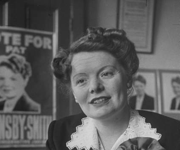
Patricia Hornsby Smith - click to view the whole Time portraitIn 1959, Patricia Hornsby-Smith (in Harold MacMillan's Conservative government) reported on the crippling price of keeping more people in psychiatric institutions than there had ever been, reporting on the "appalling legacy" of the buildings and how maintaining them would take up an increasing portion of the NHS budget; but she also spoke on how an appreciation of mental illness being like "any other disability" was a prerequisite on action that would need to be taken on both pragmatic and humanitarian grounds.

Hornsby-Smith's speech was the prologue that Enoch Powell's 1961 Water-Tower Speech was written to follow:
Enoch Powell: click to go to the text of the Water Tower Speechit is the duty of a Minister of Health and the duty of the National Association for Mental Health, to...choose and to favour wherever they have the choice, the course of more drastic and fundamental change: for we may be pretty sure that even so the progress of medical thought and method will still be well on ahead of our practice.
Powell was, of course right (and it was good to see the BBC admit that the man was more than a controversial 15-minute speech): as the documentary showed, "hope came from the laboratories [in the form of] a new generation of psychiatric drugs". However, Largactil (chlorpromazine) created new problems to replace the ones it solved in the form of simultaneous agitation and sedation, and Parkinson's Disease-like symptoms. Had the resarchers looked further into its genesis, they might have found that it was derived from a dye produced in Victorian England, but wasn't much use. So it was fed to cows to see the effect, which was that the cows calmed down. And died shortly afterwards.

However, the growing voice possessed by mentally ill people and their advocates - who included many mental health workers - drove the phamaceutical search for medications that had maximum effect on symptoms with minimum unwanted effects. The quest still continues.

click to read Boris Johnson's article in the TelegraphBut how did we get from this sense of optomism to a mentally ill man's flat being raided by a dozen riot police? As beds decrease, I worry that the stigma that infested the ageing Victorian structures hasn't disappeared but has rather been absorbed into society, which has become itself an über-asylum wherein, asserts London Mayor Boris Johnson in an exegesis of Eleanor Rigby, too many people "pretty much stay at home and watch TV" with their loneliness acting as a straitjacket - a garment never used once in the history of the crumbling Victorian asylum where I trained.

As politicians struggle to describe how they are going to deal with the deficit, it's obvious that there are goiclick to read more about hte International Clubhouse Movementng to have to be cuts. But this should not blind us to the fact that cuts started some time ago. Fulbourn hospital, the psychiatric hospital serving Cambridge and surrounding areas, lost two rehabilitation units and two acute psychiatric wards in 2007. This could have been ameliorated by better services in the community, but Vocational Services, providing occupational therapy, and Cambridge Clubhouse a range of less structured opportunities of rehabilitation after psychiatric treatment, are long gone. The Clubhouse was replaced by a mental health resource centre that aimed to make ex-patients in the community into trainers, but access is now only by telephone.

I'm not setting out my stall for my territory, having switched from a psychiatric nurse to a psychiatric patient some years ago. I'm merely arguing for common sense: in the absence of dedicated resources people requiring mental health treatment are, at the more severe end, going to keep ricocheting between inpatient wards, police cells and prison and, at the less severe, take up more of the general resources that are available, eg GP appointments, A&E beds, etc.

And the human cost is intertwined with the financial one, something that Patricia Hornsby-Smith and Enoch Powell would have recognised. I met a fellow Clubhouse veteran recently; unable to maintain employment without input but "not ill enough" to warrant a community psychiatric nurse, she spends her time subsisting on benefits - mostly, as Boris Johnson says, at home watching TV. Investing in resources that would help people like my friend both to work and to pay more taxes would, in my opinion, be a win/win situation.

Related posts:

Good taste back on the Horizon: How Mad are You?

Blurred Boundaries, Fine Lines - How Mad are You?

Tuesday, January 26, 2010

...all change?

thanks to Cambridge Cycling Campaign for the pic - click to go to websiteI had to attend a course on databases yesterday - sometimes my life just gets too exciting! After cycling into town I got onto the bus, asking the Eastern European driver where exactly the stop in the Flat Old Fen was. I know I've got a Scottish accent, but being married to an Englishwoman for nearly two decades - much of that time spent living in the Fens - has blunted it somewhat. Nevertheless, I had to sit down as wise as when I'd got on, which at that time in the morning isn't very wise at all. I wasn't as unlucky as the next chap, though - like the driver, English was his second language and he was gesticulating at a map trying to ask something. The two men found commclick to go to a review of this book about a Glesga clippieunication impossible, and the would-be voyager alighted.

What a change from the old days, I thought. We used to have an inspector on each bus who was, in Scotland, known as a clippie and - usually a woman - spoke the lingua franca, enjoining people to "come oan - get aff!" when the value of their ticket had expired and if asked, for example, if a bus went to the cemetery would reply "naw, it's afraid o' the ghosts!" You can make up your own replies for all sorts of situations, but the clippies kept it clean.

Still, I shouldn't complain in the light of what's happened in the Cambridgeshire town of Manea where a Nigerian-born German doctor who barely spoke English overestimated the amount of diamorphine (known as heroin on the streets) to give to 70-year-old David Gray by a factor of ten, killing him. The Cambridge News reveals that the company who employed Daniel Ubani as a locum had circulated an alert on the drug after two patients had placed in respiratory arrest after being prescribed overdoses - thank Heaven, they were resuscitated.

clcik to read Stephen Adams' article on Martin Amis and euthanasiaLife and death featured in the Telegraph, with Stephen Adams reporting on Martin Amis' remarks that we need euthanasia booths on street corners to cope with the "silver tsunami". It's ironic to see the man who accused US novelist Jacop Epstein of plagiarism himself stealing the idea of suicide booths first floated by sci-fi writer Robert Sheckley in his 1959 Immortality, Inc.; one wonders at what point the author, now 60, will see himself as part of the silver tsunami? Plus ça change...

I got to the Flat Old Fen, where the course went well, delivered by a team representing various Home Office initiatives who knew what they were talking about. But I wonder if one of them said more than he'd meant to when he said everything was "expected to change in two months when we get a change of government"?

Having gotten back to Cambridge in time for the evening rush-hour, I found myself sometimes going faclick to read more about the SPECS3 speed cameraster than the cars as I cycled up the city's Mill Road. So it was initially surprising to get back to work and read Chris Havergal's article for the Cambridge News speaking of a 20mph speed-limit for the thoroughfare, as I don't think any of the cars I passed managed to get up to that speed. I guess there's a problem with speeding as night draws on, but that's down to problems getting drivers to respect the present 30mph limit. There have been threats of 20mph zones for some time, but they were meaningless until the start of the year when speed cameras that can detect velocities slower than 30mph came onto the market.

tower at nightI had one stop before getting home, meeting Constanter to discuss an article he's thinking of writing for the mag over a pint at the Tintinnabula. After warming ourselves at the fire we looked out of the window at St Gallicus' tower illuminated by spotlights: symbol of the centuries-long process - whereby everything flows but slowly and organically - that builds a village like the Draughty Old Fen, it's the sort of sight that makes a long day worth it.

Sunday, November 15, 2009

social enterprise and homeless needs: the autumn issue

Politicians of all parties are looking hopefully at the phenomenon of social entrepreneurship, and Spark provides some statistics that surprised me:

click to go to the Spark websiteThere are at least 55,000 social enterprises in the UK with a combined turnover of £27billion per year. They account for 5% of all businesses with employees and contribute £8.4billion per year to the UK economy - almost 1% of annual GDP.
The reason Spark attracted my attention is that they support social entrepreneurship in the field of homelessness, and a trailblazing Cambridge social enterprise which serves homeless people, their friends and the agencies who serve them in a unique way is trying to identify funds to keep going. In short, it's fighting for its existence.

In the Autumn edition of the Willow Walker magazine Gary Barrett, who has been rock-solid in overcoming his addiction and encouraging others to do the same, describes the difficulty in getting people together to plan a magazine when they're simultaneously struggling to recover:
Gary BarrettAfter the Relapse Prevention Course I came up with the idea of a magazine. We got together a few of us ex-addicts, some of them are on meth [methadone], some of them are off...We had a magazine meeting this morning and I was the only one who turned up because the others have floated off because it's just taken too long.

I can sympathise with Mr Barrett because, taking over as as acting editor of a village magazine, I've seen some things move at speeds that make paint drying look hurried. But the case he makes illustrates precisely the case for a means of communication to tie together the members of disparate communities of homeless and vulnerably-housed people in Cambridge that isn't going to evaporate because things go too slowly for people who have recently been involved in lifestyles wherein gratification, when obtained, is instant.

That means of communication is the Willow Walker itself, and its prominence in the homeless community and the agencies serving it is recognised in Cambridge City Council's Single Homeless and Rough Sleepers Strategy 2006-09, where, in the section on User Involvement, the Council sets as a "medium" priority (the highest in that strand)that "results must be fed back to users via the Willow Walker or alternative communication mediums".

The Willow Walker's funding has been cut off because, as Chris Havergal writes in the Cambridge News, the the Council "'have concluded we are not going to support Willow Walker. We support a range of projects, including a contract we have with WinterComfort, and we don’t want to duplicate'." It was only possible to bring out the Autumn edition of the Willow Walker because of a generous donation from Cambridge University Press and the gift of professional photographer Suzanne Middlemass's time and considerable talents.

Overstream House, where Wintercomfort is based: click to go to their websiteWintercomfort, based in the city's Overstream House, supports those who are homeless or at risk of losing their accomodation and provides valuable services: for example, it's developing a weaving business based on social enterprise lines and using, ironically enough, willow. But it doesn't duplicate the vital role as a communications hub that is filled solely by the Willow Walker whose editor, social entrepreneur and community artist Kirsten Lavers, stands at the centre to stop things evaporating.

One of the many interesting and commanding articles in the Autumn edition was written by Dr Christine Hugh-Jones, who is the doctor in charge of Cambridge's Access Surgery, which takes on homeless clients. She was writing about the pioneering Joint Strategic Needs Assessment for Homeless produced for Cambridgeshire NHS by Drs Jeremiah Ngondi and Fay Haffenden. Click on the link in the last sentence to view this important document as a PowerPoint file. Here's a whistlestop tour of it:


Analysing anonymised statistics from the Access Surgery, one of their many grim findings was that the average age at death of homeless people in Cambridge is 44, which the press managed to garble into "life expectancy of homeless people in Cambridge is half that of the rest of the population of Cambridgeshire". Through the Willow Walker, Dr Hugh-Jones was able to explain to its readers that the Access Surgery's clients had, on Ngondi and Haffenden's analysis, a 2-3% chance of dying in the next year - "This is still much too high but it does not mean that if you are forty you have only four years to live". (Although the four obituaries at the end of the magazine are a sobering reminder of mortality on the streets.)

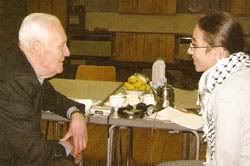
click to go to the Homeless Truths websiteThe projects that have budded from the Willow Walker have taken the Big Issue slogan of "a hand up, not a handout" and put it to work. I've already written about the radio show Homeless Truth's getting the police's point of view into the heart of the homeless community: in the latest Willow Walker there's a brilliant picture of one of the show's broadcasters, Laila Antoun, interviewing Tony Benn.

Dr Hugh-Jones' comment about the misquoted survey could apply to a range of issues affecting hard-to-reach communities in Cambridge: "What a pity no-one except the Willow Walker has bothered to report this".

click to go to the Willow Walker website

Other posts related to the Willow Walker:

Homeless not hopeless

Catching Street Voices

Both Sides of the Tracks

Save the Willow Walker

The Willow Walker looks for a funder

Top Ten songs about Thomas

Thursday, September 17, 2009

women and children first

click to read the Cambridge Rape Crisis Centre Information PackI was privileged (if that's the right word) to be invited to a seminar on responses to rape and domestic violence in Cambridgeshire recently, which was addressed by two speakers.

The first speaker was from the Cambridge Rape Crisis Centre, which is the only rape crisis service in the UK to have shut down due to funding issues then reopened, due to the dedication and hard work of several Cambridge women in making small amounts from local sources (like the Cambridge University RAG) before the Government instituted a million-pound fund in 2008 to stop any more Rape Crisis Centres from closing. This fund was re-established in 2009, enabling a a £33,000 grant from the Government Equalities Office Special Fund in the face of "indifference" from Cambridge City Council to a request for funding.

Although prepared to believe that we have a long way to go as regards taking rape seriously, I was still surprised to learn that 17% of women over 16 are estimated to experience some sort of sexual victimisation.

Every rape is reckoned to cost the state around £76,000 in physical and mental health care, police and courts, and the long-term effects of self-harming behaviour such as eating disorders and/or substance abuse. Yet the monies it has received, which will keep it open until April 2010, boil down to £2.50 per caller. A wish-list for CRCC would include a budget big enough to allow a face-to-face service, and possibly also a befriending scheme, including accompanying clients to courts.

The second speaker was from the Cambridgeshire Constabulary Domestic Violence Unit, and had some hard truths to tell us.

Cambridgeshire Constabulary receives reports of 11,000 domestic violence incidents per year - which is 27% of all violent offences - the scary bit being that, on average, a woman will have been at the wrong end of abuse 35 times before she picks up the phone (and 80% of domestic violence incidents comprise a woman being victimised by a male perpetrator, although the Cambridge Rape Crisis Centre links to a website for male survivors of sexual abuse).

Every Police Force in England has a positive action policy on domestic violence: they will arrest an abuser found to be committing a criminal offence regardless of the victim's wishes, in order to lessen the likelihood of threats by the perpetrator.

An arrest will also be made if drugs are found on the premises; and although I am in favour of robust policing on drugs, in the area of domestic violence, including rape, one finds situations where women rely on drugs to block out the pain of what they are going through - possibly even being encouraged to do so. And sometimes it can be difficult to paint a picture of a habitual drug user in court with which a jury can feel sympathy. I felt I was bogged down in the quagmire of grey areas and hard decisions the police must be faced with every day.

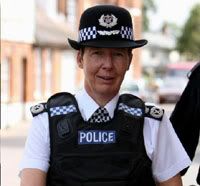
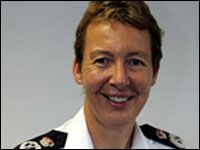
Julie Spence, Cambridgeshire Constabulary Chief ConstableAnother difficult area can be attitudes to women who stay with their abusers; the speaker related asking one police officer who questioned why abused women didn't up and go, "how would you put your life in a bag to leave forever in five minutes?" The officer addressing us was an energetic advocate of continuing training and reminding of the force in general and specially trained officers in particular. As Cambridgeshire Constabulary Chief Constable Julie Spence said earlier this year, "whilst I cannot guarantee that there has never been a time in any police force when an individual claim was not treated seriously, I know of no police officer worthy of their position who would treat [an allegation of rape] with less than absolute gravity".

click to go to 'together we can end violence against women and girlsGoing beyond the seminar, I was interested to look through the Government consultation paper of March this year, due to report back to its stakeholders imminently, Together we can end violence against women and girls, which referred to the many positive achievements which have taken place in the last
ten years, but stated early on that "Government alone cannot be the answer" to the questions we must ask about the continuing unacceptable rates of domestic violence in Britain.

But Government takes it on itself to provide answers; and in the case of the 32 rape crisis, survivors' and healing services to whom the Equalities Office Special Fund gave over £1,330,000 (€1,475,000/$2,175,000), thank God for it. London Mayor Boris Johnson looked to be leading the way in demonstrating the duty of councils to care for the most vulnerable in their areas by delivering on his manifesto commitment to increase the number of rape crisis centres in London, but unfortunately only two-thirds of the £2.23m in his manifesto commitment has been delivered. I can only hope for a rethink on this. Although the help given by these centres is and must be non-directional, it would be nice toclick to read the story of the closing women's refuge on thisisdorset.net see some Equalities Office monies going to charities who help women who wish to avoid abortion after rape, or deal with compounded trauma after abortion.

What I can't understand, though, is the disconnect sometimes apparent between promises and actions, even in this area that demands congruence between the two.

For example, the Dorset Echo's Miriam Phillips reports that a women's refuge is being closed by a quango called Supporting People on the basis that it doesn't also care for men, and women can be helped to live at home by outreach services. (The Cambridgeshire Constabulary website, like many other agencies, advises women on planning to leave.)
click to go to the Supporting People in Dorset web directory

Alternatively, the ending violence consultation paper states, in a section called "next steps", that the government has taken a measure called the Gender Equality Duty (GED - one of 72 "Key achievements since 1997" listed in annex 3 of the documents) which "requires all public bodies in England, Wales and Scotland to take steps to promote equality of opportunity between women and men and eliminate unlawful discrimination and harassment in all their functions". So, what was the Trades Union Conference that's just finished all about - did delegates representing the highly-unionised public sector perhaps get their priorities wrong?

Harriet Harman, Minister for Women and Equality - click to go to her websiteLastly, concerning Harriet Harman, who is among other roles the Minister for Women and Equality (and who, to her credit, is supporting the protests in Dorset against losing the women's refuge): while standing in for Gordon Brown during his holiday at the start of August, she spent more time defending ideological positions about the superiority of women to men (a concept I woulddn't argue about) that she never had time to dot i's and cross t's with Justice Minister Jack Straw and Home Secretary Alan Johnson on proposals to raise the percentage of successful prosecutions for rape.

What we need is governmental interference where it is warranted, for example keeping women's refuge open in the face of hypertrophied quangocracy or forcing councils to shoulder their responsibilities towards vulnerable people, and minimal interference with police in terms of targets, tickboxes and form-filling, so that they can do the jobs they so manifestly want to do, among which are preventing future domestic violence and rape by showing the perpetrators of these heinous acts that there are less and less places to hide.

When clashes of egos and agendas are at risk of turning everything around into a sticky mess, we must never lose sight the Dorset campaign's assertion that in the vast majority of domestic violence cases its "women and children first".

Related post: It's a dog's life...

Friday, August 28, 2009

Tesco: single-issue activists in tatters

The Tesco Express (small store) has only been in Cambridge's Mill Road for three days, yet it's starting to feel as if it's been there forever. It's bright, airy and affordable, and the staff are friendly.

So what was all the trouble about?

Richardc Normington, Prospective Parliamentary Candidate for the Conservative Party - click to go to website
Although resistance to Tesco's planning application for the store first came onto my radar last March, the cause of the confusion manipulated by a disaffected minority was summed up recently by Cambridge Conservative parliamentary candidate Richard Normington, who recently attended a planning meeting in the city convened to determine whether should the council enforce its own planning guidelines.
Why bother with rules if you do not plan on enforcing them? However, the City Council has overruled its own guidelines to the point that the council is treated with ridicule by many of those putting in applications. Did you know that two in every five appeals against the city are successful?
Indeed, in the planning meeting last March, "The recommendations from council officers and consultants in every case was that the Council should approve the proposed changes, usually with conditions. Arguments were backed up with reference to Central Government advice, history and the context of the Mill Road area in a 153-page agenda." All but one were refused.


The anti-TeDavid Howarth, Liberal Democrat MP for Cambridge City - click for webpagesco cmpaign has been backed up by the city's Liberal Democrat MP David Howarth, who was a witness to an assault on a 66-year-old woman collecting signatures for a petition in favour of Tesco's. To his merit he offered himself to the police as a witness; but although I realise MPs must immerse themselves in all aspects of life in their constituencies, I wonder why he was concentrating on keeping Tesco away from Mill Road while on the same thoroughfare you can buy cannabis seeds, second-hand firearms and hard core pornography, while elsewhere in the city there are problems with drug-taking, prostitution, benefit-ghettoes and drink-fuelled violence at chucking-out time. Tesco's, it seems, should be the least of his problems, and the whole situation reflects the risks of mixing with single-issue activists to the exclusion of people who are on the other side of that issue.David Howarth (far left) helping collect signatures for the No Mill Road Tesco campaign

There are those who say that Tesco's opening will herald shop closures and job losses. They will, of course, be proven right, because shops have been closing and jobs been lost for some time now - it's called a recession.

Something that may militate in Tesco's favour is the lack of an alcohol licence, in the context of accusations that the outlet - in reality a small shop among small shops - will become another source of cheap booze in an area plagued by problems related to the stuff. A dry Tesco's, I believe, will throw light onto the true source of inexpensive strong lagers and ciders whose brewers are well aware of their target market. They are sold in some of the very independent traders whom the No Mill Road Tesco Campaign affects to protect.

The campaign is, of course, in tatters, a fact recognised by judge Lord Carlisle of Berriew when he threw out Campaign member Richard Rippin's attempt to force a judicial review of the Council's decision-making process: "This application is in reality an attempt to revive the No Mill Road Tesco Campaign under the guise of a Judicial Review claim. It is a misuse of Judicial Review".

single-issue activism: anti-Tesco campaigners crowd out the opposition at a planning meetingOn Wednesday morning, Minora phoned me from outside Mill Road Tesco's to report that there were a few Campaign members outside the entrance, flanked by watchful police officers. While Campaign supporters had been quite vociferous when protesting in the Cambridge Folk Festival, these would only give a terse "I can't comment", presumably having been well-warned. It's a sign of the times that pragmatism has won out over ideologically-based censorship, and anybody who doesn't like Tesco's will be free to use any of the meny other shops in Mill Road. That's how free choice works.

Tuesday, August 11, 2009

human rights: a done deal for some, torture for others

Then the master called the servant in. 'You wicked servant,' he said, 'I cancelled all that debt of yours because you begged me to.

Shouldn't you have had mercy on your fellow-servant just as I had on you?'

In anger his master turned him over to the jailers to be tortured, until he should pay back all he owed.

In this excerpt from the Parable of the Unmerciful Servant, we can see how Jesus spoke to people in the idiom of their times. Some of the people in authority could be pretty cruel - it might be seen as a sine qua non of being in authority then. When Jesus spoke about a king who was prepared to send a servant to whom he'd previously been merciful to be tortured, his listeners would have recognised the scenario.

The subject of torture's in the news in the UK right now - two senior ministers in the Labour Government, Alan Johnson (Home Secretary) and David Miliband (Foreign Secretary) jointly published a piece in the Sunday Telegraph entitled We firmly oppose torture - but it is impossible to eradicate all risk. They wrote about how hard they work to ensure that British security services "do not collude in torture or mistreatment" of subjects who may have confessed to involvement in terror plots targeted at the West while being interrogated abroad.

Binyam Mohammed - click to read Joe Murphy's post for the Evening Standard
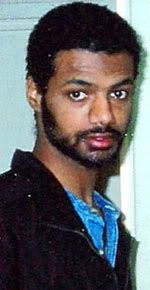
Caroline Gammell and Jon Swain explain the context - growing pressure to mount a judicial review into the treatment of Ethiopian citizen Binyam Mohamed, who left his job as a caretaker in London to travel to Afghanistan in order to kick a drug habit. Trying to re-enter Great Britain the next year with falsified documents, he was picked up in Pakistan, and ended up at the US Guantànamo Bay facility on Cuba in 2004, having been released earlier this year. Crucially, he claims that he was shunted through various countries en route under the US redition scheme, and was tortured because of material passed to US authorities by the British.

Mohamed's not a good witness even as regards his own story; the most consistent part is that he went to Afghanistan to get off drugs, and if you believe that then I'll send you prices for my cousin's drying-out house in the centre of Dublin. But the liberal-socialist establishment is getting set up to hang the British security services out to dry - presumably because they can't get hold of the American ones - and their key offence is that they perceive something in being British that is worth defending. Even the Labour chair of the Parliamentary Intelligence and Security Committee, Kim Howells, has spoke of his worry "that these calls for judicial inquiries and so on are really treating the intelligence agencies as guilty until proven innocent and that's very, very dangerous for the security of this country".

But open up the subject of treating somebody as guilty until proven innocent and you open precisely the sort of can of worms when a Government has been doing this on purely ideological grounds for more than a decade.
Peter Connelly - Baby P - was found guilty of merely existing by his guardians and their lodger, and was tortured to death. Haringey Council, which had time and funds to translate its LGBT (Lesbian, Gay, Bisexual and Transgender) Service Directory into French and Somali, visited every so often but otherwise stood by and ignored classic signs of serious abuse that you can learn in a day-long child protection course - just as it had with Victoria Climbié.

Interestingly, Human Rights Watch, an international non-governmental organisationalready excuses are being made for Peter Connelly's killers - read Damian Thompson's article; pic by the Metropolitan Police who say "By focusing international attention where human rights are violated, we give voice to the oppressed and hold oppressors accountable for their crimes", has focussed extensively on the harrowing stories of...Binyam Mohamed, but - despite not confining itself to examining governments - did not devote one word to either Peter Connelly or Victoria Climbié. It will be interesting to see if the NGO devotes any interest to the "human rights" of Peter's mother and her boyfriend, Tracey Connelly and Steven Barker, to be free of victimisation should they be released from prison. (Should they survive the attentions of fellow prisoners eager to carry out the duty the state has deserted.)

organisations watching human rights: sometimes watching the wrong way?

Human rights: obviously the property of terrorism suspects with dodgy alibis, but not of the children living in "alternative" households. (Or of the victims of Charles Manson's "harem" - the three women who were his comrades-in-slaughter are preparing a case for parole "on compassionate grounds".)

Sir John Scarlett, head of MI6, has said that his organisation is "as committed to the values and the human rights values of liberal democracy as anybody else", and I've got no cause to disbelieve him. But Telegraph columnist posits this case: Would we refuse to torture a terrorist who knew there was a nuclear bomb planted in London? I suppose there's times when it's just not enough to wear a bracelet that says "What would Jesus do?"


click to read Paul Hazelden's article on What Would Jesus Do?

Related post:Pilate's question remains unanswered

Saturday, June 27, 2009

cocaine: heartless, soulless waste

The UK has just achieved an unattractive prominence: according to the Telegraph's Tom Whitehead, Great Britain is now the world's capital for cocaine use, says a UN report (which I haven't been able to locate on the organisation's byzantine site).

click to go the the Nottingham Trent University site detailing the award-winning program
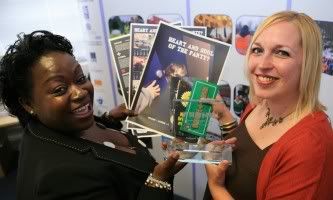
Ironically, we've just seen the publication of a report by Nottingham Trent University, in conjunction with the Nottingham Crime and Disorder Partnership, which focussed on an aspect of occaine-use that's often overlooked: the marriage of cocaine and alcohol to form a substance called coca-ethylene, which is toxic to the heart and the liver.

heart and soul of the party?The research, I think, hits the nail on the head with its title - Heart and soul of the Party? Unfortunately, I think many of us will have had the displeasure of seeing somebody emerge from the WC at a party or in a pub far more cheerful than when they went in, talking twelve to the dozen and on the edge of starting fights because they have lost any conception of personal space.
The worst thing is - I heard again and again from users trying to recover when I was a drugs worker - it feels that one can drink the place half dry and not feel that one is drunk. Not feel is the operative phrase: co-ordination might be less affected than if one had not had cocaine, but judgement goes right out the window, leading to more consumption of alcohol/cocaine and impulsive behaviour like fighting, or sex that is often unsafe and may lead to an unwanted present being transmitted to one's partner. (And that's assuming that the sex is consensual.)

The reason I mention sex more than once is that cocaine affects the brain by piggybacking on the reward system in the midbrain that makes sex, for one thing, feel enjoyable. The desire to take cocaine very soon inserts itself, cuckoo-like, as a drive. That's why the damn thing's so addictive that the brain doesn't really settle down until after about six months of abstinence.

That's the reason I spit feathers when I read articles by liberal-minded journalists who chide society - whatever they think they mean by this - for criminalising black people who take crack (the smokeaFrancisco Santos Calderón, Vice-President of Columbiable form of the drug) while turning a blind eye to white people who use cocaine. (I speak as somebody who met one black crack user in many years in the job.) The reason for my reaction is that if we see the council estates raided, then shouldn't we see the same happen to the Stock Exchange and the bankers' parties (like the one which saw the birth of derivatives)?

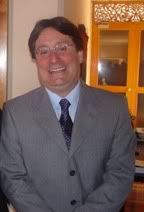
I can't disagree with the vice-president of Colombia, Francisco Santos Calderón (left), that "Every user that snorts a gram of cocaine kills 4.4 square meters of rain forest"; so I wonder why Minora comes back from school reciting the relative prices Colombian farmers can make for cocaine and traditional crops.

Cambridgeshire Constabulary - click to go to the Force home-pageI think that Cambridgeshire Constabulary is going down the right road by squeezing pubs with a name for cocaine use with an amalgamation of new technology and old-fashioned policing. As Operation Ortolan, mounted some years ago, showed, big fish and small fish are relative: in the end, there are only fish, some bigger than others, most aspiring to become bigger than they are. The Force's drugs lead, Chief Inspector Gary Goose, said:
"The dealing of heroin and cocaine is an appalling trade. It destroys people's lives and can also make life a misery for those who become a victim of associated crime such as burglary, robbery and anti-social behaviour. We do not want our communities to suffer the effects of drug misuse and we will do all we can to make the city a safer place to live and work.
The lesson of all this can be found, I believe, in Genesis 3. I've heard users say many times that they wished they'd never tried cocaine: there's such a thing as forbidden fruit.

And well done to the Nottingham Trent University students who have worked with Nottingham Crime Disorder Partnership to bring out this timely report. You can read a summary of it at Drink and Drug News.

Saturday, June 13, 2009

education: a cover for state oppression?

I recently accompanied a young lady to her school, a secondary faith school in the region, where she's not been doing too well academically for various health reasons that demand her absence frequently. A meeting had been arranged with her teachers.

I'd arrived slightly stressed, being aware of the extent to which governance of institutions has been infested by a managerial compulsion to ensure compliance has been achieved by conforming to governmental targets and dicta on such things as diversity and anti-discriminatory laws used to oppress people from a Judaeo-Christian faith background. Case in point: Jennie Jennie CainCain, secretary at Landscore Primary School in Devon, was told by her headmaster not to return to work after she asked for prayers for her daughter (who'd been disciplined for talking to a classmate about Jesus) in emails that never reached a school computer.

On the other hand, there are still many headmasters in the mould of the legendary Felix Porter from Glasgow, whose sometimes thunderous solicitousness for his charges pointed many a tearaway towards the right tracks. (One of the many ways in which he lives on is in an award named after him.) Working in social housing, I remember one of his successors striding into the office to inform us that we were now part of the truancy reporting scheme. We didn't argue.

It's no metaphor to call education a war-zone. For example, Radagast, a senior teacher in a Catholic school, writes of "the police visiting schools to 'interrogate' students about their beliefs".

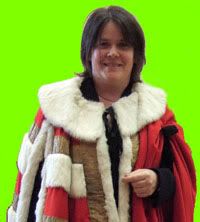
One of the major fronts in the war is home education. I wrote earlier this year aBaroness Morgan: click to read the last paragraph of George Orwell's 'Animal Farm'bout Baroness Morgan's assertion that homeschooling "could be used as a 'cover' for child abuse such as neglect, forced marriage, sexual exploitation or domestic servitude."

I find this rather strange. The man known as the "British Fritzl", who made his daughters pregnant 19 times, did not emulate his vile Austrian namesake by imprisoning the girls in a cellar: rather, he moved them around the country so that they would not make attachments who might have raised the alarm, but - crucially - sent them to schools. In a scenario that is becoming depressingly familiar, social services and police were alerted but took no further action - indeed, police told the girls' worried grandmother that "slander is a criminal offence".

Likewise, a harrowing case involving a woman accused of taking obscene pictures of young children is emerging in the south of England. But she's not a homeschooling Mum - she works in a nursery which operates from an adjoining school.

Education Otherwise, the Education Otherwise, the charity for home-schooling families: click to go to homepagecharity for families with children being educated at home, provides a laminated card for children to carry if they are picked up by police on a "sweep" for truants. I find it quite surprising that a need for them to print the information that home education is legal in the UK, given that the 2007 guidance from the Department of Schools, Children and Families on these sweeps mentions homeschooling several times. The online version links to a 2006 document from the Department of Education and Skills called What to do if you're worried a child is being abused, which lays down powers already possessed by the relevant authorities to take allegedly abused children to places of safety.

As above in the House of Commons with MPs' expenses, so below with the safety of ordinary folks' children: what is needed is not new laws, powers and regulatory bodies, but for existing ones to be used effectively and with ideological blinkers removed.

Questions remain, however, about what to do when the child abuse is state-sponsored - for example in an assembly in Bromstone Primary School in Kent, when a video of two men canoodling on a bed was shown to children as young as four as part of a drive against homophobia, leaving girls afraid to be friends with each other. Or when the state abets the abuse by rendering certain groups with "alternative" lifestyles effectively untouchable, which led to the debacle surrounding the stepfather of Baby P.

And the young lady I chaperoned to the meeting at her school? I needn't have wMaking headlines: click to go to Brian Mickelthwait's Education Blogorried. Her teachers took a blue pencil to her timetable so that she's now concentrating on three subjects, including English and Maths. They did this in the face of Government targets steamrollering teachers into fixing five good GCSE's for pupils. Had she been homeschooled, of course, this would have already been done - one good thing coming out of this farce is that more people are learning about home education than would have even considered it not so long ago.

But to my young friend's teachers, as to Radagast and all those who labour endlessly to try to get a good education for their charges in the face of government oppression, I owe something I don't think those teachers hear often enough:

Well done!


Related post: Home schooling - next in the crosshairs

Monday, June 1, 2009

booze-buses from Aotearoa - an idea for England?

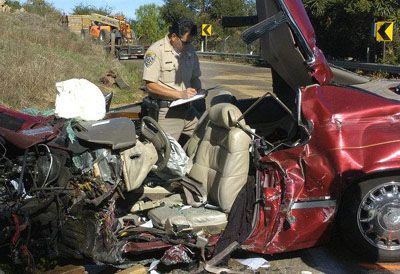
The Cambridge News reports that a blitz on drink-driving is starting up in Cambridgeshire - as Casualty Reduction Officer PC Barrios says, to target the "increase in the number of people going out and drinking".
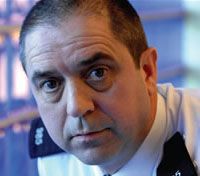
Tony Barrios, Cambridgeshire Constabulary Casualty Reduction Officer: click to read the Cambridge News article
I think it's a very good idea: there are crackdowns on drink-driving all over the world at Christmas-time, but it's easy to forget this season of barbecues and country pub gardens in bloom.

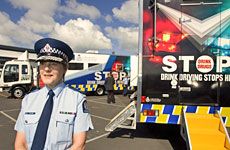
I'm reminded of a road-safety conference, I attended in London, which was addressed by Superintendent Paula Rose of New Zealand Police, who studied at the Henley Management College and worked with the Thames Valley Police, both in the UK, as part ot the Foreign and Commonwealth Aotearoa Fellowship, of which she was the 2006 recipient (Aotearoa is Māori for New Zealand).

Supt Rose told us about the country's robust system for dealing with drink-drivers (New Zealand, I gather, makes the rural parts of East Anglia look like central London). Over half of the 4.3 million inhabitants have driving licences, which can be applied for at the age of 15. There are about 400 community police stations, with 10,000-plus staff.

It was very interesting to hear her talk intelligently and humourously buSupt Paula Rose, with Booze Buses in the background, thanks to Paul Estcourt for the pic - click to read the New Zealand Herald storyt robustly about keeping on top of drink-driving on 91,000km (56,500 miles) of roads of varying standards. Ears pricked up at the mention of "booze buses" - mobile laboratories to process drivers who had failed a roadside breath test for alcohol, where a breath sample could be taken in a location where chain of evidence could be attested to, and , should the subject so choose, a blood sample could also be taken. They're staffed by officers who had trained to be part of tactical alcohol teams that would shut down a stretch of road and test every driver using it: up to 20,000 in a night.

CamJulie Spence, Chief Constable, Cambridgeshire Constabulary - click for bio & podcastsbridgeshire Constabulary Chief Constable Julie Spence has been robust in demanding Govenment give her the means to recruit more police officers to help combat the effects of an increasing population upon the region, including drink-driving, and has made her points in the highest places more forthrightly than anybody who joined any organisation solely for advancement would dare to.

The results of such measures can be amazing: in 1973, the New Zealand road toll was 800 and should have been 1,500 last year but was actually 350, due in no small part to alert and uncompromising traffic policing, led by Supt. Rose. I hope that over the next year the Treasury listens to the evidence that strategies such as "booze-buses" play a major role in reducing carnage on our roads. Supt Rose quoted a Māori saying that lays out the major priority in policing that I am sure is shared by officers everywhere: he tangata, he tangata, he tangata - "our people, our people, our people".


click to go to a YouTube video with very graphic images of the results of drink driving


Related post: drink-driving campaigns - a worked-out example

Thursday, May 14, 2009

drink-driving campaigns - a worked-out example

worthy cause: click to go to the Brake homepageOn the way to an international conference in London about drink/drug driving, I had my first lesson on the journey down. The train from Cambridge to London lived up to its nickname as "the sardine express". Although there were eight carriages all seats were taken, and the lack of vetilation made the experience feel like standing in a mobile sauna for an hour. I now know why some of those who are able to commute to big cities by car sometimes choose to do so.

The conference, hosted by the road charity Brake in the grand surroundings of thclick to go to Safer Scotland's websitee Royal College of Physicians, featured academics, police officers and advertising-campaign organisers from England, Belgium, Germany and New Zealand.

And Scotland. When Caroline Thomas, Senior Marketing Manager with the Scottish Government, started a presentation of a worked-out example of a road-safety campaign with an anti-drink-drive campaign, her Ayrshire accent was as clear as a bell; on the other hand, I'm told in my country of choice that my accent is really broad, and in my country of birth that I sound half-English.

She started with a history lesson: the first recorded death related to driving was that of Bridget Driscoll in London. A contemporary newspaper account reads:

click to read the story of Bridget Driscoll's accident on Blue Ocean Strategy Resources' websiteOn August 17, 1896, in London, Bridget Driscoll, age 45, became an early car accident fatality as crossed the grounds of the Crystal Palace (London), an automobile struck her at a speed witnesses described as "a reckless pace, in fact, like a fire engine."
The coroner concluded that the car that hit her had been driving at 4mph (6.5kph) and added his hope that there would be no further deaths due to driving. We're currently averaging an estimated 1,000,000 deaths worldwide related to driving per year.

From newspapers we went to other media. While it took radio 38 years to reach an audience of 50 million and TV 13 years, by the time mobile phones were in the ascendancy they had reached this mark within 2 years. Caroline drew our attention to the famous Miracle on the Hudson picture of US Airways Flight 1549, which had just ditched in the New York river, posted from a mobile phone on Twitter by rescuer Janis Krums as he went out on the ferry as part of the rescue team, with the microblog "There's a plane on the Hudson. I'm on the ferry going to pick up the people. Crazy." The city's own paper, the New York Times, had the story online in 10 minutes. But it had been well and truly scooped: Krums' picture had gone round the world at a speed that made swine fever look as lazy as a fed dog.


click to go to Janis Krums' famous Miracle of the Hudson' picture and message on Twitter
So where was all this going? As Ms Thomas explained, the object for Safer Scotland was to reach the relatively small amount of young people who were responsible for a disproportionate amount of failed breath tests and indeed accidents. Not pathological drinkers, people who have a beer then, having been disinhibited a little by the first pint, make the decision to have a second before they get into their car. They would then be more vulnerable to distraction, which was the theme ofthe campaign, starting with a cinema advert where a driver is distracted for a moment on a rural road, and, swerving out to avoid the car in front of him, crahes head-on with the car in front. There followed a wave of mobile-phone picture messages, starting with a ic of a car windscreeen at night, then a "new text" message, culminated in a pic of a broken windscreen. There was also an online campaign orchestrated around the "morning after", which in the UK accounts for 80% of drink-drive convictions.

the morning after online campaign
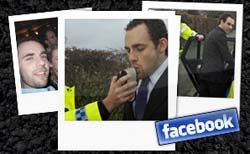
The last phase of the campaign was, I believe, a stroke of genius: a Facebook page, now taken off, called "The Loneliest Man in Scotland", which achieved 400 friends as videos were posted about how the man, having failed a breathalyser test and been convicted of drink-driving, progressively becomes isolated from the people around him. There was aThe loneliest man in Scotland - click to go to the Don't Risk It place degree of risk-taking here, as Facebookers are an independent lot, but what sponaneously happened was that abusive comments were taken care of by those many who wanted a serious debate on the matter. "Don't risk it" (the theme of the campaign) posters also appeared on X-box Live games.

The cinema ads were the workhorse of the campaign in reaching 17-19 year olds, which is perhaps a sad reflection of the cost to a family of going to the flicks. Surprisingly, use of new media like internet and mobile phones widened the age-range exposed to the advertising.

Scotland's safer driving pushes have to take into account that the country has a lot of rural roads that are often assumed to be quite empty, which is where I think Caroline's presentation was an important contribution to the conference. Should the Congestion Charge proposed for Cambridge be implemented, for example, then the Draughty Old Fen and other beads in the necklace of villages around the village will be exposed to even more rat-running than usual, as motorists whose destination is beyond Cambridge but who might usually run through it find ways to avoid the charge boundary. This, coupled with house-building schemes embarked upon to accomodate augmented populations, will fill up roads previously assumed to be emptier.

Another aspect I found impressive was that the campaign married embracing new media and technology with the age-old skill of identifying what a problem is, who is causing it, and how to reach them with which message. And all without the behinderment of ideological blinkers.

Lasly, the campaign demonstrates that, at a time when dismemberment and gore are daily bread for many younger cinema-goers and gamers, tactics have to be cerebral rather than visceral - more Psycho than Saw. As another speaker demonstrated, resolving tension halps people relax - "don't shock 'em and drop 'em, shake 'em and wake 'em". The latest Scottish advert on drink-driving demonstrates a firm grasp of this principle:


Related post: Booze-buses from Aotearoa - an idea for England?