I'd like to say a big thank-you to the 20,000 visitors who have visited this site since I had to stop updating it due to time issues.
This isn't a blog I could post at the other place, since it's related to an English Village magazine published by the parish church, therefore I try to keep all politics out of it. As the past year's gone by I've become increasingly aware of the English Defence League (EDL), which was founded in Luton in March 2009, when a group of Muslims protested at a homecoming for the Royal Anglian Regiment.
It was first portrayed as a skinhead group, but it soon became clear that as well as white people it welcomed black people, Hindus, Sikhs, Jews, gay people etc who are concerned about the spread of radical Islam in the UK. The EDL has both outlived many obituaries and is about to celebrate its second anniversary in Luton. In the run-up to this, founder Tommy Robinson (left) was interviewed by Jeremy Paxman on last-night's Newsnight. Previously in the programme, Paxo appeared at his ease interviewing a Government minister, a Jordanian Prince and a USA acedemic, but seemed considerably discomfited when faced with an angry and determined working-class bloke.
Paxman's career-defining determination to put the BBC first (he famously ended Michael Howard's career by asking the former prisons secretary the same question 12 times because - as he later admitted - his producer was insisting that the next interviewee wasn't ready) showed itself tonight. He reacted incredulously to Robinson's insistence that the problem wasn't Muslims but rather the Koran. Had he researched the subjects likely to come up during the interview, he would have learnt that Muslims reject the Judaeo-Christian convention that holy books, while inspired by God, are written by fallible human beings. Islamic belief is that Muhammed produced series of verses dictated by the Angel Gabriel, and the book of those verses is only the Koran if written in Arabic in the original words.
They may have a point, of course - much of the Judaeo-Christian Scriptures have been through more translations than you can shake a stick at and, as Kiwi theologian Revd Bosco Peters states, every translation involves interpretation by the translator. So while we as individuals grow up with a Bible around which our culture has entwined like a second strand of DNA at the hands of generations of translators, the orthodox Islamic view is that not just the message but the words of their scriptures are immutable - and so, say the proponents of Sharia law, are the tenets upon which their immutable society is based.
On another level, Paxo was clearly indignant about Robinson's remarks about Pakistani drug-dealers, insisting his interlocutor join him in affirming that there are white drug-dealers. But again he was missing the point: as drugs-workers and police know but are unable to say in polite society, much (if not most) most of the heroin that enters the UK to be cut and distributed to drug-dealers of all races is brought through Pakistan.
I think everybody knew that Jack Straw would crop up in the conversation. The former Labour Home/Justice Secretary said that there was a particular problem in the Pakistani community whereby men saw young white girls as "easy meat". Paxman refused to deal with Straw's statement, which wasn't surprising - the day it was made, the BBC 10pm news wouldn't touch it. Robinson's summary of the difference between the two men was masterful:
Have you seen people on drugs pushed by Muslims? You might not have, but I have.
Have you seen girls chatted up by Muslim men and put into burqas? You might not, but I have.
Have you seen young girls who've been raped and pimped by Muslim men? You might not, but I have.
Paxman's answer, with which he probably said more than he meant to, was "these are your issues".
These are our issues, and why the demonstration is being held in Luton, where schools of radicalisation has produced to date two known suicide bombers as opposed to the BBC, which stands accused of so many instances of editorial bias towards militant Islam I'll leave you to google it. I can't go to the EDL demonstration in Luton because I'm working, but I hope it goes well. Please read this if you plan to go to the EDL demonstration at Luton on Saturday 5th Feb.
Following Terry Wogan in the BBC Radio 2 breakfast show was always going to be a hard act, but even those of us who are Chris Evans' staunch fans have been astonished by the ease with which he's carried it off. Like a jazz musician, he structures his show with regular features around which he improvises using his quick-fire feelgood wit.
Some time ago, Jeremy Vine, who runs a talk show in the early afternoon on the same show, spoke about how he "feels unable to talk about his faith on his show because he fears how people would react". It's a fair point: the BBC is famously phobic as regards treating this country's Judaeo-Christian heritage with anything resembling respect.
However, my jaw dropped in admiration when Evans reacted idiosyncratically to the news that ITV1 broadcasts only one hour of religious content per year and Five carries none at all:
Come on, it's not about ratings, it's not about monetisation, it's about keeping in the Big Man's good books!
Everybody Draw Mohammed Day was going through my mind today when I rang Cambridge City Council to ask how permission for the proposed mosque on the city's Mill Road was progressing. I must admit I expected to learn nothing, but a very polite and helpful chap informed me that, although the land, the former Robert Sayle's site, had been acquired, no planning proposal had been submitted and one was not expected in the immediate future.
The site was acquired in 2008 by the Cambridge Muslim Welfare Society and Mulsim Academic Trust; but a police investigation of an arson attack later in the year, which resulted in their demolition, is presumably hampering planning applications.
Freedom of worship is an essential human right, so if the Muslim community in Cambridge is poorly housed in the Abu Bakr Jamia Mosque off Mill Road, then I hope they get permission for their mosque.
I also hope that any planning process is not a set-up like the Mill Road Tesco process, which was hijacked by well-heeled sandalistas objecting on ideological grounds in the knowledge that they have the money to patronise the independent shops.
So, in the event of there being a planning process that is open to the public, I have one issue that I hope will be debated in the open:
Given that paragraph 49 of Government planning advice PPG13 discourages adequate provision of parking spaces in order to promote sustainable transport choices, how will Councillors and planning officers treat proposals for parking spaces in the plans? If they apply the proposals consistently by refusing an application with adequate parking, how will they respond to claims that not everybody without private transport will be able to make it to worship, depending on where in Cambridgeshire they're coming from? (The Cambridgeshire Roman Catholic community has experienced this, with changes in Sunday bus timetables leaving residents in some villages unable to attend Sunday Mass.)
I am glad that mosque leaders have said that the mosque will have no minaret or call to prayer loudspeaker; speaking of members of Cambridge's 4000-strong Muslim community trying to cram into a space meant for 500 then "spilling out into the street", trustee Mohammed Mahmood says "We don't want to be a nuisance to neighbours anymore".
The reason I thought about Everybody Draw Mohammed Day when I was making my phone call was that I was reflecting how censorship on ideological grounds nurtures but disfigures that which it would suppress: it would have caused much less of a splash had Facebook not pulled the page that founded it. I was going to do a post for the day, but found myself unable to because any blog I would have linked to contained pictures I will not reproduce on a blog accessed by a lot of schools. But anyway, being given the information I wanted straight away was an unexpected and very pleasant surprise.
We see the worst of Islam all too often on the media. I hope the coming negotiations will show us its best out in the open.
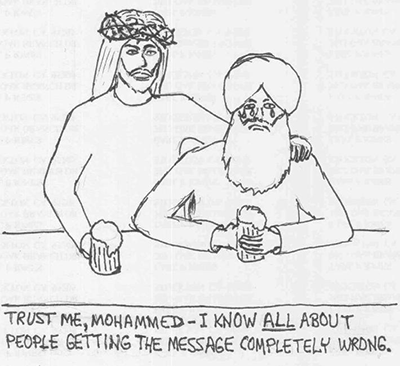
And in a spirit of conciliation here, unlinked, is a cartoon by California's Earl Jones that I hope will speak to Muslims, Christians and beyond.
UPDATE: If you are looking for "Trumpington Bible", please look at the three comments to this post by ernest green, patrick of bath and anonymous, and all will be revealed!
UPDATE 2: for an erudite discussion of the Trumpington Bible, click here to go to Bishop's Blog, the blog of Dr David Thomson, Bishop of Huntingdon.
This blog has had a lot of hits recently, which is never something to complain about, but I regret that many readers find themselves unsatisfied. Since yesterday, I've had a huge amount of people being led to my blog after googling the terms "Trumpington Bible". I've spoken about a General Election campaign in Trumpington, a village to the south-east of Cambridge, and list the Bible on the sidebar as one of my favourite books. But I've never mentioned the two words together and - strangely, given the number of hits googling the terms - Google can't find any document mentioning the two words side by side.
I wonder what's going on, what news is breaking? Can anybody enlighten us?
When I first heard of Eyjafjallajökull, I was of the same opinion as Richard Normington, in that it seemed more like a keyboard malfunction than anything else. But things started to look sinister when continent-sized areas in the course of the volcanic cloud, containing putative glass fragments that could cause high-flying jet engines to close down, were declared no-fly areas on the basis of computer models that are as diconnected from reality as the politicians who made decisions solely on their predictions, without reference to reality.
Thankfully, we can fly again. As it happens, I don't fly that often, but even in the circumference of the world I inhabit the no-fly orders had consequences, from a colleague who couldn't make it to work, through a fellow worshipper whose presence had been required to validate church accounts, to a friend who had been badly injured abroad and whose family was deprived even longer of her presence.
I thought that I'd like to dedicate this month's Top Ten to the theme of flying, because the cooling of Eyjafjallajökull's ire coincides with a crucial time in our country's history, when we decide which political parties will suppress the innate instinct to fly as high as we can, and which will not only nurture it but ensure that we lift up our peers in so doing.
10 - Would you like to fly?
The 5th Dimension, who were inducted into the Vocal Group Hall of Fame in 2002, are famous for taking the song Age of Aquarius from Hair to the top spot. My favourite song of theirs is Jimmy Webb's Up, Up and Away which, whenever I hear it, brings memories of childhood awakenings to the song being played on the ever-present radio.
9 - Wild Swan
In my opinion, Tony Clarkin - the bearded guitarist in the video - deserves to be hailed alongside Pete Townshend as arranger par excellence of his own lyrics with insight and sensitivity worthy of Berlioz. The video, telling the story of a son who simultaneously hero-worships his crusading father and feels the overarching need for his presence beside him, comes to mind because of a wild swan that's been making the news in Cambridge. Called Mr Asbo, he's been accused of harassing and even overturning boats on Cambridge's river Cam. A recent film aired on BBC 1's The One Show displayed the swan at his most aggressive - but the BBC has been accused - in a video that I recommend you watch - of goading the swan's mate into leaving her nest in order to see off a canoe that was ordered to go dangerously close to it for the sake of "car-crach TV". Given that Asbo, according to vet and Telegraph blogger Pete Wedderburn, has actually had his cygnets killed by "passers by", I'm not surprised he's mardy. The state hasn't killed my children, but arrogates to itself ever greater powers to brainwash them according to abusive agendas that seem to have no other purpose than to "rub the Right's nose in diversity". I feel as angry as Mr Asbo.
8 - Volare
In February 1991, I had an interview in London and arranged to stay with a friend in Brixton. The interview went well but later in the day came the news that 10 Downing Street had been attacked by an IRA mortar. Mobile phones being as rare as they were huge in those days, I found myself having to wait in one of the lines that trailed from every phone box. My friend explained, "I think everybody's phoning home to say they're ok". That evening, he. I and another friend went to his flat in the middle of Brixton High Street, kicking up the snow that had emptied the thoroughfare of cars. Since all of us had lived for some time in Italy, this is the song we sung:
7 - Flying machines in pieces
This is such a video of James Taylor's Fire and Rain, which is about, in part, the suicide of his fried Suzanne Schnerr, whom he'd met while both of them were hospitalised for addiction to heroin. "Flying Machine" was the name of his first band; but the line "flying machines in pieces on the ground" is about more than the breakup of a musical unit, but I wonder if. when Taylor sings "Susanne the plans they made put an end to you" (my italics) he's running from the couple's co-dependency. But. counterintuitively, I can see a better case for the use of prescribed pharmaceutical diamorphine (heroin) under strictly controlled than for legalisation of cannabis, because we cannot halt supply of heroin within our own borders. The thing is, cannabis-legalisation site UKCIA (offline at the moment) has made a case for legalisation of weed as a gateway to legalisation of just about every illegal drug. Having been a drugs-worker, I hope this never happens; I'd hate the misery I saw in the needle-exchange to become commonplace.
In 2002, Nick Clegg, now leader of the Liberal Democrats, wrote an article about a school trip to Germany:
A boy called Adrian started it. He shouted from the back of the coach, "we own your country, we won the war". Other boys tittered. One put a finger to his upper lip - the traditional British schoolyard designation for Hitler's moustache - threw his arm out in a Nazi salute, and goose-stepped down the bus aisle. Soon there was a cascade of sneering jokes, most delivered in 'Allo 'Allo German accents.
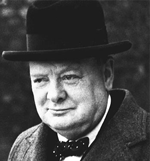
I was shocked by his ignorance. Britain was indeed on the winning side of WWII and was a major and heroic player, but to baldly assert that "Britain won the war" is as disingenuous as is baldly asserting that Germany lost it. We must never forget the key role that Britain played in defeating the Nazis (who were by no means synonymous with Germany), but it is salutary to remember that, on the eve of the Pearl Harbour attacks on December 7, 1941, Britain was losing, and Winston Churchill had authorised the distribution of bayonets with a poster campaign saying "at least you can take one with you".
As it happens, historian Colin Heaton concluded in Night Fighters that had Britain been conquered, America would have eventually had confront Hitler's contagious monomania - but Britain would have been a much changed place. Thank God that never happened.
Rector Pellegrina wasn't quite convinced when I confessed a guilty pleasure in heavy metal. I hope this video about the Battle of Britain - by an RAF composed of 10% Polish pilotry - will give her cause to reconsider.
5 - Flying Sorcery
Al Stewart merged his twin loves of flying and history for this song from his classic Year of the Cat album. An article on his website explains the context of the lyrics, from Amy Johnson, to the biplanes called Faith, Hope and Charity which defended the George Cross island of Malta and the double meaning of the Flying Circus. Enjoy this footage of him singing in Cambridge's namesake town in Massachussetts.
4 - Flying for me
John Denver was a founder of the "citizen in space" project and was even considered for the honour, but was pipped at the post by Christa McAuliffe, a secondary/high school teacher who had worked in Washington DC before moving to Concord in New Hampshire. Denver recollected that on the morning of January 28 1986 his adopted son Zac phoned him and told him to put the TV on, any station: there was the Challenger disaster, inspiring him to write:
She was flying for me She was flying for every one She was flying to see a brighter day for each and every one She gave us her light She gave us her spirit and all she can be She was flying for me
3 - Abide in His shadow for life
We had a discussion on hymns at our annual church meeting recently - you know the sort, that can quickly degenerate into an "old=Good" vs "New=Better" argument all too quickly. It was left to our venerable and classically-trained organist to point out that while traditions need maintaining, some new hymns are beautiful. One of these, I think, is Fr Michael Joncas' On Eagles' Wings, based on Psalm 91 and Isaiah 40:31. Given that John Smeaton, director of the Society for the Protection of Unborn Children, has been correcting misleading Government advice on sexual education and abortion, I think it's appropriate that this video of the song performed by Angela Birkhead-Flight is dedicated to "all babies who have died prematurely due to abortion, miscarriage or other means".
2 - Icarus
Although Kansas sung a song specifically about Icarus, another one - Carry On my Wayward son - seems to be a more meditative take on the sublime fall of the son of Daedalus, the craftsman who gave a ball of yarn to Ariadne so she could guide herself and Theseus out of the Minotaur's labyrinth, although there appear to be elements of Plato's allegory of the cave threaded through. Father and son, of course, strapped on wings of wax and feathers in order to escape the wrath of King Minos of Crete, but Icarus ignored a warning from Daedalus not to fly too high, and plunged into the sea when the heat melted the wax. It's often taken as a cautionary tale warning those who are over-ambitious of the danger of flying too high on constructions that should have been kept closer to earth. Just so, blogger Benedict White tells us that Gordon Brown was warned when Labour took power in 1997 that his proposed financial reforms would lead to a systemic banking failure. But he flew too high...
1 - The final attack
In the film The Dambusters we see a disconsolate crew looking back at the Möhne Dam on the Ruhr, feeling they have failed: then, suddenly, under the attacks that have been visited upon it, the dam's wall collapses and water floods out.
In reality, the crew pulling away was the fourth wave: a fifth Lancaster dropped its bouncing bomb upon the already-disintegrating wall to consolidate the damage.
This election has been a long, unpredictable slog. The Conservative party's first wave of attacks upon Gordon Brown, who is damming up the British people in a politically-correct prison where the silent majority of law-abiding people are punished the most, might be said to have happened shortly after his unelected accession to the Labour throne in June 2007, when he bottled out of an election he might have won when the David Cameron and George Osborne announced that only millionaires would pay inheritance tax. The second wave was a tsunami of activism, fuelled by both shoe-leather and blogs, cat-herding organised by the long-suffering Eric Pickles, the third a series of defeats inflicted upon the Prime Minister,Chancellor of the Exchequer and miscellaneous Ministers by David Cameron, George Osbourne and the Shadow front-bench team. The fourth is happening now, as candidates, activists and supporters work like Trojans to bring about change necessary for national survival.
The fifth wave is coming shortly, even as the dam walls crumble - illustrated by Gordon Brown's disastrous labelling of his own supporter, Gillian Duffy, as a "bigot" because she challenged the prevailing orthodoxy on immigration, imposed on people like her by rich ideologues who do not have to live in areas like hers. The fifth wave of attacks upon Labour's walls of infamy will come on May 6 and be inflicted by the voters, and I pray that the power-houses of willful negligence are swept away by the resulting inundation.
In my late teens, having decided to terminate my studies in Italy, I returned home by train and boat and found myself drawn to conversation with a variety of people, as if we souls in transit - in more ways than one - were drawn to each other.
I found myself reflecting on this last week while travelling by train to Spring Harvest, an annual Christian festival of lectures and worship based in two Butlins camps - Minehead and Skegness - of which I went to the latter. As it happened, I spent the first half of the week feeling a little sedated due to unexpected side-effects from my meds, but experienced yet again, in going and coming home, the discovery predicated by Dickens of David Copperfield that the stages on the journey contribute to its object.
Due to an urgent meeting at work I'd been unable to travel with the family. Not having the opportunity to partake of a radical fast in the tradition of Lough Derg in Ireland, one of Europe's most ancient sites of pilgrimage, as a blogger I'd decided to fast from the news. This left me looking out of the train windows and realising that I hadn't done so for many years, such had been the pull of having my head stuck in a book or paper when travelling.
Perhaps a meeting at work at which the probabililty of downsizing was discussed had taken my eye off the ball (as well as ensuring I couldn't travel with my family), or maybe I was a little too calmed by the smell of freshly-mown hay from the field opposite Ely station; anyway, when my train arrived simultaneously with another on the other side of the island-platform, I got on the wrong one and found myself heading back to Cambridge. An anticipated sulk was swept away by the discovery that I could get straight on another train to Ely, and I wasn't held back all that much.
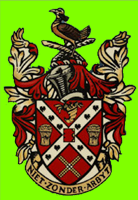
On the journey to from Ely to Grantham I watched the waterlogged Fen landscape roll past with a sense of wonder at how much dry land had been reclaimed by the heroic efforts of Sir Cornelius Vermuyden, whose travails are commemorated in the legend beneath South Cambridgeshire District Council's coat of arms - Niet Zonder Arbyt (nothing without work) - which is the only Dutch motto in British civic heraldry.
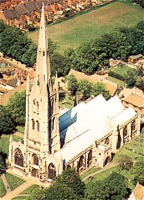
I got off at Grantham to join the Poacher Line to Skegness. The East Midlands town was instantly recognisable by the skyscraping spire of St Wulfram's Church, built to commemorate the 7th century Frankish missionary in the early 1300s, and a striking contrast to the many Norman church towers, arising from parish churches of villages mentioned in the Domesday Book, punctuating the horizon during the journey. As we drew out of the expanding East Midlands town I got a glimpse down St Peter's Hill before another new shopping centre went by. I pity people trying to get onto the property ladder here, as prices rocketed after the discovery that, at a pinch, one could commute to London from it.
Soon after Grantham the train stopped at Rauceby, once the site of a major psychiatric hospital that was closed in 1997, after which we were once again in the fens proper. I was delighted to catch a glimpse of two great crested grebe perform a mating dance before arriving at Boston, where a group of pilgrims known as the English Separatists left firstly for the Netherlands to try to practice their faith in freedom, before finally and famously fleeing the religiously-riven continent on the Mayflower to land on Plymouth Rock, and found a namesake of their hometown in Massachussetts in 1620.
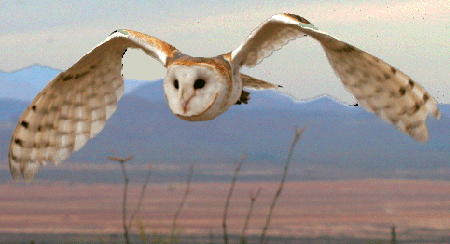
It was getting darker as the train drew towards Skegness - known as "skeggy" to its many admirers - and I saw a Barn Owl swoop low over a field in the gathering gloom. For somebody who's still a city-boy at heart, it felt like winning a prize.
On the bus from the station at Skeggy I felt a squirt of adrenaline at catching the sea just as I've always done since boyhood, although it was good to get into our caravan in the site opposite Butlins at last. Spring Harvest was good, although I was dismayed at the lack of any opportunity for traditional worship. I attended some good lectures, but will have to review my notes and do some digging before posting an appraisal.
Spring Harvest finishes on a Sunday which, if you don't have a car, is hellish, because only one train runs, but at least this year it had an extra carriage. We met one lovely woman from the north-east, who suggested that next year she might spend the Sunday night in a bed-and-breakfast and leave on the Monday - or else not come if she can't afford the extra expense. The situation regarding the trains is a crying shame, because Butlins is full-up during the two Spring Harvest week-long sessions, which help it provide such a vital economic and jobs boost to Skegness.
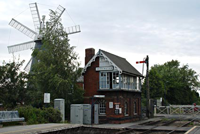
Passing Boston again, I saw a row of terraced houses that, like unbraced teeth, had grown organically, with the Unicorn Bar and Andy's Fish and Chip Shop, while St Botolph's unique spire (The Stump) played hide-and-seek in the background. Another station, Heckington, was beautifully trimmed and displayed a poster advertising a "Railway and Heritage Museum". beside the station was a huge windmill, and I wondered if this might be one of the originals deployed by Sir Cornelius to drain the Fens. Wainfleet was also beautifully kept, with flowers growing from cut-down beer barrels: an addendum to each railway sign identified it as "the home of Bateman's Brewery".
As good as it was to get back to the Draughty Old Fen, it was a beautiful, if crowded, journey. Despite large green spaces being built into the Fen drainage system by Vermuyden as an integral part, whether or not those places in the Fens I saw will be built on depends upon the result of the next election. I hope I get a chance to see them again soon.
At this vital time in the General Election timetable I've returned from holiday to find that my computer has chosen to go wobbly - I'm sure it was made by a sicialist - and I can't launch Photoshop. My daughter, who - like many children - is the resident computer expert is visiting Granny on the other side of the Fens; so, apart from pics I already have on Photobucket, I'll have to leave you to the tender mercy of Blogger's in-house image hosting program...
Suddenly blogging as the General Election approaches looks much more interesting...and dangerous. In the wake of a report by Iain Dale on a judgement against a Labour blogger sued regarding a comment he left on his site, barrister James Tumbridge (right) posts a gust blog on Ellie Seymour's site on What bloggers need to know about defamation. Watch out for the most thought-provoking conclusion to a blog that I've seen for a long time.
Nick Hillman, Conservative PPC for Cambridge, posts on the meeting to save the city's Strawberry Fair, which has been opposed this year by police on drug-taking and disorder grounds. As a historian he shares his views on the prospect of losing this festival, which began in the early 1970s.
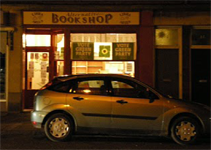
If a picture speaks a thousand words, then this snap taken by Phil Salway of the Coleridge Conservative team in Cambridge, of the Green Party's electoral campaign headquarters in the Alternative Bookshop on the city's Mill Road, speaks volumes about what the Green Party really thinks about the commitments it wants us to take on energy conservation. Be sure to click the link or the pic to go to Andrew Bower's (Cambridge City Council Conservative Candidate) to have a look and read an analysis.
Canadian newspaper website The Gazette looks at the Vatican reaction to Richard Dawkins' and Christopher Hitchins' histrionic plan to have the Pope arrested on his forthcoming State visit to Great Britain in September.
David Appletree of the Jewish Internet Defence Force reproduces a letter from Rabbi Dov Coder complaining to YouTube about hate material posted by David Dukes, notorious antisemite, racist and Ku Klux Klan member...
...while There is nothing British about the BNP looks at a racist group joined by BNP vice-chairman Simon Darby that's hosted by Facebook, a site Appletree warns about repeatedly.
And finally, here's a treat: Open Music Archive, "a collaborative project, initiated by artists Eileen Simpson & Ben White, to source, digitise and distribute out-of-copyright sound recordings. The archive is open for anyone to use and contribute to.".
I can't pinpoint when I became an Anglophile; my Mum and I would go to Blackpool frequently when I was young, but during the traditional "fair fortnight" holiday the Lancashire coastal resort would essentially turn Scottish in what remains of Scotland's support for the House of Lancaster during the Wars of the Roses, the price of cooperation having been Berwick (which soon returned to England).
I first lived in England after marrying Maxima, who comes from the other end of the Fens. After a spell we went and lived in Glasgow as my mother was very ill and, after her death, came to the Draughty Old Fen when offered a temprorary job here; when it became permanent the family moved down - it was a good move.
Although Maxima was regularly sent to coventry in Scotland because she's English, the situation has never been reciprocated here. I find the English warm-hearted, supportive and generous, despite their having laboured under an administration that for twelve years has tried its best to chip away at its best-loved traditions, the latest victim having been Pooh sticks, ostensibly cancelled for health and safety reasons.
I will always retain a level of affection for Scotland, but my guttering loyalty to the country was finally extinguished when the Lockerbie bomber, Abdelbaset Ali Mohmed Al Megrahi, was released for political reasons. Remembering TV pictures of the approaches to the Borders town choked with ambulances that would return empty, I felt sick.
Having deconstructed the notion of "race" to the level that, the Establishment says, your race is what you decide it is, one might make a good case for "English" to be a race, although in the diversity-ridden alternative universe presently prevalent in the corridors of power I suspect that one would be a non-starter. But if I called myself English, my accent would betray me the moment I opened my mouth. However, I definitely feel more British than Scottish, and will continue to do so should Scotland go its own way to make the United Kingdom into, says Alex Salmond of the Scottish National Party, the United Kingdoms.
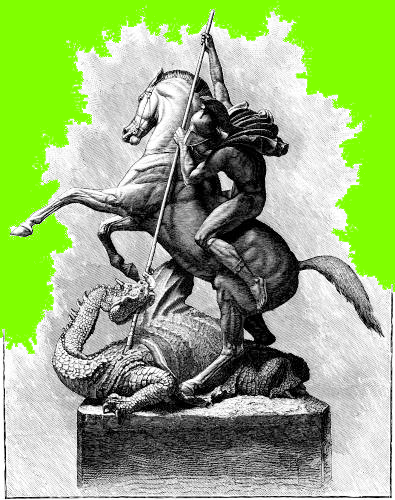
I love England. And so, in the month when we celebrate the Feast of St George, I would like to offer you a Top Ten about this wonderful, kind race: the English.
"In England, where my heart lies..."
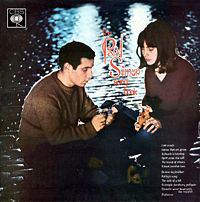
Paul Simon toured England in the early-mid 1960's, and famously spoke of his wish to voyage Homeward Bound, which he wrote while stranded at Widnes train station. "Home", of course, meant America, but it also referred to Kathy Kitty, the English girl he'd fallen in love with (hence the line "Kathy I'm lost" in America). Like many before and after he also fell in love with England - see the reference to "Cathedral bells" etc in To Emily, wherever I may find her. Here's the late Eva Cassidy singing the song live, including the classic reference to "England, where my heart lies".
Dirty Old Town
Lancashire songwriter Ewan MacColl, father of Kirsty, wrote Dirty Old Town about Salford, near Manchester, where he was born. Written in 1949, it was immediately adopted and made famous by the Dubliners, and subsequently by bands all over the English-speaking world in an example of the way English-speaking culture can go international in a heartbeat, although the socialist songwriter may not have liked to think of it that way. Luke Kelly, Dubliners founder member, sings it with his band here, displaying the English-Irish cross-pollination that has enriched both countries for centuries.
Zadok the priest
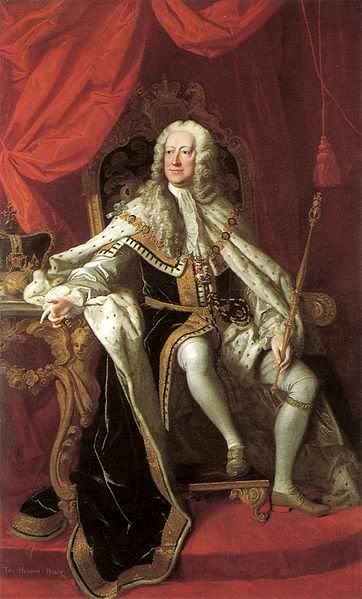
This great anthem was written by Handel for the coronation of George II in 1727. Since the union of he Crowns of England and Scotland was in 1603, and the Act of Unions uniting the two countries' Parliaments in 1707, one could say that this is a British anthem. But should Scotland secede from the Union, it will be up to them what heritage from the Union they take: I hope that Zadok the Priest - based on 1 Kings 1:38-40 - is retained by England, even if it should be duplicated elsewhere.
From Brixton to another place
Electric Avenue is a thoroughfare in Brixton linking two roads full of stalls, just like you might see in Eastenders. As cosmopolitan as it is, the video of Eddy Grant singing about the street suggests that its inhabitants and patrons might like, maybe just once in a while, something else.
Preotecting the old ways...
Yorkshire folk singer Kate Rusby covers the Kinks' 1968 hit The Village Green Preservation Society for a series called Jam and Jerusalem, which was modelled on the Womens' Institute, formed in 1915 to revitalise rural communities, but which now has a vital message for women and girls everywhere.
Burn them down?
The Jarrow Crusade was a heroic peregrination from Jarrow, near Newcastle, to the Houses of Parliament, to protest against the unemployment, poverty and even starvation that followed the collapse of the US stock exchange in 1929. In Alan Price's song about the event we hear him put himself into the song in a deconstructionist manner; but, more than that, while the majority of marchers wanted a job, we hear him echoing the cries of the vocal minority to "burn them down" - which prefigured the minority in the Miners' Strike of 1984-85 for whom a settlement of better pay and conditions would have been a disaster, because they wanted nothing but régime change.
Cricket
It was sad to see that Cambridge University's Emmanuel College was forced to desist from holding a May Ball in praise of the British Empire. Nobody's going to support the Amritsar Massacre, but Britain - and England - spread abroad a culture that continues to refer back to the English way of life where, as poet Rupert Brooke asked, stands the church clock at ten to three? A sign of this culture, visible in India, Pakistan, the West Indies, Australia and New Zealand, is cricket: and here is the tune that has accompanied English cricket on TV for decades - Soul Limbo by Booker T and the MGs.
Queen of Bollywood
Before the (modern) Suez Canal was opened in 1856, civil servants and administrators working in India would often marry Indian wives, because of the unworkability of having a wife "back home" due to the long passage time. Thus began a new race, called Anglo-Indians or Eurasians, who are still very popular in the Bollywood film industry. This is Asha Bhosle singing for the BBC - enjoy.
The seaside
The fascination for seaside resorts grew exponentially during Queen Victoria's reign, and still remains. As well as Blackpool, there were Skegness, Brighton, Torquay and many other resorts. After a fallow period, English seaside resorts are becoming more popular due to the recession, as it becomes relatively more expensive to go abroad. (Study the video below and you'll see Brian May.)
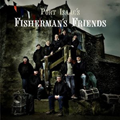
Fisherman's Friends
The Fisherman's friends, of Port Isaac in Cornwall, were founded to support the Royal National Lifeboat Institution in a part of Britain where it's all too easy for boats to go missing. If you like what you hear, please think of the men and women who give so much to bring us fish, and of the men and women who are ready to sacrifice everything when something goes wrong. Click on the flag to find out more about the RNLI, or on the image of the Fisherman's Friends' latest album on the left to find out more about the band.
We're looking forward to going to a Christian retreat at Skegness called Spring Harvest, which we attended last year.
We'd been worried about an impending strike by the RMT union that was going to stop as many as four trains in five from running.
The timing of transport strikes gives a fascinating insight into the anti-religious mentality of union leaders. On the feastday of Frederick Denison Maurice, founder of Christian Socialism, we see a train-strike planned to disrupt the travel plans of members of Judaeo-Christian faith traditions around the time of Easter and Passover, and BA cabin crew, among the highest-paid in the industry, planned their original strike to disrupt the Christmas/Hannukah period.
The original BA strike was cancelled because members of the Unite union who no longer worked as cabin crew voted for the stoppage, invalidating the ballot. Now, we hear that, thankfully, the Telegraph's David Millward reports that an injunction has stopped the railway strike because - among other innaccuracies - more votes were cast than there are members in the relevant parts of the National Union of Rail, Maritime and Transport Workers Union.
This blind reliance on manipulated statistics betrays a contempt for the truth that pervades the modern left. For example, British Prime Minister Gordon Brown has just been rapped by Sir Michael Scholar, chairman of the UK Statistics Authority, for stating in a podcast that immigration fell in 2009, using uncompareable statistics to back up his claims. But for me the most shocking abuse was by Equalities Minister Harriet Harman, who consistently claimed that the conviction rate for alleged rapists was 6%, discouraging women who had been violated from reporting the crime to the police, when the true conviction rate is over 60%.
Despite the best efforts of the RMT to disrupt travel at the time of major Christian and Jewish feasts, the trains will run next week and so (please God) we'll get to Spring Harvest, but I bet Frederick Denison Maurice is turning in his grave.
...Richard Normington, who was lucky enough to attend a comprehensive school in the days when some were allowed to speak Latin, reflects upon a phrase from Tacitus in the imminent General Election.
Two for the price of one from Fr TF's The Hermeneutic of Continuity: click here to read about Richard Dawkins' hate-material about the Pope, comparing Dawkins to another villain who wished to eradicate another religion; quite disturbing given that the Pope will soon visit as a head of state. Alternatively, click the pic to read his blog about an article by an atheist who warns his peers against "Catholic-bashing".
The Draughty Old Fen, Cambridgeshire, United Kingdom
An incurable old cyber-grumpy, I like good music, cats, bacon sarnies and anything to do with Terry Wogan. Raining on ideological parades is the cream in the coffee.
Latest 50 educational institutions accessing Tales From a Draughty Old Fen:
No endorsement by the institutions listed below of the website or any post is intended to be inferred. Click an organisation's link to go to its website.
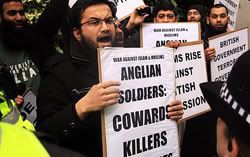 As the past year's gone by I've become increasingly aware of the English Defence League (EDL), which was founded in Luton in March 2009, when a group of Muslims protested at a homecoming for the Royal Anglian Regiment.
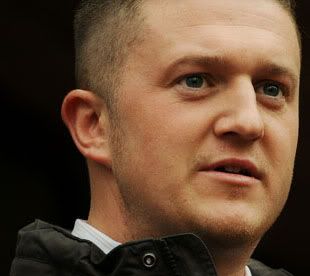 both outlived many obituaries and is about to celebrate its second anniversary in Luton. In the run-up to this, founder Tommy Robinson (left) was interviewed by Jeremy Paxman on last-night's Newsnight. Previously in the programme, Paxo appeared at his ease interviewing a Government minister, a Jordanian Prince and a USA acedemic, but seemed considerably discomfited when faced with an angry and determined working-class bloke.
 nterview, he would have learnt that Muslims reject the Judaeo-Christian convention that holy books, while inspired by God, are written by fallible human beings. Islamic belief is that Muhammed produced series of verses dictated by the Angel Gabriel, and the book of those verses is only the Koran if written in Arabic in the original words.





















 I can't pinpoint when I became an Anglophile; my Mum and I would go to Blackpool frequently when I was young, but during the traditional "fair fortnight" holiday the Lancashire coastal resort would essentially turn Scottish in what remains of Scotland's support for the House of Lancaster during the
 econstructed the notion of "race" to the level that, the Establishment says, your race is what you decide it is, one might make a good case for "English" to be a race, although in the diversity-ridden alternative universe presently prevalent in the corridors of power I suspect that one would be a non-starter. But if I called myself English, my accent would betray me the moment I opened my mouth. However, I definitely feel more British than Scottish, and will continue to do so should Scotland go its own way to make the United Kingdom into, says Alex Salmond of the Scottish National Party, the
 The Jarrow Crusade was a heroic peregrination from Jarrow, near Newcastle, to the Houses of Parliament, to protest against the unemployment, poverty and even starvation that followed the collapse of the US stock exchange in 1929. In Alan Price's song about the event we hear him put himself into the song in a deconstructionist manner; but, more than that, while the majority of marchers wanted a job, we hear him echoing the cries of the vocal minority to "burn them down" - which prefigured the minority in the Miners' Strike of 1984-85 for whom a settlement of better pay and conditions would have been a disaster, because they wanted nothing but régime change.