I don't know how to call this election, it's unlike any other I've seen.
Maxima and I voted in the Draughty Old Fen, then I cycled into Cambridge, because it's easier for me to get around there than in South Cambridgeshire.
There was a certain post-bellum atmosphere at the two polling stations where I was a teller. Conservative, Labour and Green talked as if we were at a flower show. We wondered if the lack of Liberal Democrats was due to their concentrating in marginal wards, or - my idea, rather naughty - their assuming that Cambridge was in the bag.
A surreal moment was when a Greek chap approached us and asked why he hadn't been asked for ID when voting in the local election. The three of us explained that in Britain, at the moment, we trusted people. I wonder if Greece's travails are, in part, due to people feeling frustrated that the government that demands their details for ID cards cannot balance a budget?
Two Labour tellers told me that they were unhappy about Iraq. I commiserated with them. With the Green teller, we reflected on what would be the best system for Parliament; I said that in my view, Parliament would be a whole lot more representative if more people voted. I was asked how I could make more people vote, and said I didn't know.
I'm sure that every activist is hoping for the result they want. Personally, I hope and pray that the Conservatives have a majority. Last night, I was about to pray for this when I realised what I was doing, and substituted: thy will be done.
This is an unusual Top Tips post in that it's not a blog of blogs, but rather two reccomendations.
Firstly, please vote. Staying at home affects the poll just as much as voting - for example, the last Government was elected not just by 36% of voters, but by 22% of everybody who was eligible to vote. By putting your cross in the square, you at least express your choice in favour of whichever party you want to; and, in this election that has no precendent...who knows?
Secondly, however, if you look at the sidebar on this blog you might work out what I'm going to say next: please vote Conservative. For David Cameron, George Osbourne, Theresa May and the rest of the Shadow Cabinet; but also for your local candidate. For example, Nick Hillman in Cambridge, an educator who has a better grasp of the needs and aspiration of ordinary folk than the ideologues opposing him; and in South Cambs, Jim Paice, who, as Shadow Minister for Agriculture and Rural Affairs, has represented the interests of the farmers, farm-workers and small businesses that Labour has neglected.
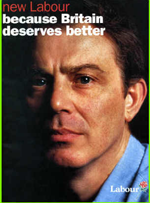
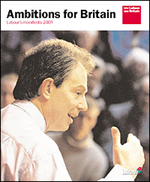
Put it this way. In 1997, Tony Blair was swept to power on the strength of five promises on class sizes, judicial reforms, NHS red tape, benefit reforms and restraint on government spending reforms that lie broken and neglected, trampled by the old socialist holy cows.
David Cameron is offering not a load of promises to be thrown away like a shopping list, but a contract with Britain which, if not adhered to, will end in the same way breaching a contract of employment would end for any of us.
Let's all think very carefully about the way in which we'll exercise our choice on Thursday May 6.
When I first heard of Eyjafjallajökull, I was of the same opinion as Richard Normington, in that it seemed more like a keyboard malfunction than anything else. But things started to look sinister when continent-sized areas in the course of the volcanic cloud, containing putative glass fragments that could cause high-flying jet engines to close down, were declared no-fly areas on the basis of computer models that are as diconnected from reality as the politicians who made decisions solely on their predictions, without reference to reality.
Thankfully, we can fly again. As it happens, I don't fly that often, but even in the circumference of the world I inhabit the no-fly orders had consequences, from a colleague who couldn't make it to work, through a fellow worshipper whose presence had been required to validate church accounts, to a friend who had been badly injured abroad and whose family was deprived even longer of her presence.
I thought that I'd like to dedicate this month's Top Ten to the theme of flying, because the cooling of Eyjafjallajökull's ire coincides with a crucial time in our country's history, when we decide which political parties will suppress the innate instinct to fly as high as we can, and which will not only nurture it but ensure that we lift up our peers in so doing.
10 - Would you like to fly?
The 5th Dimension, who were inducted into the Vocal Group Hall of Fame in 2002, are famous for taking the song Age of Aquarius from Hair to the top spot. My favourite song of theirs is Jimmy Webb's Up, Up and Away which, whenever I hear it, brings memories of childhood awakenings to the song being played on the ever-present radio.
9 - Wild Swan
In my opinion, Tony Clarkin - the bearded guitarist in the video - deserves to be hailed alongside Pete Townshend as arranger par excellence of his own lyrics with insight and sensitivity worthy of Berlioz. The video, telling the story of a son who simultaneously hero-worships his crusading father and feels the overarching need for his presence beside him, comes to mind because of a wild swan that's been making the news in Cambridge. Called Mr Asbo, he's been accused of harassing and even overturning boats on Cambridge's river Cam. A recent film aired on BBC 1's The One Show displayed the swan at his most aggressive - but the BBC has been accused - in a video that I recommend you watch - of goading the swan's mate into leaving her nest in order to see off a canoe that was ordered to go dangerously close to it for the sake of "car-crach TV". Given that Asbo, according to vet and Telegraph blogger Pete Wedderburn, has actually had his cygnets killed by "passers by", I'm not surprised he's mardy. The state hasn't killed my children, but arrogates to itself ever greater powers to brainwash them according to abusive agendas that seem to have no other purpose than to "rub the Right's nose in diversity". I feel as angry as Mr Asbo.
8 - Volare
In February 1991, I had an interview in London and arranged to stay with a friend in Brixton. The interview went well but later in the day came the news that 10 Downing Street had been attacked by an IRA mortar. Mobile phones being as rare as they were huge in those days, I found myself having to wait in one of the lines that trailed from every phone box. My friend explained, "I think everybody's phoning home to say they're ok". That evening, he. I and another friend went to his flat in the middle of Brixton High Street, kicking up the snow that had emptied the thoroughfare of cars. Since all of us had lived for some time in Italy, this is the song we sung:
7 - Flying machines in pieces
This is such a video of James Taylor's Fire and Rain, which is about, in part, the suicide of his fried Suzanne Schnerr, whom he'd met while both of them were hospitalised for addiction to heroin. "Flying Machine" was the name of his first band; but the line "flying machines in pieces on the ground" is about more than the breakup of a musical unit, but I wonder if. when Taylor sings "Susanne the plans they made put an end to you" (my italics) he's running from the couple's co-dependency. But. counterintuitively, I can see a better case for the use of prescribed pharmaceutical diamorphine (heroin) under strictly controlled than for legalisation of cannabis, because we cannot halt supply of heroin within our own borders. The thing is, cannabis-legalisation site UKCIA (offline at the moment) has made a case for legalisation of weed as a gateway to legalisation of just about every illegal drug. Having been a drugs-worker, I hope this never happens; I'd hate the misery I saw in the needle-exchange to become commonplace.
In 2002, Nick Clegg, now leader of the Liberal Democrats, wrote an article about a school trip to Germany:
A boy called Adrian started it. He shouted from the back of the coach, "we own your country, we won the war". Other boys tittered. One put a finger to his upper lip - the traditional British schoolyard designation for Hitler's moustache - threw his arm out in a Nazi salute, and goose-stepped down the bus aisle. Soon there was a cascade of sneering jokes, most delivered in 'Allo 'Allo German accents.
I was shocked by his ignorance. Britain was indeed on the winning side of WWII and was a major and heroic player, but to baldly assert that "Britain won the war" is as disingenuous as is baldly asserting that Germany lost it. We must never forget the key role that Britain played in defeating the Nazis (who were by no means synonymous with Germany), but it is salutary to remember that, on the eve of the Pearl Harbour attacks on December 7, 1941, Britain was losing, and Winston Churchill had authorised the distribution of bayonets with a poster campaign saying "at least you can take one with you".
As it happens, historian Colin Heaton concluded in Night Fighters that had Britain been conquered, America would have eventually had confront Hitler's contagious monomania - but Britain would have been a much changed place. Thank God that never happened.
Rector Pellegrina wasn't quite convinced when I confessed a guilty pleasure in heavy metal. I hope this video about the Battle of Britain - by an RAF composed of 10% Polish pilotry - will give her cause to reconsider.
5 - Flying Sorcery
Al Stewart merged his twin loves of flying and history for this song from his classic Year of the Cat album. An article on his website explains the context of the lyrics, from Amy Johnson, to the biplanes called Faith, Hope and Charity which defended the George Cross island of Malta and the double meaning of the Flying Circus. Enjoy this footage of him singing in Cambridge's namesake town in Massachussetts.
4 - Flying for me
John Denver was a founder of the "citizen in space" project and was even considered for the honour, but was pipped at the post by Christa McAuliffe, a secondary/high school teacher who had worked in Washington DC before moving to Concord in New Hampshire. Denver recollected that on the morning of January 28 1986 his adopted son Zac phoned him and told him to put the TV on, any station: there was the Challenger disaster, inspiring him to write:
She was flying for me She was flying for every one She was flying to see a brighter day for each and every one She gave us her light She gave us her spirit and all she can be She was flying for me
3 - Abide in His shadow for life
We had a discussion on hymns at our annual church meeting recently - you know the sort, that can quickly degenerate into an "old=Good" vs "New=Better" argument all too quickly. It was left to our venerable and classically-trained organist to point out that while traditions need maintaining, some new hymns are beautiful. One of these, I think, is Fr Michael Joncas' On Eagles' Wings, based on Psalm 91 and Isaiah 40:31. Given that John Smeaton, director of the Society for the Protection of Unborn Children, has been correcting misleading Government advice on sexual education and abortion, I think it's appropriate that this video of the song performed by Angela Birkhead-Flight is dedicated to "all babies who have died prematurely due to abortion, miscarriage or other means".
2 - Icarus
Although Kansas sung a song specifically about Icarus, another one - Carry On my Wayward son - seems to be a more meditative take on the sublime fall of the son of Daedalus, the craftsman who gave a ball of yarn to Ariadne so she could guide herself and Theseus out of the Minotaur's labyrinth, although there appear to be elements of Plato's allegory of the cave threaded through. Father and son, of course, strapped on wings of wax and feathers in order to escape the wrath of King Minos of Crete, but Icarus ignored a warning from Daedalus not to fly too high, and plunged into the sea when the heat melted the wax. It's often taken as a cautionary tale warning those who are over-ambitious of the danger of flying too high on constructions that should have been kept closer to earth. Just so, blogger Benedict White tells us that Gordon Brown was warned when Labour took power in 1997 that his proposed financial reforms would lead to a systemic banking failure. But he flew too high...
1 - The final attack
In the film The Dambusters we see a disconsolate crew looking back at the Möhne Dam on the Ruhr, feeling they have failed: then, suddenly, under the attacks that have been visited upon it, the dam's wall collapses and water floods out.
In reality, the crew pulling away was the fourth wave: a fifth Lancaster dropped its bouncing bomb upon the already-disintegrating wall to consolidate the damage.
This election has been a long, unpredictable slog. The Conservative party's first wave of attacks upon Gordon Brown, who is damming up the British people in a politically-correct prison where the silent majority of law-abiding people are punished the most, might be said to have happened shortly after his unelected accession to the Labour throne in June 2007, when he bottled out of an election he might have won when the David Cameron and George Osborne announced that only millionaires would pay inheritance tax. The second wave was a tsunami of activism, fuelled by both shoe-leather and blogs, cat-herding organised by the long-suffering Eric Pickles, the third a series of defeats inflicted upon the Prime Minister,Chancellor of the Exchequer and miscellaneous Ministers by David Cameron, George Osbourne and the Shadow front-bench team. The fourth is happening now, as candidates, activists and supporters work like Trojans to bring about change necessary for national survival.
The fifth wave is coming shortly, even as the dam walls crumble - illustrated by Gordon Brown's disastrous labelling of his own supporter, Gillian Duffy, as a "bigot" because she challenged the prevailing orthodoxy on immigration, imposed on people like her by rich ideologues who do not have to live in areas like hers. The fifth wave of attacks upon Labour's walls of infamy will come on May 6 and be inflicted by the voters, and I pray that the power-houses of willful negligence are swept away by the resulting inundation.
Old Holborn is an independent libertarian candidate for Cambridge who dresses as Guy Fawkes, including mask.
The reason I mention him is that he appears to have been the first person to have posted a picture of the city's Labour candidate Daniel Zeichner performing a revolting gesture during a debate at the Cambridge Union. Zeichner, giving his opinion of the Polish Law and Justice Party with which the Conservative Party in Europe is allied by giving a Nazi salute. This is yet another instance of the blogosphere leading the news agenda.
Zeichner referred to the incident at a hustings ran by the Stop the War Coalition at which Old Holborn was also present and - according to minutes - found it necessary to point out very early on, in a conversation that was heading in sinister directions, "80% of Conservative MPs and 40% of Labour MPs are signed up as friends of Israel. Only Israel has more Jewish MPs than Britain." The hustings was also attended by Julian Huppert of the Liberal Democrats, Martin Booth of Cambridge Socialists, Simon Sedgewick-Jell (representing Tony Juniper) of the Green Party and Daniel Zeichner. Conservative candidate Nicholas Hillman was speaking at another engagement.
Zeichner was lucky enough, given his recent history, to arrive right at the end of the section of questions on Israel and the Palestinian Authority. Soon after, though, the following bizarre exchange took place between Zeichner and a photographer standing at the front:
Photo: How does Daniel Zeichner square what he says with his membership of Labour Friends of Israel? DZ I’m not a member. Photo I have information that you are. DZ I’m not. Member of public to photographer: “sit down!” Photo I withdraw my previous comment, as my knowledge is not sufficient – what did you mean by “forces outside our control?” DZ My Dad was born in the 1930s in Vienna, and was driven out by the Nazis. I’m not Jewish, but my Dad lived in Vienna at a time when it was wise to get out. The photographer turned to the seats and said "I want to reassure everybody I’m not anti-Jewish", then he and the member of the public who’d told him to sit down accused each other of wanting to direct the meeting before the Chair regained control.
All of the minutes are very interesting - click to read them here. I'm sure that anybody who wants to take issue with them can refer to the video of the event filmed by Cambridge Socialists.
At this vital time in the General Election timetable I've returned from holiday to find that my computer has chosen to go wobbly - I'm sure it was made by a sicialist - and I can't launch Photoshop. My daughter, who - like many children - is the resident computer expert is visiting Granny on the other side of the Fens; so, apart from pics I already have on Photobucket, I'll have to leave you to the tender mercy of Blogger's in-house image hosting program...
Suddenly blogging as the General Election approaches looks much more interesting...and dangerous. In the wake of a report by Iain Dale on a judgement against a Labour blogger sued regarding a comment he left on his site, barrister James Tumbridge (right) posts a gust blog on Ellie Seymour's site on What bloggers need to know about defamation. Watch out for the most thought-provoking conclusion to a blog that I've seen for a long time.
Nick Hillman, Conservative PPC for Cambridge, posts on the meeting to save the city's Strawberry Fair, which has been opposed this year by police on drug-taking and disorder grounds. As a historian he shares his views on the prospect of losing this festival, which began in the early 1970s.
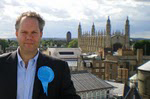
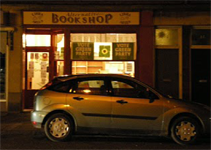
If a picture speaks a thousand words, then this snap taken by Phil Salway of the Coleridge Conservative team in Cambridge, of the Green Party's electoral campaign headquarters in the Alternative Bookshop on the city's Mill Road, speaks volumes about what the Green Party really thinks about the commitments it wants us to take on energy conservation. Be sure to click the link or the pic to go to Andrew Bower's (Cambridge City Council Conservative Candidate) to have a look and read an analysis.
Canadian newspaper website The Gazette looks at the Vatican reaction to Richard Dawkins' and Christopher Hitchins' histrionic plan to have the Pope arrested on his forthcoming State visit to Great Britain in September.
David Appletree of the Jewish Internet Defence Force reproduces a letter from Rabbi Dov Coder complaining to YouTube about hate material posted by David Dukes, notorious antisemite, racist and Ku Klux Klan member...
...while There is nothing British about the BNP looks at a racist group joined by BNP vice-chairman Simon Darby that's hosted by Facebook, a site Appletree warns about repeatedly.
And finally, here's a treat: Open Music Archive, "a collaborative project, initiated by artists Eileen Simpson & Ben White, to source, digitise and distribute out-of-copyright sound recordings. The archive is open for anyone to use and contribute to.".
I can understand the reasoning behind a certain amount of discretion about military matters in time of war - censorship imposed upon the newspapers by the wide-ranging 1914 Defence of the Realm Act was intended to maintain the morale of families, many of whose members would vote in an election that eventually came in 1918.
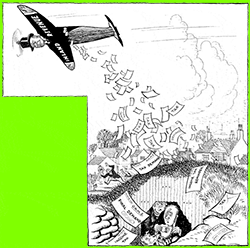
But nevertheless war journalism, from Winston Churchill's commission as a war reporter during the Boer war, through Leslie Illingworth's satirical cartoons for the Daily Mail to the embedding of journalists in military units today (which is going to be banned), has been essential in dispelling rumours about what might really be happening at the front.
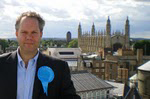
But what's really happening at the front may be, for Prime Minister Gordon Brown, the problem. For example, Snatch Land Rovers (left), nicknamed "mobile coffins" due to their vulnerability to mines, are to be phased out in favour of more robust Ridgbacks. But, after Gordon Brown's markedly uncensored visit to troops in Afghanistan on March 5 - after giving evidence to the Chilcot Inquiry on Britain's involvement in the Iraq War about his commitment to funding the Armed Forces that was immediately rebutted by senior military chiefs - Shadow Defence Secretary Liam Fox claimed that the procurement of 200 Ridgbacks (right) was at odds with the tender for 400 originally put out.
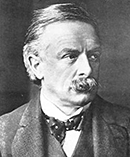
If this is the reason for the media blackout, it is a myopic repetition of history by those who appear to have forgotten it. When David Lloyd George took over as Prime Minister from Herbert Asquith after the latter's resignation in 1916, he had no choice but to relax reporting restrictions upon newspapers somewhat, because the tales of soldiers returning from the fighting were at odds with tales of victory planted by official sources.
Brown might again ban forces personnel in Afghanistan from using social media, as happened in February last year only to have the ban lifted that August, but is he going to cancel leave and Medivac during the period of "purdah" - a domestic political protocol intended to make government department communications equitable to all political parties once an election has been declared? If he wishes to put us all into a position where we don't talk about the war, he's on a hiding to nothing: if returning soldiers forced Lloyd George to loosen his government's stranglehold on the press, what will be the effect of full-on deployment of social media during [the] British election?
One thing's clear to me: if the Government thinks it can stage-manage information on a war that half the world's reporting on, we'd better keep an eye on the ballot boxes on election night.
Vicar and blogger David Keen gives lots of reasons to give up blogging for Lent. I'm not contemplating a Lenten fast from cyberspace, but with more things competing with my time something's got to give, and after the shouting's done over here that might be the blogging. I found reason (4) very compelling, but the killer quote was from Reginald Foster - that we should fast from what we sense is becoming a compulsion.
Revd Bosco Peters of the Liturgy blog wrote a post on Shrove Tuesday and its relation to Mardi gras and, as Ash Wednesday approaches, here's his reflection on the day's Collect and observing Lent.
I've read Rabbi Shai Specht's one-line explanation of the month of Adar as "the Jewish Mardi Gras" - here Risa from Isramom wishes everybody a Happy Adar!
Labour MP David Wright has got himself into a bit of a pickle. A tweet in his name referred to his political opponents as "scum-sucking pigs" ("if you put lipstick on scum-sucking pigs they're still scum-sucking pigs" - an obviously irresistable dig at Sarah Palin). If he'd put his hand up and said it was a stupid mistake we'd all have moved onto the next gaffe, but instead he seemed simultaneously to defend the remark as "legitimate comment" and claim that his twitter account had been hacked, turning the issue into one of ministerial propriety. Here, TotalPolitics director Iain Dale reproduces a letter from Eric Pickles, Chairman of the Conservative Party, asking him to answer several questions on the affair.
We've just had Valentine's Day, and this is the most poignant image I could find posted on that day: a US military nurse whispering into the ear of an unconscious Canadian soldier as they fly him to a hospital base in Afghanistan. May God be with all the Coalition troops as they roll out Operation Moshtaraq.
Seth Godin explains how companies racking up as many followers as possible on Facebook etc are on a hiding to nothing compared with viral growth of an idea or product starting from a very small base.
The name of Elie Wiesel has been sorely misused in the climate debate, therefore I recommend you help restore the balance by following David Appletree of the Jewish Internet Defense Force's advise on his new project, the Advisory Board of the Algemeiner.
Fr Tim of the Hermeneutic of Continuity writes on the Pope's encouragement of priests to use the opportunities afforded by new media, and includes a YouTub video entitled "Why am I a Catholic"?
Richard Normington worries about where the people who thought up the name for the UK's military satellite system got their inspiration from.
"We're supposed to talk to meat?". Sci-fi author Terry Bisson posts the correct version of a legendary short story of his that has been orbiting around cyberspace.
I had to attend a course on databases yesterday - sometimes my life just gets too exciting! After cycling into town I got onto the bus, asking the Eastern European driver where exactly the stop in the Flat Old Fen was. I know I've got a Scottish accent, but being married to an Englishwoman for nearly two decades - much of that time spent living in the Fens - has blunted it somewhat. Nevertheless, I had to sit down as wise as when I'd got on, which at that time in the morning isn't very wise at all. I wasn't as unlucky as the next chap, though - like the driver, English was his second language and he was gesticulating at a map trying to ask something. The two men found communication impossible, and the would-be voyager alighted.
What a change from the old days, I thought. We used to have an inspector on each bus who was, in Scotland, known as a clippie and - usually a woman - spoke the lingua franca, enjoining people to "come oan - get aff!" when the value of their ticket had expired and if asked, for example, if a bus went to the cemetery would reply "naw, it's afraid o' the ghosts!" You can make up your own replies for all sorts of situations, but the clippies kept it clean.
Still, I shouldn't complain in the light of what's happened in the Cambridgeshire town of Manea where a Nigerian-born German doctor who barely spoke English overestimated the amount of diamorphine (known as heroin on the streets) to give to 70-year-old David Gray by a factor of ten, killing him. The Cambridge News reveals that the company who employed Daniel Ubani as a locum had circulated an alert on the drug after two patients had placed in respiratory arrest after being prescribed overdoses - thank Heaven, they were resuscitated.
Life and death featured in the Telegraph, with Stephen Adams reporting on Martin Amis' remarks that we need euthanasia booths on street corners to cope with the "silver tsunami". It's ironic to see the man who accused US novelist Jacop Epstein of plagiarism himself stealing the idea of suicide booths first floated by sci-fi writer Robert Sheckley in his 1959 Immortality, Inc.; one wonders at what point the author, now 60, will see himself as part of the silver tsunami? Plus ça change...
I got to the Flat Old Fen, where the course went well, delivered by a team representing various Home Office initiatives who knew what they were talking about. But I wonder if one of them said more than he'd meant to when he said everything was "expected to change in two months when we get a change of government"?
Having gotten back to Cambridge in time for the evening rush-hour, I found myself sometimes going faster than the cars as I cycled up the city's Mill Road. So it was initially surprising to get back to work and read Chris Havergal's article for the Cambridge News speaking of a 20mph speed-limit for the thoroughfare, as I don't think any of the cars I passed managed to get up to that speed. I guess there's a problem with speeding as night draws on, but that's down to problems getting drivers to respect the present 30mph limit. There have been threats of 20mph zones for some time, but they were meaningless until the start of the year when speed cameras that can detect velocities slower than 30mph came onto the market.
I had one stop before getting home, meeting Constanter to discuss an article he's thinking of writing for the mag over a pint at the Tintinnabula. After warming ourselves at the fire we looked out of the window at St Gallicus' tower illuminated by spotlights: symbol of the centuries-long process - whereby everything flows but slowly and organically - that builds a village like the Draughty Old Fen, it's the sort of sight that makes a long day worth it.
We Brits are fond of our pets, but have mixed feelings about using them to characterise people. For example, we might say that a sprinter goes like a whippet, or apiculturists might even refer to Muhammad Ali's stinging like a bee. But to call somebody catty is generally seen as a semi-veiled insult (unless you're into camping it up, in which case it might be a compliment).
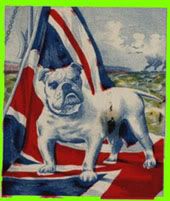
But there are limits in civilised society, even for the master of bon môts Winston Churchill, who, after being accused of drunkenness by a lady, replied: "Madam, you are ugly: tomorrow I will be sober". Another apocryphal story has him confronted by a female politician who called him a "toothless bulldog on a tattered union jack"; he replied that, as much as he disagreed with the lady, he would hesitate to call her a dog.
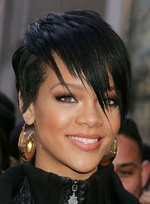
Yesterday, the Telegraph's Tom Whitehead reported a Government press release stating the principle that "it is wrong to hit girls" would be included in schoolchildren's education as part of an initiative to combat violence against women. Very laudable, of course - witness the high-profile case in the US this year when singer Rihanna, used as a punchball by her boyfriend Chris Brown, briefly returned to him. But given that this comes in Labour's twelfth year of power, I wondered how women were faring against man's other best friend (or at least his equal in terms of dependence and intelligence).
Vulpes vulpes, the red fox, is a member of the Canidae family and is therefore a cousin of Rover, Rex and even Afterglow The Big Tease. Two years after Labour took power, then Home Secretary Jack Straw instigated a six month governmental enquiry into foxhunting, and after great deliberation and an Amazon of documents, hunting with hounds (ie traditional foxhunting) was made illegal in England and Wales in 2004.
It was, of course, a political move: Labour had identified its traditional base as subsisting in cities, and didn't see itself losing many votes in pandering to its those traditional prejudices of its members involving rural matters.
Just so, the 1997 manifesto, while stating that "Labour has taken the lead in proposing action to tackle the problems of stalking and domestic violence" (17 words), also promised that "We will ensure greater protection for wildlife. We have advocated new measures to promote animal welfare, including a free vote in Parliament on whether hunting with hounds should be banned by legislation" (32 words, before a bizarre paragraph on angling).
The 2001 Labour Party manifesto has nothing to say on domestic violence, but continues to rattle the class-war sabre:
The House of Commons elected in 1997 made clear its wish to ban fox-hunting. The House of Lords took a different view (and reform has been blocked). Such issues are rightly a matter for a free vote and we will give the new House of Commons an early opportunity to express its view. We will then enable Parliament to reach a conclusion on this issue. If the issue continues to be blocked we will look at how the disagreement can be resolved. We have no intention whatsoever of placing restrictions on the sports of angling and shooting.
In 2005, the pendulum started to swing back, with nothing on hunting, but the promise of "Expanding specialist courts to deal with domestic violence and specialist advocates to support the victims of such crime and of other serious crimes like murder and rape" (27 words).
But 27 words do not a safer country for women make. At a recent course I attended on domestic violence, a shocked hush fell over the room a the trainer, a powerful, passionate and energetic speaker, informed us that in Britain there were 300-odd womens' shelters, and over 3000 homes for stray or rescued dogs.
While the question of whether it's better for a fox to be killed by dogs or by snare is a vexed issue by itself, my blood runs cold at the thought of Labour politicians using the issue of violence against women as a vote-gathering stunt, and doing so by the classical Platonic top-down method; by casting every boy as a wife-beater. There are already educational means in place, and all those MPs, including Labour ones, who quietly work to keep them in place and improve upon them must be praised. For example, when I returned from the domestic violence course, the first thing I said to Minora was that if she meets a boy whose last girlfriend does not have a name but is constantly referred to as "bitch" and such epithets, she should walk. "Da-ad!" she replied. "That's what the teachers tell us!"
A friend told me recently she'd had her Chinese Horoscope done, resulting in her being a Dog of some composition. I refrained from commenting, but wondered if she should thank her lucky stars.
This week's Question Time on BBC 1, starring Nick Griffin of the white-supremacist British National Party, went off with all the brilliance of a damp squib.
Professor Calculus and I usually don't watch TV (except for the odd snooker or cricket game) when we meet to put the world to rights over a glass of wine, but we watched QT to see the newly-elected MEP for Yorkshire and Humberside crumbling in the face of real politicians, only to see what Cranmer called "the Nick Griffin show". Griffin certainly faced some hard questions, but smirked through them - and at one point was challenged by host Jonathan Dimbleby for smiling when talking about Holocaust denial - and, in the words of James Bethell, founder of the blog There's Nothing British about the BNP, "retired wounded but on his feet, fit to fight another day".
The BNP leader is never on better form than when playing the victim for the mainstream media - for example, when protestors massed to raise awareness that Griffin was speaking at the Oxford Union with fellow Holocaust denier David Irving, they did their job so well that Griffin was able to grandstand on the national News about "people coming hundreds of miles" to be offended by him.
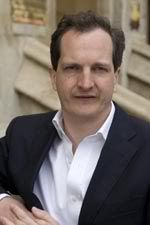
Having said that, the killer comment of the programme came from a young chap wearing a Kippah (skullcap worn by Jews), who stated, in response to Griffin's claim that Winston Churchill would have been a member of the BNP:
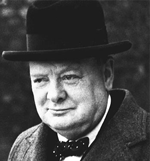
Sir Winston Churchill put everything on the line so that my ancestors wouldn't get slaughtered in the concentration camps. But here sits a man who says that is a myth just like a flat world was a myth.
Griffin stated the law prevented him from disclosing why he had "changed his mind" on the Holocaust, at which Jack Straw, as Justice Secretary, said he wasn't aware of any law which would punish him from doing so.
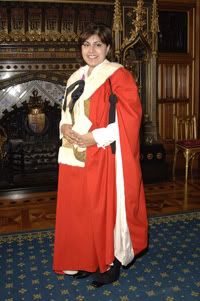
For me, the best bit was Baroness Sayeeda Warsi stating that Britain needed a cap on numbers of immigrants coming into Great Britain, which echoed a Telegraph article written by Labour's Frank Field and the Conservatives' Nicholas Soames, co-founders of the Cross-Party Group on Balanced Migration which states in its title that Cowardice on immigration has allowed the BNP to Flourish and adds that the asylum system, designed to identify individuals in genuine danger of persecution or death should they return to their own countries, has "collapsed". The story defining its collapse has to be that of a Bolivian man whose appeal against deportation was upheld by Judge James Devittie because he'd bought an English cat. In a startling exclusive, the Telegraph's Tom Whitehead reports that Andrew Neather, who had been an advisor to Jack Straw, former Home Secretary David Blunkett and former Prime Minister Tony Blair claims that mass immigration - the Bête Noire of the BNP - was "partly due to a politically motivated attempt by ministers to radically change the country and rub the Right's nose in diversity". (Baroness Warsi's comments on immigration start at 2:38 in the video below.)
True to form, Griffin is again playing to the gallery with a complaint that he faced a "lynch-mob"in the Question Time audience, and that the programme's format had been changed so that it focussed almost entirely on him.
The BNP has a Hitleresque tendency to build a delusional system around a truth, and this is no different. Griffin has a valid complaint here, and Professor Calculus and I agreed that we would've liked to see him drawn out on issues like, for example, Lord Mandelson's manipulating the Post Office strike to soften up the organisation for privatisation, and British banks' reactions to the global financial crisis.
The other "lynch mob" that protested outside BBC Television Centre in London showed socialism's deep-seated ambivalence about fascism, in that they were protesting against a man elected to the European Parliament almost totally by Labour voters disaffected by the Government's ideological method of government that has turned their country into a place they no longer recognised. I wonder if any of them were related to the trade unionists who took to the streets in support of Enoch Powell's 1968 address to Conservative Party workers at Birmingham's Midland Hotel (mis-named the "Rivers of Blood speech"), in which he anticipated Labour's silence on immigration:
Above all, people are disposed to mistake predicting troubles for causing troubles and even for desiring troubles: "If only," they love to think, "if only people wouldn't talk about it, it probably wouldn't happen."
Perhaps this habit goes back to the primitive belief that the word and the thing, the name and the object, are identical.
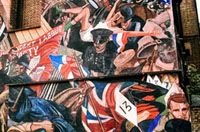
Or, indeed, if they were descended from the freedom-fighters who fought at the Battle of Cable Street in London's East End against black-shirted fascists led by Oswald Moseley, the Independent Labour Party MP who, disappointed by his party's response to unemployment, left in 1930 to form the New Party. Gordon Brown, in Maxton, his biography of the hard-left Scottish MP, records that when Moseley left James Maxton said that "he ought not to be condemned but thanked [because] his actions showed a deeper sense of responsibility about the unemployed and might lead to a 'new direction' in government policy". And just as the Nazis' response to Germany's economic woes was nationalisation on a massive scale, the BNP's website (which describes the three main parties as "liars, buggers and thieves") proposes nationalisation as a panacea for Britain's. One gets a sense of the political spectrum not as a line but a circle, where "hard-left" and "far-right" occupy the same space.
So whither the BNP? I hope that former Labour voters in north-west England who sent Nick Griffin and Andrew Bron to the European Parliament will withdraw from the abyss come the General Election and vote for the non-fascist party of their choice. But what worries me is the party's attempts to woo the forces, some of whose members, under-resourced and viewed with suspicion by the Government, may seek solace in their empty promises. I finish with a video (sorry, Pam!) from the Nothing British Operation Stolen Valour. Please click the link and visit the site to view the fightback against fascism in Great Britain.
The episode of Question Time discussed can be accessed on the BBC's i-player on the Question Time Site. If you're unable to access it, it's available in parts on YouTube - click here for part 1.
Being manic-depressive, I find myself reacting more strongly than I had anticipated to speculation in the media, informed almost totally by that in the blogosphere (as Platform 10's David Skelton observes), that Gordon Brown may be taking antidepressants.
The rumour has its genesis in a blog by John Ward, in a piece called "Establishment 'colluding in plight of sick man Brown'". It's gone through various columnists like John Barr's best beef, and culminated in Andrew Marr asking the Prime Minister, on his Sunday morning political show, if he was one of the many British people who "use prescription painkillers and pills to get through":
Ward states that "Before the arrival of Prozac derivatives, [MAOIs] were the first line of attack when dealing with severely depressed patients". I started training as a psychiatric nurse in Scotland shortly before Prozac was introduced, and MAOIs were very much a last resort then as now, only to be used when tricyclic antidepressants such as amittryptilene or lofepramine or, if necessary, antipsychotic medication had failed. Also, I can't find any mention in the prescriber's "bible", the British National Formulary, of MAOIs being used to treat Obsessive Compulsive Disorder, another of Ward's claims.
MAOI stands for monoamine oxidase inhibitor. Monoamine oxidase is an enzyme found in various parts of the body that breaks down tyramine, a compound derived form an amino acid that acts to release neurotransmitters such as dopamine, adrenaline and noradrenaline ( a longer-acting version of adrenaline). So if production of monoamine oxidase is damped down, tyramine can accumulate in the body, facilitating the production of the above neurotransmitters, which somatimes can help somebody whose depression has been otherwise treatment-resistant to work towards recovery.
The reason MAOIs are prescribed with caution is that when somebody takes them along with food high in tyramine (remembering that there already high tyramine levels in the body) a hypertensive (high-blood-pressure) crisis can arise, which could lead to burst blood vessels - for example in the brain, causing a stroke. So foods high in tyramine must be avoided - the mnemonic we learnt was "nothing pickled, processed, fermented, salted or spoiled", although a whole host of foods must be avoided, not all of which fall easily under any mnemonic. This is what started the rumour - when a "senior civil servant" mentioned "the latest nonsense - a huge list of things [Brown] can't eat or drink because of the drugs he's on...most importantly, cheese and Chianti". Those are certainly foods I would avoid if I were on MAOIs, but also if I had, say, severe heartburn.
As Marr observed, Americans know all about their President's medical history - and, I have to say, when applying for a job I mention my illness in the main part of the form and not just the equal opportunities bit (so it's frustrating when I mention it and interview panels are surprised, indicating they haven't read past the front page of the form). But we don't have such a system here, and importing it would set the law of unintended consequences in motion just as surely as exporting the NHS to the US.
Revd Chad Varah, founder of the Samaritans, wrote in Samaritans in the 80s that if depression approaching the point of suicidality were a bar to political power, the House of Commons' front benches would be somewhat emptier. Marr himself wrote of beleaguered Conservative Prime Minister Anthony Eden - of Suez Crisis fame - in 2007 (the year before Blair finally gave way to Brown): "By the time he finally got the top job halfway through the decade, he was physically depleted...like a racehorse who had been trained to win the Derby in 1938 but was not let out of the starting stalls until 1955".
Whether or not Brown is on antidepressants, what he is experiencing, sometimes at the hands of those around him, may be a consequence of the medicalisation of problems that do not fall within the sphere of medicine. Sometimes we all, as flawed human beings, experience problems that, as part of our personalities and not of a pathological process, take us to places we did no intend to go. Take Lord Peter Mandelson - he gave a rousing and even excellent speech at the Labour Party Conference yesterday, but that's the point: when its all about Peter, Peter presents no problems. But when he feels the attention draining away, he acts to bring the spotlight back upon himself, and seems not to care whether he is cast in a positive or negative light.
Is Gordon Brown fit to run the country? In my opinion, no. Not because of what may or may not be happening with his brain chemistry, but because of the wholesale dismal failure across the Labour Party in 12 years of misgovernment. That's what I'll be highlighting in the time before we eventually get a general election, not a poisoned chalice of an agenda which could lead our opponents to rumble about discrimination on the grounds of disability should the antidepressant angle play a substantial part in a Conservative victory.
The Draughty Old Fen, Cambridgeshire, United Kingdom
An incurable old cyber-grumpy, I like good music, cats, bacon sarnies and anything to do with Terry Wogan. Raining on ideological parades is the cream in the coffee.
Latest 50 educational institutions accessing Tales From a Draughty Old Fen:
No endorsement by the institutions listed below of the website or any post is intended to be inferred. Click an organisation's link to go to its website.













 But what's really happening at the front may be, for Prime Minister Gordon Brown, the problem. For example, Snatch Land Rovers (left), nicknamed "mobile coffins" due to their vulnerability to mines, are to be phased out in favour of more robust Ridgbacks. But, after Gordon Brown's markedly uncensored visit to troops in Afghanistan on March 5 - after giving evidence to the Chilcot Inquiry on Britain's involvement in the Iraq War about his commitment
 to funding the Armed Forces that was










 I had one stop before getting home, meeting Constanter to discuss an article he's thinking of writing for the mag over a pint at the Tintinnabula. After warming ourselves at the fire we looked out of the window at St Gallicus' tower illuminated by spotlights: symbol of the centuries-long process - whereby everything flows but slowly and organically - that builds a village like the Draughty Old Fen, it's the sort of sight that makes a long day worth it.

 ve upon them must be praised. For example, when I returned from the domestic violence course, the first thing I said to Minora was that if she meets a boy whose last girlfriend does not have a name but is constantly referred to as "bitch" and such epithets, she should walk. "Da-ad!" she replied. "That's what the teachers tell us!"
 Sir Winston Churchill put everything on the line so that my ancestors wouldn't get slaughtered in the concentration camps. But here sits a man who says that is a myth just like a flat world was a myth.
 Or, indeed, if they were descended from the freedom-fighters who fought at the Battle of Cable Street in London's East End against black-shirted fascists led by Oswald Moseley, the Independent Labour Party MP who, disappointed by his party's response to unemployment, left in 1930 to form the New Party. Gordon Brown, in Maxton, his biography of the hard-left Scottish MP, records that when Moseley left James Maxton said that "
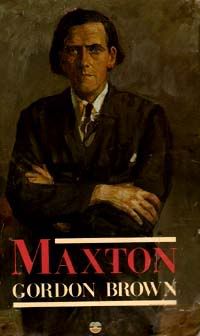 howed a deeper sense of responsibility about the unemployed and might lead to a 'new direction' in government policy
 Ward states that "

 - the mnemonic we learnt was "
 fway through the decade, he was physically depleted...like a racehorse who had been trained to win the Derby in 1938 but was not let out of the starting stalls until 1955