Showing posts with label richard dawkins. Show all posts

Tuesday, March 30, 2010

top tips for tuesday

top tips for tuesday
click to read a meditation on the Seven Last Words

The Burke's Corner blogger, in his theological blog More than a Via Media, gives us his reflections on Jesus' last words from the Cross.
click to read more on Nick Hillman's blog

Nick Hillman, PPC (Prospective Parliamentary Candidate) for Cambridge, writes about a night spent with Cambridge Street Pastors.

And while we read about the various pronunciations of Ceotibus in Fr Hunwicke's Liturgical Notes...
click to read more on Tacitus and the coming election on Richard Normington's blog

...Richard Normington, who was lucky enough to attend a comprehensive school in the days when some were allowed to speak Latin, reflects upon a phrase from Tacitus in the imminent General Election.
click to read more at Fr TF's blog

Two for the price of one from Fr TF's The Hermeneutic of Continuity: click here to read about Richard Dawkins' hate-material about the Pope, comparing Dawkins to another villain who wished to eradicate another religion; quite disturbing given that the Pope will soon visit as a head of state. Alternatively, click the pic to read his blog about an article by an atheist who warns his peers against "Catholic-bashing".


Former British Ambassador Charles Crawford wonders if fans really want to feel like they're entering a boardroom when they go to watch the football...
click to read more about the proposal

While finally, on a slightly less urban note: a proposal for a city-farm in the south of Cambridge, from the Coleridge Conservative Action Team blog.

Tuesday, July 21, 2009

crocs, giraffes and the vagrant nerve: Inside Nature's Giants

Joy Reidenberg: click to view her webpage at Mount Sinai School of Medicine
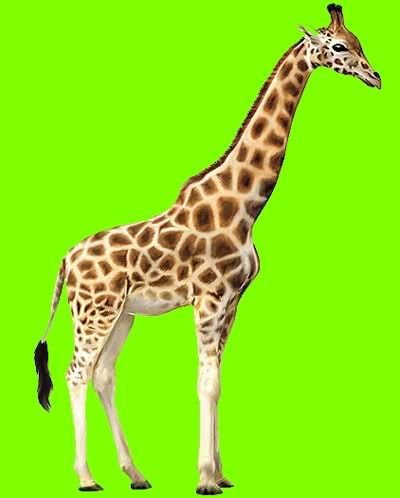
Last night, I saw history made. In the 19th century, the entire length of a giraffe's vagus nerve was dissected out for the first time. Now, for the first time on film, the entire length of the giraffe's recurrent laryngeal nerve (which goes down the length of the neck and part of which joines the vagus nerve, which then goes right on down to the abdomen before returning) has been dissected out - by Dr Joy Reidenberg, as part of the last episode of Inside Nature's Giants. In each of four instalments we saw, in the words of Professor Alun Williams of the Royal Veterinary College, "the post mortem of large wild animals – an opportunity that doesn’t very often happen even in the life of a vet."Inside Nature's Giants: click to go to the Channel 4 Website of the series

Vagus is Latin for "wandering", and in humans alone it's easy to see why the nerve is so named, as it meanders more than Leopold Bloom - originating in the brain, passing into the neck and going past the voicebox, thence through the chest to the abdomen. In the giraffe, the thing's more redolent of Odysseus, going down the entire length of the neck before returning.

A comparative anatomist and Associate Professor at the Mount Sinai School of Medicine, from where she received the Outstanding Doctoral Dissertation Award among many others (as well as, for example, from the American Association of Anatomists and Society for Marine Mammalogy), she reacted with dignity when Richard Dawkins, behind her, counselled her to be careful not to cut the nerve at a crucial point in its dissection.

Preofessor Dawkins has appeared in short slots throughout the series, although I was surprised that he only popped up twice in last week's programme, during which a crocodile which had died unexpectedly was dissected.

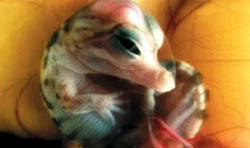
crocodile embryo: click to go to Richard Dawkins' article on croc evolution on the Inside Nature's Giants siteThe reason I was surprised at this was because, to explain why the crocodile has two aortas the team took us through its embryological development. Other embryos lose one or other aortic arches during development, but crocodiles retain both so that when necessary the "extra" one can carry deoxygenated blood, which has a lower pH, to the stomach to help manufacture the amounts of acid necessary to begin digestion of large chunks of meat.

I would've expected more input on this from the author of books like The Selfish Gene and The Extended Phenotype, because for somebody who believes that bodies are vehicles for genes travelling through the ages like a great river (the concept behind 1995's River out of Eden), the game's just about over by the time of birth, for vertebrates at least. All that's then necessary is surviving long enough for the purposes of "finding at least one heterosexual partner and successfully copulating" (in Dawkins' words in the aforementioned work); and for humans, he adds in The God Delusion, sticking together until the offspring reach adolescence.

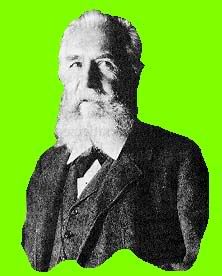
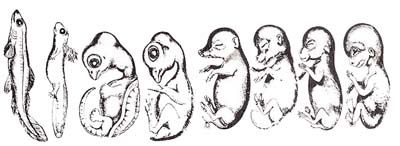
Ernst Haeckel: click to read a biographyThere's a lot of theorising about embryos that is frankly strange - for example, that represented by the phrase "ontogeny recapitulates phylogeny" coined by Ernst Haeckel in 1866, seven years after Darwin published his first edition of The Origin of Species. This was the theory that an embryo recalled in its form the stages through which life had evolved to give rise to that particular species. There's debate about whether the famous drawing, of which the last section is reproduced below, can be traced back to Haeckel, and I realise that some biologists are returning to the theory, albeit with major qualifications - for example with observations that human embryos have develop, for very short periods, structures resembling a yolk sac and gill slits. ontogeny recapitulates phylogeny: speculative embryology


Not only did Dawkins not mention embryology, but you can imagine my surprise when I read in River Out of Eden:
after numerous foldings-in, pushings-out, bulgings and stretchings of layers of cells...when the total number of cells has reached into the trillions, the final product is a baby. No, even the baby is not final, because the whole growth of the individual - again, with some parts growing faster than others - past adulthood into old age should be seen as an extension of the same process of embryology: total embryology.
I wouldn't like to present Dawkins as a pro-lifer, and his statement that the moral case for selective abortion will become overwhelming doesn't endear me, as a person living with a disability that tends to run through families, to him; but his statement above still seems to anticipate and turn on it's head that of John Harris, Professor of Bioethics at Manchester University, making the case for euthanasia for newborn babies:
We can terminate for serious foetal abnormality up to term but cannot kill a newborn. What do people think has happened in the passage down the birth canal to make it okay to kill the foetus at one end of the birth canal but not at the other?
Something that made me sit up during the giraffe autopsy was when Graham Mitchell of the University of Wyoming - described by narrator Mark Evans as "the giraffe expert" - commented that the piston-like system of inflating the huge creature's lungs to make running possible "couldn't have been better designed"; there was a polite laugh from the audience of veterinary students when he corrected himself "...evolved". It might have been a simple case of coming out with the wrong word, but the hasty correction reminded me of a phrase from the introduction to the 1996 edition of Dawkins' The Blind Watchmaker: "I was reminded of the creationist student who, through some accident of the selection procedure, was once admitted to the Zoology Department at Oxford University".

"That's not intelligent design", Reidenberg remarked of the giraffe's vagus nerve, and I would have found it difficult to disagree. Nor would I have wanted to - I don't predicate intelligence of evolution any more than I do, say, of heat as it boils water, or - more importantly - of yeast as it turns malt and hops into beer. I attribute intelligence, rather, to the person who starts off the process with a specific end in mind. In the case of the kettle or the brewery, the end is a cup of tea or a pint in the Tintinnabula with Professor Calculus.

In that of Creation, I believe God created the universe aeons ago so that it would unfold in a certain way, and is continually present to nurture us if we choose to use our free will to take advantage of that. I realise many will disagree with me - not least some of my co-religionists - but being able to communicate with each other and thereby develop and learn is one of the great things about living in a society in which, at the time of writing, we are free.click to read Joy Reidenberg's giraffe facts on the Inside Nature's Giants website


Related posts: elephants, arthritis and euthanasia: Inside Nature's Giants

Whales and unintelligent evolution: Inside Nature's Giants


Click here to go to the Channel 4 website for Inside Nature's Giants

Monday, July 6, 2009

whales and unintelligent evolution: inside nature's giants

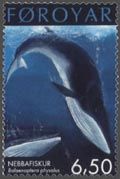
Fin whales, from a Faroese stampIn the late 60's in Ayrshire, in south-west Scotland, a minor sensation accompanied a showman as he travelled round showing off an embalmed whale. Perhaps slightly misreading his Bible, he had christened the beast "Jonah the Whale"; we kids dutifully ooh'd and aah'd because the thing had been so hyped-up by the Mums at nursery school, but we were expecting a leviathan from our storybooks, and this creature was about the length of two cows standing nose-to-tail. And, as I recall, it was peeling a bit.

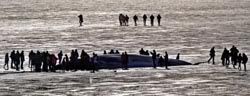
On the other hand, the whale featured in tonight's Inside Nature's Giants on Channel 4 was truly colossal. A fin whale - second in size only to the blue whale - the cause of death, after collision with a ship had been ruled out, was reckoned to have been grounding herself on the sandbank on Courtmacsherry Bay in Cork where she was found, then suffocating as her huge lungs were unable to inflate under the weight of a body unsupported by water.

Mark Evans: click to read about his unusual career on his homepageAgain we had the same intelligent graphics with a voiceover by veterinary surgeon and presenter Mark Evans that last week were put to work teasing out the evolutionary pathway of the elephant. The first "whale", he reckoned, was Pakicetus, a primarily land-living mammal which for some reason headed for the sea and whose progeny saw no reason to leave.

First of all, the whale had to be "deflated" by making small cuts along the blubber. As a cautionary example, a clip was shown of a dead whale being cut open in Denmark and the gases which had gathered post-mortem literally exploding out. That having beclick to go to the homepage of the Irish Whale and Dolphin Groupen done, comparative anatomist Joy Reidenberg of Mt Sinai School of Medicine - described by Evans as "the queen of whale anatomy" - masterfully dissected the animal as far as she could with the help of the Irish Whale and Dolphin group. I say "as far as she could" because the skeleton had been promised to the nearby community of Kilbrittain to display. So she couldn't saw through the ribs to get the heart, which was anchored in place by structures to high up for her to reach.

But those parts she did get were a revelation. The larynx looked about the size of a German shepherd's kennel, and in the search for the hyoid bone - which, she explained, helps the whale both produce sound for echolocation and swim - she had to snap off the point where the clavicles (collar-bones) fuse: it looked like the wishbone from a Brobdingnag chicken.

Dr Joy Reidenberg
Dr Reidenberg seemed a little more willing than the members of the Royal Veterinary society who autopsied the elephant in last week's programme to get into the "intelligent design" debate, saying of the multi-chambered stomach more suited to chewing a cow's cud , and the "vestigial back leg" about the size of an adult human femur, that "if evolution were intelligent we wouldn't have these handicaps - it's a mishmash".

Having never predicated intelligence of evolution, I was rather nonplussed. It's like saying that the processes of slow-cooking or printing a paper are intelligent. I believe that the ingredients of the feast or the thesis were intelligently put together, and that evolution is the inevitable working-out of the right ingredients being together at the right time and put under the right pressures on a planet in just the right place...everything is tuned to within a hair's-width. The only alternative to this scenario which physicists have forwarded is an infinity of alternative universes, each different by a hair's-width (the only half-convincing proof of this is that you never do find those lost socks).

The position I embrace is hardly falsifiable, but I have a strange bedfellow in this, in that Richard Dawkins casts aspersions on Karl Popper's doctrine that a hypothesis is only scientific if it can potentially be proved to be false in The Blind Watchmaker. He believes that explanations will be found for that which cannot yet be explained; I too believe that all things will be known eventually.

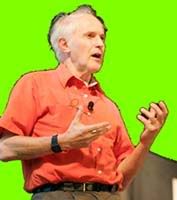
Dawkins made six short appearances in the documentary, wearing a bright orange windcheater that didn't seem to shelter him from the studio lights where he was filmed. Something that surprised me was that he never mentioned the phrase "the delusion of design" which we were promised in the teaser after last week's documentary. He restricted himself to making observations that, for example, whales were even-toed ungulates (belonging to the family of mammals with cloven hooves), and arched their backs when swimming as mammals do when they gallop. As yet, the series hasn't - quite - conformed to the nightmare of the Telegraph's Ajesh Patalay, of A gory attempt to disprove 'intelligent design' theories.

Dawkins has, however, been in the very recent news, albeit in an indirect way. A British exam board has been criticised for asking GCSE students to place creationism beside evolution in explaining how we got to where we are, and critique them. The BBC remarked at the end of its article on this that "Last year, this issue led to the resignation of Professor Michael Reiss as director of education at the Royal Society."
Professor michael Reiss - click to go to his homepage at the University of London
Professor Reiss resigned from the Royal Society in the same way that a man who is shot decides to stop breathing. When he merely posited dealing with creationism in science classes when the subject arises, and in milder terms than the exam question, Royal Society member Sir Richard Roberts wrote to Lord Rees, the Society's President:
We gather Professor Reiss is a clergyman, which in itself is very worrisome. Who on earth thought that he would be an appropriate Director of Education...?
now for something not completely different: read Martin Beckford's report that two in three teachers believe in teaching creationismThis is where Dawkins comes in: he immediately put out a statement saying "A clergyman in charge of education for the country's leading scientific organisation - it's a Monty Python sketch." In characteristic fashion, when the job was done he had a letter published by New Scientist, saying "Perhaps I was a little uncharitable to liken the appointment of a vicar as the Royal Society's Education Director to a Monty Python sketch."

One thing I noticed was that, in considering whether the whale might be pregnant, Evans referred to the putative foetus as "a calf"; I hope people who heard the reference to the cetaceous nature of a putative unborn whale will reflect upon the humanity of an unborn child.

picturesque Kilbrittain village: click to go to the Kilbrittain websiteThe old girl's skeleton will be a great focal point for the Kilbrittain community, as well as a memento mori. I'll look out for updates.

The next episode of Inside Nature's Giants deals with an autopsy on an alligator, the "ultimate predator".

You can watch Inside Nature's Giants: the Whale on Channel 4's website

Related post:Elephants, arthritis and euthanasia - inside nature's giants

Tuesday, June 30, 2009

elephants, arthritis and euthanasia: inside nature's giants

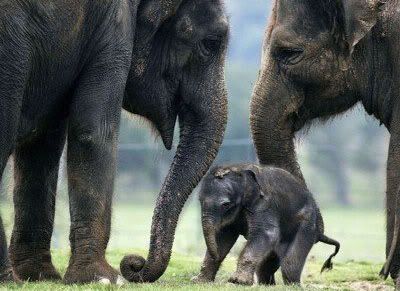
elephants as they appear on postersMinima loves elephants: she has elephant posters in her room, pictures of elephants decorating the covers of her jotters, and was heartbroken, upon watching the last instalment of Lord of the Rings, to find that the baddies rode on elephant-like thingies with spikes.

So I was careful to phone home tonight, at the end of a late shift, to warn Maxima that I was going to watch a C4 show - to which I'd been alerted by the Telegraph's Urmee Khan - called Inside Nature's Giants, which, in the first of four episodes concentrating on autopsies on iconic animals, dealt with the post-mortem examination of a lame elephant. It's the first time in a while we've gotten Minima to retire without argument on her designated bedtime for a schoolday, but that's another story.


Not bAlun Williamseing oversentimental about dead animals, I nevertheless took no pleasure in seeing the grand old dame laid out. But she was treated with respect by the professionals, including the Royal Veterinary College's Alun Williams. Evolutionary biologist Simon Watt explained, with the aid of intelligent graphics, how animals representing various branches of the Tree of Life had tried to cope with reconciling a body high enough to house a vast digestive system with mouthparts that could reach water and high bushes but the elephant is the only surviving successful model.


I didn't have any problems with this, although I realise some of my coreligionists might. What made me feel concerned was that Richard Dawkins, society atheist and professional polemicist, had been invited to record contributions to the series, but added nothing of substance to Watt's informative expatiations.

One phrase of his that interested me was, when commenting on the tendency of male elephants to grow shorter tusks since being hunted for ivory by mankind, was that it was "evolution happening before our very eyes - it can happen very fast".

This was a view that Dawkins enthusiastically espoused in his first - bestselling - popular science book, The Selfish Gene, in catastrophic changes to the Evolutionary Stable Stephen Jay GouldStrategy he espouses in Chapter 5. Sometime after this, he discovered that he had reinvented Stephen Jay Gould's concept of punctuated equilibrium - that nothing much happens for a long time then everything changes - and was unkind to Gould in ways that could not be justified in a professional sense. In the 30th anniversary edition of The Selfish Gene, he admitted - in an endnote to chapter 5, that he had been "petulant" in his criticisms of punctuated equilibrium in his 1986 The Blind Watchmaker, and that "if this has hurt anybody's feeling, I regret it". Gould had been dead for four years. Dawkins absolves himself in finishing off the endnote: "my heart was in the right place".

There were fascinating insights into elephant anatomy and physiology, as well as footage of the beasts in the wild where they belong. Also shown was their irascible side. It was a pity Minima never saw this, as I'd have liked her to appreciate how God's creatures are in reality, now that she's graduating from comfortable storybooks.

Something that affected me was the sight of how elephants treat the remains of others of their kind when they happen upon them. They caress the skulls and lift the bones, in a display that suggested grief. The narrator suggested that they were trying to identify who the dead were. I can understand that: I never knew my Granny, Julia, but I remember an old woman from my childhood in the Ayrshire moors who knew me not by my name but as "Julia's daughter's son".

What concerned me was that, after this excercise in anthropomorphising our proboscid friends - which may have been justified to a limited extent - we were treated to several statements about the extent of the poor old girl's cartilage degeneration and how "the quality of life when you get to this level of arthritis is unthinkable". I'm sorry for her (I wish I'd noted her name), but my mother had severe arthritis in every joint for a couple of decades; I won't deny that death came as a friend, but that's by no means the same as averring that humans should be brought to his domain before nature is happy to call time on behalf of God. I've had a couple of dogs put down, because they did not have the capacity to try to apply understanding to suffering on behalf of themselves, let alone others. I grieved, of course, but to apply the same standards to people is to show a fundamental misunderstanding of why our species is called Homo sapiens.


Generally, however, this was a very interesting program. I suppose Richard Dawkins generally behaved himself; it rethanks to the Irish Times for the pic - click to read their story about the beaching of a fin whalemains to be seen whether the same can be said of next week's offering, in which a fin whale is going to be autopsied in situ. Dawkins promises to reveal to us - in an opening salvo of a battle the Royal Veterinary College may not be eager to fight - "the delusion of design - it looks exactly like an engineer might have made it".

He's already got his first shot in: if we believe in a Creator, at a greater or lesser remove from the mechanics of His creation, we're deluded. I look forward to next week's programme, to hear his justification (if he deigns to give any) for why his faith in his own rectitude necessarily negates the beliefs of those he he labels as "deluded".

In the meantime, I quote a phrase of Charles Darwin's which I've never seen Dawkins referring to, as an indication of the former's breadth of intellect in the face of contradictions which would have pulled apart those who grasp fame at his coat-tails:
I feel most deeply that the whole subject is too profound for the human intellect. A dog might as well speculate on the mind of Newton. Let each man hope and believe what he can.


The first episode of Inside Nature's Giants may be viewed on the C4 website.


a family of elephants as they deserve to be left - with thanks to Getty images

Related post:Whales and unintelligent evolution: Inside nature's giants

Wednesday, February 11, 2009

happy birthday Charles Darwin

fluI have mixed feelings about the flu vaccination. I once had an argument with Professor Calculus, who said he'd had the flu jab every year it had been available, and hadn't had the illness since 1988. I replied that, never having had the jab, I too hadn't had the flu since 1988. But Calculus is somewhat older than me, so perhaps the jab is indicated in his case.

So I was interested to read in the Cambridge News about a talk on the evolution of flu in Cambridge University's Leverhulme Centre for Human Evolutionary Studies as part of the celebrations for the bicentenary of Charles Darwin's birth.

The Leverhulme Centre was difficult to find at first, as there's a warren of throroughfares in that part of the city; but once I'd located Fitzwilliam Street the imposing, if foreshortened, façade was immediately visible. The glass doors opened automatically, which was a bit of a shame, because I'd been trying to read the finely-crafted inscriptions on them. I think they were quotes from Darwin.

The presentation was actually entitled the evolution of influenza viruses: seasonal flu Dr Colin Russelland vaccines and was given by Dr Colin Russell of the university's Centre for Pathogen Evolution, and facilitated by Chris Smith, a doctor and scientist who presents the Naked Scientist show and podcast for BBC Radio Five Live, and also pops up on Australia's ABC Radio National; sponsorship was from British Council Bulgaria, who had supplied a video-link to a group of students in Sofia. I'm informed by the organisation's Lyubov Kostova that the BC in Bulgaria are still talking about his presentation!
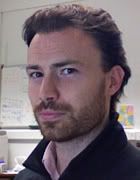
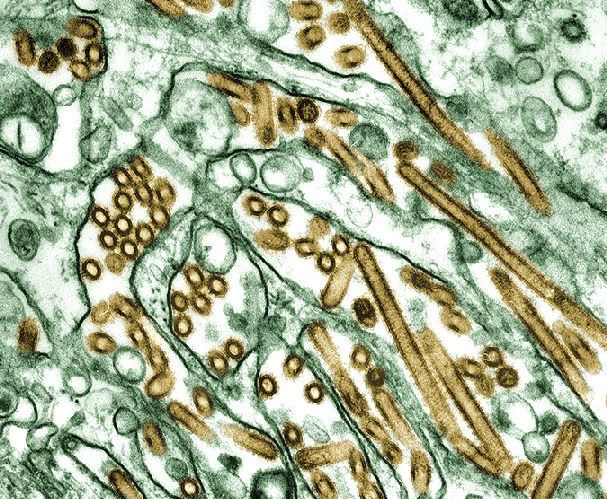
Dr Smith began the seminar by assuring us that his nudity was metaphclick for details of British Council Bulgaria's Café Scientifiqueorical, which was a relief. Dr Russell kicked off with the numbers, which I found surprising: 600 million people are infected worldwide with the influenza virus each year, leading to 100,000 hospitalizations every year in Great Britain, and 20,000 deaths. Russell is part of the World Health Organisation committee which analyses samples of bird flu, which often migrates across species to infect humans, to try to predict how the viruses will evolve in order to work out which ones to put into the vaccine which will try to protect vulnerable people from the disease at the end of this year. He will be part of the final decision-making process later this week.

The problem is that every time a scientist makes a comment about flu vaccines or influenza-related mortality, the subject of the 1918 pandemic - named the "Spanish flu" or "Spanish Lady" because Spain was one of the few countries not to suppress reports of the attrition, which exceeded that of the Great War - comes up in an often unmeasured way in the populist press. Smith referred to a headline on the BBC website, which I haven't been able to find, which comprised the word FLU dripping with blood. "I'd long thought the BBC was a bastion of jounalistic integrity", he commented.

Russell referred to the flu pandemics of 1893, 1957 and 1968, which are mentioned much less often than the 1918 one, but which determined the shape of the seasonal influenza outbreaks between themselves and the next outbreaks. The reason 1918 was different, however, was that the thing reproduced so quickly that it was present in all organs - including the brain - and had elements of a haemorrhagic fever like the Ebola or the Hanta viruses, which came to us from animals.

Russell engaged both academics and eejits like me in seconds, and his talk was fascinating from beginning to end, alighting on many subjects: but it was here that my own interest was especially piqued. Ebola comes from bats, with whom it appears to have coexisted for so long that virus and bat do each other no harm. But then a bat bites a gorilla, which is found by a West African villager who is looking for bush-meat to sell and is, probably, desperately poor. The virus kills him gruesomely, then his fellow villagers honour their tradition of giving the corpse a communal bath to clean him up for the afterlife. You can guess the rest.

Similarly, rats with the Hanta virus have been found to be more resistant to infection with the plague virus Yersinia Pestis, while the beastie causes a similar death to Ebola infection in humans. Smith added that measles appears to have migrated to humans from cattle 5,000 years ago, in whom the causative virus causes rinderpest; flu started coming to us from birds in the far east 2,000 years ago, and smallpox appears to be caused from a virus descended from the one which causes camelpox.

At this point, Smith picked up on a "throwaway figure" of Russell's on the amount of bacteria in the body; he'd estimated that only 10% of the DNA in the body is human, the rest belonging to our bacterial guests. Smith ran with this to talk about how "we have a huge population" in the world, adding that "one of the places with the biggest population density is this bloody country", and finishing off by declaring, in respect of there being 50 bacterial cells in our bodies for each human one of ours, "we are passengers in our own body". Russell stepped in to clarify that we humans do have our own genome, of which bacterial DNA is not a part.

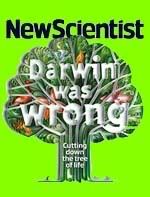
This seemed to reflect the debate going on in some parts of the scientific community over whether Charles Darwin's "tree of life", suggesting that we ultimately descend froclick to read the New Scientist article disestablishing Charles Darwin's tree of lifem a common ancestor, is a valid representation of how evolution works. Some biologists are suggesting that genes can travel horizontally as well as vertically, as laid out in a recent edition of the New Scientist in an issue on whose cover was emblazoned Darwin was wrong. On of the chief engines of this horizontal gene transfer is reckoned to be viruses - Richard Dawkins introduced this concept to the popular consciousness in the first part of his documentary on The Genius of Charles Darwin, when he talked about HIV straight after dealing with Malthus' theories on how disease and war curb overpopulation - this may have been the reason for Dawkins' presence at the seminar.

There seems to be a wider debate, which threatens to develop into a battle, over who owns the heritage of Darwin: radical militant atheist philosophers of science on the one hand, and practicing scientists on the other. Russell showed how the battle-lines are not clearly demarcated when he predicated intentionality of nature with phrases like "nature selects" and even "nature moves in mysterious ways"; but the manner in which he acted to prevent the seminar's narrative from drifting into more contentious ground speaks volumes for his place in the camp containing scientists who want to do science.

A thawing of some scientists' attitudes to religion, or at least a recognition of the truth of the aphorism with which Wittgenstein ends his Tractatus Logico-Philosophicus - "Whereof one cannot speak, thereof one must be silent" - may be indicated by timing. Darwin's bicentenary falls on 12th February, but this celebration of his achievements ended with this seminar on the 10th - the day before the anniversary of Bernadette Soubirous' first sighting of Aquero, the beautiful lady in the grotto of Massabielle at Lourdes later revealed to be the Virgin Mary. New Scientist, on the other hand, marked that particular anniversary with a disquisition on How your brain creates God.

I'm not sure about Russell's views on religion, and that's how it should be: a warrior fighting for the lives of people vulnerable to death by influenza, he was there to talk about the disease and how to mitigate its worst effects. And he did so admirably. I have to swallow down my doubts about the global vaccine industry to recognise that he is working against natural selection, flying in the face of the foul precepts related to social Darwinism that so horrified Darwin to follow a star that Richard Dawkins, Darwin's false prophet, lacks the ability to comprehend: altruism.

click to hear Elizabeth Francis perform her songs on myspace
Having ridden shotgun with a colleague doing training earlier in the day, my head was spinning with ideas by the end of the seminar. So it was good to retire to The Snug on Lensfield Road to hear Elizabeth Francis breathe smoky life into songs of life, loss and obsession while jazz and soul fell in love on her keyboard under classically-trained fingers. If music is the uniquely human response to thinking too much, play on!

Happy birthday, Charles Darwin, I hope your legacy will soon be free of the ideological accretions that co-opt your posthumous approval of concepts you would doubtlessly have spat on.

Related post: swine flu and the hazard of hysteria

Swine flu - is it time to panic yet?

Friday, November 7, 2008

faith schools - teaching unions versus teachers

Wendy Wright speaking on human rights in ChinaThis August, as part of his series on The Genius of Charles Darwin, Richard Dawkins interviewed Wendy Wright, President of Concerned Women for America, about the controversy surrounding the teaching of creationism in school as opposed to evolution. In my opinion, Wright displayed her greater cognitive agility by stating that in a controversial subject such as that of creationism versus evolution, pupils should learn both sides of the debate.

Today, Martin Beckford, religious affairs correspondent of the Telegraph, reported on a poll by teachers.tv which produced some unexpected but reassuring statistics. Although half of the teachers in the 1200 surveyed disagreed that creationism should be given parity with evolution in the classroom, a third - a very significant minority - thought that parity was appropriate - and indeed just under a third already consider creationism as equal to evolution.

click to read a profile of Michael ReissAnother statistic showed that the controversy over Professor Michael Reiss being ousted from his position as Director of Education at the Royal Society is far from dead (Professor Reiss opined that creationism should be taught in schools and was promptly ousted by a cabal of scientists whose figurehead was Dawkins; Sir Richard Roberts called Reiss's vocation "very worrisome"):
Nearly half (49.9%) of teachers also agreed with Professor Michael Reiss’ sentiment that excluding alternative explanations to evolution is counter-productive and alienates pupils from science.
What this figure suggests is that some of those teachers who disagree that creationism should be weighted equally with evolution support a place for creationism in the syllabus. Dawkins' retort to Ms Wright on the issue of teaching both was that he was all for teaching children to think for themselves, but there were limits. In neglecting to explain what he thought these limits were, he ceded the position of freer-thinker to Wright, who had probably held it all along.

This is in the context, I believe, of a rather loaded dialogue on the role of faith schools in society that has been going on for a couple of years in the open, but which bodies of a certain ideological shade have been pursuing covertly for decades.

The NASUWT (National Union of Schoolmasters/Union of Women Teachers) brought out a consultation document this year called Keeping the Faith, which in the body of the text constructs a balanced argument about the role of religion in education, but in the conclusion comes out in favour of a British Humanist Association publication called A Better Way Forward, which concludes that all religions should be given equal weight: while a valid proposal for a phenomonological study, this is an insult to each and every religion so considered, no matter the religion/denomination of the school. Translating the argument into another sphere, can you imagine a physical education class in Texas which was looking into baseball and situated the Texas Rangers as being no different from the Yankees?

click to go to the home page of the Catholic Education ServiceThe above study involved only one religious group, the Catholic Education Service, despite the fact that in Great Britain there are schools of other faiths: the 2004 report by Dr Richard Stone, Islamophobia, stated that there were nearly 7,000 state religious schools in the UK, of which 33 were Jewish, 2 Sikh, 1 Greek Orthodox and 1 Seventh Day Adventist; of the rest, one paper puts the numbers at over 4,700 Church of England schools, and just over 2,100 Roman Catholic schools. As a member of the Church of England, I feel I detect an agenda: go for the Catholics first, then mop up the rest. This is a time to stick together.

The NUT (National Union of Teachers)has called for an end to funding of faith schools, and says in a typical passage in its document, In Good Faith:
Human equality in all its dimensions should be affirmed and celebrated. The importance of working for the elimination of any faith-based homophobia, transphobia and institutionalised prejudice towards lesbian, gay, bisexual and transgender people is vital.
I am reminded of a robustly pro-gay friend who chose me as the first person to come to and voice her concerns about a circle of gay men, not well liked in the LGBT community, who were running a competition on how young a boyfriend they could pull. I hope that free-thinking gay people, should they read passages like that quoted above, will reply, "not in my name".

In case the NUT paper wasn't circulated widely enough, it was summarised on a Marxist website, by NUT activist Kirsty Paton, under the title, "Schools are for teaching, not for preaching". The author states that, having heard arguments from the Catholic Church and the Church of England in favour of retaining faith schools, "fortunately we then had the opportunity to listen to the views of the British Humanist Association, the National Secular Society (NSS) and Women against Fundamentalism all of whom explained why faith schools should be opposed".

I am against fundamentalism in all its forms, which is why I am in favour of faith schools: if you believe that after a worthless life we turn to dust, then there are no limits to what you might do; if, on the other hand, you suspect that Hell might be possible, then you are an invaluable pointer to Heaven. God bless you.

Tuesday, October 21, 2008

don't go down the road to hell, it's jammed with bendy-buses

one blogger's suggestion for the campaignIn order to survive, any extremist organisation has to turn public opinion against the group from which it recruits in order that some individuals in this group will become radicalised and provide the extremists with an intake.

A case in point was the methods of nationalist and loyalist paramilitary organisations emanating from Northern Ireland, which would carry out operations in such a way as to cause feelings of revulsion in the target community and polarise the non-aligned, often by using twisted logic to classify innocents as enemies and act accordingly. For example, attacks on peace-loving Irish people in London following IRA bombs weren't a side-effect of the campaign, they were one of the desired outcomes, to cause radicalisation.

A similar process can be seen in the 2004 murder of film-maker Theo van Gogh in Amsterdam. Local government, in introducing its action plan to counter radicalisation, stated: "Although we were prepared for the possibility of an attack in Amsterdam, we were totally unprepared for the abhorrent way in which this attack took place. It put an enormous strain on relations in the city."

I wouldn't want to accuse Professor Richard Dawkins of wishing to radicalise those atheists who don't accept that being so doesn't mean they have to be anti-religion in a violent way, but he is involved in an attempt to radicalise them nonetheless.

On June 20 this year, Guardian blogger Ariane Sherine reported seeing a poster posingAriane Sherine the question that Luke 18:8 tells us Jesus asked his disciples during a discourse in the house of the Pharisee where he cured the man with the dropsical hand (starting 14:1) - "when the Son of Man comes, will he find any faith on earth?". She went on to write a rather amusing article which she ended by proposing that thousands of atheists club together to buy an advert on a bus that would say, "There's probably no God. Now stop worrying and get on with your life." She states the Guardian's Comment is Free editor contacted the head of the National Secular Society for her to check out the feasibility of such a scheme. He appeared not to be very impressed, and suggested people donate to the NSS.

That same day, however, Jon Worth, who in his other life designs websites for Labour politicians, came by the post and changed it from some slightly controversial fun into something else in his blog, in which he states "you can’t spend a day in central London without being confronted by some sign that religion should be your only salvation", adding "what I really loathe is people somehow judging that those with religious belief are somehow superior beings".

He set up a pledgebank page devoted to the cause, and - despite the support of a campaign of bloggers - by the time the pledge had run out, the Telegraph's Matthew Moore reported that only 877 of the 4,678 people required had made a pledge, and the whole thing appeared "dead in the water".

Enter Richard Dawkins, who appended his name to the campaign by pledging to match funds donated up to £5500 ($9350). He seems to have somehow negotiated a deal whereby the message will be carried by as many as 60 London bendybuses for a month for £11,000 ($18,700). But a combination of Dawkins' name and a serious networking campaign (look at the messages at the bottom of Sherine's blog on the issue) led, as Martin Beckford reports, to £31,000 ($52,900) being raised.

I've been to London many times in the course of visiting family, and journeys related to my former job as a drugs-worker, and don't share Jon Worth's experience that you can't escape being "confronted" by religion. Away from the centre, I've seen a lot of hope, but also the sort of sights that drove Ralph McTell to write "Streets of London". But that's ok, seemingly, because bendy-buses will be going round telling people that "probably there's no God" (the first word is there to avoid litigation).

Perhaps wisely, some religious groups and figures have contributed to the campaign, which hopefully will draw some of the poison from it and eventually help indicate the ridiculous nature of the whole venture.

I say ridiculous advisedly - it's time to look at the website which prompted Ms Sherine's musings. (Although what seems to have exercised Jon Worth, who really started the ball rolling, was "a 40 minute sermon" from somebody who from his description may have been suffering from a mental illness.)

The jesussaid.org website opens with a welcome page and has 12 bars down the side indicating different pages. I had to open 11 of them before I came across the mention of hell that Sherine mentioned - she had obviously put a lot of work into being offended. Still, I'm sure it's had a lot of hits through all this, which is obviously a good thing.

But who is the campaign aimed at? I imagine it will offend a lot of people of many faiths or none, and am worried that the poor bus-drivers might get a bit of hassle. But the target of the campaign, I think, is atheists. Specifically, those atheists who lack the visceral fear of religion that pervades The God Delusion, and do not subscribe to the view that lack of faith presupposes hatred of faith. I've known many atheists who have no problem with religion or religionists. And the Second Vatican Council document Gaudium et Spes reminds people of faith that, regarding those who shut out God and try to dodge religious questions, "believers themselves frequently bear some responsibility for this situation". The object of the campaign is for "non-aligned" atheists to be given grief in the hope that some of them will become radicalised.

Pace Cardinal Murphy O' Connor, Archbishop Williams et al, I won't be donating to this scheme, as there's better ways I can use my donations. I can only finish by referring to the 4 pages near the start of The God Delusion that Dawkins devotes to the cartoons of Mohammed that appeared in Jyllands-Posten in September 2005, which led to riots in February 2006. Similarly, some time has elapsed from Ariane Sherine's throwaway remarks in the Guardian to the near-culmination of the campaign to put anti-religion posters on London buses; and if Dawkins thinks the cartoon outcry was a set-up, then this is no less so.

London's bendy bus: bringing a hate campaign to a stop near you

NB: I was not being facetious in comparing the bendybus campaign to those of terrorists; I believe the basic process as regards radicalisation and recruitment is the same. For those interested in the progress of Amsterdam's campaign against radicalisation I recommend a page from Muhammad Haniff, who links to a very interesting (but long) report on the process of radicalisation in the context of Amsterdam.

Tuesday, October 7, 2008

society's evolution to the financial

click to see nine gene discoveries that could change your life

The Language of the Genes
Steve Jones
Flamingo 1994
pp 347

I was tucking into my curried tatties - Maxima is half-Irish and can do anything with the dChris Evansamn things - minding my own business this evening, when the author of a book I'm reading came on Chris Evans' Radio 2 show.
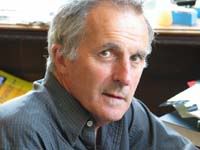
Steve Jones is an evolutionary biologist who started his career as a malacologist (snail-ologist), and I was given his book, The Language of the Genes, by a friend who expected to enjoy watching me explode in righteous inarticulacy. Instead, I was riveted.

Steve JonesMost geneticists have to deal with the fact that their science had inauspicious origins, and Jones deals with this frankly in the introduction. Social Darwinism was founded largely by liberal Victorian thinker Herbert Spencer and Francis Galton, Charles Darwin's half-cousin. Through Galton's influence, the movement - which mortified Darwin - morphed from letting evolution carry on without interferences such as healthcare and philanthropy into eugenics, which was very much involved with interfering with evolution. The pseudo-science served as a cover for figures from all parts of the political spectrum who were concerned for the future of the white race - whatever race is apart from societally-determined constructs based on arbitrary classification of features, mainly (but not exclusively) skin colour. Jones relates an anecdote towards the end of the book:

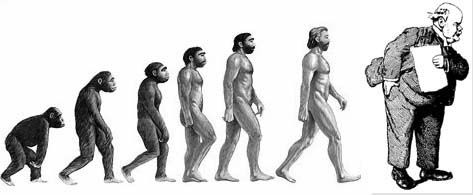

In 1987, a secretary from Virginia sued her employer for discriminating against her because she was black. She lost the case on the grounds that, as she had red hair, she must be white. She then worked for a black employer and, undaunted by her earlier experience, sued her for discriminating against her as she was white. She lost again: the court found that she could not be white as she went to a black school.
That all this was not consumed in the obscene flames of the Holocaust is borne out by both last century's history and recent events.

In Fatal Misconception: the Struggle to control World Population, Matthew Connelly relates how de Gaulle thought that post-war France had become too "Latinized", and approved a scheme for "an infusion of Nordic blood" which included persuading German prisoners of war to marry French women.

A row has recently erupted about a pioneer of eugenics being featured on stamps. As the Dailclick to read Gerald Warner's blogy Telegraph's Gerald Warner points out, Marie Stopes was an ardent admirer of Hitler, supported compulsory sterilisation of the "diseased", and formulated the slogan "Joyful and Deliberate Motherhood, A Safe Light in our Racial Darkness". (Her organisation was called the Society for Constructive Birth Control and Racial Progress; it bears no links to Marie Stopes International - this was born when the Population Services Family Planning Programme bought the rights to her name from the British Eugenics Society post-WWII.)

Combining a lightness of touch with the depth of his knowledge of his subject, Jones then proceeds to take us on a journey of discovery that passes through biochemistry, virology, palaeopathology, discrimination, the evolution of evolutionary science and gender politics. Indeed, three-quarters of my family would be pleased to read in the chapter on The Battle of the Sexes that "We are still not certain why males exist; and why, if we must have them at all, nature needs so many...the frank answer is that...although the reason for the existence of women is obvious enough, nobody has any real idea what point there is in being a man."

I would answer that one in the words of Genesis 1:27: "So God created man in his own image...male and female he created them". And for good reason: as Jones points out, the product of sexual reproduction is a genetically unique individual every time, whereas in asexual reproduction, an unfavourable mutation is there to stay. Jones, however is not a man of faith; but, while he holds some strong views on creationism, he is not an ideologue like, say, Richard Dawkins - he refers to Biblical quotes several times in his arguments; although he might not believe in the historical books, he unashamedly points to their feasibility.

Another point at which he diverges from Dawkins is in his refusal to reduce human beings to disposable vehicles for genetic material; he states: "To make too much of the shared DNA of chimps and humans is to be in danger of falling into...foolishness. Humans, uniquely, are what they think." Later, in case the point hasn't got through, he refers to Dawkins' book The Blind Watchmaker (which is a parody of William Paley's parable of finding a watch in a field and realising that it must have been, as we might say, "intelligently designed"):

There is a danger of seeing the whole of biology as evidence of natural selection. Just as Paley saw the complexity of life as an argument for God, there is a neo-Paleyism which plagues evolutionary theory. It argues that all animal structure is well adapted so that it must always reflect the action of selection...Some feel that the Darwinian theory drives the whole of evolution from the order of the bases in DNA to the shape of the nose...Another beauty - and an important weakness - of the theory of evolution by natural selection is that with a little imagination it is possible to come up with an explanation of anything...Many are fantasy, but because they invoke events which took place in the distant past they are almost impossible to refute.
The Language of the Genes concludes with a reflection on the dangers of making too much of the genome, in which he refers (in 1994) to a movement "to add to the Universal Declaration of Human Rights a statement that everyone has the right to a genetic constitution which has not been changed without their consent". In 2004, the Vatican's International Theological Commission released Communion and Stewardship: Human Persons Created in the Image of God, which was published under the auspices of Cardinal Josef Ratzinger, now Pope Benedict XVI. Paragraph 91 states:


"The uniqueness of each human person, in part constituted by his biogenetic characteristics and developed through nurture and growth, belongs intrinsically to him [sic] and cannot be instrumentalized in order to improve some of these characteristics...Such modifications would in any case violate the freedom of future persons who had no part in decisions that determine his bodily structure and characteristics in a significant and possibly irreversible way [but] gene therapy...would help the individual to give full expression to his real identity which is blocked by a defective gene.
By 2006, the best that UNESCO's Universal Declaration on Bioethics and Human Rights had come up with was that "The impact of life sciences on future generations, including on their genetic constitution, should be given due regard".

Much of this section might have been written last week, instead of over a decade ago. Jones tells us of an insurance company that offered to test a couple's unborn child for the gene for cystic fibrosis "only if the parents agreed to have an abortion if the test was positive". Mass testing might (then) cost £50,000 per person for every case of cystic fibrosis "prevented" - "much less than the cost of lifelong treatment" (although he notes that a hundred times more people may carry the gene than have the disease). This is the logic, I think, that will increasingly inform the policy-making of government, health and insurance agencies should the present financial crisis turn out to be a long-term phenomenon. Which poses the question: are people with disabilities, health-needs or a probability of developing these in the light of their genome seen to have any intrinsic value? (Jones: "Is a damaged gene a pre-existing condition?")

The reason that Jones was appearing on Evans' show was down to his statement - fleshed out in an article he has written for the Telegraph - amplifying TLG's conclusion that "it looks as if the human mutation rate is on its way down...we are almost at the end of [our] evolutionary road". So the eugenicists have failed in their bids to control human evolution - but the ethical dilemmas we inherited from them have not left us, they have merely mutated from the racial sphere to the financial.

click to read how healthcare for the sick and disabled is already under threat

Wednesday, September 17, 2008

a coup from the shadows

I was a member of a Justice and Peace group until relatively recently, growing more and more dissatisfied with the outlook of the other members. For me, the end came when a Lent campaign against climate change was planned as part of preparation for Easter. I brought up the fact that there were two sides to the anthropogenicity debate surrounding climate change - nothing stronger than that - and was met with an icy silence. I left soon afterwards.

The same dark forces in our society who want to stifle argument about climate change are doing the same for the so-called debate which sees faith and science as opposed and irreconcilable.
click to read an Evalgelical critique of Ussher's chronology
This debate is being fought ostensibly on the 4004 front, ie concentrating on Bishop Ussher's chronology which placed Creation as starting on the evening of Sunday, October 23 of that year.

Personally, I don't know anybody who believes this, although I realise there are some members in many Christian denominations who do.

However, the mere fact of issues relating to faith being in the public sphere is raising the hackles of figures who would like to chase religion and religionists out of public life. Thus, Professor Michael Reiss (left), until recently director of education at the Royal Society, Great Britain's premier scientific institution, stepped down from his post yesterday after, as the First Post put it, "he appeared to suggest in a speech last week that creationism should be taught in schools alongside evolution". As he objected on the BBC's Jeremy Vine show on Friday 12 September, when the furore was let loose, this was not what he said. Indeed, he had posted on his Guardian blog the day before:


the excellent book Science, Evolution, and Creationism published by the US National Academy of Sciences and Institute of Medicine, asserts: "The ideas offered by intelligent design creationists are not the products of scientific reasoning. Discussing these ideas in science classes would not be appropriate given their lack of scientific support."

I agree with the first sentence but disagree with the second. Just because something lacks scientific support doesn't seem to me a sufficient reason to omit it from a science lesson. When I was taught physics at school, and taught it extremely well in my view, what I remember finding so exciting was that we could discuss almost anything providing we were prepared to defend our thinking in a way that admitted objective evidence and logical argument...

I do believe in taking seriously and respectfully the concerns of students who do not accept the theory of evolution, while still introducing them to it. While it is unlikely that this will help students who have a conflict between science and their religious beliefs to resolve the conflict, good science teaching can help students to manage it – and to learn more science.
So far so fair. But this intellectual honesty forced the real reasons for objections within the Royal Society to Reiss's education post into the open: he is a Church of England priest. As the backlash was being orchestrated, Richard Dawkins stated, as he admitted in a letter he was "working on" getting published in the British press, that "A clergyman in charge of education for the country's leading scientific organisation - it's a Monty Python sketch". (The letter was snapped up by New Scientist. Unlike most of NS's long articles, you can view the whole article without taking out a subscription.)

The letter that seems to have hit the Royal Society's main artery was a letter by Sir Richard Roberts stating that


We gather Professor Reiss is a clergyman, which in itself is very worrisome. Who on earth thought that he would be an appropriate Director of Education, who could be expected to answer questions about the differences between science and religion in a scientific, reasoned way?...Ill-conceived opinions by a representative of the RS will only encourage those teachers, both scientists and otherwise, with a creationist agenda to speak about it to their students in the classroom.
The letter is reproduced by a volunteer for the Richard Dawkins Foundation for Reason & Science, who comments on his blog:


Is it possible that Sir Richard has not read Reiss’ actual articles?...criticism of Reiss should be based on his actions, and not speculation or misunderstanding of what he has done...Sir Roberts [sic] sent his letter the day after the Royal Society sent a press release with Reiss’ clarification. My concern is that this whole fiasco will turn into a farce that will not exactly show secularist and those for science education in a positive light."Sir John Sulston
I am sure that the text of any official speech made ex cathedra by a senior Royal Society office-holder would have been made available to senior RS members shortly afterwards, if not before. Pace the respect for reason and truth of Homo Economicus shown above, he doesn't seem to have quite gotten the point of this plot. Rev Reiss would have been pushed if he had said nothing more controversial than "if you boil water ySir Harry Krotoou will get steam". His role as RS Director of Education was scheduled for destruction by virtue of his being an ordained priest and nothing else. Dawkins, the Establishment's pet atheist, and the éminences grises Sir Richard Roberts, Sir Harry Kroto and Sir John Sulston decided he had to go, and Daniel Palmer strained foaming at the leash in his New Scientist blog.

At the end of a series of bogs about Dawkin's series on Charles Darwin, I asked: "Personally, I trust in God. You may have another position, which indeed you have every right to hold: but can you justify it outside the realm of strangling those voices with whom you disagree?"

Dawkins, it seems, is at the service of those who have neither that disposition nor ability.

Sunday, September 14, 2008

why the large hadron collider will find the Higgs boson

The last time I had a jar with Professor Calculus, the Large Hadron Collider at CERN had just been fired for the first time. Given that the world had obstinately refused to end in the face of hysterical objections by the sort of people who become amorous about trees, I put it to him that either the world had not ended, or it had done so and I was, in fact, a figment of his imagination, therefore mine's was a pint. He didn't see my reasoning. Sometimes scientists just don't get it.

The somewhat histrionic coverage of the opening of the Large Hadron collider seems to be in measure with the epithet given to its chosen prey, the hypothetical Higgs boson: the God particle. This has even, in recent times, leaked into popular culture in the remake - starring George Clooney - of the Russian film Solaris, where ghosts are sent to wherever ghosts go when they're killed by a "Higgs beam". In reality, the Higgs boson, if it exists, is estimated to exist for a fraction of a fraction of a second, so it's difficult to imagine it getting up to any of the activities predicated of various deities by different cultures.

The Large Hadron Collider cost around £4.4 billion ($7.8 billion) to build. Many countries have contributed to it - for example, the US gave $531 million (£300 million), Spain €55 million (£44 million/$77 million) and Japan ¥5 billion (£26 million/$47 million); the UK gives CERN £70 million($124 million) per year.

It's difficult to imagine these countries donating such significant sums through the goodness of their rulers' hearts; especially as, in the case of Great Britain, there were 25,700 "excess winter fuel deaths" due to people not being able to heat their houses at the same time as buying food.

On the other hand, perhaps it's exactly the point that our countries are contributing to CERN while older people die. It's not a new phenomenon - in the Who's 1973 album Quadrophenia, Pete Townshend writes in Helpless Dancer: "people die because they're old/or left alone because they're cold".

Steven Hawking, Lucasian Professor of Mathematics at Cambridge University, made a rather strange statement recently:

Both the LHC and the Space program are vital if the human race is not to stultify and eventually die out. Together they cost less than one tenth of a per cent of world GDP. If the human race can not afford this, then it doesn't deserve the epithet 'human'.
As much as I'm an admirer of Professor Hawking, who exemplifies the great potential of people who, like myself, have a disability, I have to to admit to being a bit put out by this statement. Is he saying it's worth spending up to $6.5 trillion (£3.6 trillion - 10% of world GDP) on research into sub-atomic particles and interstellar peripateticism? If he, and anybody else, thinks this way, I recommend a swift dose of Gattaca, the 1997 film starring Uma Thurman and Jude Law which presents a society driven by eugenics wherein engineered humans are free to leave the planet, and the rest are cleaners. (There's a cool twist - check out the film.)

The thing is, unfortunately, there has been a tendency to believe that some people are worth more than others, which in the middle of the 19th century acquired a sheen of respectability with the publication of Darwin's evolutionary theory, incorporating the concept of the survival of the fittest into the Malthusian fable that famine and war are necessary to control population (a travesty of Darwin's concept which horrified him).

Unmasked by the Holocaust, this tendency is rising again with the tendency of scientists and writers, like Richard Dawkins and Daniel Dennett, to force science onto the street-corner so that it can lead the unsuspecting curious to be shanghaied into the radical militant atheist army meretriciously peddling the idea that science is a jealous god, and will tolerate no system of belief that posits intuition inexplicable by detectable particles.

This first operation of the large hadron collider was nothing more than a booting-up, and produced a "fuzzy dot". And yet already there's a conflict, with Steven Hawking saying that the results would be more interesting if the Higgs boson weren't found than if it were, and the eponymous Professor Higgs opposing this view; probably only one of them can look forward to a Nobel prize.

The Large Hadron Collider appears to keep 6000 scientists in tea and biscuits. More than this, it is required to find the Higgs boson so that a business case can be made in 2012 for a larger collider.

I wonder how much difference there is between a fuzzy dot, and smoke and mirrors. Anyhow, there are so many careers and reputations riding on the discovery of the Higgs boson that I'm sure it will be discovered, whether it exists or not.


Related post: Solaris - the boson delusion

Tuesday, August 19, 2008

return of the ichneumon delusion

Tonight I eventually managed to view the last of Richard Dawkin's documentary trilogy, The Genius of Charles Darwin. I'd originally missed it, but a kind sympathiser who had video'd it gave me a copy.

To place the documentary in context, Dawkins stated in Part 1 that 4 out of 10 people believe in God as the Creator of all. In spite of the fact that this indicates that more people are for his views than against, he took a class of 15-16 year olds, and appeared to have failed to convert them to unbelief.

In the second part he attacked - possibly fairly - those who had interpreted The Selfish Gene as meaning that, in the words of Gordon Gekko of Wall Street , "Greed is, for lack of a better word, good".

Part 3 of The Genius of Charles Darwin starts with a preview of a conversation between Dawkins and a secondary-school science teacher who says, "we can't get into the business of knocking down kids' religions"; Dawkins replies "Why not?", without being troubled by doubt about his own philosophy. Indeed, he complains later that "relativism...is rife today"; Indeed: Pope John Paul II often made the same point.

Dawkins states that "religious fundamentalists are eager to attack the legacy of Charles Darwin which they just don't understand". This may or may not be a fair point, except that in his zeal to present himself as Darwin's interpreter he does not stop to consider that he might not understand the legacy of the Bible which he never ceases to attack.

Wendy Wright, of Concerned Women of America, spoke with Dawkins, which I suppWendy Wrightose was brave of both of them. However, I didn't feel that RD appreciated the subtleties of Wright's argument, which was that, if evolution is seen to be controversial, then children should be taught both sides of that controversy. She then stated that she'd rather believe in God than fallible scientists. Dawkins retorted that he was all in favour of teaching children to think for themselves, but that there were limits to this. Which led me to think: what are the limits, and who puts them there? Since these questions were not only unasked but unanswered I felt like shouting "Quis custodiet ipsos custodes? at the show, but paused the video and made a cuppa instead.

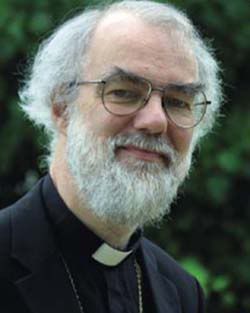
DawkinDr Rowan Williams, Archbishop of Canterburys later spoke to Dr Rowan Williams, the Archbishop of Canterbury, who said he believed that God "shapes the whole process" of creation, including evolution, as Creator; when Dawkins asked if God intervened in nature, the Archbishop replied that this would imply some imperfection in God's setting up of nature. As is his wont, Dawkins came round to he Virgin Birth; whereas he rated it as a "cheap conjuring trick", Williams stated that it was "Creation opening up to its own depths". It was a short interview, possibly commensurate with Dawkins' opinion on Williams, or perhaps with the philosopher of science's fear that the prelate's greater intellectual agility might come to the fore given a longer segment.
You didn't need to have a crystal ball to see that Dawkins would return to the Ichneumon wasp, laying its eggs within a caterpillar then paralysing the caterpillar's motor nerves so that junior would have a store of fresh meat. Atheist evolutionists spend so much effort reminding us of the Ichneumonidae reproduction cycle that the creature would charge royalties if it were sentient. Yet the reason it caused such a crisis of faith in God for Victorian society, while its poverty, workhouses and factories failed to provoke a crisis of much of that society's faith in itself, was the popularity of "natural theology", stating that the existence of God could be discerned through nature as well as by revelation. Perhaps one needs to look at more of creation than the lives and deaths of a small group of arthropods in order to get an idea that "the skies proclaim the work of [God's] hands" (Psalm 19:1). I had a friend who could believe in God when up a mountain, but became an atheist when back in the city.

But in his world, where objectively our travails are not worth more than those of an insect, all that matters to Dawkins is that he is at the top of the tree he has played no small part in cultivating, bonsai-style, from the seeds sown by Darwin, Mendel and many others. He has named one of his books after Darwin's anguished cry: "What a book a devil's chaplain might write on the clumsy, wasteful, blundering, low, and horribly cruel works of nature!"

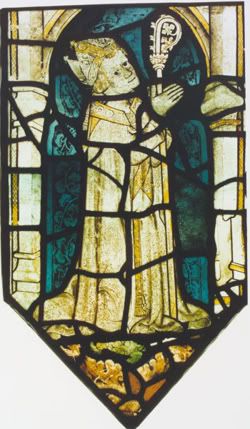
In the last Chapter of The God Delusion, he speaks of William of Wykeham founding Oxford'sstained-glass image of William of Wykeham, Bishop of Winchester, at New Hall, Oxford New College in 1379 "as a great chantry to make intercession for the repose of his soul". Dawkins sees no need to look upwards for salvation. While Bishop William formed a forum so he might be remembered to God, Dawkins' has ensured he will be remembered to humankind, or at least that portion which is interested and/or incensed by his works. His official website is called RichardDawkins.net, and he has developed The Richard Dawkins Foundation for Reason & Science, the website from which you can buy two volumes of Conversations with Richard Dawkins. The Genius of Charles Darwin was not about Charles: it was about the ascent of Richard to the post of Vicar of Evolution, infallible and impeccable.

Personally, I trust in God. You may have another position, which indeed you have every right to hold: but can you justify it outside the realm of strangling those voices with whom you disagree?


related posts ?
?
The Genius of Charles Darwin Part 1: the ichneumon delusion

The Genius of Charles Darwin Part 2: the altruism delusion