Showing posts with label science. Show all posts

Tuesday, May 18, 2010

"Mental: a History of the Madhouse"

click to go to the show websiteAs a part of a series of documentaries detailing changes in views about mental illness in the last 60 years, BBC4 screened Mental: A History of the Madhouse last night, and it did an admirable job of exploring the spectrum of shades of grey involved in the issue without black-and-white judgement.

For example, there was Maggie, who volunteered for "experimental" brain surgery in the 1960s and who feels that, after 5 years of debilitation that followed the surgery - in which a section of her brain was burned out to stop the fits of violence that would require increasing lengths of hospitalisation - she recovered in spite of and not because of the operation. She has been given awards for campaigning for community causes...but one is left wondering if this would have been possible without the operation.
Jonathan Zito RIP: click to go to a statement by the Jonathan Zito TrustI thought of this towards the end of the documentary, when we saw the dark side of the opposite of the asylum model of care. Following a series of murders by people who had been released into the community as beds were closed (so the chance of their being readmitted stadily diminished), the most famous of which was the 1992 murder of Jonathan Zito by Christopher Clunis at Finsbury Park, a psychiatrist briefs a police shift that one of his patients is having increasingly violent urges, and then a dozen riot officers break into his house because both psychiatrist and police have decided that "overwhelming force" is required.

There have, of course, been huge leaps since the days of the asylums, when staff violence towards patients was recalled by a former psychiatric nurse as having been justified, when he was a student, by his charge nurse on the grounds that "if you live among shit you become shit". Although thankfully I missed this period, I felt ashamed to have been a psychiatric nurse.

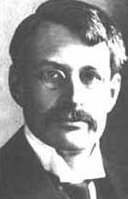
Patricia Hornsby Smith - click to view the whole Time portraitIn 1959, Patricia Hornsby-Smith (in Harold MacMillan's Conservative government) reported on the crippling price of keeping more people in psychiatric institutions than there had ever been, reporting on the "appalling legacy" of the buildings and how maintaining them would take up an increasing portion of the NHS budget; but she also spoke on how an appreciation of mental illness being like "any other disability" was a prerequisite on action that would need to be taken on both pragmatic and humanitarian grounds.

Hornsby-Smith's speech was the prologue that Enoch Powell's 1961 Water-Tower Speech was written to follow:
Enoch Powell: click to go to the text of the Water Tower Speechit is the duty of a Minister of Health and the duty of the National Association for Mental Health, to...choose and to favour wherever they have the choice, the course of more drastic and fundamental change: for we may be pretty sure that even so the progress of medical thought and method will still be well on ahead of our practice.
Powell was, of course right (and it was good to see the BBC admit that the man was more than a controversial 15-minute speech): as the documentary showed, "hope came from the laboratories [in the form of] a new generation of psychiatric drugs". However, Largactil (chlorpromazine) created new problems to replace the ones it solved in the form of simultaneous agitation and sedation, and Parkinson's Disease-like symptoms. Had the resarchers looked further into its genesis, they might have found that it was derived from a dye produced in Victorian England, but wasn't much use. So it was fed to cows to see the effect, which was that the cows calmed down. And died shortly afterwards.

However, the growing voice possessed by mentally ill people and their advocates - who included many mental health workers - drove the phamaceutical search for medications that had maximum effect on symptoms with minimum unwanted effects. The quest still continues.

click to read Boris Johnson's article in the TelegraphBut how did we get from this sense of optomism to a mentally ill man's flat being raided by a dozen riot police? As beds decrease, I worry that the stigma that infested the ageing Victorian structures hasn't disappeared but has rather been absorbed into society, which has become itself an über-asylum wherein, asserts London Mayor Boris Johnson in an exegesis of Eleanor Rigby, too many people "pretty much stay at home and watch TV" with their loneliness acting as a straitjacket - a garment never used once in the history of the crumbling Victorian asylum where I trained.

As politicians struggle to describe how they are going to deal with the deficit, it's obvious that there are goiclick to read more about hte International Clubhouse Movementng to have to be cuts. But this should not blind us to the fact that cuts started some time ago. Fulbourn hospital, the psychiatric hospital serving Cambridge and surrounding areas, lost two rehabilitation units and two acute psychiatric wards in 2007. This could have been ameliorated by better services in the community, but Vocational Services, providing occupational therapy, and Cambridge Clubhouse a range of less structured opportunities of rehabilitation after psychiatric treatment, are long gone. The Clubhouse was replaced by a mental health resource centre that aimed to make ex-patients in the community into trainers, but access is now only by telephone.

I'm not setting out my stall for my territory, having switched from a psychiatric nurse to a psychiatric patient some years ago. I'm merely arguing for common sense: in the absence of dedicated resources people requiring mental health treatment are, at the more severe end, going to keep ricocheting between inpatient wards, police cells and prison and, at the less severe, take up more of the general resources that are available, eg GP appointments, A&E beds, etc.

And the human cost is intertwined with the financial one, something that Patricia Hornsby-Smith and Enoch Powell would have recognised. I met a fellow Clubhouse veteran recently; unable to maintain employment without input but "not ill enough" to warrant a community psychiatric nurse, she spends her time subsisting on benefits - mostly, as Boris Johnson says, at home watching TV. Investing in resources that would help people like my friend both to work and to pay more taxes would, in my opinion, be a win/win situation.

Related posts:

Good taste back on the Horizon: How Mad are You?

Blurred Boundaries, Fine Lines - How Mad are You?

Thursday, April 22, 2010

Earth Day: John Denver versus the pandora's box

John Denver in his biplane - click to read an excerpt of his biographyMy friends are sometimes surprised to hear that I'm a John Denver fan. I disagree with some of - actually most of - his political views, but then again I like some of John Lennon's early 1970s music, even though the man was by then an even nuttier fruitcake than he was in the Beatles.

What I admire is Denver's adherence to his principles, and one of the first things I point out when talking about him is that while rock and pop oligarchs were recording their histrionic singles Do they Know it's Christmas? and We are the World, Denver was frequently in African countries with his sleeves rolled up. Denver had wanted to be on We are the World, but the single's producer, Ken Kragen, who also managed Harry Chapin and Kenny Rogers, commented that "several [un-named] people felt his image would hurt the credibility of the recording as a pop/rock anthem. I didn't agree".

Similarly, Earth Day 2010 - click to go to the homepagewhile Earth Day, instituted in 1970, is a once-a-year "awareness-raising exercise" for some, the title of Denver's 1990 song for the occasion summed up his typically uncompromising view: Celebrate Earth day (Every Day).

In other words, if you think that the activities of humankind are causing global warming, you can use your God-given free will to give up your car, stop flying in aeroplanes (admittedly not hard to do recently with the help of Icelandic volcanoes) and power your household entirely with wind-turbines. Every day.

My favourite Earth Day story was from Anthony Watts, stating that today Arctic sea-ice is at its hightest for 9 years, while Telegraph blogger James Delingpole lists the lunacy of Earth Day votaries:
  • "Between 75 and 85 percent of all the species of living animals will be extinct" by 1995 - Earth Day founder, the late Gaylord Nelson.James Delingpole - click to read the whole article

  • The world will be "…eleven degrees colder in the year 2000. This is about twice what it would take to put us into an ice age," Kenneth Watt, speaking at Swarthmore University, April 19, 1970.

  • "By 1985, air pollution will have reduced the amount of sunlight reaching earth by one half…" Life magazine, January 1970.
Gaylord Nelson, aside from founding Earth Day, is also famous for instituting hearings as a Senator on the safety of the contraceptive pill which required US manufacturers to place a statement as to the Pill's safety on its boxes, the first time in the country that an adverse effect had to be listed on a pharmaceutical product, and I can't fault him for that. But I think it gives an insight into the way his mind worked that no women were invited to testify, and this gave "reproductive rights" advocate Alice Wolfson a chance to stake her place in the dimming light.

Another peek into his psyche is given by his insistence that Earth Day should be held on April 22. This waMargaret Mead - click to read her article on Earth Days against the likes of, say, anthropologist Margaret Mead, who called Earth Day "the first holy day which transcends all national borders", that the feast should be held on the Spring Equinox, which falls around a month earlier. Students of history will note, therefore, the significance of the first Earth Day being held on 22 April 1970: it was, according to the Grergorian Calendar, the hundredth anniversary of the birth of Vladimir Ilyich Ulyanov - Lenin.

Sadly, in the aftermath of John Denver's last flight, I am not aware of eminent left-leaning figures who believe in showing what they think about the environment at least as much through how they live as what they say. I suspect they were sidelined from public life by the same sort of ideologues who decided Denver was not appropriate for We are the World.

So we are left with a holyday of obligation for a monster who murdered and oppressed his own people before directing his baleful gaze towards Russia's neighbours, thence to the rest of the world both in his own right and through his unintended heir Stalin, who muscled in on his legacy the same way that Alice Wolfson piggybacked on the unsuspecting Gaylord Nelson. Thus do each generation's self-elected prophets hand a Pandora's box to those who will empty its contents upon the silent majority of the next.

And that's before we get to Al Gore.

Related post: lights on: don't let earth hour usher in a dark age

Friday, April 2, 2010

coast: natural history of a man-made environment

click to read the Wikipedia entry for HolbeachI once wisited The Wash. I was staying with a friend who worked in a hotel in Holbeach, in the South Lincolnshire area of Little Holland, and we drove up to see this seemingly unspoilt area of the Fens.

I say "seemingly" because the Fens compete with the Netherlands as constituting arguably one of the most modified areas in the world. Mostly below sea level, they were once a vast flooded area with bits of land poking up, on which settlements were built: Ely Cathedral in its various forms has been called "the ship of the Fens" for over a thousand years, and it's not a metaphor.

On last night's episode of the BBC2 10-minute documentary season Coast, focuclick to read G.M. Trevelyan's account of the eleventh battle of Isonzossing on The Wash, local archaeologist Maisie Taylor summed up how the Fens have been seen in Britain in the past: "they were wonderful for people who lived here, but for outsiders it was an evil place". Former Professor of History and Head of Trinity College at Cambridge University (and head of the British Red Cross during World War I) G.M. Trevelyan provides a case in point in his 1944 masterpiece English Social History by quoting Elizabethan historian William Camden:
The upper and north part of Cambridgeshire is all over divided into river isles, which all summer long afford a most delightful green prospect, but in winter are almost all laid under water, and in sclick to read more about William Camden on the Vision of Britain Through Time websiteome sort resembling the sea itself. The inhabitants of this and the rest of the fenny country (which reaches 68 miles from the borders of Suffolk to Wainfleet in Lincolnshire) are a sort of people (much like the place) of brutish, uncivilized tempers, envious of all others, whom they call Upland men; and usually walking aloft upon a sort of stilts they all keep the business of grazing, fishing and fowling.
Isolation, however, can have its advantages: I don't know if it's an urban myth that many churchyards dating from medieval times have mounds owing to mass graves dug to inter victims of the Black Death, but most churchyards in the Fens are flat, because they were cut off from the rest of England and often only reachable by boat.

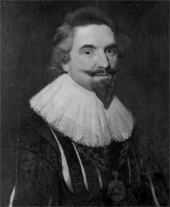
Sir Cornelius Vermuyden: click to learn moreAs Trevelyan notes, there had been plans to drain the Fens and make them more widely habitable since Elizabeth (I)'s time, with jealous eyes cast across the North Sea to Holland, whose modern name, Nederland, means "the lowland". It was eventually achieved by Dutchman Sir Cornelius Vermuyden, who was commissioned by King Charles I on the basis of his work in reclaiming parts of Essex from the sea. He oversaw the creation of artificial waterways - from ditches (one runs outside our house) to rivers - to channel water to the Wash, into which water was pumped through a series of windmills, although the job is now done electronically.

One principle Vermuyden insisted on was that large areas of land should not be built on; they might be cultivated (Taylor refers to the Fens in Coast as "a huge growbag"), but they needed to be free from buildings so that they could absorb precipitation, so it's disturbing to learn that politicians who either dont know, or don't care about, this country's history demanding that Cambridgeshire greenbelt land be built on. Some of this land is next to us, and higher than us - even with the fields there, we sometimes get floods: should the soil and grass be replaced by concrete, we'd better buy life-jacRichard Normington: click to read his post on housing targetskets! We were all relieved to hear the Conservatives' plans to scrap national plans and promote local decision-making in the area of house-building, as reported by Richard Normington - not due to party-political considerations, merely because not all of us can swim!

Miranda Krestovnikoff: click to read more about Coast presentersI'm a birdwatcher - albeit not a twitcher, I'm not into ticking boxes - so it was gratifying to see Coast deal with the half-million feathered friends who use The Wash as a stopping-off place each year during long migrations; I was surprised that oystercatchers, one of my favourite birds, sometimes travel from the Arctic to Africa. It was interesting to see how plaoystercatcher: click to see more wonderful images of natural Britain by Mark Holdernesscid the birds were when caught by a cannon-net for purposes of ringing, with ornitholigist Miranda Krestovnikoff explaining that this made the job of the Wash Wader Ringing Group so much easier.

Presenter Mark Horton finished the show by saying that, due to rising sea levels, a decision would have to be made regarding whether to fight for the land around The Wash, or give it up to the sea. Businessman Peter Dawe proposed a controversial Wash tidal barrier in 2008 but it seems to have sunk without trace, although I wouldn't be surprised if it were refloated given that we now have near-idle windfarms that are killing bats and eagles.

If any of you reading this can access the BBC, I thoroughly recommend Coast as a compelling and informative series on the natural history of these islands, which at the moment do not have borders but rather coasts.

Sunday, March 28, 2010

lights on: don't let earth hour usher in a dark age

click to read how to beat the Earth Hour fascists next yearIn the Draughty Old Fen last night, I didn't see many more houses in the dark than the number of people who are usually out on a Saturday evening leave behind. The reason I was looking was that Earth Hour took place from 8.30-9.30, during which people who believe the theory that the activities of humankind are causing our climate to change were told to leave their lights off to make "a call to stand up, to take responsibility, to get involved and lead the way towards a sustainable future".

If so, Earth Hour fell at the first hurdle. In the words of the Daily Telegraph:

Even if power stations are turned off, the upsurge in turning the lights back on one hour later will require power stations that can fire up quickly like oil and coal.

Energy experts said it could therefore result in an increase in carbon emissions "rendering all good intentions useless at a flick of a switch".

But WWF said the campaign was about raising awareness and saving energy in the long term, rather than a short-term fix.
Any chess player understands the principle of making an immediate sacrifice for a future gain, but if the WWF (World Wildlife Foundation) and its Green fellow-travellers were really into long-term thinking, they wouldn't have campaigned for decades against the cleanest proven source of large amounts of energy around: nuclear power. Because the protests of a tiny minority of vocal vested interests were heeded, Great Britain now has only 19 nuclear reactors, and the new generation, commissioned only last year, won't be ready to fire up until 2020, if there aren't yet more objections.

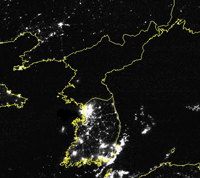
I was interested to see a night-time satellite image of South Korea taken duclick to read Anthony Watts on Earth Hour in North Korearing Earth Hour on Anthony Watts' Watts up with That blog, showing the country's towns as lit up as on any other night, while on the north of the border a Communist dark age still exists.

I am concerned that in our still-free societies there are those who would like to lead us into such a dark age and, although little that justice-and-peace types say surprises me, I was shocked last year to be invited to "fast" from the lights in my house from Ash Wednesday so that I and my family would appreciate God's gift of light on Easter Sunday. Was it coincidence that this was also the time of the changeover from real lightbulbs that have served us well from Edison's time to the pathetically poor energy-saving bulbs that don't even light up when you switch them on?

click to read 'Petrarch and the Dark Ages' by Paula StilesSuite 101's Paula Stiles identifies the term Dark Ages as having originally been coined by the Italian Renaissance poet Petrarch, who "appears to have used the term to describe the 5th to 14th centuries in protest at the relentless denigration of ancient pagan religion by Christian writers during this period."

Bertrand Russell, in his A History of Western Philosophy, doesn't link Petrarch with the phrase, but places the conception of the modern era at the Renaissance (in a chapter entitled The eclipse of the Papacy), and vents his anger on the Fathers of the Church, with special bile reserved for St Augustine, whose death was roughly contemporaneous with the final decomposition of the Roman Empire:

It is strange that the last men of intellectual eminence before the dark ages were concerned, not with saving civilization or expelling the barbarians or reforming the abuses of the administration, but with preaching the merit of virginity and the damnation of unbaptized infants. Seeing that these were the preoccupations that the Church handed on to the converted barbarians, it is no wonder that the succeeding age surpassed almost all other fully historical periods in cruelty and superstition.
(It should be said that Russell lets his prejudice - and western ethnocentrism - trump his erudition here: one could say that the rump Roman Empire, as the Byzantine civilisation centred on Constantinople, survived happily into mid-Renaissance times until destroyed by Sultan Mehmed's Ottoman army in 1453).

But how dark were the dark ages? If the past is another country, we would be ethnocentric ourselves to blame other civilisations for not undergoing the explosion of progress that has marked ours since, say, the invention of the steam locomotive by William Murdoch and James Watt in the late 18th century. But the early medieval period was not short of eureka moments in many fields.

In 1150, for example, the Knights Templar sowed the seeds of modern capitalism by inventing the "letter of credit" - which would evolve into the cheque - that allowed aclick to go to Top 10 Inventions of the Middle Ages pilgim to deposit funds in one place and redeem them in another far away.

Shortly afterwards, the arbitrary power of absolute monarchs was dealt a fatal blow by the Magna Carta, signed in England in 1215. Around the same time, Franciscan Friar Roger Bacon would initiate the scientific method by making a hypothesis, testing it and then refining it further if it passed the test; if not, moving on to another hypothesis - one of his experiments was on the ancient remedy of ground willow bark to treat fever and pain, which would be built on by French chemist Charles Frederic Gerhardt to synthesize Aspirin in 1853.

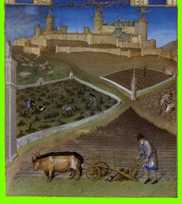
Underpinning both of these - and much else - was the novel addition of wheels to the plough in the 6th century (aboone of Milliband's banned adverts, click to read more...ve), allowing it to increase in weight and till more and heavier soil, allowing populations to increase and create more pressure for innovation.

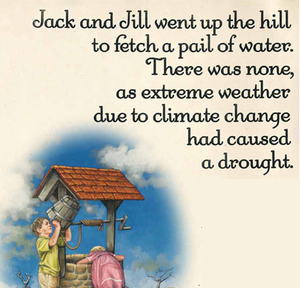
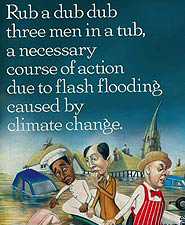
But now we have a movement of groups of activists, supposedly informed by science, to stifle any innovation that they do not approve of, and allow only research that saves the appearances of anthropogenic climate change/global warming, which is being shoved down the throats of our children and young people in education and leisure. Case in point: energy secretary Ed Milliband commissioned adverts promoting the theory of anthropogenic climate change as fact and using nursery-rhymes to do so, only (thank God) to have them banned by the Advertising St...and another banned advert;again click to read moreandards Authority on he grounds that the clear implications of the ads weren't supported by science. Milliband had obviously studied his Jesuit educational theory: "give me the child for his first seven years..."; but at least the lights are still on in the ASA.

The Telegraph's Murray Wardrop reports that earth is said to be entering a new period of geological time due to the acts of humankind having an indelible effect on old Gaia. Eugene F Stoermer of the University of Michigan's Center for Great Lakes and Aquatic Sciences places the handover from the present Holocene era to the putative Anthropocene at the end of the 18th century and "James Watt's invention of the steam engine" - William Murdoch obviously having gone the same way as Alfred Wallace, Friedrich Engels and woogie.

Last night I marked Earth Hour by having every light in the house switched on - except Maxima's room, as our cat Magus was curled up sleeping on her duvet. It was no mere excercise in contrarianism - we need a symbol of our desire to keep the lights on in science, and in our hard-won freedoms of conscience and expression.

To allow a Dark Age of fluffy earth-worship to be imposed would necessitate abuses of knowledge and wisdom that would have horrified the followers of the Old Religions whose torches were finally extinguished by the so-called Enlightenment's genteel patrician oppression; and the population control measures needed for proposed swingeing cuts in carbon dioxide (a gas necessary for all life on earth) would make the Holocaust look like a practice session. And guess what? It woulreprise: click to read Damian Thompson's advice on climate changedn't be the lives of hand-wringing liberal intellectuals that were demanded.

Come next Earth Hour, my electricity meter will be working as hard as ever and for a good cause. When the time comes, I heartily commend Damian Thompson's advice to you: "Beat the 'Earth Hour' fascists and turn on your lights NOW!"

Tuesday, March 9, 2010

top tips for Tuesday

top tips for Tuesday

Ten top tips this week, starting with Cambridge's Big Three Conservative bloggers!

City Councillor Chris Howell - click to read blog

The Coleridge Conservative Action Team, including City Councillor Chris Howell and candidate Andy Bower, looks at the police's success in closing down two brothels in the city's south-east area, then meditates on the injustice in doffenences in the BBC's coverage of the financial affairs of Conservative and Labour donors...

nick hillman - click to read his account of the function

...Cambridge's Prospective Parliamentary Candidate, Nick Hillman, blogs on Rwanda's President Kagame's speech to the Royal Commonwealth Society on his country's entry to the Commonwealth, focussing on young people in Africa and the world...

Richard Normington - click to read more
...and Richard Normington picks up on Iain Dale's question of why the next Budget hasn't been announced yet.
click to read the article on football prediction at physorg.com
Alex Ferguson watch out: Lisa Zyga speculates on the US site physorg.com on whether the result of a football game can be predicted through maths.

click to read Neuroskeptic's summary of this curious case

Anybody who knows anything about mental illness or recovery from drugs misuse has heard of serotonin and dopamine - here Neuroskeptic summarises the case of a chap who was born with a brain unable to synthesize either.

click to see the whole cartoon and ead Bones' commentary

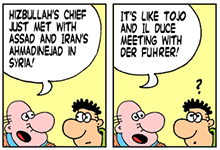
The cartoonist Bones - aka Yaakov Kirschen - looks at a meeting of three modern dictators and compares in to events on the eve of the Second world War - click the pic to see the whole cartoon.

photographers - click to read about the free app and get to it!
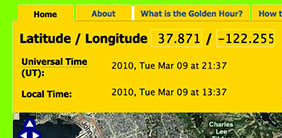
One for the photographers of both digital and analogue disposition: petapixel posts a link to an online application that calculates the "golden hours" - the time immediately after dawn or before sunset - for anywhere on the globe.
The Seventeenth Century History blog ponders the decisions to sack Naomi Tadmor and David Ganz, respectively an early modern historian and Britain's only Professor of Paleography, in a polyglot post bemoaning the dumbing-down of our education.

click to read about that Adam and Steve apology

Father TF looks at That "Adam & Steve Apology in the wake of a deacon having been forced to make an apology over the prospect of same-sex marriage that, FrTF points out, may not have come from homosexual activists.

click to read Linda's post

But I can make a cappuccino, asserts Linda from Don't Poke the Baby, meditating upon the slings and arrows of outrageous fortune.

Friday, February 5, 2010

needle injury in a playground

click to go to the Look East HomepageIt was distressing to see on the Look East regional news magazine, then read in the Cambridge News yesterday, the news that a council worker had been jabbed in the leg by a used needle in a children's play area. But I found myself wishing that the former news outlet, part of the BBC, had researched their facts about the diseases that can be caught through contact with injecting equipment more thoroughly.

The needle had been wedged into the rope seat of a swing then, presumably, broken off, and had jabbed Jason Law, who works as a groundsman for Littleport Parish Council in East Cambridgeshire, through the trousers.

According to Look East, Mr Law would have "an agonising wait of 6-8 weeks" before he found out whether he would find if, God forbid, he had contracted anything from the needle.

This is tosh. The diseases most often caught from needles - Hepatitis B (against which any council should have workers like Mr Law vaccinated), Hepatitis C and HIV take a minimum of three months to show their ugly faces; in reality, negative test results are meaningless unless samples are taken six months after exposure. The Cambridge News got it right: "he has to have regular blood tests and injections over the next six months before, hopefully, being given the all-clear". The initial tests would have been at the behest of the behemoth which wban doormats? click to read moreants to stop schoolchildren play conkers, push gravestones over and now ban doormats: the insurance industry. Should Mr Law be found to already have an illness that might be caught through contact with needles or other injecting equipment - or indeed through something as innocent as a boyhood blood transfusion - any payout would be substantially reduced or indeed non-existent.

It's being presumed that the needle was put into the swing-seat maliciously, as well it may have been. On the other hand, there is a growing awareness among the various communities of injectinfits in a pocket: a typical burnbing drug-users that they have a responsibility not to allow their equipment to be reused, which might risk transferring the very beasties that Mr Law has been put at risk of. In the absence of education otherwise, they often stick needles into trees and snap the attached syringes off (and the needles often later fall out and await a passing child in thin-soled sandals).

The correct procedure, of course, is to place the used injecting equipment into a burnbin/sharpsbin and take it to a needle-exchange, which is usually a pharmacist displaying one of the symbols to the right; or it may be within a drugs agency; from either needle exchange signs for the uk and usthe burnbins will be collected and incinerated, hence the unofficial name "sinbin" (incineration-bin).



What happened to Mr Law is of course the responsibility of the individual drug-user, and if this individual is found I hope they lock him away and throw away the key, both for what they are putting the groundsman through and the risk to which they exposed children at play. But, given that in the year to April 2009 hundreds of paedophiles and rapists were let off with cautions, I'm not hopeful.

What doesn't help as well is the refusal of some authorities to accept that a serious class A problem exists within their boundaries - perhaps a consequence of public bodies being allowed to rate their own performance?

click to read an abstract on drinking in methadone usersAnother stumbling-block can be groups of residents fearful for their house-prices putting pressure on the outlets where Methadone is dispensed to be closed, as they are unhappy at seeing what in reality is a minority of clients collect their heroin-substitute then sit around swallowing cheap strong lager or cider. They're looking at the wrong side of the equation: if off-licenses, including shops that sell alcohol from dawn till after dusk, were forced to raise the price of their Carlsberg Special Brew, White Lightning Cider and the rest - as the Conservative Party has pledged to make happen - the problem would much lessen.

The war on drugs, of course, must continue; but like any war, resources must be targeted on a pragmatic basis. For example, it would make more sense to decriminalise or even prescribe - under strictly controlled conditions - diamorphopium poppy: click to read moreine (heroin) for the purposes of detoxification than to cede to the many attacks on the illegality of cannabis, because the problem of cannabis cultivation can largely be dealt with within our shores, whereas 95% of heroin comes from Afghanistan. Until a decision can be made as to whether to buy the products of the poppy fields at a higher rate than the Taliban offer and produce pharmaceutical opiates, or apply liberal helpings of Agent Orange (or some such herbicide) thereupon, all we can do is disconnect what supply from demand as we can and deal with the effects of what gets through.

But all this doesn't help Mr Law. I wish him as much peace as he can garner over the coming months, and hope he is given the support he so richly deserves for his devotion to his job.

Tuesday, January 19, 2010

top tips for Tuesday

top tips for Tuesday
click to go to the site of the Hôpital Albert Schweitzer

This is a general link to the Hôpital Albert Schweitzer blog in Port au Prince, Haiti, where managing director Ian Raswon is keeping the world posted of the sometimes grim progress and where you can donate to the effort.
the IDF Search and Rescue Force works in Haiti - click to read moreAt Media Backspin, we hear that Venezualan president Hugo Chavez is accusing the US of using the quake as a pretext to occupy Haiti - a charge that French Cooperation Minister Alain Joyandet is repeating. So, we're asked, what is the role of the media in this and can media offering a partisan perspective be said to be neutral observers?
clieck to rad more about the Vatican's online Chinese Bible


Elsewhere, the Catholic News Service announces that the Vatican is now offering the Bible online in Chinese...
click to read Josephine McDermott's blog at Chelsea Girl in China

...while in the country itself, Telegraph blogger Josephine McDermott - Chelsea Girl in China - wonders how the stand-off between Google and China will play out.
clcik to read more about the RockYou scandalIn the context of news that the British Government - unlike that of France and Germany - isn't warning its citizens off Internet Explorer after serious security weaknesses were uncovered, Richard Hollis reports on the breaching of 32 million accounts on the social networking site RockYou, exposed by the hacker responsible after the site issued denials.
click to read more about the real story of the Pope's visit to the Rome Synagogue


Fr Tim Finigan posts on Pope Benedict's visit to the Rome Synagogue and, tellingly, quotes Mordechai Lewy, Israel's Ambassador to the Holy See, as saying taht there was a certain disappointment in some parts of the press when a crisis failed to emerge.
Beth Kanter: click to read more about Social Media and Haiti

Beth Kanter, who blogs on using social media for non-profit, is based in the US, but many of her ideas could be applicable anywhere. Here she looks at some ways to help Haiti.
click to read more at the site for the study of Anti-Americanism


Last November, Conservative leader David Cameron launched AmericaInTheWorld.com, the online presence of the London Centre for the Study of Anti-Americanism. Here, Paul Goodman meditates on how, when it comes to major disasters, the US is damned if it does and damned if it doesn't.
trial without jury?  Click to read more at Richard Taylor's blog


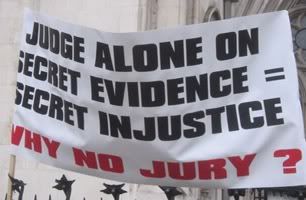
Things to come? Richard Taylor on the first trial without a jury in modern times on British soil.
click to read more on the dereliction of duty of many science journalists


And finally, Catholic Herald editor Luke Coppen on how many science journalists are passive consumers of scientific stories - for example during the passage of the egregious Human Fertilisation and Embryology Bill - and have forgotten how to investigate.