Showing posts with label forces. Show all posts

Monday, May 3, 2010

top ten songs about flying

Click here to go to Top Ten Songs about Flying for 56k modems or slow broadband

When I first heard of Eyjafjallajökull, I was of the same opinion as Richard Normington, in that it seemed more like a keyboard malfunction than anything else. But things started tRichard Normington: click to read moreo look sinister when continent-sized areas in the course of the volcanic cloud, containing putative glass fragments that could cause high-flying jet engines to close down, were declared no-fly areas on the basis of computer models that are as diconnected from reality as the politicians who made decisions solely on their predictions, without reference to reality.

Thankfully, we can fly again. As it happens, I don't fly that often, but even in the circumference of the world I inhabit the no-fly orders had consequences, from a colleague who couldn't make it to work, through a fellow worshipper whose presence had been required to validate church accounts, to a friend who had been badly injured abroad and whose family was deprived even longer of her presence.

I thought that I'd like to dedicate this month's Top Ten to the theme of flying, because the cooling of Eyjafjallajökull's ire coincides with a crucial time in our country's history, when we decide which political parties will suppress the innate instinct to fly as high as we can, and which will not only nurture it but ensure that we lift up our peers in so doing.

10 - Would you like to fly?

The 5th Dimension, who were inducted into the Vocal Group Hall of Fame in 2002, are famous for taking the song Age of Aquarius from Hair to the top spot. My favourite song of theirs is Jimmy Webb's Up, Up and Away which, whenever I hear it, brings memories of childhood awakenings to the song being played on the ever-present radio.


9 - Wild Swan

In my opinion, Tony Clarkin - the bearded guitarist in the video - deserves to be hailed alongside Pete Townshend as arranger par excellence of his own lyrics with insight and sensitivity worthy of Berlioz. The video, telling the story of a son who simultaneously hero-worships his crusading father and feels the overarching need for his presence beside him, comes to mind because of a wild swan that's been making the news in Cambridge. Called Mr Asbo, he's been accused of harassing and even overturning boats on Cambridge's river Cam. A recent film aired on BBC 1's The One Show displayed the swan at his most aggressive - but the BBC has been accused - in a video that I recommend you watch - of goading the swan's mate into leaving her nest in order to see off a canoe that was ordered to go dangerously close to it for the sake of "car-crach TV". Given that Asbo, according to vet and Telegraph blogger Pete Wedderburn, has actually had his cygnets killed by "passers by", I'm not surprised he's mardy. The state hasn't killed my children, but arrogates to itself ever greater powers to brainwash them according to abusive agendas that seem to have no other purpose than to "rub the Right's nose in diversity". I feel as angry as Mr Asbo.


8 - Volare

In February 1991, I had an interview in London and arranged to stay with a friend in Brixton. The interview went well but later in the day came the news that 10 Downing Street had been attacked by an IRA mortar. Mobile phones being as rare as they were huge in those days, I found myself having to wait in one of the lines that trailed from every phone box. My friend explained, "I think everybody's phoning home to say they're ok". That evening, he. I and another friend went to his flat in the middle of Brixton High Street, kicking up the snow that had emptied the thoroughfare of cars. Since all of us had lived for some time in Italy, this is the song we sung:


7 - Flying machines in pieces

This is such a video of James Taylor's Fire and Rain, which is about, in part, the suicide of his fried Suzanne Schnerr, whom he'd met while both of them were hospitalised for addiction to heroin. "Flying Machine" was the name of his first band; but the line "flying machines in pieces on the ground" is about more than the breakup of a musical unit, but I wonder if. when Taylor sings "Susanne the plans they made put an end to you" (my italics) he's running from the couple's co-dependency. But. counterintuitively, I can see a better case for the use of prescribed pharmaceutical diamorphine (heroin) under strictly controlled than for legalisation of cannabis, because we cannot halt supply of heroin within our own borders. The thing is, cannabis-legalisation site UKCIA (offline at the moment) has made a case for legalisation of weed as a gateway to legalisation of just about every illegal drug. Having been a drugs-worker, I hope this never happens; I'd hate the misery I saw in the needle-exchange to become commonplace.


6 - So much owed by so many to so few

In 2002, Nick Clegg, now leader of the Liberal Democrats, wrote an article about a school trip to Germany:

A boy called Adrian started it. He shouted from the back of the coach, "we own your country, we won the war". Other boys tittered. One put a finger to his upper lip - the traditional British schoolyard designation for Hitler's moustache - threw his arm out in a Nazi salute, and goose-stepped down the bus aisle. Soon there was a cascade of sneering jokes, most delivered in 'Allo 'Allo German accents.
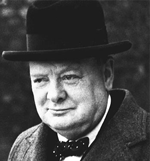
click to read or listen to Churchill's The Few speechI was shocked by his ignorance. Britain was indeed on the winning side of WWII and was a major and heroic player, but to baldly assert that "Britain won the war" is as disingenuous as is baldly asserting that Germany lost it. We must never forget the key role that Britain played in defeating the Nazis (who were by no means synonymous with Germany), but it is salutary to remember that, on the eve of the Pearl Harbour attacks on December 7, 1941, Britain was losing, and Winston Churchill had authorised the distribution of bayonets with a poster campaign saying "at least you can take one with you".

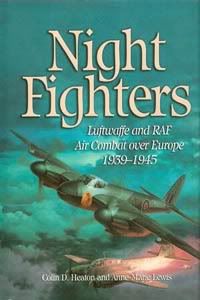
As it happens, historian Colin Heaton concluded in Night Fighters that had Britain been conquered, America would have eventually had confront Hitler's contagious monomania - but Britain would have been a much changed place. Thank God that never happened.

Rector Pellegrina wasn't quite convinced when I confessed a guilty pleasure in heavy metal. I hope this video about the Battle of Britain - by an RAF composed of 10% Polish pilotry - will give her cause to reconsider.


5 - Flying Sorcery

Al Stewart merged his twin loves of flying and history for this song from his classic Year of the Cat album. An article on his website explains the context of the lyrics, from Amy Johnson, to the biplanes called Faith, Hope and Charity which defended the George Cross island of Malta and the double meaning of the Flying Circus. Enjoy this footage of him singing in Cambridge's namesake town in Massachussetts.


4 - Flying for me

John Denver was a founder of the "citizen in space" project and was even considered for the honour, but was pipped at the post by Christa McAuliffe, a secondary/high school teacher who had worked in Washington DC before moving to Concord in New Hampshire. Denver recollected that on the morning of January 28 1986 his adopted son Zac phoned him and told him to put the TV on, any station: there was the Challenger disaster, inspiring him to write:
click to read more about Christa MacAuliffeShe was flying for me
She was flying for every one
She was flying to see a brighter day for each and every one
She gave us her light
She gave us her spirit and all she can be
She was flying for me


3 - Abide in His shadow for life

click to go to the Society for the Protection of Unborn Children websiteWe had a discussion on hymns at our annual church meeting recently - you know the sort, that can quickly degenerate into an "old=Good" vs "New=Better" argument all too quickly. It was left to our venerable and classically-trained organist to point out that while traditions need maintaining, some new hymns are beautiful. One of these, I think, is Fr Michael Joncas' On Eagles' Wings, based on Psalm 91 and Isaiah 40:31. Given that John Smeaton, director of the Society for the Protection of Unborn Children, has been correcting misleading Government advice on sexual education and abortion, I think it's appropriate that this video of the song performed by Angela Birkhead-Flight is dedicated to "all babies who have died prematurely due to abortion, miscarriage or other means".


2 - Icarus

Although Kansas sung a song specifically about Icarus, another one - Carry On my Wayward son - seems to be a more meditative take on the sublime fall of the son of Daedaldetail from Lament for Icarus by Herbert Draper - click to read Benedict White's blogus, the craftsman who gave a ball of yarn to Ariadne so she could guide herself and Theseus out of the Minotaur's labyrinth, although there appear to be elements of Plato's allegory of the cave threaded through. Father and son, of course, strapped on wings of wax and feathers in order to escape the wrath of King Minos of Crete, but Icarus ignored a warning from Daedalus not to fly too high, and plunged into the sea when the heat melted the wax. It's often taken as a cautionary tale warning those who are over-ambitious of the danger of flying too high on constructions that should have been kept closer to earth. Just so, blogger Benedict White tells us that Gordon Brown was warned when Labour took power in 1997 that his proposed financial reforms would lead to a systemic banking failure. But he flew too high...


1 - The final attack

In the film The Dambusters we see a disconsolate crew looking back at the Möhne Dam on the Ruhr, feeling they have failed: then, suddenly, under the attacks that have been visited upon it, the dam's wall collapses and water floods out.

In reality, the crew pulling away was the fourth wave: a fifth Lancaster dropped its bouncing bomb upon the already-disintegrating wall to consolidate the damage.

This election has been a long, unpredictable slog. The Conservative party's first wave of attacks upon Gordon Brown, who is damming up the British people in a politically-correct prison where the silent majority of law-abiding people are punished the most, might be said to have happened shortly after his unelected accession to the Labour throne in June 2007, when he bottled out of an election he might have won when the David Cameron and George Osborne announced that only millionaires would pay inheritance tax. The second wave was a tsunami of activism, fuelled by both shoe-leather and blogs, cat-herding organised by the long-suffering Eric Pickles, the third a series of defeats inflicted upon the Prime Minister,Chancellor of the Exchequer and miscellaneous Ministers by David Cameron, George Osbourne and the Shadow front-bench team. The fourth is happening now, as candidates, activists and supporters work like Trojans to bring about change necessary for national survival.

The fifth wave is coming shortly, even as the dam walls crumble - illustrated by Gordon Brown's disastrous labelling of his own supporter, Gillian Duffy, as a "bigot" because she challenged the prevailing orthodoxy on immigration, imposed on people like her by rich ideologues who do not have to live in areas like hers. The fifth wave of attacks upon Labour's walls of infamy will come on May 6 and be inflicted by the voters, and I pray that the power-houses of willful negligence are swept away by the resulting inundation.


If you liked this, click here to go to more Top Ten Songs about...

Tuesday, March 9, 2010

war and information: what Lloyd George could teach Gordon Brown

I was concerned to read an article by the Telegraph's Andrew Gilligan, saying thaclick to go to the Illingworth Collection at the National Gallery of Wales sitet journalists will be banned from the front line in Afghanistan once the date for the General Election is set.

I can understand the reasoning behind a certain amount of discretion about military matters in time of war - censorship imposed upon the newspapers by the wide-ranging 1914 Defence of the Realm Act was intended to maintain the morale of families, many of whose members would vote in an election that eventually came in 1918.

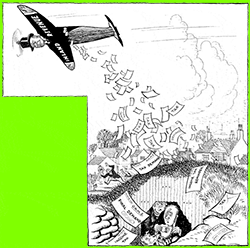
But nevertheless war journalism, from Winston Churchill's commission as a war reporter during the Boer war, through Leslie Illingworth's satirical cartoons for the Daily Mail to the embedding of journalists in military units today (which is going to be banned), has been essential in dispelling rumours about what might really be happening at the front.

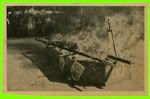
snatch land roverBut what's really happening at the front may be, for Prime Minister Gordon Brown, the problem. For example, Snatch Land Rovers (left), nicknamed "mobile coffins" due to their vulnerability to mines, are to be phased out in favour of more robust Ridgbacks. But, after Gordon Brown's markedly uncensored visit to troops in Afghanistan on March 5 - after giving evidence to the Chilcot Inquiry on Britain's involvement in the Iraq War about his commitment Ridgbackto funding the Armed Forces that was immediately rebutted by senior military chiefs - Shadow Defence Secretary Liam Fox claimed that the procurement of 200 Ridgbacks (right) was at odds with the tender for 400 originally put out.

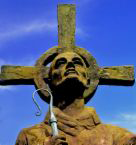
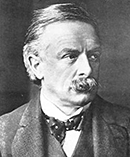
David Lloyd George - click for biographyIf this is the reason for the media blackout, it is a myopic repetition of history by those who appear to have forgotten it. When David Lloyd George took over as Prime Minister from Herbert Asquith after the latter's resignation in 1916, he had no choice but to relax reporting restrictions upon newspapers somewhat, because the tales of soldiers returning from the fighting were at odds with tales of victory planted by official sources.

Brown might again ban forces personnel in Afghanistan from using social media, as happened in February last year only to have the ban lifted that August, but is he going to cancel leave and Medivac during the period of "purdah" - a domestic political protocol intended to make government department communications equitable to all political parties once an election has been declared? If he wishes to put us all intsocial media and politics: click to read more at Reuterso a position where we don't talk about the war, he's on a hiding to nothing: if returning soldiers forced Lloyd George to loosen his government's stranglehold on the press, what will be the effect of full-on deployment of social media during [the] British election?

One thing's clear to me: if the Government thinks it can stage-manage information on a war that half the world's reporting on, we'd better keep an eye on the ballot boxes on election night.

Tuesday, February 16, 2010

top tips for Tuesday

top tips for tuesday, ash wednesday
click to read about a vicar's Lenten fast from bloggingVicar and blogger David Keen gives lots of reasons to give up blogging for Lent. I'm not contemplating a Lenten fast from cyberspace, but with more things competing with my time something's got to give, and after the shouting's done over here that might be the blogging. I found reason (4) very compelling, but the killer quote was from Reginald Foster - that we should fast from what we sense is becoming a compulsion.
click to read Bosco Peters' post on Ash Wednesday

Revd Bosco Peters of the Liturgy blog wrote a post on Shrove Tuesday and its relation to Mardi gras and, as Ash Wednesday approaches, here's his reflection on the day's Collect and observing Lent.
click to read Risa's greeting for Adar


I've read Rabbi Shai Specht's one-line explanation of the month of Adar as "the Jewish Mardi Gras" - here Risa from Isramom wishes everybody a Happy Adar!
Labour MP David Wright has got himself into a bit of a pickle. A tweet in his name referred to his political oclick here to go to TotalPoliticspponents as "scum-sucking pigs" ("if you put lipstick on scum-sucking pigs they're still scum-sucking pigs" - an obviously irresistable dig at Sarah Palin). If he'd put his hand up and said it was a stupid mistake we'd all have moved onto the next gaffe, but instead he seemed simultaneously to defend the remark as "legitimate comment" and claim that his twitter account had been hacked, turning the issue into one of ministerial propriety. Here, TotalPolitics director Iain Dale reproduces a letter from Eric Pickles, Chairman of the Conservative Party, asking him to answer several questions on the affair.


We've just had Valentine's Day, and this is the most poignant image I could find posted on that day: a US military nurse whispering into the ear of an unconscious Canadian soldier as they fly him to a hospital base in Afghanistan. May God be with all the Coalition troops as they roll out Operation Moshtaraq.
click to read some counterintuitive wisdom on marketing using new media


Seth Godin explains how companies racking up as many followers as possible on Facebook etc are on a hiding to nothing compared with viral growth of an idea or product starting from a very small base.
click to read David Appletree's review of the Algemeiner Facebook fan page


The name of Elie Wiesel has been sorely misused in the climate debate, therefore I recommend you help restore the balance by following David Appletree of the Jewish Internet Defense Force's advise on his new project, the Advisory Board of the Algemeiner.
click to read Fr TF's post on priests and the new media


Fr Tim of the Hermeneutic of Continuity writes on the Pope's encouragement of priests to use the opportunities afforded by new media, and includes a YouTub video entitled "Why am I a Catholic"?
click to read about the similarity between the UK satellite system and a famous sci-fi film


Richard Normington worries about where the people who thought up the name for the UK's military satellite system got their inspiration from.
we're meant to talk to meat?  Click for enlightenment


"We're supposed to talk to meat?". Sci-fi author Terry Bisson posts the correct version of a legendary short story of his that has been orbiting around cyberspace.

Sunday, November 22, 2009

top ten songs about times and seasons

10 - Turn, turn, turn

You know it's the 60s when you hear the screaming at the start of this clip from the US music show Shindig that sets the theme for this month's top ten. It's a setting of Ecclesiastes 3:1-8 by Pete Seeger, the man of peace who had to be restrained from taking an axe to Bob Dylan when he went electric at the Newport Folk Festival in 1965, illustrating peaceniks' curious propensity for violence when things they care about get messed with. Seeger reportedly donates 45% of donations from the song to the Israeli Committee against House Demolitions, which opposes houses being built by Jews in the country's so-called "occupied" territories, and has been accused by NGO-Monitor of using "demonization rhetoric that is unrelated to housing issues,...participat[ing] in anti-Israel events" and promoting "a highly politicized narrative of the conflict, falsely accusing Israel of ethnic cleansing and state terrorism". Here's the song:


9 - A time to be born, a time to die

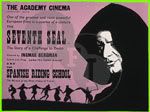
click to see Ian McKellen as The Seventh Seal's Death in Last Action HeroThe Seventh Seal is Ingmar Bergman's masterpiece based on Revelation 8:1, which speaks of a silence in Heaven when the seal of the title is opened by the Lamb of God. The film's influence on cinematography stretches from Arnold Schwarzenneger's soul-searching Last Action Hero to Bill and Ted's Bogus Journey and many points in-between (for example the epic chess game in Harry Potter and the Philosopher's Stone). I first heard Scott Walker's 1969 tribute to it quite recently on Stuart Maconie's BBC Radio 6 show The Freak Zone, in which he showcases progressive rock, psychedelia and the forgotten delights of music that doesn't make it onto more mainstream shows.


8 - A time to kill, a time to heal

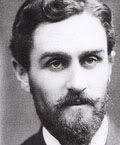
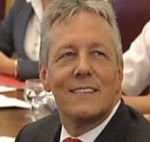
(Sir) Roger CasementLondoner Arnold Bax, who loved to holiday in the West of Ireland, composed Elegiac Trio in 1916 about the failed Easter rising, the elegy being for the chocolate-box Ireland of his imagination as much as the dead. What was arguably more tragic than what happened was what didn't - Roger Casement was picked up by British forces shortly after landing on Banna Strand in Kerry, having been taken there by U-Boat. Casement was trying to get the message to Irish rebels to abort the operation, as the German promise of help - on the basis of "my enemy's enemy" - was, like the French promise of help during the 1798 rising, composed of little more than words. PPeter Robinson, DUP leader - click to read moreerhaps the over-riding tragedy is that the relatively inclusive United Irishmen of 1798 were progressively sidelined by more sectarian organisations which spent as much energy on internal rifts as on anything else, but like the rest of the world I pray that Democratic Unionist Party leader Peter Robinson can manage to keep his party on-side with the power-sharing arrangement in the context of that arrangement having been set up by politicians who wanted Loyalists to give up more than they were perhaps ready to. Unfortunately not quite the whole piece is on this clip (I can't find it in one piece), but I hope you get the taste of the gentle Irish breeze.


7 - A time to plant, a time to reap

I was initially going to put this one under "a time to laugh, a time to weep", as we've all been to weddings that start with joyous reunions surrounding the joyous union before Auntie Betty gets maudlin over a sherry too many, then chose this heading because one of the many things weddings indicate is the maturing of the human harvest, an allegory that deepens my enjoyment of each year's Harvest Festival at St Gallicus. Harnick's lyrics say it all in perfect harmony with Bock's music on Sunrise, Sunset from Fiddler on the Roof.


6 - A time to build up, a time to break down

a burning coffin at the Death of Hippy ceremony in Haight Ashbury - click to read the original speechThis is archetypal psychedelia recorded in 1967, the year in which the "Death of Hippy" was proclaimed by, er, hippies. Three years afterwards, it appeared on the soundtrack of an atrocious piece of trash called Beyond the Valley of the Dolls, which was about the section of the generation that thought it invented sexual liberation, but which was reaping the harvest sown by its parents who were fighting a war that some thought might end civilisation. A lot of good stuff happened in the 60s - you can't diss the decade that saw Gillian Anderson's conception - but a lot of people, often women who were being conditioned by fashionable feminists to become cannon-fodder for the exploitation rodeo, were broken; witness novelist Martin Amis' contention that "the sexual revolution killed my sister Sally". Click on the clip, and immerse yourself in the strangeness.


5 - A time you may embrace, a time to refrain from embracing

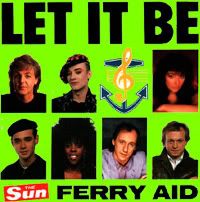
the Sun's recording of Let it BeNever somebody to let a song away with only one meaning, Paul McCartney combined the faith of his childhood with memories of his mother in Let it Be. The middle verse seems to be a meditation on a verse of a Prayer to Our Lady of Lourdes, which I've only ever seen in French, which enjoins the Virgin priez pour ceux qui aiment et sont partis - "pray for those who love and are parted". There are many ways in which one can experience the heartbreak of being parted, so I thought that in was appropriate to post this video by Ferry Aid, produced by Hit Factory team Stock, Aitken and Waterman and starring Macca, which was released in 1987 in the aftermath of the sinking of the Herald of Free Enterprise near Zeebruge in Belgium. Parental advisory: contains shoulderpads and Big Hair.



4 - A time of war, a time of peace

Edith PiafThis was sung by Edith Piaf, "the sparrow", about les Grognards, an elite unit - essentially a special forces regiment - who were sent to Russia in the ill-fated campaign defeated by Generals January and February. In the song, the soldiers' shades march through Paris, a city they never had a chance to see during their brief lives and whose citizens' freedoms were won by their sacrifices. Its a song about our duty of remembrance towards the glorious fallen, summed up by Herodotus with Simonides' epitaph for the slain Spartans in his Histories -
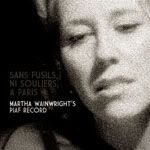
Go tell the Spartans, stranger passing by, Martha Wainwright's Piaf album: click to read a review
that here, obedient to their law, we lie.
- and recited at the start and end of every Royal British Legion meeting: "at the going down of the sun, we will remember them". Here it's performed by Martha Wainwright, who's just released an album of Piaf songs.


3 - A time for every purpose under Heaven

It was a very good year is a fitting humanistic summary of the Ecclesiastes passage. It was made famous by Frank Sinatra, but here's Ervin Drake's song covered by Ray Charles duetting with Willie Nelson.


2 - Chanukah

(Or Hanukkah song, I'm not sure about the translitteration.) How can I write a post about times and seasons and not get seasonal for the last couple? Adam Sandler wrote this for kids who felt they were the only ones in their streets not to have a Christmas tree. The irony is that, here in East Anglia, a lot of people have plastic Chanukah candleabra in their windows thinking that they're Christmas decorations. Adam Sandler performs his original (and best, I think) Chanukah Song on Youtube, but in the only clips I can find he's so busy being Adam Sandler he doesn't give the song a chance. So here it is performed by Oy Capella, Syracuse University's mixed Jewish a capella outfit.


1 - O Come O Come Emmanuael

Enya performs this classic Advent hymn, mixing English with Irish, that voices a longing for reconciliation for God that Christians believe came in the person of Jesus Christ. More Christmas music coming soon.


If you enjoyed this, click here for some more Top ten songs about...

Sunday, November 8, 2009

Remembrance Sunday 2009

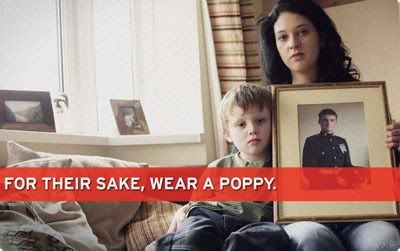
November 11 is celebrated in many places over the world to remember those who have fallen in war and pray for peace, celebrated on the date when the First World War officially ended by signing an armistice in 1918. For example, it's known as Veterans' Day in the US, National Day in Poland and The Day of Peace in Belgium. In Great Britain and the 53 members of the Commonwealth, it's known as Remembrance Sunday. It's tied in with the Royal British Legion's Poppy Appeal, which was conceived of in the US by academic Moina Michael, who was inspired bu John McCrae's poem In Flanders Fields

I was gutted at missing the Festival of Remembrance this year, I can't remember the last time I missed it.

This morning, Rector Pellegrina presented a wreath she'd made from evergreen branches from her garden, and invited the children of the parish - both ununiformed and members of the Scouts adn Girl Guides - to thread poppies into it.

Then, as we do every year, we processed from St Gallicus to the Draughty Old Fen War Memorial, where local clergy called out the names of everybody from the Fen and surrounding villages who had died in conflicts since the First World War - WWII, Korea, the two Gulf Wars, Northern Ireland and the present wars in Iraq and Afghanistan.

There'll be another, smaller ceremony at the War Memorial on Wednesday, when the Parish Council and members of the Royal British Legion will lay poppy wreaths at 11 o' clock on the 11th day of the 11th month. For the first time, children from the Draughty Old Fen will be present. And they'll recite the fourth verse of Laurence Binyon's poem For the Fallen, as we did at the end of the service:

click to read more about Laurence Binyon at firstworldwar.comWith proud thanksgiving, a mother for her children,
England mourns for her dead across the sea.
Flesh of her flesh they were, spirit of her spirit,
Fallen in the cause of the free.

Solemn the drums thrill; Death august and royal
Sings sorrow up into immortal spheres,
There is music in the midst of desolation
And a glory that shines upon our tears.

They went with songs to the battle, they were young,
Straight of limb, true of eye, steady and aglow.
They were staunch to the end against odds uncounted;
They fell with their faces to the foe.

They shall grow not old, as we that are left grow old:
Age shall not weary them, nor the years contemn.
At the going down of the sun and in the morning
We will remember them.

They mingle not with their laughing comrades again;
They sit no more at familiar tables of home;
They have no lot in our labour of the day-time;
They sleep beyond England's foam.

But where our desires are and our hopes profound,
Felt as a well-spring that is hidden from sight,
To the innermost heart of their own land they are known
As the stars are known to the Night;

As the stars that shall be bright when we are dust,
Moving in marches upon the heavenly plain;
As the stars that are starry in the time of our darkness,
To the end, to the end, they remain.

click to go to the Royal British Legion Poppy Appeal

Saturday, October 24, 2009

there's nothing British about Nick Griffin on Question Time

This week's Question Time on BBC 1, starring Nick Griffin of the white-supremacist British National Party, went off with all the brilliance of a damp squib.

James Bethell: click to go to Nothing British's initiative to bring centre-right policy-makers togetherProfessor Calculus and I usually don't watch TV (except for the odd snooker or cricket game) when we meet to put the world to rights over a glass of wine, but we watched QT to see the newly-elected MEP for Yorkshire and Humberside crumbling in the face of real politicians, only to see what Cranmer called "the Nick Griffin show". Griffin certainly faced some hard questions, but smirked through them - and at one point was challenged by host Jonathan Dimbleby for smiling when talking about Holocaust denial - and, in the words of James Bethell, founder of the blog There's Nothing British about the BNP, "retired wounded but on his feet, fit to fight another day".

The BNP leader is never on better form than when playing the victim for the mainstream media - for example, when protestors massed to raise awareness that Griffin was speaking at the Oxford Union with fellow Holocaust denier David Irving, they did their job so well that Griffin was able to grandstand on the national News about "people coming hundreds of miles" to be offended by him.

Having said that, the killer comment of the programme came from a young chap wearing a Kippah (skullcap worn by Jews), who stated, in response to Griffin's claim that Winston Churchill would have been a member of the BNP:
best point of the programme from the man in a KippahSir Winston Churchill put everything on the line so that my ancestors wouldn't get slaughtered in the concentration camps. But here sits a man who says that is a myth just like a flat world was a myth.
Griffin stated the law prevented him from disclosing why he had "changed his mind" on the Holocaust, at which Jack Straw, as Justice Secretary, said he wasn't aware of any law which would punish him from doing so.

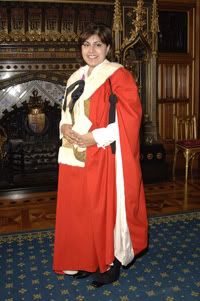
Baroness Warsi: click to read moreFor me, the best bit was Baroness Sayeeda Warsi stating that Britain needed a cap on numbers of immigrants coming into Great Britain, which echoed a Telegraph article written by Labour's Frank Field and the Conservatives' Nicholas Soames, co-founders of the Cross-Party Group on Balanced Migration which states in its title that Cowardice on immigration has allowed the BNP to Flourish and adds that the asylum system, designed to identify individuals in genuine danger of persecution or death should they return to their own countries, has "collapsed". The story defining its collapse has to be that of a Bolivian man whose appeal against deportation was upheld by Judge James Devittie because he'd bought an English cat. In a startling exclusive, the Telegraph's Tom Whitehead reports that Andrew Neather, who had been an advisor to Jack Straw, former Home Secretary David Blunkett and former Prime Minister Tony Blair claims that mass immigration - the Bête Noire of the BNP - was "partly due to a politically motivated attempt by ministers to radically change the country and rub the Right's nose in diversity". (Baroness Warsi's comments on immigration start at 2:38 in the video below.)


True to form, Griffin is again playing to the gallery with a complaint that he faced a "lynch-mob"in the Question Time audience, and that the programme's format had been changed so that it focussed almost entirely on him.

The BNP has a Hitleresque tendency to build a delusional system around a truth, and this is no different. Griffin has a valid complaint here, and Professor Calculus and I agreed that we would've liked to see him drawn out on issues like, for example, Lord Mandelson's manipulating the Post Office strike to soften up the organisation for privatisation, and British banks' reactions to the global financial crisis.

The other "lynch mob" that protested outside BBC Television Centre in London showed socialism's deep-seated ambivalence about fascism, in that they were protesting against a man elected to the European Parliament almost totally by Labour voters disaffected by the Government's ideological method of government that has turned their country into a place they no longer recognised. I wonder if any of them were related to the trade unionists who took to the streets in support of Enoch Powell's 1968 address to Conservative Party workers at Birmingham's Midland Hotel (mis-named the "Rivers of Blood speech"), in which he anticipated Labour's silence on immigration:

Above all, people are disposed to mistake predicting troubles for causing troubles and even for desiring troubles: "If only," they love to think, "if only people wouldn't talk about it, it probably wouldn't happen."

Perhaps this habit goes back to the primitive belief that the word and the thing, the name and the object, are identical.
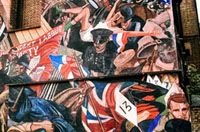
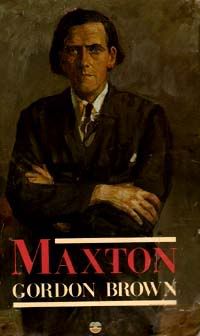
Battle of Cable Street mural, with Independent Labour Party flagOr, indeed, if they were descended from the freedom-fighters who fought at the Battle of Cable Street in London's East End against black-shirted fascists led by Oswald Moseley, the Independent Labour Party MP who, disappointed by his party's response to unemployment, left in 1930 to form the New Party. Gordon Brown, in Maxton, his biography of the hard-left Scottish MP, records that when Moseley left James Maxton said that "he ought not to be condemned but thanked [because] his actions sMaxton by Gordon Brownhowed a deeper sense of responsibility about the unemployed and might lead to a 'new direction' in government policy". And just as the Nazis' response to Germany's economic woes was nationalisation on a massive scale, the BNP's website (which describes the three main parties as "liars, buggers and thieves") proposes nationalisation as a panacea for Britain's. One gets a sense of the political spectrum not as a line but a circle, where "hard-left" and "far-right" occupy the same space.

So whither the BNP? I hope that former Labour voters in north-west England who sent Nick Griffin and Andrew Bron to the European Parliament will withdraw from the abyss come the General Election and vote for the non-fascist party of their choice. But what worries me is the party's attempts to woo the forces, some of whose members, under-resourced and viewed with suspicion by the Government, may seek solace in their empty promises. I finish with a video (sorry, Pam!) from the Nothing British Operation Stolen Valour. Please click the link and visit the site to view the fightback against fascism in Great Britain.


The episode of Question Time discussed can be accessed on the BBC's i-player on the Question Time Site. If you're unable to access it, it's available in parts on YouTube - click here for part 1.

Thursday, September 17, 2009

women and children first

click to read the Cambridge Rape Crisis Centre Information PackI was privileged (if that's the right word) to be invited to a seminar on responses to rape and domestic violence in Cambridgeshire recently, which was addressed by two speakers.

The first speaker was from the Cambridge Rape Crisis Centre, which is the only rape crisis service in the UK to have shut down due to funding issues then reopened, due to the dedication and hard work of several Cambridge women in making small amounts from local sources (like the Cambridge University RAG) before the Government instituted a million-pound fund in 2008 to stop any more Rape Crisis Centres from closing. This fund was re-established in 2009, enabling a a £33,000 grant from the Government Equalities Office Special Fund in the face of "indifference" from Cambridge City Council to a request for funding.

Although prepared to believe that we have a long way to go as regards taking rape seriously, I was still surprised to learn that 17% of women over 16 are estimated to experience some sort of sexual victimisation.

Every rape is reckoned to cost the state around £76,000 in physical and mental health care, police and courts, and the long-term effects of self-harming behaviour such as eating disorders and/or substance abuse. Yet the monies it has received, which will keep it open until April 2010, boil down to £2.50 per caller. A wish-list for CRCC would include a budget big enough to allow a face-to-face service, and possibly also a befriending scheme, including accompanying clients to courts.

The second speaker was from the Cambridgeshire Constabulary Domestic Violence Unit, and had some hard truths to tell us.

Cambridgeshire Constabulary receives reports of 11,000 domestic violence incidents per year - which is 27% of all violent offences - the scary bit being that, on average, a woman will have been at the wrong end of abuse 35 times before she picks up the phone (and 80% of domestic violence incidents comprise a woman being victimised by a male perpetrator, although the Cambridge Rape Crisis Centre links to a website for male survivors of sexual abuse).

Every Police Force in England has a positive action policy on domestic violence: they will arrest an abuser found to be committing a criminal offence regardless of the victim's wishes, in order to lessen the likelihood of threats by the perpetrator.

An arrest will also be made if drugs are found on the premises; and although I am in favour of robust policing on drugs, in the area of domestic violence, including rape, one finds situations where women rely on drugs to block out the pain of what they are going through - possibly even being encouraged to do so. And sometimes it can be difficult to paint a picture of a habitual drug user in court with which a jury can feel sympathy. I felt I was bogged down in the quagmire of grey areas and hard decisions the police must be faced with every day.

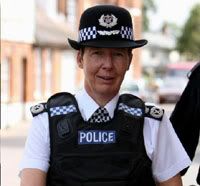
Julie Spence, Cambridgeshire Constabulary Chief ConstableAnother difficult area can be attitudes to women who stay with their abusers; the speaker related asking one police officer who questioned why abused women didn't up and go, "how would you put your life in a bag to leave forever in five minutes?" The officer addressing us was an energetic advocate of continuing training and reminding of the force in general and specially trained officers in particular. As Cambridgeshire Constabulary Chief Constable Julie Spence said earlier this year, "whilst I cannot guarantee that there has never been a time in any police force when an individual claim was not treated seriously, I know of no police officer worthy of their position who would treat [an allegation of rape] with less than absolute gravity".

click to go to 'together we can end violence against women and girlsGoing beyond the seminar, I was interested to look through the Government consultation paper of March this year, due to report back to its stakeholders imminently, Together we can end violence against women and girls, which referred to the many positive achievements which have taken place in the last
ten years, but stated early on that "Government alone cannot be the answer" to the questions we must ask about the continuing unacceptable rates of domestic violence in Britain.

But Government takes it on itself to provide answers; and in the case of the 32 rape crisis, survivors' and healing services to whom the Equalities Office Special Fund gave over £1,330,000 (€1,475,000/$2,175,000), thank God for it. London Mayor Boris Johnson looked to be leading the way in demonstrating the duty of councils to care for the most vulnerable in their areas by delivering on his manifesto commitment to increase the number of rape crisis centres in London, but unfortunately only two-thirds of the £2.23m in his manifesto commitment has been delivered. I can only hope for a rethink on this. Although the help given by these centres is and must be non-directional, it would be nice toclick to read the story of the closing women's refuge on thisisdorset.net see some Equalities Office monies going to charities who help women who wish to avoid abortion after rape, or deal with compounded trauma after abortion.

What I can't understand, though, is the disconnect sometimes apparent between promises and actions, even in this area that demands congruence between the two.

For example, the Dorset Echo's Miriam Phillips reports that a women's refuge is being closed by a quango called Supporting People on the basis that it doesn't also care for men, and women can be helped to live at home by outreach services. (The Cambridgeshire Constabulary website, like many other agencies, advises women on planning to leave.)
click to go to the Supporting People in Dorset web directory

Alternatively, the ending violence consultation paper states, in a section called "next steps", that the government has taken a measure called the Gender Equality Duty (GED - one of 72 "Key achievements since 1997" listed in annex 3 of the documents) which "requires all public bodies in England, Wales and Scotland to take steps to promote equality of opportunity between women and men and eliminate unlawful discrimination and harassment in all their functions". So, what was the Trades Union Conference that's just finished all about - did delegates representing the highly-unionised public sector perhaps get their priorities wrong?

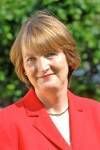
Harriet Harman, Minister for Women and Equality - click to go to her websiteLastly, concerning Harriet Harman, who is among other roles the Minister for Women and Equality (and who, to her credit, is supporting the protests in Dorset against losing the women's refuge): while standing in for Gordon Brown during his holiday at the start of August, she spent more time defending ideological positions about the superiority of women to men (a concept I woulddn't argue about) that she never had time to dot i's and cross t's with Justice Minister Jack Straw and Home Secretary Alan Johnson on proposals to raise the percentage of successful prosecutions for rape.

What we need is governmental interference where it is warranted, for example keeping women's refuge open in the face of hypertrophied quangocracy or forcing councils to shoulder their responsibilities towards vulnerable people, and minimal interference with police in terms of targets, tickboxes and form-filling, so that they can do the jobs they so manifestly want to do, among which are preventing future domestic violence and rape by showing the perpetrators of these heinous acts that there are less and less places to hide.

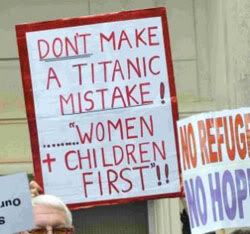
When clashes of egos and agendas are at risk of turning everything around into a sticky mess, we must never lose sight the Dorset campaign's assertion that in the vast majority of domestic violence cases its "women and children first".

Related post: It's a dog's life...

Sunday, September 13, 2009

prawns in the dark - surely not the last night?

Terry Wogan: click for the website of his fans, the TOGSIt's not often that people go to a music show, let alone one featuring classical music, for the compére as much as the acts. But that's what happens every year at the BBC's Proms in the Park, which has been presented by Sir Terry Wogan - who lampoons it as "Prawns/Prams in the Dark" - for fourteen years; the audience of 40,000 broke into chants of "Ter-ry! Ter-ry! Ter-ry!" several times.

The show was on the radio, which as far as I'm concerned is superior to the TV because we have a limited number of senses and the telly ties up two of them almost totally. But it was engaging, so much so that I put the Telegraph crossword down several times. That doesn't happen often.

Katherine Jenkins - click to go to websiteThis year's Proms in the Park opened with Strike up the Band by the BBC Concert Orchestra, conducted by Martin Yates. They also backed Icelandic tenor Garđar Thór Cortes and modern forces' sweetheart Katherine Jenkins, who performed live for the first time her operatic rendering of Evenescence's Bring me to life, which was given its first airing by Wogan on his Breakfast Show last week. If you have a look at this clip of her singing Music of the Night at the 2006 Proms (sorry, Pam!), you'll understand why Terry announced after her spot "that shattered a few windows at the Dorchester!"


Wogan's hilarity in the face of spin, bombast and hyperbole is the reason why he's so popular, even among folk like me who view the BBC with suspicion. He triggered diplomatic compSoren Pilmark and Natasja Crone-Back presenting the Eurovision Song Contest in Denmark in 2001laints from Denmark when, presenting the Eurovision from that country in 2001, he referred to hosts Soren Pilmark and Natasja Crone-Back as "Doctor Death and the Tooth Fairy", and his response to the swine-flu hysteria earlier this year was "pandemic - my granny!" Famously, when Northern Rock was nationalised after disappearing up its own bad debt he read out, on his show, an excerpt from Das Kapital in which Marx called for banks to be brought under state control.

The DJ has been referred to as one of the "untouchables" of the BBC, in that they don't dare get rid of him, no matter how politically incorrect he becomes, due to his audience figures - at the last count, eight million people tune in to his breakfast show every morning. So there was a sense of shock when he announced his retirement from Wake Up To Wogan last Wednesday; I felt I knew what it must have felt like to hear that the Beatles had split up.

Where was I?  Click to read a review of Wogan's latest book And in true style in the Park, he lauded Martin Yates as "the only conductor who can play the spoons...Captain Corelli on his belly, and I won't tell you where he plays his Humperdinck...", and when the orchestra vacated the stage for Escala, announced that they'd just gone "for a quick fifteen pints". In his new book, he describes his "loyal, ever-offensive listeners" as "the gratuitously hurtful folk who declare that I'm very popular in hospitals because the listeners abed there are too weak to reach out and switch me off".

Proms in the Park goes for a lighter experience than is traditionally meted out in the Proms proper, but still Barry Manilow introduced his epic performance of Could it be magic with a section of Chopin's Prelude in C major whose chord structure inspired the music and shortly afterwards went into my favourite - Copacabana.

Leading the crowd in 'Rule Britannia' at the Last Night of the Proms: click to read a report on the BBC websiteThe last 45 minutes of the programme came from the Albert Hall, as we joined The Last Night of the Proms. I had planned to watch some of this on TV, but was frankly left rather cold by the thought of an Arnold overture with parts for vaccuum cleaners and floor-polishers, even if one of the latter was operated by David Attenborough. David Robertson, principal guest conductor for the night and musical director of the Saint Louis Symphony Orchestra, apologised for the misunderstanding involving tea in Boston, then used it as an excuse to gently chide the promgoers for inserting a glottal stop in place of the final "T" in Land of Hope and Glory's last line, "God who made thee mighty, make thee mightier yet". We also had those other two mainstays that make the last night so wonderful, Jerusalem and Rule Britannia before God Save the Queen ended the night.

The warm embrace of their country by so many of its (and others') young people was both comforting and poignant in the light of a report by the University of London's Insititute of Education that showed 74% of teachers surveyed as applying words like "brainwashing" about patriotism; a description, notes Cranmer, that many don't apply to "secularism, sex, contraception, abortion, drugs, global warming, anti-capitalism, the glories of the EU, the wonders of the UN and a myriad of Marxist agendas."

The BBC has expressed its discomfort with the night's "Britishness" in the past. I'm not sure whether it's now reconciled itself to the country it serves, or if corporate heads have been temporarily focussed by the thought that the next Last Night may take place under a government that values that country and its people more than Labour's actions and pronouncements show that it does.

Whichever, I live in hope that Sir Terry's retirement won't be complete. We need the sheer common sense he ingeniously wraps in a surreal coating. And I'm always happy to listen to somebody grumpier than me.

Thursday, August 6, 2009

hiroshima: a thousand suns

click to read Kate Day's article Hiroshima: remembering and rebuildingclick to see a Telegraph picture special on marking the anniversary of the Hiroshima bomb

If the radiance of a thousand suns were to burst into the sky, that would be like the splendor of the Mighty One and I am become Death, the shatterer of worlds

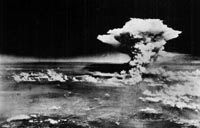
Today, the world is marking the anniversary of the Atom-Bomb's being dropped on Hiroshima, in the second man-made nuclear explosion in history on August 6, 1945. The first one was on the Trinity Site near Alamogordo, New Mexico, where the sheer destructiveness of the thing caused Robert Oppenheimer to quote the variation on a verse from the Bhagavad-Gita at the top of the page.


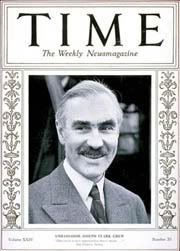
How did it all start? On December 6, 1941, US President Franklin D Roosevelt sent a "triple priority" telegram to Emperor Hirihito of Japan, delivered by ambassador Joseph C Grew, in which Roosevelt reminded the god-king of the mutual benefits of the hundred-year friendship that had existed between the two countries, and asked him to reassure the American people that war was not inevitable by withdrawing his forces from Indo-China (south-east Asia). On the next day, of course, Japanese forces bombed the US fleet in the Hawaiian port of Pearl Harbor, which marked the start of America's formal entry into World War II without, as Grew writes in his 1944 memoirs, Ten Years in Japan, "the usual preliminary declaration of hostilities". In a CBS radio address delivered on August 30, 1942, Grew referred to the "Spartan" qualities that the Japanese Army had "nourished and encouraged" in its warriors, opposed to their perception of "the white man's flabbiness".

By the time the bomb was dropped, American forces were involved in a grim island-by-island struggle. The Telegraph's Kate Day states that 70,000 Japanese are reckoned to have died on that fateful day when the Enola Gay flew over Hiroshima, and another 70,000 died within 5 years. Compare this with 110,000 Japanese killed in the battle for the island of Okinawa alone.

I'm not trying to make out the dropping of Little Boy to have been a philanthropic act - the Second World War was what it said on the tin, and, of course, when the Japanese powers-that-be realised that the attrition was not going to stop after the Nagasaki bombing, many American lives were saved. (And not only American: Professor Calculus once told me that when he heard the news about Hiroshima his reaction was "thank God" - his brother was fighting in Burma).

When Max Planck founded quantum physics with the publication of his paper on black-body radiation in 1901, the die was cast: as soon as 1905, Einstein had published his Special Theory of Relativity, coclick to read a reviewntaining the equation that would power atomic research: E=mc2.

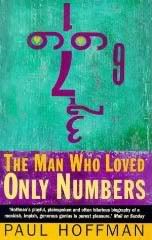
Like Einstein, many of the foremost mathematicians and theoretical physicists lived in Europe and were Jewish. After the rise of Hitler, many would flee to America, thus making the A-bomb project possible. In his 1999 biography of the mathematician Paul Erdős, The Man who Loved Only Numbers, biographer Paul Hoffmann describes Erdős' surprise in finding, at a meeting of mathematicians in Los Alamos, that everybody in the room was not only European but, like him, Hungarian.

click to read more about A Thousand Suns on Alex Scarrow's website
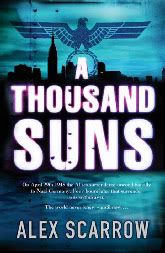
A Thousand Suns by Alex Scarrow is an account of a German-built A-bomb that is made possible because a captured Jewish scientist, working under threat of his family being executed, finds the hole in Werner Heisenberg's theory that will allow a bomb to be built with pounds of uranium instead of tons of the stuff. (Heisenberg was interrogated at Farm Hall in the Cambridgeshire village of Godmanchester.) We read the crises of conscience of the scientist, who places a note inside the bomb's arming compartment telling of his fears that an atomic explosion might start a chain reaction that would destroy the world - something that worried Oppenheimer; the leader of the crew that will fly a captured B-17 Flying Fortress, modified to carry more fuel, to New York; and, towards the book's gripping dénouement, the crew-member who goes to arm the bomb and finds the note. Along the way we visit President Harry S Truman's war-room and the chaos of Hitler's crumbling bunker.

Threaded through, we read the story of a photographer and his minder who, diving off the New York State shore, find the wreck of the craft, and trigger a chain of events which will lead a CIA operative, who has spent his life guarding the hidden history of America's short-lived surrender to GerNight Fighters by Colin D Heaton and Anne-Marie Lewis: click to read moremany, to a decision which will, in the light of his own troubled conscience, either redeem him or damn him.

There are many well-drawn characters in the book, which is named after Oppenheimer's comment. But there's no doubt in my mind that the hero of the piece is the Medusa, the fictional B-17 bomber that, ironically, was the name of one of the ships which survived the Japanese attack on Pearl Harbor. Scarrow has obviously done his research. At one point he has a navigator take a reading on a sextant, whose use in WWII bombers is not widely known, which makes me wonder if one of his resources was Colin Heaton's authoritative history of the night war over Europe, Night Fighters.

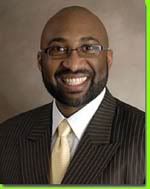
So how have we fared since 6 August, 1945? Well, after Nagasaki no nuclear device has been set off in anger, a situation which is increasingly likely to change as more and more unstable countries seek the bomb, and nuclear powers China and India increasingly look to Africa for Lebensraum.Reverend Arnold M Culbreath asks: what is the largest killer of African American people in the US today?  Click to find the answer

In other areas, we're not doing too well: one example of this is published in John Smeaton's blog for today, quoting the Reverend Arnold M Culbreath's statistic that "every month in the U.S., approximately 35,000 black babies die by abortion" - a 6 August 1945 every two months, showing that predominantly white population controllers are something more sinister than flabby. troubled conscience: click to read more about the Japanese healing doll And in Japan, when abortion became legal in 1949 there were 246,000: the fateful day over three times over - things are so bad that older women are buying "healing dolls" to replace children who weren't born.

Mori Masaki's anime film Barefoot Gen, based on Keiji Nakazawa's manga series of the same name, depicts the horror of Hiroshima as seen through the eyes of an innocent victim, a child. Spare a thought for the innocent victims of other, undepicted, catastrophes.

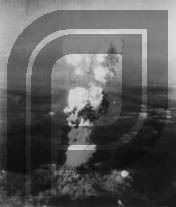
photo of the mushroom cloud over Hiroshima, taken by an aircraft codnamed Necessary Evil, with one of the logos of abortion provider International Planned Parenthood Federation superimposed