Being something of a heavy metal connoisseur, I was saddened to hear the news of Ronnie James Dio's death on the radio last night.
Dio started playing in bands in 1957 and releasing records the year after. What a time his first full decade as a recording artist must have been, as rhythm'n'blues morphed into psychedelia which, in its 1970s incarnation as progressive rock, laid the foundations for the golden era of heavy metal in the 1980s. This, incidentally, was kicked off by Black Sabbath's release of Heaven and Hell, with Dio on vocals replacing Ozzy Osbourne, whose demons had nearly destroyed the band.
What marked Dio (born Padavona in Portsmouth, New Hampshire) out as a giant was his eschewal of the rock'n'roll lifestyle, which he put down not to studying pharmacology for a year at degree level but because, he told an interviewer for dmme.net, "I saw how destructive it was, and how it dulled your sensibilities and ate up your talent and your life". On records his first instrument was the bass guitar, but before that he learned trumpet, which built up his diaphragm to the point where it would sustain his most powerful and nuanced instrument: his voice, which would come to international prominence with Rainbow and, after recording arguably the definitive Black Sabbath album, with his eponymous band as well as numerous collaborations.
Dio succumbed to stomach cancer yesterday after battling with it since late last year. This may be of little comfort to his widow at the moment, but his avoidance of the rock'n'roll lifestyle put him beyond the rock'n'roll death that follows on all too often. Not for him choking on vomitus after downing a handful of sleeping-pills like Jimi Hendrix; or alcohol poisoning due to mistaking Heminevrin for recreational tablets, which prevented Keith Moon's stomach ejecting the bucketful he'd had during a relapse; or, most cruelly, Phil Lynott sliding into the last goodnight due to liver failure while his mother wept.
All of these people have left us wonderful music, but Dio left something else alongside - a template for living well in an industry that has been known to eat its children. Thanks for the music, Ronnie.
Here's RJD as I like to remember him, singing about his beloved pop medeivalism with Ritchie Blackmore's Rainbow in 1975.
Showing posts with label alcohol. Show all posts
Showing posts with label alcohol. Show all posts
Monday, May 17, 2010


Sunday, March 7, 2010
street drinking: syrup and paint-stripper
 The staff of Cambridge's Mill Road Tesco deserve an award for tenacity in the face of eejits, as in merely opening the store they scored a gruelling victory over vested interests mounting a predominantly anti-capitalist campaign under the name of the No Mill Road Tesco Campaign.
The store has recently had an application to sell alcohol turned down - see Cambridge resident (expected to stand as an Independent in the next election) Richard Taylor's helpful and exhaustive account - on account of its being in a cumulative alcohol impact zone, which creates an assumption against granting new licences to sell alcohol.
What got me thinking was how alcohol gets into the hands of people in Mill Road with problematic drinking patterns in the first place. So as soon I was able I went to the end of Mill Road nearest town and walked up the mile-odd length, paying attention to the shops that sell alcohol.
Like any other consumers of alcohol, street-drinkers are partial to their favourites - most commonly Carls
 berg Special Brew or the other 9% lagers on sale. (The manufacturers observe the Memorandum of Understanding between the Department of Health and the Alcohol Industry on putting sensible drinking reminders on their cans, despite the fact that the contents of a single 500ml can of 9% lager, containing 4.5 units of alcohol, put the drinker above the government's recommendation of 2-4 units daily). Strong ciders also appeal to their palate, so I think it's significant - thanks again to Richard Taylor for his report - that Mill Roa
 d Tesco had pledged to sell no beers or cider above 5.5% alcohol - the equivalent of 11º proof in US measurements.
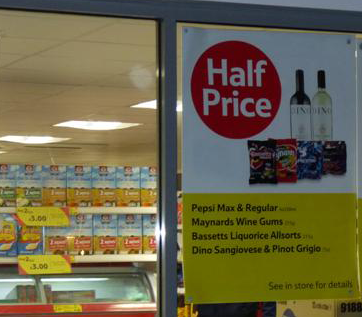
So No Mill Road were being rather disingenuous in making a noise about the local Tesco store's admittedly presumptious display of posters offering cheap wine: one doesn't often hear of pinot grigio-fuelled disorder.
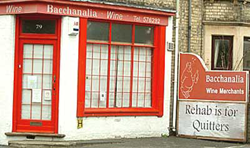 Which isn't to say that there hasn't been controversy with wine in Cambridge: in 2008, a wine-shop in the city's Victoria Road called Bacchanalia, which is opposite an Alcoholics Anonymous centre (and has a sister-store on Mill Road) displayed a sign proclaiming Rehab is for Quitters. Although one can appreciate the wordplay on one level, I think the fruit of the vine was more sinned against than sinning, not to mention people trying to piece their lives back together.
The first thing I noticed was that shops genuinely serving specific communities - eg Chinese, Afro-Carribean, Malaysian - sold little or even no alcohol. On the other hand, the cynically-named International Food Store was in reality a wallful of shelves stocked
 with wines and spirits facing a wall of beers and soft drinks, with two thin aisles of snacks in between, and in between those huge plastic bottles of strong cider on the floor. Another general store had not only three different brands of 9% lager but also a variety of strong, cheap ciders, of the chemically-derived sort that Conservative leader David Cameron once remarked had "never seen an apple".
In all, there were five small, independent stores of the kind, say No Mill Road Tesco, in need of protection against the supermarket giant which were selling drinks that specifically fuel the thoroughfare's alcohol problems. I say specifically advisedly - when's the last time you saw 9% syrup or paint-stripper cider at a dinner-party or while getting together to watch the football?
Capitalism is insensate and must needs be fenced in by legal frameworks to prevent abuses like, for example, the sale of alcohol to minors, directly or through adults. Both the Co-op and Tesco, as far as I'm aware, will not sell to adults who are known to pass on to underage street-drinkers; so why ca
 n't smaller stores be leant upon to refuse to sell to people who are drunk, or who are known to drink in the street? Many people buy drinks from stores because pubs are forced to keep their prices high - releasing the legislative garotte strangling them wouldn't stop street drinking, but it could prevent people taking drinks home in a habit that has the potential to spiral dangerously, and would widen the cadre of social drinkers in pubs in whose self-interest it is not to let each other get out of control.
And while I'm on my wish-list, how about doubling the price of superstrong lagers and ciders?
Friday, February 5, 2010
needle injury in a playground
 It was distressing to see on the Look East regional news magazine, then read in the Cambridge News yesterday, the news that a council worker had been jabbed in the leg by a used needle in a children's play area. But I found myself wishing that the former news outlet, part of the BBC, had researched their facts about the diseases that can be caught through contact with injecting equipment more thoroughly.
The needle had been wedged into the rope seat of a swing then, presumably, broken off, and had jabbed Jason Law, who works as a groundsman for Littleport Parish Council in East Cambridgeshire, through the trousers.
According to Look East, Mr Law would have "an agonising wait of 6-8 weeks" before he found out whether he would find if, God forbid, he had contracted anything from the needle.
This is tosh. The diseases most often caught from needles - Hepatitis B (against which any council should have workers like Mr Law vaccinated), Hepatitis C and HIV take a minimum of three months to show their ugly faces; in reality, negative test results are meaningless unless samples are taken six months after exposure. The Cambridge News got it right: "he has to have regular blood tests and injections over the next six months before, hopefully, being given the all-clear". The initial tests would have been at the behest of the behemoth which w
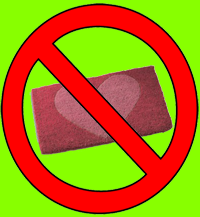 ants to stop schoolchildren play conkers, push gravestones over and now ban doormats: the insurance industry. Should Mr Law be found to already have an illness that might be caught through contact with needles or other injecting equipment - or indeed through something as innocent as a boyhood blood transfusion - any payout would be substantially reduced or indeed non-existent.
It's being presumed that the needle was put into the swing-seat maliciously, as well it may have been. On the other hand, there is a growing awareness among the various communities of injectin
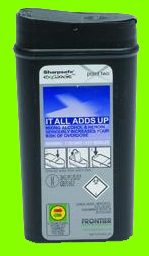 g drug-users that they have a responsibility not to allow their equipment to be reused, which might risk transferring the very beasties that Mr Law has been put at risk of. In the absence of education otherwise, they often stick needles into trees and snap the attached syringes off (and the needles often later fall out and await a passing child in thin-soled sandals).
The correct procedure, of course, is to place the used injecting equipment into a burnbin/sharpsbin and take it to a needle-exchange, which is usually a pharmacist displaying one of the symbols to the right; or it may be within a drugs agency; from either
 the burnbins will be collected and incinerated, hence the unofficial name "sinbin" (incineration-bin).
What happened to Mr Law is of course the responsibility of the individual drug-user, and if this individual is found I hope they lock him away and throw away the key, both for what they are putting the groundsman through and the risk to which they exposed children at play. But, given that in the year to April 2009 hundreds of paedophiles and rapists were let off with cautions, I'm not hopeful.
What doesn't help as well is the refusal of some authorities to accept that a serious class A problem exists within their boundaries - perhaps a consequence of public bodies being allowed to rate their own performance?
 Another stumbling-block can be groups of residents fearful for their house-prices putting pressure on the outlets where Methadone is dispensed to be closed, as they are unhappy at seeing what in reality is a minority of clients collect their heroin-substitute then sit around swallowing cheap strong lager or cider. They're looking at the wrong side of the equation: if off-licenses, including shops that sell alcohol from dawn till after dusk, were forced to raise the price of their Carlsberg Special Brew, White Lightning Cider and the rest - as the Conservative Party has pledged to make happen - the problem would much lessen.
The war on drugs, of course, must continue; but like any war, resources must be targeted on a pragmatic basis. For example, it would make more sense to decriminalise or even prescribe - under strictly controlled conditions - diamorph
 ine (heroin) for the purposes of detoxification than to cede to the many attacks on the illegality of cannabis, because the problem of cannabis cultivation can largely be dealt with within our shores, whereas 95% of heroin comes from Afghanistan. Until a decision can be made as to whether to buy the products of the poppy fields at a higher rate than the Taliban offer and produce pharmaceutical opiates, or apply liberal helpings of Agent Orange (or some such herbicide) thereupon, all we can do is disconnect what supply from demand as we can and deal with the effects of what gets through.
But all this doesn't help Mr Law. I wish him as much peace as he can garner over the coming months, and hope he is given the support he so richly deserves for his devotion to his job.
Monday, June 1, 2009
booze-buses from Aotearoa - an idea for England?
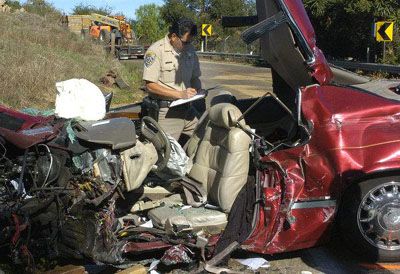
The Cambridge News reports that a blitz on drink-driving is starting up in Cambridgeshire - as Casualty Reduction Officer PC Barrios says, to target the "increase in the number of people going out and drinking".
I think it's a very good idea: there are crackdowns on drink-driving all over the world at Christmas-time, but it's easy to forget this season of barbecues and country pub gardens in bloom.
I'm reminded of a road-safety conference, I attended in London, which was addressed by Superintendent Paula Rose of New Zealand Police, who studied at the Henley Management College and worked with the Thames Valley Police, both in the UK, as part ot the Foreign and Commonwealth Aotearoa Fellowship, of which she was the 2006 recipient (Aotearoa is Māori for New Zealand).
Supt Rose told us about the country's robust system for dealing with drink-drivers (New Zealand, I gather, makes the rural parts of East Anglia look like central London). Over half of the 4.3 million inhabitants have driving licences, which can be applied for at the age of 15. There are about 400 community police stations, with 10,000-plus staff.
It was very interesting to hear her talk intelligently and humourously bu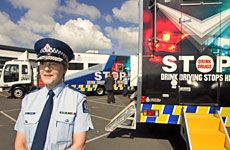 t robustly about keeping on top of drink-driving on 91,000km (56,500 miles) of roads of varying standards. Ears pricked up at the mention of "booze buses" - mobile laboratories to process drivers who had failed a roadside breath test for alcohol, where a breath sample could be taken in a location where chain of evidence could be attested to, and , should the subject so choose, a blood sample could also be taken. They're staffed by officers who had trained to be part of tactical alcohol teams that would shut down a stretch of road and test every driver using it: up to 20,000 in a night.
Cam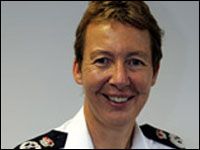 bridgeshire Constabulary Chief Constable Julie Spence has been robust in demanding Govenment give her the means to recruit more police officers to help combat the effects of an increasing population upon the region, including drink-driving, and has made her points in the highest places more forthrightly than anybody who joined any organisation solely for advancement would dare to.
The results of such measures can be amazing: in 1973, the New Zealand road toll was 800 and should have been 1,500 last year but was actually 350, due in no small part to alert and uncompromising traffic policing, led by Supt. Rose. I hope that over the next year the Treasury listens to the evidence that strategies such as "booze-buses" play a major role in reducing carnage on our roads. Supt Rose quoted a Māori saying that lays out the major priority in policing that I am sure is shared by officers everywhere: he tangata, he tangata, he tangata - "our people, our people, our people".
Related post: drink-driving campaigns - a worked-out example
I think it's a very good idea: there are crackdowns on drink-driving all over the world at Christmas-time, but it's easy to forget this season of barbecues and country pub gardens in bloom.
I'm reminded of a road-safety conference, I attended in London, which was addressed by Superintendent Paula Rose of New Zealand Police, who studied at the Henley Management College and worked with the Thames Valley Police, both in the UK, as part ot the Foreign and Commonwealth Aotearoa Fellowship, of which she was the 2006 recipient (Aotearoa is Māori for New Zealand).
Supt Rose told us about the country's robust system for dealing with drink-drivers (New Zealand, I gather, makes the rural parts of East Anglia look like central London). Over half of the 4.3 million inhabitants have driving licences, which can be applied for at the age of 15. There are about 400 community police stations, with 10,000-plus staff.
It was very interesting to hear her talk intelligently and humourously bu
t robustly about keeping on top of drink-driving on 91,000km (56,500 miles) of roads of varying standards. Ears pricked up at the mention of "booze buses" - mobile laboratories to process drivers who had failed a roadside breath test for alcohol, where a breath sample could be taken in a location where chain of evidence could be attested to, and , should the subject so choose, a blood sample could also be taken. They're staffed by officers who had trained to be part of tactical alcohol teams that would shut down a stretch of road and test every driver using it: up to 20,000 in a night.Cam
bridgeshire Constabulary Chief Constable Julie Spence has been robust in demanding Govenment give her the means to recruit more police officers to help combat the effects of an increasing population upon the region, including drink-driving, and has made her points in the highest places more forthrightly than anybody who joined any organisation solely for advancement would dare to.The results of such measures can be amazing: in 1973, the New Zealand road toll was 800 and should have been 1,500 last year but was actually 350, due in no small part to alert and uncompromising traffic policing, led by Supt. Rose. I hope that over the next year the Treasury listens to the evidence that strategies such as "booze-buses" play a major role in reducing carnage on our roads. Supt Rose quoted a Māori saying that lays out the major priority in policing that I am sure is shared by officers everywhere: he tangata, he tangata, he tangata - "our people, our people, our people".
Related post: drink-driving campaigns - a worked-out example
Friday, May 29, 2009
when agendas come together
This post contains a discussion of suicide. If you are feeling very down, please either navigate away or click here to go to the end.
When I started training as a psychiatric nurse in the late 1980s, we had a class on death in the initial module before we were let loose on unsupecting wards, and I was surprised by how many people had to take advantage of prior permission to step outside for a while should one feel the need.
Later on, we were introduced to psychiatric nursing proper, and we all did the training; those were the days when heads of nursing schools were more involved in working with hospitals than now, and it was realised that sometimes people with mental illnesses or learning difficulties need to come to hospital, or conversely staff in mental-health institutions might need general-nursing skills should one of their charges, say, become ill or have an accident.
In this module, we were introduced to suicide as a subject for clinical study, and everybody was expected to stay within the lecture hall: everybody did.
First came an anecdote of a man who said every day that he was going to kill himself, how, and where: and one day, after several years, as people paid less and less notice, he did. The moral: never take a threat or prediction of suicide anything other than seriously. On the other hand, there were also people who would be admitted having injured themselves in ways which self-evidently c ould not be life-threatening - but navigating around the large intersect between the two approaches the best definition of psychiatry I've ever heard: "a blind man in a dark room looking for a black cat that isn't there".
Over the years I lost several clients to suicide, which was quite hard at the time. But then I lost a friend, and experienced first-hand the raw nerves slicing across one's consciousness as emotional evisceration accompanies an endless round of "what-ifs". I still ask the girls to help me pray for "Dad's friend who died sad and alone", and I think Minora's guessed what that means.
So my antennae twitched upon reading a story on the matter in the Cambridge News.
In December 2006, 56-year-old David Woods was admitted to Addenbro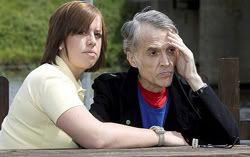 oke's Hospital in Cambridge after a suicide attempt. His daughter and son were alerted. By the time they arrived in Cambridge, Mr Woods had been given a liver transplant as an urgent life-saving measure. Neither of his children had been consulted.
Mr Woods was in a coma for six weeks after the incident (it's not mentioned whether it was medically induced), and came to with, we are told, "the mental age of a child" who needs round the clock care. So, given that the attempt that landed Mr Woods in hospital came at the end of a rapid succession of tries that day, why was a liver transplanted; and why is this three-year-old incident hitting the news big-time now?
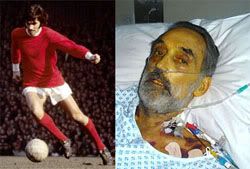
Looking at the first question yields clouds within clouds. Professor Roger Williams of University College's Institute of Hepatology in London was involved in Great Britain's first liver transplant in 1968, and was also involved in the care of George Best towards the end of his life, imploring every pub and off-licence in the country not to serve alcohol to the addicted footballer. He told the Telegraph's Celia Walden:
 ors; but I do't think I would be straying from the pro-life fold by suggesting that a liver transplant, with the attendant risk of major damage to organs - including the brain - through buildup of toxins should not be undertaken until the family's view has been taken into account. I'm not saying for a minute that anybody who is critically ill following a suicide attempt shouldn't be treated, merely that in this particular instance a unilateral decision to insert a donor liver may have been something of an unreasonably heroic measure.
Professor Williams adds: "I would say that the psychiatric assessor is the person one might point a finger at"; it's not clear that the psychiatrist who examined David Woods while he was semi-conscious at best was employed by Addenbrooke's or the local mental health trust, but it would be instructive to look at the latter, who would have treated him for his manic-depression.
In November 2006, the Cambridgeshire and Peterborough NHS Foundation Trust's board meeting minutes announced that "performance targets" for its annual health check by the Healthcare Commission (now the Care Quality Commission) included an "Audit of suicide prevention". This was a month before Woods' last attempt, but five months after an earler attempt, we are told, was assessed as a "cry for help". (The suicide prevention audit is first mentioned in board minutes of March 2006.) In March 2008's minutes we learn that the annual healthcheck has been passed except for a waste-management target, and "A re-audit of the National Suicide Strategy in 2007 identified clear improvements in clinical practice" and that "
the electronic system for investigating and completing serious untoward incidents (SUIs), was reviewed and further improved during the year and now incorporates the national standards for suicide prevention."
An annual healthcheck is a byzantine proceedure looking at a trust's "performance indicators"; in the "frequently asked questions" document, on page 12 (of 15), we learn in the answers to questions 24 and 25 that "It is the responsibility of every healthcare organisation to ensure that they submit all necessary data for our assessment purposes by the deadline date for each data collection...It is the responsibility of the primary data collector to communicate these data quality checks and ensure that they are applied prior to submission to the Care Quality Commission."
So there we have it: two levels of deniability between the Care Quality Commission's examining whether boxes are ticked and conditions endured by patients (and staff) on the ground. It comes as no surprise that the Care Quality Commission is headed by Cynthia Bower, former chief executive of the West Midlands Strategic Health Authority when it failed to pick up the egregious abuses visited upon patients in Stafford General Hospital. She wouldn't have been in place at the time we're talking about, but she has obviously been parachuted into a job where her talents will ensure the continuation of the prevailing ethos.
Cambridgeshire and Peterborough NHS Foundation Trust's medical director, Dr Tom Denning, told the Cambridge News in the article linked to above that "you always have to give life the benefit of the doubt". The Trust has just published a statement on the "latest news" section of its website:
You'll be glad to know that the answer to the question of why this is an item now is much simpler. But I should first note that I am not implying that David Woods' children have any sort of double agenda. To paraphrase a wise family doctor's counsel to my wife when I was first diagnosed with manic depression, they've been hit by the train, and it keeps on hitting.
On 27 May, the story broke in the Cambridge News and it was mentioned that Nadine Woods was "torn" about taking her father "to a euthanasia clinic in Switzerland".
The next day (the same day that the Telegraph picked up the story), Lord Alderdice tabled an amendment to the Coroners and Justice Bill, which is due to be debated in a House of Lords Committee on 9-10 June. The amendment reads:
If you live in Great Britain, please read and act upon this alert from the Society for the Protection of Unborn Children. If you from elsewhere, please pray for us.
And for the Woods family, who find themselves buffeted by agendas more highly-powered than most express trains.
Depression's a queer thing to deal with - everybody has their own way to deal with the Black Dog, as Churchill called it. There's always the Samaritans, of course, or a doctor, friend, counsellor, or the local mental health helpline. Myself, if I'm too down to read a book, I turn on the radio, preferably a station with some MOR music and light banter. The mood-lifting effects of exercise have long been noted, but if I embark on some hard-training plan I end up beating up on myself when, inevitably, I fail: walking is good. REM has some good advice in their song Everybody Hurts - "take comfort in your friends". I find it incredibly difficult to tell people face-to-face when I'm down, but I hae to because I hide it when I am; and my friends give me time when I manage to tell them, whether that be time spent with me or time I need to take to reforge connections after a period not really saying much. And as a very wise man I knew once said, if the abyss looks into you when you look into it, look the other way.

When I started training as a psychiatric nurse in the late 1980s, we had a class on death in the initial module before we were let loose on unsupecting wards, and I was surprised by how many people had to take advantage of prior permission to step outside for a while should one feel the need.
Later on, we were introduced to psychiatric nursing proper, and we all did the training; those were the days when heads of nursing schools were more involved in working with hospitals than now, and it was realised that sometimes people with mental illnesses or learning difficulties need to come to hospital, or conversely staff in mental-health institutions might need general-nursing skills should one of their charges, say, become ill or have an accident.
In this module, we were introduced to suicide as a subject for clinical study, and everybody was expected to stay within the lecture hall: everybody did.
First came an anecdote of a man who said every day that he was going to kill himself, how, and where: and one day, after several years, as people paid less and less notice, he did. The moral: never take a threat or prediction of suicide anything other than seriously. On the other hand, there were also people who would be admitted having injured themselves in ways which self-evidently c
ould not be life-threatening - but navigating around the large intersect between the two approaches the best definition of psychiatry I've ever heard: "a blind man in a dark room looking for a black cat that isn't there".Over the years I lost several clients to suicide, which was quite hard at the time. But then I lost a friend, and experienced first-hand the raw nerves slicing across one's consciousness as emotional evisceration accompanies an endless round of "what-ifs". I still ask the girls to help me pray for "Dad's friend who died sad and alone", and I think Minora's guessed what that means.
So my antennae twitched upon reading a story on the matter in the Cambridge News.
In December 2006, 56-year-old David Woods was admitted to Addenbro
oke's Hospital in Cambridge after a suicide attempt. His daughter and son were alerted. By the time they arrived in Cambridge, Mr Woods had been given a liver transplant as an urgent life-saving measure. Neither of his children had been consulted.Mr Woods was in a coma for six weeks after the incident (it's not mentioned whether it was medically induced), and came to with, we are told, "the mental age of a child" who needs round the clock care. So, given that the attempt that landed Mr Woods in hospital came at the end of a rapid succession of tries that day, why was a liver transplanted; and why is this three-year-old incident hitting the news big-time now?
Looking at the first question yields clouds within clouds. Professor Roger Williams of University College's Institute of Hepatology in London was involved in Great Britain's first liver transplant in 1968, and was also involved in the care of George Best towards the end of his life, imploring every pub and off-licence in the country not to serve alcohol to the addicted footballer. He told the Telegraph's Celia Walden:
"What is surprising is that the family do not appear to have been consulted," he tells me. "When we first started conducting liver transplants in paracetamol overdose cases, most were young people without a history of psychiatric illness. Very few would be given a transplant within 24 hours without agreement from the family...I find it puzzling that these things weren't picked up on when the clinician reviewed David Woods' notes. It is very unusual for someone to be given a transplant when they have tried to commit suicide several times in the past.Williams was speaking about the effect this affair might have on potential liver-don
ors; but I do't think I would be straying from the pro-life fold by suggesting that a liver transplant, with the attendant risk of major damage to organs - including the brain - through buildup of toxins should not be undertaken until the family's view has been taken into account. I'm not saying for a minute that anybody who is critically ill following a suicide attempt shouldn't be treated, merely that in this particular instance a unilateral decision to insert a donor liver may have been something of an unreasonably heroic measure.Professor Williams adds: "I would say that the psychiatric assessor is the person one might point a finger at"; it's not clear that the psychiatrist who examined David Woods while he was semi-conscious at best was employed by Addenbrooke's or the local mental health trust, but it would be instructive to look at the latter, who would have treated him for his manic-depression.
In November 2006, the Cambridgeshire and Peterborough NHS Foundation Trust's board meeting minutes announced that "performance targets" for its annual health check by the Healthcare Commission (now the Care Quality Commission) included an "Audit of suicide prevention". This was a month before Woods' last attempt, but five months after an earler attempt, we are told, was assessed as a "cry for help". (The suicide prevention audit is first mentioned in board minutes of March 2006.) In March 2008's minutes we learn that the annual healthcheck has been passed except for a waste-management target, and "A re-audit of the National Suicide Strategy in 2007 identified clear improvements in clinical practice" and that "
the electronic system for investigating and completing serious untoward incidents (SUIs), was reviewed and further improved during the year and now incorporates the national standards for suicide prevention."
An annual healthcheck is a byzantine proceedure looking at a trust's "performance indicators"; in the "frequently asked questions" document, on page 12 (of 15), we learn in the answers to questions 24 and 25 that "It is the responsibility of every healthcare organisation to ensure that they submit all necessary data for our assessment purposes by the deadline date for each data collection...It is the responsibility of the primary data collector to communicate these data quality checks and ensure that they are applied prior to submission to the Care Quality Commission."
So there we have
it: two levels of deniability between the Care Quality Commission's examining whether boxes are ticked and conditions endured by patients (and staff) on the ground. It comes as no surprise that the Care Quality Commission is headed by Cynthia Bower, former chief executive of the West Midlands Strategic Health Authority when it failed to pick up the egregious abuses visited upon patients in Stafford General Hospital. She wouldn't have been in place at the time we're talking about, but she has obviously been parachuted into a job where her talents will ensure the continuation of the prevailing ethos.Cambridgeshire and Peterborough NHS Foundation Trust's medical director, Dr Tom Denning, told the Cambridge News in the article linked to above that "you always have to give life the benefit of the doubt". The Trust has just published a statement on the "latest news" section of its website:
We are sorry to hear that the family have concerns about whether in retrospect it was the right thing to undertake a life saving liver transplant operation in 2006. We would like to hear from the family so that we can discuss their concerns in more detail.Personally, I think this bit of get-outery is of doubtful value, and I would suggest that David Woods was given a liver transplant - whatever the result - without reference to the family in order to improve Cambridgeshire and Peterborough NHS Foundation Trust's appearance of compliance with suicide-prevention targets.
Decisions to undertake emergency life-saving liver transplantation are made by the transplant consultants with advice from other medical specialists, including psychiatrists, when appropriate.
You'll be glad to know that the answer to the question of why this is an item now is much simpler. But I should first note that I am not implying that David Woods' children have any sort of double agenda. To paraphrase a wise family doctor's counsel to my wife when I was first diagnosed with manic depression, they've been hit by the train, and it keeps on hitting.
On 27 May, the story broke in the Cambridge News and it was mentioned that Nadine Woods was "torn" about taking her father "to a euthanasia clinic in Switzerland".
The next day (the same day that the Telegraph picked up the story), Lord Alderdice tabled an amendment to the Coroners and Justice Bill, which is due to be debated in a House of Lords Committee on 9-10 June. The amendment reads:
Insert the following new Clause—Although SPUC director John Smeaton states the amendment is not likely to be added to the bill, it's important that it be opposed vigorously to show that people who value life are alert to the drip-drip-drip of bringing legalised euthanasia onto the statute books against the will of the British people - and the Members of the House of Lords might want to look in the direction of the Commons to see the effects of continually acting against the interests of the people one is supposed to serve.
"Exceptions to offence of assisting suicide"
Notwithstanding sections 49 to 51, no offence shall have been committed if assistance is given to a person to commit suicide who is suffering from a confirmed, incurable and disabling illness which prevents him from carrying through his own wish to bring his life to a close, if the person has received certification from a coroner who has investigated the circumstances, and satisfied himself that it is indeed the free and settled wish of the person that he brings his life to a close."
If you live in Great Britain, please read and act upon this alert from the Society for the Protection of Unborn Children. If you from elsewhere, please pray for us.
And for the Woods family, who find themselves buffeted by agendas more highly-powered than most express trains.
Depression's a queer thing to deal with - everybody has their own way to deal with the Black Dog, as Churchill called it. There's always the Samaritans, of course, or a doctor, friend, counsellor, or the local mental health helpline. Myself, if I'm too down to read a book, I turn on the radio, preferably a station with some MOR music and light banter. The mood-lifting effects of exercise have long been noted, but if I embark on some hard-training plan I end up beating up on myself when, inevitably, I fail: walking is good. REM has some good advice in their song Everybody Hurts - "take comfort in your friends". I find it incredibly difficult to tell people face-to-face when I'm down, but I hae to because I hide it when I am; and my friends give me time when I manage to tell them, whether that be time spent with me or time I need to take to reforge connections after a period not really saying much. And as a very wise man I knew once said, if the abyss looks into you when you look into it, look the other way.
Thursday, October 23, 2008
well done Philip and Fern
I came into the living-room this morning to see This Morning hosts Philip Schofield and Fern Britton reading a statement from Max Clifford stating he didn't think the two ambushed writer and pop-singer Kerry Katona on their show yesterday. Intrigued, I looked up the appearance on YouTube:
It seems, according to a bbc.co.uk report that Ms Katona arrived just in time for her interview, therefore the producers of her show had no time to "assess" her beforehand.
Fern referred to Katona's past addiction problems - fairly, I thought, not only because they're in the public domain, but because they were obviously worried about her; Schofield's manner was redolent of a Dad concerned for a friend that his daughter's brought home in a vulnerable state.
Mark Croft, Katona's husband, referred to "bipolar depression", by which I imagine he means bipolar affective disorder where, when active, depression is the predominant feature - I'm not being pedantic, I have the same thing. (And when I'm ill there's no stopping me from doing something I've sent my mind on.)
Croft states she's on medication, as am I. And there's the rub: medication for many mental illnesses can have some quite distressing side effects, which can include slurring of speech. Once I experienced this when one of my meds was raised, and on another occasion when a med was changed I was shaking and sweating until my body got used to it...I was mortified, imagining that people would see me coming into work in the morning with the shakes and perspiring, and draw what they might think was the obvious conclusion. The media's mentioning that she might be on Chlorpromazine - this med is so powerful that in the prison system they used to refer to it as "liquid cosh".
Any other substances can interfere with the levels of medications in your body - for example, paracetamol can keep the liver busy, which means that your blood-levels of other meds build up for a while. Alcohol can have the same effect: as Katona pointed out, she's 28 and can drink if she wants to. Painkillers taken for a hangover can complicate the picture further.
But the crux of the issue is, was Kerry ambushed? Not a bit of it, in my opinion. It might have been more comfortable for Kerry had Phil and Fern glossed over the difficulties she was obvioulsy having, but she would have faced a lot more questions today, especially as she's being followed around by a camera crew for some sort of reality show.
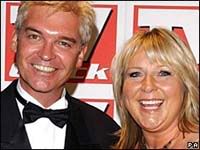
And Phil and Fern would find themselves being accused of collusion. You know, the sort of situation where Mother tells the kids to go to bed early again because "Dad's not well". I don't imagine it was a bundle of laughs for them asking Kerry what was wrong, but they did the right thing and I believe they will come to be vindicated for it. As Fern said:

It seems, according to a bbc.co.uk report that Ms Katona arrived just in time for her interview, therefore the producers of her show had no time to "assess" her beforehand.
Fern referred to Katona's past addiction problems - fairly, I thought, not only because they're in the public domain, but because they were obviously worried about her; Schofield's manner was redolent of a Dad concerned for a friend that his daughter's brought home in a vulnerable state.
Mark Croft, Katona's husband, referred to "bipolar depression", by which I imagine he means bipolar affective disorder where, when active, depression is the predominant feature - I'm not being pedantic, I have the same thing. (And when I'm ill there's no stopping me from doing something I've sent my mind on.)
Croft states she's on medication, as am I. And there's the rub: medication for many mental illnesses can have some quite distressing side effects, which can include slurring of speech. Once I experienced this when one of my meds was raised, and on another occasion when a med was changed I was shaking and sweating until my body got used to it...I was mortified, imagining that people would see me coming into work in the morning with the shakes and perspiring, and draw what they might think was the obvious conclusion. The media's mentioning that she might be on Chlorpromazine - this med is so powerful that in the prison system they used to refer to it as "liquid cosh".
Any other substances can interfere with the levels of medications in your body - for example, paracetamol can keep the liver busy, which means that your blood-levels of other meds build up for a while. Alcohol can have the same effect: as Katona pointed out, she's 28 and can drink if she wants to. Painkillers taken for a hangover can complicate the picture further.
But the crux of the issue is, was Kerry ambushed? Not a bit of it, in my opinion. It might have been more comfortable for Kerry had Phil and Fern glossed over the difficulties she was obvioulsy having, but she would have faced a lot more questions today, especially as she's being followed around by a camera crew for some sort of reality show.
And Phil and Fern would find themselves being accused of collusion. You know, the sort of situation where Mother tells the kids to go to bed early again because "Dad's not well". I don't imagine it was a bundle of laughs for them asking Kerry what was wrong, but they did the right thing and I believe they will come to be vindicated for it. As Fern said:
We are just concerned for you because you're bubbly, you're funny, you're beautiful, you're quick-witted - all of those things, and we can't bear to see you not looking the Kerry we know.So well done, Philip and Fern, and get well soon, Kerry.
Friday, March 14, 2008
The Budget: panem et circenses and Special Brew
This year's spring Budget, which no sane person doubts is at least as much the Prime Minister's as Alistair Darling's, will be fodder for psychoanalysts and psephologists alike for many elections to come. In Diplomacy, Henry Kissinger predicates of Hitler's character the quality of doing everything possible to bring the house of cards of his own creation crashing down around his ears; in a similar way, the Prime Minister seems determined to go the extra mile to destroy himself, his party and his country.
There's not enough time or blogs to chew over the slings and arrows of outrageous farce aimed across the whole spectrum of social class that Darling Brown is determined to systematically alienate. So I'd like to concentrate on one aspect - alcohol.
Government apparatchiks appear to have noticed that alcohol prices are going down in real terms, but not to have clicked that this observation pertains to supermarket-sold alcohol. So, in an effort to stop binge-drinking, which is in principle - rightly - applauded by doctors, the Budget has piled above-inflation tax hikes on beer bought in pubs: the very places where it's not too easy to binge-drink, because the licensee faces prosecution and loss of license should a serious incident result from binge-drinking on their premises.
So, with the smoking-ban, rising beer and wine prices and competition from supermarkets selling cheap booze, our pubs are facing mounting pressure just to stay open, with worrying consequences. For one thing, rather than smoke out in the streets of our draughty old fens, people are smoking at home in front of their children; now, with the double-whammy of the rising price of a pint while off-license drink gets relatively cheaper, they are taking booze home to drink in front of their children as well. Another victory for the received wisdom of the liberal-socialist axis in the face of common sense.
I can understand the rationale behind the move on alcohol taxes. But it's difficult to envisage gangs of yobs getting tanked up on Cabernet Sauvignon before having a sophisticated night out headbutting all the right people then doing a Damien Hirst on the pavement. If the government wants to put the pressure on problematic drinking, it should target certain brands of alcoholic drink with the precision of a cruise missile instead of blanket-bombing the whole industry. Specifically, superstrength lager, strong cider and spirit-based alcopops.
However, it would be unfair to tar all of these drinks with the same brush. Bacardi, for example, has a website that can only be accessed after the surfer has entered their date of birth and country of domicile. There's also a facility to enter your postcode and find a taxi-firm.
Carlsberg has the same sort of setup. It also has a responsible drinking page, which informs us that a 500ml can of Special Brew contains 4.5 units of alcohol. On the page dedicated to Special Brew, the street-drinker's tipple of choice, we are told that "the Department of Health advises that men should now drink no more than 3-4 units of alcohol per day, and women should drink no more than 2-3 units of alcohol per day." In other words, drink one can of the product and, in the light of Carlsberg's own responsible drinking policy, you're drinking irresponsibly. The concoction, we are told, was "first brewed in 1950 to satisfy the refined tastes of Winston Churchill himself". Sounds impressive, but I'm not aware of the old war-horse having had a taste for paint-stripper saturated with syrup; and I think it's unfair to project an image of fighting them on the beaches and never surrendering which is simply setting up the average consumers of strong lagers which their brewers knowingly target to be objects of derision at best,and of fear at worst.
If this government wants to stop binge-drinking, wine and pints of beer are the wrong things to target. Put higher tax on superstrength lager and cider, and alcopops, if you dare, Darling Gordon. The disadvantage for you is that this may nudge some people struggling to end their addictions to become free of drugs and alcohol, and they would soon be looking for employment which is no longer there because immigrants have arrived unimpeded to reap what they have not sown.
While we will argue for a long time over whether the Minister for children shouted "So What?" in reply to David Cameron's delineation of the increasing tax burden, the sight of Housing Minister Caroline Flint in full Blair Babe fatigues was certainly an eye-opener: I hadn't realised how easy it was to disguise jackboots as heels.
There's not enough time or blogs to chew over the slings and arrows of outrageous farce aimed across the whole spectrum of social class that Darling Brown is determined to systematically alienate. So I'd like to concentrate on one aspect - alcohol.
Government apparatchiks appear to have noticed that alcohol prices are going down in real terms, but not to have clicked that this observation pertains to supermarket-sold alcohol. So, in an effort to stop binge-drinking, which is in principle - rightly - applauded by doctors, the Budget has piled above-inflation tax hikes on beer bought in pubs: the very places where it's not too easy to binge-drink, because the licensee faces prosecution and loss of license should a serious incident result from binge-drinking on their premises.
So, with the smoking-ban, rising beer and wine prices and competition from supermarkets selling cheap booze, our pubs are facing mounting pressure just to stay open, with worrying consequences. For one thing, rather than smoke out in the streets of our draughty old fens, people are smoking at home in front of their children; now, with the double-whammy of the rising price of a pint while off-license drink gets relatively cheaper, they are taking booze home to drink in front of their children as well. Another victory for the received wisdom of the liberal-socialist axis in the face of common sense.
I can understand the rationale behind the move on alcohol taxes. But it's difficult to envisage gangs of yobs getting tanked up on Cabernet Sauvignon before having a sophisticated night out headbutting all the right people then doing a Damien Hirst on the pavement. If the government wants to put the pressure on problematic drinking, it should target certain brands of alcoholic drink with the precision of a cruise missile instead of blanket-bombing the whole industry. Specifically, superstrength lager, strong cider and spirit-based alcopops.
However, it would be unfair to tar all of these drinks with the same brush. Bacardi, for example, has a website that can only be accessed after the surfer has entered their date of birth and country of domicile. There's also a facility to enter your postcode and find a taxi-firm.
Carlsberg has the same sort of setup. It also has a responsible drinking page, which informs us that a 500ml can of Special Brew contains 4.5 units of alcohol. On the page dedicated to Special Brew, the street-drinker's tipple of choice, we are told that "the Department of Health advises that men should now drink no more than 3-4 units of alcohol per day, and women should drink no more than 2-3 units of alcohol per day." In other words, drink one can of the product and, in the light of Carlsberg's own responsible drinking policy, you're drinking irresponsibly. The concoction, we are told, was "first brewed in 1950 to satisfy the refined tastes of Winston Churchill himself". Sounds impressive, but I'm not aware of the old war-horse having had a taste for paint-stripper saturated with syrup; and I think it's unfair to project an image of fighting them on the beaches and never surrendering which is simply setting up the average consumers of strong lagers which their brewers knowingly target to be objects of derision at best,and of fear at worst.
If this government wants to stop binge-drinking, wine and pints of beer are the wrong things to target. Put higher tax on superstrength lager and cider, and alcopops, if you dare, Darling Gordon. The disadvantage for you is that this may nudge some people struggling to end their addictions to become free of drugs and alcohol, and they would soon be looking for employment which is no longer there because immigrants have arrived unimpeded to reap what they have not sown.
While we will argue for a long time over whether the Minister for children shouted "So What?" in reply to David Cameron's delineation of the increasing tax burden, the sight of Housing Minister Caroline Flint in full Blair Babe fatigues was certainly an eye-opener: I hadn't realised how easy it was to disguise jackboots as heels.
Subscribe to:
Posts (Atom)