Fatal Misconception - The Struggle to Control World PopulationMatthew Connelly
pp520
Harvard University Press 2008
"Those who cannot remember the past are condemned to repeat it." George Santayana
I begin with this often-misquoted phrase from George Santayana because the story of birth-control as national and transnational policy seems to be that of recurring bouts of "collective amnesia", as Connolly puts it. For example, Connelly cites a screening of the pro-life film
The Great Population Hoax at IPPF headquarters which caused activists to complain about arguments using distortions of the truth; manager Julian Heddy had to admit that these were actual claims made by earlier population-control advocates.
In order to test the prevalence of population control in recent times, after the prejudices, avoidable tragedies and wilful negligence, I leafed through today's
Daily Telegraph. I found a story about how
Pakistan is to receive a $9 billion (£5.6 billion) loan from the IMF, but would not like a full-blown IMF program because "
it would likely come with painful conditions to cut government spending that could affect programs for the poor".
Wondering what these might be, I looked through some IMF papers for other countries, and found a
Senegal Poverty Reduction Strategy Paper from 2006 which contained a statement on page 38 that one of the priority objectives of this was population control.
I've already
blogged about how social Darwinism evolved into eugenics. I knew that Darwin himself was horrified by the former phenomenon, but it surprised me to learn that he complained to Annie Besant during her phase as a eugenicist (before she became a mystic philosopher) that eugenics interfered with natural selection. I considered myself quite informed on these matters, but this was only one of countless revelations in Matthew Connelly's intensely-researched tome on how population control was all about controlling other folks' populations. Shortly into my first session with
Fatal Misconception, I realised I was reading one of the most important books of my life.
One of the key dogmas of eugenics was maintaining the purity of one's people. When Margaret Sanger realised that those concerned about this were coalescing into a discrete movement, two of the names she thought of calling it were "neo-Malthusianism" and "race control", before she decided on "birth control". An American, her British counterpart, Marie Stopes, stated that she wanted to recruit from "healthy, well-conditioned individuals only", and that "Constructive Birth Control will fill the comfortable cradles and empty the gutters".
The Birth Control Movement was ostensibly an internationalist movement seeking a world government in order to eliminate war. But what they were about was the future of the white race (whatever that is), and at the time eliminating the "yellow peril" (although at the International Neo-Malthusian and Birth Control Conference in New York in 1925, Indian nationalist Taraknath Das complained about the "white peril).
India was a target for Sanger and her followers from the start, and during Connelly's exposition of the whole sordid affair as a case-study I had to remind myself several times that I wasn't reading a horror story but modern history.
A measure of the morality of the Birth Control movement can be gleaned from his description of Margaret Sanger "criss-crossing" India dispensing spermicidal foam, almost totally unarmed with information as to its safety. It seems not to have bothered her that a similar foam, distributed to African Americans by "notorious racist" Lydia DeVilbiss, was causing side-effects, but finally sent her foam away for analysis upon learning that DeVilbiss' concoction had caused adverse effects when tested upon dogs.
Following the 1951 census, Indian Prime Minister Jawaharlal Nehru "
called for free sterilisation and contraception when recommended on medical grounds, and suggested that where feasible it should be given for social and economic reasons as well". India would never be the same. (It should be noted that Hellen Keller, the deaf-blind pioneer,
wrote to Sanger breathlessly congratulating her for founding the Planned Parenthood foundation in India in 1952. I find this rather strange, as Sanger referred to the blind, deaf and mute as "this dead weight of human waste" in her 1922 book
The Pivot of Civilization - and
Marie Stopes wrote her son Harry out of her will because he married a woman - daughter of "bouncing bomb" inventor Barnes Wallis - with hereditary short-sightedness.)
The International Planned Parenthood Federation (IPPF) had maintained a presence in India for two decades before Nehru gave them the go-ahead, and responded to their mission with a Neitzschean optimism: "
India is the cauldron in which mankind will be tested". Farce ensued immediately - during their 5-year study in the Punjab husbands and wives would answer intrusive questions about their sex-lives differently, and by the time their trial on birth-control ended, the birth-rate was greater than when it began. (They weren't the only ones falling over their own feet; a Swedish trial in nearby Ceylon - now Sri Lanka - couldn't prove the effectiveness of contraceptives after two years.)
The degree to which the Indian population control program contributed to the
Emergency and its conclusion will, I think, be a subject for debate until Kingdom Come. But abuses in order to increase "acceptors" were a part of the program from the beginning. Intrauterine Devices (IUD's), which had been found to be a cause of heavy bleeding and ectopic pregnancy in programs in Hong Kong, Puerto Rico, Pakistan and other countries, were being used widely, and the UN promised follow-ups in India to catch complications early, despite there being one health visitor per 40,000 people in India. Men who refused sterilization were denied pay-rises and promotions, and by the late '6o's payments were being made both to be vasectomised and to recruit others.
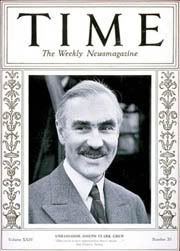
Mass sterilisation was praised in 1960 by
Time, and when the Emergency was declared in 1975 Indira Ghandi's son Sanjay commented that it was an "appropriate atmosphere" for tackling what DN Pai, director of family planning in Maharashtra, called "people pollution". What was effectively coercive for poor people became mandatory. Connelly explains:
Sterilization became a condition not just for land allotments, but for irrigation, water, electricity, ration cards, rickshaw licenses, medical care, pay raises, and promotions. Everyone, from senior government officials to train conductors to policemen, was given a sterilization quota."
One of Sanjay's circle, Ruksana Sultana, demanded that Muslims who were begging her to have the demolition of their houses stopped - the idea being that sterilization certificates be produced to get alternative accomodation - produce 300 people for sterilization in return, and had to be rescued from the resulting riot by police who eventually gained control by firing live ammunition into the crowd.
However, Gandhi had two qualities that just about all senior population controllers at the time lacked: she was a woman and a mother. She became depressed over the suffering of her people and called an election - and was robustly defeated.
Another tragedy of India is that the population control could have been different. On December 3, 1935, Margaret Sanger had an audience with Mahatma Gandhi concerning population control, and told
Time, "He just didn't know much about the subject." In reality, Gandhi was a proponent of natural family planning, which he thought strengthened self-control. Connelly speculates that she didn't publicize Gandhi's views on natural family planning because "
it was endorsed by a growing number of Catholics".
Sanger was, in fact, deeply anti-Catholic, and indeed when she left the American Birth Control League "when she found she could no longer control it" she called its house journal,
Birth Control Review, "
no different from 'all the little Catholic papers'". Connolly continues:
Whatever their differences, Sanger insisted that all these [birth control] groups shared "one common enemy, one group of opposition objecting to everything we do or say - the Catholic Church".
This attitude still thrives: in September of this year
John Smeaton highlighted tactics which were contrived to be offensive to Christians in general, but to Catholics in particular, and the British HFEA (Human Fertilisation and Embryology Authority) still
excludes pro-lifers, which in some circles is taken to be a synonym for Catholic. There are, however, two things to be thankful for: firstly, Roman Catholics still swell the ranks of pro-lifers, and secondly, they have been joined by people of other religions and none - there are pro-life
Anglicans,
Baptists,
Methodists,
Protestants,
Jews,
Hindus,
atheists,
pagans - the list goes on and on and on...
Despite the abuses of the Indian birth control campaign, in 1983 Indira Gandhi, returned to power, shared the first United Nations Population Award - with Xinzhong Qian, Soviet-trained former soldier who was one of the masterminds of the Chinese population control campaign.
Birth control being what it says on the tin, ie control, it's surprising that it wasn't embraced wholeheartedly by a Communist country before China started considering it in the late seventies.
The IPPF's program in China, states Connelly, was "no secret". Stephen Mosher, later President of the
Population Research Institute, brought back reports such as that from a Guangdong village:
Eighteen women who were at least five months pregnant, "red-eyed from lack of sleep and crying", were told they would have to undergo abortions, in two cases by Caeserian section. Through such means, China registered 7.9 million abortions, 13.5 million IUD insertions, and almost 7 million sterilizations in 1979...
Yet, though the riots in India had barely died down, it was as though they had never happened - despite the repercussions of the Indian fiasco reaching not just Pakistan, but also countries as diverse as Iran, Indonesia and the Philippines and contributing to the overthrow of more than one government. Yet, says Connolly, "
senior IPPF staff had their eyes wide open" regarding the China campaign, whose aims, according to the
United Nations Population Fund (UNFPA) were not just to reduce "overpopulation" but to "raise the quality of population from the point of view of eugenics, education and ethics". With people who could remember newsreels detailing the horrors of Belsen, Auschwitz etc at the time of their liberation still in employment, eugenics was back.
And it's back this time without necessarily being imposed from above - witness sex-selective abortions in India and China facilitated by ultrasound machines. In the light of modern preoccupations with all things genetic, Connolly refers to people "
faithfully reciting a eugenic catechism without the faintest idea of where it came from or where it can lead". For example, while in Australia a child has been born after surviving an
ectopic pregnancy, in Britain doctors have been given permission to screen embryos for cosmetic defects, with a view to destroying the ones that don't match expectations, the defects including squints and even
hair colour.
One thing gynaecologists and obstetricians have always agreed upon is that there is no difference between a baby before birth and one after. This is why in 2006 the
Royal College of Obstetricians and Gynaecologists proposed infanticide for the sickest babies on the grounds, among other things, of the costs of looking after them - and Connelly notes that the population control agenda gathered steam during the financial crises of the 1930's. In the US, Senator Barack Obama is reckoned to have voted against the
Born Alive Infants Protection Act, which would protect babies who have survived abortion from being murdered. (In the UK, whose population is around a fifth of that of the US, fifty babies a year are estimated to
survive abortion.)
What we're looking at here is an attempt to formally renunciate the broad medical concensus that once a baby has taken its first breath it is a human being. I'm reminded of Philip K Dick's 1973 short story
The Pre-Persons, in which a child can be "aborted" up to the age of 12 , and even then is only safe if he/she can prove a certain degree of mathematical ability. I wish I could say it's still in the realms of sci-fi, but earlier this year Australian doctor and bioethicist Fr Joseph Tham estimated that infanticide would be "normalised"
in 50 years. An online friend has alerted me to the philosophy of Dr Peter Singer, an animal liberationist who believes that animals are people but that babies can be killed up to 28 days post-birth. (Connelly refers to a pressure group called Zero Population Growth, which in 1969 wanted to exterminate humanity but give other primates an antidote so they would survive.)
What will happen? Will the "collective amnesia" of policymakers draw us to catastrophe once more, so that in the reaction we can once more cry "
Never again"?
But population planners have an enemy that they cannot forever subjugate. Connelly describes how the Emergency ended - "
Something more powerful, even more implacable, had finally defeated the ideology of population control: People voting, one by one."
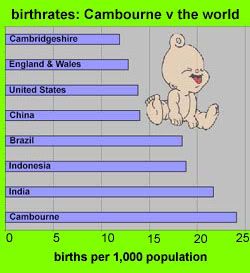 I envy Chris Havergal of the Cambridge News, who had to think up a headline for his story about the village of Cambourne having a higher birthrate than India, and came up with Welcome to Prambourne!
 while author and journalist Sir Max Hastings advises "a Tory government must offer parents better tax breaks, to encourage us to have more children of our own". France aggressively pushes tax and other breaks for working women who decide to have children, but a spokesman for the Paris office of the Organisation for Economic Cooperation and Development - which supports the Millenium Goal advocating "reproductive rights" [including abortion] for all - states that "The way you encourage women to have more children is to help them work more". The Labour Life Group disagreed in a 2008 press release and proposed a position I would hesitate to embrace by stating that "Improved opportunities for women in paid employment and equal access to better paid careers has been a factor reducing the birth rate".
 In China, the one-parent policy has been in place since 1979, with the full knowledge and cooperation of the International Planned Parenthood Foundation, despite its denials. In its forst year, Stephen Mosher brought back this report, referred to in Matthew Connelly's Fatal Misconception - the struggle to control world population (to which I owe much of what follows):
 Reimert Ravenholt, while head of USAID, was credited with reducing the world's birthrate from 4.9 to 2.9 children per woman (although birthrates do fall endogenously as societies slowly become more affluent); he commented that introducing a family planning project at "sub-village level" in Indonesia was "awesome - perhaps the most socially directed [aimed at the poorest] family planning outside of red China".
 got too hot for him wrote to the Washington Post in January 1976 stating his opposition to the programme of compulsory male sterilisation that was compounding the Emergency. The mindset of (mostly male) population controllers was revealed when he stated his preference for the substitution of sterilisation of women, which would involve going through the abdominal wall in often less than salubrious settings where not all involved were fully trained. Sex-selective abortion when a baby is identified as being female through the use of ultrasound (which is banned in the country for this purpose) is warping the country's demographics, as it is in China - when Australian foreign minister Gareth Evans was confronted about unregulated export of the machines to the latter country in 1990 fuelling abortion, he replied that the same could be said of unregulated export of coathangers.
 Through the offices of Margaret Sanger, eugenics - population control - got a firm foothold in the United States. While she criss-crossed India handing out contraceptive foam to villagers, she never thought anything about sinister stories of side-effects until the same foam, distributed by Lydia DeVilbiss, caused adverse effects when tested upon dogs. This shows the attitude of population controllers to people who aren't white (and able-bodied) which continues in the organisation Sanger founded - the IPPF - targeting poor black areas with abortion clinics to the extent that the Revd Arnold M Culbreath, who oversees the Life Issues Institute's program Protecting Black Life, has stated that "every month in the U.S., approximately 35,000 black babies die by abortion".
 Brazil was also an early victim of the eugenics/population control movement: in the First Pan-American Conference on Eugenics and Homiculture at Havana in 1927, Brazilian eugenicists "considered ways to 'whiten' their populations as a way to improve them" (as well as Chinese, Japanese and Mexican delegates). As perhaps a sign of things to come for us all, Philip Longman, author of The Empty Cradle: how falling birthrates threaten world prosperity mentioned the use of certain images of womanhood in Brazilian soap-operas as a means of bringing down birth-rates.








 insulting or abusive. Certainly the reaction in this country to a friendly gibe made in an Army environment doesn't bear any resemblance to the "British tolerance" which Gordon Brown assured the Indian people of when he visited to the sound of riots over the
 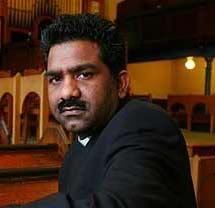 uote the above because of another story involving somebody born in Pakistan that broke on Sunday - and in my home town - showing that people from that country can definitely be genuine victims of discrimination. Reverend Mahboob Masih of
  tempted to show how downtrodden Muslims were in Britain by stating that it was unacceptable to insult
 alternative family arrangement, therefore Haringey Social Services managers closed their ears to the concerns of workers on the ground about her son; you can follow the case of
  Bullying is big business on TV. Last year, Channel Four's Celebrity Big Brother let Jade Goody's racist bullying of Bollywood star Shilpa Shetty carry on because it attracted viewers; but the ratings war yeilded a Pyrrhic victory as riots in India coincided with Gordon Brown's visit there, Carphone Warehouse
  ats soon discovered their reactionary sides when they criticised her, basically, for being a mother in a public place. Things got very nasty when it was alleged that her newborn daughter was in reality her own daughter's child; to (then) Senator Obama's credit (something I'm not that used to saying) he reacted swiftly to insist that family members were off-limits. It would send a stronger message about the President-Elect's sense of fair play if he were to announce an inquiry about who targeted two minors, one a newborn baby with special needs - and upon whose orders.
 The climate-change industry owes far more to bullying than it ever did to science. In his book
  ange theory as late as 1988, but in 2004 described it as "