Showing posts with label food. Show all posts

Monday, March 1, 2010

eggs, pesto and Tolkein: my bachelor weekend

click to go to Lord of the Rings Fanatics SiteI'm a big fan of The Lord of the Rings, but must admit to my shame that I find the films more accessible than the book - I'm on my third attempt to get to the finish and, being halfway through The Two Towers, am further than I managed to get to either as a schoolboy or ten years ago.

A few months ago I bought a book - the first of a series called The Wheel of Time - that offered to "mine the world Tolkein hinted at"; I got through a few hundred pages then came to a phrase "slowly he began to breathe slowly". (Minora calls me a pedant, which really annoys me, because she puts the stress on the wrong syllable.)

As I threw it in the bin, I resolved to spend my weekend alone - Maxima having taken the girls to the other end of the Fens to visit her parents - reacquainting myself with the films, which have helped me power through the book no end.

As usual with one of my "bachelor weekends", I raided the "reduced to clear" section of the local supermarket to make one of my experimental meals that the women in my life tend to frown on.
The goal, I decided, would be something meatball-ish. So I emptied three cans of mince and onions into bowl, and grated two big wodges of blue cheese into it. I'd come home with a pack of eight factory eggs which had been going for a song because there should have been ten. I'm not overly chuffed at the concept of factory farming, but it beats me how people can look virtuous when buying their free-range eggs laid by hens bred to produce the extra-large ones, either not thinking or not caring why the shells have blood on them. Anyway, I couldn't decide how many eggs to use, so in went the lot. Then the best part of a jar of pesto went in. I like pesto. It's the nearest you'll get to a culinary proof of a deity other than an epiphany in your pantry, especially at times when you find yourself wondering why a loving God would create something like carrots.

Anyway, I grated a chunk of parmesan into the concoction, mixing while some penne bubbled away, then dropped teaspoonfuls of it onto a hot frying-pan with plenty of oil. (Helping make pancakJRR Tolkein: click to read more at CatholicAuthors.comes at the Rectory on Shrove Tuesday, Rector Pellegrina asked me to reduce the amount of oil in my pan. When I did, people grumbled that my pancakes suddenly weren't as nice.) They ended up more like flat coins than balls, but tasted sublime in a sauce of blue cheese, mushroom soup and eggs.

It was, in fact, a meal suitably epic to accompany a marathon session of all three videos from which I emerged square-eyed but happy. I have the book with Tolkein's Foreword to the Second Edition, in which he tries to dispel speculation that the work is a religious analogy. I accept that, but it was also a labour of love for the author and expert on the Anglo-Saxon and early English languages, and as such I believe that the childhood convert to Roman Catholicism dug deep into the mines of his spirituality to inform the ethics of his morality-tale. What's really becoming click to read a review of the Lord of the Rings DVD on Amazonclear to me as I read The Lord of the Rings this time is that his first-hand experience of the horrors of the Great War wedded to frustration with the politics of appeasement directed towards Hitler - despite Tolkein's denial - come through in the backstory of the powers of Middle Earth standing back while the treacherous Sauron consolidates his hold on Mordor, to use it as a base for launching his bid to enslave the fantastic world.

And my cooking? I enthusiastically showed the remainder of the panful to Maxima on her return, at which she winced and told me to go get everybody a Chinese. Was it the eggs?

a question of eggs?

Tuesday, February 16, 2010

top tips for Tuesday

top tips for tuesday, ash wednesday
click to read about a vicar's Lenten fast from bloggingVicar and blogger David Keen gives lots of reasons to give up blogging for Lent. I'm not contemplating a Lenten fast from cyberspace, but with more things competing with my time something's got to give, and after the shouting's done over here that might be the blogging. I found reason (4) very compelling, but the killer quote was from Reginald Foster - that we should fast from what we sense is becoming a compulsion.
click to read Bosco Peters' post on Ash Wednesday

Revd Bosco Peters of the Liturgy blog wrote a post on Shrove Tuesday and its relation to Mardi gras and, as Ash Wednesday approaches, here's his reflection on the day's Collect and observing Lent.
click to read Risa's greeting for Adar


I've read Rabbi Shai Specht's one-line explanation of the month of Adar as "the Jewish Mardi Gras" - here Risa from Isramom wishes everybody a Happy Adar!
Labour MP David Wright has got himself into a bit of a pickle. A tweet in his name referred to his political oclick here to go to TotalPoliticspponents as "scum-sucking pigs" ("if you put lipstick on scum-sucking pigs they're still scum-sucking pigs" - an obviously irresistable dig at Sarah Palin). If he'd put his hand up and said it was a stupid mistake we'd all have moved onto the next gaffe, but instead he seemed simultaneously to defend the remark as "legitimate comment" and claim that his twitter account had been hacked, turning the issue into one of ministerial propriety. Here, TotalPolitics director Iain Dale reproduces a letter from Eric Pickles, Chairman of the Conservative Party, asking him to answer several questions on the affair.


We've just had Valentine's Day, and this is the most poignant image I could find posted on that day: a US military nurse whispering into the ear of an unconscious Canadian soldier as they fly him to a hospital base in Afghanistan. May God be with all the Coalition troops as they roll out Operation Moshtaraq.
click to read some counterintuitive wisdom on marketing using new media


Seth Godin explains how companies racking up as many followers as possible on Facebook etc are on a hiding to nothing compared with viral growth of an idea or product starting from a very small base.
click to read David Appletree's review of the Algemeiner Facebook fan page


The name of Elie Wiesel has been sorely misused in the climate debate, therefore I recommend you help restore the balance by following David Appletree of the Jewish Internet Defense Force's advise on his new project, the Advisory Board of the Algemeiner.
click to read Fr TF's post on priests and the new media


Fr Tim of the Hermeneutic of Continuity writes on the Pope's encouragement of priests to use the opportunities afforded by new media, and includes a YouTub video entitled "Why am I a Catholic"?
click to read about the similarity between the UK satellite system and a famous sci-fi film


Richard Normington worries about where the people who thought up the name for the UK's military satellite system got their inspiration from.
we're meant to talk to meat?  Click for enlightenment


"We're supposed to talk to meat?". Sci-fi author Terry Bisson posts the correct version of a legendary short story of his that has been orbiting around cyberspace.

Friday, December 11, 2009

cookies...

I heard from Linda over at Don't Poke the Baby that she's having a cookie party tomorrow, and for those whom a trip to the States would necessitate wet feet, she's decided that the cookies can be virtual (geddit?)

My older daughter Minora was going to copy down a diabetic cookie recipe and at the same time post some of her Manga drawings, but she's caught the bugs that are doing the rounds and her own blood sugars are going up and down quicker than the Grand Ole Duke of York's minions.

So I searched through the internet and found a compromise: a diabetic recipe for oatmeal cookies, so you've got something from her, and something that sounds Scottish - so much so that Samule Johnson defined "oats" in his dictionary as "a grain, which in England is generally given to horses, but in Scotland supports the people" - without there being a danger of any terrorists being released from prison.

click to go to the Information about Diabetes websiteWithout further ado, here's the recipe from the Information about Diabetes website. (Please note: recommendations can be different from country to country, so if in doubt please check with your diabetes nurse.)

INGREDIENTSclick here to go to the Information about Diabetes oatmeal cookie recipe

To serve 24:

1/2 cup Margarine, (1 Stick)
1/4 cup Sugar
1/4 cup Brown sugar
Dry sugar substitute equal
To 1/4 cup of sugar
1/4 cup Egg, whites
1 tsp Vanilla
1/2 tsp Black walnut flavoring
1/4 cup Water, at room temperature
1 1/2 cup All-purpose flour
1 tsp Baking soda
1/4 tsp Salt
1/2 cup Black or English Walnuts chopped

Preparation:

Cream margarine, sugars and dry sugar substitute
together at medium speed until light and fluffy. Add
egg whites, flavorings, and water, and mix at medium
speed for 30 seconds, scraping down the bowl before
and after adding egg whites, flavorings, and water.
Stir flour, baking powder, salt, oatmeal and walnuts
together to blend, and add to creamy mixture. Mix to
blend. Drop dough by 1 1/2 T onto cookie sheets that
have been sprayed with pan spray or lined with
aluminum foil. Press each cookie down lightly with the
back of a tablespoon dipped in color water. Bake at
350 for 12 to 14 minutes, or until cookies are lightly
browned. Remove them to a wire rack and cool to room
to temperture. Yield: 24 Food exchanges per serving: 1
STARCH/BREAD EXCHANGE + 1 FAT EXCHANGE Calories: 122
Fat: 6g, CHO: 15g, PRO: 3g, NA 120 mg, Cholesterol: 0
Source:

Desserts for Diabetics by Mabel Cavaiani, R.D.

Shared by: Kathleen's recipe swap page - email recipes@ilos.net


I'm hoping Minora will be a bit better tomorrow, and will be able to upload one of her Manga drawings. Linda, I hope your real and virtual cookie parties go really well together - give my best wishes to Pam!

Tuesday, September 29, 2009

we'll vote on politics, not pills

Being manic-depressive, I find myself reacting more strongly than I had anticipated to speculation in the media, informed almost totally by that in the blogosphere (as Platform 10's David Skelton observes), that Gordon Brown may be taking antidepressants.

The rumour has its genesis in a blog by John Ward, in a piece called "Establishment 'colluding in plight of sick man Brown'". It's gone through various columnists like John Barr's best beef, and culminated in Andrew Marr asking the Prime Minister, on his Sunday morning political show, if he was one of the many British people who "use prescription painkillers and pills to get through":


prozacWard states that "Before the arrival of Prozac derivatives, [MAOIs] were the first line of attack when dealing with severely depressed patients". I started training as a psychiatric nurse in Scotland shortly before Prozac was introduced, and MAOIs were very much a last resort then as now, only to be used when tricyclic antidepressants such as amittryptilene olinks to the BNF entry on MAOIs - you may have to register to view entriesr lofepramine or, if necessary, antipsychotic medication had failed. Also, I can't find any mention in the prescriber's "bible", the British National Formulary, of MAOIs being used to treat Obsessive Compulsive Disorder, another of Ward's claims.

MAOI stands for monoamine oxidase inhibitor. Monoamine oxidase is an enzyme found in various parts of the body that breaks down tyramine, a compound derived form an amino acid that acts to release neurotransmitters such as dopamine, adrenaline and noradrenaline ( a longer-acting version of adrenaline). So if production of monoamine oxidase is damped down, tyramine can accumulate in the body, facilitating the production of the above neurotransmitters, which somatimes can help somebody whose depression has been otherwise treatment-resistant to work towards recovery.


The reason MAOIs are prescribed with caution is that when somebody takes them along with food high in tyramine (remembering that there already high tyramine levels in the body) a hypertensive (high-blood-pressure) crisis can arise, which could lead to burst blood vessels - for example in the brain, causing a stroke. So foods high in tyramine must be avoided cheese and wine- the mnemonic we learnt was "nothing pickled, processed, fermented, salted or spoiled", although a whole host of foods must be avoided, not all of which fall easily under any mnemonic. This is what started the rumour - when a "senior civil servant" mentioned "the latest nonsense - a huge list of things [Brown] can't eat or drink because of the drugs he's on...most importantly, cheese and Chianti". Those are certainly foods I would avoid if I were on MAOIs, but also if I had, say, severe heartburn.

As Marr observed, Americans know all about their President's medical history - and, I have to say, when applying for a job I mention my illness in the main part of the form and not just the equal oppoChad Varah - click to go to the Samaritans homepagertunities bit (so it's frustrating when I mention it and interview panels are surprised, indicating they haven't read past the front page of the form). But we don't have such a system here, and importing it would set the law of unintended consequences in motion just as surely as exporting the NHS to the US.

Revd Chad Varah, founder of the Samaritans, wrote in Samaritans in the 80s that if depression approaching the point of suicidality were a bar to political power, the House of Commons' front benches would be somewhat emptier. Marr himself wrote of beleaguered Conservative Prime Minister Anthony Eden - of Suez Crisis fame - in 2007 (the year before Blair finally gave way to Brown): "By the time he finally got the top job halA History of Modern Britain by Andrew Marrfway through the decade, he was physically depleted...like a racehorse who had been trained to win the Derby in 1938 but was not let out of the starting stalls until 1955".

Whether or not Brown is on antidepressants, what he is experiencing, sometimes at the hands of those around him, may be a consequence of the medicalisation of problems that do not fall within the sphere of medicine. Sometimes we all, as flawed human beings, experience problems that, as part of our personalities and not of a pathological process, take us to places we did no intend to go. Take Lord Peter Mandelson - he gave a rousing and even excellent speech at the Labour Party Conference yesterday, but that's the point: when its all about Peter, Peter presents no problems. But when he feels the attention draining away, he acts to bring the spotlight back upon himself, and seems not to care whether he is cast in a positive or negative light.

Is Gordon Brown fit to run the country? In my opinion, no. Not because of what may or may not be happening with his brain chemistry, but because of the wholesale dismal failure across the Labour Party in 12 years of misgovernment. That's what I'll be highlighting in the time before we eventually get a general election, not a poisoned chalice of an agenda which could lead our opponents to rumble about discrimination on the grounds of disability should the antidepressant angle play a substantial part in a Conservative victory.

And what made me sit up straight was that it was that most hard-boiled of political commentators, Iain Dale, who teased out the pertinent point amid the tough days to come: If Brown is ill he deserves our compassion, not our insults.

Friday, August 28, 2009

Tesco: single-issue activists in tatters

The Tesco Express (small store) has only been in Cambridge's Mill Road for three days, yet it's starting to feel as if it's been there forever. It's bright, airy and affordable, and the staff are friendly.

So what was all the trouble about?

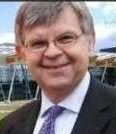
Richardc Normington, Prospective Parliamentary Candidate for the Conservative Party - click to go to website
Although resistance to Tesco's planning application for the store first came onto my radar last March, the cause of the confusion manipulated by a disaffected minority was summed up recently by Cambridge Conservative parliamentary candidate Richard Normington, who recently attended a planning meeting in the city convened to determine whether should the council enforce its own planning guidelines.
Why bother with rules if you do not plan on enforcing them? However, the City Council has overruled its own guidelines to the point that the council is treated with ridicule by many of those putting in applications. Did you know that two in every five appeals against the city are successful?
Indeed, in the planning meeting last March, "The recommendations from council officers and consultants in every case was that the Council should approve the proposed changes, usually with conditions. Arguments were backed up with reference to Central Government advice, history and the context of the Mill Road area in a 153-page agenda." All but one were refused.


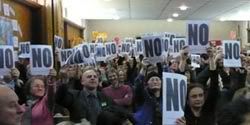
The anti-TeDavid Howarth, Liberal Democrat MP for Cambridge City - click for webpagesco cmpaign has been backed up by the city's Liberal Democrat MP David Howarth, who was a witness to an assault on a 66-year-old woman collecting signatures for a petition in favour of Tesco's. To his merit he offered himself to the police as a witness; but although I realise MPs must immerse themselves in all aspects of life in their constituencies, I wonder why he was concentrating on keeping Tesco away from Mill Road while on the same thoroughfare you can buy cannabis seeds, second-hand firearms and hard core pornography, while elsewhere in the city there are problems with drug-taking, prostitution, benefit-ghettoes and drink-fuelled violence at chucking-out time. Tesco's, it seems, should be the least of his problems, and the whole situation reflects the risks of mixing with single-issue activists to the exclusion of people who are on the other side of that issue.David Howarth (far left) helping collect signatures for the No Mill Road Tesco campaign

There are those who say that Tesco's opening will herald shop closures and job losses. They will, of course, be proven right, because shops have been closing and jobs been lost for some time now - it's called a recession.

Something that may militate in Tesco's favour is the lack of an alcohol licence, in the context of accusations that the outlet - in reality a small shop among small shops - will become another source of cheap booze in an area plagued by problems related to the stuff. A dry Tesco's, I believe, will throw light onto the true source of inexpensive strong lagers and ciders whose brewers are well aware of their target market. They are sold in some of the very independent traders whom the No Mill Road Tesco Campaign affects to protect.

The campaign is, of course, in tatters, a fact recognised by judge Lord Carlisle of Berriew when he threw out Campaign member Richard Rippin's attempt to force a judicial review of the Council's decision-making process: "This application is in reality an attempt to revive the No Mill Road Tesco Campaign under the guise of a Judicial Review claim. It is a misuse of Judicial Review".

single-issue activism: anti-Tesco campaigners crowd out the opposition at a planning meetingOn Wednesday morning, Minora phoned me from outside Mill Road Tesco's to report that there were a few Campaign members outside the entrance, flanked by watchful police officers. While Campaign supporters had been quite vociferous when protesting in the Cambridge Folk Festival, these would only give a terse "I can't comment", presumably having been well-warned. It's a sign of the times that pragmatism has won out over ideologically-based censorship, and anybody who doesn't like Tesco's will be free to use any of the meny other shops in Mill Road. That's how free choice works.

Wednesday, August 12, 2009

the passions of Kiri Te Kanawa

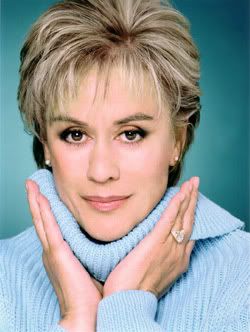
Dame Kiri Te Kanawa - click to go to the Kiri Te Kanawa Foundation websiteEverybody's got their favourite performances of their favourite stars. Mine's is Dame Kiri as Mary Dee in Paul McCartney's and Carl Davis' 1991 Liverpool Oratorio. Before she walks offstage after a blazing row in the Crises movement, her spoken "I think you should know, you're going to have a baby" could turn Old Faithful to ice.

Having gotten from being an aspiring opera singer in Gisborne, New Zealand, to become the First Lady of Opera by a commitment to education and hard work, she's sung the spectrum of soprano - from Die Zauberflöte (her first stage role) to South Pacific and from Faust to the two voices of Eliza Doolittle in My Fair Lady, playing so many lauded rolls that it would take a whole post to list them.

Today the Telegraph's Stephen Adams announced that when the opera-singer plays her beloved part of the Marschallin in Richard Strauss's Der Rosenkavalier next April, it will be her last role.

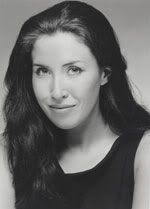
teaching at the Solti Te Kanawa Accademia di Bel Canto - click to read more (in Italian) However, what she's doing is just as interesting as what she's done. As well as being the first visiting teacher at Georg Solti's Accademia di Bel Canto (in which she is now a partner), the Kiri Te Kanawa Foundation identifies and nurtures operatic talent in New Zealand, and also prepares scholars for larger cities with long-established opera scenes. One of Te Kanawa's first protegées, Ana James, states
NZ is severely lacking in both language and vocal coaching...Many Australasian singers who I studied with in London and NY have already fallen of the radar.
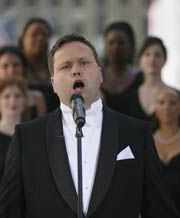
Hving pointed to so-called "popera" stars like Kathryn Jenkins' and Hayley Westenra's reliance on microphones, Dame Kiri has insisted that the opera singers of the future need time to mature away from the demands of the "instant fame" culture of shows such as X-Factor and Britain's Got Talent. Paul Potts, winer of Britain's got talent 2007
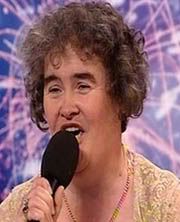
I can see her point: there'll always be a place for somebody like Paul Potts, who finished his shift selling mobile phones then brought the house down on the latter show with his rendition of Nessun Dorma, but Susan Boyle's collapse from
nervous exhaustion after her shock loss on this year's series showed the risks of a process that is not nearly long enough to identify people whom it might harm more than help, whatever the outcome. Susan Boyle, runner-up in Britain's got Talent 2007

Heaven knows I met enough aspiring dancers using stimulants to control their weight as a drugs-worker, but Kiri Te Kanawa Foundation alumna Ana James indicates the same process is happening with opera-singers:
Ana James - click for biography
Now, opera companies want to cast slim healthy singers. I think this can only be a good thing as it is unhealthy to be over your ideal weight and not to take exercise in any case. However, at the other end of the spectrum, I know of several anorexic singers, which I am sure was unheard of 20 years ago! This is a very sad situation because it can and does affect the voice, as well as weakens the body and mind. As a soprano I feel huge pressure to stay slim,toned, fit, and look as good as possible at all times. There will always be a slimmer, better soprano out there ready to take a job!!! I work out at the gym, do pilates, yoga at least three times a week (when at home!) and I eat healthily (no carbohydrates after 5pm).
It would be sad to see the old adage that it ain't over till the fat lady sings become it's finished when the skeletal girl drops. I'm sure producers aren't looking for girls who are too hypoglycaemic to speak their own minds...are they?

Speaking one's own mind is something Te Kanawa has shown herself unafraid of doing. In 2003, she created a shockwave when she criticised welfare-dependency within the Māori culture from which she hails and about which she is as passionate as anything she devotes herself to. In a statement which isn't far from the reality on some housing estates I've lived in, she said,
I see too many people living on benefits... it just drives me mad. I've known someone, a Maori, who's been on a benefit for 37 years. Now what sort of pride is that?
Dame Kiri will be bringing three of her Future Stars of Opera to perform with the London Sinfonia on October 16 as part of the Tower (of London) Festival.

After which, the world will remain her oyster.

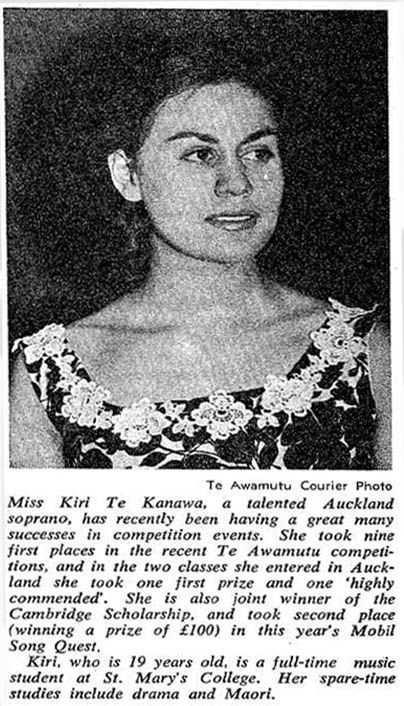
excerpt from TE Ao Hou - The New World - about Kiri Te Kanawa winning the Te Awamutu competition aged 19 in 1963 - click to read transcript

Saturday, May 30, 2009

hypergarlic megapizza

Maxima and the kids went away to the other side of the fens recently to visit relatives, so I decided I'd try my hand at cookery. I thought I'd share my creation with you - the hypergarlic megapizza.

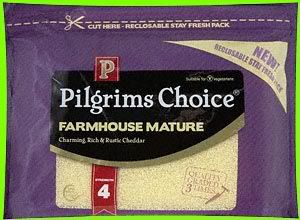
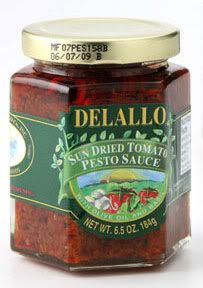
Get a pizPilgrim's choice - the Led Zeppelin of cheddarza base - preferably one that's got mushrooms already on it, as this will save you the effort of preparing them. Also buy three large blocks of strong cheddar - I chose Pilgrim's Choice; and some blue cheese, with parmesan as well. Add to your basket a bowl of pitted olives, a large jar of tomato pesto and some Lazy Garlic. (Note - it's not the garlic that's lazy, it's the cook. There's a theme coming through here.)
tomato pesto - beware people who say you can have too much
Spread the entire contents of the jar of tomato pesto over the pizza base. There are still people who say you can have too much pesto: they're dangerous and shouldn't be approached. They may go away if you throw peas at them, especially if they're still in the cans.

Don't bother grating the cheddar, it'll all end up a blob however you prepare it. Slice the first lot of cheddar and put it over the pesto, remembering to intercept liberal amounts as your reward for taking the bin the kitchen, work must be seen to have been doneother to cook. Then add the olives - all of them - and the second lot of cheddar over this.

This is important: grate the parmesan, then judiciously forget to wash up the grater, so your other half will know how hard you've worked. Put the parmesan over the second layer of cheddar, the lazy garlic (again all of it) over the parmesan, the blue cheese over the garlic, then the last lot of cheddar over this. Spend some time in amazed contemplation of your creation - a thing of beauty is a joy indeed, and there's nothing more beautiful or indeed joyous than your first hypergarlic megapizza.

Turn the cooker on. Put the pizza in the oven. After closing it, turn the oven on. Go watch somethinsurrender is not an option: the king of pot noodlesg important, like football, a heavy metal concert or Lord of the Rings, but don't have the volume too loud so that when the cheese starts to spit you'll remember you forgot the pizza.

Enjoy. For several days.

NB: this is a health-promotion blog. If you find all the cheese too salty, go have a kebab or a pot noodle instead.

Related post: Haute cuizine

Friday, May 22, 2009

Master of Space and Time

Master of Space and Time
Rudy Rucker
pp 229

1984 is a little outside "my period" for science fiction - I remember having a conversation with the fellow at the till about it: as good as the Star Wars and Star Trek films were (and in the case of the latter, the series and original books), the tie-ins that started appearing, in Britain at least, flooded the market with fiction that wasn't as cerebral as one would like sci-fi to be. But when I looked at the list of chapters and saw titles like This is the Name of this Chapter, Godzilla meets the Toad Man and 100,000,000,000,000,000,000,000,000,000,000,000, I knew I had to read it. James Warhola's cover art also intrigued me.

Rucker is a great-great-great grandson of the German philosopher GF Hegel. According to the author's online autobiography, his grandfather "could sense the gathering storm" in 1937, and sent Rucker's mother to America - "the land of the future" identified by the great philosopher in The Philosophy of History, "where, in the ages that lie before us, the burden of the World's History shall reveal itself".

Rucker is the originator of the literary art of transrealism, and has written a manifesto in which he sets out his stall, perhaps a trifle hubristically, but then the mathematician and computer scientist turned author displays his ability to dissect the makeup of a novel in his Writer's Toolkit. Here in his manifesto he explains the relation between SF and other forms of fiction:


The familiar tools of SF — time travel, antigravity, alternate worlds, telepathy, etc. — are in fact symbolic of archetypal modes of perception. Time travel is memory, flight is enlightenment, alternate worlds symbolize the great variety of individual world-views, and telepathy stands for the ability to communicate fully. This is the “Trans” aspect. The “realism” aspect has to do with the fact that a valid work of art should deal with the world the way it actually is. Transrealism tries to treat not only immediate reality, but also the higher reality in which life is embedded.
Drs Harry Gerber and Joe Fletcher used to build fantastic machines together - for example, for the military, to make the enemy's water supply radioactive - but couldn't get patents for their inventions because they couldn't explain how they worked.

The machine at the centre of this novel is a "blunzer", a machine that works by altering the value of Planck's measurement in a flow of gluons (which hold quarks together in subatomic particles) which is then injected into the brain of the blunzee, giving him or her godlike powers for a limited period of time.

But time, as Einstein found, is the joker of the pack. Harry Gerber builds the machine first (before he forgets how he did it), but Fletcher sends him back the instructions upon being blunzed. Then...but that would be telling.

Herein lies one of the themes of the novel: as one reviewer stated, "Rucker is bewitched by the absurdities of the universe implied by quantum theory".

And boy, is the quantum universe absurd, as are its architects. Even as certain scientists fight tooth-and-nail to remove any trace of God from their universe, the "god-particle", the elusive Higgs boson, is sought by the Large Hadron Collider at Cern - the underground basilica of physics to which preposterous sums of money are sacrificed (although Austria has had enough of haemmorhaging shrinking resources, and may be the first of many). Even other scientists, including Cambridge's eminent Stephen Hawking, are sidelined: Hawking was publicly subjected to the astounding charge of his work being not good enough by Professor Stephen Higgs, who proposed the eponymous particle's existence in 1964, who had not read the paper in which Hawking stated that the universe would be "more exciting" if it were not found than if it were.

However, the novel transcends mere science, and is also a meditation on the traditional Hungarian folk-tale of "the peasant and the sausage" - a peasant catches a fish, which promises him three wishes in return for its release. Going home and telling his wife of his good fortune, he unthinkingly wishes for a sausage, and one appears; his wife, cursing his stupidity for wasting a wish, cries that the sausage should grow on his nose; and the third wish has to be used to remove the sausage. So, remembering that there are three sorts of gluons...anyway, the tale can be seen in only slightly altered form at the start of MGM's 1958 version of Tom Thumb.

Religion of a sort is present: the Church of Scientific Mysticism has "grown out of the mystical teachings of Albert Einstein and Kurt Gödel", and has a minister with the surname Bitter - Rucker's mother's maiden name (his father became an Episcopal minister). Fletcher's wife finds some comfort here, being worried about world hunger, but feeling angry and offended at Gerber's indication of an answer typical of those scientists who set the western agenda - that "there are too many people".

I don't think Rucker's being facetious here. Born in 1946, he would have been in his senior years at St Xavier's High School in Kentucky at a time when some theologians started to speak more and more like social workers, leaving scientists to pick up the discarded mantle and sew their own cloth thereon. For, as much as scientists try to obliterate God from the world they present for the consumption of the masses, all they succede in doing is effacing religious language. They are still left with some form of intentionality, or at the most basic level the question of the goldilocks universe, "why us?" Rucker deals with this question in a way that I found totally unexpected; his solution is far from an orthodox Judaeo-Christian one, but he nevertheless points, in his own way, towards "the higher reality in which life is embedded.

As both a modern take on the dangers of getting what you wish for and a fun read, I thoroughly recommend this cynical and witty working-out of quantum science in action as an antidote to theoreticians who take themselves a little too seriously.

Saturday, March 28, 2009

Abigail Blackburn and the truth about pregorexia

I've just read four issues of the British celebrity gossip magazine Now, and feel as if my head's made of even more sawdust than usual.

The context was the part played by Now in a recent documentary by Louise Redknapp looking at the last taboo about eating disorders, "pregorexia" - compulsion to lose weight during and just after pregnancy.

I've long been aware of the singer, who performed with Eternal and as a solclick to read about reactions to Louise's size zero venture on metro.co.uko artist, presenter and model who is usually known by her first name, but she appeared firmly on my radar last March with a documentary called The Truth about Size Zero, during which she put herself through a gruelling diet and exercise regime to reach the magical dress size (UK size 4). She was beginning to experience a morbid satisfaction in the power dieting gave her over bodily appetites when she achieved her goal, but was crying uncontrollably and forgetting lines: her nutritionist, Dr Adam Carey, was at the point of withdrawing his cooperation.

She spoke to Dr Carey again as presenter for the first of three documentaries on The Truth about Beauty, where she investigated the effect of "celebrity culture" on women who are pregnant or have recently given birth. At one point she started crying while interviewing an anonymous pregnant woman who was so desperate to control her weight and appearance that she admitted to having eaten only one apple during a two-day period. Carey referred to a woman whose eating disorder was so easily triggered that she saw pictures of pregnant women in a famine-blasted part of Africa and thought "if they can do it...".
Mel C - read about the birth of her baby girl in the Telegraph; thanks to wireimage for the pic
For me, things started to get really interesting was when Size Zero veteran Melanie Chisholm (Mel C of the Spice Girls and easily the outfit's best voice) joined Louise in a taxi; they pored over an issue of Now, and found an item referring to Redknapp's pregnancy, saying she had "gone into hiding" because she was "massive".

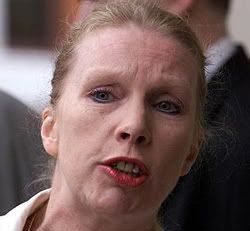
Louise would later secure an interview with Abigail Blackburn, who became editor of Now in March 2008. When the celebrity confronted her about the remarks concerning "hiding herAbigail Blackburnself away", the woman whose career depends upon finding nasty things to say about celebs made a comment about everything being passed by their lawyers. If it was meant to be threatening, Louise had obviously survived more convincing challenges, and asked about the "massive" comment. After an unsuccessful attempt to wriggle out, Ms Blackburn eventually admitted that her magazine operated on a system of chinese whispers.

But whispers in magazines with huge circulations can be damaging, as Louise found out when she interviewed the poor pregnant lady who was subsisting on apples. Things got worse: going to California (why do shows about body-image tend to visit L.A. and thereabouts?) she met a lady called Jocelyn Cisco, who had given birth to a wonderful child five months previously, and was about to go in for a procedure called a "mummy tuck" or "mummy makeover" - tummy tuck, breast lift and liposuction.

This is concerning. During labour and for some time thereafter, a mother's blood thickens as a mechanism to limit the catastrophic potential of a haemorrhage. Just so, the surgeon, a Dr Delgado, commented while operating on Ms Cisco that "this is a lot easier than exercising", and added that the most risky cosmetic procedure was a tummy tuck (abdominoplasty), because of the risk of potentially fatal blood clots. (I don't know if it's related, but an article in Medical News Today stated that the incidence of blood clots in cosmetic surgery could be reduced by prophylaxis - preventative measures.)
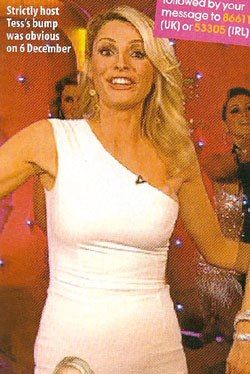
Tess Daly, with or without bump - what do you think? Click to enlarge image
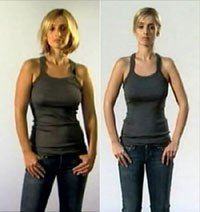
Now runs a line in spotting "baby bumps", a term which isn't in my Chambers dictionary, but is defined by etymological blogger Lynneguist as an "abdominal protuberance evident in pregnancy". From what I'm able to make of the phrase, which according to Lynneguist only made the Oxford English Dictionary last year, it denotes undeniable visual proof of pregnancy, but Now predicates the term of celebs where I can see no "bump" at all. The subtext, I think, is that the magazine will act like the bully in the girls' playground, and inform the world that any woman in the public eye who dares put on any weight beyond what it declares acceptable is pregnant. Look at the image of Tess Daly, presenter of Dancing on Ice, to the left, and see if you can discern a "baby bump". Maybe I'm just thick or male (if there's a difference), but I can't. this is how Claire Richards advises women to objectify themselves with photos on the fridge
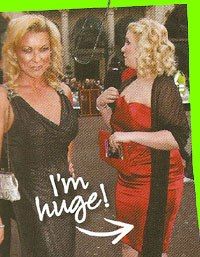
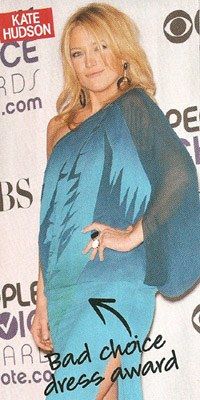
There are also pics posted of actress Kate Hudson and singer Claire Richards, witKate Hudsonh arrows for the sake of those whose minds have been so numbed they can no longer read. I'm not being facetious - looking through the mags, both Maxima and Minora agreed that after about ten pages the insipid text had them sufficiently somnolent so as only to be able to see the pictures.

Thankfully, in the documentary Louise went to San Diego to visit a group of women who had started a site called The Shape of a Mother, celebrating the post-partum female figure. The site, which also deals with issues such as loss of a child and infertility, was set up "to help women love their new bodies" and not seek such dangerous quick-fixes as those offered by Dr Delgado; and also as an antidote to internet chat-rooms frequented by pregnant mothers desparate to lose weight after the fashion of Britney Spears, Jessica Alba or Christina Aguilera - or, more precisely, not to give the playground bully more evidence of their abdominal protruberances than they have to. Significantly, after her "mummy tuck", Jennifer Cisco celebrating - Louise and Jamie Redknappconfessed she'd never had the opportunity to see another mother's abdomen post-birth.
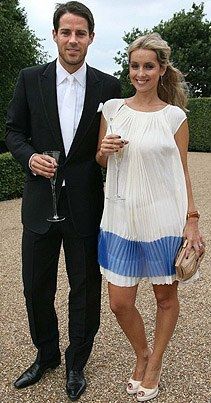
Louise and Jamie Redknapp's son Beau was born in November 2008. As well as being a cause for rejoicing, it gives us a time-fix for whenabouts the documentary was filmed. So I imagine it gave Abigail Blackburn some time to put together a special edition of her magazine called Now Celeb Mum & Baby. Its fairly innocuous content belies its function as a cynical manipulation of public opinion, published two days before the documentary aired.

But where's all this coming from? I think Radagast hits the nail on the head when he writes that "our society's obsession with boosting children's self-esteem is encouraging 'a narcissistic generation' who [are] focused on themselves...undermin[ing] the traditional role of the family in forming children's emotional and social upbringing." Blackburn's tawdry rag both feeds on and exacerbates the parasitic need to raise one's own self esteem by knocking that of others until cause and effect are indistinguishable, like Ouroboros eating his tail. The prospect of a thick ear for taking people down is gone, replaced by the promise that the sky's the limit, depending upon how many - often fragile - human beings you're prepared to step on.

Louise was extremely worried about the prospect of having nine weeks to slim down after giving birth in order to do a photoshoot as the official face of the lingerie company Triumph. After negotiating with a rep who was initially rather pushy, she won a six-week extension - and even then her personal trainer tried to persuade her not to pursue her goal-weight so stringently. I feel sorry for those who, finding themselves upon the altar of celebrity, feel for whatever reason that they cannot fight for their rights, but it is heartening that they - and others whom our broken society has deprived of proper role-models - have found a champion in Louise Redknapp.
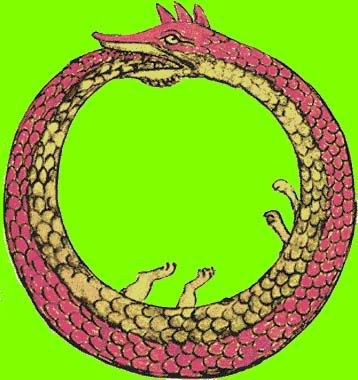

effect consumes cause - Ouroboros eating his own tail

Related posts:

Claire Sweeney's big fat...

Body image isn't all it looks like

Friday, March 20, 2009

pigs might fly

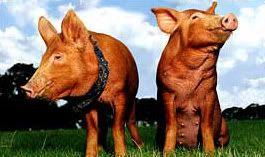
Butch (right) and her brother Sundance: click to read the story
Sometimes, the story of two runaways catches the imagination of a nation, if not a continent.

It was 1998: these two, being taken to an ignominious fate, escaped and were recaptured. Not happy with this, they escaped again and crossed the River Avon, after which the police were called out; by the time they were surrounded again the eyes of an entire media machine were upon tDonatella Lorch - click to read her storyhem. But like their human counterparts, Butch and the Sundance Pig were only taken after a long fight. By this time, of course, questions had been asked in Parliament, and if they had been returned to the Malmesbury abbotoir, there would have been an international outcry: Japan had sent journalists to the quiet Wiltshire town, and American war reporter Donatella Lorch declared that the pigs had become "celebrities".

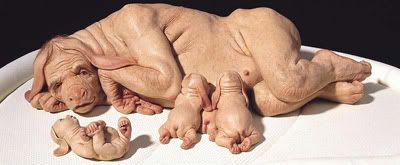
There's a lot to be said for pigs, I think - mainly because we find it easy to have empathy with them. For example, when Patricia Piccini wanted to raise awareness of human-animal hybrids, she used pigs as a model for a sculpture called "The Young Family", of which a painting is reproduced here. A scientist friend of mine experimented on mice in order to further essential The Young Family: click to go to Patricia Piccini's websiteresearch, but told me he wouldn't have been able to experiment on pigs, because they look too intelligent. In fact, if celebrity chef Hugh Fearnley Whittingstall had campaigned for the rights of stall-farmed pigs instead of battery hens, the whole phenomenon of intensive farming would be on its last legs right now - but Whittingstall has his own organic meat to promote, and his biggest seller is chicken.

Maxima tells me that when she and her classmates were called "pigs" at school by boys who probably fancied them but were scared to admit it, the reply was that the epithet stood for "pretty intelligent girl".

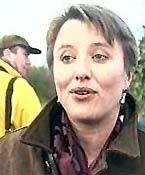
But I don't think former Labour MP Helen Clark intended the word as a compliment when, tired and emotional in a bar, police were called to eject her when she became abusive to the Portuguese barmaid.

ClHelen Clark - click to read further details of the trialark was elected MP for Peterborough as a result of having been selected by Labour out of an all-woman list. After being voted out in 2005, she threatened to join the Conservative Party but didn't do so - so I guess distributing the Mae Wests and the parachutes was a waste of time.

She was an MP at a time when the police were being inundated with new paperwork and targets. I don't mean to say that as a Labour MP she was intimately involved with that - but in a sense that's the point: Tony Blair told MP's to spend more time in their constituencies, and while they did this - and I realise that in Labour, just as in any other party, there are MPs who are passionate about both their constituencies and Parliament - one of the many agendas enacted was that of trying to turn the police force from an effective body devoted to keeping the Queen's Police to a warm fuzzy group who would never stand in Labour's way again. Thankfully, due to the influence of old hands, they are yet to succeed completely.

Where this is coming from is the Miner's Strike of 1984-1985. This was ostensibly a strike over the issues of closures, pay and conditions, but what National Union of Mineworkers head Arthur Scarghill had in mind was unseating Margaret Thatcher's government, after the fashion in which the NUM had forced Edward Heath to ask Great Britain "who governs?" in 1974 under the general secretaryship of Lawrence Daly. To cut a long story short, the NUM lost, and paid for Scarghill's dream of revolution by seeing mines closed all over the country.
click to go to the website of the South of England Rare Breeds Centre & Country Farm Park
But there's a question I haven't answered. What became of Butch and the Sundance Pig? They were bought by the Daily Mail, are alive and well in the South of England Rare Breeds Centre & Country Park, and a film has been made of their story. From what I hear, fame hasn't gone to their heads. So far, at least - but I think they're smart enough to know when they're onto a good thing.

Clever animals, pigs.

Monday, February 16, 2009

A 45º-turn on battery farming

freedom to protestRecently, the Cambridge News ran a story about students from Cambridge's Anglia Ruskin University picketing a Tesco's store to try to persuade it to stop selling eggs from caged hens, a subject which becomes close to my daughters' hearts every time it gets an airing; they then bring it close to my ears. (Maybe the protesters took advantage of the student union's free bus to Tesco...)

I'm sorry that animals are living in squalour and misery to feed us for less. But, in our broken society where kids live with drug-taking parents in a narrative so bleak it would have rendered Dickens suicidal, parents look at the financial news and weep, and older folk live emptily in the carpeted gulags of some nursing-homes, the fates of our feathered friends are not that high on my agenda.

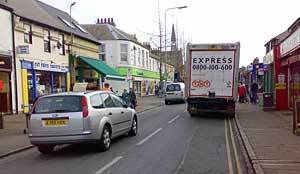
Nevertheless, I'm not made of stone, so as I had to be in town today, Ia section of Cambridge's Mill Road had a walk down Mill Road, the cosmopolitan thoroughfare that the anti-Tesco campaigners are always going on about, and which is on Anglia Ruskin University's doorstep. My mission: to find out whether the small, independent traders whom the above state they defend are on-message as regards caged hens. My report follows:

If you want compassion for chickens, then Al Amin at number 100 was the clear winner, as it sold only eggs from free-range hens. On the other hand, Winfield Chinese Supermarket at no. 58 sold only caged chickens' eggs; I don't know the status of the quails and ducks whose produce was also available. (I only recently found out that there was such a thing as battery ducks, when Minora told me.)

Balv's Superette at no. 160 sold eggs from both caged and free-range hens, as did the Nip-In Express at no. 30. Conversely, there was no identification visible on the eggs for sale in unmarked boxes in Notun Bangla Bazar at no. 194, or in Spice-Gate International Food Centre at no. 14.

One store I dropped into was sold out of eggs, and in another where I couldn't find them a harrassed-looking lady behind the counter was trying to convince a young man that four cans of 9% lager was quite enough for him - he was rather a big chap.

I'm not quite sure why the campaigners have chosen Tesco's, which gives shoppers a choice between free-range and caged chickens and their eggs. It could be that they are yet to devise coping-mechanisms for the misery of other beings that is woven into many of our daily choices; possibly they ascribe to the view that most of us are economic automata; or maybe they just don't like Tesco's. Probably all three, and more, are intermixed.

Also to be factored in is celebrity chef Hugh Fearnley Whittingstall's campaign against Tesco's intensive-rearing techniques. However, this man has form: in January 2008 he was unmasked by an industry watchdog as having "allowed needless cruelty" at the battery-farm he set up to show viewers the horror of it all. Apparently it wasn't horrible enough already.

I don't doubt the sincerity of the protesters at Tesco's, I merely doubt their appreciation of situations where the pennies matter. If they really want to make a difference, they could lobby the Government to make it more rewarding for farmers to breed free-range chickens than it is at present, without increasing their impact on ordinary folks' pockets. Who knows, they might even be inspired to give the many Halal meat outlets in Cambridge some friendly advice on animal welfare.

But if they still think that campaigning for eggs to come from free-range chickens is the answer, then maybe as well as picketing Tesco's they might have a look at some of the establishments I've listed above that sell eggs from caged hens.

you choose: click to go to the homepage of Compassion in World Farming