Showing posts with label madness. Show all posts

Tuesday, May 18, 2010

"Mental: a History of the Madhouse"

click to go to the show websiteAs a part of a series of documentaries detailing changes in views about mental illness in the last 60 years, BBC4 screened Mental: A History of the Madhouse last night, and it did an admirable job of exploring the spectrum of shades of grey involved in the issue without black-and-white judgement.

For example, there was Maggie, who volunteered for "experimental" brain surgery in the 1960s and who feels that, after 5 years of debilitation that followed the surgery - in which a section of her brain was burned out to stop the fits of violence that would require increasing lengths of hospitalisation - she recovered in spite of and not because of the operation. She has been given awards for campaigning for community causes...but one is left wondering if this would have been possible without the operation.
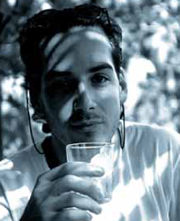
Jonathan Zito RIP: click to go to a statement by the Jonathan Zito TrustI thought of this towards the end of the documentary, when we saw the dark side of the opposite of the asylum model of care. Following a series of murders by people who had been released into the community as beds were closed (so the chance of their being readmitted stadily diminished), the most famous of which was the 1992 murder of Jonathan Zito by Christopher Clunis at Finsbury Park, a psychiatrist briefs a police shift that one of his patients is having increasingly violent urges, and then a dozen riot officers break into his house because both psychiatrist and police have decided that "overwhelming force" is required.

There have, of course, been huge leaps since the days of the asylums, when staff violence towards patients was recalled by a former psychiatric nurse as having been justified, when he was a student, by his charge nurse on the grounds that "if you live among shit you become shit". Although thankfully I missed this period, I felt ashamed to have been a psychiatric nurse.

Patricia Hornsby Smith - click to view the whole Time portraitIn 1959, Patricia Hornsby-Smith (in Harold MacMillan's Conservative government) reported on the crippling price of keeping more people in psychiatric institutions than there had ever been, reporting on the "appalling legacy" of the buildings and how maintaining them would take up an increasing portion of the NHS budget; but she also spoke on how an appreciation of mental illness being like "any other disability" was a prerequisite on action that would need to be taken on both pragmatic and humanitarian grounds.

Hornsby-Smith's speech was the prologue that Enoch Powell's 1961 Water-Tower Speech was written to follow:
Enoch Powell: click to go to the text of the Water Tower Speechit is the duty of a Minister of Health and the duty of the National Association for Mental Health, to...choose and to favour wherever they have the choice, the course of more drastic and fundamental change: for we may be pretty sure that even so the progress of medical thought and method will still be well on ahead of our practice.
Powell was, of course right (and it was good to see the BBC admit that the man was more than a controversial 15-minute speech): as the documentary showed, "hope came from the laboratories [in the form of] a new generation of psychiatric drugs". However, Largactil (chlorpromazine) created new problems to replace the ones it solved in the form of simultaneous agitation and sedation, and Parkinson's Disease-like symptoms. Had the resarchers looked further into its genesis, they might have found that it was derived from a dye produced in Victorian England, but wasn't much use. So it was fed to cows to see the effect, which was that the cows calmed down. And died shortly afterwards.

However, the growing voice possessed by mentally ill people and their advocates - who included many mental health workers - drove the phamaceutical search for medications that had maximum effect on symptoms with minimum unwanted effects. The quest still continues.

click to read Boris Johnson's article in the TelegraphBut how did we get from this sense of optomism to a mentally ill man's flat being raided by a dozen riot police? As beds decrease, I worry that the stigma that infested the ageing Victorian structures hasn't disappeared but has rather been absorbed into society, which has become itself an über-asylum wherein, asserts London Mayor Boris Johnson in an exegesis of Eleanor Rigby, too many people "pretty much stay at home and watch TV" with their loneliness acting as a straitjacket - a garment never used once in the history of the crumbling Victorian asylum where I trained.

As politicians struggle to describe how they are going to deal with the deficit, it's obvious that there are goiclick to read more about hte International Clubhouse Movementng to have to be cuts. But this should not blind us to the fact that cuts started some time ago. Fulbourn hospital, the psychiatric hospital serving Cambridge and surrounding areas, lost two rehabilitation units and two acute psychiatric wards in 2007. This could have been ameliorated by better services in the community, but Vocational Services, providing occupational therapy, and Cambridge Clubhouse a range of less structured opportunities of rehabilitation after psychiatric treatment, are long gone. The Clubhouse was replaced by a mental health resource centre that aimed to make ex-patients in the community into trainers, but access is now only by telephone.

I'm not setting out my stall for my territory, having switched from a psychiatric nurse to a psychiatric patient some years ago. I'm merely arguing for common sense: in the absence of dedicated resources people requiring mental health treatment are, at the more severe end, going to keep ricocheting between inpatient wards, police cells and prison and, at the less severe, take up more of the general resources that are available, eg GP appointments, A&E beds, etc.

And the human cost is intertwined with the financial one, something that Patricia Hornsby-Smith and Enoch Powell would have recognised. I met a fellow Clubhouse veteran recently; unable to maintain employment without input but "not ill enough" to warrant a community psychiatric nurse, she spends her time subsisting on benefits - mostly, as Boris Johnson says, at home watching TV. Investing in resources that would help people like my friend both to work and to pay more taxes would, in my opinion, be a win/win situation.

Related posts:

Good taste back on the Horizon: How Mad are You?

Blurred Boundaries, Fine Lines - How Mad are You?

Thursday, April 22, 2010

Earth Day: John Denver versus the pandora's box

John Denver in his biplane - click to read an excerpt of his biographyMy friends are sometimes surprised to hear that I'm a John Denver fan. I disagree with some of - actually most of - his political views, but then again I like some of John Lennon's early 1970s music, even though the man was by then an even nuttier fruitcake than he was in the Beatles.

What I admire is Denver's adherence to his principles, and one of the first things I point out when talking about him is that while rock and pop oligarchs were recording their histrionic singles Do they Know it's Christmas? and We are the World, Denver was frequently in African countries with his sleeves rolled up. Denver had wanted to be on We are the World, but the single's producer, Ken Kragen, who also managed Harry Chapin and Kenny Rogers, commented that "several [un-named] people felt his image would hurt the credibility of the recording as a pop/rock anthem. I didn't agree".

Similarly, Earth Day 2010 - click to go to the homepagewhile Earth Day, instituted in 1970, is a once-a-year "awareness-raising exercise" for some, the title of Denver's 1990 song for the occasion summed up his typically uncompromising view: Celebrate Earth day (Every Day).

In other words, if you think that the activities of humankind are causing global warming, you can use your God-given free will to give up your car, stop flying in aeroplanes (admittedly not hard to do recently with the help of Icelandic volcanoes) and power your household entirely with wind-turbines. Every day.

My favourite Earth Day story was from Anthony Watts, stating that today Arctic sea-ice is at its hightest for 9 years, while Telegraph blogger James Delingpole lists the lunacy of Earth Day votaries:
  • "Between 75 and 85 percent of all the species of living animals will be extinct" by 1995 - Earth Day founder, the late Gaylord Nelson.James Delingpole - click to read the whole article

  • The world will be "…eleven degrees colder in the year 2000. This is about twice what it would take to put us into an ice age," Kenneth Watt, speaking at Swarthmore University, April 19, 1970.

  • "By 1985, air pollution will have reduced the amount of sunlight reaching earth by one half…" Life magazine, January 1970.
Gaylord Nelson, aside from founding Earth Day, is also famous for instituting hearings as a Senator on the safety of the contraceptive pill which required US manufacturers to place a statement as to the Pill's safety on its boxes, the first time in the country that an adverse effect had to be listed on a pharmaceutical product, and I can't fault him for that. But I think it gives an insight into the way his mind worked that no women were invited to testify, and this gave "reproductive rights" advocate Alice Wolfson a chance to stake her place in the dimming light.

Another peek into his psyche is given by his insistence that Earth Day should be held on April 22. This waMargaret Mead - click to read her article on Earth Days against the likes of, say, anthropologist Margaret Mead, who called Earth Day "the first holy day which transcends all national borders", that the feast should be held on the Spring Equinox, which falls around a month earlier. Students of history will note, therefore, the significance of the first Earth Day being held on 22 April 1970: it was, according to the Grergorian Calendar, the hundredth anniversary of the birth of Vladimir Ilyich Ulyanov - Lenin.

Sadly, in the aftermath of John Denver's last flight, I am not aware of eminent left-leaning figures who believe in showing what they think about the environment at least as much through how they live as what they say. I suspect they were sidelined from public life by the same sort of ideologues who decided Denver was not appropriate for We are the World.

So we are left with a holyday of obligation for a monster who murdered and oppressed his own people before directing his baleful gaze towards Russia's neighbours, thence to the rest of the world both in his own right and through his unintended heir Stalin, who muscled in on his legacy the same way that Alice Wolfson piggybacked on the unsuspecting Gaylord Nelson. Thus do each generation's self-elected prophets hand a Pandora's box to those who will empty its contents upon the silent majority of the next.

And that's before we get to Al Gore.

Related post: lights on: don't let earth hour usher in a dark age

Tuesday, February 16, 2010

touching home: the day after Valentine's

Mindnight having passed, this should really be called "the day after the day after Valentine's", but then I suppose that depends on where you are when you're reading it.

Maxima and I try to refrain from going overboard with cards and gifts now that the girls are a little older. We celebrate Christmas religiously, but otherwise don't bother too much with cards etc. Except when we do. That's the problem with an unofficial arrangement.

better late than never - click for poems for Valentine's DaySo I was nonplussed when Maxima handed me an envelope that morning, with a very nice card touched my heart. She left the room to do something - at which Minora came in, slipped an envelope into my hand and whispered in my ear - in a manner a Sergeant Major would be proud of - "fill it in!" I know when I'm licked.

I can't lay my hand on the card right now, but I remember the verse being a little treacly. Was this the only card she could find, or is that how she sees love between a couple who have nearly been married 20 years? Or is that how our love would seem to me if my tired old hull weren't so barnacled?

I remember a party my Uncle and Aunt had for their 25th wedding anniversary - he said he loved her, and went bright red. It was the first time, I believe, their children had heard it said 'twixt one and the other. It was almost like a line I once read in a classic detective story set in Sicily by Leonardo Sciaclick to read a review of Il Giorno della Civetta (in Italian)scia called Il Giorno della Civetta (later made into an Italian-language film with Claudia Cardinale) where the detective asks a newly-widowed woman "Did you love him?" and she answers "Of course - we were married". I don't want the girls, in the future when we're gone, to assume that we must have loved each other because we were married, because unfortunately, even these days, it ain't necessarily so. I'm glad that they can hear us say it as well as see us show it, like the two sides of a coin.

After attending a service of Holy Communion at St Gallicus we came home and dinner was put on. I hadn't been aware of my mood being slightly elevated towards the end of the week, but I felt a leaden weight drag my mind down while mashing the potatoes. Maxima saw me slow down and start to slouch, and placed me at the table while she finished the tatties. Yet again, with my family around me, I experienced love as the safety-net under the trapeze.

Thankfully we were able to attend St Gallicus for a Valentine's Day Celebration of Marriage, one of hundreds that were happening up and down the country. There were twedding ringshree hymns from the top ten wedding hymns during the service - Amazing Grace, Make me a Channel of your Peace and Praise my Soul the King of Heaven. Between the second and third the married couples faced each other and renewed our wedding vows, saying "I took you..." and "with this ring I wed you...", etc. With a peal of bells beforehand and a slice of cake and glass of champagne or orange juice afterwards, it was good to touch home with where we'd started out all those years ago - scrape off the barnacles, as it were.

I didn't feel well enough to the discussion on theology Rector Pellegrina was hosting that evening, but it was a lovely day and - one of the major points, I think - Minora and even Minima (now a teenager) had went a little misty eyed at the flowers, bells, etc. The service was thoroughly grounded in the conticlick to read Bishop David's sermon, given at Queen's College, Cambridgenuing theological thread concerning marriage running through the Old and New Testaments (hardly surprising, since the Christian Bible starts with one marriage and ends with another). I found this all the more comforting for not feeling too great; something Richard Dawkins would sneer at, but I think Bishop David Thomson, in his Valentine's Day Sermon on the Four Loves, explained it consummately: "Religion is easily accused of being a crutch, but I have no problem myself with an A and E department if I’ve been in an accident, and life is full of accidents." Amen to that.

I never had time to write all this down on Valentine's Day as I had to be up early for work - which compliments medication excellently in putting mental illness in its place - but I hope your Valentine's day was good or, if it wasn't, that it wasn't too bad. Touch home more than once a year.

Sunday, December 20, 2009

despite the thermofascists, French farce at Copenhagen

Writing about the Treaty of Versailles in his 1994 masterwork Diplomacy, Henry Kissinger summed up why the 2009 Copenhagen United Nations Climate Change Conference was flawed from the start:
Versailles: Lloyd George, Orlando, Clemenceau and Wilson - click to read moreit is almost always a mistake for heads of state to undertake the details of a negotiation. They are then obliged to master specifics normally handled bu their foreign offices and are deflected onto subjects more appropriate to their subordinates, while being kept from issues only heads of states can resolve. Since no one without a well-developed ego reaches the highest office, compromise is difficult and deadlocks are dangerous. With the domestic positions of the interlocutors so often dependent on at least the seDaryl Hannahmblance of success, negotiations more often concentrate on obscuring differences than they do on dealing with the essence of a problem.
Graced by the likes of Leonardo diCaprio, Daryl Hannah and Helena Christensen, Copenhagen 2009 has barely limped past the finishing tape despite the supporters of both Gordon Brown and Barack Obama claiming that their man struggled alone to achieve a comPolly Toynbee: click to go to her Guardian homepagepromise against the odds. Labour snob-for-hire Polly Toynbee captured the air of frustration with ordinary people whom the Establishment has gone out of its way to gag:
Most leaders in Copenhagen were out ahead of their people. Most understand the crisis better than those they represent, promising more sacrifice than their citizens are yet ready to accept – while no doubt praying for some miraculous technological escape.
Sudanese diplomat Lumumba Stanislaus Di-Aping spoke for the G77 group of the corrupt régimes of developing countries who had brought their begging-bowls to the Baltic when he asked what OLumumbia Di Aping - click to read about his remark at the Daily Mailbama would tell his daughters about his part in abandoning their Kenyan relatives, then developed the tired old theme comparing of climate-change "deniers" to scum who say that the Holocaust never happened by saying that Copenhagen spelled "incineration" for Africa and was comparable to the Nazis "sending six million Jews into the furnace". (Sweden's chief negotiator Anders Turesson called the reference "utterly despicable" - maybe the country's still ashamed of its politicians' initial apathy towards the Aftonbladet blood libel scandal.)

Shortly before the conference began, UK Prime Minister Gordon Brown had a swipe at people who believe the hard sciLord Christopher Monckton: click to read more on Watt's Up With Thatence showing that changes in climate are not predominantly due to the actions of humankind, calling us "flat earthers", and the attacks have not let up. In Lord Christopher Monckton's case the attack was not metaphorical; as reported in the tap, the anthropogenic climate-change sceptic had the correct paperwork to enter the conference but was excluded, then was assaulted by a Danish policeman despite having followed St John's Ambulance recommendations to keep his hands in his pockets; he had turned his back and was walking away when he was knocked unconscious.

Coline Covington - click to go to her home pageOther attacks are more insidious. The First Post's resident psychoanalyst, Coline Covington, spoke of Sarah Palin, as a typical climate change "denier", as having the sort of narcissism seen in small children; displaying her membership of the Richard Dawkins school of rhetoric, she sets up her straw man at the start of the article by talking about Nick Griffin, leader of the neo-nazi BNP. She says, referring to Palin and by implication to many of us, "Climate change threatens our narcissistic omnipotence. Deniers do not want anyone else telling them they cSarah Palinan't drive large cars or run two refrigerators...This is a mentality resembling the narcissism of small children who want to hold onto their illusion of omnipotence and control over mother."

What Covington is referring to is more than the sexually-deviant scribblings of Sigmund Freud that imprisoned many children in their abusers' houses by interpreting their reports as libidinous fantasies; she's talking about narcissistic personality disorder, in a disappointing confirmation of the hostility of many psychiatric professionals towards people with personality disorders, and their over-readiness to inflict the diagnostic sentence upon people of whom they disapprove.

Copenhagen has failed, and that's disappointing because, for opposition against the thermofascists to turn to an effective resistance movement, we need to know exactly what we're resisting. The reason it's failed is precisely as Kissinger identified, that there were too many powerful egos with long memories at the conference.

Case in point: there will be consequences for Obama's humiliating China for not meeting Kyoto targets in the presence of that country's Prime Minister: had he watched Li Yu's 2007 Dam Street Dr henry Kissinger - click to go to his homepage(Hong Yan) he would have learned the lesson you can find in the most basic internet guide for doing business with Chinese people - "Never allow your protagonist to lose face, and try not to lose face yourself." Heads of state like Britain's Gordon Brown, the US's Barack Obama and India's Manmohan Singh would have done better to send their foreign ministers or, even better, senior diplomats. Is Henry Kissinger still working?

Thursday, December 17, 2009

the real predator hides behind the Tiger

Tiger Woods doesn't have his troubles to seek: the man who has everything lacks a shed in which to escape the celebrity goldfish-bowl that is constructed around anybody good enough at whatever it is they do (and lucky enough) to make a lot of money, usually for the purpose of pulling them apart when cracks creep up the façade.

Kosher Sex - click to read an interview with Rabbi Boteach at about.comThere has also been a degree of compassion: for example, David Skelton at Platform 10 reminds us that "every Bobby Charlton there was a George Best, for every Michael Vaughan there was a hard drinking genius like Iain Botham"; and Rabbi Shmuley Boteach, author of Kosher Sex took a more analytic view of why men cheat in the Jerusalem Post, opining that somebody who has become as successful as Woods through their innate competitiveness is living with the toxic anxiety that "they are only special to the extent that they keep on winning". (Although he does then pose the million-pound question: "Many have said that husbands like Tiger Woods are sex addicts. But then why aren't they addicted to sex with their wives?")

Another, equally explosive, controversy linked with Tiger Woods emanates not from him but from one of his associates but has been eclipsed by the lurid chain of revelations about Woods' sex life - and perhaps that's the point.

Anthony Galea - click to read Tom Leonard's article in the TelegraphThe Telegraph's Tom Leonard revealed this week that Woods' doctor, Anthony Galea, has been under investigation by the FBI and the Royal Canadian Mounted Police for allegedly supplying performance-enhancing drugs to sportspeople, after his assistant was arrested crossing the US/Canada border with a laptop containing his patients' treatment and four substances, including human growth hormone (HGH). This is often used to look and possibly feel a bit better, and has been referred to as "the fountain of youth".

This is worrying. I'm sure what was in Galea's assistant's car was actually recombinant growth hormone, which is made in a laboratory either totally synthetically or with the aid of genetically-modified bacteria.

Human growth hormone is what it says on the tin. It's been harvested from the brains of cadavers since 1958, when Dr Maurice Raben of the Tufts University School of dwarfism sufferer Monique Johnson - click to read her stoy on CBSmedicine first treated a 17-year-old boy who had dwarfism (which can result from a lack of human growth hormone from one's own pituitary gland) by injecting him with HGH he had harvested from an autopsied corpse.

From 1958 until the practice was banned with the advent of the recombinant hormone in 1985, a minority click to read more about Creuzfeldt-Jakob disease at the Alzheimer's Society websiteof HGH recipients were dogged with the symptoms of Creuzfeld-Jacob disease (CJD), a degenerative neurological disorder manifested by dementia and movement disorders, which had first been identified in the 1920s in the Fore people of New Guinea, who practiced rituals involving cannibalism. (CJD would later become famous as "mad cow disease" - bovine spongiform encepalopathy or BSE - and would be traced to bovine brain material being present in cow-feed.) The US National Endocrine and Metabolic Diseases Service reports that 28 out of 7,700 recipients of HGH in the US were identified as having developed the symptoms of CJD, 109 out of 1,700 in France, 56 out of 1,848 in England - and in 2002, a Dutch man developed symptoms 38 years after the treatment, the longest recorded gap.

Although no longer acceptable as a medical treatment, the price of recombinant HGH creates a market for the original stuff in communities of people engaged in the worship of Narcissus who haven't yet realised that to put a few years onto your lifespan and look like a Greek god doesn't bring you a whit more happy. Intelligence suggests that HGH is being harvested from corpses in the Baltic region, Eastern Europe and - of course - China, where possessing organs or bodily fluids that somebody richer than you wants can be a capital crime. Others may be paying over the odds for consignments of HGH that are packaged like medicine and have the right labels and warnings, but since it's produced illicitly there's no way to tell, and no comeback when your memory starts to go.

In sports there's a huge market for performance-enhancing substances like steroids, erythropoietin, HGH and of course painkillers so that one can ignore the warnings screaming "stop". So perhaps this is why the media are on a continuous drip of revelations about enough mistresses, porn-stars and the rest to people a netball league, and why it's not going to stop anytime soon. So, whether or not Woods has taken performance-enhancing drugs (not all of which are illegal), perhaps it's time for him to hire other folks' muscles to create a space where he can sit down and figure out how not to let things spiral out of control again. Who knows, his silence might even prompt Anthony Galea to find his voice.

Narcissus, with apologies to Caravaggio

Related post - Victor Conte and Dwain Chambers' secrets

Sunday, November 1, 2009

cannabis policy's in no more chaos than usual

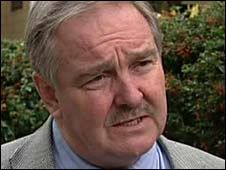
David Nutt - click to read BBC report
I'm not accustomed to find myself in agreement with anything the Government does, but today I must laud their decision to finally rid themselves of Professor David Nutt.

Until Friday 30 October, Nutt chaired the Advisory Council on the Misuse of Drugs, a body set up by the Misuse of Drugs Act 1971 to do what it says on the tin: advise the Government on drug-use and strategies to control it.

Nutt is no stranger to controversy, most famously this January when he published a paper in the Journal of Psychopharmacology called Equasy - An overlooked addiction with implications for the current debate on drug harms, in which he described a group of symptoms in a woman

who had suffered permanent brain damage as a result of equasy-induced brain damage. She had undergone severe personality change that made her more irritable and impulsive, with anxiety and loss of the ability to experience pleasure. There was also a degree of hypofrontality [lower metabolic activity in the frontal regions of the brain causing impaired concentration] and behavioural disinhibition that had lead to many bad decisions in relationships with poor choice of partners and an unwanted pregnancy. She is unable to work and is unlikely ever to do so again, so the social costs of her brain damage are also very high.
Equasy turned out to be Equine Addiction Syndrome - horseriding (does the author have a Jilly Cooper habit?); and Nutt showed a little later in the paper why he had been such an ideologially beautiful choice for the Labour Party to head a quango: "Violence is historically intimately associated with equasy – especially those who gather together in hunting groups; initially, this was interspecies aggression but latterly has become specific person to person violence between the pro and anti-hunt lobby groups."

He was forced to apologise by then Home Secretary Jacqui Smith for trivialising the dangers of ecstasy, but has continued to insist it is relatively harmless in the face of damage caused by other drugs, particularly alcohol.

Natural in Cambridge - click to read about the head-shop in the Cambridge NewsI don't know any drugs worker who would disagree with this. One question commonly used in training is to ask what would be the major cause of substance-related conditions you'd see if you sat in a busy Accident and Emergency Ward (or Casualty, Emergency Room, etc) from Friday night to the wee hours of Monday morning. The answer, duh, is alcohol - with maybe a few heroin overdoses and overheating/dehydration and heart palpitations caused by ecstasy and other stimulants - hence the current debate about how to control alcohol consumption by people prone to binge-drinking.

What seems to have done for Nutt, however, is his allegation that Prime Minister Gordon Brown reclassified cannabis from a class C to a class B drug, after it was taken down from class B to C by former Home Secretary David Blunkett under Tony Blair in 2004, for political reasons.

Nutt's gotten hold of the wrong end of the stick. That first reclassification, in my view, was the political move. Votes were perceived in easing up on cannabis smokers and so, in the teeth of opposition from the police, the drug was placed into the lowest class of illicit substances. Almost immediately, people were popping up all over the place saying that cannabis had been legalised. Shortly afterwards, public and professional concerns about the link between cannabis and mental illness began to mount.

This was no knee-jerk reaction. In the early 1970s, when Nutt graduated from medical school, cannabis contained 1-2% THC (tetrahydrocannabinol, or to give it its Sunday name, Δ9-Tetrahydrocannabinol), the drug's main euphoriant. Now, the "super-strong" version of the weed called skunk, which has been selectively bred to increase the THC present, has up to 15% of the stuff. Skunk started appearing on British streets in the early 1990s, long after Bill Clinton did not inhale or some future British pyou don't know what you're getting without an electron microscopeoliticians did, as they used to push each other out of the way to tell us.

The thing is, if you increase the amount of one substance in the plant, other substances will be present in smaller proportions - one being Cannabidiol which, asserted Zuardi et al in a 2006 paper, actually functions as an antipsychotic. So people whose genetic trigger predisposes them to developing a psychotic condition are more vulnerable to having it pulled by cannabis.

And there's the rub. The UK Cannabis Internet Activists association resuscitates the uncaring utilitarianism of Mill Senior that Mill Junior had tried so hard to kill by looking at the number of people who would have to be discouraged from smoking cannabis to prevent one case of psychosis, concluding that "around 3,000 heavy cannabis users, or 150,000 light users" would have to be prevented to achieve this goal. [Update 2 Nov: they were quoting research from various universities - see their comment at bottom; my apologies.] If they want to use the NNT (number needed to treat) measure, though, it shouldn't be considered solely for a single issue: perhaps it might shed light on the effectiveness of the HPV vaccination, or the medicines being thrown at the swine flu. Or, indeed, we might look at the number of arrests needed to turn one burglar onto the straight and narrow, and conclude that theft should be legalised. And I suppose it's sweet that the Government doesn't persecute and slander every group denying establishment orthodoxy - in the UKCIA's case, that cannabis can cause schizophrenia.

Frank poster campaign arond cannabis - click to see its interactive websiteBut psychosis isn't the only risk of cannabis use. There's also the phenomenon - whose existence is admittedly disputed - of amotivational syndrome, where somebody feels a reduced desire to work or sometimes even get out of their chair - indeed, government drugs helpline Frank used the tagline "Have you become an expert of antique furniture, gardening and daytime cookery programmes?" on one of its posters raising awareness of the amotivational effects of cannabis. There was, it's true, a famous study on labourers in Jamaica who smoked "ganja" heavily that dismissed amotivational syndrome by showing that they did more work when on cannabis; but what's less often mentioned that the work done in between using cannabis was often found to have been carried out with impaired concentration and not quite finished. My own experience of middle-aged people who had used cannabis since their teens was of blank faces asking "what have I done with my life?"; and their partners, if they'd stayed, asking "what have you done with my life?"

I don't know why Nutt ignored all this in his demands for cannabis to be legalised - perhaps for ideological reasons, or possibly he wanted to be perceived as being "down with the kids". This chocolate teapot of a functionary fails to deal with the fact that only a government set on populating psychiatric wards and prisons would legalise skunk, therefore the cannabis "factories" - houses where every square foot possible is dedicated to growing strong cannabis, which can pull in £20,000 per month with overheads diminished if the "gardeners" are trafficked children instead of adults paid with the drug - would have no impetus to close down.

Daniel Hannan MEP - click to read his article on Frank NuttUltimately, despite claims to the contrary, British drugs policy is in no more of a state of chaos than it usually is for Nutt's departure. The hiring and firing of senior public servants is a function of government, and if we don't like a government's choices, then we change the government at the soonest possible opportunity. As Daniel Hannan MEP states in a Telegraph articleclick to go to the Advisory Council on the Misuse of Drugs homepage entitled Perhaps we should abandon democracy and be ruled by Prof David Nutt, "Have we really lost confidence in our ability to govern ourselves through the ballot box? What fools our fathers were if this be true."

Related post: Rizla - a smoke or a toke?

Saturday, October 24, 2009

top ten songs about thomas

click to go to the THOMAS siteThere's a charity in North-East England called Thomas, which stands for those on the margins of a society, that works "at the cutting edge of social exclusion providing therapuetic and practical support to the drug addict, ex-offender, homeless and others suffering various kinds of social exclusion". I think the acronym says it all - please click the link to the right and have a look at their page; I'd like to concentrate in this post on people who are socially excluded in Cambridge, and who are about to lose an invaluable service which has blossomed into a whole system offering people who are or have been homeless, in the words of the Big Issue motto, "a hand up, not a handout".

In Cambridge we have a magazine produced for and by presently and formerly homeless people called the Willow Walker which is under threat because its funding has been removed; an Autumn issue is forthcoming thanks to the good graces of Cambridge University Press, and editor Kirsten Lavers is presently raising funds through justgiving.com to produce the annual calendar.

The Willow Walker provides the unique service of getting the voices of homeless people into the services which commission and provide services for them. It speaks not only about needs and tragedies, but about aspirations and successes. Cambridge City Council seems to think at the moment that other services duplicate this, but I'm not aware of any.

I thought, as my monthly "top ten", I'd post ten songs about homelessness and responses from within and outwith the communities of people who are excluded in some way. There are as many songs that I could have posted as there are pathways into exclusion, so here are my choices, which are arranged without the usual numbers.

Witnessing and abuse

click to go to the Fish website lyrics pageFish voices the distress a neighbour feels when listening to a neighbour and her children get beaten by her partner - and the temptation to escape from that distress through fantasizing about being a "rescuer", literally a knight in shining armour, which leaves him in a guilt-walled cell where "I become an accessory/and I don't have an alibi".

click to go to the International Directory of Domestic Violence AgenciesThis is a very harrowing song at the best of times; if you're feeling vulnerable because of domestic violence issues, please click the link to the left.


Violence

Nick Dominguez - click to read moreIn the Autumn 2006 edition of the Willow Walker, Big Issue founder John Bird told Nick Dominguez, who is one of my favourite blues singers as well as a great writer, that - in the time of the infamous London landlord Peter Rachman - he was trying not only to survive a violent father but an "ideology of failure" imposed upon certain families by Social Services. Here is No Son of Mine by Genesis:


Relationships

While one hopes that one's relationship is forever, poet Cate Wiliams wrote for the Willow Walker of the sad truth that some go to hell in a handcart with the lines:

The loser and the winner
Are playing the same game
And the hopeless young beginner
Will do it all the same.

However, she finishes her verse in the hope the downwards is not the only motion:

At the foot of every mountain
The path tells us to go
To keep on climbing upward
And never answer no.

This is Abba's song about about "the loser and the winner" from the film Mamma Mia, where Meryl Streep plays a woman who has lost in love in every sense - but suspects little the reparative action that life has in store for her.


Labelling

Sometimes when homeless people become housed, they face criticisms of still forming part of the street community that is spoken of in negative tones. This legendary song by the Shangri-Las encapsulates the difficulty of getting the streets out of one's mind once one has bodily emerged from them.


Illness

Many people on the streets have an illness, but some would say that this reflects the prevalence of mental illness in society as a whole - ie more than some quarters would like to admit: in Cambridge alone, we've seen the closure of two acute psychiatric wards; and the Cambridge Clubhouse, part of the Clubhouse movement, which helps people rehabilitate themselves from chronic illness and the effects of hospitalisation, was closed down and replaced by the Cambridge Mental Health Rclick for Torvill & Dean's Dancing on Ice Tour siteesource Centre, which itself is now to be closed. As a fellow Clubhouse alumnus told me, more folks than should be the case will end up being ping-ponged between prison and the wards as each argues the case for the other to be responsible.


Here's Jane Torville and Christopher Dean skating to Olympic gold to to Ravel's Bolero, which - it has been asserted - reflected his incipient manic-depression in the repeated phrasings.


Horace speaks from the past

One of the tracks on the critically-lauded album Both Sides of the Tracks by Street Voices is Horace Odes Book 3 Verse 29 recited by Geoff Coombe. It contains the lines written by the 1st century BC Roman poet:

Though storms around my vessel rave,
I will not fall to craven prayers,
Nor bargain by my vows to save
My Cyprian and Sidonian wares,
Else added to the insatiate main.
Then through the wild Aegean roar
The breezes and the Brethren Twain
Shall waft my little boat ashore.

The best song I can think of to represent Horace's maritime metaphor for life is Paul Simon's Bridge over Troubled Water: here it is sung by Eva Cassidy.


Hope

Lee Jay wrote his first poem in custody, and his stanzas take no prisoners. His poem Regrets, published in the Willow Walker, begins:

Lee JayHe sits alone, on his own
In a lonely place
As he wipes a tear from his eye
As he looks life in the face.
And he wonders why he lived his life!
The way he lived his life,
And he wipes another tear from his eye.

In Madness' hard-hitting and symphonic One Better Day, we hear of the hope that many people in the street community have that things will get better - getting out of that lonely place one day at a time.


Exclusion

This poem was written by a former alcoholic who had recovered but seemed to feel imprisoned by others' assumptions. It begins:

I am put away
I am discounted
I'm unwanted, don't fit,
I have no "house", of my "own",
Outside the city I sit, homeless.

Rejected, as I pay no tax, a social leper I,
A great assumption made.
That I am of no value...

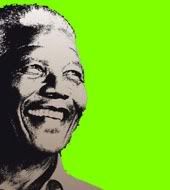
click to go to the Nelson Mandela FoundationWhen I read these lines, the first thing I thought of was Labi Siffre's Something Inside So Strong with its video based on Nelson Mandela's imprisonment, because of Mandela's refusal to remove himself from the consciousness of those to whom his existence was an embarrassment.


Building Oneself

The Willow Walker, with the English Churches Housing Group, sponsored a scheme in 2007 shrewdly called "the self-build": it both highlighted the breadth of talent languishing on the streets and in hostels at this time when we need as many people working as possible, and provided a parable in wood and nails of building oneself up as a person. The Self-Build motto is you'll always get what you've always got if you always do what you've always done:

click to go to the Willow Walker Self-Build issue

On a constructional theme, here's The Who singing Pete Townshend's Dig.


Beatitudes: turning things upside down

click to see the video on Revd Bosco Peters' Liturgy websiteI found this beautiful video on Revd Bosco Peters' Liturgy blog - it's the monks of the Russian Orthodox Valaam monastery singing the phrases from Matthew 5:3-12, helping us to try to identify that hardest of questions, who is the neighbour that Moses' book of Leviticus tells us we should love as ourselves, a task Rabbi Akiva called "the greatest principle of the Torah. I hope the present and future bodies looking at funding the Willow Walker will see that helping presently and formerly homeless people both fits in seamlessly with the Judaeo-Christian principles upon which our country is built, and makes sound econonomic, social, political and humanitarian sense.

(Update: the original video has been taken down, so here's the Beatitudes from Bishop Hilarion Alfeyev's St Matthew's Passion.


Click here to view and download issues of the Willow Walker.


Other posts related to the Willow Walker:

Homeless not hopeless

Catching Street Voices

Both Sides of the Tracks

Save the Willow Walker

The Willow Walker looks for a funder


click to go to the Willow Walker website and find out what you can do

Related posts on music: click here for more top ten songs about...

Monday, October 19, 2009

the Willow Walker looks for a funder

click to go to the Willow Walker summary and achievementsLast week I attended an event designed to raise awareness about the Willow Walker, a unique magazine produced for and by homeless people in Cambridge. It may soon have to close because its funding body, the Churches Housing Trust, has decided - bizarrely, in my opinion - that its activities and articles don't accord with the trust's Christian ethos.

As we prepared for a photoshoot arranged by the Cambridge News by planning out how to distribute letters painted on A4 paper that would spell out SAVE THE WILLOW WALKER, somebody noticed that there were 13 men and 2 women present in the building. Kirsten Lavers, the magazine's editor, currently going through a redundancy process that will end in January 2010, did some swift mental calculations and commented that this ratio was just about representative of the street community in Cambridge. In a discussion of why this should be so, one chap suggested the various processes following the breakup of a relationship. I found myself transported back to when homelessness was not a distant prospect for me.

To cut a long story short, shortly after moving to Cambridge from Glasgow I was hospitalised and eventually diagnosed with manic depression (bipolar affective disorder). While in hospital, our landlord sold our house to another landlord and eviction proceedings begun. This compounded the pressure on Maxima, who had been effectively coping as a single mother for some time, and it didn't help that the attitude of some of the mental health staff involved in my care was that marital breakup would be part of the natural progression of the consequences of my illness.

Happily, neither breakup nor homelessness occurred, but it is a chilling lesson into one of the many paths into homelessness: a (sometimes small) change in environmental conditions that throws a genetic switch, resulting in chaos.

Relationship breakdown and mental illness are but two of the ways to become homeless which are often discussed, but just as often kept at arms' length through an assumption that "it won't happen to me".

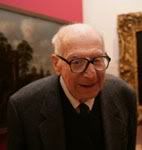
generous sponsors: click to go to the Cambridge University Press websiteThe photo that was taken accompanied an article by the Cambridge News' Chris Havergal. Whereas we were quite optimistic after a donation of £4,000 from Cambridge University Press to ensure that the Autumn Willow Walker came out, Chris' article, entitled Blow to campaign to save voice of homeless, stated that Cambridge City Council's head of strategic housing, AlanHenry Rothschild RIP: click to go to the Primavera website Carter, had announced that the Council did not wish to fund projects that duplicated services, citing Wintercomfort for the Homeless, a service where members of the street community can get some shelter and a feed. Wintercomfort - the brainchild of Henry Rothschild, WWII veteran and founder of the Primavera group of galleries, who died in May this year - is too tightly stretched to apply for additional funds for the Willow Walker.

The reason the Walker is unique is that, unlike, say, the Big Issue, it exists as a voice for homeless people in Cambridge and as such is also delivered to the statutory and voluntary agencies that provide seCambridge Link-Up: click to go to websitervices for them. From the Willow Walker has sprung Homeless Truths, a radio show for and by homeless people, on which a police representative was once interviewed, getting a viewpoint of which the street community can be suspicious into the heart of that community; Cambridge Link-Up is another shoot, recycling everyday items with pleasing and surprising results; and Street Voices has not only released a double CD to critical acclaim, but has shown the big-heartedness of people who are or have been homeless by pclick to go through to 209.com radioerforming concerts of words and music for Homelessness Sunday and Leprosy Sunday, as well as performing a major concert at Cambridge Guildhall. The magazine once ran an article by Dave Whitman, of Chicago cultural arts project Temporary Services; Dave remains a supporter.

Kirsten Lavers, editor of the Willow Walker: click to go to the magazine websiteEvery process needs a stable pivot, and as far as the Willow Walker is concerned, that pivot is Kirsten Lavers. She is an unwavering voice of advocacy for homeless people in Cambridge, nad her skills will be needed more than ever when - given the significant concomitancy of mental distress with homelessness - we've lost the Clubhouse, two acute psychiatric wards and a rehabilitation house; and the city's Mental Health Resource Centre is soon to go. To let the Willow Walker fail would be to score a "fail" in enlightened self-interest. The Cambridge Link-Up website puts it best:
We believe that homeless people are a massively untapped resource of skills, creativity, knowledge and experience able to contribute positively to their community.


Kirsten is currently having funding bids put together in a last-ditch surge to save this important and aspirational institution which is already woven into Cambridge's venerable fabric. Wherever you are, please show your support for it by respectfully emailing Alan Carter, head of strategic housing for Cambridge City Council, at Alan.carter@cambridge.gov.uk, and please copy it to Kirsten Lavers at editorial@willowwalker.org. And if you are or know a funder, please get in touch with Kirsten.

Related posts:

Homeless not hopeless

Catching Street Voices

Both Sides of the Tracks

Save the Willow Walker