Showing posts with label euthanasia. Show all posts

Friday, January 29, 2010

so why was she in court?

"If you have a body...then it has to be tested in court."

That's what Anne Widdecombe said on TV earlier this week on another subject, but it provides a perfect answer to the question Caroline Gammell posed in the Telegraph: Why was Kay Gilderdale in court charged with attempted murder?

A month after the Director of Public Prosecutions issued guidelines on assisted suicide that SPUC said "legally downgrade the right to life of disabled or terminally-ill people", Kay Gilderdaleread why protection against assisted suicide must stay on John Smreaton's blog's daughter Lynn - who had chronic myalgic encepalopathy (ME or chronic fatigue syndrome - took an overdose of her prescribed morphine, at which point Gilderdale mater then fed her sleeping-pills and antidepressants and injected air into her veins. She was cleared by a jury on Monday 25 January.

My first reaction to the headline was to wonder why the woman might not be in court for attempted murder at least, but it was interesting to read on and find out that a spokesman for another mother who had killed her child shortly beforehand commented: "Frances’s conviction and sentence were wrong and for this lady it seems they have got it right".

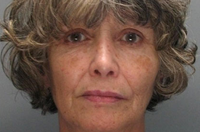
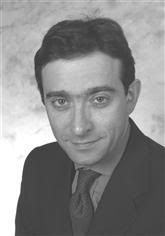
The lady in question is Frances Inglis, who is also referenced in the Guardian's treatment of the Mrs Gildpolice pic of Frances Inglis - click to read how jurors were heckled in courterdale, where we learn that Mrs Inglis bought two grams of heroin from dealers and injected her son with it.

The Disability Matters blog, however, fleshes out some details about what happened after Inglis' son, became brain-damaged after either falling out of or jumping from the ambulance that had come for him after he'd been in a fight:
Frances Inglis...immediately became obsessed with ending his life, repeatedly making the case to anyone who would listen that she did not think any treatment was in her son's best interest. She visited her son almost constantly and was described by Thomas’ brother, Alexander, as "obsessive and negative."

Only 10 days after the accident, Inglis decided that she had to “put her son out of his misery.” So she injected him with a lethal dose of morphine. While Thomas was successfully resuscitated, he had been without oxygen long enough that his brain damage was much worse...Out on bail, a condition of which was that she go nowhere near Thomas, she disguised herself as Thomas' aunt, fooled the nurses, and injected Thomas with a fatal dose of heroin.
Two grams of heroin is a prodigious amount but, even if only a quarter-pure, it would be a massive overdose. One only hopes that the material with which the heroin was "cut" - and cut it certainly was, as she bought it from dealers - wasn't medically active click here if you're having problems with heroinand didn't cause any seizures as the boy passed away.


Pro-euthanasia campaigners would reply that if physician-assisted suicide were legal, Thomas would have been given pharmaceutical diamorphine (heroin), but, given the material above, it's by no means certain that a doctor would have considered Thomas eligible - although in a chilling caveat, Richard Normington quotes Dr Reginaclick to read Doctors who Kill by Regina Dwyer on the New York Times site Dwyer's conclusion to a New York Times article on doctors who kill:
In the end, we doctors are no different than the rest of you. We probably turn killer less often than most other occupations. But our ranks have and will always include the deeply flawed, the greedy, the delusional, bunglers, rationalizers and just plain sociopaths - like every other population.
But the issue isn't doctor-assisted suicide, as opposed as I am to that. It's how we prevent, in some cases, abuse of the effective power that members of the above categories have to kill the sick relative of their choice, and in others - given assisted-suicide supporter Jamie Dettmer's assertion that Mrs. Gilderdale had sought to dissuade her bedridden daughter, Lynn, from wanting to end [her] life - people wracked by pain and despair and in crisis from unintentionally applying emotional blackmail upon their loved ones to act with lethal effect upon them.

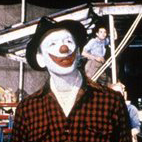
James Stewart as Buttons: click for an analysis of the sad clown in cultureI'm sure Kay Gilderdale and Frances Inglis are, possibly in different ways, occupying somewhere resembling hell right now. Cecil B De Mille, for example, in his 1952 The Greatest Show on Earth, presented a visual interpretation of a self-assumed mark of Cain in Buttons the Clown's smiley face perpetually masking the lugubrious demeanour of somebody who has "killed the thing he loved".

That's why killing sick or disabled people, although it has always happened, has always been fenced in by a taboo which the Establishment is dismantling to all of our peril.

And, for all the guidelines revolving around assisted suicide and living wills, that's why Kay Gilderdale was in court charged with attempted murder.

Tuesday, January 26, 2010

...all change?

thanks to Cambridge Cycling Campaign for the pic - click to go to websiteI had to attend a course on databases yesterday - sometimes my life just gets too exciting! After cycling into town I got onto the bus, asking the Eastern European driver where exactly the stop in the Flat Old Fen was. I know I've got a Scottish accent, but being married to an Englishwoman for nearly two decades - much of that time spent living in the Fens - has blunted it somewhat. Nevertheless, I had to sit down as wise as when I'd got on, which at that time in the morning isn't very wise at all. I wasn't as unlucky as the next chap, though - like the driver, English was his second language and he was gesticulating at a map trying to ask something. The two men found commclick to go to a review of this book about a Glesga clippieunication impossible, and the would-be voyager alighted.

What a change from the old days, I thought. We used to have an inspector on each bus who was, in Scotland, known as a clippie and - usually a woman - spoke the lingua franca, enjoining people to "come oan - get aff!" when the value of their ticket had expired and if asked, for example, if a bus went to the cemetery would reply "naw, it's afraid o' the ghosts!" You can make up your own replies for all sorts of situations, but the clippies kept it clean.

Still, I shouldn't complain in the light of what's happened in the Cambridgeshire town of Manea where a Nigerian-born German doctor who barely spoke English overestimated the amount of diamorphine (known as heroin on the streets) to give to 70-year-old David Gray by a factor of ten, killing him. The Cambridge News reveals that the company who employed Daniel Ubani as a locum had circulated an alert on the drug after two patients had placed in respiratory arrest after being prescribed overdoses - thank Heaven, they were resuscitated.

clcik to read Stephen Adams' article on Martin Amis and euthanasiaLife and death featured in the Telegraph, with Stephen Adams reporting on Martin Amis' remarks that we need euthanasia booths on street corners to cope with the "silver tsunami". It's ironic to see the man who accused US novelist Jacop Epstein of plagiarism himself stealing the idea of suicide booths first floated by sci-fi writer Robert Sheckley in his 1959 Immortality, Inc.; one wonders at what point the author, now 60, will see himself as part of the silver tsunami? Plus ça change...

I got to the Flat Old Fen, where the course went well, delivered by a team representing various Home Office initiatives who knew what they were talking about. But I wonder if one of them said more than he'd meant to when he said everything was "expected to change in two months when we get a change of government"?

Having gotten back to Cambridge in time for the evening rush-hour, I found myself sometimes going faclick to read more about the SPECS3 speed cameraster than the cars as I cycled up the city's Mill Road. So it was initially surprising to get back to work and read Chris Havergal's article for the Cambridge News speaking of a 20mph speed-limit for the thoroughfare, as I don't think any of the cars I passed managed to get up to that speed. I guess there's a problem with speeding as night draws on, but that's down to problems getting drivers to respect the present 30mph limit. There have been threats of 20mph zones for some time, but they were meaningless until the start of the year when speed cameras that can detect velocities slower than 30mph came onto the market.

tower at nightI had one stop before getting home, meeting Constanter to discuss an article he's thinking of writing for the mag over a pint at the Tintinnabula. After warming ourselves at the fire we looked out of the window at St Gallicus' tower illuminated by spotlights: symbol of the centuries-long process - whereby everything flows but slowly and organically - that builds a village like the Draughty Old Fen, it's the sort of sight that makes a long day worth it.

Tuesday, November 17, 2009

counting the cost of creating our future

click to go to the Alzheimer's Society homepageOne phrase that has stuck in my head since training for my stint in geriatrics as a student nurse is that "when we create the care that older people receive, we define our own future".

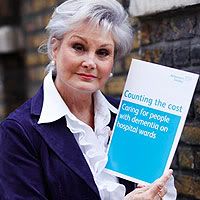
Newsreader, broadcaster and dancer Angela Rippon has been appointed Alzheimer's Society Ambassador alongside businessman John Hughes, and both appeared on ITV1's This Morning to mark the launch of an AS report called Counting the Cost. This looks at the reasons why people with dementia tend to be kept in hospital longer than peAngela Rippon holding 'Counting the Cost' - click to read moreople who are not suffering from a dementing process, and at the costs to both individual and Health Service of this.

It's not uncommon for somebody to show first symptoms of dementia only when they spend some time in an unfamiliar environment - for example if away on holiday or visiting friends. Thereafter, the environment should change as little as possible: in other words, hospital stays should be as short as possible.

I'm not trying to make carers feel guilty for going off for a much-needed break and putting their loved-one in respite-care, as this would be a nursing home specialising in the care of older people, some with dementia. What the report's saying is that hospital stays should be as short as possible, so that the person with dementia can then recover from their hospital stay in familiar surroundings, whether that be the family home or a nursing home.

The report's findings are compelling: while 97% of nursing staff and nurse managers report that "they always or sometimes care for someone with dementia", "47% of carer respondents said that being in hospital had a significant negative effect on the general physical health of the person with dementia, which wasn’t a direct result of the medical condition" and "54% of carer respondents said that being in hospital had a significant negative effect on the symptoms of dementia, such as becoming more confused and less independent".

is it really necessary? Click to read moreThe best-known example of this is inappropriate prescription of medications, predominantly antipsychotics, but also others. On my second night as a patient in a psychiatric ward, I found I'd been prescribed a sleeping tablet because, I think, my tossing and turning on a clanky hospital bed had been quite loud: the prescription had no bearing on my condition. How much more would people with dementia, who might not be able to tell the difference between night and day, be vulnerable to inappropriate prescription? (I'm on an antipsychotic, appropriately prescribed for manic depression, that can knock me out - I wouldn't like to see its effect on a frail older person who wasn't alert to all the cues warning of danger of falls, etc.)

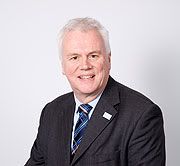
I've got a lot of time for the Alzheimer's Society, as when Baroness Warnock, former chairman of the Committee of Inquiry into Human Fertilisation and Embryology, proclaimed that "dementia sufferers should consider ending their lives through euthanasia because of the strain they put on their families and public services", the Society's president, Neil Hunt, expressed his horror that someboNeil Hunt, Chief Executive of the Alzheimer's Society - click to read moredy in a public position could "disregard the value of the lives of people with dementia so callously...that they should feel that they have some sort of duty to kill themselves is nothing short of barbaric".

The Society, in its paper, gives a powerful incentive for NHS trusts to consider giving dementia patients as short a stay as possible - the bottom line. The full report goes into detail what savings could be made in which circumstances, but the executive summary delivers the money-shot:

This report finds that supporting people with dementia to leave hospital one week sooner than they currently do could result in savings of at least £80 million a year...It would not be unreasonable to assume that there are savings to be made in care for peoplclick to read Angela Rippon's biography - thanks tp Z Design & Print for the pic.e with dementia running into hundreds of millions of pounds, which could be more effectively reinvested.
And, as Angela Rippon, proof (if it were needed) that one can be 65 and glamorous, said on This Morning of the art and science of caring for older people: "We're all going there".

Friday, November 6, 2009

Baby RB and the misery of medics

click to read more at startrek.comBones stares at the grim scene lifted out of his memory by Spock's wayward brother Sybok: the young doctor reluctantly switches off his father's life support system at the latter's pleading. Now back in the present, he turns to his companions and informs them that a cure for his father's disease was discovered shortly afterwards.

Faith that the future will provide something we lack at present is a defining characteristic of our species. For example, this month's Reader's Digest tells the story of how Professor Graham Hughes, founder of the London Lupus Centre, noticed a biochemical similarity in patients suffering from an inexplicable paralysis in Kingston Hospital, Jamaica, and patiently tracked down the cause: an antibody that attacked phospholipids on an autoimmune basis, causing a coagulation disorder, which he called antiphospholipid syndrome but has been renamed Hughes' Syndrome by the medical profession.

click to read more about Prof Graham Hughes at the London Lupus Centre websiteWhen he first presented his findings, a surgeon sitting next to him, recognising the symptoms, whispered "my first wife died of this", then both listened to the testimony of a woman who, having been the first to be diagnosed with Hughes' Syndrome and treated, had given birth to her first child after nine miscarriages.

Sometimes miracles happen: in June, six-week-old Grace Vincent continued breathing after her life-support system was switched off to let her "incurable" meningitis take its course, and she defied odds of survival that doctors had put at less than one percent.

So it's sad to see a court battle over the future of Baby RB, who was born with congenital myasthenic syndrome which, explains the Muscular Dystrophy Campaign, is "a muscle weakness that limits the movement of his limbs and his ability to breathe on his own". His father wants his life-support to remain on, and his mother wants it to be switched off on the basis that she would rather cope with a mother’s grief of losing a child than to see her son’s "intolerable suffering".

Michael Mylonas, representing the NHS Hospital Trust representing Baby RB, stated "Clinicians at the hospital are against this because in their view even with a tracheostomy, the quality of Baby RB’s life will be such that in fact he has a miserable, sad and pitiful existence". He added the following astounding statement:
Michael Mylonas - click to read moreThe argument before you is the fact that he has normal cognitive function and normal brain would weigh in his favour.

But the Trust is concerned that his awareness will simply make his own plight all the more unbearable - not so much now, but as he gets older and catches glimpses of what others can do.
His reasoning puzzles me: is there anybody who hasn't looked jealously at others' abilities and compared them to their own? Failure, misery and pain are so bound in with the human condition that the above argument does not so much rationalise extinguishing a baby's life as provide grounds for genocide.

Baby RB is unable to move his limbs but can wiggle his body to indicate, his father asserts, pleasure, and has been filmed enjoying toys. The Muscular Dystrophy Campaign said in a statement,

"Baby RB's parents find themselves in and that unfortunately the resolution of this case will inevitably be devastating for all parties involved...The Muscular Dystrophy Campaign is here to provide support for all families affected by muscle disease through our freephone information support line and care team. We also continue to invest over £1million each year into pioneering research to find treatments and cures for muscle disease."
Martin BobrowIts rather ambivalent stance may be due to the chairmanship of Professor Martin Bobrow, non-executive director at Cambridge's Addenbrookes Hospital, Deputy Chairman of the Nuffield Council on Bioethics and a member of the Human Genetics Advisory Commission, who has declared himself in favour of pre-implantation genetic diagnoses. This would prevent such messy court cases by preventing the birth of babies with neuromuscular disorders, and would also render the many wonderful services provided by the Muscular Dystrophy Campaign unnecessary.

I don't wish to demonise Baby RB's mother with all this, Heaven knows she must be under enough pressure as it is, for example with a marital split whose "amicable" nature may be the good cop to the trial's bad cop. But she's not being helped by doctors who predicate "a miserable, sad and pitiful existence" of a 13-month-old child. Doctors are there to perform medical and surgical interventions, not to use their eminence in order to misrepresent their opinions as facts. (I'm reminded of the case of Baby OT, whose life support was switched off this March, in spite of legal protests by both parents, by doctors who spoke of "empathy" and "distress" instead of doing medicine.)

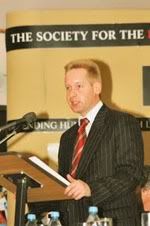
John Smeaton, Director of the Society for the Protection of Unborn Children, quotes the society's communications manager, Anthony Ozimic, on the matter:
Anthony Ozimic: click to read more
Whenever there is doubt about life-sustaining medical treatment, everyone should act with a presumption in favour of life. The value of a person's life, and the protection due to that life, should never be judged according to opinions about the person's quality of life. An ill or disabled person's life should never be regarded as not worth living. Doctors should not confuse the possible burdens of a medical intervention with the priceless worth of a person's life.
In fact, in a dramatic intervention, it's been announced that Baby RB's father has found a doctor willing to perform a tracheostomy on the child, but doctors have countered that this would necessitate "painful" surgery. If surgery's painful, fire the anaesthetist; I think I'd have more respect for them if they came out and honestly complained about "costly" surgery (in a research paper, Alison Davis of No Less Human refers to a British government publication that mentions that "caring for the handicapped can impose great burdens on our society").

It's not impossible that RB's condition may one day be treatable, perhaps even before the third birthday that doctors say he will struggle to reach, not stopping to think that for all of us there are times when it's a struggle to envisage getting up the following morning.

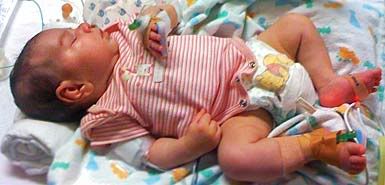
Thanks to the Monash Medical Centre for the pic of Baby Z: click to read moreTake Baby Z (above). The Telegraph's Bonnie Malkin reports that the newborn was cured of molybdenum cofactor deficiency, which usually kills in around three months, by a medicine Professor Günther Shwarz had been working on for 15 years. Contacted by the family, he sent his entire stock of the experimental compound.

Does something like this await Baby RB, should the medical establishment suffer him to live? I don't know, but we live in hope - it's what we do.

Related post - Sympathy and distress - bad medicine for Baby OT

Saturday, August 15, 2009

the British left meddles in a very American dilemma

we love the NHSPeople in the US are currently struggling with a dilemma about the future face of healthcare in their country. A lot of the arguments centre on Britain's National Health Service (NHS) with, for example, Katie Brickell, Brit bride who was told that she couldn't have smear tests until the age of 25 and who, now at that age, is dying of cervical cancer, saying she has been misrepresented in the US media debate over proposed "Obamacare" healthcare reforms.

What I think is being lost on both sides of the pond is that the NHS did not just spring fully-formed from the head of a Soviet-style committee, but rather is a femme d'une certaine âge whose first solid incarnation was as a propaganda weapon, when copies of the 1942 Beveridge report rained on leading German military/political figures' parades when dropped from bombers, because Nazis hadn't planned for the wellbeing of the Übermenschen nearly as well.

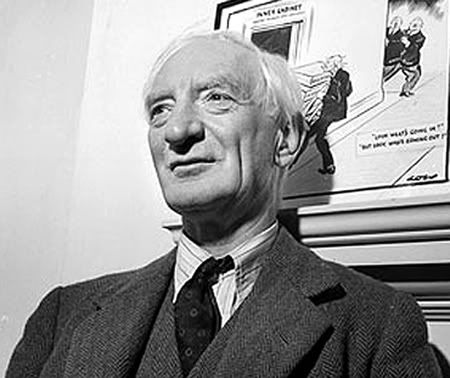
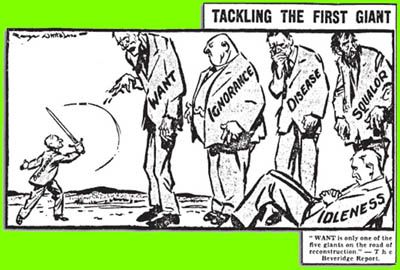
Visionary - William Beveridge: click to read problems with the implementaion of his visionThe NHS was conceived by William (later Lord) Beveridge as an essential part of the welfare state's architecture; a future Liberal MP, he was commissioned by wartime coalition leader Winston Churchill to fashion the country's social future, and this was made a reality by Clement Attlee's immediate postwar Labour government: it was a project that could be comfortably owned by people from across the political spectrum. One of the many things Beveridge realised that are now subject to mission-drift was that full employment would be essential to provide the tax returns that would fund the system, which was going to banish his five evil giants of want, ignorance, disease, squalour and ignorance.

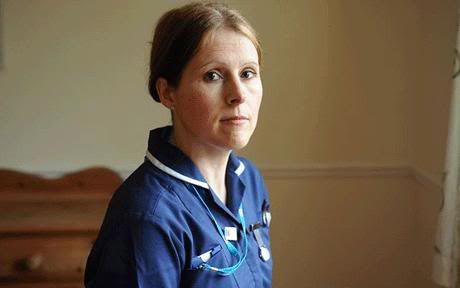
Heaven knows that Americans looking over the sea at the NHS will see that there has been mission drift - I can see that even since I started training as a nurse in the 1980s. Then, there was a clear hierarchy of management - junior sister, senior sister, nursing officer, management board. Then, a way would have been found to give Katie Brickell her smear-test. Now, her request would have gone through so many oncological leads, champions and commissioners even before it hit a Byzantine yet burgeoning management system that it's a wonder they had time to give her one refusal, let alone three. Personally I don't agree that the NHS is socialised healthcare: rather, this is what happens when socialist masters get hold of what works and break it so they can take credit for struggling to to fix it.

There are many dangers of undertaking the journey towards universal health-care. I would like to highlight three.

1 - Healthcare "rights" are asserted that are no such thing.

The First Post's Alexander Cockburn asserts, rightly, that the great battles have already been won through, say, provision of clean water, better sanitation and the near-eradication of TB. So now we have "rights" being asserted which are in no way inalienable from the human condition. For example, I've seen the pain of women and couples who can't conceive, but to have children is, unfortunately, not a right. Neither is gender-changing surgery in the absence of being born with two sets of sexual organs. Nor is tattoo removal, which was at one point being prioritised by hospital trusts that had fallen behind in their targets prescribing how much time could lapse between GP referral and treatment.

2 - State-controlled healthcare is hostage to prevailing politically-correct ideologies.

Note I don't attack state funding here, but state control - which in the jealous eyes of socialism comes hand in hand with allocation of monies. For example, IVF treatment was once given only to heterosexual couples judged to have a strong commitment to each other, but now the liberal-socialist establishment is ticking two boxes at once by ensuring that same-sex couples have access to IVF, and that in the case of lesbians both guardians can be called "mother" because babies born through IVF treatment have no legal right to a father.

Otherwise, politicians' pet minorities can be prioritised above people with pressing needs. One example is travellers being allowed to skip doctors' queues in the South of England because they are judged to be "vulnerable"; another is an order that went Caroline Petrie - read her vow to continue offering spiritual comfort to her patients. Thanks to Jay Williams and the Telegraph for the pic.out to overworked nurses to turn Muslims' hospital beds to face Mecca three times a day (while a Christian nurse is suspended for offering to pray for a patient); yet again, in Britain the roughly 80,000 unfortunate enough to be living with HIV/AIDS benefit from the efforts of affluent, articulate activists, while roughly 600,000 individuals infected with Hepatitis C, often caught in similar ways, languished almost unrepresented until bean-counters realised the cost of treatment is going to be disastrous.

3 - Sinister governmental agendas can be inserted at will.

In the UK, nurses and doctors at present have the right to opt-out of performing or assisting at abortion procedures, but this right is constantly under threat as it is perceived to interfere with a woman's right to choose abortion, although a woman's right to choose to give birth is not generally considered a priority by NHS commissioners. Technically full-birth abortion is illegal here, but the London Evening Standard notes that in one year 66 babies survived abortion for up to ten hours, because "once born no medical help is offered". At the other end of life, an unofficial policy of involuntary euthanasia is visited upon people in a coma in hospitals, especially those with no visitors (volunteers can be a great source of information).


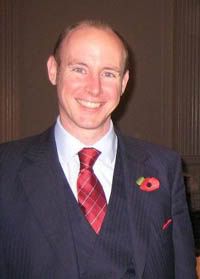
click to read Daniel Hannan's blog 'The NHS row - my final wordI hope the American people look at professionally-placed stories about the NHS with caution, because one of the agendas at play here is operated by the British left who, not realising that outside their groupthink people have things called opinions, are trying to manipulate the "Obamacare" debate in order to bounce British conservatives into saying that they are not totally happy with the NHS. One current example is a smear-attempt upon MEP Daniel Hannan (involving, among other things, half-truths being fed to US commentators about Katie Brickell's views on the NHS), who gave a thoughtful interview with US talkshow host Glenn Beck starting with the prevailing social views at the NHS's inception and going forward from there. For those who are interested - and this is a fascinating insight into the socialist mindset - Hannan is actually being punished for the "crime" of delivering the following rather brilliant speech to the European Parliament on March 24 this year in response to an address by Gordon Brown on Britain's performance during the financial crisis.


We Brits should not have the arrogance to assume that a shared language involves a shared culture - Britain and America are different countries with many shared values, but many more divergences involving geography, history and worldview, to name but three. At the end of the day, the American adult population - like the British - is composed chiefly of grown-ups, and they will choose what they choose to resolve this very American dilemma, either through Town-hall meetings or at the ballot-box.

Beveridge's five giants: a mammoth victim of mission drift - click to read the Archbishop of York's analysis of what goes wrong with Britain's Big Visions

Tuesday, June 30, 2009

elephants, arthritis and euthanasia: inside nature's giants

elephants as they appear on postersMinima loves elephants: she has elephant posters in her room, pictures of elephants decorating the covers of her jotters, and was heartbroken, upon watching the last instalment of Lord of the Rings, to find that the baddies rode on elephant-like thingies with spikes.

So I was careful to phone home tonight, at the end of a late shift, to warn Maxima that I was going to watch a C4 show - to which I'd been alerted by the Telegraph's Urmee Khan - called Inside Nature's Giants, which, in the first of four episodes concentrating on autopsies on iconic animals, dealt with the post-mortem examination of a lame elephant. It's the first time in a while we've gotten Minima to retire without argument on her designated bedtime for a schoolday, but that's another story.


Not bAlun Williamseing oversentimental about dead animals, I nevertheless took no pleasure in seeing the grand old dame laid out. But she was treated with respect by the professionals, including the Royal Veterinary College's Alun Williams. Evolutionary biologist Simon Watt explained, with the aid of intelligent graphics, how animals representing various branches of the Tree of Life had tried to cope with reconciling a body high enough to house a vast digestive system with mouthparts that could reach water and high bushes but the elephant is the only surviving successful model.


I didn't have any problems with this, although I realise some of my coreligionists might. What made me feel concerned was that Richard Dawkins, society atheist and professional polemicist, had been invited to record contributions to the series, but added nothing of substance to Watt's informative expatiations.

One phrase of his that interested me was, when commenting on the tendency of male elephants to grow shorter tusks since being hunted for ivory by mankind, was that it was "evolution happening before our very eyes - it can happen very fast".

This was a view that Dawkins enthusiastically espoused in his first - bestselling - popular science book, The Selfish Gene, in catastrophic changes to the Evolutionary Stable Stephen Jay GouldStrategy he espouses in Chapter 5. Sometime after this, he discovered that he had reinvented Stephen Jay Gould's concept of punctuated equilibrium - that nothing much happens for a long time then everything changes - and was unkind to Gould in ways that could not be justified in a professional sense. In the 30th anniversary edition of The Selfish Gene, he admitted - in an endnote to chapter 5, that he had been "petulant" in his criticisms of punctuated equilibrium in his 1986 The Blind Watchmaker, and that "if this has hurt anybody's feeling, I regret it". Gould had been dead for four years. Dawkins absolves himself in finishing off the endnote: "my heart was in the right place".

There were fascinating insights into elephant anatomy and physiology, as well as footage of the beasts in the wild where they belong. Also shown was their irascible side. It was a pity Minima never saw this, as I'd have liked her to appreciate how God's creatures are in reality, now that she's graduating from comfortable storybooks.

Something that affected me was the sight of how elephants treat the remains of others of their kind when they happen upon them. They caress the skulls and lift the bones, in a display that suggested grief. The narrator suggested that they were trying to identify who the dead were. I can understand that: I never knew my Granny, Julia, but I remember an old woman from my childhood in the Ayrshire moors who knew me not by my name but as "Julia's daughter's son".

What concerned me was that, after this excercise in anthropomorphising our proboscid friends - which may have been justified to a limited extent - we were treated to several statements about the extent of the poor old girl's cartilage degeneration and how "the quality of life when you get to this level of arthritis is unthinkable". I'm sorry for her (I wish I'd noted her name), but my mother had severe arthritis in every joint for a couple of decades; I won't deny that death came as a friend, but that's by no means the same as averring that humans should be brought to his domain before nature is happy to call time on behalf of God. I've had a couple of dogs put down, because they did not have the capacity to try to apply understanding to suffering on behalf of themselves, let alone others. I grieved, of course, but to apply the same standards to people is to show a fundamental misunderstanding of why our species is called Homo sapiens.


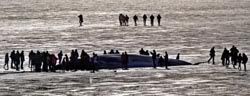
Generally, however, this was a very interesting program. I suppose Richard Dawkins generally behaved himself; it rethanks to the Irish Times for the pic - click to read their story about the beaching of a fin whalemains to be seen whether the same can be said of next week's offering, in which a fin whale is going to be autopsied in situ. Dawkins promises to reveal to us - in an opening salvo of a battle the Royal Veterinary College may not be eager to fight - "the delusion of design - it looks exactly like an engineer might have made it".

He's already got his first shot in: if we believe in a Creator, at a greater or lesser remove from the mechanics of His creation, we're deluded. I look forward to next week's programme, to hear his justification (if he deigns to give any) for why his faith in his own rectitude necessarily negates the beliefs of those he he labels as "deluded".

In the meantime, I quote a phrase of Charles Darwin's which I've never seen Dawkins referring to, as an indication of the former's breadth of intellect in the face of contradictions which would have pulled apart those who grasp fame at his coat-tails:
I feel most deeply that the whole subject is too profound for the human intellect. A dog might as well speculate on the mind of Newton. Let each man hope and believe what he can.


The first episode of Inside Nature's Giants may be viewed on the C4 website.


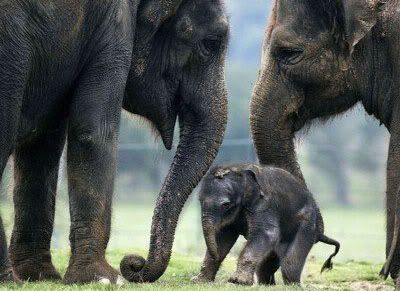
a family of elephants as they deserve to be left - with thanks to Getty images

Related post:Whales and unintelligent evolution: Inside nature's giants

Friday, February 20, 2009

immortality ignored

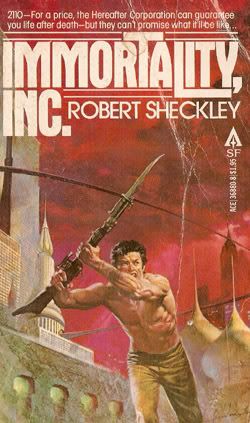
Immortality, Inc. by robert Sheckley
Immortality, Inc.
Robert Sheckley
ACE 1959
pp 279
(Also published in 1958 as Immortality, Delivered)

I love sci-fi novels from the mid-50s to the mid-70s, where through looking at the author's vision of the future one sees a view of where the future might be going. Towards the end of the '70s the sci-fi market started to be saturated with various Star Wars and Star Trek novelisations and spin offs which, while being fair reads individually, became cumulatively rather too much of a good thing.

Robert Sheckley's novel of temporal bodysnatching is filled with the sort of humour acting as a trojan horse for piquant social comment that earned him the accolade of "Voltaire and Soda" from fellow sci-fi writer Brian Aldiss.

Thomas Blaine dies in a collision with another car, having driven his rather aggressively. He awakes in a clinic, rather disorientated - understandably - and finds recording technicians commenting positively on the quality of his anguish which they have been saving on a disc that will go on general release, so others can vicariously experience his trauma from inside his head then return to the safety of his living-room.

It turns out that the Hereafter Corporation has been experimenting with grabbing people from the past to solve the problem of "zombies". These result when the mind of a paying customer cannot bond properly with the body of somebody who has been given Hereafter Insurance as the price for selling his body for the customer's continued corporeal existence.

The premise of the book is that a way has been discovered of detecting the mind after death, the backstory that following this revelation, people started to sate their appetites for all sort of risky activities in the belief that death is not the end - deceived by false hope: it is not guaranteed that everybody's mind will cross over.

Which is where the Hereafter Corporation steps in, having found scientific methods to virtually guarantee not only the survival of the mind in the, well, hereafter, but also the transfer of a mind from a body that is in some way unsatisfactory to another model. Poorer individuals sell their bodies for money that will pay their families' bills and the aforesaid insurance. For especially lucrative customers the transfer is done in a clinic, otherwise...Sheckley describes a queue of sad individuals waiting to do their deal in a "suicide booth".

Blaine finds himself in the body of the proto-Chippendale we see on the book's cover and, when he is unable to reprise his career as a junior yaught designer, becomes a hunter, being paid to provide a showstopping finale for those who have been there, done that, and, having paid up their policies, are tired of a priveleged life. Free to do this because Hereafter have decided that it would be too controversial to use Blaine as marketing material, he finds that he is now hunted. With a love story and the de rigeur slipping of a mickey in a bar, it's a thoroughly entertaining and challenging novel, no less so than at the ending.

It seems to me, though, that our materialistic culture hasn't diverged much from the path Sheckley foresaw in novelised form. We can't yet see the world from inside other people's heads, but TV schedules are creaking with reality shows filmed 24/7 from every angle, with contestants urged to spew out inanities in camera on camera.

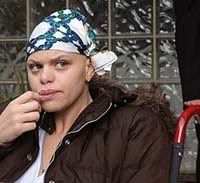
CasJade Goody, with thanks to the Daily Mirrore in point: in Great Britain, having been force-fed Jade Goodie's life, loves and lazy assumptions, we are now pummelled with incessant updates of her impending death from cancer in a metaphysical Big Brother's house with walls so porous that great swathes of society are osmosing into the diary room. I'm sure I'm not alone in hoping things go well for her in her own hereafter, but do we really need to know about her fiancé's post-prison curfew, his fight with her mother at her hospital bedside or her sinister elevation to the status of national treasure?

A pathological desire to seat oneself in somebody else's sensorium, however, only drives a sub-plot of the book. The main part deals with the desire for eternal deferment of death and its strange bedfellow, the compulsion to self-destruct. This can be seen in two news-stories that are currently in the news.

Last July, I blogged about Dr Iain Kerr, who had been suspended from practicing a scorpion's tale: Iain Kerrmedicine for 6 months after being found guilty by the General Medical Council of prescribing large doses of barbiturates to people, mostly older, whose medical presentations did not remotely suggest that barbiturates were appropriate. I then lamented that while Dr Crippen was hung after being convicted of killing one person (his wife), "now a man who is happy to publicise his murderous pastime...is suspended from his profession for 6 months, but otherwise at liberty".

However, Kerr now states that he has cut his ties to Dignity in Dying (formerly the Voluntary Euthanasia Society), and adds, "I appreciate that it is not acceptable for an individual doctor, no matter how well intentioned, to act in those sort of circumstances as an individual...".

But there's a sting in the tail. Immediately following the above statement is: "without the benefit of some formal process governing any sort of activity like this". Kerr elucidates:

I realise that if there is to be any form of physician-assisted suicide, it will have to be within a proper legal framework and that there is no place for a practitioner to become so empathic with a patient that he may be tempted to go contrary to the current advice on physician assisted suicide
He says, furthermore, in the first article linked to, "If the law is to be changed, it must be politicians and lawyers who draft the changes".

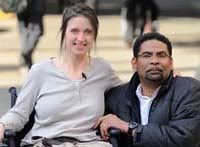
Debbie Purdy and partner Oscar Puente: does being photogenic mean being right?His comment is germane to another breaking story, that Debbie Purdy has been unsuccessful in her appeal to secure an undertaking that her husband would not be arrested for abetting her suicide should he help her travel to the Dignitas Clinic in Switzerland. A commercial concern, it makes a lot of money helping people with chronic pain, terminal and/or degenerative illness or depression go gently into that good night. Her original case against the Director of Public Prosecutions, as Joshua Rozenberg explained, was thrown out because the DPP was unable to give an undertaking based on a hypothetical scenario. Tellingly, in relation to Dr Kerr's view that "politicians and lawyers" must pave the way towards the anti-utopia Sheckley novelises, the law-lords have reinforced the point that it isn't a job for lawyers and judges to make law, rather "it had to be parliament which decided if the law should change".

So if the Labour Party takes the bait and legalises physician-assisted suicide, it will certainly win itself a sort of immortality: it will be cursed until the end of history by victims of the liberal totalitarianism which seeks to knock down concepts of objective right and wrong while ever strengthening its belief in its own infallibility.

Yet even the dismissal of the appeal has a sting in its own tail, as Paul Tully of SPUC comments:
Today's judgment, however, is disturbing in that the judges seem to hPaul Tully of the Society for the Protection of Unborn Childrenave shown support for the idea that some (disabled) people are right to want to die. The judgment acknowledges the wrongfulness of giving practical assistance to people who want to die, but asserts that it may be "inexpedient to take action against relatives for assisting a disabled person's suicide". The presumption underlying this thinking is that the lives of people who are enduring long-term disabilities are of low value, and should not be protected in the same way as other people.
This disregard for disabled people can be seen in action even as Sheckley was writing Immortality, Inc. Author Dick Wittenborn recalls a conversation with his pioneering psychiatrist father:
In the mid-Sixties, after one of my dad's cocktail parties, I told him how cool I thought a colleague of his was...this eminent man of medicine had won the Lasker Award and was then thought on his way to a Nobel. My father answered, 'Yeah, Dr X is a good guy. Of course, he's killed hundreds of his patients.'
It sometimes seems overwhelming, so it's good to see good news when it comes in: Wesley Smith of Secondhand Smoke reports that "Hawaii's assisted suicide legislation looks like it isn't going to make it this year."

Sheckley makes a wise move when he has one of his characters announce that the Hereafter Insurance Corporation deals with the mind, and makes no pronouncement on the survival or fate of the soul, something which the Government seeks to deny at every available opportunity through its pet outlets like New Scientist and the BBC.

Out of my parents and grandparents, a group of six people, five died of cancer and the fate of the sixth is lost to posterity, so what life has in store for me is a closed book; like all of us, I guess. But, when all's said and done, the school of thought that believes immortality consists purely of existing as a memory is poor man's meat: there's only one book I want my name in.

Thursday, December 18, 2008

a right to both sides of the story?

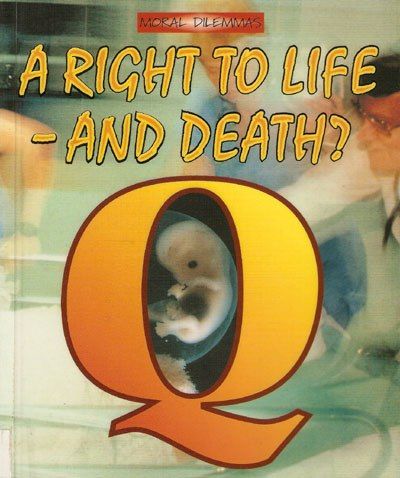
A Right to Life - and Death?
"Moral Dilemmas" series
Kenneth Boyd
Evans Brothers Limited 1999
First Paperback Editions 2003

As a fan of the great detectives from Sherlock Holmes to Morse I'm always intrigued by a mystery, and as it happens, the other day a mystery was posted through my letterbox.

The above book was sent to me by a worried parent whose son is studying RE (Religious Education) at Key Stage 4, or the first year of an RE GCSE in old money, and was given the book for a project.

The book is divided into six chapters: rights in general, abortion, fertility treatment, transplantation, rationing health care and dying well. I had a few concerns about the book in general, but the book's treatment of abortion is symptomatic of its approach.

The reader is given a worked example, and I hope I can be forgiven for quoting from this at length:

Kate is forty years old and has just discovered she is pregnant. She already has three children, two girls and a boy, aged seventeen, fifteen and and thirteen, respectively. A few years ago she and her husband, John, opened a small restaurant. It does well, but only because they both work very long hours. A month or so ago, rushing to catch the plane for their first weekend abroad for several years, Kate forgot to pack their oral contraceptives. She thought she was unable to conceive because of the time of the month, but when they got back home she was suspicious. She carried out a pregnancy test, and it was positive.

Kate and John discuss what they should do. All of their income goes on family expenses and the children's education. They can't afford to pay someone else to take on Kate's work while she has the baby, and if they are going to have another child, Kate wants to bring it up herself, as they did with the others before she went back to work.

They could give up their business and John could try to find another job. But they would earn a lot less and they would feel this would not be fair to their other children at this stage in their education. So, reluctantly, they decide to go to their doctor to ask if Kate can have an abortion. The doctor thinks that Kate and John have taken a responsible decision, and sends Kate to a hospital specialist who agrees to terminate her pregnancy. After further discussion with the doctors, Kate also has a sterilisation to prevent her having any further children.

Phew - there's so much going on in that extract it's hard to know where to start! For one thing, Kate and her husband went "reluctantly" to their doctor - why didn't the doctor pick up on this reluctance or, if you want, cognitive dissonance, and advise that they think about it?

For another, this dissonance is strengthened when we are told that "if they are going to have another child, Kate wants to bring it up herself", then we learn in the next paragraph that the poor woman has a sterilisation - so what form does the "further discussion with the doctors" take - do they have meaningful dialogue, or does this "discussion" takes place when she is having the procedure, possibly very emotional and vulnerable, with the doctors above her in every sense?

I could pick out many more things, but thirdly and lastly, I'm still concerned about Kate's sterilisation. Given that this is an early abortion, why do the doctors need to perform an invasive procedure going inside Kate's abdomen in order to ensure that the couple have no further children? Not much mystery there - the text says it's to prevent her from having further children. A shame, because it would be much simpler to perform a vasectomy, and any possible after-effects, say infection, would be far further from major organs. Perhaps John has something to tell her about his future procreative aspirations? And has she been given time to reflect that should she and her husband split up she is now infertile? I realise this isn't a post about marital fragility, but why, in our supposedly sexually emancipated society, are women expected to pay the price for their men's behaviour with and in their bodies?

All through the abortion section, there are panels giving opinions that I find one-sided. Please allow me to quote three of them. The first is from "Dr Daniel Callahan, Ethicist" in Abortion: Understanding Differences:
...abortion is a necessary evil, one that must be tolerated and supported until such time as better sex education, more effective contraception, and a more just social order make possible fewer troubled pregnancies. And even then, there will still be some justifiable reasons for abortion: it will never disappear.
The second is shot through with the cold utilitarianism of Mill senior, and comes from "Professor Roger Higgs, General Practitioner" in the 1997 BMJ (British Medical Journal) New Dictionary of Medical Ethics:

In practice, it has been shown that women usually take great thought and pains to identify and minimise the harms, balancing different and competing harms in a nuanced way in considering whether to keep or terminate a new pregnancy. Such down-to-earth examples of compromise might put ethicists, politicians, campaigners, and religious leaders to shame, and convert the general question to the particular: "How much should this possible new life matter, in this situation and at this stage?"
I might comment oPope John Paul II - click to go to 'Veritatis Splendor'n the above, that Pope John Paul II, quoted in a post by Radagast, turns the question of the relationship between the general and the particular on its head to shine a light on Kant's categorical imperative, which states that we should react to each individual situation as if its solution constituted a general law: "the function of [conscience] is to apply the universal Immanuel Kantknowledge of the good in a specific situation and thus to express a judgement about the right conduct to be chosen here and now". (Veritatis Splendor (The Splendour of Truth), para 32).

The third and last quote, which we are told comes from "Mother of unborn Down's syndrome son", is shorter:


If women understood that late abortions don't have to cause lasting trauma, fewer would feel obliged to give birth to a handicapped child.
This quote from A Right to Life - and Death? vindicates Matthew Connelly's prophetic reference at the end of Fatal Misconception - the Struggle to Control World Population to people "faithfully reciting a eugenic catechism without the faintest idea of where it came from or where it can lead".

The mystery proper started when I started checking out the background to the book, when I kept getting a page on the Evans Publishing Group website saying "There were no matches for your search in the database. Please try again." Even when I managed to find a mention of the book on the publisher's site, when I clicked the link to the book I got the same screen.

And yet the book is in circulation. The Times Educational Supplement lists it in an article on "citizenship" books; East Lothian Council Library Service's TalisPrism search engine lists it in a mixed bag called the Coping Collection including also Alcohol, AIDS, and All by myself: the toilet training book; and I was initially worried to see that the independent children's books magazine Books for Keeps listed it in an article bemoaning the UK's rate of teenage pregnancies (by any definition abortion doesn't prevent pregnancy), but rather relieved that they included alongside it Cool and Celibate? Sex or no sex? by David Bull.

Further afield, New Zealand's Kids' Catalogue Web lists it as one of three books in a section called "Right to life juvenile literature", the other two being You wouldn't want to be a pyramid builder! and A to Zen: a book of Japanese culture.

The book certainly casts its net wide - in the first section, Rights, Life and Costs, there are pcitures of refugees in Rwanda, a public health scheme in Zaire ("poor countries have limited resources available and also find it difficult to provide services which will reach into the more remote areas of their often very large countries") and a vaccination scheme in India.

So it wasn't a surprise to find that A right to life - and death? is listed by Better World Books, which describes itself thus: "Better World Books collects and sells books online to fund literacy initiatives worldwide". It still froze my blood, though, to see that the project seems to have gotten the book into Botswana, where page 38 (41 in the .pdf linked to) it is listed under "moral education" in a "prescription list" of books for junior and senior secondary published by the country's Ministry of Education.

click to go to the homepage of Concerned Women for AmericaIt may seem that I'm against teaching children of an appropriate age about abortion, contraception, etc. Actually, I'm not. I'm of a mind with Wendy Wright, chair of Concerned Women of America, who says that if teachers are presented with a controversial subject, they should teach both sides of the controversy (she was debating with Richard Dawkins on why she thought evolution should be taught in schools alongside creationism).

So, by all means, in state schools teach children that a woman has a right to choose abortion - as long as the un-negotiable humanity of the unborn baby is taught alongside and with equal value; show the results of studies showing that abortion has no side effects - as long as the many studies showing links to depression, breast cancer, later miscarriage, etc etc etc are presented alongside and with equal value; share the opinion that handicapped babies bring misery for themselves and hardship for their families into the world - as long as the objective value of all human beings from Steven Hawking to the kids in the special school down the road is taught alongside and with equal value.

It sounds a tall order, but anything else isn't education, it's propaganda. In fact, Sherlock Holmes' comment on The Strange Affair of A right to life - and death? might be the same as in The Adventure of the Devil's Foot: "To let the brain work without sufficient material is like racing an engine. It racks itself to pieces."

But I can't end this post with a quote from a fictional character. Here's the pro-choice autLinda Bird Francke, author of 'The Ambivalence of Abortion'hor Linda Bird Francke in her painfully honest work The Ambivalence of Abortion, talking about her own early abortion in the introduction ("I waited for my husband to burst through the door and yell 'stop', but of course he didn't") and finishing the section by stating what she experiences in quiet moments: "I wave at the baby. 'Of course we have room', I cry to the ghost. 'Of course we do.'"

Friday, October 17, 2008

the suicide solution

Very briefly, news is just breaking that the two people are being questioned by police in relation to a young man's travelling to Switzerland to commit suicide.

Daniel James, who was 23, had tried to kill himself several times because of the "day-to-day fear and loathing of his living existence" due to being paralyzed from the chest down after a rugby accident in March 2007. He died on 12 September, a week before publicisation of comments by Baroness Warnock saying that there was "nothing wrong" with people being helped to die for the sake of their loved ones or of society.

Looking at what facts we have as a former mental health worker, the fact that he made suicide attempts indicates that severe depression may have been part of his psychological picture, with six months possibly not being long enough for him to make an accomodation with his new bodily image and and grieve for his lost physical abilities (for a bereaved person, grief does not start to be considered pathological until it has lasted two years).

In the present climate when public funds are tighter than ever due to bailing out financial institutions and disabled people are living ever longer, isn't it remarkable that the mainstream media are being hit by stories about suicide for vulnerable and depressed people being a viable solution to suffering and uncertainty?

Recquiescat in pace, and God be with his family at this time.

Tuesday, October 14, 2008

first they came for the photogenic

The Director of Public Prosecutions has been asked to clarify under what conditions it would prosecute the husband of a woman woman suffering from MS for taking her to the Dignitas clinic in Switzerland, where people are assisted to die.

The DPP sees the importance of this case and earlier this month allowed SPUC (the Society for the Protection of Unborn Children) to make a contribution, during which it stated that Mrs Debby Purdy's campaign would "serve to undermine vulnerable people".


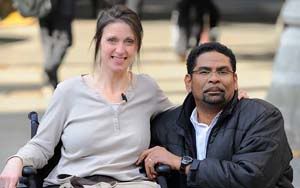
Debbie Purdy and Omar Puente
Last month, Baroness Warnock commented that people with Alzheimer's disease were "wasting people's lives" and stated there was "nothing wrong" with people being helped to die for the sake of society. Conservative MP Nadine Dorries recognised what she was speaking about: the Telegraph article I link to above quotes her as saying: "I believe it is extremely irresponsible and unnerving for someone in Baroness Warnock's position to put forward arguments in favour of euthanasia for those who suffer from dementia and other neurological illnesses" (my italics).

Warnock's original article was called "A Duty to Die?" This has been the title of various ethical articles, but I believe she chose that title as a reference to a joint statement by Archbishop of Canterbury Dr Rowan Williams, Archbishop of Westminster Cardinal Cormac Murphy O' Connor and Chief Rabbi Dr Jonathan Sacks in a letter to the Times bemoaning the legislative drift from the right to die for the terminally ill to their "duty to die".

Where Mrs Purdy seems to be coming from is that whereas para. 1 of the Suicide Act 1961 abrogates "the rule of law whereby it is a crime for a person to commit suicide", para 2 states:
(1)A person who aids, abets, counsels or procures the suicide of another, or an attempt by another to commit suicide, shall be liable on conviction on indictment to imprisonment for a term not exceeding fourteen years.

(2)If on the trial of an indictment for murder or manslaughter it is proved that the accused aided, abetted, counselled or procured the suicide of the person in question, the jury may find him guilty of that offence.
However, her campaign is a strange one, given that of the more than 100 Britons who have been helped to die at the Dignitas clinic in Switzerland, there has not been one prosecution. She has stated that she feels her husband Omar Puente "would be more likely to face prosecution as he is black and a foreigner".

Joshua Rozenberg refers to the case of MS Diane Pretty, who failed to get a legal guarantee that her husband would not be prosecuted for helping her to die. In her case, the European Court of Human Rights decided that it could not interfere with Great Britain's applying para 2 of the Suicide Act. However, What Purdy and Puente are asking for is a technical clarification of the circumstances in which the DPP would bring a prosecution against Mr Puente for assisting in some as yet undefined way with Mrs Purdy's suicide. Mr Rozenberg's interpretation of the outcome of the judicial review was: "wait and see".

neighbours complained about Dignitas bringing people back to a flat in this block to die, photo courtesy of the Daily TelegraphDignitas has long been the subject of controversy. It assisted people to die in a flat in a residential block until the neighbours complained, and then moved to a hotel room, from which it was also barred. It then resorted to handing over barbiturates to people who wanted to kill themselves in a car park; they would then drive to another car park and swallow the drugs. From 1998-2007, it killed over 750 non-Swiss, charging £3,000 ($5,000) each.

Personally, I think Baroness Warnock made her "duty to die" statement in the knowledge that this case was coming up. I think, too, that the soap Emmerdale will be running a suicide storyline off the back of this - with an abusive husband representing a certain sector of society, and the wife urging him to go on taking the pills standing in for the "enlightened" campaigners who would like to free the aged, ill and sad from oppression.

But how enlightened are these campaigners? Warnock refers to the cost to the NHS - ie taxpayers' money, a hot topic in recent months - in keeping the incapacitated alive. On the other side of the mortal coil, the Royal College of Obstetrics and Gynaecology referred to the "financial hardship in the bringing up of the sickest babies" in its proposal for infanticide. And even Dignity in Dying, for Pete's sake (formerly the Voluntary Euthanasia Society) has criticised Dignitas for its proposal to help people with chronic mental health problems (a drain on society's resources?) to die. Indeed, commenting on the Purdy case, John Smeaton, head of SPUC, referred to the propensity of people with multiple sclerosis to suffer depression and suicidal thoughts.

There is a version of a famous poem about how a populace allowed itself to sleepwalk into calamity on the New England Holocaust Memorial:
Pastor Martin Niemöller, from a Time cover - click to see the story of 'first they came for...'
They came first for the Communists,
and I didn't speak up because I wasn't a Communist.
Then they came for the Jews,
and I didn't speak up because I wasn't a Jew.
Then they came for the trade unionists,
and I didn't speak up because I wasn't a trade unionist.
Then they came for the Catholics,
and I didn't speak up because I was a Protestant.
Then they came for me,
and by that time no one was left to speak up.

On 9/11, "spin doctor" Jo Moore sent an infamous email to members of the British government stating that it was "a good day to bury bad news". I would suggest that this whole dismal season is time to watch out for the rights of all those who cannot assert them for themselves for whatever reason, or who are being manipulated by a cynical politically-correct media machine as a way to hammer a eugenic wedge once more into the fabric of society. Alternatively, one day if you become less able you might find it is a good day to bury you, and there will be nobody left to hear your voice.

Tuesday, October 7, 2008

society's evolution to the financial

click to see nine gene discoveries that could change your life

The Language of the Genes
Steve Jones
Flamingo 1994
pp 347

I was tucking into my curried tatties - Maxima is half-Irish and can do anything with the dChris Evansamn things - minding my own business this evening, when the author of a book I'm reading came on Chris Evans' Radio 2 show.
Steve Jones is an evolutionary biologist who started his career as a malacologist (snail-ologist), and I was given his book, The Language of the Genes, by a friend who expected to enjoy watching me explode in righteous inarticulacy. Instead, I was riveted.

Steve JonesMost geneticists have to deal with the fact that their science had inauspicious origins, and Jones deals with this frankly in the introduction. Social Darwinism was founded largely by liberal Victorian thinker Herbert Spencer and Francis Galton, Charles Darwin's half-cousin. Through Galton's influence, the movement - which mortified Darwin - morphed from letting evolution carry on without interferences such as healthcare and philanthropy into eugenics, which was very much involved with interfering with evolution. The pseudo-science served as a cover for figures from all parts of the political spectrum who were concerned for the future of the white race - whatever race is apart from societally-determined constructs based on arbitrary classification of features, mainly (but not exclusively) skin colour. Jones relates an anecdote towards the end of the book:



In 1987, a secretary from Virginia sued her employer for discriminating against her because she was black. She lost the case on the grounds that, as she had red hair, she must be white. She then worked for a black employer and, undaunted by her earlier experience, sued her for discriminating against her as she was white. She lost again: the court found that she could not be white as she went to a black school.
That all this was not consumed in the obscene flames of the Holocaust is borne out by both last century's history and recent events.

In Fatal Misconception: the Struggle to control World Population, Matthew Connelly relates how de Gaulle thought that post-war France had become too "Latinized", and approved a scheme for "an infusion of Nordic blood" which included persuading German prisoners of war to marry French women.

A row has recently erupted about a pioneer of eugenics being featured on stamps. As the Dailclick to read Gerald Warner's blogy Telegraph's Gerald Warner points out, Marie Stopes was an ardent admirer of Hitler, supported compulsory sterilisation of the "diseased", and formulated the slogan "Joyful and Deliberate Motherhood, A Safe Light in our Racial Darkness". (Her organisation was called the Society for Constructive Birth Control and Racial Progress; it bears no links to Marie Stopes International - this was born when the Population Services Family Planning Programme bought the rights to her name from the British Eugenics Society post-WWII.)

Combining a lightness of touch with the depth of his knowledge of his subject, Jones then proceeds to take us on a journey of discovery that passes through biochemistry, virology, palaeopathology, discrimination, the evolution of evolutionary science and gender politics. Indeed, three-quarters of my family would be pleased to read in the chapter on The Battle of the Sexes that "We are still not certain why males exist; and why, if we must have them at all, nature needs so many...the frank answer is that...although the reason for the existence of women is obvious enough, nobody has any real idea what point there is in being a man."

I would answer that one in the words of Genesis 1:27: "So God created man in his own image...male and female he created them". And for good reason: as Jones points out, the product of sexual reproduction is a genetically unique individual every time, whereas in asexual reproduction, an unfavourable mutation is there to stay. Jones, however is not a man of faith; but, while he holds some strong views on creationism, he is not an ideologue like, say, Richard Dawkins - he refers to Biblical quotes several times in his arguments; although he might not believe in the historical books, he unashamedly points to their feasibility.

Another point at which he diverges from Dawkins is in his refusal to reduce human beings to disposable vehicles for genetic material; he states: "To make too much of the shared DNA of chimps and humans is to be in danger of falling into...foolishness. Humans, uniquely, are what they think." Later, in case the point hasn't got through, he refers to Dawkins' book The Blind Watchmaker (which is a parody of William Paley's parable of finding a watch in a field and realising that it must have been, as we might say, "intelligently designed"):

There is a danger of seeing the whole of biology as evidence of natural selection. Just as Paley saw the complexity of life as an argument for God, there is a neo-Paleyism which plagues evolutionary theory. It argues that all animal structure is well adapted so that it must always reflect the action of selection...Some feel that the Darwinian theory drives the whole of evolution from the order of the bases in DNA to the shape of the nose...Another beauty - and an important weakness - of the theory of evolution by natural selection is that with a little imagination it is possible to come up with an explanation of anything...Many are fantasy, but because they invoke events which took place in the distant past they are almost impossible to refute.
The Language of the Genes concludes with a reflection on the dangers of making too much of the genome, in which he refers (in 1994) to a movement "to add to the Universal Declaration of Human Rights a statement that everyone has the right to a genetic constitution which has not been changed without their consent". In 2004, the Vatican's International Theological Commission released Communion and Stewardship: Human Persons Created in the Image of God, which was published under the auspices of Cardinal Josef Ratzinger, now Pope Benedict XVI. Paragraph 91 states:


"The uniqueness of each human person, in part constituted by his biogenetic characteristics and developed through nurture and growth, belongs intrinsically to him [sic] and cannot be instrumentalized in order to improve some of these characteristics...Such modifications would in any case violate the freedom of future persons who had no part in decisions that determine his bodily structure and characteristics in a significant and possibly irreversible way [but] gene therapy...would help the individual to give full expression to his real identity which is blocked by a defective gene.
By 2006, the best that UNESCO's Universal Declaration on Bioethics and Human Rights had come up with was that "The impact of life sciences on future generations, including on their genetic constitution, should be given due regard".

Much of this section might have been written last week, instead of over a decade ago. Jones tells us of an insurance company that offered to test a couple's unborn child for the gene for cystic fibrosis "only if the parents agreed to have an abortion if the test was positive". Mass testing might (then) cost £50,000 per person for every case of cystic fibrosis "prevented" - "much less than the cost of lifelong treatment" (although he notes that a hundred times more people may carry the gene than have the disease). This is the logic, I think, that will increasingly inform the policy-making of government, health and insurance agencies should the present financial crisis turn out to be a long-term phenomenon. Which poses the question: are people with disabilities, health-needs or a probability of developing these in the light of their genome seen to have any intrinsic value? (Jones: "Is a damaged gene a pre-existing condition?")

The reason that Jones was appearing on Evans' show was down to his statement - fleshed out in an article he has written for the Telegraph - amplifying TLG's conclusion that "it looks as if the human mutation rate is on its way down...we are almost at the end of [our] evolutionary road". So the eugenicists have failed in their bids to control human evolution - but the ethical dilemmas we inherited from them have not left us, they have merely mutated from the racial sphere to the financial.

click to read how healthcare for the sick and disabled is already under threat