In the wake of the terrible massacre in Norway, UK Prime Minister David Cameron has ordered a review of the far-right, which is apparently to include the English Defence League.
Things had been going so well: the Daily Mail and Daily Telegraph had dropped the "far" tag and started referring to the EDL merely as "right-wing" (although given its predominabtly blue-collar membership a survey of union membership among EDL members might be instructive). The organisation has been steadily winning a better reputation among the police-forces with whom it consults and cooperates before and during demos; and, almost alone, it has shone a searchlight into the shadier corners of Blackpool, where 14-year old Cheryl Downes was groomed for sex, murdered and disemboweled by kebab-shop owners.
Describing other people's politics is often relative to where you are standing. Remember the fall of the Soviet empire, when Russian communists suddenly became right-wingers, in a clear indication that the term was indication of disapproval as opposed to marking a sea-change in Politburo direction?
I am not against having a debate about the role of right-wing politics in Europe, because debate is necessary for a healthy democracy. I just wonder how we will fare at the hands of, say, the BBC, which at its most centrist is the cultural wing of the Labour Party and extends leftwards from there, to depths from where anywhere to the right of Ed Balls must seem an awfully long way away.
For the record, I wish to quote what Anders Breivik said about the English Defence League. It would turn my stomach to provide a link to the maniac's document - if you need to find it, you can hardly avoid it. On page 1436, he states:
The EDL are in fact anti-racist, anti-fascist and anti-Nazi. They even have many members and leaders with non-European background (African and Asian). They have worked so hard, and continue to work hard, to keep National Socialists out of the organization, but yet they are strategically labeled as racist-fascist-Nazi-monsters by the multiculturalist authorities. The EDL, although having noble intentions are in fact dangerously naïve. EDL and KT [the murderer's putative organisation] principles can never be reconciled as we are miles apart ideologically AND organizationally. The EDL even rejects taking a stand against multiculturalism which proves that they are even more naïve than Sarkozy, Merkel and Cameron who have all admitted that multiculturalism has been a failure and a disaster for Europe.
...The EDL, on the other hand, IS a democratic movement. They STILL believe that the democratic system can solve Britain’s problems… This is why the EDL harshly condemns any and all revolutionary conservative movements that employ terror as a tool, such as the KT. And this is why, we, the KT view the EDL as naïve fools, wasting all their energy monkeyscreaming to deaf ears while they should instead have focused on means and methods that are meaningful in regards to achieving true political change, in regards to tearing down the multiculturalist regime known as Britain.
I feel sullied for just having quoted him - join the dots yourself. And while you do, if you are in any way counter-hegemonic - a member of the EDL, perhaps, or a home-schooling parent, or a maverick trades-union member who won't tow the party line - keep listening for the midnight knock on the door.
May God be with those who died in Norway, and those left behind.
I'm not a footie fan, but since you can't escape the World Cup this summer, I thought I'd theme my monthly Top Ten around football on the principle that if you can't beat 'em...So enjoy the music, and if you want to go a little deeper, click the flags to find more aboutthe national teams!
So the first song is published in solidarity with people who, like me, don't understand others' obsession with the world's most popular sport! This was originally sung by Robin Hall and Jimmy MacGregor, from Glasgow and Edinburgh respectively - home to Celtic, Rangers, Partick Thistle, Hearts and Hibernian; but Australian Anglophile Rolf Harris has updated it slightly.
The World Cup's being held in South Africa, which was teetering on race war not long ago with the murder of Eugene Terreblanche; but, as the Telegraph's Rian Malan notes, "when South Africans pull together, we can move mountains". Here, one of the country's greatest exports, vocal group Ladysmith Black Mombazo, repatriate The Lion Sleeps Tonight (sung by, among others, The Tokens, Karl Denver and Tight Fit) in the original Zulu Mbube, "Lion".
The official World Cup song, Waving Flag, is an inspiring piece about the ability of the "beautiful game" to bring peoples together. It would seem patronising were it not sung by K'Naan, a Somalian artist who has seen at first hand the violence that ensues when countries fail. This is the official video:
The phrase "beautiful game" was coined by Sir Edison Arantes do Nascimento, otherwise known as the Brazilian and international player Pelé, arguably the most famous football player ever. Brazil's the only team to have played in every world cup and, as five-time winners, has a small galaxy of stars on its strip. Unsurprisingly, they're the bookies' favourite to win this time. Look at the photo of actors and footballing deities on this video of the theme to Escape to Victory and you'll see Pelé kneeling in the front row, third from the right. He's depicted as being badly injured by a Nazi player in the film, which I wonder is a reference to his being targeted for fouling by Bulgarian players in the 1966 world cup.
An essential part of football is the terrace chant, the simplest being just rhyming phrases, eg "ooh-ah, CantonAAAAH!" More complex ones are taken from songs, for example the first line of Guantanamera, in the form of, eg, "one David Beckham, there's only one David Beckham..." It works with Becks' name and ones like Graham Souness, but it just doesn't work with names like Marc-Antoine Fortuné. Anyway, here's the original from Los Paraguayos:
But this is all very male-orientated. What about the women? Lots of women do, of course, watch football - and there's an ongoing debate as to whether men and women should play football together - but it remains a male-dominated sport. So I hope you ladies out there suffering from footie-fatigue HAVE SOME FUN!
Despite rumours of countries being prepared to bribe referees, one hopes that the Olympian ideal of sport still pertains in football. Whitney Houston sang about that ideal perfectly in the Albert Hammond/John Bettis composition One Moment in Time, and it's covered here by Charice Pempengco, the Filipina singer who shot to fame through YouTube. Watch that space.
Tracks by footballers and other team members are traditionally associated with players gargling with gravel before attempting to deliver an approximation of music, so it was a revelation when England's erstwhile Swedish manager, Sven-Göran Eriksson, compiled a collection of classical pieces. This is Malcom Arnold's English Dances Set 2, performed by the Texas Honors Wind Ensemble.
Do England have a chance of winning a second World Cup? Just as any boxer in a ring has a "fighter's chance" of winning, I'd say that England has a chance of winning merely by its presence in the World Cup. It's a pity that injury has ruled David Beckham out of playing, but Fabio Capello's still an inspirational manager and has a great team behind him. As the advert says, "maybe, just maybe..."
I've just finished watching the Eurovision Song Contest, held in Norway's Telenor Stadium in Bærum, a suburb of its capital, Oslo. My own predictions panned - the Netherlands never made it through to the final, and Spain ended fifteenth, despite having the opportunity to play twice due to a stage-invasion during their first attempt that I'd thought was part of the act.
It was very enjoyable, and I'd like to bring you what I thought was the best of the music - while looking at shadows that sometimes seemed to be lurking behind the industrial joy of what I'd hoped would be an uncomplicated night.
I don't think I'm applying for a stay in the Tower of London for saying that Britain's entry in this year's Eurovision was even a bigger turkey than Turkey (who did field one of their biggest bands, but disappointed with the absence of the usual belly-dancing act).
Manga (the band) is big in Turkey, and other countries were fielding artists who had written songs, recorded albums, and one even owned a recording studio. It would be churlish to suggest that the ten points given to Josh Debovie - landing us in 25th place out of 25 - it has to be said that the song is something I'd expect to hear Redcoats welcoming holidaymakers to Butlins with, or in a quondam Gang Show; I suspect it's not even sophisticated enough to make it into a franchise movie of the High School Musical genre. Maxima said it all when she commented that Jedward would have made a better job.
Last year's show in Russia was, it seems in a different world where lavish productions were possible - although news broke today that the expense may have put paid to Russia's chances of televising the World Cup. Given that the Russian show pulled Eurovision back from death by public apathy due to a tainted voting system, it was sad to hear booing when Russia was awarded points for Peter Nalitch and Friends' Lost and Forgotten, as the tale of lost love with a penitential streak was a really good piece and, like many songs this year, of an above average standard. Here they are at the finals of the contest to find a song for Russia:
Not that we were the only turkey, and this was when one started to see shadows. Giorgos Alkaios and Friends did a taverna-style dance routine that was pretty minimalistic in terms of costumes and background. Perhaps this was at the best as denizens of the northern Euro area, not least Germans, might have ended up asking their politicians what exactly they were contemplating mortgaging their future to. Likewise, the Serbian entry's chorus was "Balkan, Balkan, the Balkans!" and I wondered if the singer realised he was singing about the land the generation above him had gone a-slaughtering through.
On the other hand, Ukraine's Alyosha was much more demure live than in her video. An environmentalist from the land of Ukraine, she made no fatuous references to polar bears or ice but looked (in part) at the relationship between video games and the violence sweeping the world. This is from an earlier BBC recording showcasing the songs for Europe:
There was certainly no shortage of songs in English - but if this is an indication of the language's global ascendancy, in Eurovision terms the victory is a pyrrhic one. The cultural diversity that the European Broadcasting Union was set up to celebrate has lost out. Interestingly, however, Armenia's Eva Rivas got round this by sining, in English, a song themed around the country's national symbol, the apricot, which gives its colour to the flag's lower bar. There was a flurry of protest in Turkey about possible references to its genocide of Armenians in 1915, but it's not clear that the lyrics bear that out, and in any case Turkey gave Armenia 6 points. Rivas performs the song here in the second semi-final - note Jivan Gasparyan playing duduk (traditional Armenian flute) - at 83, he's the oldest musician to accompany a Eurovision act on stage.
Not to be outdone in the field of eminent musicians, Albania's Juliana Pasha was accompanied by Italian violinist Olen Cesari, who had recently played for the Pope, in It's all about you. Like a cross between Debbie Harry and Maddy Prior, she perhaps hoped that by going barefoot on stage she could emulate Sandy Shaw's winning performance with Puppet on a String in 1967. But even Cesari's heroic efforts couldn't rescue the song from its own mediocrity, which might have been disguised somewhat had it been sung in Albanian: so, as a hint of this was featured in the introduction to Oslo 10, I feel unashamed of bringing you Ms Shaw!
Later that year, Israel would launch a pre-emptive attack on Egypt fuelled by proof that the country was, with the help of all Israels neighbours and Arab lands from further afield, going to do the dirty first. If, in gaining Gaza, Israel is an occupying country, then it's probably the most benign occupier since Cyrus the Great. The burden of this is apparent in much of modern Israeli culture, and its 2010 Eurovision entry - sung, refreshingly, in the country's own language - is no exception: I think it'll take a while to unravel all the meanings contained, onion-like, in Milim, a love-song sung by Harel Skaat:
Belarus' entry, Butterflies, again sung in English, could have been a bit more rehearsed for pronunciation, and given that Eurovision posts translations of every song online would have lost nothing fron being sung in Belarusian or Russian. But they had an innovation towards the end of the song that announcer Graham Norton said would have every girl under eight shouting "I want one!" The video was great, but seeing how they represented the special effects live was sublime:
Ireland must have been another country watching Greece very closely, because my Irish friends tell me that back home they're not pleased that, after making such sacrifices in personal and work terms to mitigate the financial crisis in Europe, they are having to watch richer countries prepare to bail out Greece, which helped found the EU's instability by cooking the books in the first place. But Niamh Kavanagh, who won Eurovision for the Emerald Isle in 1993 - again an established star singing a song strong enough to storm any hit parade - gave a first-class performance with It's for You, another song this year looking beyond the precarious value of things to deeper truths.
Given that Belgium's French- and Flemish-speaking populations could be on the track for a messy divorce, it was perhaps wise of Tom Dice to sing Me and My Guitar in English. More than this, however, it was significant that a man alone on the stage with a guitar, helped just a little by strings on a backing track, should come 6th. Is this an indication that Europeans are rejecting showiness, or even setting their faces towards a new austerity?
Poor old Portugal has never won the contest despite, like Ireland, consistently sending great singers with great songs: this year Filipa Azevedo with a sentiment I know well: Há Dias Assim - It's One of those Days.
http://www.youtube.com/watch?v=vQI4X4BL4Qw
Germany's Lena was this year's Eurovision, with a throwaway pop tune that will be sung by young girls across the continent because it will annoy parents, especially Dads. Consider: "I went everywhere for you/I even did my hair for you/I bought new underwear that’s blue...I even painted my toenails for you..." 'Nuff said. The 19-year-old's enthusiastically-applied lipstick reminded me of what we used to call in quondam Glasgow "Jubilee lips" after the colour the ghastly iced concoction of that name, composed mostly of deep red food-colouring, would leave one's kisser.
The scoring was interesting: after French premier Nicholas Sarkozy humiliated Germany's Angela Merkel with a table-thumping tantrum over differences in how to overcome the crisis precipitated by Greece, the two countries awarded each other a lukewarm 3 points in the scoring; while Greece, having vented its spleen at having been found out in its own murderous tantrum, gave Germany, its potential financial saviour, 2 points in return for 8.
That said, the result was that a delighted girl won a prestigious contest, and this was her night. Here she is receiving the trophy:
On Saturday we'll have the Eurovision Song Contest. My dearest wish is that it will produce some vintage cheese, but time goes on. But time goes on too quickly, sometimes: when I saw the Ukranian video (which does not by any means represent how the country will be represented on the night) I thought: I don't want my daughters to see this.
These are my two picks for Saturday night. First, the Netherlands entry: Sieneke with Ik Ben Verliefd (Sha-La-Lie):
And secondly, the Spanish entry - Daniel Diges, with Algo Pequeñito:
Don't get me wrong, I hope Britain wins; but I also hope rain will stop, Bank Holiday Mondays will be sunny, and Scotland will win the World Cup. Some things just aren't going to happen. But Britain will not win Eurovision again until, like other countries, we ask our best musical talent if they have the will to enter. Or else until our political masters put aside their mantras of being edgy and diverse, and listen to the wisdom of Beatles manager Brian Epstein: "the next big thing is a good tune".
That having been said, may the best act win - and if not the best, the cheesiest!
When I first heard of Eyjafjallajökull, I was of the same opinion as Richard Normington, in that it seemed more like a keyboard malfunction than anything else. But things started to look sinister when continent-sized areas in the course of the volcanic cloud, containing putative glass fragments that could cause high-flying jet engines to close down, were declared no-fly areas on the basis of computer models that are as diconnected from reality as the politicians who made decisions solely on their predictions, without reference to reality.
Thankfully, we can fly again. As it happens, I don't fly that often, but even in the circumference of the world I inhabit the no-fly orders had consequences, from a colleague who couldn't make it to work, through a fellow worshipper whose presence had been required to validate church accounts, to a friend who had been badly injured abroad and whose family was deprived even longer of her presence.
I thought that I'd like to dedicate this month's Top Ten to the theme of flying, because the cooling of Eyjafjallajökull's ire coincides with a crucial time in our country's history, when we decide which political parties will suppress the innate instinct to fly as high as we can, and which will not only nurture it but ensure that we lift up our peers in so doing.
10 - Would you like to fly?
The 5th Dimension, who were inducted into the Vocal Group Hall of Fame in 2002, are famous for taking the song Age of Aquarius from Hair to the top spot. My favourite song of theirs is Jimmy Webb's Up, Up and Away which, whenever I hear it, brings memories of childhood awakenings to the song being played on the ever-present radio.
9 - Wild Swan
In my opinion, Tony Clarkin - the bearded guitarist in the video - deserves to be hailed alongside Pete Townshend as arranger par excellence of his own lyrics with insight and sensitivity worthy of Berlioz. The video, telling the story of a son who simultaneously hero-worships his crusading father and feels the overarching need for his presence beside him, comes to mind because of a wild swan that's been making the news in Cambridge. Called Mr Asbo, he's been accused of harassing and even overturning boats on Cambridge's river Cam. A recent film aired on BBC 1's The One Show displayed the swan at his most aggressive - but the BBC has been accused - in a video that I recommend you watch - of goading the swan's mate into leaving her nest in order to see off a canoe that was ordered to go dangerously close to it for the sake of "car-crach TV". Given that Asbo, according to vet and Telegraph blogger Pete Wedderburn, has actually had his cygnets killed by "passers by", I'm not surprised he's mardy. The state hasn't killed my children, but arrogates to itself ever greater powers to brainwash them according to abusive agendas that seem to have no other purpose than to "rub the Right's nose in diversity". I feel as angry as Mr Asbo.
8 - Volare
In February 1991, I had an interview in London and arranged to stay with a friend in Brixton. The interview went well but later in the day came the news that 10 Downing Street had been attacked by an IRA mortar. Mobile phones being as rare as they were huge in those days, I found myself having to wait in one of the lines that trailed from every phone box. My friend explained, "I think everybody's phoning home to say they're ok". That evening, he. I and another friend went to his flat in the middle of Brixton High Street, kicking up the snow that had emptied the thoroughfare of cars. Since all of us had lived for some time in Italy, this is the song we sung:
7 - Flying machines in pieces
This is such a video of James Taylor's Fire and Rain, which is about, in part, the suicide of his fried Suzanne Schnerr, whom he'd met while both of them were hospitalised for addiction to heroin. "Flying Machine" was the name of his first band; but the line "flying machines in pieces on the ground" is about more than the breakup of a musical unit, but I wonder if. when Taylor sings "Susanne the plans they made put an end to you" (my italics) he's running from the couple's co-dependency. But. counterintuitively, I can see a better case for the use of prescribed pharmaceutical diamorphine (heroin) under strictly controlled than for legalisation of cannabis, because we cannot halt supply of heroin within our own borders. The thing is, cannabis-legalisation site UKCIA (offline at the moment) has made a case for legalisation of weed as a gateway to legalisation of just about every illegal drug. Having been a drugs-worker, I hope this never happens; I'd hate the misery I saw in the needle-exchange to become commonplace.
In 2002, Nick Clegg, now leader of the Liberal Democrats, wrote an article about a school trip to Germany:
A boy called Adrian started it. He shouted from the back of the coach, "we own your country, we won the war". Other boys tittered. One put a finger to his upper lip - the traditional British schoolyard designation for Hitler's moustache - threw his arm out in a Nazi salute, and goose-stepped down the bus aisle. Soon there was a cascade of sneering jokes, most delivered in 'Allo 'Allo German accents.
I was shocked by his ignorance. Britain was indeed on the winning side of WWII and was a major and heroic player, but to baldly assert that "Britain won the war" is as disingenuous as is baldly asserting that Germany lost it. We must never forget the key role that Britain played in defeating the Nazis (who were by no means synonymous with Germany), but it is salutary to remember that, on the eve of the Pearl Harbour attacks on December 7, 1941, Britain was losing, and Winston Churchill had authorised the distribution of bayonets with a poster campaign saying "at least you can take one with you".
As it happens, historian Colin Heaton concluded in Night Fighters that had Britain been conquered, America would have eventually had confront Hitler's contagious monomania - but Britain would have been a much changed place. Thank God that never happened.
Rector Pellegrina wasn't quite convinced when I confessed a guilty pleasure in heavy metal. I hope this video about the Battle of Britain - by an RAF composed of 10% Polish pilotry - will give her cause to reconsider.
5 - Flying Sorcery
Al Stewart merged his twin loves of flying and history for this song from his classic Year of the Cat album. An article on his website explains the context of the lyrics, from Amy Johnson, to the biplanes called Faith, Hope and Charity which defended the George Cross island of Malta and the double meaning of the Flying Circus. Enjoy this footage of him singing in Cambridge's namesake town in Massachussetts.
4 - Flying for me
John Denver was a founder of the "citizen in space" project and was even considered for the honour, but was pipped at the post by Christa McAuliffe, a secondary/high school teacher who had worked in Washington DC before moving to Concord in New Hampshire. Denver recollected that on the morning of January 28 1986 his adopted son Zac phoned him and told him to put the TV on, any station: there was the Challenger disaster, inspiring him to write:
She was flying for me She was flying for every one She was flying to see a brighter day for each and every one She gave us her light She gave us her spirit and all she can be She was flying for me
3 - Abide in His shadow for life
We had a discussion on hymns at our annual church meeting recently - you know the sort, that can quickly degenerate into an "old=Good" vs "New=Better" argument all too quickly. It was left to our venerable and classically-trained organist to point out that while traditions need maintaining, some new hymns are beautiful. One of these, I think, is Fr Michael Joncas' On Eagles' Wings, based on Psalm 91 and Isaiah 40:31. Given that John Smeaton, director of the Society for the Protection of Unborn Children, has been correcting misleading Government advice on sexual education and abortion, I think it's appropriate that this video of the song performed by Angela Birkhead-Flight is dedicated to "all babies who have died prematurely due to abortion, miscarriage or other means".
2 - Icarus
Although Kansas sung a song specifically about Icarus, another one - Carry On my Wayward son - seems to be a more meditative take on the sublime fall of the son of Daedalus, the craftsman who gave a ball of yarn to Ariadne so she could guide herself and Theseus out of the Minotaur's labyrinth, although there appear to be elements of Plato's allegory of the cave threaded through. Father and son, of course, strapped on wings of wax and feathers in order to escape the wrath of King Minos of Crete, but Icarus ignored a warning from Daedalus not to fly too high, and plunged into the sea when the heat melted the wax. It's often taken as a cautionary tale warning those who are over-ambitious of the danger of flying too high on constructions that should have been kept closer to earth. Just so, blogger Benedict White tells us that Gordon Brown was warned when Labour took power in 1997 that his proposed financial reforms would lead to a systemic banking failure. But he flew too high...
1 - The final attack
In the film The Dambusters we see a disconsolate crew looking back at the Möhne Dam on the Ruhr, feeling they have failed: then, suddenly, under the attacks that have been visited upon it, the dam's wall collapses and water floods out.
In reality, the crew pulling away was the fourth wave: a fifth Lancaster dropped its bouncing bomb upon the already-disintegrating wall to consolidate the damage.
This election has been a long, unpredictable slog. The Conservative party's first wave of attacks upon Gordon Brown, who is damming up the British people in a politically-correct prison where the silent majority of law-abiding people are punished the most, might be said to have happened shortly after his unelected accession to the Labour throne in June 2007, when he bottled out of an election he might have won when the David Cameron and George Osborne announced that only millionaires would pay inheritance tax. The second wave was a tsunami of activism, fuelled by both shoe-leather and blogs, cat-herding organised by the long-suffering Eric Pickles, the third a series of defeats inflicted upon the Prime Minister,Chancellor of the Exchequer and miscellaneous Ministers by David Cameron, George Osbourne and the Shadow front-bench team. The fourth is happening now, as candidates, activists and supporters work like Trojans to bring about change necessary for national survival.
The fifth wave is coming shortly, even as the dam walls crumble - illustrated by Gordon Brown's disastrous labelling of his own supporter, Gillian Duffy, as a "bigot" because she challenged the prevailing orthodoxy on immigration, imposed on people like her by rich ideologues who do not have to live in areas like hers. The fifth wave of attacks upon Labour's walls of infamy will come on May 6 and be inflicted by the voters, and I pray that the power-houses of willful negligence are swept away by the resulting inundation.
Old Holborn is an independent libertarian candidate for Cambridge who dresses as Guy Fawkes, including mask.
The reason I mention him is that he appears to have been the first person to have posted a picture of the city's Labour candidate Daniel Zeichner performing a revolting gesture during a debate at the Cambridge Union. Zeichner, giving his opinion of the Polish Law and Justice Party with which the Conservative Party in Europe is allied by giving a Nazi salute. This is yet another instance of the blogosphere leading the news agenda.
Zeichner referred to the incident at a hustings ran by the Stop the War Coalition at which Old Holborn was also present and - according to minutes - found it necessary to point out very early on, in a conversation that was heading in sinister directions, "80% of Conservative MPs and 40% of Labour MPs are signed up as friends of Israel. Only Israel has more Jewish MPs than Britain." The hustings was also attended by Julian Huppert of the Liberal Democrats, Martin Booth of Cambridge Socialists, Simon Sedgewick-Jell (representing Tony Juniper) of the Green Party and Daniel Zeichner. Conservative candidate Nicholas Hillman was speaking at another engagement.
Zeichner was lucky enough, given his recent history, to arrive right at the end of the section of questions on Israel and the Palestinian Authority. Soon after, though, the following bizarre exchange took place between Zeichner and a photographer standing at the front:
Photo: How does Daniel Zeichner square what he says with his membership of Labour Friends of Israel? DZ I’m not a member. Photo I have information that you are. DZ I’m not. Member of public to photographer: “sit down!” Photo I withdraw my previous comment, as my knowledge is not sufficient – what did you mean by “forces outside our control?” DZ My Dad was born in the 1930s in Vienna, and was driven out by the Nazis. I’m not Jewish, but my Dad lived in Vienna at a time when it was wise to get out. The photographer turned to the seats and said "I want to reassure everybody I’m not anti-Jewish", then he and the member of the public who’d told him to sit down accused each other of wanting to direct the meeting before the Chair regained control.
All of the minutes are very interesting - click to read them here. I'm sure that anybody who wants to take issue with them can refer to the video of the event filmed by Cambridge Socialists.
In the Draughty Old Fen last night, I didn't see many more houses in the dark than the number of people who are usually out on a Saturday evening leave behind. The reason I was looking was that Earth Hour took place from 8.30-9.30, during which people who believe the theory that the activities of humankind are causing our climate to change were told to leave their lights off to make "a call to stand up, to take responsibility, to get involved and lead the way towards a sustainable future".
If so, Earth Hour fell at the first hurdle. In the words of the Daily Telegraph:
Even if power stations are turned off, the upsurge in turning the lights back on one hour later will require power stations that can fire up quickly like oil and coal.
Energy experts said it could therefore result in an increase in carbon emissions "rendering all good intentions useless at a flick of a switch".
But WWF said the campaign was about raising awareness and saving energy in the long term, rather than a short-term fix.
Any chess player understands the principle of making an immediate sacrifice for a future gain, but if the WWF (World Wildlife Foundation) and its Green fellow-travellers were really into long-term thinking, they wouldn't have campaigned for decades against the cleanest proven source of large amounts of energy around: nuclear power. Because the protests of a tiny minority of vocal vested interests were heeded, Great Britain now has only 19 nuclear reactors, and the new generation, commissioned only last year, won't be ready to fire up until 2020, if there aren't yet more objections.
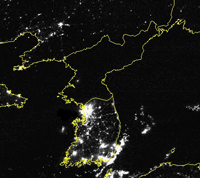
I was interested to see a night-time satellite image of South Korea taken during Earth Hour on Anthony Watts' Watts up with That blog, showing the country's towns as lit up as on any other night, while on the north of the border a Communist dark age still exists.
I am concerned that in our still-free societies there are those who would like to lead us into such a dark age and, although little that justice-and-peace types say surprises me, I was shocked last year to be invited to "fast" from the lights in my house from Ash Wednesday so that I and my family would appreciate God's gift of light on Easter Sunday. Was it coincidence that this was also the time of the changeover from real lightbulbs that have served us well from Edison's time to the pathetically poor energy-saving bulbs that don't even light up when you switch them on?
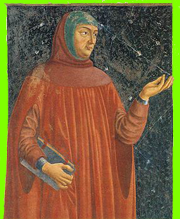
Bertrand Russell, in his A History of Western Philosophy, doesn't link Petrarch with the phrase, but places the conception of the modern era at the Renaissance (in a chapter entitled The eclipse of the Papacy), and vents his anger on the Fathers of the Church, with special bile reserved for St Augustine, whose death was roughly contemporaneous with the final decomposition of the Roman Empire:
It is strange that the last men of intellectual eminence before the dark ages were concerned, not with saving civilization or expelling the barbarians or reforming the abuses of the administration, but with preaching the merit of virginity and the damnation of unbaptized infants. Seeing that these were the preoccupations that the Church handed on to the converted barbarians, it is no wonder that the succeeding age surpassed almost all other fully historical periods in cruelty and superstition.
(It should be said that Russell lets his prejudice - and western ethnocentrism - trump his erudition here: one could say that the rump Roman Empire, as the Byzantine civilisation centred on Constantinople, survived happily into mid-Renaissance times until destroyed by Sultan Mehmed's Ottoman army in 1453).
But how dark were the dark ages? If the past is another country, we would be ethnocentric ourselves to blame other civilisations for not undergoing the explosion of progress that has marked ours since, say, the invention of the steam locomotive by William Murdoch and James Watt in the late 18th century. But the early medieval period was not short of eureka moments in many fields.
In 1150, for example, the Knights Templar sowed the seeds of modern capitalism by inventing the "letter of credit" - which would evolve into the cheque - that allowed a pilgim to deposit funds in one place and redeem them in another far away.
Shortly afterwards, the arbitrary power of absolute monarchs was dealt a fatal blow by the Magna Carta, signed in England in 1215. Around the same time, Franciscan Friar Roger Bacon would initiate the scientific method by making a hypothesis, testing it and then refining it further if it passed the test; if not, moving on to another hypothesis - one of his experiments was on the ancient remedy of ground willow bark to treat fever and pain, which would be built on by French chemist Charles Frederic Gerhardt to synthesize Aspirin in 1853.
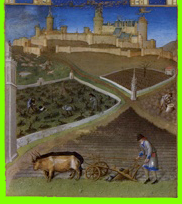
Underpinning both of these - and much else - was the novel addition of wheels to the plough in the 6th century (above), allowing it to increase in weight and till more and heavier soil, allowing populations to increase and create more pressure for innovation.
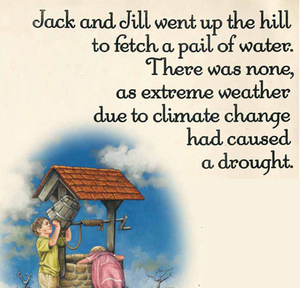
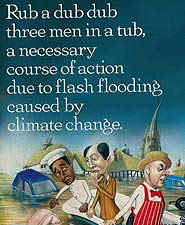
But now we have a movement of groups of activists, supposedly informed by science, to stifle any innovation that they do not approve of, and allow only research that saves the appearances of anthropogenic climate change/global warming, which is being shoved down the throats of our children and young people in education and leisure. Case in point: energy secretary Ed Milliband commissioned adverts promoting the theory of anthropogenic climate change as fact and using nursery-rhymes to do so, only (thank God) to have them banned by the Advertising Standards Authority on he grounds that the clear implications of the ads weren't supported by science. Milliband had obviously studied his Jesuit educational theory: "give me the child for his first seven years..."; but at least the lights are still on in the ASA.
The Telegraph's Murray Wardrop reports that earth is said to be entering a new period of geological time due to the acts of humankind having an indelible effect on old Gaia. Eugene F Stoermer of the University of Michigan's Center for Great Lakes and Aquatic Sciences places the handover from the present Holocene era to the putative Anthropocene at the end of the 18th century and "James Watt's invention of the steam engine" - William Murdoch obviously having gone the same way as Alfred Wallace, Friedrich Engels and woogie.
Last night I marked Earth Hour by having every light in the house switched on - except Maxima's room, as our cat Magus was curled up sleeping on her duvet. It was no mere excercise in contrarianism - we need a symbol of our desire to keep the lights on in science, and in our hard-won freedoms of conscience and expression.
To allow a Dark Age of fluffy earth-worship to be imposed would necessitate abuses of knowledge and wisdom that would have horrified the followers of the Old Religions whose torches were finally extinguished by the so-called Enlightenment's genteel patrician oppression; and the population control measures needed for proposed swingeing cuts in carbon dioxide (a gas necessary for all life on earth) would make the Holocaust look like a practice session. And guess what? It wouldn't be the lives of hand-wringing liberal intellectuals that were demanded.
The nomenclature of the feast of mothers leaves me confused. I'm not sure if the difference between Mothers' Day and Mothering Sunday is that one is American and the other British, or one secular and the other religious.
Anybody who has had the privilege of knowing members of the Filipino community in Cambridge (the city's St Philip Howard's church has been called Little Manila) will know that they celebrate Mother's Day as religiously as any Holiday of Obligation. It leaves you with a renewed appreciation of the feast; but it's a time of year that can bring as much upset as it can peace.
Mothers' Day at St Gallicus was a happy affair that saw the first reading subsequently dramatised preceded by the children, which ended up with the teenage daughter of a two-year-old Pharaoh rescuing a plastic Moses from a basket. At the close of ther service all the mothers in the congregation were presented with little potted primroses, with enough left over so that everybody was abe to leave with one.
At home, Minora had put a lamb joint in the oven, and Minima prepared the veg while I divested the table of a week's accretion of books, homework and other things we'd decided we needed to keep but couldn't quite remember why.
A sobering note came during dinner when we heard on the radio news of Children's Commissioner Dr Maggie Atkinson's cynically-timed announcement that murdered toddler Jamie Bulger's killers Jon Venables and Robert Thomson, both 10 at the time of the slaughter, would never have stood trial today under the change she wishes to implement to the minimum age of criminal responsibility, raising it from 10 to 12.
Calling Dr Atkinson's comments twisted and insensitive, Jamie's mother, Denise Fergus, called for an apology to be followed by her either jumping or being pushed from the post. Doubtlessly we'll hear more of the affair, as Mrs Fergus is due to meet Justice Secretary Jack Straw this week to discuss Venables' arrest, rumoured to be connected with child pornography.
Minima volunteered to wash up, while Maxima and I listened to Johnny Walker's Sounds of the 70s show on Radio 2, then we got the laptop out for something that, to be honest, I think we'd been avoiding.
Aled Jones came to fame as a choirboy singing most famously Walking in the Air from The Snowman, and now, as well as pursuing a singing career, presents Christian programmes on TV and radio. On this morning's Good Morning Sunday Mothers' Day special, he'd interviewed Kate McCann, whose daughter Madeleine was taken from the family's holiday apartment in Portugal.
At times her voice seemed on the verge of cracking - and we were close to tears - as Kate told how she thinks of Madeleine every day and prays for her captors: her Parish Priest has given her a key to the church. She said that "every day is the same without Madeleine", so Mothers' Day brings both comfort and pain. When Jones asked her if she could forgive the people who took her daughter, she paused then said "I don't know". It was, I think, the most searingly honest point in an excoriating interview.
I was pleasantly surprised that the programme emphasized the religious aspect of Mothers' Day - Jones played Taverner's Hymn to the Mother of God, performed by the Choir of St George's Chapel, and an unexpected treat: Hymn to Mary by Beth Nielsen Chapman. It was interesting that Taverner composed his hymn in remembrance of his mother: this was the motivation for Paul McCartney's Let it Be, with the meditation on a line of the Prayer to Our Lady of Lourdes - priez pour ceux qui aiment et sont partis (pray for those who love and are parted) - in the middle two verses.
And the best prayer that I can send up to the mother of God on this day for Denise Fergus and Kate McCann and their families concerns the situation which many mothers have to face as regards their children, albeit hopefully in happier circumstances: pray for those who love and are parted.
Alexander the Great's death in 323BC has been attributed to different causes like poisoning, pancreatitis or typhoid, but what seems to have hastened his demise was an extended drinking session, part of which may have been a celebration in honour of Dyonysus, the god of (among other things) wine. If so, he was by no means its last casualty.
The earliest alcoholic drinks seem to have been fermented independently from rice in China, and from both barley and (of course) grapes in the Middle East, around the seventh millennium BC. Mesopotamian clay-tablet art shows people drinking from vats with straws, and beer was so important to the pharoahs that jars of it would be interred with them.
What I hope is beyond debate is that, while alcohol can be a social lubricant, it has its dangers, and the border between the two is by no means well delineated.
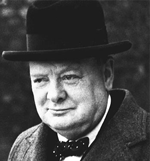
Therefore I'm astounded that it's still possible to buy 500ml cans of 9% lager, when the customer base for this beverage is known to be almost exclusively people who are drinking problematically, and sometimes also using it as an adjunct to prescribed or illicit drugs. For example, even though one such can of Carlsberg Special Brew would put one over the Government's recommended drinking levels for the whole day, the website still maintains that the mixture was concocted in 1950 for Winston Churchill: but I'm not aware of the old warhorse having a taste for paint-stripper in syrup - and that's before one considers "cheap cider...that has never seen an apple".
So I'm not totally surprised that the Tesco store in Cambridge's Mill Road has been refused an alcohol licence - because the thoroughfare has, over the years, accrued a name for alcohol-related problems. The thing is, the problems aren't due to people getting loaded up on Cabernet Sauvignon or some such: those small independent traders lionised by the No Mill Road Tesco campaign that have a licence to sell alcohol sell, without exception, Winston's ruin and cidre sans pommes.
That's not the only problem - I can think of a top-selling beer and an equally popular spirit that, in the substance misuse treatment trade, share the unfortunate epithet "wife-beater juice" because of the interactions between the various higher alcohols and certain personality types. (I say "certain" because many people can have a pint of one with the other as a chaser and remain calm as a cucumber.)
The response of the present Government to all this is to propose measures to enforce a minimum price on alcohol, which is good in the sense that selling booze as a loss-leader is asking for trouble.
But what would complement this, I think, would be an approach in which banning loss-leading alcohol would be one of three branches. Given that strong lagers and ciders are big sellers in deprived areas, councils could be given powers to shut down shops who refuse to reduce the proportion of strong cheap drinks to more conventional alcohol - I have seen shops whose main stock in trade was poor old boys desperate to stop the shakes in the morning.
And lastly, we - whatever our political colour - need to foster a resurgence in responsibility. To get blind drunk every weekend for a prolonged period of time is not unknown to lead to Korsakoff's psychosis; how about raising the price of drinks in supermarkets but allowing it to come down in pubs, where it's in the self-interest of a cadre of social drinkers to tell an individual when he's had enough?
Serial toasts are raised to many things, but I think poor old Dionysus, were he real, would say in the majority of cases, "not in my name".
Geneviève de Fontenay, septuagenarian grande-dame of Miss France, is living proof that there can be honour in the much-maligned art of appreciating the beauty of the human form.
Beauty pageants have been with us since pre-Christian Europe, when Roman and Germanic traditions independently decided that an attractive young woman be chosen to represent in comprehensible form the burgeoning spring - what became known as the May Queen, part of many a town and village ceremony, even as socialists coveted May-Day and then, as the contestants in Miss London School of Economics found, proclaimed the ceremonies like those of the day's original tenants an "objectification of women".
While the pagan overseers of May-Day may have had a better grasp of the procreative aspect of sex than the unitive one, the author of Song of Songs displays no such impediment as we see carnal and romantic combine to turn the marriage-bed into a gateway to the numinous:
While the king was at his table, my perfume spread its fragrance.
My lover is to me a sachet of myrrh resting between my breasts.
My lover is to me a cluster of henna blossoms from the vineyards of En Gedi.
How beautiful you are, my darling! Oh, how beautiful! Your eyes are doves.
How handsome you are, my lover! Oh, how charming! And our bed is verdant.
The beams of our house are cedars; our rafters are firs.
What's notable about Songs is that the Beloved is no beauty-queen; taking the work as an erotic poem (one of several interpretations), she initially tries to turn the Lover's eyes away from her because she has been put to work in the fields - "Do not stare at me because I am...darkened by the sun."
Mme de Fontenay enforces strict rules regarding the conduct of Miss France contestants before, during and after the contest: entrants must be single, nulliparous, not have posed for nude or scantily-clad pictures; and a successful Miss France must not pose for such pictures for five years after gaining the title.
In an article about the crisis surrounding the present incumbent, First News' Gavin Mortimer revisits a controversy 2008 incumbent Valérie Bègue of Réunion, he says, "was ordered to stand down by de Fontenay on account of a series of titillating photos, one of which involved licking yogurt off a ledge. Bègue refused, saying that she was fully clothed in the photos and hadn't authorised their publication. De Fontenay was forced to back off when she was accused in some quarters of racism."
Mortimer, a class-war conspiracy theorist, is showing an aversion to traditional values in his selectivity with the facts: despite its cherished laïcité, there is a strong core of Judaeo-Christian values in France. The photo that endangered Bègue's crown did so not because she was in a swimming-pool wearing a skimpy bikini: the clinching factor was that she was in a "crucified" position, floating on a wooden cross. I refrain from posting the pic due to its blasphemy rather than any salaciousness.
The present unhappiness to dog Miss France by association is the publication of nude photos of Miss Paris 2010, Kelly Bochenko, in scandal-sheet Entrevue. The 23-year-old stated that they had been taken either by or for a former boyfriend four years ago and she'd forgotten about them.
Actually, I don't have too much of a problem swallowing the last statement. In a toxic practice called sexting, young people - predominantly females - send lewd and sometimes downright pornographic photographs of themselves to males or even to their peers by mobile phone, something that is planting a harvest of tears for the future as these photos find their way onto the internet where they await the subjects' parents or even children should the models be hubristic enough to achieve anything. Yet explicit "lads' mags" whose publishers resist every effort to relegate them to the top shelf continue to brainwash young men into moulding young women into sex-objects, as all the while feminists fix their fury on beauty contests which, while staunch guardians like Geneviève de Fontenay stand watch, are much more about a celebration of grace and elegance than that much-used misnomer into which all the varied subtleties of sexuality are crushed, "just sex".
While in Songs Lover and Beloved embrace and encircle in a double-helix dance, sex without commitment splinters us into so many shards we end up out of control and easy meat for predators who feed on the vulnerable.
Perhaps Bochenko's boyfriend was jealous of her incipient success? The wonderful passage of Songs about love being as strong as death has a scorpions' sting in the tail that Andrew Jones indicates with his point "sexual love is so powerful that it needs to be sealed": "its jealousy [is] unyielding as the grave. It burns like blazing fire, like a mighty flame." I just wonder whether her forgetting about the skin-pix represents a genuine lapse of memory or a need for a psychological fig-leaf.
The First Post's Gavin Mortimer has a depressing prediction for Bochenko and too many women who have been softened up by the abusive phenomena of sexting and lads' mags, with an insight into their raison d'être: "the photos will do her no harm should she wish to go into the porn business". That's nothing to sing about. I hope Kelly Bochenko can put this behind her, whatever the gutter press's ambitions for her, and reaches for the heights she is capable of.
Writing about the Treaty of Versailles in his 1994 masterwork Diplomacy, Henry Kissinger summed up why the 2009 Copenhagen United Nations Climate Change Conference was flawed from the start:
it is almost always a mistake for heads of state to undertake the details of a negotiation. They are then obliged to master specifics normally handled bu their foreign offices and are deflected onto subjects more appropriate to their subordinates, while being kept from issues only heads of states can resolve. Since no one without a well-developed ego reaches the highest office, compromise is difficult and deadlocks are dangerous. With the domestic positions of the interlocutors so often dependent on at least the semblance of success, negotiations more often concentrate on obscuring differences than they do on dealing with the essence of a problem.
Graced by the likes of Leonardo diCaprio, Daryl Hannah and Helena Christensen, Copenhagen 2009 has barely limped past the finishing tape despite the supporters of both Gordon Brown and Barack Obama claiming that their man struggled alone to achieve a compromise against the odds. Labour snob-for-hire Polly Toynbee captured the air of frustration with ordinary people whom the Establishment has gone out of its way to gag:
Most leaders in Copenhagen were out ahead of their people. Most understand the crisis better than those they represent, promising more sacrifice than their citizens are yet ready to accept – while no doubt praying for some miraculous technological escape.
Sudanese diplomat Lumumba Stanislaus Di-Aping spoke for the G77 group of the corrupt régimes of developing countries who had brought their begging-bowls to the Baltic when he asked what Obama would tell his daughters about his part in abandoning their Kenyan relatives, then developed the tired old theme comparing of climate-change "deniers" to scum who say that the Holocaust never happened by saying that Copenhagen spelled "incineration" for Africa and was comparable to the Nazis "sending six million Jews into the furnace". (Sweden's chief negotiator Anders Turesson called the reference "utterly despicable" - maybe the country's still ashamed of its politicians' initial apathy towards the Aftonbladet blood libel scandal.)
Shortly before the conference began, UK Prime Minister Gordon Brown had a swipe at people who believe the hard science showing that changes in climate are not predominantly due to the actions of humankind, calling us "flat earthers", and the attacks have not let up. In Lord Christopher Monckton's case the attack was not metaphorical; as reported in the tap, the anthropogenic climate-change sceptic had the correct paperwork to enter the conference but was excluded, then was assaulted by a Danish policeman despite having followed St John's Ambulance recommendations to keep his hands in his pockets; he had turned his back and was walking away when he was knocked unconscious.
Other attacks are more insidious. The First Post's resident psychoanalyst, Coline Covington, spoke of Sarah Palin, as a typical climate change "denier", as having the sort of narcissism seen in small children; displaying her membership of the Richard Dawkins school of rhetoric, she sets up her straw man at the start of the article by talking about Nick Griffin, leader of the neo-nazi BNP. She says, referring to Palin and by implication to many of us, "Climate change threatens our narcissistic omnipotence. Deniers do not want anyone else telling them they can't drive large cars or run two refrigerators...This is a mentality resembling the narcissism of small children who want to hold onto their illusion of omnipotence and control over mother."
What Covington is referring to is more than the sexually-deviant scribblings of Sigmund Freud that imprisoned many children in their abusers' houses by interpreting their reports as libidinous fantasies; she's talking about narcissistic personality disorder, in a disappointing confirmation of the hostility of many psychiatric professionals towards people with personality disorders, and their over-readiness to inflict the diagnostic sentence upon people of whom they disapprove.
Copenhagen has failed, and that's disappointing because, for opposition against the thermofascists to turn to an effective resistance movement, we need to know exactly what we're resisting. The reason it's failed is precisely as Kissinger identified, that there were too many powerful egos with long memories at the conference.
Case in point: there will be consequences for Obama's humiliating China for not meeting Kyoto targets in the presence of that country's Prime Minister: had he watched Li Yu's 2007 Dam Street(Hong Yan) he would have learned the lesson you can find in the most basic internet guide for doing business with Chinese people - "Never allow your protagonist to lose face, and try not to lose face yourself." Heads of state like Britain's Gordon Brown, the US's Barack Obama and India's Manmohan Singh would have done better to send their foreign ministers or, even better, senior diplomats. Is Henry Kissinger still working?
The Draughty Old Fen, Cambridgeshire, United Kingdom
An incurable old cyber-grumpy, I like good music, cats, bacon sarnies and anything to do with Terry Wogan. Raining on ideological parades is the cream in the coffee.
Latest 50 educational institutions accessing Tales From a Draughty Old Fen:
No endorsement by the institutions listed below of the website or any post is intended to be inferred. Click an organisation's link to go to its website.


















 Alexander the Great's death in 323BC has been attributed to different causes like poisoning, pancreatitis or typhoid, but what seems to have hastened his demise was an extended drinking session, part of which may have been a celebration in honour of Dyonysus, the god of (among other things) wine. If so, he was by no means its last casualty.
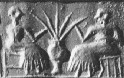 and beer was so important to the pharoahs that jars of it would be interred with them.

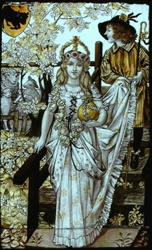 May Queen, part of many a town and village ceremony, even as socialists coveted May-Day and then, as the contestants in

 dered to stand down by de Fontenay on account of a series of titillating photos, one of which involved licking yogurt off a ledge. Bègue refused, saying that she was fully clothed in the photos and hadn't authorised their publication. De Fontenay was forced to back off when she was accused in some quarters of racism
 The present unhappiness to dog Miss France by association is the publication of nude photos of Miss Paris 2010, Kelly Bochenko, in scandal-sheet Entrevue. The 23-year-old stated that they had been taken either by or for a former boyfriend four years ago and she'd forgotten about them.



 mblance of success, negotiations more often concentrate on obscuring differences than they do on dealing with the essence of a problem.


 an't drive large cars or run two refrigerators...This is a mentality resembling the narcissism of small children who want to hold onto their illusion of omnipotence and control over mother.