The reason I'm worried is that we've been here before, in the form of a campaign to keep Tesco out of Mill Road that, while ultimately a failure, released more heat than light in its frantic efforts to exclude an outlet popular with blue-collar workers from the "multicultural" area. It was alleged that shops would close down like dominos should Tesco's open a store there, while in reality far fewer shops have become vacant than you might expect in an economic downturn. You can still buy Rosaries, wigs, hard-core porn and second-hand firearms on Mill Road, just as you could before Tesco opened, just as you will be able to after Sainsbury's opens.
I'm also worried that, as mentioned, the present university Chancellor is Prince Philip, Duke of Edinburgh, husband of the Queen, father to the heir to the throne and grandfather to Prince William, who was recently spectacularly married to the Duchess of Cambridge, aka Kate Middleton. A less desirable claim to fame is that, since 1997, he has been accused of the manslaughter (at least) of Dodi al-Fayed and Princess Diana (right) by Mohammed al-Fayed, whose latest effort in his crusade was the Cannes-panned documentary about the infamous crash in a Paris tunnel, Unlawful Killing. Will Mr Al-Fayyed be able to resist a bit of troublemaking should the Prince's stepping down prove a popular subject in the media?
Mr Arain is Kenyan, which gives him something in common with Barrack Obama, whose father came from the country. A low point of Mr Obama's presidency, which I do not ascribe to him personally, was when former president Jimmy Carter decried Obama's detractors as racists. I hope supporters of both candidates will pull back from using the race-card in this campaign.
Perusing the list of Cambridge University Chancellors evinces an absence of names that are not Norman/Anglo-Saxon in origin. It could be that, since the University attracts the most talented people from all points on the globe, the time for a Chancellor from outside this island nation is overdue. But any candidate should have as his/her first priority the good of the University and its contribution to Cambridge and East Anglia; if there's a place for one shopkeeper to try to stop another from opening nearby, the Chancellorship is not that place. It could be that, in the interest of the University and the region which reaps its benefits, the installation of a Chancellor from further afield may have to be overdue a little longer.
In the UK we have a political gossip-blogger and cartoonist called Guido Fawkes, occasionally also known as former City trader Paul Staines.
Basically a political version of Hedda Hopper, Fawkes has excelled even himself in poor taste with a cartoon of Conservative MP David Ruffley who, apparently having become depressed in the wake of the expenses scandal, fell in front of a train on Thursday 17 June, in what the police described as a "non-suspicious incident". The cartoon depicts Mr Ruffley telling a doctor that the cause of the incident was because "they wouldn't let me claim for rope or pills".
I don't care what party Ruffley belongs to, and this is not the time to discuss what he may or may not stand accused of. Some years ago I was lucky enough to survive a suicide attempt, and can recognise Staines' scratchings as an attention-junkie waving histrionically as he kicks against a sea of apathy.
Hollywood Actress Joan Fontaine once sent Hedda Hopper a dead skunk with the note "I stink, and so do you". Staines stinks like a dead dog. I must ask political columnists and bloggers to give him the attention he has indicated that he deserves: none.
And I hope better days lie ahead for David Ruffley.
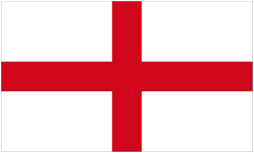
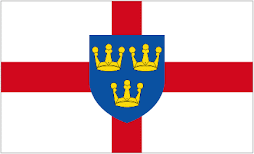
I'm not a footie fan, but since you can't escape the World Cup this summer, I thought I'd theme my monthly Top Ten around football on the principle that if you can't beat 'em...So enjoy the music, and if you want to go a little deeper, click the flags to find more aboutthe national teams!
So the first song is published in solidarity with people who, like me, don't understand others' obsession with the world's most popular sport! This was originally sung by Robin Hall and Jimmy MacGregor, from Glasgow and Edinburgh respectively - home to Celtic, Rangers, Partick Thistle, Hearts and Hibernian; but Australian Anglophile Rolf Harris has updated it slightly.
The World Cup's being held in South Africa, which was teetering on race war not long ago with the murder of Eugene Terreblanche; but, as the Telegraph's Rian Malan notes, "when South Africans pull together, we can move mountains". Here, one of the country's greatest exports, vocal group Ladysmith Black Mombazo, repatriate The Lion Sleeps Tonight (sung by, among others, The Tokens, Karl Denver and Tight Fit) in the original Zulu Mbube, "Lion".
The official World Cup song, Waving Flag, is an inspiring piece about the ability of the "beautiful game" to bring peoples together. It would seem patronising were it not sung by K'Naan, a Somalian artist who has seen at first hand the violence that ensues when countries fail. This is the official video:
The phrase "beautiful game" was coined by Sir Edison Arantes do Nascimento, otherwise known as the Brazilian and international player Pelé, arguably the most famous football player ever. Brazil's the only team to have played in every world cup and, as five-time winners, has a small galaxy of stars on its strip. Unsurprisingly, they're the bookies' favourite to win this time. Look at the photo of actors and footballing deities on this video of the theme to Escape to Victory and you'll see Pelé kneeling in the front row, third from the right. He's depicted as being badly injured by a Nazi player in the film, which I wonder is a reference to his being targeted for fouling by Bulgarian players in the 1966 world cup.
An essential part of football is the terrace chant, the simplest being just rhyming phrases, eg "ooh-ah, CantonAAAAH!" More complex ones are taken from songs, for example the first line of Guantanamera, in the form of, eg, "one David Beckham, there's only one David Beckham..." It works with Becks' name and ones like Graham Souness, but it just doesn't work with names like Marc-Antoine Fortuné. Anyway, here's the original from Los Paraguayos:
But this is all very male-orientated. What about the women? Lots of women do, of course, watch football - and there's an ongoing debate as to whether men and women should play football together - but it remains a male-dominated sport. So I hope you ladies out there suffering from footie-fatigue HAVE SOME FUN!
Despite rumours of countries being prepared to bribe referees, one hopes that the Olympian ideal of sport still pertains in football. Whitney Houston sang about that ideal perfectly in the Albert Hammond/John Bettis composition One Moment in Time, and it's covered here by Charice Pempengco, the Filipina singer who shot to fame through YouTube. Watch that space.
Tracks by footballers and other team members are traditionally associated with players gargling with gravel before attempting to deliver an approximation of music, so it was a revelation when England's erstwhile Swedish manager, Sven-Göran Eriksson, compiled a collection of classical pieces. This is Malcom Arnold's English Dances Set 2, performed by the Texas Honors Wind Ensemble.
Do England have a chance of winning a second World Cup? Just as any boxer in a ring has a "fighter's chance" of winning, I'd say that England has a chance of winning merely by its presence in the World Cup. It's a pity that injury has ruled David Beckham out of playing, but Fabio Capello's still an inspirational manager and has a great team behind him. As the advert says, "maybe, just maybe..."
I've just finished watching the Eurovision Song Contest, held in Norway's Telenor Stadium in Bærum, a suburb of its capital, Oslo. My own predictions panned - the Netherlands never made it through to the final, and Spain ended fifteenth, despite having the opportunity to play twice due to a stage-invasion during their first attempt that I'd thought was part of the act.
It was very enjoyable, and I'd like to bring you what I thought was the best of the music - while looking at shadows that sometimes seemed to be lurking behind the industrial joy of what I'd hoped would be an uncomplicated night.
I don't think I'm applying for a stay in the Tower of London for saying that Britain's entry in this year's Eurovision was even a bigger turkey than Turkey (who did field one of their biggest bands, but disappointed with the absence of the usual belly-dancing act).
Manga (the band) is big in Turkey, and other countries were fielding artists who had written songs, recorded albums, and one even owned a recording studio. It would be churlish to suggest that the ten points given to Josh Debovie - landing us in 25th place out of 25 - it has to be said that the song is something I'd expect to hear Redcoats welcoming holidaymakers to Butlins with, or in a quondam Gang Show; I suspect it's not even sophisticated enough to make it into a franchise movie of the High School Musical genre. Maxima said it all when she commented that Jedward would have made a better job.
Last year's show in Russia was, it seems in a different world where lavish productions were possible - although news broke today that the expense may have put paid to Russia's chances of televising the World Cup. Given that the Russian show pulled Eurovision back from death by public apathy due to a tainted voting system, it was sad to hear booing when Russia was awarded points for Peter Nalitch and Friends' Lost and Forgotten, as the tale of lost love with a penitential streak was a really good piece and, like many songs this year, of an above average standard. Here they are at the finals of the contest to find a song for Russia:
Not that we were the only turkey, and this was when one started to see shadows. Giorgos Alkaios and Friends did a taverna-style dance routine that was pretty minimalistic in terms of costumes and background. Perhaps this was at the best as denizens of the northern Euro area, not least Germans, might have ended up asking their politicians what exactly they were contemplating mortgaging their future to. Likewise, the Serbian entry's chorus was "Balkan, Balkan, the Balkans!" and I wondered if the singer realised he was singing about the land the generation above him had gone a-slaughtering through.
On the other hand, Ukraine's Alyosha was much more demure live than in her video. An environmentalist from the land of Ukraine, she made no fatuous references to polar bears or ice but looked (in part) at the relationship between video games and the violence sweeping the world. This is from an earlier BBC recording showcasing the songs for Europe:
There was certainly no shortage of songs in English - but if this is an indication of the language's global ascendancy, in Eurovision terms the victory is a pyrrhic one. The cultural diversity that the European Broadcasting Union was set up to celebrate has lost out. Interestingly, however, Armenia's Eva Rivas got round this by sining, in English, a song themed around the country's national symbol, the apricot, which gives its colour to the flag's lower bar. There was a flurry of protest in Turkey about possible references to its genocide of Armenians in 1915, but it's not clear that the lyrics bear that out, and in any case Turkey gave Armenia 6 points. Rivas performs the song here in the second semi-final - note Jivan Gasparyan playing duduk (traditional Armenian flute) - at 83, he's the oldest musician to accompany a Eurovision act on stage.
Not to be outdone in the field of eminent musicians, Albania's Juliana Pasha was accompanied by Italian violinist Olen Cesari, who had recently played for the Pope, in It's all about you. Like a cross between Debbie Harry and Maddy Prior, she perhaps hoped that by going barefoot on stage she could emulate Sandy Shaw's winning performance with Puppet on a String in 1967. But even Cesari's heroic efforts couldn't rescue the song from its own mediocrity, which might have been disguised somewhat had it been sung in Albanian: so, as a hint of this was featured in the introduction to Oslo 10, I feel unashamed of bringing you Ms Shaw!
Later that year, Israel would launch a pre-emptive attack on Egypt fuelled by proof that the country was, with the help of all Israels neighbours and Arab lands from further afield, going to do the dirty first. If, in gaining Gaza, Israel is an occupying country, then it's probably the most benign occupier since Cyrus the Great. The burden of this is apparent in much of modern Israeli culture, and its 2010 Eurovision entry - sung, refreshingly, in the country's own language - is no exception: I think it'll take a while to unravel all the meanings contained, onion-like, in Milim, a love-song sung by Harel Skaat:
Belarus' entry, Butterflies, again sung in English, could have been a bit more rehearsed for pronunciation, and given that Eurovision posts translations of every song online would have lost nothing fron being sung in Belarusian or Russian. But they had an innovation towards the end of the song that announcer Graham Norton said would have every girl under eight shouting "I want one!" The video was great, but seeing how they represented the special effects live was sublime:
Ireland must have been another country watching Greece very closely, because my Irish friends tell me that back home they're not pleased that, after making such sacrifices in personal and work terms to mitigate the financial crisis in Europe, they are having to watch richer countries prepare to bail out Greece, which helped found the EU's instability by cooking the books in the first place. But Niamh Kavanagh, who won Eurovision for the Emerald Isle in 1993 - again an established star singing a song strong enough to storm any hit parade - gave a first-class performance with It's for You, another song this year looking beyond the precarious value of things to deeper truths.
Given that Belgium's French- and Flemish-speaking populations could be on the track for a messy divorce, it was perhaps wise of Tom Dice to sing Me and My Guitar in English. More than this, however, it was significant that a man alone on the stage with a guitar, helped just a little by strings on a backing track, should come 6th. Is this an indication that Europeans are rejecting showiness, or even setting their faces towards a new austerity?
Poor old Portugal has never won the contest despite, like Ireland, consistently sending great singers with great songs: this year Filipa Azevedo with a sentiment I know well: Há Dias Assim - It's One of those Days.
http://www.youtube.com/watch?v=vQI4X4BL4Qw
Germany's Lena was this year's Eurovision, with a throwaway pop tune that will be sung by young girls across the continent because it will annoy parents, especially Dads. Consider: "I went everywhere for you/I even did my hair for you/I bought new underwear that’s blue...I even painted my toenails for you..." 'Nuff said. The 19-year-old's enthusiastically-applied lipstick reminded me of what we used to call in quondam Glasgow "Jubilee lips" after the colour the ghastly iced concoction of that name, composed mostly of deep red food-colouring, would leave one's kisser.
The scoring was interesting: after French premier Nicholas Sarkozy humiliated Germany's Angela Merkel with a table-thumping tantrum over differences in how to overcome the crisis precipitated by Greece, the two countries awarded each other a lukewarm 3 points in the scoring; while Greece, having vented its spleen at having been found out in its own murderous tantrum, gave Germany, its potential financial saviour, 2 points in return for 8.
That said, the result was that a delighted girl won a prestigious contest, and this was her night. Here she is receiving the trophy:
Since the Willow Walker folded, a lot has been happening behind the scenes to re-establish a written-word service for homeless and vulnerably housed people in Cambridge and the people who serve them.
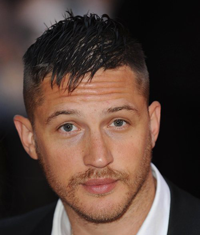
This culminated earlier in the year with the formation of Flack, a company registered as a social enterprise which aims to launch its first issue next spring. Their patron, Tom Hardy, is coming to the Cambridge Arts Picturehouse on Sunday 9 May to answer questions after a special screeening of his controversial film Bronson in aid of the charity. I don't think I can do better than give you the press release, with hyperlinks and pics.
Hollywood star Tom Hardy will be coming to Cambridge on Sunday, May 9 for a special screening of his film Bronson. The showing, in the Cambridge Arts Picturehouse at 1pm, will be followed by a question-and-answer session with the actor.
The screening is to support the newly-formed charity Flack, which was set up to replace and expand the services to homeless/vulnerably housed people and the agencies who serve them by the magazine Willow Walker. The first editor of the Willow Walker, named after a Cambridge hostel run by English Churches Housing Group, was Alexander Masters, whose book Stuart: A Life Backwards was turned into a film starring Hardy.
The editor of Flack, which hopes to launch its new magazine in Spring 2011, is Kirsten Lavers, whose tenure at the Willow Walker as Alexander Masters’ successor saw the formation of a business called Cambridge Link-Up, run by present and formerly homeless people, and Street Voices, whose double CD Both Sides of the Tracks was released in March 2009 to critical acclaim.
Tom Hardy, patron of Flack, has successfully battled an alcohol and crack addiction he acquired after the box-office failure of Star Trek Nemesis, in which he played Praetor Shinzon, an evil clone of Captain Jean Luc Picard; the film was released at the same time as Harry Potter and the Chamber of Secrets, the James Bond film Die another Day and Lord of the Rings: The Two Towers.
Bronson is the story of prisoner Charles Bronson, who changed his name from Michael Peterson to give him a harder image as a bare-knuckle fighter in London. First arrested in 1974 for armed robbery, he has spent just four months as a free man since, and is still imprisoned. He has been called "the most violent prisoner in Britain", and has been moved 120 times. Hardy famously did 2500 press-ups a day for five weeks before filming started to bulk up for the role. His other films include Black Hawk Down, Minotaur and RocknRolla, while he has also starred in TV productions such as Band of Brothers, Wuthering Heights and The Virgin Queen.
My friends are sometimes surprised to hear that I'm a John Denver fan. I disagree with some of - actually most of - his political views, but then again I like some of John Lennon's early 1970s music, even though the man was by then an even nuttier fruitcake than he was in the Beatles.
What I admire is Denver's adherence to his principles, and one of the first things I point out when talking about him is that while rock and pop oligarchs were recording their histrionic singles Do they Know it's Christmas? and We are the World, Denver was frequently in African countries with his sleeves rolled up. Denver had wanted to be on We are the World, but the single's producer, Ken Kragen, who also managed Harry Chapin and Kenny Rogers, commented that "several [un-named] people felt his image would hurt the credibility of the recording as a pop/rock anthem. I didn't agree".
Similarly, while Earth Day, instituted in 1970, is a once-a-year "awareness-raising exercise" for some, the title of Denver's 1990 song for the occasion summed up his typically uncompromising view: Celebrate Earth day (Every Day).
In other words, if you think that the activities of humankind are causing global warming, you can use your God-given free will to give up your car, stop flying in aeroplanes (admittedly not hard to do recently with the help of Icelandic volcanoes) and power your household entirely with wind-turbines. Every day.
"Between 75 and 85 percent of all the species of living animals will be extinct" by 1995 - Earth Day founder, the late Gaylord Nelson.
The world will be "…eleven degrees colder in the year 2000. This is about twice what it would take to put us into an ice age," Kenneth Watt, speaking at Swarthmore University, April 19, 1970.
"By 1985, air pollution will have reduced the amount of sunlight reaching earth by one half…" Life magazine, January 1970.
Gaylord Nelson, aside from founding Earth Day, is also famous for instituting hearings as a Senator on the safety of the contraceptive pill which required US manufacturers to place a statement as to the Pill's safety on its boxes, the first time in the country that an adverse effect had to be listed on a pharmaceutical product, and I can't fault him for that. But I think it gives an insight into the way his mind worked that no women were invited to testify, and this gave "reproductive rights" advocate Alice Wolfson a chance to stake her place in the dimming light.
Another peek into his psyche is given by his insistence that Earth Day should be held on April 22. This was against the likes of, say, anthropologist Margaret Mead, who called Earth Day "the first holy day which transcends all national borders", that the feast should be held on the Spring Equinox, which falls around a month earlier. Students of history will note, therefore, the significance of the first Earth Day being held on 22 April 1970: it was, according to the Grergorian Calendar, the hundredth anniversary of the birth of Vladimir Ilyich Ulyanov - Lenin.
Sadly, in the aftermath of John Denver's last flight, I am not aware of eminent left-leaning figures who believe in showing what they think about the environment at least as much through how they live as what they say. I suspect they were sidelined from public life by the same sort of ideologues who decided Denver was not appropriate for We are the World.
So we are left with a holyday of obligation for a monster who murdered and oppressed his own people before directing his baleful gaze towards Russia's neighbours, thence to the rest of the world both in his own right and through his unintended heir Stalin, who muscled in on his legacy the same way that Alice Wolfson piggybacked on the unsuspecting Gaylord Nelson. Thus do each generation's self-elected prophets hand a Pandora's box to those who will empty its contents upon the silent majority of the next.
The nomenclature of the feast of mothers leaves me confused. I'm not sure if the difference between Mothers' Day and Mothering Sunday is that one is American and the other British, or one secular and the other religious.
Anybody who has had the privilege of knowing members of the Filipino community in Cambridge (the city's St Philip Howard's church has been called Little Manila) will know that they celebrate Mother's Day as religiously as any Holiday of Obligation. It leaves you with a renewed appreciation of the feast; but it's a time of year that can bring as much upset as it can peace.
Mothers' Day at St Gallicus was a happy affair that saw the first reading subsequently dramatised preceded by the children, which ended up with the teenage daughter of a two-year-old Pharaoh rescuing a plastic Moses from a basket. At the close of ther service all the mothers in the congregation were presented with little potted primroses, with enough left over so that everybody was abe to leave with one.
At home, Minora had put a lamb joint in the oven, and Minima prepared the veg while I divested the table of a week's accretion of books, homework and other things we'd decided we needed to keep but couldn't quite remember why.
A sobering note came during dinner when we heard on the radio news of Children's Commissioner Dr Maggie Atkinson's cynically-timed announcement that murdered toddler Jamie Bulger's killers Jon Venables and Robert Thomson, both 10 at the time of the slaughter, would never have stood trial today under the change she wishes to implement to the minimum age of criminal responsibility, raising it from 10 to 12.
Calling Dr Atkinson's comments twisted and insensitive, Jamie's mother, Denise Fergus, called for an apology to be followed by her either jumping or being pushed from the post. Doubtlessly we'll hear more of the affair, as Mrs Fergus is due to meet Justice Secretary Jack Straw this week to discuss Venables' arrest, rumoured to be connected with child pornography.
Minima volunteered to wash up, while Maxima and I listened to Johnny Walker's Sounds of the 70s show on Radio 2, then we got the laptop out for something that, to be honest, I think we'd been avoiding.
Aled Jones came to fame as a choirboy singing most famously Walking in the Air from The Snowman, and now, as well as pursuing a singing career, presents Christian programmes on TV and radio. On this morning's Good Morning Sunday Mothers' Day special, he'd interviewed Kate McCann, whose daughter Madeleine was taken from the family's holiday apartment in Portugal.
At times her voice seemed on the verge of cracking - and we were close to tears - as Kate told how she thinks of Madeleine every day and prays for her captors: her Parish Priest has given her a key to the church. She said that "every day is the same without Madeleine", so Mothers' Day brings both comfort and pain. When Jones asked her if she could forgive the people who took her daughter, she paused then said "I don't know". It was, I think, the most searingly honest point in an excoriating interview.
I was pleasantly surprised that the programme emphasized the religious aspect of Mothers' Day - Jones played Taverner's Hymn to the Mother of God, performed by the Choir of St George's Chapel, and an unexpected treat: Hymn to Mary by Beth Nielsen Chapman. It was interesting that Taverner composed his hymn in remembrance of his mother: this was the motivation for Paul McCartney's Let it Be, with the meditation on a line of the Prayer to Our Lady of Lourdes - priez pour ceux qui aiment et sont partis (pray for those who love and are parted) - in the middle two verses.
And the best prayer that I can send up to the mother of God on this day for Denise Fergus and Kate McCann and their families concerns the situation which many mothers have to face as regards their children, albeit hopefully in happier circumstances: pray for those who love and are parted.
Cavete: discusses and links to material some people may find disturbing
When I was in my mid-teens I developed acne. Never having been one to do things by halves, mine was in the form of angry boils flowering luxuriantly over my fizzog. I didn't have much of a problem with it, and didn't get more hassle than one might have expected in a working-class Glaswegian housing estate.
Then I went to university in Italy, and the head of my college decided he did have a problem with my acne, and at his insistence I set out on courses of antibiotics and various other pills and potions - one of which, as I remember, turned my first wee of the morning bright red, which was quite a thing if you weren't prepared for it.
During my first year at uni I fell into a deep depression, and I wonder if the head's effective declaration that my appearance was undesirable contributed to the mix of being away from home from the first time and studying like I'd never done before. But the past can be a dangerous place to form assumptions about, so who knows?
I found myself thinking about this period of my life for the first time in a while after an advert directed me to BBC Radio 1's listen-again feature, where Aled Jones from the Chris Moyles show (me neither) had hosted a "surgery" about body-image, when a young man called in to speak about his desperation that nothing his doctor gave him was touching his acne. I felt for him.
An American psychotherapist called Aaron Haydn Jones explained the process of filtering, whereby we might ignore 100 positive comments and dwell on one negative one. I can't argue with that - Richard Carpenter attributed one journalist's comments about his sister's weight in the early 1970s to her tortured death in 1983.
The show, however, wasn't exclusively about anorexia and bulimia as such but about unhappinesses with one's body (which might admittedly feed the pathogenesis of one of these terrible illnesses). I started to wonder about the direction of the show when one chap rang in to complain about the shape of one of his eyebrows, but then a young woman said that she'd had problems with her mum after she (filia) had a breast reduction: Aaron was running with the ball immediately, and wondered if the girl had had cosmetic surgery for what was a relational problem, and spoke of feelings of jealousy - or at least displacement - that can sometimes occur between mother and daughter, father and son. Then, of course, another young woman rang in to complain that her breasts were too small.
Something that's been in the news recently is airbrushing - a case in point being a photo of model Phillipa Hamilton where her waist appears smaller than her head, an image that made fashion house advertisers Ralph Lauren regret their use of Photoshop and ultimately issue a reluctant apology. To indicate the power of the program, some Radio 1 figures allowed their images to be retouched and posted on the website.
Where things started to get interesting was when Emma Ledger, deputy editor of More clebrity magazine, came on the show briefly to say that the publication had no policy as to the sizes of models whose photos it published, and that it only airbrushed to get rid of zits or tidy up hair. "Who wants to see a zit on the cover of a magazine?" she moaned, and suddenly I realised that perhaps punk had a point after all.
The first thing I did was to reflect that if a mag is publishing pics of clothes that are supplied to it, its in-house policies on model sizes are meaningless if the sample garments supplied to it only fit "size-zero" models; something which caused (British) Vogue editor Alexandra Schulman to fire off an angry letter to designers.
The second thing I did was to buy a copy of More, and try not to look too embarrassed as I payed for it. This is something I did when suspicious about Now editor Abigail Blackburn's protestations of innocence to Louise Redknapp, who had accused her magazine of triggering "pregorexia; the issue of Now brought out to coincide with Redknapp's crusading documentary was a celebrity pregnancy special, but the devil was in the detail, and the detail turned out to be in the back issues.
I have no back issues of More, but on flicking through the magazine did find an advert for Tesco Clothing Online featuring a photo of a woman who looked as though she had other priorities than eating. Had the magazine been supplied with the pic, or with clothes that would only fit somebody of her dimensions?
What caught Maxima's eyes made a bee in her bonnet buzz furoiusly: she pointed to a photo of Sarah Harding of Girls Aloud with (I think) Tom Crane, and, pointing to Crane's form (which compared to mine looks skeletal), demanded to know why men could look any way they wanted while women had to look like Barbie. At least she let up quite soon - one Hogmanay she went on and on about male performers looking like they'd been dragged through a hedge while female ones were expected to exude glamour. At least she had a point. But I hope the bloke who phoned in to complain about his eyebrow never had a look at the "More man of the week" (Kellan Lutz from vampire flick Twilight); no wonder illicit steroid sales are booming, as vulnerable young men think they have to "get ripped". It's not for me to contradict Emma Ledger and say that the photo was digitally manipulated, but Radio 1 DJ Vis showed that it could be done (see pic below).
Ledger did stress that her magazine was for 18-26-year-olds ("of all shapes and sizes"), but the feature that gave me most cause for concern was nothing to do with body-image, rather "position of the week", demonstrated with Barbie and Ken dolls. I thought of the poor girl who texted Jones' show to say that she only felt good about herself if a boy told her she was pretty, and felt furthermore that the only way to bring this about was to sleep with said boy. I remembered sadly the travellers' tales of former colleagues in drugs work, who had given talks to schoolchildren and reported back that girls said that some boys threatened to spread the word that they were "frigid" if they refused to have sex. Sometimes we fellows are unconscionably nasty people, and moreover, while More is by no means the worst offender, I'm also not sure what Ms Ledger thinks happens to somebody on their 18th birthday to make them less vulnerable to masculine con-tricks than they were at 17 years and 364 days old.
Now I only look in the mirror on those occasions when I have no choice but to shave and comb my hair; but I remember a strange young man who would examine his image, although I'm no longer sure what he was looking for or even at. Young people today are not the means to enrichment of the staff of celebrity magazines and/or the shareholders of companies that own them. It's no cliché that children are the future: young people will father and bear our grandchildren, will work in supermarkets and universities and, among a milion other things, will hopefully enjoy life enough to convince the grumpier among us that there's a point to it all.
And, on a personal note, I'd like to send a message to the young man with acne. Nothing worked for me either - but it faded in every way as I got older.
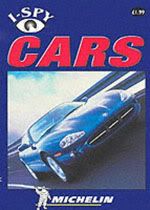
I was never a sports fan; but it's so pervasive that, even being averse to it if not phobic, I was caught up by the cloud of depression caused by Kenny Dalglish's departure to Liverpool from Celtic that hung over our school for a day. I think I went home and gazed at his picture on one of the football cards you got with bubble-gum brought from ice-cream vans and mentally asked, "how could you do it?" But I was better the next day, and was back in the school's small car-park with my Eye-spy Book of Cars.
The behaviour of sports personalities off the pitch, field or course has been high in the media spotlight recently but, in an article whose title refers to Pele's description of football as "the beautiful game", the Telegraph's Mick Brown shows us that extra-curricular activities are nothing new:
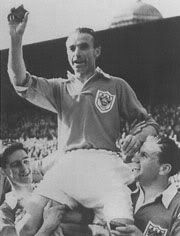
One of the more poignant football stories this week was the revelation that during the Second World War those two examplars of a finer age of Corinthian values, Stanley Matthews and Stan Mortensen, were arrested for trying to sell contraband coffee and soap while playing an international match in Belgium. Their excuse, touchingly, was that they needed the money to buy presents for their wives. The two men were given formal reprimands, and the incident buried away in Ministry of Defence documents which have been kept secret for more than 65 years.
However, stories coming out in recent years seem to be of a more serious nature than spivviness.
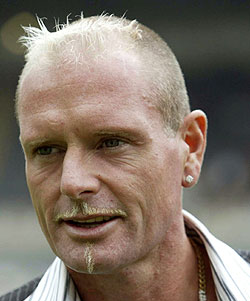
For example, we had the infamous "dentist's chair" incident in the 1996 European Cup, where members of the England Football Team adopted the posture of a client of said professional to have spirits poured into their mouths. The incident probably had a two-way relationship with Paul Gascoigne's increasingly problematic drinking; as the Guardian's Mark Watson wote last year, "if Gascoigne's gluttony ended up being his fatal flaw, the media were equally greedy for details of his impending downfall. The tabloids who demand 'GET HELP FOR THIS MAN' these days are, by and large, the same ones whose relentless scrutiny fuelled Gascoigne's decline."
More recently, a presumably fatigued Tiger Woods has been intimately linked with nineteen women. But compare his attendance at a clinic that treats addiction to sex while Iris Robinson, MP in the devolved Stormont Assembly in Northern Ireland, who had a fling with one man who fleeced her for £50,000, told all in a BBC documentary and is now a star on Facebook, was taken into psychiatric care when the scandal broke. I'm not trying to say that committing adultery with one person is more excusable than committing it with nineteen, merely that being diversity-ridden does not protect society from institutionalised sexism.
It's as if sports stars, whether playing or not, are in an enclave where normal morality is kept at the gates. In an essay on Moral Reasoning in the Context of Sport, David Shields and Brenda Bredemeier of the Univesity of Missouri's Center for Character and Citizenship state they found in a study of 50 college students that "the nonathletes had significantly more mature moral reasoning than did the basketball players", explaining:
we also noted that in the philosophical and social science literature on play, games, and sport it was commonplace to discuss these activities as somehow "set apart" from everyday life. The noted philosopher Huizinga, for example, described play as "a stepping out of 'real life' into a temporary sphere of activity with a disposition all of its own". Handelman, an anthropologist, wrote that entry into the play realm requires "a radical transformation in cognition and perception". Schmitz, a sociologist, similarly suggested that play transfers participants into a world with new forms of space, time, and behavior, "delivering its own values in and for itself".
Now we have the news that John Terry, captain of the England football team, had an affair with the wife of his team-mate Wayne Bridge - but there's something different here. Famously strict England manager Fabio Capello, in seeking to lance "the most pernicious boil threatening his meticulous preparations for the World Cup", indicated that he's opening the gates of the enclave when he asked Bridge if he would be prepared to play under Terry's captaincy, the result being that England is seeking a new captain.
One could argue that heaping more money and fame upon young males than they can reasonably be expected to cope with is asking for trouble. It's a compelling argument and is in many cases true, but there's more. Firstly, huge amounts of money pumped into sport by TV deals and sponsorship that distort the playing field in every sense - from which even the sedate world of cricket isn't immune; secondly, the fête-'em-and-slate-'em attitude embraced by celebrity magazines and the worse tabloids which assumes that being in the public eye is a hubristic act that must be punished by astounding violations of privacy; and thirdly, a notion on the part of the Establishment that success - that being known for being good at sport, perspicacious at business, or just being known for being known - is an end in inself and a "get out of jail free" card.
However, Capello's reaction to his former captain's phiandering - making Terry the first England player demoted for non-football-related matters - wasn't the only surprising thing about the affair; the "other woman" has announced that she won't be selling her story. If things keep going on like this, I might just look out my old football cards.
The Draughty Old Fen, Cambridgeshire, United Kingdom
An incurable old cyber-grumpy, I like good music, cats, bacon sarnies and anything to do with Terry Wogan. Raining on ideological parades is the cream in the coffee.
Latest 50 educational institutions accessing Tales From a Draughty Old Fen:
No endorsement by the institutions listed below of the website or any post is intended to be inferred. Click an organisation's link to go to its website.
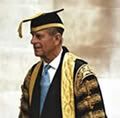 The Cambridge News' Raymond Brown reports that Abdul Arain, an independent trader on the city's Mill Road, is to stand against Lord Sainsbury for the post of Chancellor of the University of Cambridge when the present incumbent, Prince Philip (right), steps down in June of this year. I wish both men good luck, and hope for a clean campaign.
 What worries me is that the contest, which is ostensibly about who will represent the University at official functions, is in reality about the imminent opening of a Sainsbury's store in the old Mickey Flynn's Pool Hall on the thoroughfare.
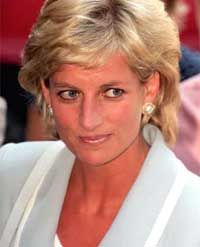 I'm also worried that, as mentioned, the present university Chancellor is Prince Philip, Duke of Edinburgh, husband of the Queen, father to the heir to the throne and grandfather to Prince William, who was recently spectacularly married to the Duchess of Cambridge, aka Kate Middleton. A less desirable claim to fame is that, since 1997, he has been accused of the manslaughter (at least) of Dodi al-Fayed and Princess Diana (right) by Mohammed al-Fayed, whose latest effort in his crusade was the Cannes-panned documentary about the infamous crash in a Paris tunnel, Unlawful Killing. Will Mr Al-Fayyed be able to resist a bit of troublemaking should the Prince's stepping down prove a popular subject in the media?



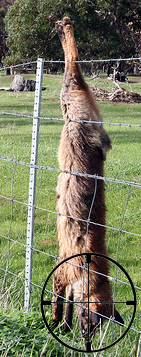 Basically a political version of Hedda Hopper, Fawkes has excelled even himself in poor taste with a cartoon of Conservative MP David Ruffley who, apparently having become depressed in the wake of the expenses scandal,
 Hollywood Actress Joan Fontaine once sent Hedda Hopper a dead skunk with the note "I stink, and so do you". Staines stinks like a dead dog. I must ask political columnists and bloggers to give him the attention he has indicated that he deserves: none.




















 brought out to coincide with Redknapp's crusading documentary was a celebrity pregnancy special, but the devil was in the detail, and the detail turned out to be in the back issues.
 he had a point. But I hope the bloke who phoned in to complain about his eyebrow never had a look at the "More man of the week" (Kellan Lutz from vampire flick Twilight); no wonder illicit steroid sales are booming, as vulnerable young men think they have to "get ripped". It's not for me to contradict Emma Ledger and say that the photo was digitally manipulated, but Radio 1 DJ Vis showed that it could be done (see pic below).

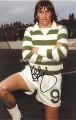 I was never a sports fan; but it's so pervasive that, even being averse to it if not phobic, I was caught up by the cloud of depression caused by Kenny Dalglish's departure to Liverpool from Celtic that hung over our school for a day. I think I went home and gazed at his picture on one of the football cards you got with bubble-gum bro
 For example, we had the infamous
 Robinson, MP in the devolved Stormont Assembly in Northern Ireland, who had a fling with one man who fleeced her for £50,000, told all in a BBC documentary and is now a