English summertime is typified by two things: heat, and rain when you least expect it! In honour of the summer, I'd like to present you with my own personal top ten songs about summer.
If you would like to send in a personal "top ten songs about..", please send the list to fulbourn_mill@yahoo.com. The songs can be secular, religious, modern, classical or a mix of any of these! A few words about why you like each track would be appreciated - I'll do the rest, including cinding the videos if you would like me to.
Ed.
10 Holiday!
This Boney M track from 1979 encapsulated what it felt to be at school as summer approached.
With the present financial situation, holidaying in Great Britain is à la mode once more - in 1975, Freddie Mercury of Queen wrote a song called Seaside Rendezvous that, while our seaside resorts were still popular, looked back to their glory days in the 1920s.
The Last of the Summer Wine is the world's longest-running sitcom and is about men and women behaving badly, all the more hilarious because they're at a time of life when ageists assume that behaving badly has withered on the vine. Here, the late Bill Owen, who played Compo in the show, gives a poignant reading of the theme tune's words with the melody playing behind. Enjoy.
Sometimes people long for summer because they find winter somewhat oppressive. One of these people is Richard Carpenter, who composed Crescent Noon with his songwriting partner John Bettis because he found himself longing for the light and cheer of summer the whole year through. He performs it here with his sister Karen as The Carpenters.
The egregious 1970 folly Beyond the Valley of the Dolls produced one very good song that has been described by Stuart Maconie, DJ on the groundbreaking Radio Six show The Freak Zone as "perfect summer pop". The irony is, as he pointed out, that, in the tale of exploitation, the "number one hit" was better than much of the music going about at the time.
George Harrison wrote It's all too much about the excesses of the summer of love, and it was his intention that the short song would be included in the Sergeant Pepper album. Unfortunaltely, he wasn't there when the tracks were finally chosen; the song would have made a great bridge between Good Morning Good Morning and the reprise of the title song. Anyway, here's the song, in its incarnation as the penultimate track in Yellow Submarine:
I'm not a footie fan, but since you can't escape the World Cup this summer, I thought I'd theme my monthly Top Ten around football on the principle that if you can't beat 'em...So enjoy the music, and if you want to go a little deeper, click the flags to find more aboutthe national teams!
So the first song is published in solidarity with people who, like me, don't understand others' obsession with the world's most popular sport! This was originally sung by Robin Hall and Jimmy MacGregor, from Glasgow and Edinburgh respectively - home to Celtic, Rangers, Partick Thistle, Hearts and Hibernian; but Australian Anglophile Rolf Harris has updated it slightly.
The World Cup's being held in South Africa, which was teetering on race war not long ago with the murder of Eugene Terreblanche; but, as the Telegraph's Rian Malan notes, "when South Africans pull together, we can move mountains". Here, one of the country's greatest exports, vocal group Ladysmith Black Mombazo, repatriate The Lion Sleeps Tonight (sung by, among others, The Tokens, Karl Denver and Tight Fit) in the original Zulu Mbube, "Lion".
The official World Cup song, Waving Flag, is an inspiring piece about the ability of the "beautiful game" to bring peoples together. It would seem patronising were it not sung by K'Naan, a Somalian artist who has seen at first hand the violence that ensues when countries fail. This is the official video:
The phrase "beautiful game" was coined by Sir Edison Arantes do Nascimento, otherwise known as the Brazilian and international player Pelé, arguably the most famous football player ever. Brazil's the only team to have played in every world cup and, as five-time winners, has a small galaxy of stars on its strip. Unsurprisingly, they're the bookies' favourite to win this time. Look at the photo of actors and footballing deities on this video of the theme to Escape to Victory and you'll see Pelé kneeling in the front row, third from the right. He's depicted as being badly injured by a Nazi player in the film, which I wonder is a reference to his being targeted for fouling by Bulgarian players in the 1966 world cup.
An essential part of football is the terrace chant, the simplest being just rhyming phrases, eg "ooh-ah, CantonAAAAH!" More complex ones are taken from songs, for example the first line of Guantanamera, in the form of, eg, "one David Beckham, there's only one David Beckham..." It works with Becks' name and ones like Graham Souness, but it just doesn't work with names like Marc-Antoine Fortuné. Anyway, here's the original from Los Paraguayos:
But this is all very male-orientated. What about the women? Lots of women do, of course, watch football - and there's an ongoing debate as to whether men and women should play football together - but it remains a male-dominated sport. So I hope you ladies out there suffering from footie-fatigue HAVE SOME FUN!
Despite rumours of countries being prepared to bribe referees, one hopes that the Olympian ideal of sport still pertains in football. Whitney Houston sang about that ideal perfectly in the Albert Hammond/John Bettis composition One Moment in Time, and it's covered here by Charice Pempengco, the Filipina singer who shot to fame through YouTube. Watch that space.
Tracks by footballers and other team members are traditionally associated with players gargling with gravel before attempting to deliver an approximation of music, so it was a revelation when England's erstwhile Swedish manager, Sven-Göran Eriksson, compiled a collection of classical pieces. This is Malcom Arnold's English Dances Set 2, performed by the Texas Honors Wind Ensemble.
Do England have a chance of winning a second World Cup? Just as any boxer in a ring has a "fighter's chance" of winning, I'd say that England has a chance of winning merely by its presence in the World Cup. It's a pity that injury has ruled David Beckham out of playing, but Fabio Capello's still an inspirational manager and has a great team behind him. As the advert says, "maybe, just maybe..."
I'm not a footie fan, but since you can't escape the World Cup this summer, I thought I'd theme my monthly Top Ten around football on the principle that if you can't beat 'em...So enjoy the music, and if you want to go a little deeper, click the flags to find more aboutthe national teams!
So the first song is published in solidarity with people who, like me, don't understand others' obsession with the world's most popular sport! This was originally sung by Robin Hall and Jimmy MacGregor, from Glasgow and Edinburgh respectively - home to Celtic, Rangers, Partick Thistle, Hearts and Hibernian; but Australian Anglophile Rolf Harris has updated it slightly.
The World Cup's being held in South Africa, which was teetering on race war not long ago with the murder of Eugene Terreblanche; but, as the Telegraph's Rian Malan notes, "when South Africans pull together, we can move mountains". Here, one of the country's greatest exports, vocal group Ladysmith Black Mombazo, repatriate The Lion Sleeps Tonight (sung by, among others, The Tokens, Karl Denver and Tight Fit) in the original Zulu Mbube, "Lion".
The official World Cup song, Waving Flag, is an inspiring piece about the ability of the "beautiful game" to bring peoples together. It would seem patronising were it not sung by K'Naan, a Somalian artist who has seen at first hand the violence that ensues when countries fail. This is the official video:
The phrase "beautiful game" was coined by Sir Edison Arantes do Nascimento, otherwise known as the Brazilian and international player Pelé, arguably the most famous football player ever. Brazil's the only team to have played in every world cup and, as five-time winners, has a small galaxy of stars on its strip. Unsurprisingly, they're the bookies' favourite to win this time. Look at the photo of actors and footballing deities on this video of the theme to Escape to Victory and you'll see Pelé kneeling in the front row, third from the right. He's depicted as being badly injured by a Nazi player in the film, which I wonder is a reference to his being targeted for fouling by Bulgarian players in the 1966 world cup.
An essential part of football is the terrace chant, the simplest being just rhyming phrases, eg "ooh-ah, CantonAAAAH!" More complex ones are taken from songs, for example the first line of Guantanamera, in the form of, eg, "one David Beckham, there's only one David Beckham..." It works with Becks' name and ones like Graham Souness, but it just doesn't work with names like Marc-Antoine Fortuné. Anyway, here's the original from Los Paraguayos:
But this is all very male-orientated. What about the women? Lots of women do, of course, watch football - and there's an ongoing debate as to whether men and women should play football together - but it remains a male-dominated sport. So I hope you ladies out there suffering from footie-fatigue HAVE SOME FUN!
Despite rumours of countries being prepared to bribe referees, one hopes that the Olympian ideal of sport still pertains in football. Whitney Houston sang about that ideal perfectly in the Albert Hammond/John Bettis composition One Moment in Time, and it's covered here by Charice Pampegno, the Filipina singer who shot to fame through YouTube.
Tracks by footballers and other team members are traditionally associated with players gargling with gravel before attempting to deliver an approximation of music, so it was a revelation when England's erstwhile Swedish manager, Sven-Göran Eriksson, compiled a collection of classical pieces. This is Malcom Arnold's English Dances Set 2, performed by the Texas Honors Wind Ensemble.
Do England have a chance of winning a second World Cup? Just as any boxer in a ring has a "fighter's chance" of winning, I'd say that England has a chance of winning merely by its presence in the World Cup. It's a pity that injury has ruled David Beckham out of playing, but Fabio Capello's still an inspirational manager and has a great team behind him. As the advert says, "maybe, just maybe..."
I've just finished watching the Eurovision Song Contest, held in Norway's Telenor Stadium in Bærum, a suburb of its capital, Oslo. My own predictions panned - the Netherlands never made it through to the final, and Spain ended fifteenth, despite having the opportunity to play twice due to a stage-invasion during their first attempt that I'd thought was part of the act.
It was very enjoyable, and I'd like to bring you what I thought was the best of the music - while looking at shadows that sometimes seemed to be lurking behind the industrial joy of what I'd hoped would be an uncomplicated night.
I don't think I'm applying for a stay in the Tower of London for saying that Britain's entry in this year's Eurovision was even a bigger turkey than Turkey (who did field one of their biggest bands, but disappointed with the absence of the usual belly-dancing act).
Manga (the band) is big in Turkey, and other countries were fielding artists who had written songs, recorded albums, and one even owned a recording studio. It would be churlish to suggest that the ten points given to Josh Debovie - landing us in 25th place out of 25 - it has to be said that the song is something I'd expect to hear Redcoats welcoming holidaymakers to Butlins with, or in a quondam Gang Show; I suspect it's not even sophisticated enough to make it into a franchise movie of the High School Musical genre. Maxima said it all when she commented that Jedward would have made a better job.
Last year's show in Russia was, it seems in a different world where lavish productions were possible - although news broke today that the expense may have put paid to Russia's chances of televising the World Cup. Given that the Russian show pulled Eurovision back from death by public apathy due to a tainted voting system, it was sad to hear booing when Russia was awarded points for Peter Nalitch and Friends' Lost and Forgotten, as the tale of lost love with a penitential streak was a really good piece and, like many songs this year, of an above average standard. Here they are at the finals of the contest to find a song for Russia:
Not that we were the only turkey, and this was when one started to see shadows. Giorgos Alkaios and Friends did a taverna-style dance routine that was pretty minimalistic in terms of costumes and background. Perhaps this was at the best as denizens of the northern Euro area, not least Germans, might have ended up asking their politicians what exactly they were contemplating mortgaging their future to. Likewise, the Serbian entry's chorus was "Balkan, Balkan, the Balkans!" and I wondered if the singer realised he was singing about the land the generation above him had gone a-slaughtering through.
On the other hand, Ukraine's Alyosha was much more demure live than in her video. An environmentalist from the land of Ukraine, she made no fatuous references to polar bears or ice but looked (in part) at the relationship between video games and the violence sweeping the world. This is from an earlier BBC recording showcasing the songs for Europe:
There was certainly no shortage of songs in English - but if this is an indication of the language's global ascendancy, in Eurovision terms the victory is a pyrrhic one. The cultural diversity that the European Broadcasting Union was set up to celebrate has lost out. Interestingly, however, Armenia's Eva Rivas got round this by sining, in English, a song themed around the country's national symbol, the apricot, which gives its colour to the flag's lower bar. There was a flurry of protest in Turkey about possible references to its genocide of Armenians in 1915, but it's not clear that the lyrics bear that out, and in any case Turkey gave Armenia 6 points. Rivas performs the song here in the second semi-final - note Jivan Gasparyan playing duduk (traditional Armenian flute) - at 83, he's the oldest musician to accompany a Eurovision act on stage.
Not to be outdone in the field of eminent musicians, Albania's Juliana Pasha was accompanied by Italian violinist Olen Cesari, who had recently played for the Pope, in It's all about you. Like a cross between Debbie Harry and Maddy Prior, she perhaps hoped that by going barefoot on stage she could emulate Sandy Shaw's winning performance with Puppet on a String in 1967. But even Cesari's heroic efforts couldn't rescue the song from its own mediocrity, which might have been disguised somewhat had it been sung in Albanian: so, as a hint of this was featured in the introduction to Oslo 10, I feel unashamed of bringing you Ms Shaw!
Later that year, Israel would launch a pre-emptive attack on Egypt fuelled by proof that the country was, with the help of all Israels neighbours and Arab lands from further afield, going to do the dirty first. If, in gaining Gaza, Israel is an occupying country, then it's probably the most benign occupier since Cyrus the Great. The burden of this is apparent in much of modern Israeli culture, and its 2010 Eurovision entry - sung, refreshingly, in the country's own language - is no exception: I think it'll take a while to unravel all the meanings contained, onion-like, in Milim, a love-song sung by Harel Skaat:
Belarus' entry, Butterflies, again sung in English, could have been a bit more rehearsed for pronunciation, and given that Eurovision posts translations of every song online would have lost nothing fron being sung in Belarusian or Russian. But they had an innovation towards the end of the song that announcer Graham Norton said would have every girl under eight shouting "I want one!" The video was great, but seeing how they represented the special effects live was sublime:
Ireland must have been another country watching Greece very closely, because my Irish friends tell me that back home they're not pleased that, after making such sacrifices in personal and work terms to mitigate the financial crisis in Europe, they are having to watch richer countries prepare to bail out Greece, which helped found the EU's instability by cooking the books in the first place. But Niamh Kavanagh, who won Eurovision for the Emerald Isle in 1993 - again an established star singing a song strong enough to storm any hit parade - gave a first-class performance with It's for You, another song this year looking beyond the precarious value of things to deeper truths.
Given that Belgium's French- and Flemish-speaking populations could be on the track for a messy divorce, it was perhaps wise of Tom Dice to sing Me and My Guitar in English. More than this, however, it was significant that a man alone on the stage with a guitar, helped just a little by strings on a backing track, should come 6th. Is this an indication that Europeans are rejecting showiness, or even setting their faces towards a new austerity?
Poor old Portugal has never won the contest despite, like Ireland, consistently sending great singers with great songs: this year Filipa Azevedo with a sentiment I know well: Há Dias Assim - It's One of those Days.
http://www.youtube.com/watch?v=vQI4X4BL4Qw
Germany's Lena was this year's Eurovision, with a throwaway pop tune that will be sung by young girls across the continent because it will annoy parents, especially Dads. Consider: "I went everywhere for you/I even did my hair for you/I bought new underwear that’s blue...I even painted my toenails for you..." 'Nuff said. The 19-year-old's enthusiastically-applied lipstick reminded me of what we used to call in quondam Glasgow "Jubilee lips" after the colour the ghastly iced concoction of that name, composed mostly of deep red food-colouring, would leave one's kisser.
The scoring was interesting: after French premier Nicholas Sarkozy humiliated Germany's Angela Merkel with a table-thumping tantrum over differences in how to overcome the crisis precipitated by Greece, the two countries awarded each other a lukewarm 3 points in the scoring; while Greece, having vented its spleen at having been found out in its own murderous tantrum, gave Germany, its potential financial saviour, 2 points in return for 8.
That said, the result was that a delighted girl won a prestigious contest, and this was her night. Here she is receiving the trophy:
When I first heard of Eyjafjallajökull, I was of the same opinion as Richard Normington, in that it seemed more like a keyboard malfunction than anything else. But things started to look sinister when continent-sized areas in the course of the volcanic cloud, containing putative glass fragments that could cause high-flying jet engines to close down, were declared no-fly areas on the basis of computer models that are as diconnected from reality as the politicians who made decisions solely on their predictions, without reference to reality.
Thankfully, we can fly again. As it happens, I don't fly that often, but even in the circumference of the world I inhabit the no-fly orders had consequences, from a colleague who couldn't make it to work, through a fellow worshipper whose presence had been required to validate church accounts, to a friend who had been badly injured abroad and whose family was deprived even longer of her presence.
I thought that I'd like to dedicate this month's Top Ten to the theme of flying, because the cooling of Eyjafjallajökull's ire coincides with a crucial time in our country's history, when we decide which political parties will suppress the innate instinct to fly as high as we can, and which will not only nurture it but ensure that we lift up our peers in so doing.
10 - Would you like to fly?
The 5th Dimension, who were inducted into the Vocal Group Hall of Fame in 2002, are famous for taking the song Age of Aquarius from Hair to the top spot. My favourite song of theirs is Jimmy Webb's Up, Up and Away which, whenever I hear it, brings memories of childhood awakenings to the song being played on the ever-present radio.
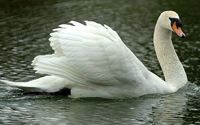
9 - Wild Swan
In my opinion, Tony Clarkin - the bearded guitarist in the video - deserves to be hailed alongside Pete Townshend as arranger par excellence of his own lyrics with insight and sensitivity worthy of Berlioz. The video, telling the story of a son who simultaneously hero-worships his crusading father and feels the overarching need for his presence beside him, comes to mind because of a wild swan that's been making the news in Cambridge. Called Mr Asbo, he's been accused of harassing and even overturning boats on Cambridge's river Cam. A recent film aired on BBC 1's The One Show displayed the swan at his most aggressive - but the BBC has been accused - in a video that I recommend you watch - of goading the swan's mate into leaving her nest in order to see off a canoe that was ordered to go dangerously close to it for the sake of "car-crach TV". Given that Asbo, according to vet and Telegraph blogger Pete Wedderburn, has actually had his cygnets killed by "passers by", I'm not surprised he's mardy. The state hasn't killed my children, but arrogates to itself ever greater powers to brainwash them according to abusive agendas that seem to have no other purpose than to "rub the Right's nose in diversity". I feel as angry as Mr Asbo.
8 - Volare
In February 1991, I had an interview in London and arranged to stay with a friend in Brixton. The interview went well but later in the day came the news that 10 Downing Street had been attacked by an IRA mortar. Mobile phones being as rare as they were huge in those days, I found myself having to wait in one of the lines that trailed from every phone box. My friend explained, "I think everybody's phoning home to say they're ok". That evening, he. I and another friend went to his flat in the middle of Brixton High Street, kicking up the snow that had emptied the thoroughfare of cars. Since all of us had lived for some time in Italy, this is the song we sung:
7 - Flying machines in pieces
This is such a video of James Taylor's Fire and Rain, which is about, in part, the suicide of his fried Suzanne Schnerr, whom he'd met while both of them were hospitalised for addiction to heroin. "Flying Machine" was the name of his first band; but the line "flying machines in pieces on the ground" is about more than the breakup of a musical unit, but I wonder if. when Taylor sings "Susanne the plans they made put an end to you" (my italics) he's running from the couple's co-dependency. But. counterintuitively, I can see a better case for the use of prescribed pharmaceutical diamorphine (heroin) under strictly controlled than for legalisation of cannabis, because we cannot halt supply of heroin within our own borders. The thing is, cannabis-legalisation site UKCIA (offline at the moment) has made a case for legalisation of weed as a gateway to legalisation of just about every illegal drug. Having been a drugs-worker, I hope this never happens; I'd hate the misery I saw in the needle-exchange to become commonplace.
In 2002, Nick Clegg, now leader of the Liberal Democrats, wrote an article about a school trip to Germany:
A boy called Adrian started it. He shouted from the back of the coach, "we own your country, we won the war". Other boys tittered. One put a finger to his upper lip - the traditional British schoolyard designation for Hitler's moustache - threw his arm out in a Nazi salute, and goose-stepped down the bus aisle. Soon there was a cascade of sneering jokes, most delivered in 'Allo 'Allo German accents.
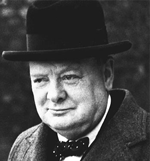
I was shocked by his ignorance. Britain was indeed on the winning side of WWII and was a major and heroic player, but to baldly assert that "Britain won the war" is as disingenuous as is baldly asserting that Germany lost it. We must never forget the key role that Britain played in defeating the Nazis (who were by no means synonymous with Germany), but it is salutary to remember that, on the eve of the Pearl Harbour attacks on December 7, 1941, Britain was losing, and Winston Churchill had authorised the distribution of bayonets with a poster campaign saying "at least you can take one with you".
As it happens, historian Colin Heaton concluded in Night Fighters that had Britain been conquered, America would have eventually had confront Hitler's contagious monomania - but Britain would have been a much changed place. Thank God that never happened.
Rector Pellegrina wasn't quite convinced when I confessed a guilty pleasure in heavy metal. I hope this video about the Battle of Britain - by an RAF composed of 10% Polish pilotry - will give her cause to reconsider.
5 - Flying Sorcery
Al Stewart merged his twin loves of flying and history for this song from his classic Year of the Cat album. An article on his website explains the context of the lyrics, from Amy Johnson, to the biplanes called Faith, Hope and Charity which defended the George Cross island of Malta and the double meaning of the Flying Circus. Enjoy this footage of him singing in Cambridge's namesake town in Massachussetts.
4 - Flying for me
John Denver was a founder of the "citizen in space" project and was even considered for the honour, but was pipped at the post by Christa McAuliffe, a secondary/high school teacher who had worked in Washington DC before moving to Concord in New Hampshire. Denver recollected that on the morning of January 28 1986 his adopted son Zac phoned him and told him to put the TV on, any station: there was the Challenger disaster, inspiring him to write:
She was flying for me She was flying for every one She was flying to see a brighter day for each and every one She gave us her light She gave us her spirit and all she can be She was flying for me
3 - Abide in His shadow for life
We had a discussion on hymns at our annual church meeting recently - you know the sort, that can quickly degenerate into an "old=Good" vs "New=Better" argument all too quickly. It was left to our venerable and classically-trained organist to point out that while traditions need maintaining, some new hymns are beautiful. One of these, I think, is Fr Michael Joncas' On Eagles' Wings, based on Psalm 91 and Isaiah 40:31. Given that John Smeaton, director of the Society for the Protection of Unborn Children, has been correcting misleading Government advice on sexual education and abortion, I think it's appropriate that this video of the song performed by Angela Birkhead-Flight is dedicated to "all babies who have died prematurely due to abortion, miscarriage or other means".
2 - Icarus
Although Kansas sung a song specifically about Icarus, another one - Carry On my Wayward son - seems to be a more meditative take on the sublime fall of the son of Daedalus, the craftsman who gave a ball of yarn to Ariadne so she could guide herself and Theseus out of the Minotaur's labyrinth, although there appear to be elements of Plato's allegory of the cave threaded through. Father and son, of course, strapped on wings of wax and feathers in order to escape the wrath of King Minos of Crete, but Icarus ignored a warning from Daedalus not to fly too high, and plunged into the sea when the heat melted the wax. It's often taken as a cautionary tale warning those who are over-ambitious of the danger of flying too high on constructions that should have been kept closer to earth. Just so, blogger Benedict White tells us that Gordon Brown was warned when Labour took power in 1997 that his proposed financial reforms would lead to a systemic banking failure. But he flew too high...
1 - The final attack
In the film The Dambusters we see a disconsolate crew looking back at the Möhne Dam on the Ruhr, feeling they have failed: then, suddenly, under the attacks that have been visited upon it, the dam's wall collapses and water floods out.
In reality, the crew pulling away was the fourth wave: a fifth Lancaster dropped its bouncing bomb upon the already-disintegrating wall to consolidate the damage.
This election has been a long, unpredictable slog. The Conservative party's first wave of attacks upon Gordon Brown, who is damming up the British people in a politically-correct prison where the silent majority of law-abiding people are punished the most, might be said to have happened shortly after his unelected accession to the Labour throne in June 2007, when he bottled out of an election he might have won when the David Cameron and George Osborne announced that only millionaires would pay inheritance tax. The second wave was a tsunami of activism, fuelled by both shoe-leather and blogs, cat-herding organised by the long-suffering Eric Pickles, the third a series of defeats inflicted upon the Prime Minister,Chancellor of the Exchequer and miscellaneous Ministers by David Cameron, George Osbourne and the Shadow front-bench team. The fourth is happening now, as candidates, activists and supporters work like Trojans to bring about change necessary for national survival.
The fifth wave is coming shortly, even as the dam walls crumble - illustrated by Gordon Brown's disastrous labelling of his own supporter, Gillian Duffy, as a "bigot" because she challenged the prevailing orthodoxy on immigration, imposed on people like her by rich ideologues who do not have to live in areas like hers. The fifth wave of attacks upon Labour's walls of infamy will come on May 6 and be inflicted by the voters, and I pray that the power-houses of willful negligence are swept away by the resulting inundation.
I can't pinpoint when I became an Anglophile; my Mum and I would go to Blackpool frequently when I was young, but during the traditional "fair fortnight" holiday the Lancashire coastal resort would essentially turn Scottish in what remains of Scotland's support for the House of Lancaster during the Wars of the Roses, the price of cooperation having been Berwick (which soon returned to England).
I first lived in England after marrying Maxima, who comes from the other end of the Fens. After a spell we went and lived in Glasgow as my mother was very ill and, after her death, came to the Draughty Old Fen when offered a temprorary job here; when it became permanent the family moved down - it was a good move.
Although Maxima was regularly sent to coventry in Scotland because she's English, the situation has never been reciprocated here. I find the English warm-hearted, supportive and generous, despite their having laboured under an administration that for twelve years has tried its best to chip away at its best-loved traditions, the latest victim having been Pooh sticks, ostensibly cancelled for health and safety reasons.
I will always retain a level of affection for Scotland, but my guttering loyalty to the country was finally extinguished when the Lockerbie bomber, Abdelbaset Ali Mohmed Al Megrahi, was released for political reasons. Remembering TV pictures of the approaches to the Borders town choked with ambulances that would return empty, I felt sick.
Having deconstructed the notion of "race" to the level that, the Establishment says, your race is what you decide it is, one might make a good case for "English" to be a race, although in the diversity-ridden alternative universe presently prevalent in the corridors of power I suspect that one would be a non-starter. But if I called myself English, my accent would betray me the moment I opened my mouth. However, I definitely feel more British than Scottish, and will continue to do so should Scotland go its own way to make the United Kingdom into, says Alex Salmond of the Scottish National Party, the United Kingdoms.
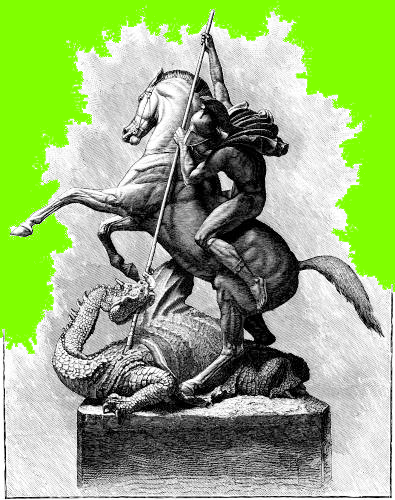
I love England. And so, in the month when we celebrate the Feast of St George, I would like to offer you a Top Ten about this wonderful, kind race: the English.
"In England, where my heart lies..."
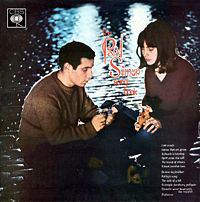
Paul Simon toured England in the early-mid 1960's, and famously spoke of his wish to voyage Homeward Bound, which he wrote while stranded at Widnes train station. "Home", of course, meant America, but it also referred to Kathy Kitty, the English girl he'd fallen in love with (hence the line "Kathy I'm lost" in America). Like many before and after he also fell in love with England - see the reference to "Cathedral bells" etc in To Emily, wherever I may find her. Here's the late Eva Cassidy singing the song live, including the classic reference to "England, where my heart lies".
Dirty Old Town
Lancashire songwriter Ewan MacColl, father of Kirsty, wrote Dirty Old Town about Salford, near Manchester, where he was born. Written in 1949, it was immediately adopted and made famous by the Dubliners, and subsequently by bands all over the English-speaking world in an example of the way English-speaking culture can go international in a heartbeat, although the socialist songwriter may not have liked to think of it that way. Luke Kelly, Dubliners founder member, sings it with his band here, displaying the English-Irish cross-pollination that has enriched both countries for centuries.
Zadok the priest
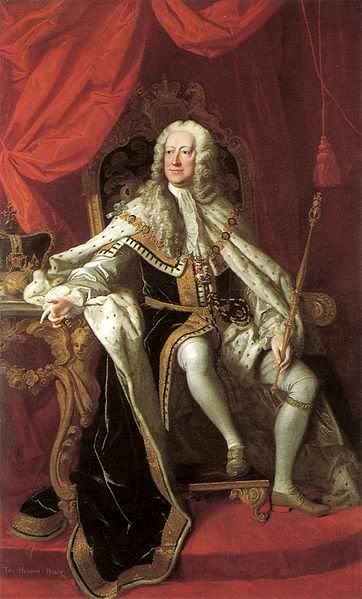
This great anthem was written by Handel for the coronation of George II in 1727. Since the union of he Crowns of England and Scotland was in 1603, and the Act of Unions uniting the two countries' Parliaments in 1707, one could say that this is a British anthem. But should Scotland secede from the Union, it will be up to them what heritage from the Union they take: I hope that Zadok the Priest - based on 1 Kings 1:38-40 - is retained by England, even if it should be duplicated elsewhere.
From Brixton to another place
Electric Avenue is a thoroughfare in Brixton linking two roads full of stalls, just like you might see in Eastenders. As cosmopolitan as it is, the video of Eddy Grant singing about the street suggests that its inhabitants and patrons might like, maybe just once in a while, something else.
Preotecting the old ways...
Yorkshire folk singer Kate Rusby covers the Kinks' 1968 hit The Village Green Preservation Society for a series called Jam and Jerusalem, which was modelled on the Womens' Institute, formed in 1915 to revitalise rural communities, but which now has a vital message for women and girls everywhere.
Burn them down?
The Jarrow Crusade was a heroic peregrination from Jarrow, near Newcastle, to the Houses of Parliament, to protest against the unemployment, poverty and even starvation that followed the collapse of the US stock exchange in 1929. In Alan Price's song about the event we hear him put himself into the song in a deconstructionist manner; but, more than that, while the majority of marchers wanted a job, we hear him echoing the cries of the vocal minority to "burn them down" - which prefigured the minority in the Miners' Strike of 1984-85 for whom a settlement of better pay and conditions would have been a disaster, because they wanted nothing but régime change.
Cricket
It was sad to see that Cambridge University's Emmanuel College was forced to desist from holding a May Ball in praise of the British Empire. Nobody's going to support the Amritsar Massacre, but Britain - and England - spread abroad a culture that continues to refer back to the English way of life where, as poet Rupert Brooke asked, stands the church clock at ten to three? A sign of this culture, visible in India, Pakistan, the West Indies, Australia and New Zealand, is cricket: and here is the tune that has accompanied English cricket on TV for decades - Soul Limbo by Booker T and the MGs.
Queen of Bollywood
Before the (modern) Suez Canal was opened in 1856, civil servants and administrators working in India would often marry Indian wives, because of the unworkability of having a wife "back home" due to the long passage time. Thus began a new race, called Anglo-Indians or Eurasians, who are still very popular in the Bollywood film industry. This is Asha Bhosle singing for the BBC - enjoy.
The seaside
The fascination for seaside resorts grew exponentially during Queen Victoria's reign, and still remains. As well as Blackpool, there were Skegness, Brighton, Torquay and many other resorts. After a fallow period, English seaside resorts are becoming more popular due to the recession, as it becomes relatively more expensive to go abroad. (Study the video below and you'll see Brian May.)
Fisherman's Friends
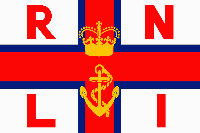
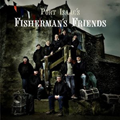
The Fisherman's friends, of Port Isaac in Cornwall, were founded to support the Royal National Lifeboat Institution in a part of Britain where it's all too easy for boats to go missing. If you like what you hear, please think of the men and women who give so much to bring us fish, and of the men and women who are ready to sacrifice everything when something goes wrong. Click on the flag to find out more about the RNLI, or on the image of the Fisherman's Friends' latest album on the left to find out more about the band.
I first became aware of Festa delle Donne (Women's Day) in the 1980s in Italy, which is quite appropriate as that is where it appears to have begun. At the end of the Second World War, it was decided to consolidate several days celebrating women in March, some with roots in antiquity, in March 8. I remember going to university and seeing just about all of the women wearing flowers on their coats - small, white flowers, I wish I could remember the name.
March 8 is still, of course, International Women's Day, but it has accrued a whole week around it, which this year lasts from Saturday 5 March to Saturday 12 March, with the day itself in the middle on the Tuesday. And, as a bonus, Women's World Day of Prayer on the inaugural day, Saturday March 5, focussing on Cameroon.
I'd been planning a Top Ten pertaining to women for some time, because I looked at my music collection and saw that there were few women fronting a band or singing solo there: Carole Fredericks, Ulanda McCulloch and Bonnie Tyler, for example, and, of course, Cambridge-born songstress EJ Norman (right - click to hear her music). Is collecting music by other blokes something men do when we graduate from stamps?
It's not an idle question: last night I had a bath, which among other things affords me the only opportunity I get to read for a prolonged time, and had BBC Radio Cambridgeshire on the shower radio. Having the germ of this blog in my head, it shocked me that well over an hour passed between hearing one female vocalist and the next, despite there certainly being no dearth of good music written and/or performed by women. If this phenomenon is threaded through the fabric of society, is it possible that, say, all-women shortlists to select Prospective Parliamentary Candidates - which I've always felt vaguely uncomfortable with but are supported by many including Ellee Seymour - are the way ahead?
On the other hand, the opposite situation doesn't pertain with Maxima: although she certainly listens to more female vocalists than me - like Diana Ross, Nancy Griffiths and Katie Melua - she also has in her collection The Jam and the Police (with their respective solo leaders Paul Weller and Sting), Madness and Planxty, as well as her family's favourites such as Guy Mitchell and Tommy Steele. (And Buddy Holly. Being a Buddy Holly fan makes life easier in our house.)
Making a list for this post, I found myself trying to identify only pieces sung by women but also composed by women, and wondered if I were unconsciously applying a sort of gender-apartheid? The thing is, if I am, I am therefore part of the problem and will be unable to appreciate it from the outside. I'm confused...
10 - what men think women think
I can only ever write this post from the outside, so here's Nick Lowe with Girls' Talk, showing how men can be paranoid about women when there aren't even any present.
9 - self-assurance
Beverley Knight released this recently with Chaka Khan, and these lines go right to the heart:
Where's the man to quantify Everything I'm worth and who I am? He should look me in the eye Tell me where he figures in my plan...!
8 - remembrance and sorrow
Fannie Hurst's 1933 novel Imitation of Life was filmed twice, the 1934 version being eclipsed by the 1959 one - which I remember watching with my Mum in the late 1970s: here Mahalia Jackson sings at the funeral of the black woman who brought up a white girl who didn't quite appreciate the worth of her foster-mother until it was too late.
7 - remembrance and joy
6 - the girl he left behind
All around my Hat was originally written from the viewpoint of a minor English criminal sent to Australia for several years, but here legendary folk singer Sandy Denny fronts Steeleye Span in turning it round so that the girl he leaves behind will wear a ribbon in her hat for "a twelve-month and a day".
5 - sticking with it
French singer/songwriter Jean-Jacques Goldman (who wrote for Céline Dion before she started singing in English) found himself surfing TV channels one night and was suddenly faced with a documentary called "Far West", part of which dealt with a group of nuns in the delivery suite of a maternity hospital. He was amazed by the footage and wrote a song that he performed with the supergroup he formed with his chums Michael Jones and the late, great Carole Fredericks, to whom this video is dedicated.
4 - incertitude?
Nena (Gabriele Kerner) released 99 red balloons (or luftballone) in 1983, not long after a British TV survey of the concerns of schoolchildren revealed nuclear war to be their greatest fear. Towards the end of the video, set on an army assault course in Germany (the father of one of the band members was a NATO colonel), if the band look distressed, it's because they were: unscripted gasoline bombs were exploding around them. But it made for a good video.
3 - identity
Here Gali Atari, who won the 1979 Eurovision Song Contest for Israel singing Alleluia wih Milk and Honey, sings of the joy and the pain of belonging to a place one cannot separate oneself from.
2 - What have they done to the weather?
Originally released as Weather Song, writer Malvina Reynolds wanted to highlight the effects of nuclear testing, which - reports the Telegraph's Bonnie Malkin, is still bearing bad news to the Aboriginies of the Australian outback. For a while, this became the anthem of a generation sufficiently secure behind their countries' nuclear deterrents to call for said deterrents' dismantling. (See the passionate support of the recently demised Labour leader Michael Foot for the Campaign for Nuclear Disarmament, which he helped found.) Here it's sungby one of the most beautiful voices of all time, Judith Durham, with of course the Seekers.
1 -trust
When Minima asked to play this at the start of an Advent course and I heard the first few lines, I thought it was time to hide behind my hands; but I hadn't trusted her enough - just over halfway through the song by Nashville-based Christian band Zoegirl, the lyrics develop to completely change the meaning of the piece.
The Draughty Old Fen, Cambridgeshire, United Kingdom
An incurable old cyber-grumpy, I like good music, cats, bacon sarnies and anything to do with Terry Wogan. Raining on ideological parades is the cream in the coffee.
Latest 50 educational institutions accessing Tales From a Draughty Old Fen:
No endorsement by the institutions listed below of the website or any post is intended to be inferred. Click an organisation's link to go to its website.
 With the present financial situation, holidaying in Great Britain is à la mode once more - in 1975, Freddie Mercury of Queen wrote a song called Seaside Rendezvous that, while our seaside resorts were still popular, looked back to their glory days in the 1920s.
 The Last of the Summer Wine is the world's longest-running sitcom and is about men and women behaving badly, all the more hilarious because they're at a time of life when ageists assume that behaving badly has withered on the vine. Here, the late Bill Owen, who played Compo in the show, gives a poignant reading of the theme tune's words with the melody playing behind. Enjoy.
 Sometimes people long for summer because they find winter somewhat oppressive. One of these people is Richard Carpenter, who composed Crescent Noon with his songwriting partner John Bettis because he found himself longing for the light and cheer of summer the whole year through. He performs it here with his sister Karen as The Carpenters.
 The egregious 1970 folly Beyond the Valley of the Dolls produced one very good song that has been described by Stuart Maconie, DJ on the groundbreaking Radio Six show The Freak Zone as "perfect summer pop". The irony is, as he pointed out, that, in the tale of exploitation, the "number one hit" was better than much of the music going about at the time.
 George Harrison wrote It's all too much about the excesses of the summer of love, and it was his intention that the short song would be included in the Sergeant Pepper album. Unfortunaltely, he wasn't there when the tracks were finally chosen; the song would have made a great bridge between Good Morning Good Morning and the reprise of the title song. Anyway, here's the song, in its incarnation as the penultimate track in Yellow Submarine:












 I can't pinpoint when I became an Anglophile; my Mum and I would go to Blackpool frequently when I was young, but during the traditional "fair fortnight" holiday the Lancashire coastal resort would essentially turn Scottish in what remains of Scotland's support for the House of Lancaster during the
 econstructed the notion of "race" to the level that, the Establishment says, your race is what you decide it is, one might make a good case for "English" to be a race, although in the diversity-ridden alternative universe presently prevalent in the corridors of power I suspect that one would be a non-starter. But if I called myself English, my accent would betray me the moment I opened my mouth. However, I definitely feel more British than Scottish, and will continue to do so should Scotland go its own way to make the United Kingdom into, says Alex Salmond of the Scottish National Party, the
 The Jarrow Crusade was a heroic peregrination from Jarrow, near Newcastle, to the Houses of Parliament, to protest against the unemployment, poverty and even starvation that followed the collapse of the US stock exchange in 1929. In Alan Price's song about the event we hear him put himself into the song in a deconstructionist manner; but, more than that, while the majority of marchers wanted a job, we hear him echoing the cries of the vocal minority to "burn them down" - which prefigured the minority in the Miners' Strike of 1984-85 for whom a settlement of better pay and conditions would have been a disaster, because they wanted nothing but régime change.



 Nena (Gabriele Kerner) released 99 red balloons (or luftballone) in 1983, not long after a British TV survey of the concerns of schoolchildren revealed nuclear war to be their greatest fear. Towards the end of the video, set on an army assault course in Germany (the father of one of the band members was a NATO colonel), if the band look distressed, it's because they were: unscripted gasoline bombs were exploding around them. But it made for a good video.