Following Terry Wogan in the BBC Radio 2 breakfast show was always going to be a hard act, but even those of us who are Chris Evans' staunch fans have been astonished by the ease with which he's carried it off. Like a jazz musician, he structures his show with regular features around which he improvises using his quick-fire feelgood wit.
Some time ago, Jeremy Vine, who runs a talk show in the early afternoon on the same show, spoke about how he "feels unable to talk about his faith on his show because he fears how people would react". It's a fair point: the BBC is famously phobic as regards treating this country's Judaeo-Christian heritage with anything resembling respect.
However, my jaw dropped in admiration when Evans reacted idiosyncratically to the news that ITV1 broadcasts only one hour of religious content per year and Five carries none at all:
Come on, it's not about ratings, it's not about monetisation, it's about keeping in the Big Man's good books!
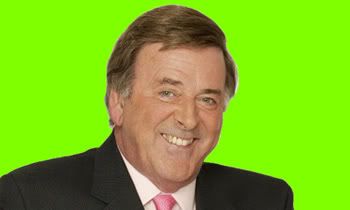
It's not often that people go to a music show, let alone one featuring classical music, for the compére as much as the acts. But that's what happens every year at the BBC's Proms in the Park, which has been presented by Sir Terry Wogan - who lampoons it as "Prawns/Prams in the Dark" - for fourteen years; the audience of 40,000 broke into chants of "Ter-ry! Ter-ry! Ter-ry!" several times.
The show was on the radio, which as far as I'm concerned is superior to the TV because we have a limited number of senses and the telly ties up two of them almost totally. But it was engaging, so much so that I put the Telegraph crossword down several times. That doesn't happen often.
This year's Proms in the Park opened with Strike up the Band by the BBC Concert Orchestra, conducted by Martin Yates. They also backed Icelandic tenor Garđar Thór Cortes and modern forces' sweetheart Katherine Jenkins, who performed live for the first time her operatic rendering of Evenescence's Bring me to life, which was given its first airing by Wogan on his Breakfast Show last week. If you have a look at this clip of her singing Music of the Night at the 2006 Proms (sorry, Pam!), you'll understand why Terry announced after her spot "that shattered a few windows at the Dorchester!"
Wogan's hilarity in the face of spin, bombast and hyperbole is the reason why he's so popular, even among folk like me who view the BBC with suspicion. He triggered diplomatic complaints from Denmark when, presenting the Eurovision from that country in 2001, he referred to hosts Soren Pilmark and Natasja Crone-Back as "Doctor Death and the Tooth Fairy", and his response to the swine-flu hysteria earlier this year was "pandemic - my granny!" Famously, when Northern Rock was nationalised after disappearing up its own bad debt he read out, on his show, an excerpt from Das Kapital in which Marx called for banks to be brought under state control.
The DJ has been referred to as one of the "untouchables" of the BBC, in that they don't dare get rid of him, no matter how politically incorrect he becomes, due to his audience figures - at the last count, eight million people tune in to his breakfast show every morning. So there was a sense of shock when he announced his retirement from Wake Up To Wogan last Wednesday; I felt I knew what it must have felt like to hear that the Beatles had split up.
And in true style in the Park, he lauded Martin Yates as "the only conductor who can play the spoons...Captain Corelli on his belly, and I won't tell you where he plays his Humperdinck...", and when the orchestra vacated the stage for Escala, announced that they'd just gone "for a quick fifteen pints". In his new book, he describes his "loyal, ever-offensive listeners" as "the gratuitously hurtful folk who declare that I'm very popular in hospitals because the listeners abed there are too weak to reach out and switch me off".
Proms in the Park goes for a lighter experience than is traditionally meted out in the Proms proper, but still Barry Manilow introduced his epic performance of Could it be magic with a section of Chopin's Prelude in C major whose chord structure inspired the music and shortly afterwards went into my favourite - Copacabana.
The last 45 minutes of the programme came from the Albert Hall, as we joined The Last Night of the Proms. I had planned to watch some of this on TV, but was frankly left rather cold by the thought of an Arnold overture with parts for vaccuum cleaners and floor-polishers, even if one of the latter was operated by David Attenborough. David Robertson, principal guest conductor for the night and musical director of the Saint Louis Symphony Orchestra, apologised for the misunderstanding involving tea in Boston, then used it as an excuse to gently chide the promgoers for inserting a glottal stop in place of the final "T" in Land of Hope and Glory's last line, "God who made thee mighty, make thee mightier yet". We also had those other two mainstays that make the last night so wonderful, Jerusalem and Rule Britannia before God Save the Queen ended the night.
The warm embrace of their country by so many of its (and others') young people was both comforting and poignant in the light of a report by the University of London's Insititute of Education that showed 74% of teachers surveyed as applying words like "brainwashing" about patriotism; a description, notes Cranmer, that many don't apply to "secularism, sex, contraception, abortion, drugs, global warming, anti-capitalism, the glories of the EU, the wonders of the UN and a myriad of Marxist agendas."
The BBC has expressed its discomfort with the night's "Britishness" in the past. I'm not sure whether it's now reconciled itself to the country it serves, or if corporate heads have been temporarily focussed by the thought that the next Last Night may take place under a government that values that country and its people more than Labour's actions and pronouncements show that it does.
Whichever, I live in hope that Sir Terry's retirement won't be complete. We need the sheer common sense he ingeniously wraps in a surreal coating. And I'm always happy to listen to somebody grumpier than me.
In his autobiography Mustn't Grumble, veteran surrealist DJ Terry Wogan describes the attachment that BBC Radio 2 listeners have to their weekday captains of the airwaves:
Radio 2 weekdays is a "personality" network. People don't listen to Sarah Kennedy, [now-retired] Jimmy Young or even me for the music. They listen because they've become attached to the person presenting the programme - and, because of the personal, very intimate nature of the radio, far more deeply attached than they would ever become to any presenter on television.
It appears that the first of this trio, Sarah Kennedy, has been "spoken to" for remarking on her Wednesday 8 July early-morning show that the late Enoch Powell was "the greatest Prime Minister that Britain never had".
This is as close to a mortal sin as you can get in the radically secularist broadcasting monolith. Enoch Powell started World War II as a private and ended it a brigadier, and had a parliamentary career lasting 37 years. He had many high spots as an MP - for example, his Address to the National Association of Mental Health Annual Conference while Minister of Health in 1961, often referred to as "the watertower speech", which set out an agenda to integrate psychiatric wards into the general hospital structure. But stormtroopers of the liberal-socialist axis categorise Powell by a 20-minute speech made to the Conservative Political Central group in a Birmingham hotel in 1968. It's referred to - wrongly - as the "Rivers of Blood speech", probably because of a reference to Virgil's Aeneid: "like the Roman, I seem to see 'the River Tiber foaming with much blood'".
The speech was about the impact of immigration upon Great Britain. It was delivered in the idiom of another time. I don't endorse phrases like "'in 15 or 20 years' time the black man will have the whip hand over the white man'", of course - but it wasn't original Powell, it was a quote from one of his working-class constituents.
And there's the rub: the dirty little secret that Labour and the BBC conspire to keep between them is that much of the racism we see today comes from the group that Labour sees as its natural electoral fodder - white working class people. We recently suffered the national humiliation of seeing two BNP (British National Party) candidates sent to the European parliament on a slogan of "the Labour Party your grandfather would recognise", elected by abandoned working class people - like an abused daughter seeking out an abusive husband - in constituencies gerrymandered to produce a Labour winner with a ridiculous proportion of the vote.
The disciplinary action against Kennedy seems to have spread shockwaves of compliance through Radio 2. The evening after, Stuart Maconie delivered a bizarre apology at the end of the show he shares with Mark Radcliffe because his guest, fellow presenter Claudia Winkleman, had referred to Oasis as "the best band in the world".
What happened next, on Winkleman's own show, Hot Gossip, was instructive. In a comedy show based on rumours about showbusiness types where anybody is ostensibly fair game, one of the panel started telling a joke about lesbians - and was promptly shouted down by Winkleman, who sounded fairly desperate to change the subject.
Loony leftists like the BNP (deliberately misbranded as "far right") will not be defeated by running away from sensitive issues and shooting the messenger on the flimsiest of pretexts; Kennedy's remark sparked 25 complaints. Compare the 63,000 protests against the screening of Jerry Springer: the Opera by BBC2 in 2005, or the 38,000 against Jonathan Ross and Russell Brand's obscene messages on Andrew Sachs' answerphone about his granddaughter. And what of enoch Powell? Having contributed decisively to the Conservatives' 1970 general election win, a 1972 opinion poll found him the most popular politician in the land. After having encouraged people to vote Labour in the 1974 election over Britain having joined the EEC (now the EU) under Tory Prime Minister Edward Heath, he returned as an Ulster Unionist MP after turning down an offer from BNP precursors the National Front to stand for them. I had always been puzzled as to why Labour hadn't taken on Powell in 1974, given the enthusiastic support shown by trade-unionists to his 1968 Birmingham speech. Professor Calculus provided an answer for me when he remarked that, had Labour Prime Minister Harold Wilson welcomed Powell into the party, he would have been welcoming his successor.
So when Sarah Kennedy described him as the best Prime Minister we never had - something that's unremarked upon when said of, say, Dennis Healey or Iain Duncan Smith - she was doing nothing but stating the obvious.
Sometimes the news seems to wrap me in darkness, and at these times I think it's good to reflect, among other things, on those parts of popular culture that point towards another place - upstairs, as it were. I'd like to share with you - with apologies to Pam H - ten songs that remind me there's still hope.
10 - Beautiful Sunday
I always smile when this comes on the radio (not often enough), as it carries memories of how a song, a smile and a skip can vanquish hard times under iron skies. In Scotland, this feel-good song was so popular that a dance was created specially for it called the slosh. You can see it here, but at a Scottish wedding or other sort of celebration, when the opening bars of Beautiful Sunday come on the men clear off and let the women get on with it - facing columns of women moving with military precision, we know our place. Actually it's quite fun to see your Great Aunt Aggie co-ordinating with all the rest in this simple dance:
1 - Take three steps to the left and kick right foot over to the left 2 - Take three steps to the right and kick left foot over to the right 3 - Take three steps to the left and kick right foot over to the left 4 - Take three steps back to the right, lift your left foot behind your right leg and touch your left foot with your right hand. 5 - Raise right leg and slap your thigh with your right hand. 6 - Raise left leg and clap both hands together under the raised left leg. Turn and repeat.
A male friend and I were once persuaded (dragged) onto the dance-floor to do the slosh to Beautiful Sunday. We were hardly fit for any more dancing for the rest of the night. But enjoy the song.
9 - Shine Silently
I love this song by Nils Lofgren - it always used to be on Terry Wogan's breakfast show, but you don't hear it so often these days. It just captures the way sometimes all you need from the one you love is for them to be there.
8 - Through the Barricades
Spandau Ballet's 1986 song about two people from opposed communities falling in love could apply to many situations, but Northern Ireland was on the band's minds as extremist leaders from both sides struggled desperately too keep alive the hatred that was key to their survival. There are still problems, but broadly hate lost.
7 - Love comes to everyone
George Harrison's cotemporaries once christened him "the Preacher" because he tended to bend their ear about the "Krishna consciousness" variant of Hinduism he was devoted to. Like the religion itself, Harrison could be somewhat syncretic, which did not always produce a jarring effect: in this song, "got to go through that door" in the first verse links with "knock and it will open wide" in the last, indicating that he's not talking solely about romantic love.
6 - Hallelujah
This song is one of the best in the history of Eurovision, I reckon, possibly second only to I treni di Tozeur. I've posted the version sung by Gali Atari and Milk & Honey on the night, because it has an English translation of the Hebrew that gets closer to what the writers were saying in that beautifully expressive language.
5 - Hymn
It's ironic that at a time when many hymnwriters were concentrating on the horizontal to the virtual exclusion of the vertical, Barclay James Harvest brought out a single called Hymn which did exactly what it said on the tin, with a story of the birth, life, death and resurrection of Jesus. Hymn came from the 1977 album Gone to Earth - this clip's from the 1980 Concert for the People performed next to the Berlin Wall.
4 - The Cutter
This Runrig song is the true story of a lorry-driver called Johnny Morrison who, at a time when people who moved from the north of Scotland to the south were still seen as emigrants, went to live in Canada. He made his fortune there but, at the time the song was written in 1987, still came home every year to cut peat on his mother's land. Even though I'm quite happily exiled in England, for me this song describes in literal form the link that ties us to the very land of our origin.
3 - Superbird
I love this song - performed by Tommy Steele on Terry Wogan's TV show - about the sort of God-given innocent childhood imagination that risks being "educated" to perdition. With the Superbird go green cheese on the moon and, a big target for many secularists right now, Santa Claus. As the song says, "there's time enough to wreck your dreams".
2 - Deliver us from evil
I love the setting for A night on Bald Mountain (sometimes referred to as A Night on the Bare Mountain) by Modest Mussorgsky, orchestrated for Walt Disney's 1940 film Fantasia by Leopold Stokowski. The manifold versions and stories behind this piece easily rival any Beatles minutiae. What strikes me is that the animation could have sprung from the imagination of Clive Barker, although the film was given a U (Universal) certificate in the UK. Some say the original tone poem was about a witches' sabbat, others that it represented disturbing images dreamt by St John the Evangelist on Patmos prior to the visions he recounted in the Book of Revelation - the composition's history is so tortuous we'll probably never know. Whatever, this powerful mix of sound and vision calms down when the Stokowski's simple toll of the Angelus bell gives way to a segment of Bach's Ave Maria. Whether you prefer the translation of Mt 6:13 and Lk 11:4 as "deliver us from evil" or the lesser-used "deliver us from the evil one", this fits the bill.
1 - Sweetest Feeling
I was exceptionally down some time ago when I heard Jackie Wilson's celebration of life and love for the first time in a while. It reminded me of what was best in my life, and things started to turn round. Every time I hear it since then I send a "thank you" upstairs.
Today I went to buy my first single for 8 years - I didn't succeed, though, because when I went to HMV I couldn't find the singles section. It was a bit simpler when you just had to look for the racks with 7" 45 RPM's...then I found out that the track I was looking for was only released as a single digitally.
I liked the warm, winsome feel of Mykonos by the Fleet Foxes the first time I heard it. It was redolent of many sounds, like CSNY, the Byrds etc while being beholden to none, the way a fine wine can suggest cinnamon, ginger and strawberries without any of those ingredients having been near it. And when Terry Wogan gave the track his seal of approval by calling it "strange but beautiful", I knew I had to have it. I found a version of their eponymous album containing an extra disc which had Mykonos on it, and which, in fact, to date contains all of their recorded music. So I breathed in the country-rock harmonies married to pastoral music - it was as if much of popular music from the Bay City Rollers to Robbie Williams had been nothing but a bad dream.
This gave me an idea. It occurred to me that many of the songs about places that I've heard over the years have struck a chord with me, stayed with me as it were. I'd like to share ten of them with you. Maybe you might even like to do the same.
The place is at the end of the Kintyre peninsula in a part of South-West Scotland I never got to know as well as I would have liked; the McCartney family bought a farm there shortly after the break-up of the Beatles.
I remember dancing to this at a school disco in Glasgow, at a time when you didn't hear many songs about Scotland in the charts. Some pseuds suggested that it wasn't Paul McCartney's best work, but I would put it up there with Eleanor Rigby, Let it Be, Pipes of Peace and all his many classics. I heard that the bagpipe band was offered either a one-off payment or a share of the royalties, and, deciding that a song with bagpipes would never make it, asked for the former. I bet they were kicking themselves!
After Johnny Cash looked at a map of Ireland - never having been there - and used the names to write Forty Shades of Green, he couldn't do anything wrong in the eyes of the various Scottish/Irish communities of the world. Even so, it was a surprise to go to Rome to study and find a group of Scottish blokes singing the college song, Remember the Alamo in thick (mostly) Glaswegian accents. I think a couple had relatives in the US, but the reason for the adoption of the song had been lost to posterity long before they came. Some suggested it went right back to Scottish singer Donovan's version of the song, released two years after Cash's in 1965. Whatever the origins, this stirring tale of the bravery of a group of men following Travis, Bowie and Crockett in their doomed attempt to prevent the surge of Santa Anna's troops into the (then) Republic of Texas has as its chorus the battle-cry of of the troops in the Battle of San Jacinto, when the Mexican army was driven out of Texas: Remember the Alamo!
We never worked out why Alice e Battiato, the duo singing for Italy in the 1984 Eurovision Song Contest, were singing about a deserted Tunisian town, but in terms of writing and production this is a consummate pop song and they deserved to win. It was certainly better than Britain's Love Games, sung by Belle & the Devotions, who made it sound like a half-hearted warm-up for a Three Degrees tribute band. The winners were Sweden's The Herreys with Diggi-Loo Diggi-Ley, in which they sang about their magic shoes. But the lyrics of I treni di Tozeur are perfectly crafted - and the video's got a steam locomotive.
During the spring and summer, the people of Glasgow had a venerable tradition of taking a ride on a paddle-steamer down their river to one of several coastal and island towns - Dunoon, Rothesay, Tighnabruaich, etc - that was called going "doon the watter". Only one ship does this now: the Waverley, the world's last ocean-going paddle-steamer. The ship features in this video of The Song of the Clyde, which is about going doon the watter, sung by tenor Kenneth McKellar, a Scottish "national treasure" whose fine voice was ignored by the classical world because he chose to sing traditional folk songs for a popular market instead of pursuing a career in opera. Looking at the careers of Pavarotti, Domingo et al, his crime appears to have consisted of being ahead of his time. I hope you enjoy the song, and looking at my old stamping-ground.
6 - Palace of Aranjuez
This is a section of a classical concerto, not a song, but I didn't want to make the title of the blog too unwieldy. This is the adagio, the middle of the three segments of the Concierto de Aranjuez of 1939. Some people have asserted that the bombing of Guernica during the Spanish Civil War may have had an input into the piece's sad theme, and that may be, in part, true. But others have asserted that Joaquín Rodrigo wrote it after his wife suffered a miscarriage. This is closer to the truth, but again not quite accurate. Rodrigo gave an interview, aired on British TV shortly before his death, in which he said that he composed this piece while his wife was going through the miscariage, the hell - for both of them - of wondering whether their baby was going to live or die. The slow, minor theme between guitar and clarinet that kicks off the piece is Rodrigo praying to God for his and his wife's baby; this eventually gives way to ever more frantic flamenco-inspired strumming, as he begs so feverishly for the child's life that man and prayer become inseparable; and then we have an orchestral reprise of the guitar's original theme - if what went before was his Gethsemane, this is his "your will, not mine" moment. It's one of the few pieces of music that make me want to weep and is, I think, a perfect international anthem for the unborn.
Noël Coward is said to have written this song while sitting in a bombed station during the Blitz. Much more of a "man of the people" than either his accent or detractors might suggest, he was fiercely patriotic: if you listen carefully, you can occasionally hear short parodies of Deutschland über alles. London Pride (Saxifraga urbium) is a perennial flower: both it and Londoners can thrive just about anywhere, not least in the bombed-out shells left by the Blitz.
Jimmy Webb wrote three place-name songs for Glen Campbell: Wichita Lineman, By the time I get to Phoenix, and my favourite is this - although it wasn't until recently that I found out the meaning of the song, that US Marines would leave Galveston to travel to Vietnam. When I realised that, then the words, coupling the optimism of youth with an ever-present awareness of one's mortality that perhaps belongs to older heads, took on a whole new meaning.
Né en 17 à Leidenstadt was written by Jean-Jacques Goldman, who wrote songs for Celine Dion when she was singing in French. Goldman, who is French but has Polish Jewish forbears, imagines himself being born on the site of a humiliating defeat for the Germans towards the end of World War I and asks if things would have been different for him had he been born German. Then the focus goes to Belfast (this was 1990 - before the Peace Process): would one have been able to reach a hand beyond one's tribe? And finally, the late great Carole Fredericks sings the lyrics wondering if she'd have heard the voices saying that things would never be the same if she's been born white and rich in Johannesburg. A very engaging song - and the sampled bagpipes in the chorus are the icing on the cake.
I was taught this song as a young'un, and was delighted when a Scottish group called Runrig, who came originally from the isle of Skye, released it in 1979. It was good to hear a Scottish group singing in a Scottish accent; although it's a bit strange, now that original singer Donnie Munroe has left, to hear Canadian Bruce Guthro speaking in an American accent and singing in a Scottish one. I hope you enjoy the video of Donnie performing it with the band.
I knew I wanted to end this blog with the idea of home, but wasn't sure about the song: Home Loving Man by Roger Whittaker, for example, or Back Home Again by John Denver, or Going Home by Runrig? The thing is, to me, home isn't so much a function of the location of one's birth, as of the people that accrue around you as the years go by. I think, personally, that the process of going home is a pilgrimage from culture to identity and from place to people, whether or not life leaves you where you were born. Personally, I was born in Glasgow, and, moving forther afield, upon meeting Maxima knew that I'd come home, which was no longer a set of co-ordinates but a person, then a group of people. There are still some people I love in Glasgow, and I enjoy going to visit them; then I come home.
Maxima currently has a bug, so I've come into XV, the local charity shop, to open up for the knitting group she usually hosts. I'm glad I did, because, being unable to access my computer due to having messed up reloading Windows, I went online here and found that Linda from "Don't poke the baby" has kindly tagged me in a game of tag (we called it "tig" in Scotland, but the pun doesn't work so well) which originated with Kalona from Knocking everywhere.
I tag lots of bloggers though my "blogs I follow" and my blogroll. The tags we list seem to be limited to four or five, so here are my selections:
1 - Pam H - a non-blogging blogger who often gives me the benefit of her faith and wide experience. Hope you start blogging soon, Pam!
2 - Don't Poke the Baby - points of view from a Roman Catholic home-schooling Mum, gardner and photographer. Great stuff, and brilliant photos too.
3 - Witness to Love - a pro-life, pro-Christianity blog specialising on the rights of children from the point of view of Radagast, a senior teacher in a Roman Catholic school.
4 - John Smeaton - SPUC Director - a blog from the head of the Society for the Protection of Unborn Children, on pro-life matters from Britain and abroad.
5 - Cranmer political and religious news from all over the world and the spectrum of Christianity, seen from an Anglican viewpoint.
Here's my six favourite things:
1 - living in the Fens of East Anglia, where my children have a much better chance of having a childhood than in the sink estate where we used to live in Glasgow, a city which all too often eats its children.
2 - as above, from the point of view of religion, which is far, far less tribalised than in south-west Scotland.
3 - the Christian communities centred on St Gallicus' in the Draughty old Fen.
4 - the blogosphere, where everybody who wants to can have a voice.
5 - memories of sitting at my Mum's knees and hearing her stories of growing up in Glasgow before and during WWII, and of her Dad, a Sergeant in the Argyll and Southern Highlanders.
6 - Waking up to Sarah Kennedy's early-morning show on Radio 2 so that I can catch Terry Wogan's show from the start. A wonderfully irreverent man with a politically incorrect streak running through his surreal humour that gives a voice to the ideologically unbeautiful.
Thanks for wishing me happy St Nicholas' Day, Linda - the same to you and to everybody reading this!
Frugal Dougal Happy Yellow Dog of the Fens (by appointment)
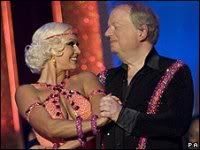
Tonight I cried seeing John Sergeant's last dance on Strictly Come Dancing. Or at least I wanted to join the Facebook group of the same name, referred to in the Telegraph's article on the veteran political journalist's controversial exit from the BBC celebrity dancing competition - better known internationally under its syndicated title Dancing with the Stars, but couldn't locate it. So I joined Facebook's Boycott Strictly until they bring back John Sergeant! instead.
It really is a shame, as I wanted to get in touch with my warm, fuzzy and lachrymose side after being referred by Felix Hominum to the Typealyzer, whose "bloganalysis" of me stated that I "might come across as arrogant, impatient and insensitive to people that need some time to understand what they are talking about." Still, being the "logical and analytical type", I knew all about my arrogance, impatience and insensitivity from the start, and massively intelligent people like myself have no time for crying over shrinking violets who get kicked off variety shows.
To get back to Sergeant, though, he didn't actually get kicked off. He resigned after being bullied by the show's four judges - Len Goodman, Arlene Philips, Bruno Tonioli and Craig Revel Horwood - who would make caustic comments, calling his dancing a "travesty" and referring to him as a "dancing pig", Philips going as far as turning up on BBC Radio 2 (I think it was on the Steve Wright show) specifically to brief against Sergeant. Sergeant had previously commented that the purpose of the show was to entertain, and that the BBC had signed his contract on this with its eyes open, a point he iterated during a press conference explaining his departure:
This attitude from the BBC is reflective of its general tendency to eat its own children when they are no longer ideologically beautiful. Rolf Harris, probably the most talented painter of our time and presenter of the BBC's most popular art programme ever, has spoken of his frustration that he "can't get arrested" by the BBC because of its ageism.
As part of his commitment to charitable giving, Harris is reissuing his 1969 hit Two Little Boys with all proceeds going to The Poppy Appeal on the 90th anniversary year of the end of the First World War.
I can't knock the BBC on the subject of supporting charities. However, if you want to give ethically, charitable giving at a remove can be vexed. For instance, I was quite devastated to find out from Radagast's blog, "Witness to Love", that BBC Children in Need, the brainchild of my hero Terry Wogan and a charity I've supported financially and on this blog, has supported
organisations like Brook Advisory and members of the Association of Medical Research Charities (AMRC) during the last 17 years. Brook Advisory is one of the largest abortion providers in the UK and the AMRC campaigns for the use of human embryos in ‘research’ and supports the development of contraceptive vaccines for use in influencing “world population problems”.
I'd like to know if Wogan knows about this and, if he is aware and supportive of it, I think it would be interesting to hear how he defends it.
The big story about the BBC, of course, is that behind criminally obscene phone calls made by Jonathan Ross and Russell Brand on the latter's radio show to the grandfather of a woman Ross claimed Brand had had sex with. The backdrop to this particularly tawdry episode in the decline of a great broadcaster is becoming more and more incriminating to ever more senior BBC managers, it now appears that Lesley Douglas, former Radio 2 controller, didn't even listen to the programme pre-broadcast; who on earth was supervising the woman? And haven't executives realised that the whole farce may have legitimised, in the eyes of some, upsetting phone calls to the families of BBC broadcasters and managers as a valid course of reparative action?
The BBC makes some of the best content in the world, but is also adept at clawing at the bottom of of the barrel - not just with the abovementioned; a general abrasiveness pertains which saw a comedian in Mock the Week make "a highly offensive remark about the Queen" - on a programme that was repeated as the Ross/Brand scandal raged.
In the article linked to above, we are told that David Davis MP is urging people not to pay their licence fees - currently at £139.50 ($208) until the last possible moment. Others, most notably the Spectator's Charles Moore, are spearheading a move not to pay the licence fee at all, but rather to donate the money to charity - in Moore's case, Help the Aged, to highlight the BBC's ageism.
We need to hit the BBC, we need to hit them hard, and we need to keep on hitting. So, tomorrow, Maxima and I are going to get our heads together to discuss what for me may be the second time in my life when I have knowingly broken the law (the first time being when I bought Minora cigarettes, but that's another story). I'm not telling people that they should break the law similarly, but there's certainly a lot of good causes that need money - one I can think of off the top of my head is Across.
As for Strictly Come Dancing, I won't be watching the rest of the series - a subsidiary reason being Len Goodman's remark to dancer Christine Bleakley to "whip off your knickers and swing them in the air", which seems to have been the reason for a remark from host Bruce Forsyth, later in the show, about the programme going out before the watershed. The main reason, however, is that I don't need to watch it any more to find out who won. The moral victory goes to the beautiful, elegant and dignified Kristina Rihanoff, and the equally dignified (if slightly less beautiful) John Sergeant.
In today's Telegraph, Christopher Howse speaks of the moral philosopher G.E.M. (Elisabeth) Anscombe, starting by quoting her entry in the Oxford Dictionary of Biography - "all her children were told how to prepare meals".
Sometimes it feels that Minora and I are drifting apart, possibly like many adolescent girls and their Dads. There've been times when I should have been the bridge-builder after a spat, but in reality it is she who has eased the path with a culinary concoction, which may come from a range of books from my Granny's 1920 book of "Plain Cookery Recipes" from the Edinburgh School of Cookery and Domestic Economy to Maxima's Weightwatchers' Cookbook.
Food can be a strong tie between parents and children - case in point: parents passing fish and chips to their children through the railings of Rawmarsh community School in South Yorkshire when Jamie Oliver was brought in to oversee a school meals policy which, while it may have been ideologically healthy, was not at all popular...and I'd like to know why the Government hasn't yet noticed that chips are in fact healthy; they're made from potatoes.
Unfortunately, sometimes ties from children to parents aren't always reciprocated. During this year's Children in Need telethon, Terry Wogan said, "if you've read the papers over the last couple of weeks, you've an idea what can happen to children". This, I believe, was a reference to the awful case of "Baby P", a 17-month-old child who was murdered after being visited 60 times by services in Haringey, the borough in London where Victoria Climbié was slaughtered under the gaze of social and other services - and six months after former Haringey social worker Nevres Kemal wrote of her fears that another Victoria Climbié situation was waiting to happen to the then Secretary of State for Health Patricia Hewitt, copying her letter to then junior health ministers Rosie Winterton and Ivan Lewis, as well as local MP David Lammy.
Children in Need started in 1980 as "the telethon", presented by Terry Wogan, Sue Lawley and Esther Rantzen. The latter went on to found Childline, which played an invaluable role in providing children with the means to report abuse; but she came to regret that the concept of child protection was hijacked by "insidious jobsworths" who had an agenda to suppress competitive games and any risky activity whatever.
Of the three, only Wogan has remained with the yearly event, now in its 28th year, quickly replacing histrionics with hilarity - probably the most efficient way to break down barriers and facilitate empathy with people who are different to us.
And to open wallets. Last year, Children in Need raised £19 million on the night. It had been widely forecast that in the light of the economic downturn a more modest total should be anticipated, but by the end of the night of 14th November Sir Terry's humour, humility and happy surrealism had helped garner nearly £21 million - with the help of many friends, for example the soap opera Eastenders' take on several West End musicals:
The thing is, there seem to be more children in need every year. But what are they in need of? In some cases the answer is simple - motorised wheelchairs that enable participation in sports, for example, or nurses to look after one brave young chap who had survived a difficult birth with multiple disabilities, to be a source of inspiration and love to his family.
One vignette showed a boy in his early teens who had all but given up on his Dad, who was addicted to crack. One had the uncomfortable impression, in the light of recent news, that the lad was representative of a tsunami of anomie; but this young man was working to make his community a better place - he wasn't content to assume the victim status that much of the mainstream media demand in return for fifteen minutes of fame.
It occurs to me that Children in Need is unusual in the modern BBC, because it not only assumes but demands moral givens: that children have a right to childhood, and we have a duty to protect it. It is beset by many slings and arrows, for example the illusion that sexual "freedom" (which usually refers to men's freedom to love and leave women) has benefits which trickle down to children. While Ludwig Wittgenstein, Elisabeth Anscombe's mentor, averred that ethical statements belonged in the same realm as art and aesthetics, Anscombe beleived that, for instance, if you owed money, your obligation to repay the debt was as much a fact as the debenture's existence. She wrote in 1972:
If Christian standards of chastity were widely observed the world would be enormously much happier. Our world, for example, is littered with deserted wives - partly through that fantastic con that went on for such a long time about how it was part of liberation for women to have dead easy divorce: amazing - these wives often struggling to bring up young children or abandoned to loneliness in middle age. And how many miseries and hang-ups are associated with loss of innocence in youth! What miserable messes people keep on making, to their own and others' grief, by dishonourable sexual relationships!
It's not necessary to take such an overtly Christian view to maintain a moral outlook: Kant's moral imperative was categorical, ie one should do the right thing regardless of one's inclinations, and it should be assumed that any single situation which presents a moral dilemma must be addressed as if the solution to that situation constitute a universal law.
Maxima once suggested to me that the conflicts I have with Minora point to the freedom she has to have such conflicts. Freedom sometimes seems like British gold reserves - non-existent, but still widely regarded as valuable. But, year after year, Children in Need shows that many young people aren't content with fools' illusions - they want the real thing. And while Sir Terry is in charge of Children in Need, nothing but the real thing will do.
Tomorrow night, Channel 5 will broadcast a documentary featuring a burlesque artiste with the name Voluptua with a title similar to the above, although being a fan of customisation I've chosen my own imprecation.
For those unsure of the situation, the Daily Mail's Melanie Philips published an article on 27 October detailing the implications of a situation that not many of us were aware of: on Saturday, October 18, Russell Brand had Jonathan Ross as a guest on his BBC 2 radio show. Andrew Sachs, a venerable veteran of TV and radio, was due to do an interview over the phone, but was unavailable, therefore messages were left. The messages were about sexual relations the pair, but especially Ross, claimed to have had with Sachs' granddaughter, Georgina Baillie (Voluptua), and an attempted apology in the form of a song was even more explicit; their view was the immature, sexist and even misogynist one that if a woman does a certain job then she is "fair game" - and so, apparently, is her 78-year-old granddad.
The show has an audience of about 400,000 mostly young people (compared with, say, 8 million of all ages for the station's Sir Terry Wogan), so comment on the show initially eddied lazily around various Facebooks, Bebo's, etc. Two complaints were made, after which the segment was pulled from the show's podcast and listen-again site.
After Ms Philip's article, complaints had reached 18,000 by 31 October, and around another 20,000 accumulated in another two days. The BBC called it a record number, but that record actually belongs to Jerry Springer - The Opera (63,000 complaints with no heads rolled).
To cut things short, on 29 October - a full 11 days after the incident, Brand and Ross were suspended, and Brand resigned. The following day Radio 2 Controller Lesley Thomas, who had worked her way up from the post of production assistant, resigned.
What the controversy was about was that the show was not broadcast live, but had been recorded beforehand so that a producer could check through for offensive material. None was marked up on the appropriate sheet. The two managers over the producer were on holiday - but isn't that what the on-call system is for?
Even so, the person there with the sheet should have known that putting Jonathan Ross and Russell Brand in the same room would require going through the recording with a fine-tooth comb, because both of these figures have form.
Jonathan Ross has sexually humiliated Gwyneth Paltrow, Nicole Kidman and Halle Berry, among others, on his Friday night TV show. Russell Brand showed up for a show dressed as Osama bin Laden on September 12 2001, called George Bush a "retarded cowboy" on TV, and on the same MTV awards show claimed to have "won" a purity ring - a sign of a vow to remain chaste until marriage popular in the US - from a male star. (Could be that he was feeding his sex addiction, except he seems to regard sex with relish. Take it from a former addictions worker, Russell, if you experience significant positive reinforcement - ie if you enjoy it - it's not an addiction...)
The political reaction has been strong - so much so that the incident stood shoulder-to-shoulder with the American election and the recession in last week's Spectator. David Cameron said, "we need to know who made the decision to broadcast it? How high up the editorial chain did it go? Who examined it? Why did they conclude that it should be broadcast?" Having said that, Ross burnt his boats there when he made obscene remarks to the Conservative leader about Baroness Thatcher on his show; I'd like to know whether he merely wanted to take Cameron down a peg, or was also under instructions to do so.
The Prime Minister demanded that the BBC take "appropriate action." In the light of what a report by the "Stop BBC Bias" group in 2004 alleging a "cosy" relationship between the two organisations with frequent "job-swapping", including Tom Kelly, Martin Sixsmith and Bill Bush, what "appropriate action" might be makes the mind boggle.
Mary Whitehouse might not have approved of Baillie's burlesque group, the Satanic Sluts, but she would have known right away how to deal with Brand's and Ross's treatment of hte performer. She would have written to the Prime Minister to say that legally it was the Government who was responsible for the BBC - because they had no answer to this, then PM Harold Wilson's office's reaction was to "lose" the letters. In similar fashion, the BBC initially appeared to have "lost" Andrew Sachs' complaint about the Brand/Ross phone calls, but was later forced to admit that this was a lie. BBC Director General Mark Thompson seems to be getting ready to go for the Gordon Brown award for mobilising lifeboats from the ship you've just scuttled by saying how quickly the BBC (eventually) reacted. No doubt, as in any monolithic organisation, he'll then proceed to airbrush out the truth by dissolving the facts in a deconstructionist substrate that leaves nothing but a series of narrative strands of equal (ie no) value. He will then invest in Ross and Brand's future by piling all the corporation's sins upon their back, thus facilitating their eventual return as victims. Except...it's happened again.
On Sunday night, a show that Jeremy Clarkson had pre-recorded and that was passed by BBC executives was broadcast, containing Clarkson's assertion that being a lorry driver is "a hard job - change gear, change gear, change gear, check your mirrors, murder a prostitute, change gear, change gear, murder" (possibly a reference to the conviction of a lorry-driver - the "Suffolk Strangler" - in Ipswich earlier this year for murdering five prostitutes).
We need to respond to the BBC's constant attempts to corrupt our children, attack our faiths and abuse uninvolved bystanders by complaining, complaining and complaining again - and not settling for the bug letter.
Apart from obviously Mr Sachs, the greatest injustice in this case seems to have been visited upon Lesley Douglas - I wish she hadn't seen, or been shown, the need to resign. The incident happened on Mark Thompson's shift as well as hers. She caused consternation with her decisions to hire Chris Evans for the drivetime show and Jeremy Vine to take over Sir Jimmy Young's talk-show, but was proved to have a sense for pure gold.
Part and parcel of being as senior as Mark Thompson is includes 24/7 responsibility - everything that happens does so on your shift; as the sign on US President Harry Truman's desk proclaimed, "The Buck Stops Here". Hopefully, as Mr Thompson realises that this isn't going to go away, he will realise the wisdom of inviting her back for some tea and humble pie.
The Draughty Old Fen, Cambridgeshire, United Kingdom
An incurable old cyber-grumpy, I like good music, cats, bacon sarnies and anything to do with Terry Wogan. Raining on ideological parades is the cream in the coffee.
Latest 50 educational institutions accessing Tales From a Draughty Old Fen:
No endorsement by the institutions listed below of the website or any post is intended to be inferred. Click an organisation's link to go to its website.

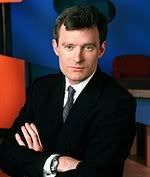 Some time ago, Jeremy Vine, who runs a talk show in the early afternoon on the same show, spoke about how he "feels unable to talk about his faith on his show because he fears how people would react". It's a fair point: the BBC is famously phobic as regards treating this country's Judaeo-Christian heritage with anything resembling respect.


 laints from Denmark when, presenting the Eurovision from that country in 2001, he referred to hosts Soren Pilmark and Natasja Crone-Back as "Doctor Death and the Tooth Fairy", and his response to the swine-flu hysteria earlier this year was "pandemic - my granny!" Famously, when Northern Rock was nationalised after disappearing up its own bad debt he read out, on his show, an excerpt from Das Kapital in which Marx called for banks to be brought under state control.



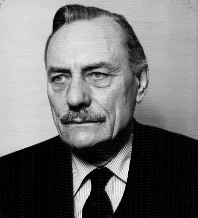 This is as close to a mortal sin as you can get in the radically secularist broadcasting monolith. Enoch Powell started World War II as a private and ended it a brigadier, and had a parliamentary career lasting 37 years. He had many high spots as an MP - for example, his

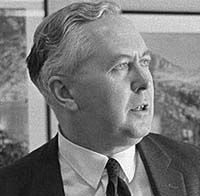
 , Channel 5 will broadcast a documentary featuring a burlesque artiste with the name Voluptua with a title similar to the above, although being a fan of customisation I've chosen my own imprecation.
 pared with, say, 8 million of all ages for the station's
 ck our faiths and abuse uninvolved bystanders by complaining, complaining and complaining again - and not settling for