Showing posts with label cannabis. Show all posts

Sunday, December 13, 2009

the education issue

click to see how Statcounter worksI've only had a Statcounter account for a year or so, so I don't know at what point schools and universities started accessing this blog in large numbers. But that they do is gratifying. For a couple of months through Statcounter, I've been keeping a track on what schools authorities and boards, universities and other educational institutions and charities have been accessing the blog, and what posts have been the most popular. This has led to me keeping a rolling tally of the last 50 universities etc to access the blog, down on the bottom of the sidebar to the right.

I blog about popular culture against the background of Judaeo-Christian faith traditions and conservative political views and, when I'm not writing about things like cookies (see the previous post) try to research topics exhaustively. I write for the only person you can honestly write for - myself - and am glad that, alongside several online friends I've made like Linda Pam and Revd Bosco, academic instutions have chosen to follow the blog, some quite regularly. I hope you all continue to enjoy it.

I've posted a full top 30 over on the Top 30 from the Fen site; here's the top ten. (Note: it would be mischevous of me to mention which posts were accessed by the Houses of Parliament and the US House of Representatives, so I won't.)

Maureen Hamilton, who allowed her last days to be captured to show young people the risks of smokingUnderage smoking is more stupid than criminal An unorthodox but time-honoured way to discourage an underage smoker, using inclusion instead of stigmatisation. Accessed by schools authorities internationally.


Was the presidential election a set-up?When Goulong Li went head-to-head with Tom Chigbo for the presidency of Cambridge University Student Union, university dons took the unprecedented move of briefing against Li in local and even national newspapers, professing their shock at his opinion - which he had spoken freely for a year and a half - that homosexuals could be "cured". But the point at which he lost the election may have been when, during the filmed hustings, he took his Bible from his pocket. This post was very popular in both Cambridge and universities across the US.


Cannabis policy's in no more chaos than usual As Frank Nutt's supporters predict Bad Things for drugs policies in the wake of his removal as head of the Advisory Council on the Misuse of Drugs, I find myself in the unusual position of supporting the government on his sacking.




celebrity culture eats its own children, and nobody profits more than editors like Abigail BlackburnAbigail Blackburn and the truth about pregorexia Celebrity culture eats its own children, and nobody profits more than editors like Abigail Blackburn. Written about a documentary by singer and model Louise Redknapp, the post has been enduringly popular within and outwith educational establishments.


Anne FrankAnne Frank In the display on Anne Frank in Cambridge's Addenbrooke's Hospital - the foundation was delivering diversity training - we saw the world famous picture of Anne staring into a future she would never see. Accessed by some universities, but predominantly by schools.


Norman Tebbit and the art of Risk Former Conservative Party chairman Norman Tebbit showed a magisterial understanding of the concept of risk when he suggested voters could elect smaller parties as a reaction to the MPs' expenses crisis. Councils, schools and insurance companies take note.


population control is a fatal misconceptionFatal Misconception - the struggle to control world population Indira Gandhi's first government collapsed in chaos because of population control measures drawn up by white westerners, but eugenics has returned. Very popular in India for reasons that become obvious, but also internationally, and by some surprising institutions.


Good taste back on the horizon - how mad are you? A documentary recreating David Rosenhahn's 1972 experiment involving "pseudopatients" admittied to a psychiatric ward - with surprising results.


contains spoilers!Harry Potter and the Deathly Hallows From Harry Potter through such stopping points as Odysseus and back - but contains spoilers: big ones! Both unis and schools seemed to like this one.


Chlamydia, koalas and killer sex education The government is attacking the epidemic of chlamydia in young people on two fronts: firstly, by grafting it onto its campaign to delay early sex; and secondly, by handing out condoms to the population it's trying to delay early sex within.

Sunday, November 1, 2009

cannabis policy's in no more chaos than usual

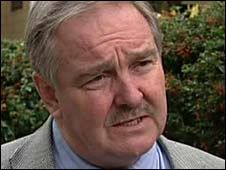
David Nutt - click to read BBC report
I'm not accustomed to find myself in agreement with anything the Government does, but today I must laud their decision to finally rid themselves of Professor David Nutt.

Until Friday 30 October, Nutt chaired the Advisory Council on the Misuse of Drugs, a body set up by the Misuse of Drugs Act 1971 to do what it says on the tin: advise the Government on drug-use and strategies to control it.

Nutt is no stranger to controversy, most famously this January when he published a paper in the Journal of Psychopharmacology called Equasy - An overlooked addiction with implications for the current debate on drug harms, in which he described a group of symptoms in a woman

who had suffered permanent brain damage as a result of equasy-induced brain damage. She had undergone severe personality change that made her more irritable and impulsive, with anxiety and loss of the ability to experience pleasure. There was also a degree of hypofrontality [lower metabolic activity in the frontal regions of the brain causing impaired concentration] and behavioural disinhibition that had lead to many bad decisions in relationships with poor choice of partners and an unwanted pregnancy. She is unable to work and is unlikely ever to do so again, so the social costs of her brain damage are also very high.
Equasy turned out to be Equine Addiction Syndrome - horseriding (does the author have a Jilly Cooper habit?); and Nutt showed a little later in the paper why he had been such an ideologially beautiful choice for the Labour Party to head a quango: "Violence is historically intimately associated with equasy – especially those who gather together in hunting groups; initially, this was interspecies aggression but latterly has become specific person to person violence between the pro and anti-hunt lobby groups."

He was forced to apologise by then Home Secretary Jacqui Smith for trivialising the dangers of ecstasy, but has continued to insist it is relatively harmless in the face of damage caused by other drugs, particularly alcohol.

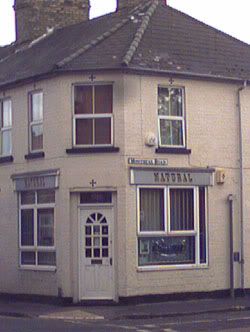
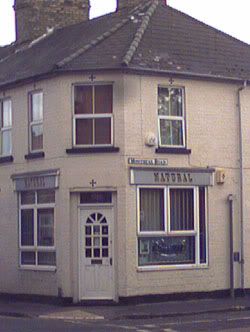
Natural in Cambridge - click to read about the head-shop in the Cambridge NewsI don't know any drugs worker who would disagree with this. One question commonly used in training is to ask what would be the major cause of substance-related conditions you'd see if you sat in a busy Accident and Emergency Ward (or Casualty, Emergency Room, etc) from Friday night to the wee hours of Monday morning. The answer, duh, is alcohol - with maybe a few heroin overdoses and overheating/dehydration and heart palpitations caused by ecstasy and other stimulants - hence the current debate about how to control alcohol consumption by people prone to binge-drinking.

What seems to have done for Nutt, however, is his allegation that Prime Minister Gordon Brown reclassified cannabis from a class C to a class B drug, after it was taken down from class B to C by former Home Secretary David Blunkett under Tony Blair in 2004, for political reasons.

Nutt's gotten hold of the wrong end of the stick. That first reclassification, in my view, was the political move. Votes were perceived in easing up on cannabis smokers and so, in the teeth of opposition from the police, the drug was placed into the lowest class of illicit substances. Almost immediately, people were popping up all over the place saying that cannabis had been legalised. Shortly afterwards, public and professional concerns about the link between cannabis and mental illness began to mount.

This was no knee-jerk reaction. In the early 1970s, when Nutt graduated from medical school, cannabis contained 1-2% THC (tetrahydrocannabinol, or to give it its Sunday name, Δ9-Tetrahydrocannabinol), the drug's main euphoriant. Now, the "super-strong" version of the weed called skunk, which has been selectively bred to increase the THC present, has up to 15% of the stuff. Skunk started appearing on British streets in the early 1990s, long after Bill Clinton did not inhale or some future British pyou don't know what you're getting without an electron microscopeoliticians did, as they used to push each other out of the way to tell us.

The thing is, if you increase the amount of one substance in the plant, other substances will be present in smaller proportions - one being Cannabidiol which, asserted Zuardi et al in a 2006 paper, actually functions as an antipsychotic. So people whose genetic trigger predisposes them to developing a psychotic condition are more vulnerable to having it pulled by cannabis.

And there's the rub. The UK Cannabis Internet Activists association resuscitates the uncaring utilitarianism of Mill Senior that Mill Junior had tried so hard to kill by looking at the number of people who would have to be discouraged from smoking cannabis to prevent one case of psychosis, concluding that "around 3,000 heavy cannabis users, or 150,000 light users" would have to be prevented to achieve this goal. [Update 2 Nov: they were quoting research from various universities - see their comment at bottom; my apologies.] If they want to use the NNT (number needed to treat) measure, though, it shouldn't be considered solely for a single issue: perhaps it might shed light on the effectiveness of the HPV vaccination, or the medicines being thrown at the swine flu. Or, indeed, we might look at the number of arrests needed to turn one burglar onto the straight and narrow, and conclude that theft should be legalised. And I suppose it's sweet that the Government doesn't persecute and slander every group denying establishment orthodoxy - in the UKCIA's case, that cannabis can cause schizophrenia.

Frank poster campaign arond cannabis - click to see its interactive websiteBut psychosis isn't the only risk of cannabis use. There's also the phenomenon - whose existence is admittedly disputed - of amotivational syndrome, where somebody feels a reduced desire to work or sometimes even get out of their chair - indeed, government drugs helpline Frank used the tagline "Have you become an expert of antique furniture, gardening and daytime cookery programmes?" on one of its posters raising awareness of the amotivational effects of cannabis. There was, it's true, a famous study on labourers in Jamaica who smoked "ganja" heavily that dismissed amotivational syndrome by showing that they did more work when on cannabis; but what's less often mentioned that the work done in between using cannabis was often found to have been carried out with impaired concentration and not quite finished. My own experience of middle-aged people who had used cannabis since their teens was of blank faces asking "what have I done with my life?"; and their partners, if they'd stayed, asking "what have you done with my life?"

I don't know why Nutt ignored all this in his demands for cannabis to be legalised - perhaps for ideological reasons, or possibly he wanted to be perceived as being "down with the kids". This chocolate teapot of a functionary fails to deal with the fact that only a government set on populating psychiatric wards and prisons would legalise skunk, therefore the cannabis "factories" - houses where every square foot possible is dedicated to growing strong cannabis, which can pull in £20,000 per month with overheads diminished if the "gardeners" are trafficked children instead of adults paid with the drug - would have no impetus to close down.

Daniel Hannan MEP - click to read his article on Frank NuttUltimately, despite claims to the contrary, British drugs policy is in no more of a state of chaos than it usually is for Nutt's departure. The hiring and firing of senior public servants is a function of government, and if we don't like a government's choices, then we change the government at the soonest possible opportunity. As Daniel Hannan MEP states in a Telegraph articleclick to go to the Advisory Council on the Misuse of Drugs homepage entitled Perhaps we should abandon democracy and be ruled by Prof David Nutt, "Have we really lost confidence in our ability to govern ourselves through the ballot box? What fools our fathers were if this be true."

Related post: Rizla - a smoke or a toke?

Monday, August 31, 2009

in praise of betrayal

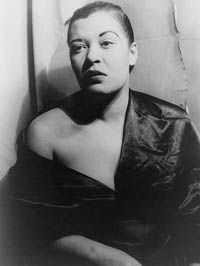
Billie HolidayI'm not proposing that betrayal in general be praised, merely that some instances of betrayal can have a decidedly therapeutic effect in a manner that I can only describe as praiseworthy.

Take Billie Holiday, for example. Various motives have been forwarded for her agent, Joe Glaser, turning her over to the police in 1947 because of her heroin habit, including a suggestion that she was a "trade" and the return was blind eyes dutifully turned to the cannabis habit of Louis Armstrong, another of Glaser's acts. But Holiday got clean in prison, and almost certainly lived a little longer to enrich our lives with her music - until liver-disease took her in 1959.

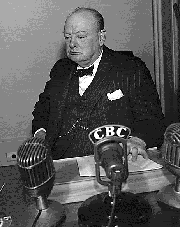
Winston Churchill in Quebec, 1943 - click to read his story at the Winston Churchill Memorial Trust.  Thanks to the FDR Library for the pic.Winston Churchill entered Parliament as a Consrvative Party MP in 1900, and crossed the floor of the House of Commons to join the Liberals in 1904 in protest, partly, at lack of rights for trade unionists; twenty years later, with experience as Home Secretary and First Lord of the Admiralty under his belt, he rejoined the Conservatives His comment?Anyone can rat, but it takes a certain amount of ingenuity to re-rat".


You can't get far in a discussion about betrayal without mentioning the Big One. DaJudas with black halo, detail from a stained window in St John the Baptist Church in Bruford - click to go to websitente has Judas being eternally chewed in one of Lucifer's three mouths (between Brutus and Cassius) in a circle of Hell named for him with the anti-Semitism that besmirched much of the times: Judecca. In his 1910 article for the Catholic Encyclopedia, William Knight shows how thinking had become more subtly nuanced over the centuries by mitigating the condemnation somewhat with the assertion that the whole episode is a mystery. However, although The Passion of the Christ treats Judas' betrayal and death in the manner of reportage, most film-makers attempting a life of Jesus can't resist exploring Judas' psychological motivation - from wanting the Sanhedrin to listen to him in Jesus of Nazareth to wishing to force his hand but ultimately being used almost as a patsy in the Time-Life film simply called Jesus. Whatever, Judas' course of action had a decidedly beneficial effect.

What I'm getting to is that, in the age of "compliance" that ensures boxes are ticked to assure managers that rules are adhered to, perhaps a little more betrayal of the therapeutic sort is called for.

a Great British hero: John WickFor example, earlier this year, former SAS officer John Wick found himself in the possession of evidence that some MPs were misleading the public as to their use of expenses - which, of course, comes from taxpayers' money. Even though he knew some of the casualties would be Conservatives (he is a fundraiser for the party), he put his country first and chose to pass the documents to the Daily Telegraph, finishing an article he wrote for the paper with "As a man who served Queen and country in the Armed Forces, I feel proud to have played my part in what the Telegraph rightly describes as 'a very British revolution'".


Not all whistleblowers are so fortunate, or perhaps as robust as a former Special Forces officer. For example, Liberal Democrat MP Norman Baker has sugested that the 2Victoria Climbié003 death of Dr David Kelly, who criticised the Government's "sexed-up" dossier on Iraq's nuclear capabilities, may have been murder; Greg Ocytko, former risk analyst for Halifax Bank of Sotland (HBOS), which collapsed spectacularly in 2008 in an implosion mirroring that of Lehman brothers, claims to have been forced from his job for making his disquiet known when he found fatal flaws in the bank's systems; and Nevres Kemal, who warned former head for Haringey Social Services Sharon Shoesmith that there was going to be another Victoria Climbié prior to the death of Peter Connelly (Baby P), suffered the fate of thorns in the side of authority since Socrates when she was investigated for abusing her daughter.

click to go to the Patients' Association homepageLast Thursday, the Patients' Association released a report called Patients...not numbers, people...not statistics about the "dreadful, neglectful, demeaning, painful and sometimes downright cruel treatment" that has been visited by nursing staff upon older people in NHS hospitals, including a report on Bella Bailey, whose daughtclick to go to the Cure the NHS homepageer kept a diary of the neglect with which her mother was tortured to her death in plain sight of the nursing station, and founded the pressure-group Cure the NHS to campaign for better care in the NHS.

Although members of the Patients' Association are not whistleblowers, bullying of such is so engrained within the NHS (and governmental departments generally) that the Association has been threatened with legal action by one hospital trust for revealing information about the 1-2% of patients (possibly up to a million nationally) who, for example, are left in their own excrement, have to have their toilets cleaned by relatives or are left to slake their thirst from vases.

Dame Christine Beasley - click to go to her Department of Health webpage Libby Purves reports that the reaction of Dame Christine Beasley, England's Chief Nursing Officer since 2004, has been to opine that nurses who refuse to report abusive colleagues are "as culpable as the person who did it". Although she recognises that reporting senior colleagues can be more dificult ("but that's no excuse"), she doesn't deal with a fact related to Bella Bailey: that on Dame Christine's shift Cynthia Bower, who failed to spot the Cynthia Bower - click to read moremassacre at Stafford General Hospital when she was chief executive of the West Midlands Strategic Health Authority, charged with checking standards are maintained, was promoted to the head post in the Care Quality Commission in April of this year - in charge of maintaining standards throughout the NHS. In a piece of staggering hypocrisy that she may come to have cause to regret quite soon, Bower told the Guardian upon her appointment that
It was not until the final months before her mother died that she understood how powerless people can feel when confronted by inadequate care.
I believe there's only one strategy through which Dame Christine can hold on to her integrity: to call for an amnesty for NHS staff who wish to report negligently poor care concomitantly with an investigation with the powers to interview staff at absolutely any level of authority, held by a body independent of the NHS and with safeguards in place to weed out vexatious complaints.

Or, on the other hand, she could let her reputation and those of the individuals below her and above her be eroded by the steady drip of therapeutic betrayals as the disgust becomes unbearable and the Great British Revolution rolls on.

Sunday, October 5, 2008

Tesco: a different view always helps

the Wilco shop which Tesco has permission to move into, with thanks to the 'Cambridge News'Yesterday's Cambridge News reported that a Cambridge City Council has finished hearing four days' of evidence regarding an appeal by Tesco's against decisions to refuse permission to the chain to install an extension and plant into a shop void which the Council has already given it permission to move into.

This story has been running all year in the face of a concerted anti-Tesco campaign which has included submissions to the Council from Germany and Australia. It has included a 600-strong protest march, a petition containing over 4,000 signatures, and a dedicated facebook group.

However, a related Facebook group called Let's turn Mill Road into chains free zone unintentionally puts my own argument into a nutshell:

Mill Road is an extraordinary street on which it is possible to drink Arabic coffee or fine wines; where you can worship in a Mosque, a Hindu shrine or a Baptist church; where you can eat foie gras or fish and chips, tom yum or chicken tikka lababda; where you can stock up on herbs and spices from aam to zedoary.
My argument, and that of many others who are too busy to march down Mill Road, is: which of the above is a Tesco Metro going to threaten? (Although I'm a bit doubtful about the claim for foie gras; the last mention of it in Cambridge I recall was when a restaurant selling the delicacy was vandalised by animal-rights protestors. The story made me feel tempted to develop a foie gras habit.)

As well as being able to access all of the above, there are more goods you can buy on Mill Road - cannabis seeds and the means to grow them, second-hand firearms and hard-core pornography. In this context, I was surprised to learn that Cambridge's MP David Howarth is supporting the campaign against Tesco's opening in Mill Road: there are more important issues affecting the thoroughfare.

Like, for example, Lib Dem Councillor Kilian Bourke's plan to make Mill Road a shared space. I'm not saying that removing signage and road markings would not make motorists think more carefully about what they were doing, but the No Mill Road Tesco campaign's own video shows how busy the road can get; I don't see the wisdom of removing demarcation between those parts of the road used by drivers and those by pedestrians. The Wikipedia article linked to above states: "Shared space zones are very frightening for the blind and partially sighted who cannot visually negotiate their way with other road users, as the lack of separation implicit in these schemes has also has removed their safe space".

I'm rather unhappy with the video as it gives no indication of the time of day it was taken - during term time, much of Cambridge is practically gridlocked, not just Mill Road, for the school runs. When I was in town the other day, I saw how vulnerable the road was to stoppages when a huge Co-op van blocked the whole road while maneuvring into the street running down the side of the supermarket.

Which brings me to the reason why the Mill Road situation has been in my mind recently. Last week I went to an event at Cambridge University facilitated by the Co-op; it had been planned for a previous date, but a delay held it back until the week before the Tesco hearing. One of the speakers, I see from my notes, brought up the subject of the chain's own farms, which might "mitigate the impact of [pause] larger retailers". She later said that schoolchildren she spoke to thought that milk originates from Tesco's, and to much hilarity an audience member shouted, "you're really in trouble if your milk comes from Tesco's!"

I'm not saying that this event had a hidden agenda to herd Cambridge's shopping intelligentsia against Tesco's, but it reminded me that if you didn't know the smaller ethnic stores in Mill Road very well, then if you wanted anti-Mill-Road Tesco's material you went to Mill Road Co-op; and that a Tesco's in Mill Road would threaten the Co-op much more than it would, say, the tearooms, the pagan bookshop, the nail-bar, etc...

In February, the anti-campaign published a shopping-basket comparison, according to which another Tesco Express's goods were slightly dearer than goods bought in various local shops. Ok, but shortly after this the Cambridge News printed a letter from an older person who said she'd be happy to pay the difference if it would save her from walking up and down going to various shops. There's always swings and roundabouts. (I'm a little puzzled as to why the campaign differentiates between the Co-op as a "local" shop and Tesco's as a chain, though.)

The anti's have got an advantage here, in that it's much easier to proclaim oneself anti-Tesco than pro-Tesco. Myself, I'm "pro" a relatively pleasant shopping experience with a short waiting time and reasonable prices. I might get that in Asda's, Sainsbury's etc, but I happen to go to Tesco's when it's handy.

Indeclick to read about Tesco's charity of the yeared, I've always said that I prefer Tesco's; and added that if I stopped preferring it, or it was busy, I'd go somewhere else, because I do not ascribe to an ideology which classifies human beings as economic automata. I believe Tesco's would sit well in Mill Road because, with shops as with people, it takes all sorts.

Related posts:

Do the shopping, stuff the skunk
Normal service will not shortly be resumed

Tuesday, June 10, 2008

time to normalise strawberry fair

This Saturdaygone - 7 June - I went to Midsomer Common in the morning, where sound-stages, exhibitions and stalls were being set up for Strawberry Fair.
click to go to Freedom-1215
I met with Richard Normington (right) of Freedom-1215: the number refers to the date the Magna Carta was signed, ensuring key freedoms such as protection from the then Crown's omnipotence, judicial rights, and a full pint of beer.

As we went round the ground looking for some friends, I was struck by the number of stalls advertising legal herbal highs and/or cannabis-taking paraphernalia such as bongs, which are used to provide a concentrated cannabis-smoking experience without having to mess about with cigarette papers or tobacco. I remarked that anecdotal evidence showed that as little as one gram of skunk was enough to maintain a psychopathological state such as depression or paranoia, something which is increasingly recognised.

After Richard left, as we hadn't found my friends, I noticed a hunt saboteurs' tent. I had to supress a smile - this is a cause close to Minora's heart, she who has never seen a fox in her life. I, on the other hand, have seen plenty: the city of Glasgow has the highest concentration of foxes in Great Britain. If I thought for one moment they gave a fig about the damn fox I would have went over; so I walked on.

It gave me heart, however, to see a stall run by NO2ID. I said to the lady minding it, I used to be vaguely in favour of ID cards in the context of national security - then all this information started to go missing. There was a time when, for example, Soviet spies would have to work hard to get hold of such a wealth of statistics. Now, the Government can't even be bothered to expend the energy involved in giving it away - it just loses the stuff. I liked the flier (bottom) - a mock ID card with a picture of George Orwell, in the name of Winston Smith, the hero of Orwell's dystopic political thriller 1984.

Strawberry Fairthanks to The Spectator - click to read more's organisers had mounted a campaign to clean up the fair's image. In the end, unfortunately, the antisocial element won out, and now local residents are asking for a "gap year", largely due to drug-related antisocial behaviour.

I had a pint before going home, and heard some folk complaining that pubs which admitted under-18's could no longer host cigarette-machines. It appears that Westminister may be following Scotland's plan to "denormalise" - a word it has borrowed, ironically, from database management - smoking.

Perhaps its priority should be to "denormalise" consumption of illegal drugs in city-centre festivals, starting with forcing the sale of paraphernalia back into head-shops which could then be monitored.

But what can you say about governmental efforts to change our behaviour by altering our language...double-plus ungood?


click to find out more

Saturday, March 22, 2008

rizla - a smoke or a toke?

a As reported in the March-April 2008 edition of Druglink, Rizla, the major manufacturer of cigarette papers, seems rather annoyed. Mental health charity Rethink has called for it to put health warnings concerning the dangers of cannabis on its king-size papers, on the basis that "more people think king-size Rizla papers are used for cannabis than for tobacco".

A Rizla spokesman objected: "Rizla as a brand was singled out for the total focus of a campaign about cannabis use. There was no justification for picking on a single brand."

One justification may be that the Association of Nurses in Substance Abuse guide to Good clinical practice identified in 1997 that the presence of Rizla papers could indicate, in the presence of other signs, that cannabis was being used. In 1993, an advert for Rizla with the caption "twist and burn" was banned by the Advertising Standards Authority because it was seen to promote cannabis use - a twist to close the paper at the end of a fatter than usual cigarette being the sign of a spliff within all the toking subcultures - despite Rizla's protestations that it was a motorcycling phrase (it's actually associated with making your own CD's). The same year, the ASA resisted complaints about another Rizla campaign, filled with what could be interpreted as cannabis references, fronted by the slogan "It's what you make it".

The trouble with cannabis is that it's not what it used to be. Progressive politicians push each other out of the way to disclose solemnly that they inhaled once upon a time - with the implied message that "it didn't do me any harm, so..." However, it's a circular argument: people who are in a position to disseminate the message that cannabis didn't do them any harm, are in a position to do so because cannabis didn't do them any harm.

But cannabis does do harm, and here's the rub: it has gotten more harmful from the 1980's onwards through selective breeding to increase the amount of psychoactive compounds - mainly tetrahydrocannabinol (plus around 60 other cannabinoids) - in the plant. In the 1970's, cannabis could contain as low as 1-2% tetrahydrocannabinol (THC); it can contain over ten times as much now.

Not only that, but the amount of home-grown cannabis is increasing, rendering border controls (such as they are) useless. Ten years ago, 11% of cannabis sold in Great Britain was grown here; now, that figure has risen to 60%, possibly due in part due to Moroccan authorities cracking down on the drug. Home growing is also cheaper; with "gardeners" often paid in cannabis instead of money, once the cost of a rented house - with almost every square foot devoted to agriculture - is subtracted, the rest is profit. With crops maturing every month, it is not unknown for a street value of over £20,000 to be raised twelve times a year. It seems that the Nuntii Cantabrigienses carries a story about a cannabis factory discovered every week.

Gone are the days when cannabis was associated with relaxed people listening intently to jazz, Led Zeppelin or sub-Pink-Floyd psychodelia. Or Revolution Number 9, but anybody with any affection for The Beatles doesn't talk about that. With increasing strength, phenomena such as tolerance and even a cannabis withdrawal syndrome have been identified, as well as a link with the development of psychosis.

Certain components of cannabis may have important roles to play in pain relief, it is true; but that is no more an argument for its general acceptability than the pain-relieving qualities of diamorphine justify abuse of street heroin. In terms of harm done, moreover, much of the harm suffered by users of street heroin is inflicted by additives with which the drug is "cut" to make it last longer; the significant amounts of harm done by cannabis, on the other hand, can be ascribed purely and simply to its endogenous components.

What has all of this got to do with Rizla? I would say a lot, because Rizla is often assumed to be the cigarette-paper of choice to smoke tobacco, surely, but is also inextricably bound up with the consumption of cannabis. For example, an opinion-piece concerning a garage (written by customers, not owners) speaks of it "providing the youth of Bourne End with an endless supply of Rizlas and munchies". Man does not live by cigarette papers alone, it's true, but "munchies" is a word that cannabis-users employ to indicate the stimulation of appetite engendered by the weed's consumption.

There are plenty of examples of Rizla being used within direct reference to drugs, even to the preparation of joints. But Rizla cannot be held responsible for the acts of eejits - however, the cross-motif is so universally associated with cannabis use that there is a brand of cigarette papers called "cannabis" which uses the Rizla cross motif. I realise that the company cannot be expected to keep an eye on every pirate outfit which steals its motif, but in this case I call on Rizla to identify the makers of this brand of papers and publically denounce it because of cannabis use. I'd hoped to get one of these packs from the low-cost store in Cantabrigia's Mill Road that was selling them, but both the papers and the bongs with the pictures of cannabis leaves on them are gone - maybe some eejit's been blogging about them. (The bloke in the head-shop was puzzled about "cannabis" cigarette papers, he said you wouldn't want to advertise you were smoking it. He seemed to know something about odour-free cannabis that I didn't.)

In the meantime, if Rizla doesn't want to put a health-warning on its papers regarding cannabis, perhaps it might consider starting to distance itself from the illicit drugs trade by putting another legend on its papers: "not to be used with cannabis."

Tuesday, January 15, 2008

do the shopping, stuff the skunk

Having been born with the disability of XY chromosomes, I find shopping traumatic. It's an activity I dread. So it may be no surprise that, although purveyors of things that Maxima decrees we need are generally not of much interest to me, I find it easier to shop in establishments whose layouts and staff let people with better things to do get in there, get the job done and head back home.

Talking of which, not a million miles from the draughty old fen, there has been a hullabulloo about the proposed building of a small Tesco's store in Mill road in Cantabrigia.

The main thrust of the case against Tesco's is that it would threaten the livelihood of the other traders in Mill Road. This is a very diverse area, it is true. But surely ipso facto this is an argument against any shop opening up in the space left by the old Wilco shop, in that it will threaten the livelihood of at least one other shop in the road. It's called competition.

We are told by the people who run the "No Mill Road Tesco" campaign that it is not its remit to make anybody feel threatened, but makes a lot of the fact that it once managed to marshal 600 people to join a march down the road. Even though 110,400 Cantabrigians elected not to march, the presence of 600 angry people outside the window of a small outlet - and the proposed convenience store will be an "Express", a small shop among small shops - would leave me feeling threatened.

Tesco's is a successful enterprise, and I think this is what the ringleaders of this confused campaign are really protesting about: capitalism. That being so, they should extend their protest to include every shop in Mill Road, because they're all there to make money. Sonia Cooter, the co-ordinator of the No Mill Road Tesco campaign, states that people who want to shop at Tesco's are "misguided", and that "independent stores on Mill Road are cheaper." Those would be the charity shops, Sonia. And even they exist to raise money for their respective causes, thank God, showing that capitalism has a heart. One might also wonder why Miss Cooter protests against one shop opening in Mill Road, when the neighbourhood of Romsey, which she represented for last year's Mill Road Winter Fair has been decimated.

Another moan is that the presence of a small Tesco's will endanger pedestrians and cyclists. Much of the danger in Mill Road is caused by precisely these two groups. There are also cars and motorbikes that drive on the wrong side of the road at high speed to try to overtake the traffic creeping into or from town, depending on the time of day.

Still, if the protesters find themselves confused by the facts, they can indulge in the last refuge of the liberal by crossing the road to buy paraphernalia for using cannabis (at best) in a discount store. In case their ideologically sound hand-wringing leaves them tired and emotional, the relevant items are marked with pictures of cannabis leaves or Mephitis mephitis. I don't see Tesco's putting that particular shop out of business, and even less the head-shop up the road.

In fact, unless Tesco's Express starts providing rosaries, wigs, acupuncture, betting facilities, hard-core pornography or second-hand firearms, I think even the shops in the immediate vicinity are safe.

I plan to use Mill Road Tesco's. If I should change my mind, I'm going to dare defy the received wisdom of the comrades that everybody within two miles will march into the store like automata, and choose to shop somewhere else. In the draughty old fen, we call that thinking for ourselves.

Related posts:

normal service will not shortly be resumed
Tesco: a different view always helps

Friday, January 11, 2008

silly season for addled idiots

So here we go again, some eejit with nothing better to do thinks it's time to legalise all drugs, because Welsh chief constable Richard Brunstrom has called for legalisation and regulation of all drugs, describing the Misuse of Drugs Act 1971 as 'not fit for purpose' and 'immoral', urging its repeal."

There is a very good case to be made for decriminalising heroin under some conditions and prescribing it to people who are already addicted. It would vastly reduce the misery suffered by the victims of burglary and dealing, and moreover would make great inroads into reducing street-prostitution, as well as taking the most vulnerable (predominantly) women and girls out of situations where they might fall prey to the sort of scum who profit from their abuse at the hands of scum who use street prostitutes.

But what about stimulants?

This is the point at which pedants jump up and protest that caffeine's a stimulant. So it is, but caffeine never dissolved a nasal septum, bled calcium from bones, nails and teeth, induced impulsive crime and aggression or was to blame for unintended or even non-consensual sex. Cocaine does the first, amphetamines the second, both of them (and also methamphetamine) the third, and all three plus ecstasy the last - although a skinful can do the last two for less layout. Ecstasy, moreover, carries the perverse risk of death by drinking too much water due to its well-known effect of dehydration. Nobody in their right mind drinks a lethal amount of water, but if you have a roomful of people who have dropped E's then you will find nobody in their right mind.

Steroids turn the level playing field that sport should be played upon into a quagmire, lead to aggression and baldness (ever wondered why slapheads are moody buggers?), but on the upside, M&S will give any man brave enough to enter the lingerie section a free bra-fitting. And they shrink testicles to the dimensions of peanuts. Talking of which, as they are illicit and therefore not regulated, the carrier-oil can be anything...like peanut oil. Ouch.

And then there's the last refuge of the warm fuzzy liberal, cannabis. You know, the stuff that Bill Clinton put in the reefer that he tried to play the flute with. Trendy politicians push each other out of the way to offload that they did inhale once upon a time, and do not take it into account that cannabis has been selectively bred in the last two decades to maximise the amount of THC, the main one of the 60 or so psychoactive ingredients. Kids are ending up in psychiatric wards because they never had a chance in the face of huge amounts of psychosis-causing chemicals and of the collusion of their elders.

If the 1971 Act is not fit for purpose, it is precisely because it has been chipped away at by the cool, if unintended, products of middle-class upbringings stirring up sub-working-class sentiments to satisfy their need for publicity and controversy. Nothing wrong with being middle-class, of course (some of my best friends have fondue sets!), but when somebody with the means to spread their articulate attention-seeking propaganda among the fuddled masses pulls strings, we get the sort of Greek tragedies that have been inflicted upon the world by Marx, Lenin, Franco, Mosely, and not to forget St Clayre-Rayner, patron of professional victims.

In the draughty old fen, our hard-working sergeant is at pains to point out that recent drugs seizures don't mean we have an entrenched drug problem. Which is a good thing, as the tender mercies of John Barleycorn Esq upon some of our young folk keep the police busy. Mr Brunstrom should listen to his police officers and PCSO's on the ground before he gives the green light for the nation to get high.