Showing posts with label health. Show all posts

Tuesday, May 18, 2010

"Mental: a History of the Madhouse"

click to go to the show websiteAs a part of a series of documentaries detailing changes in views about mental illness in the last 60 years, BBC4 screened Mental: A History of the Madhouse last night, and it did an admirable job of exploring the spectrum of shades of grey involved in the issue without black-and-white judgement.

For example, there was Maggie, who volunteered for "experimental" brain surgery in the 1960s and who feels that, after 5 years of debilitation that followed the surgery - in which a section of her brain was burned out to stop the fits of violence that would require increasing lengths of hospitalisation - she recovered in spite of and not because of the operation. She has been given awards for campaigning for community causes...but one is left wondering if this would have been possible without the operation.
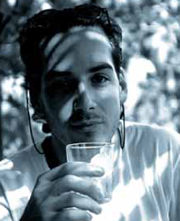
Jonathan Zito RIP: click to go to a statement by the Jonathan Zito TrustI thought of this towards the end of the documentary, when we saw the dark side of the opposite of the asylum model of care. Following a series of murders by people who had been released into the community as beds were closed (so the chance of their being readmitted stadily diminished), the most famous of which was the 1992 murder of Jonathan Zito by Christopher Clunis at Finsbury Park, a psychiatrist briefs a police shift that one of his patients is having increasingly violent urges, and then a dozen riot officers break into his house because both psychiatrist and police have decided that "overwhelming force" is required.

There have, of course, been huge leaps since the days of the asylums, when staff violence towards patients was recalled by a former psychiatric nurse as having been justified, when he was a student, by his charge nurse on the grounds that "if you live among shit you become shit". Although thankfully I missed this period, I felt ashamed to have been a psychiatric nurse.
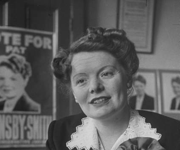
Patricia Hornsby Smith - click to view the whole Time portraitIn 1959, Patricia Hornsby-Smith (in Harold MacMillan's Conservative government) reported on the crippling price of keeping more people in psychiatric institutions than there had ever been, reporting on the "appalling legacy" of the buildings and how maintaining them would take up an increasing portion of the NHS budget; but she also spoke on how an appreciation of mental illness being like "any other disability" was a prerequisite on action that would need to be taken on both pragmatic and humanitarian grounds.

Hornsby-Smith's speech was the prologue that Enoch Powell's 1961 Water-Tower Speech was written to follow:
Enoch Powell: click to go to the text of the Water Tower Speechit is the duty of a Minister of Health and the duty of the National Association for Mental Health, to...choose and to favour wherever they have the choice, the course of more drastic and fundamental change: for we may be pretty sure that even so the progress of medical thought and method will still be well on ahead of our practice.
Powell was, of course right (and it was good to see the BBC admit that the man was more than a controversial 15-minute speech): as the documentary showed, "hope came from the laboratories [in the form of] a new generation of psychiatric drugs". However, Largactil (chlorpromazine) created new problems to replace the ones it solved in the form of simultaneous agitation and sedation, and Parkinson's Disease-like symptoms. Had the resarchers looked further into its genesis, they might have found that it was derived from a dye produced in Victorian England, but wasn't much use. So it was fed to cows to see the effect, which was that the cows calmed down. And died shortly afterwards.

However, the growing voice possessed by mentally ill people and their advocates - who included many mental health workers - drove the phamaceutical search for medications that had maximum effect on symptoms with minimum unwanted effects. The quest still continues.

click to read Boris Johnson's article in the TelegraphBut how did we get from this sense of optomism to a mentally ill man's flat being raided by a dozen riot police? As beds decrease, I worry that the stigma that infested the ageing Victorian structures hasn't disappeared but has rather been absorbed into society, which has become itself an über-asylum wherein, asserts London Mayor Boris Johnson in an exegesis of Eleanor Rigby, too many people "pretty much stay at home and watch TV" with their loneliness acting as a straitjacket - a garment never used once in the history of the crumbling Victorian asylum where I trained.

As politicians struggle to describe how they are going to deal with the deficit, it's obvious that there are goiclick to read more about hte International Clubhouse Movementng to have to be cuts. But this should not blind us to the fact that cuts started some time ago. Fulbourn hospital, the psychiatric hospital serving Cambridge and surrounding areas, lost two rehabilitation units and two acute psychiatric wards in 2007. This could have been ameliorated by better services in the community, but Vocational Services, providing occupational therapy, and Cambridge Clubhouse a range of less structured opportunities of rehabilitation after psychiatric treatment, are long gone. The Clubhouse was replaced by a mental health resource centre that aimed to make ex-patients in the community into trainers, but access is now only by telephone.

I'm not setting out my stall for my territory, having switched from a psychiatric nurse to a psychiatric patient some years ago. I'm merely arguing for common sense: in the absence of dedicated resources people requiring mental health treatment are, at the more severe end, going to keep ricocheting between inpatient wards, police cells and prison and, at the less severe, take up more of the general resources that are available, eg GP appointments, A&E beds, etc.

And the human cost is intertwined with the financial one, something that Patricia Hornsby-Smith and Enoch Powell would have recognised. I met a fellow Clubhouse veteran recently; unable to maintain employment without input but "not ill enough" to warrant a community psychiatric nurse, she spends her time subsisting on benefits - mostly, as Boris Johnson says, at home watching TV. Investing in resources that would help people like my friend both to work and to pay more taxes would, in my opinion, be a win/win situation.

Related posts:

Good taste back on the Horizon: How Mad are You?

Blurred Boundaries, Fine Lines - How Mad are You?

Thursday, May 13, 2010

don't kids with HIV suffer enough without this?

We may have a new government but, behind the scenes, the same unelected sinister forces are pushing their agendas at our children.

click to go to Hypnet's homepageHYPNet - the HIV in Young People Network - describes itself as "a multidisciplinary group of health professionals and voluntary sector representatives" working for people between the ages of 14-24 who are unfortunate enough to be living with HIV.

They've just released draft guidelines on the management of sexual and reproductive health for adolescents living with HIV 2010.

The first thing that worried me on the guidance came as early as Section 3, Definitions. In this draft document, which dealt with "possibility of having pleasurable and safe sexual experiences" for adolescents, the term "adolescence" itself is defined worryingly:

The term adolescent will be used throughout these guidelines to denote young people aged 10-24 years old, which covers the age from the onset of menarche in the UK to the upper limit of the definition of young adult...
I had to read the lower limit of that definition again: 10. This is no faux alarm - the Telegraph's Aislinn Laing reported recently that "Between 2000 and 2007, a total of 15 ten year olds and 39 aged 11 fell pregnant in England and Wales". HYPnet's somewhat abusive take on sexual health care is outlined in bold letters at point 8.1:

PHCP [paediatric healthcare professionals] need to take responsibility for seeing that Sexual Health needs, if not brought up by the adolescent, are raised in consultations, starting well before sexual maturity is reached.
Yet, although the paper states twice that in England and Wales sexual activity involving under-13's is illegal and indeed rape (under common law consent is meaningless under this age), the waters are muddied by a statement in point 6.3, which concerns the Sexual Offences Act 2003, that "this document does not advocate mandatory reporting to police or social services of every sexually active under 18 if there is no cause for concern"; the cut-off point of 13 has been dropped.

A pattern starts to emerge at point 8.3, where we read under the heading of Sexual Health Education that "Psychosexual issues may arise from cultural and religious beliefs around...female circumcision". Again, there is no comment, even to the effect that "female circumcision", more properly known as female genital mutilation, is a vicious assault on a young girl which, even if it is carried out abroad, is still an offence as if it had been done in the UK under the terms of the Female Genital Mutilation Act 2003. But the foul practice is listed as if it had no more significance than being one cultural phenomenon among many.

click to go to the SPUC websiteIn 2006 Anthony Ozimic, Political Secretary of the Society for the Protection of Unborn Children (SPUC) identified that the term "sexual and reproductive health" cannot be taken within any legal framework to include abortion.

The news has travelled slowly: point 9.2 in this document about sexual and reproductive health is a "checklist for sexual history discussion", and the ninth crib-note states: "Managing an unplanned pregnancy. Options of continuing with pregnancy, adoption or termination of pregnancy; methods of termination." The thought of an adolescent girl, already emotionally fragile through the stigma many people living with HIV are still exposed to, being put at risk of post-abortion trauma is as heartbreaking as is the omission of the risk of PAT from the crib-notes. Similarly, the advice under 16.4, emergency click to read more about the morning-after pillcontraception, advises not only the morning-after pill Levonelle, which is basically a form of chemical abortion, but that double the dose (3000 micrograms instead of 1500) be given, and that the dose be documented because Levonelle is not licensed to be given in this quantity. There's no mention in the paper of the patient being informed of this in the event of the drug being given in a sexual health clinic as opposed to a pharmacy.

Ironically, the one area (16.5) where the paper hits the nail right on the head is the one that workers whose fields intersect that of sexual health are asked to keep quiet about:
Condoms are estimated to prevent HIV transmission in only 13% (4-40) of cases (Davis and Weller 1999) and should not therefore be relied on alone for contraception.
I recommend that you follow the link to the Davis and Weller article, which seems to contextualise a later study in the New England Journal of Medicine that found a higher rate of protection (22% - albeit against HPV transmission) - when condoms were used 100% of the time.

Draft Guidance on the Management of Sexual and Reproductive Health for Adolescents Living with HIV 2010 is a case-in-point of how wilfully incomplete advice drawn up along click to go to the nhsnetworks entry for HYPNetideological lines can put real, vulnerable, people right in the firing line of the slings and arrows of outrageous fortune. The nhsnetworks lisclick to email Dr Simon Portsmouthting for HYPNet shows that membership is open to all, and current membership is 2 (one of whom is paediatric HIV expert Dr Simon Portsmouth, right) - who have managed to get this paper distributed throughout the world by the otherwise well-regarded aidsmap e-bulletin.

The trojan horse was an article called Numerous unplanned pregnancies in vertically-inclick to go to the aidsmap Trojan Horse articlefected teenagers (the term indicating that the virus was transmitted during pregnancy or at birth), which did not appear to consider that there are numerous unplanned pregnancies in teenagers generally - Britain has the highest rate of teenage pregnancies in Europe - precisely because of abusive sex education strategies of the sort championed by HYPNet.

If you are concerned or disturbed about any of the issues in this post, please respectfully and with sensitivity towards the difficulties faced by young people with HIV email Dr Simon Portsmouth.

Monday, April 5, 2010

top ten songs about England

Click here to go to Top Ten Songs about England for 56k modems or slow broadband

I can't pinpoint when I became an Anglophile; my Mum and I would go to Blackpool frequently when I was young, but during the traditional "fair fortnight" holiday the Lancashire coastal resort would essentially turn Scottish in what remains of Scotland's support for the House of Lancaster during the Wars of the Roses, the price of cooperation having been Berwick (which soon returned to England).

I first lived in England after marrying Maxima, who comes from the other end of the Fens. After a spell we went and lived in Glasgow as my mother was very ill and, after her death, came to the Draughty Old Fen when offered a temprorary job here; when it became permanent the family moved down - it was a good move.

Although Maxima was regularly sent to coventry in Scotland because she's English, the situation has never been reciprocated here. I find the English warm-hearted, supportive and generous, despite their having laboured under an administration that for twelve years has tried its best to chip away at its best-loved traditions, the latest victim having been Pooh sticks, ostensibly cancelled for health and safety reasons.

I will always retain a level of affection for Scotland, but my guttering loyalty to the country was finally extinguished when the Lockerbie bomber, Abdelbaset Ali Mohmed Al Megrahi, was released for political reasons. Remembering TV pictures of the approaches to the Borders town choked with ambulances that would return empty, I felt sick.

Having dSt George and the Dragoneconstructed the notion of "race" to the level that, the Establishment says, your race is what you decide it is, one might make a good case for "English" to be a race, although in the diversity-ridden alternative universe presently prevalent in the corridors of power I suspect that one would be a non-starter. But if I called myself English, my accent would betray me the moment I opened my mouth. However, I definitely feel more British than Scottish, and will continue to do so should Scotland go its own way to make the United Kingdom into, says Alex Salmond of the Scottish National Party, the United Kingdoms.
I love England. And so, in the month when we celebrate the Feast of St George, I would like to offer you a Top Ten about this wonderful, kind race: the English.

"In England, where my heart lies..."

click to read more on the Edmondson Blog
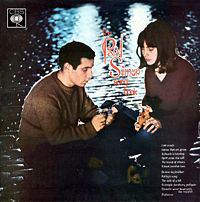
Paul Simon toured England in the early-mid 1960's, and famously spoke of his wish to voyage Homeward Bound, which he wrote while stranded at Widnes train station. "Home", of course, meant America, but it also referred to Kathy Kitty, the English girl he'd fallen in love with (hence the line "Kathy I'm lost" in America). Like many before and after he also fell in love with England - see the reference to "Cathedral bells" etc in To Emily, wherever I may find her. Here's the late Eva Cassidy singing the song live, including the classic reference to "England, where my heart lies".


Dirty Old Town

Lancashire songwriter Ewan MacColl, father of Kirsty, wrote Dirty Old Town about Salford, near Manchester, where he was born. Written in 1949, it was immediately adopted and made famous by the Dubliners, and subsequently by bands all over the English-speaking world in an example of the way English-speaking culture can go international in a heartbeat, although the socialist songwriter may not have liked to think of it that way. Luke Kelly, Dubliners founder member, sings it with his band here, displaying the English-Irish cross-pollination that has enriched both countries for centuries.


Zadok the priest

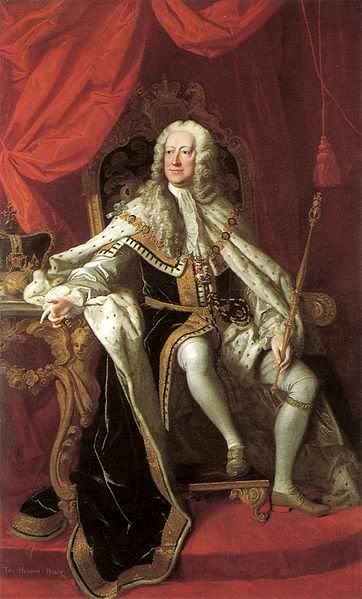
King George IIThis great anthem was written by Handel for the coronation of George II in 1727. Since the union of he Crowns of England and Scotland was in 1603, and the Act of Unions uniting the two countries' Parliaments in 1707, one could say that this is a British anthem. But should Scotland secede from the Union, it will be up to them what heritage from the Union they take: I hope that Zadok the Priest - based on 1 Kings 1:38-40 - is retained by England, even if it should be duplicated elsewhere.


From Brixton to another place

Electric Avenue is a thoroughfare in Brixton linking two roads full of stalls, just like you might see in Eastenders. As cosmopolitan as it is, the video of Eddy Grant singing about the street suggests that its inhabitants and patrons might like, maybe just once in a while, something else.


Preotecting the old ways...

Yorkshire folk singer Kate Rusby covers the Kinks' 1968 hit The Village Green Preservation Society for a series called Jam and Jerusalem, which was modelled on the Womens' Institute, formed in 1915 to revitalise rural communities, but which now has a vital message for women and girls everywhere.


Burn them down?

the Jarrow CrusadeThe Jarrow Crusade was a heroic peregrination from Jarrow, near Newcastle, to the Houses of Parliament, to protest against the unemployment, poverty and even starvation that followed the collapse of the US stock exchange in 1929. In Alan Price's song about the event we hear him put himself into the song in a deconstructionist manner; but, more than that, while the majority of marchers wanted a job, we hear him echoing the cries of the vocal minority to "burn them down" - which prefigured the minority in the Miners' Strike of 1984-85 for whom a settlement of better pay and conditions would have been a disaster, because they wanted nothing but régime change.


Cricket

It was sad to see that Cambridge University's Emmanuel College was forced to desist from holding a May Ball in praise of the British Empire. Nobody's going to support the Amritsar Massacre, but Britain - and England - spread abroad a culture that continues to refer back to the English way of life where, as poet Rupert Brooke asked, stands the church clock at ten to three? A sign of this culture, visible in India, Pakistan, the West Indies, Australia and New Zealand, is cricket: and here is the tune that has accompanied English cricket on TV for decades - Soul Limbo by Booker T and the MGs.


Queen of Bollywood

Before the (modern) Suez Canal was opened in 1856, civil servants and administrators working in India would often marry Indian wives, because of the unworkability of having a wife "back home" due to the long passage time. Thus began a new race, called Anglo-Indians or Eurasians, who are still very popular in the Bollywood film industry. This is Asha Bhosle singing for the BBC - enjoy.


The seaside

Blackpool Tower: click to learn moreThe fascination for seaside resorts grew exponentially during Queen Victoria's reign, and still remains. As well as Blackpool, there were Skegness, Brighton, Torquay and many other resorts. After a fallow period, English seaside resorts are becoming more popular due to the recession, as it becomes relatively more expensive to go abroad. (Study the video below and you'll see Brian May.)


Fisherman's Friends

click to go to the Royal National Lifeboat Institute homepageThe Fisherman's friends, of Port Isaac in Cornwall, were founded to support the Royal National Lifeboat Institution in a part of Britain where it's all too easy fofisherman's friends - click to find out morer boats to go missing. If you like what you hear, please think of the men and women who give so much to bring us fish, and of the men and women who are ready to sacrifice everything when something goes wrong. Click on the flag to find out more about the RNLI, or on the image of the Fisherman's Friends' latest album on the left to find out more about the band.


If you enjoyed this, click here for more Top ten songs about...

Related posts:

this blessed plot, this earth, this realm, this england

let England stand free

Happy st George's Day!

Sunday, April 4, 2010

on the trail in Trumpington

UPDATE: click here if you're looking for "Trumpington Bible"

Andrew Lansley, and Nick and Lara Hillman, in Brookside, Cambridge

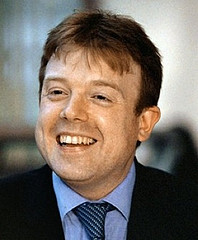
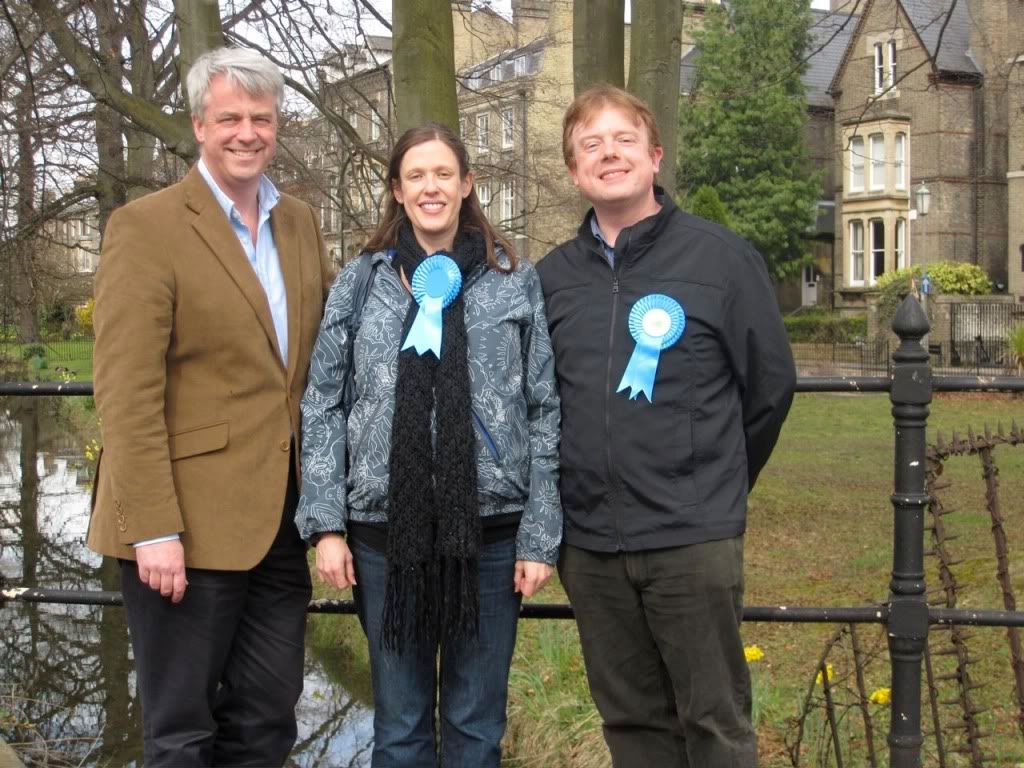
In the photo above, from left: Andrew Lansley, Shadow Secretary of State for Health, Lara Hillman, candidate for City Councillor for the Abbey Ward in Cambridge, and Nick Hillman, Prospective Parliamentary Candidate for Cambridge; taken in Brookside, in the Trumpington ward of Cambridge.


Nick Hillman: click to read an interview on his websiteGoing to Trumpington Waitrose to meet Nick Hillman - Prospective Parliamentary Candidate) for Cambridge - for a letter-drop explaining a boundary change, I was delighted to meet Nick's wife Lara, who is standing to become a Councillor for the city's Abbey ward. I have to admit a stereotypical male reaction on meeting an obviously pregnant woman in asking whether she might need some rests while walking about, which she handled with very good grace, considering the weight I'm carrying myself.

The letter was from Shadow Health Secretary Andrew Lansley, explaining that the village of Trumpington will no longer be part of his South Cambridgeshire Constituency but pass to Cambridge City which, hopefully, will be turned blue by Nick Hillman on Election Day.

Trumpington village signLook to the panel on the top right to see a countdown to how long we have to wait until that day. Since Gordon Brown bottled out of an autumn 2007 election that he might well have won through the "honeymoon effect" of his just having taken over from Tony Blair, he must be thinking back to 1979, when James Callaghan went right to the wire and lost to Margaret Thatcher after a humiliating vote of no confidence which he lost by one vote.
Mr Lansley had been in the news yesterday criticising the Government for not making vital cancer-treating drugs available on the NHS; but, like any responsible MP, Lansley cares deeply about his constituency andAndrew Lansley - click to go to his home page says in his letter, which he came to Trumpington to hand to the Cambridge team:
[The boundary change] is sad for me. I lived on the High Street in Trumpington for five years. I have been involved in many issues locally and have got to know well many people and organisations. It will be hard to hand over. But, when I do, I hope it will be to Nick Hillman, who is the Conservatives' Prospective Parliamentary Candidate for Cambridge City. I have known Nick for several years. Living in Cambridge, a former teacher at Hills Road Sixth Form College and latterly the Conservatives' leading advisor on policy towards Universities, Nick is brilliantly well qualified to be the Member of Parliament for Cambridge.
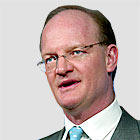
David Willetts: click to go to his homepageAs Andrew Lansley indicates, Nick Hillman works closely with David Willetts, who is the Shadow Minister for Universities and Skills. I hope to see Nick Hillman and David Willetts working closely together with Michael Gove, presently Shadow Secretary of State for Children, Schools and Families - who has challenged a major teaching union to "put its own principles into practice by setting up its own school" - to help us alMichael Gove: read more at the Blue Blogl create a society where, Gove stated at this year's Conservative Party Spring Conference in Brighton, "Education is at the heart of change."

It was interesting to see the cosmopolitan nature of the ward in the streets around the Panton Arms, houses side-to-side with student accommodation and University buildings. I saw a few students going about their business and reflected that Labour had brought education back to the state which prompted James Callaghan to deliver his Ruskin speech in the Oxford University college, one of his first acts upon taking over as Prime Minister in 1976 after the sudden retirement of Harold Wilson, in the middle of the Labour term that mirrors the present one in ending so chaotically. Callaghan wrote about the speech in his 1987 autobiography Time and Chance:
Industry complained that some school-leavers did not have the basic tools to do the job and many of our best-trained students from university and polytechnics had no desire to join industry. Why was this?...Were we sacrificing thoroughness and depth of courses in favour of range and diversity?
Lara was a bundle of energy: the people of Abbey will be well-served should they elect her as their City Counsellor. She and Nick gave me a lift back up to Waitrose so I could pedal frantically back to catch the start of Doctor Who, which I almost managed. Settling down to turkey-roll, and chips, it made me feel slightly guilty to think that Nick and Lara still had their sleeves rolled up and were working hard. I hope, for all our sakes, that they are elected in May.

Monday, March 22, 2010

spring of hope: an update in pictures

I'm not doing too well this Lent. Last year, I gave up a couple of pints a weSpring of hope: click to go to homepageek and gave the money to charity. This Lent I've had to learn editing from scratch to publish the village magazine - although I was priveleged to learn from somebody who'd done the job in professional and voluntary roles for decades.

click to go to the Ugandan tourist board websiteSo it was good to be sent a photo-update of a charity I was made aware of soon after moving to the Draughty Old Fen: the Spring of Hope foundation (part of the Youth with a Mission group) which helps disabled children in Uganda - much are in their clinic in Wabwoko, which is in the Kayunga District of Uganda, shaded orange in the map to the left. I'd like to share some of these photos with you, with the original comments.


Click here to go to the Spring of Hope blog


click to go to Mulago Hospital website

Emily (volunteer) and Victor (OT student ) on a home visit!! Feb 2010, we saw our first Uganda OT students come from Mulago training hospital!!

click to read about Spring of Hope's New Steps deaf school and World Deaf Awareness Week

Our deaf children from both schools were able to visit the zoo in Entebbe thanks to Roxy fundraising!!
22nd Feb 2010

click to go to the Spring of Hope page on Facebook We bought our 2nd bike, after a previous volunteer Melanie fundraised. Moses is now out and about in the community. Children in Wabwoko are at last receiving weekly home visits!! Bought Feb. 11th!!
click to read Counting Pills for Clinic on the Spring of Hope blog

Carolyn(volunteer) and Moses counting medications at the end of a very busy clinic,. At this clinic in Wabwoko we received 96 epileptic patients!! Feb 12th!!

click to read about Adia on the Spring of Hope blog

Children and parents at the clinic in Wabwoko. Feb 12th!!


The last pic really struck a chord with me because I remember the sense of wonder and getting bigger exuded by both my children when they started school, something I think one can see on the face of little Zachariah as he starts on his own incredible journey of education, thanks to Spring of Hope.


Zachariah's first day aat school - click to read more about Spring of Hope and how you can help

Sunday, March 7, 2010

street drinking: syrup and paint-stripper

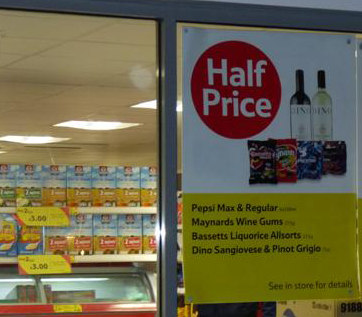
no mill road tesco poster: click to go to campaign homepageThe staff of Cambridge's Mill Road Tesco deserve an award for tenacity in the face of eejits, as in merely opening the store they scored a gruelling victory over vested interests mounting a predominantly anti-capitalist campaign under the name of the No Mill Road Tesco Campaign.

The store has recently had an application to sell alcohol turned down - see Cambridge resident (expected to stand as an Independent in the next election) Richard Taylor's helpful and exhaustive account - on account of its being in a cumulative alcohol impact zone, which creates an assumption against granting new licences to sell alcohol.

What got me thinking was how alcohol gets into the hands of people in Mill Road with problematic drinking patterns in the first place. So as soon I was able I went to the end of Mill Road nearest town and walked up the mile-odd length, paying attention to the shops that sell alcohol.

Like any other consumers of alcohol, street-drinkers are partial to their favourites - most commonly Carlsclick for more informationberg Special Brew or the other 9% lagers on sale. (The manufacturers observe the Memorandum of Understanding between the Department of Health and the Alcohol Industry on putting sensible drinking reminders on their cans, despite the fact that the contents of a single 500ml can of 9% lager, containing 4.5 units of alcohol, put the drinker above the government's recommendation of 2-4 units daily). Strong ciders also appeal to their palate, so I think it's significant - thanks again to Richard Taylor for his report - that Mill Roapresumptuous posters?d Tesco had pledged to sell no beers or cider above 5.5% alcohol - the equivalent of 11º proof in US measurements.
So No Mill Road were being rather disingenuous in making a noise about the local Tesco store's admittedly presumptious display of posters offering cheap wine: one doesn't often hear of pinot grigio-fuelled disorder.

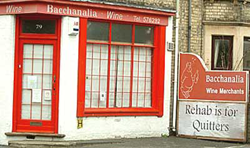
Which isn't to say that there hasn't been controversy with wine in Cambridge: in 2008, a wine-shop in the city's Victoria Road called Bacchanalia, which is opposite an Alcoholics Anonymous centre (and has a sister-store on Mill Road) displayed a sign proclaiming Rehab is for Quitters. Although one can appreciate the wordplay on one level, I think the fruit of the vine was more sinned against than sinning, not to mention people trying to piece their lives back together.

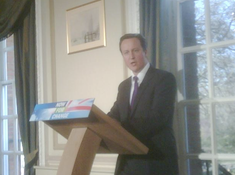
The first thing I noticed was that shops genuinely serving specific communities - eg Chinese, Afro-Carribean, Malaysian - sold little or even no alcohol. On the other hand, the cynically-named International Food Store was in reality a wallful of shelves stocked David Cameron - click to read about the whole press conferencewith wines and spirits facing a wall of beers and soft drinks, with two thin aisles of snacks in between, and in between those huge plastic bottles of strong cider on the floor. Another general store had not only three different brands of 9% lager but also a variety of strong, cheap ciders, of the chemically-derived sort that Conservative leader David Cameron once remarked had "never seen an apple".

In all, there were five small, independent stores of the kind, say No Mill Road Tesco, in need of protection against the supermarket giant which were selling drinks that specifically fuel the thoroughfare's alcohol problems. I say specifically advisedly - when's the last time you saw 9% syrup or paint-stripper cider at a dinner-party or while getting together to watch the football?

Capitalism is insensate and must needs be fenced in by legal frameworks to prevent abuses like, for example, the sale of alcohol to minors, directly or through adults. Both the Co-op and Tesco, as far as I'm aware, will not sell to adults who are known to pass on to underage street-drinkers; so why caclick to read a blog on binge-drinking by James Brokenshire MPn't smaller stores be leant upon to refuse to sell to people who are drunk, or who are known to drink in the street? Many people buy drinks from stores because pubs are forced to keep their prices high - releasing the legislative garotte strangling them wouldn't stop street drinking, but it could prevent people taking drinks home in a habit that has the potential to spiral dangerously, and would widen the cadre of social drinkers in pubs in whose self-interest it is not to let each other get out of control.

And while I'm on my wish-list, how about doubling the price of superstrong lagers and ciders?

Tuesday, February 23, 2010

top tip for Tuesday

top tip for tuesday
Only time for one tip this week, as I'm experimenting with the seat-of-the-pants style of editing the church mag: but what a tip it is.

John Smeaton: click to read original postLast Friday John Smeaton, director of SPUC (the Society for the Protection of Unborn Children) drews a line in the sand in response to the Government's abusive proposals for sex education in schools, which bode ill for the Christian, Jewish, Hindu and Muslim voluntary grant-aided

Smeaton cites a Government media release praising St Thomas More's RC School in Bedford on the grounds that, among other things,
St Thomas More delivers SRE [sex and relationships education] through the pastoral programclick to go to the homepage of St Thomas More, Bedfordme in conjunction with the RE syllabus...the school explicitly recognises the reality that some young people may choose to be sexually active and, if that is the case, they need the knowledge and confidence to make an informed choice to protect themselves from pregnancy and STIs. The school nurse provides students with clear accurate information about the full range of contraception and STIs and details of local services...Pregnancy options, including abortion, are also discussed in a non-judgemental way with the RE syllabus requiring students to understand the spectrum of pro- and anti-choice views on abortion.
Smeaton provides a long list of tenets of the Roman Catholic faith that these grounds violate, after announcing that "I will be writing to St Thomas More school, asking them to confirm or deny the government's claims about what is happening in its school."

Damien Thompson - click to read his blog on the Catholic Education ServiceLater that day, the Telegraph's Blogs Editor, Damian Thomson forecast Bad Things for Oona Stannard, chief executive of the Catholic Education Service, which, as Smeaton identified, had helped the Government draw up its guidelines. Fr Tim Finnegan, a frequent flier on this feature, refers to both posts as he runs with the theme on his blog The Hermeneutic of Continuity. He asks how far the moral relativism will be taken:
I doubt whether you would get Healthy Schools Status if you taught that there was a range of views on the advantages of smoking tobacco; and I don't suppose there is meant to be a valid range of views on the pros and cons of nazism as a system of government. The relativism of Ed Balls and his friends who are setting the agenda for secular Britain is actually only applied to the "views" they disagree with, such as Catholic moral teaching on the sanctity of life, marriage, and the procreation of children.
The Government is mounting an attack both on one Faith and on faith. I remember minor Scottish politicians muttering about "Rome on the rates" and, as they have risen, they have dripped their poison slowly through the years in the hope that the erosion would create a cavity large enough to insert their specious moral outrage about "religion on the rates".

As John Smeaton notURGENT: read and act!es, today - Tuesday 23 - is the day when Parliament is due to vote on what is effectively the nationalisation of the bodies, minds and spirits of our children.

Smeaton remarks that St Thomas More "preferred to sacrifice himself rather than put the state's demands above the church's teachings", as can be seen in the 1966 film
A man for All Seasons starring, among others, Paul Scofield and Susannah York. I wonder if the Government was careful to use a school bearing his name as a Trojan horse to try to use the state's demands to extinguish the church's teaching?

Saturday, February 20, 2010

Maasai medical mission 2010

A friend of Maxima's had a leaving do in the Draughty Old Fen yesterday, before she goes Hélène Evansto Africa.

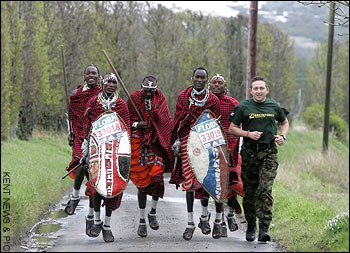
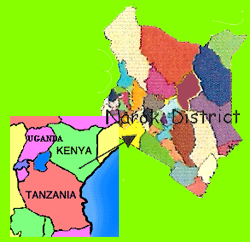
Hélène Evans (right), a nurse from Cambridge, is leaving next month to work with a two-week medical outreach to the Naroka district of Kenya called the Maasai Medical Mission, which has been led by GP Dr Richard Scott since 2002, (bclick to read abot the Maasai joggersefore which he'd went to Kenya with Through Faith Missions) at the invitation of Pastor David Kereto.

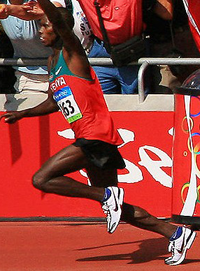
I have to admit, to my shame, that I was ignorant of the Maasai people of East Africa until they touched my world in 2008. Six of the tribesmen from across the border in Tanzania - wearing recycled car tyres as shoes - came to run the Flora London marathon in order Samuel Wanjiru - click to see International Amateur Athletic Federation statsto raise money through sponsorship to instal a fresh-water well in their village. (The next year, the marathon was won by Kenyan runner Sammy Wanjiru, setting a course record).

Hélène writes:
the Naroka District of KenyaThe Maasi is a true pastoralist. Farming is anathema to them. They are hospitable, generous and affectionate, love their children, unbelievably domestic and gentle, and religious. They are firm believers in the one God - Engai, but are plagued by a fear of evil spirits. Bravest of the brave, a warrior tribe living the life they have lived over hundreds of years.

They see Engai as a creator-god associated with a mountaintop who gifted all the world's cattle to them. As well as travelling around the area to provide midwifery advice, dress wounds, treat malaria and the after-effects of polio, they will be bearing witness to another Creator God who was originally associated with mountains (see the experiences of Moses, Elijah and Jesus).Again Hélène writes:
Who is my neighbour in today's global village?

99% of all maternal deaths, 98% of all child deaths and 80% of all AIDS deaths occur in the developing world, yet this is the place where resources and workers are fewest. In Sub-Saharan Africa, 3% of the world's health workforce cares for 10% of the world's population bearing 24% of the global disease burden - with less than 1% of the global health expenditure.

The Good Samaritan helped a stranger because he saw this desperate need. How can we respond to the enormous needs we see in other parts of the world? There are many ways we can get involved - going, giving, praying, partnering, teaching, trainiPastor David Keretong - and more. Maasai Medical Mission aims to play a part in bringing God's love and care to some of the poorest people in the world.
Hélène is asking for three things:

First, pray: for Dr Scott, Pastor David Kereto (right), Hélène, and the rest of the Maasai Medical Mission 2010 team.

Second, if you can contribute financial aid (towards eg flights/food/water/petrol/staff costs etc) or medical supplies, please contact Hélène on penhydd1740@yahoo.co.uk.

Maasai Medical Mission 2010