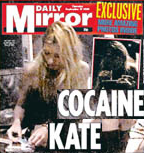
Being something of a heavy metal connoisseur, I was saddened to hear the news of Ronnie James Dio's death on the radio last night.
Dio started playing in bands in 1957 and releasing records the year after. What a time his first full decade as a recording artist must have been, as rhythm'n'blues morphed into psychedelia which, in its 1970s incarnation as progressive rock, laid the foundations for the golden era of heavy metal in the 1980s. This, incidentally, was kicked off by Black Sabbath's release of Heaven and Hell, with Dio on vocals replacing Ozzy Osbourne, whose demons had nearly destroyed the band.
What marked Dio (born Padavona in Portsmouth, New Hampshire) out as a giant was his eschewal of the rock'n'roll lifestyle, which he put down not to studying pharmacology for a year at degree level but because, he told an interviewer for dmme.net, "I saw how destructive it was, and how it dulled your sensibilities and ate up your talent and your life". On records his first instrument was the bass guitar, but before that he learned trumpet, which built up his diaphragm to the point where it would sustain his most powerful and nuanced instrument: his voice, which would come to international prominence with Rainbow and, after recording arguably the definitive Black Sabbath album, with his eponymous band as well as numerous collaborations.
Dio succumbed to stomach cancer yesterday after battling with it since late last year. This may be of little comfort to his widow at the moment, but his avoidance of the rock'n'roll lifestyle put him beyond the rock'n'roll death that follows on all too often. Not for him choking on vomitus after downing a handful of sleeping-pills like Jimi Hendrix; or alcohol poisoning due to mistaking Heminevrin for recreational tablets, which prevented Keith Moon's stomach ejecting the bucketful he'd had during a relapse; or, most cruelly, Phil Lynott sliding into the last goodnight due to liver failure while his mother wept.
All of these people have left us wonderful music, but Dio left something else alongside - a template for living well in an industry that has been known to eat its children. Thanks for the music, Ronnie.
Here's RJD as I like to remember him, singing about his beloved pop medeivalism with Ritchie Blackmore's Rainbow in 1975.
When I first heard of Eyjafjallajökull, I was of the same opinion as Richard Normington, in that it seemed more like a keyboard malfunction than anything else. But things started to look sinister when continent-sized areas in the course of the volcanic cloud, containing putative glass fragments that could cause high-flying jet engines to close down, were declared no-fly areas on the basis of computer models that are as diconnected from reality as the politicians who made decisions solely on their predictions, without reference to reality.
Thankfully, we can fly again. As it happens, I don't fly that often, but even in the circumference of the world I inhabit the no-fly orders had consequences, from a colleague who couldn't make it to work, through a fellow worshipper whose presence had been required to validate church accounts, to a friend who had been badly injured abroad and whose family was deprived even longer of her presence.
I thought that I'd like to dedicate this month's Top Ten to the theme of flying, because the cooling of Eyjafjallajökull's ire coincides with a crucial time in our country's history, when we decide which political parties will suppress the innate instinct to fly as high as we can, and which will not only nurture it but ensure that we lift up our peers in so doing.
10 - Would you like to fly?
The 5th Dimension, who were inducted into the Vocal Group Hall of Fame in 2002, are famous for taking the song Age of Aquarius from Hair to the top spot. My favourite song of theirs is Jimmy Webb's Up, Up and Away which, whenever I hear it, brings memories of childhood awakenings to the song being played on the ever-present radio.
9 - Wild Swan
In my opinion, Tony Clarkin - the bearded guitarist in the video - deserves to be hailed alongside Pete Townshend as arranger par excellence of his own lyrics with insight and sensitivity worthy of Berlioz. The video, telling the story of a son who simultaneously hero-worships his crusading father and feels the overarching need for his presence beside him, comes to mind because of a wild swan that's been making the news in Cambridge. Called Mr Asbo, he's been accused of harassing and even overturning boats on Cambridge's river Cam. A recent film aired on BBC 1's The One Show displayed the swan at his most aggressive - but the BBC has been accused - in a video that I recommend you watch - of goading the swan's mate into leaving her nest in order to see off a canoe that was ordered to go dangerously close to it for the sake of "car-crach TV". Given that Asbo, according to vet and Telegraph blogger Pete Wedderburn, has actually had his cygnets killed by "passers by", I'm not surprised he's mardy. The state hasn't killed my children, but arrogates to itself ever greater powers to brainwash them according to abusive agendas that seem to have no other purpose than to "rub the Right's nose in diversity". I feel as angry as Mr Asbo.
8 - Volare
In February 1991, I had an interview in London and arranged to stay with a friend in Brixton. The interview went well but later in the day came the news that 10 Downing Street had been attacked by an IRA mortar. Mobile phones being as rare as they were huge in those days, I found myself having to wait in one of the lines that trailed from every phone box. My friend explained, "I think everybody's phoning home to say they're ok". That evening, he. I and another friend went to his flat in the middle of Brixton High Street, kicking up the snow that had emptied the thoroughfare of cars. Since all of us had lived for some time in Italy, this is the song we sung:
7 - Flying machines in pieces
This is such a video of James Taylor's Fire and Rain, which is about, in part, the suicide of his fried Suzanne Schnerr, whom he'd met while both of them were hospitalised for addiction to heroin. "Flying Machine" was the name of his first band; but the line "flying machines in pieces on the ground" is about more than the breakup of a musical unit, but I wonder if. when Taylor sings "Susanne the plans they made put an end to you" (my italics) he's running from the couple's co-dependency. But. counterintuitively, I can see a better case for the use of prescribed pharmaceutical diamorphine (heroin) under strictly controlled than for legalisation of cannabis, because we cannot halt supply of heroin within our own borders. The thing is, cannabis-legalisation site UKCIA (offline at the moment) has made a case for legalisation of weed as a gateway to legalisation of just about every illegal drug. Having been a drugs-worker, I hope this never happens; I'd hate the misery I saw in the needle-exchange to become commonplace.
In 2002, Nick Clegg, now leader of the Liberal Democrats, wrote an article about a school trip to Germany:
A boy called Adrian started it. He shouted from the back of the coach, "we own your country, we won the war". Other boys tittered. One put a finger to his upper lip - the traditional British schoolyard designation for Hitler's moustache - threw his arm out in a Nazi salute, and goose-stepped down the bus aisle. Soon there was a cascade of sneering jokes, most delivered in 'Allo 'Allo German accents.
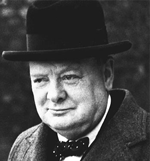
I was shocked by his ignorance. Britain was indeed on the winning side of WWII and was a major and heroic player, but to baldly assert that "Britain won the war" is as disingenuous as is baldly asserting that Germany lost it. We must never forget the key role that Britain played in defeating the Nazis (who were by no means synonymous with Germany), but it is salutary to remember that, on the eve of the Pearl Harbour attacks on December 7, 1941, Britain was losing, and Winston Churchill had authorised the distribution of bayonets with a poster campaign saying "at least you can take one with you".
As it happens, historian Colin Heaton concluded in Night Fighters that had Britain been conquered, America would have eventually had confront Hitler's contagious monomania - but Britain would have been a much changed place. Thank God that never happened.
Rector Pellegrina wasn't quite convinced when I confessed a guilty pleasure in heavy metal. I hope this video about the Battle of Britain - by an RAF composed of 10% Polish pilotry - will give her cause to reconsider.
5 - Flying Sorcery
Al Stewart merged his twin loves of flying and history for this song from his classic Year of the Cat album. An article on his website explains the context of the lyrics, from Amy Johnson, to the biplanes called Faith, Hope and Charity which defended the George Cross island of Malta and the double meaning of the Flying Circus. Enjoy this footage of him singing in Cambridge's namesake town in Massachussetts.
4 - Flying for me
John Denver was a founder of the "citizen in space" project and was even considered for the honour, but was pipped at the post by Christa McAuliffe, a secondary/high school teacher who had worked in Washington DC before moving to Concord in New Hampshire. Denver recollected that on the morning of January 28 1986 his adopted son Zac phoned him and told him to put the TV on, any station: there was the Challenger disaster, inspiring him to write:
She was flying for me She was flying for every one She was flying to see a brighter day for each and every one She gave us her light She gave us her spirit and all she can be She was flying for me
3 - Abide in His shadow for life
We had a discussion on hymns at our annual church meeting recently - you know the sort, that can quickly degenerate into an "old=Good" vs "New=Better" argument all too quickly. It was left to our venerable and classically-trained organist to point out that while traditions need maintaining, some new hymns are beautiful. One of these, I think, is Fr Michael Joncas' On Eagles' Wings, based on Psalm 91 and Isaiah 40:31. Given that John Smeaton, director of the Society for the Protection of Unborn Children, has been correcting misleading Government advice on sexual education and abortion, I think it's appropriate that this video of the song performed by Angela Birkhead-Flight is dedicated to "all babies who have died prematurely due to abortion, miscarriage or other means".
2 - Icarus
Although Kansas sung a song specifically about Icarus, another one - Carry On my Wayward son - seems to be a more meditative take on the sublime fall of the son of Daedalus, the craftsman who gave a ball of yarn to Ariadne so she could guide herself and Theseus out of the Minotaur's labyrinth, although there appear to be elements of Plato's allegory of the cave threaded through. Father and son, of course, strapped on wings of wax and feathers in order to escape the wrath of King Minos of Crete, but Icarus ignored a warning from Daedalus not to fly too high, and plunged into the sea when the heat melted the wax. It's often taken as a cautionary tale warning those who are over-ambitious of the danger of flying too high on constructions that should have been kept closer to earth. Just so, blogger Benedict White tells us that Gordon Brown was warned when Labour took power in 1997 that his proposed financial reforms would lead to a systemic banking failure. But he flew too high...
1 - The final attack
In the film The Dambusters we see a disconsolate crew looking back at the Möhne Dam on the Ruhr, feeling they have failed: then, suddenly, under the attacks that have been visited upon it, the dam's wall collapses and water floods out.
In reality, the crew pulling away was the fourth wave: a fifth Lancaster dropped its bouncing bomb upon the already-disintegrating wall to consolidate the damage.
This election has been a long, unpredictable slog. The Conservative party's first wave of attacks upon Gordon Brown, who is damming up the British people in a politically-correct prison where the silent majority of law-abiding people are punished the most, might be said to have happened shortly after his unelected accession to the Labour throne in June 2007, when he bottled out of an election he might have won when the David Cameron and George Osborne announced that only millionaires would pay inheritance tax. The second wave was a tsunami of activism, fuelled by both shoe-leather and blogs, cat-herding organised by the long-suffering Eric Pickles, the third a series of defeats inflicted upon the Prime Minister,Chancellor of the Exchequer and miscellaneous Ministers by David Cameron, George Osbourne and the Shadow front-bench team. The fourth is happening now, as candidates, activists and supporters work like Trojans to bring about change necessary for national survival.
The fifth wave is coming shortly, even as the dam walls crumble - illustrated by Gordon Brown's disastrous labelling of his own supporter, Gillian Duffy, as a "bigot" because she challenged the prevailing orthodoxy on immigration, imposed on people like her by rich ideologues who do not have to live in areas like hers. The fifth wave of attacks upon Labour's walls of infamy will come on May 6 and be inflicted by the voters, and I pray that the power-houses of willful negligence are swept away by the resulting inundation.
Since the Willow Walker folded, a lot has been happening behind the scenes to re-establish a written-word service for homeless and vulnerably housed people in Cambridge and the people who serve them.
This culminated earlier in the year with the formation of Flack, a company registered as a social enterprise which aims to launch its first issue next spring. Their patron, Tom Hardy, is coming to the Cambridge Arts Picturehouse on Sunday 9 May to answer questions after a special screeening of his controversial film Bronson in aid of the charity. I don't think I can do better than give you the press release, with hyperlinks and pics.
Hollywood star Tom Hardy will be coming to Cambridge on Sunday, May 9 for a special screening of his film Bronson. The showing, in the Cambridge Arts Picturehouse at 1pm, will be followed by a question-and-answer session with the actor.
The screening is to support the newly-formed charity Flack, which was set up to replace and expand the services to homeless/vulnerably housed people and the agencies who serve them by the magazine Willow Walker. The first editor of the Willow Walker, named after a Cambridge hostel run by English Churches Housing Group, was Alexander Masters, whose book Stuart: A Life Backwards was turned into a film starring Hardy.
The editor of Flack, which hopes to launch its new magazine in Spring 2011, is Kirsten Lavers, whose tenure at the Willow Walker as Alexander Masters’ successor saw the formation of a business called Cambridge Link-Up, run by present and formerly homeless people, and Street Voices, whose double CD Both Sides of the Tracks was released in March 2009 to critical acclaim.
Tom Hardy, patron of Flack, has successfully battled an alcohol and crack addiction he acquired after the box-office failure of Star Trek Nemesis, in which he played Praetor Shinzon, an evil clone of Captain Jean Luc Picard; the film was released at the same time as Harry Potter and the Chamber of Secrets, the James Bond film Die another Day and Lord of the Rings: The Two Towers.
Bronson is the story of prisoner Charles Bronson, who changed his name from Michael Peterson to give him a harder image as a bare-knuckle fighter in London. First arrested in 1974 for armed robbery, he has spent just four months as a free man since, and is still imprisoned. He has been called "the most violent prisoner in Britain", and has been moved 120 times. Hardy famously did 2500 press-ups a day for five weeks before filming started to bulk up for the role. His other films include Black Hawk Down, Minotaur and RocknRolla, while he has also starred in TV productions such as Band of Brothers, Wuthering Heights and The Virgin Queen.
At this vital time in the General Election timetable I've returned from holiday to find that my computer has chosen to go wobbly - I'm sure it was made by a sicialist - and I can't launch Photoshop. My daughter, who - like many children - is the resident computer expert is visiting Granny on the other side of the Fens; so, apart from pics I already have on Photobucket, I'll have to leave you to the tender mercy of Blogger's in-house image hosting program...
Suddenly blogging as the General Election approaches looks much more interesting...and dangerous. In the wake of a report by Iain Dale on a judgement against a Labour blogger sued regarding a comment he left on his site, barrister James Tumbridge (right) posts a gust blog on Ellie Seymour's site on What bloggers need to know about defamation. Watch out for the most thought-provoking conclusion to a blog that I've seen for a long time.
Nick Hillman, Conservative PPC for Cambridge, posts on the meeting to save the city's Strawberry Fair, which has been opposed this year by police on drug-taking and disorder grounds. As a historian he shares his views on the prospect of losing this festival, which began in the early 1970s.
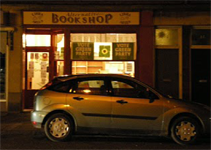
If a picture speaks a thousand words, then this snap taken by Phil Salway of the Coleridge Conservative team in Cambridge, of the Green Party's electoral campaign headquarters in the Alternative Bookshop on the city's Mill Road, speaks volumes about what the Green Party really thinks about the commitments it wants us to take on energy conservation. Be sure to click the link or the pic to go to Andrew Bower's (Cambridge City Council Conservative Candidate) to have a look and read an analysis.
Canadian newspaper website The Gazette looks at the Vatican reaction to Richard Dawkins' and Christopher Hitchins' histrionic plan to have the Pope arrested on his forthcoming State visit to Great Britain in September.
David Appletree of the Jewish Internet Defence Force reproduces a letter from Rabbi Dov Coder complaining to YouTube about hate material posted by David Dukes, notorious antisemite, racist and Ku Klux Klan member...
...while There is nothing British about the BNP looks at a racist group joined by BNP vice-chairman Simon Darby that's hosted by Facebook, a site Appletree warns about repeatedly.
And finally, here's a treat: Open Music Archive, "a collaborative project, initiated by artists Eileen Simpson & Ben White, to source, digitise and distribute out-of-copyright sound recordings. The archive is open for anyone to use and contribute to.".
Cavete: discusses and links to material some people may find disturbing
When I was in my mid-teens I developed acne. Never having been one to do things by halves, mine was in the form of angry boils flowering luxuriantly over my fizzog. I didn't have much of a problem with it, and didn't get more hassle than one might have expected in a working-class Glaswegian housing estate.
Then I went to university in Italy, and the head of my college decided he did have a problem with my acne, and at his insistence I set out on courses of antibiotics and various other pills and potions - one of which, as I remember, turned my first wee of the morning bright red, which was quite a thing if you weren't prepared for it.
During my first year at uni I fell into a deep depression, and I wonder if the head's effective declaration that my appearance was undesirable contributed to the mix of being away from home from the first time and studying like I'd never done before. But the past can be a dangerous place to form assumptions about, so who knows?
I found myself thinking about this period of my life for the first time in a while after an advert directed me to BBC Radio 1's listen-again feature, where Aled Jones from the Chris Moyles show (me neither) had hosted a "surgery" about body-image, when a young man called in to speak about his desperation that nothing his doctor gave him was touching his acne. I felt for him.
An American psychotherapist called Aaron Haydn Jones explained the process of filtering, whereby we might ignore 100 positive comments and dwell on one negative one. I can't argue with that - Richard Carpenter attributed one journalist's comments about his sister's weight in the early 1970s to her tortured death in 1983.
The show, however, wasn't exclusively about anorexia and bulimia as such but about unhappinesses with one's body (which might admittedly feed the pathogenesis of one of these terrible illnesses). I started to wonder about the direction of the show when one chap rang in to complain about the shape of one of his eyebrows, but then a young woman said that she'd had problems with her mum after she (filia) had a breast reduction: Aaron was running with the ball immediately, and wondered if the girl had had cosmetic surgery for what was a relational problem, and spoke of feelings of jealousy - or at least displacement - that can sometimes occur between mother and daughter, father and son. Then, of course, another young woman rang in to complain that her breasts were too small.
Something that's been in the news recently is airbrushing - a case in point being a photo of model Phillipa Hamilton where her waist appears smaller than her head, an image that made fashion house advertisers Ralph Lauren regret their use of Photoshop and ultimately issue a reluctant apology. To indicate the power of the program, some Radio 1 figures allowed their images to be retouched and posted on the website.
Where things started to get interesting was when Emma Ledger, deputy editor of More clebrity magazine, came on the show briefly to say that the publication had no policy as to the sizes of models whose photos it published, and that it only airbrushed to get rid of zits or tidy up hair. "Who wants to see a zit on the cover of a magazine?" she moaned, and suddenly I realised that perhaps punk had a point after all.
The first thing I did was to reflect that if a mag is publishing pics of clothes that are supplied to it, its in-house policies on model sizes are meaningless if the sample garments supplied to it only fit "size-zero" models; something which caused (British) Vogue editor Alexandra Schulman to fire off an angry letter to designers.
The second thing I did was to buy a copy of More, and try not to look too embarrassed as I payed for it. This is something I did when suspicious about Now editor Abigail Blackburn's protestations of innocence to Louise Redknapp, who had accused her magazine of triggering "pregorexia; the issue of Now brought out to coincide with Redknapp's crusading documentary was a celebrity pregnancy special, but the devil was in the detail, and the detail turned out to be in the back issues.
I have no back issues of More, but on flicking through the magazine did find an advert for Tesco Clothing Online featuring a photo of a woman who looked as though she had other priorities than eating. Had the magazine been supplied with the pic, or with clothes that would only fit somebody of her dimensions?
What caught Maxima's eyes made a bee in her bonnet buzz furoiusly: she pointed to a photo of Sarah Harding of Girls Aloud with (I think) Tom Crane, and, pointing to Crane's form (which compared to mine looks skeletal), demanded to know why men could look any way they wanted while women had to look like Barbie. At least she let up quite soon - one Hogmanay she went on and on about male performers looking like they'd been dragged through a hedge while female ones were expected to exude glamour. At least she had a point. But I hope the bloke who phoned in to complain about his eyebrow never had a look at the "More man of the week" (Kellan Lutz from vampire flick Twilight); no wonder illicit steroid sales are booming, as vulnerable young men think they have to "get ripped". It's not for me to contradict Emma Ledger and say that the photo was digitally manipulated, but Radio 1 DJ Vis showed that it could be done (see pic below).
Ledger did stress that her magazine was for 18-26-year-olds ("of all shapes and sizes"), but the feature that gave me most cause for concern was nothing to do with body-image, rather "position of the week", demonstrated with Barbie and Ken dolls. I thought of the poor girl who texted Jones' show to say that she only felt good about herself if a boy told her she was pretty, and felt furthermore that the only way to bring this about was to sleep with said boy. I remembered sadly the travellers' tales of former colleagues in drugs work, who had given talks to schoolchildren and reported back that girls said that some boys threatened to spread the word that they were "frigid" if they refused to have sex. Sometimes we fellows are unconscionably nasty people, and moreover, while More is by no means the worst offender, I'm also not sure what Ms Ledger thinks happens to somebody on their 18th birthday to make them less vulnerable to masculine con-tricks than they were at 17 years and 364 days old.
Now I only look in the mirror on those occasions when I have no choice but to shave and comb my hair; but I remember a strange young man who would examine his image, although I'm no longer sure what he was looking for or even at. Young people today are not the means to enrichment of the staff of celebrity magazines and/or the shareholders of companies that own them. It's no cliché that children are the future: young people will father and bear our grandchildren, will work in supermarkets and universities and, among a milion other things, will hopefully enjoy life enough to convince the grumpier among us that there's a point to it all.
And, on a personal note, I'd like to send a message to the young man with acne. Nothing worked for me either - but it faded in every way as I got older.
It was distressing to see on the Look East regional news magazine, then read in the Cambridge News yesterday, the news that a council worker had been jabbed in the leg by a used needle in a children's play area. But I found myself wishing that the former news outlet, part of the BBC, had researched their facts about the diseases that can be caught through contact with injecting equipment more thoroughly.
The needle had been wedged into the rope seat of a swing then, presumably, broken off, and had jabbed Jason Law, who works as a groundsman for Littleport Parish Council in East Cambridgeshire, through the trousers.
According to Look East, Mr Law would have "an agonising wait of 6-8 weeks" before he found out whether he would find if, God forbid, he had contracted anything from the needle.
This is tosh. The diseases most often caught from needles - Hepatitis B (against which any council should have workers like Mr Law vaccinated), Hepatitis C and HIV take a minimum of three months to show their ugly faces; in reality, negative test results are meaningless unless samples are taken six months after exposure. The Cambridge News got it right: "he has to have regular blood tests and injections over the next six months before, hopefully, being given the all-clear". The initial tests would have been at the behest of the behemoth which wants to stop schoolchildren play conkers, push gravestones over and now ban doormats: the insurance industry. Should Mr Law be found to already have an illness that might be caught through contact with needles or other injecting equipment - or indeed through something as innocent as a boyhood blood transfusion - any payout would be substantially reduced or indeed non-existent.
It's being presumed that the needle was put into the swing-seat maliciously, as well it may have been. On the other hand, there is a growing awareness among the various communities of injecting drug-users that they have a responsibility not to allow their equipment to be reused, which might risk transferring the very beasties that Mr Law has been put at risk of. In the absence of education otherwise, they often stick needles into trees and snap the attached syringes off (and the needles often later fall out and await a passing child in thin-soled sandals).
The correct procedure, of course, is to place the used injecting equipment into a burnbin/sharpsbin and take it to a needle-exchange, which is usually a pharmacist displaying one of the symbols to the right; or it may be within a drugs agency; from either the burnbins will be collected and incinerated, hence the unofficial name "sinbin" (incineration-bin).
What happened to Mr Law is of course the responsibility of the individual drug-user, and if this individual is found I hope they lock him away and throw away the key, both for what they are putting the groundsman through and the risk to which they exposed children at play. But, given that in the year to April 2009 hundreds of paedophiles and rapists were let off with cautions, I'm not hopeful.
What doesn't help as well is the refusal of some authorities to accept that a serious class A problem exists within their boundaries - perhaps a consequence of public bodies being allowed to rate their own performance?
Another stumbling-block can be groups of residents fearful for their house-prices putting pressure on the outlets where Methadone is dispensed to be closed, as they are unhappy at seeing what in reality is a minority of clients collect their heroin-substitute then sit around swallowing cheap strong lager or cider. They're looking at the wrong side of the equation: if off-licenses, including shops that sell alcohol from dawn till after dusk, were forced to raise the price of their Carlsberg Special Brew, White Lightning Cider and the rest - as the Conservative Party has pledged to make happen - the problem would much lessen.
The war on drugs, of course, must continue; but like any war, resources must be targeted on a pragmatic basis. For example, it would make more sense to decriminalise or even prescribe - under strictly controlled conditions - diamorphine (heroin) for the purposes of detoxification than to cede to the many attacks on the illegality of cannabis, because the problem of cannabis cultivation can largely be dealt with within our shores, whereas 95% of heroin comes from Afghanistan. Until a decision can be made as to whether to buy the products of the poppy fields at a higher rate than the Taliban offer and produce pharmaceutical opiates, or apply liberal helpings of Agent Orange (or some such herbicide) thereupon, all we can do is disconnect what supply from demand as we can and deal with the effects of what gets through.
But all this doesn't help Mr Law. I wish him as much peace as he can garner over the coming months, and hope he is given the support he so richly deserves for his devotion to his job.
A month after the Director of Public Prosecutions issued guidelines on assisted suicide that SPUC said "legally downgrade the right to life of disabled or terminally-ill people", Kay Gilderdale's daughter Lynn - who had chronic myalgic encepalopathy (ME or chronic fatigue syndrome - took an overdose of her prescribed morphine, at which point Gilderdale mater then fed her sleeping-pills and antidepressants and injected air into her veins. She was cleared by a jury on Monday 25 January.
My first reaction to the headline was to wonder why the woman might not be in court for attempted murder at least, but it was interesting to read on and find out that a spokesman for another mother who had killed her child shortly beforehand commented: "Frances’s conviction and sentence were wrong and for this lady it seems they have got it right".
The lady in question is Frances Inglis, who is also referenced in the Guardian's treatment of the Mrs Gilderdale, where we learn that Mrs Inglis bought two grams of heroin from dealers and injected her son with it.
The Disability Matters blog, however, fleshes out some details about what happened after Inglis' son, became brain-damaged after either falling out of or jumping from the ambulance that had come for him after he'd been in a fight:
Frances Inglis...immediately became obsessed with ending his life, repeatedly making the case to anyone who would listen that she did not think any treatment was in her son's best interest. She visited her son almost constantly and was described by Thomas’ brother, Alexander, as "obsessive and negative."
Only 10 days after the accident, Inglis decided that she had to “put her son out of his misery.” So she injected him with a lethal dose of morphine. While Thomas was successfully resuscitated, he had been without oxygen long enough that his brain damage was much worse...Out on bail, a condition of which was that she go nowhere near Thomas, she disguised herself as Thomas' aunt, fooled the nurses, and injected Thomas with a fatal dose of heroin.
Two grams of heroin is a prodigious amount but, even if only a quarter-pure, it would be a massive overdose. One only hopes that the material with which the heroin was "cut" - and cut it certainly was, as she bought it from dealers - wasn't medically active and didn't cause any seizures as the boy passed away.
Pro-euthanasia campaigners would reply that if physician-assisted suicide were legal, Thomas would have been given pharmaceutical diamorphine (heroin), but, given the material above, it's by no means certain that a doctor would have considered Thomas eligible - although in a chilling caveat, Richard Normington quotes Dr Regina Dwyer's conclusion to a New York Times article on doctors who kill:
In the end, we doctors are no different than the rest of you. We probably turn killer less often than most other occupations. But our ranks have and will always include the deeply flawed, the greedy, the delusional, bunglers, rationalizers and just plain sociopaths - like every other population.
But the issue isn't doctor-assisted suicide, as opposed as I am to that. It's how we prevent, in some cases, abuse of the effective power that members of the above categories have to kill the sick relative of their choice, and in others - given assisted-suicide supporter Jamie Dettmer's assertion that Mrs. Gilderdale had sought to dissuade her bedridden daughter, Lynn, from wanting to end [her] life - people wracked by pain and despair and in crisis from unintentionally applying emotional blackmail upon their loved ones to act with lethal effect upon them.
I'm sure Kay Gilderdale and Frances Inglis are, possibly in different ways, occupying somewhere resembling hell right now. Cecil B De Mille, for example, in his 1952 The Greatest Show on Earth, presented a visual interpretation of a self-assumed mark of Cain in Buttons the Clown's smiley face perpetually masking the lugubrious demeanour of somebody who has "killed the thing he loved".
That's why killing sick or disabled people, although it has always happened, has always been fenced in by a taboo which the Establishment is dismantling to all of our peril.
And, for all the guidelines revolving around assisted suicide and living wills, that's why Kay Gilderdale was in court charged with attempted murder.
John Smeaton announces the launch of a new short film about abortion, containing interviews with both pro-life and pro-choice activists. Watch that space.
Addiction Today, the blog (and magazine) of the Addiction Recovery Foundation, focuses on the closure of an abstinence-based alcohol recovery course which has triggered the threat of a judicial review by activists, in the context of the NHS increasingly withdrawing opportunities for private/third sector companies to apply for tenders relating to addiction recovery services.
You can run...David Appletree of the Jewish Internet Defence Force on the withdrawal from Twitter of an antisemite called Rachel Oetting who works for Walmart - a result from an excellent peice of detective work on his part; her Facebook profile is here, and her Myspace page here. Note to Brits: Walmart owns the Asda chain of stores - perhaps we need to keep an eye on them.
Over at Republic of Mathematics, Gary Davis tells us that mathematics is more than a language: does that mean I'm more than illiterate? This article brought back cherished memories of Professor Calculus expatiating on Euler's proof on the relationship between the faces and vertices of a polyhedron.
Into the present furore about privacy and organisations' obligations to respect it, Scottish Labour activist Yapping Yousuf throws his opinion on why Labour should retain email addresses of people who contact elected representatives online for the purposes of electoral advertising.
At Suite 101, singer Terry Mike Jeffrey remembers Elvis upon the release of his fifth album in tribute to the King.
Something that really touched me today was an article in the Cambridge Evening News by Jack Grove about a Muslim optician who not only overrode the Tesco computer system to get a pair of glasses to a dying Christian man in time for him to see the England/South Africa Boxing Day cricket game, but paid for it out of his own pocket. It was a good end to the year news-wise.
There seems to be a fad for putting 10 predictions for 2010 online, so here's mine.
The Large Hadron Collider at CERN will announce the existence of the Higgs Boson, only for leaks to reveal that interpretations of results were premature.
A new series of Star Trek - The Next Generation will be filmed.
The BBC licence fee will become a tax imposed on all instead of payable only by television owners in anticipation of a victory by the Conservatives, who have sworn to "tear up the BBC Charter". This will cause a tax revolt by people unhappy with the Corporation's toxic values.
JK Rowling will announce she is starting work on a new series of books about Harry and Ginny Potter's children.
Unhappiness with "green taxes" will boil over as the anthropogenic climate change continues to disintegrate.
Chaos will ensue among athletes training for the 2012 Olympics at London as the International Olympic Committee announces it is considering legalising some substances presently banned - probably including recombinant growth hormone - under standardised conditions.
US president Barack Obama's advisors will suggest that he consider Great Britain as a country friendly to terrorists.
Anime films from Japan will start to be routinely shown in mainstream European and American cinemas.
The Queen will take part in a ceremony at Westminster Abbey confirming that Great Britain is a Christian country.
Life will go on.
We're having some friends round tonight; it'll be sad without Professor Calculus, who last Hogmanay left our jaws hanging open when he lectured our French friend Amata about "that idiot Napoleon". But we'll raise a glass to his memory, and will sing what verses we remember of Auld Lang Syne upon the bells.
So, depending where you are, I hope you had, are having or will have a Happy New Year.
Where is the medical research that says that being bi-polar impairs your judgement as to what is right and what is wrong? Do you think that if I decided to go out now on the streets and start dealing drugs when I end up in court I could say to the judge; "Oh please your honour, I didn't know what I was doing- as I have bi-polar!" It is a pathetic excuse and can never be used in a court of law to excuse a crime.
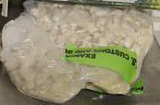
This was, curiously, posted on a football website, about the execution on 29 December of Akmal Shaikh in China for bringing 4kg of heroin into the country, having been allegedly "duped" by a chap in Poland. I don't personally have a problem with believing that: a friend's son was offered a wad of money to take a package from A to B and, having been stopped by the police, found that the "easy money" had been payment for his being stupid enough to transport a class-A drug. So he served his time in prison: paid the price, you might say, according to the law of the land he was arrested in.
What the fellow says in the quote at the top of the page isn't all that far off-target, but where I take issue is with the phrase "pathetic excuse" as part of a description of a serious mental illness, one that I have myself. I prefer the more measured reasoning of the Telegraph's Richard Edwards:
The episodes [of extreme mood swings] can last several weeks or months and at worst can include psychotic symptoms such as hallucinations and delusions that one has special powers or abilities...There is debate in legal circles as to whether those affected can claim it as a defence to their actions because bipolar [disorder] affects mood rather than cognition, and therefore does not necessarily affect a person’s ability to know right from wrong.
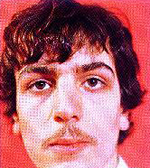
Shaikh's supporters pointed to the lyrics of a song for world peace inviting a rabbit to pray with him as proof of his mental illness, and even Reprieve, the prisoners' human rights charity, called the song "bizarre" and "terrible". But if insipid songs voiced by grandiose personalities indicated serious mental illness, there'd be still more pop stars on medication than there presently are - even among the hubris-scarred Live Aid veterans, whose pomposity was outdone only by the scale of the hair and shoulderpads. (Actually, Syd Barrett produced some rather brilliant stuff in the florid phase of his illness.)
While I was in hospital and in the grip of a delusion that was urging me to break the law, a psychiatrist advised me that should I do so then my treatment would continue in prison, and that was enough to keep me on the right side of the law. The same principle has applied here in reverse: Shaikh broke the law not just in China but in its Xinjian Uyghur Autonomous Region, where the treatment of Christians such as Alimujiang Yimiti, bravely exposed by ChinaAid, show that compassion there is especially a stranger in a strange land.
All of this is no comfort to the Shaikh family who, presumably through no fault of their own, have lost their loved one. It might be worth noting, though, that in the UK, the 4kg of heroin he was carrying would be worth £40,000 ($63,700) at current prices before it was cut with potentially lethal contaminants to make it go further and earn up to ten times as much.
So should China have executed Akmal Shaikh? You could say that what he was carrying in his suitcase, knowingly or not, was as life-destroying as a bus ploughing through a crowd; like a suicide-bomb in slow motion. I cannot find myself condemning China for the move, but that doesn't mean we can become less suspicious towards the murderous tiger, whose colonial claws are already gripping swathes of Africa, nor can we pretend not to see the abuses towards its own citizens who may be members of house-churches that don't officially exist, or perhaps aren't even born yet. SPUC director John Smeaton highlights our own complicity in this:
The UNFPA's participation in China's forced abortion one-child policy is well-documented. Furthermore, when Colin Powell (a supporter of abortion) was US Secretary of State, the State Department verified the pro-life Population Research Institute’s allegations that the UNFPA was cooperating with China's coercive abortion programme...The UK government gave over 40 million US dollars to the "regular funds contributions" of UNFPA in 2007 (the latest report available), about 10% of the total income China received in regular donations from over 180 countries worldwide.
Presumably the diplomatic and political row over the execution of Akmal Shaikh will lumber on as China saves face while Gordon Brown searches for a figleaf to cover the intellectual, moral and political paucity of his position; and meanwhile, the products of the Afghan opium fields alone kill 100,000 people a year - the equivalent of over 1900 executions daily. Where are the wailing politicians?
The Draughty Old Fen, Cambridgeshire, United Kingdom
An incurable old cyber-grumpy, I like good music, cats, bacon sarnies and anything to do with Terry Wogan. Raining on ideological parades is the cream in the coffee.
Latest 50 educational institutions accessing Tales From a Draughty Old Fen:
No endorsement by the institutions listed below of the website or any post is intended to be inferred. Click an organisation's link to go to its website.






















 brought out to coincide with Redknapp's crusading documentary was a celebrity pregnancy special, but the devil was in the detail, and the detail turned out to be in the back issues.
 he had a point. But I hope the bloke who phoned in to complain about his eyebrow never had a look at the "More man of the week" (Kellan Lutz from vampire flick Twilight); no wonder illicit steroid sales are booming, as vulnerable young men think they have to "get ripped". It's not for me to contradict Emma Ledger and say that the photo was digitally manipulated, but Radio 1 DJ Vis showed that it could be done (see pic below).


 g drug-users that they have a responsibility not to allow their equipment to be reused, which might risk transferring the very beasties that Mr Law has been put at risk of. In the absence of education otherwise, they often stick needles into trees and snap the attached syringes off (and the needles often later fall out and await a passing child in thin-soled sandals).
 the burnbins will be collected and incinerated, hence the unofficial name "sinbin" (incineration-bin).









 transport a class-A drug. So he served his time in prison: paid the price, you might say, according to the law of the land he was arrested in.