Showing posts with label islam. Show all posts

Wednesday, February 2, 2011

English Defence League: Tommy Robinson on Newsnight

I'd like to say a big thank-you to the 20,000 visitors who have visited this site since I had to stop updating it due to time issues.

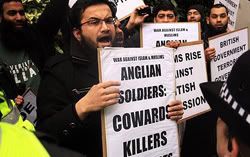
This isn't a blog I could post at the other place, since it's related to an English Village magazine published by the parish church, therefore I try to keep all politics out of it. the incident that gave rise to the English Defence LeagueAs the past year's gone by I've become increasingly aware of the English Defence League (EDL), which was founded in Luton in March 2009, when a group of Muslims protested at a homecoming for the Royal Anglian Regiment.

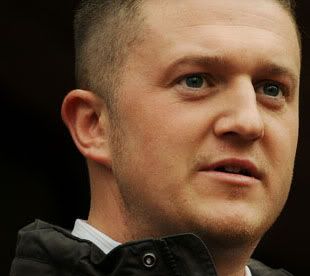
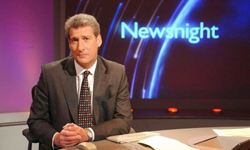
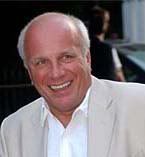
It was first portrayed as a skinhead group, but it soon became clear that as well as white people it welcomed black people, Hindus, Sikhs, Jews, gay people etc who are concerned about the spread of radical Islam in the UK. The EDL has Stephen Lennonboth outlived many obituaries and is about to celebrate its second anniversary in Luton. In the run-up to this, founder Tommy Robinson (left) was interviewed by Jeremy Paxman on last-night's Newsnight. Previously in the programme, Paxo appeared at his ease interviewing a Government minister, a Jordanian Prince and a USA acedemic, but seemed considerably discomfited when faced with an angry and determined working-class bloke.

Paxman's career-defining determination to put the BBC first (he famously ended Michael Howard's career by asking the former prisons secretary the same question 12 times because - as he later admitted - his producer was insisting that the next interviewee wasn't ready) showed itself tonight. He reacted incredulously to Robinson's insistence that the problem wasn't Muslims but rather the Koran. Had he researched the subjects likely to come up during the interview, he would have learnt that Muslims reject the Judaeo-Christian convention that holy books, while inspired by God, are written by fallible human beings. Islamic belief is that Muhammed produced series of verses dictated by the Angel Gabriel, and the book of those verses is only the Koran if written in Arabic in the original words.

They may have a point, of course - much of the Judaeo-Christian Scriptures have been through more translations than you can shake a stick at and, as Kiwi theologian Revd Bosco Peters states, every translation involves interpretation by the translator. So while we as individuals grow up with a Bible around which our culture has entwined like a second strand of DNA at the hands of generations of translators, the orthodox Islamic view is that not just the message but the words of their scriptures are immutable - and so, say the proponents of Sharia law, are the tenets upon which their immutable society is based.

On another level, Paxo was clearly indignant about Robinson's remarks about Pakistani drug-dealers, insisting his interlocutor join him in affirming that there are white drug-dealers. But again he was missing the point: as drugs-workers and police know but are unable to say in polite society, much (if not most) most of the heroin that enters the UK to be cut and distributed to drug-dealers of all races is brought through Pakistan.

I think everybody knew that Jack Straw would crop up in the conversation. The former Labour Home/Justice Secretary said that there was a particular problem in the Pakistani community whereby men saw young white girls as "easy meat". Paxman refused to deal with Straw's statement, which wasn't surprising - the day it was made, the BBC 10pm news wouldn't touch it. Robinson's summary of the difference between the two men was masterful:


Have you seen people on drugs pushed by Muslims? You might not have, but I have.

Have you seen girls chatted up by Muslim men and put into burqas? You might not, but I have.

Have you seen young girls who've been raped and pimped by Muslim men? You might not, but I have.
Paxman's answer, with which he probably said more than he meant to, was "these are your issues".

These are our issues, and why the demonstration is being held in Luton, where schools of radicalisation has produced to date two known suicide bombers as opposed to the BBC, which stands accused of so many instances of editorial bias towards militant Islam I'll leave you to google it. I can't go to the EDL demonstration in Luton because I'm working, but I hope it goes well. Please read this if you plan to go to the EDL demonstration at Luton on Saturday 5th Feb.

click to read the English Defence League mission statement

Saturday, May 22, 2010

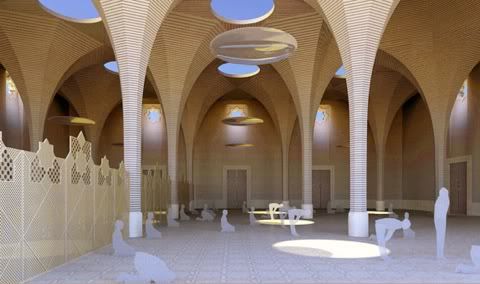
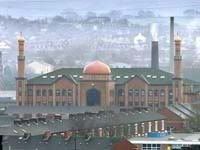
Cambridge's new mosque: planning still pending

click to view Cambridge City Council's websiteEverybody Draw Mohammed Day was going through my mind today when I rang Cambridge City Council to ask how permission for the proposed mosque on the city's Mill Road was progressing. I must admit I expected to learn nothing, but a very polite and helpful chap informed me that, although the land, the former Robert Sayle's site, had been acquired, no planning proposal had been submitted and one was not expected in the immediate future.

The site was acquired in 2008 by the Cambridge Muslim Welfare Society and Mulsim Academic Trust; but a police investigation of an arson attack later in the year, which resulted in their demolition, is presumably hampering planning applications.

click to go to the Cambridge Mosque is Moving siteFreedom of worship is an essential human right, so if the Muslim community in Cambridge is poorly housed in the Abu Bakr Jamia Mosque off Mill Road, then I hope they get permission for their mosque.

I also hope that any planning process is not a set-up like the Mill Road Tesco process, which was hijacked by well-heeled sandalistas objecting on ideological grounds in the knowledge that they have the money to patronise the independent shops.

So, in the event of there being a planning process that is open to the public, I have one issue that I hope will be debated in the open:

Given that paragraph 49 of Government planning advice PPG13 discourages adequate provision of parking spaces in order to promote sustainable transport choices, how will Councillors and planning officers treat proposals for parking spaces in the plans? If they apply the proposals consistently by refusing an application with adequate parking, how will they respond to claims that not everybody without private transport will be able to make it to worship, depending on where in Cambridgeshire they're coming from? (The Cambridgeshire Roman Catholic community has experienced this, with changes in Sunday bus timetables leaving residents in some villages unable to attend Sunday Mass.)

I am glad that mosque leaders have said that the mosque will have no minaret or call to prayer loudspeaker; speaking of members of Cambridge's 4000-strong Muslim community trying to cram into a space meant for 500 then "spilling out into the street", trustee Mohammed Mahmood says "We don't want to be a nuisance to neighbours anymore".

The reason I thought about Everybody Draw Mohammed Day when I was making my phone call was that I was reflecting how censorship on ideological grounds nurtures but disfigures that which it would suppress: it would have caused much less of a splash had Facebook not pulled the page that founded it. I was going to do a post for the day, but found myself unable to because any blog I would have linked to contained pictures I will not reproduce on a blog accessed by a lot of schools. But anyway, being given the information I wanted straight away was an unexpected and very pleasant surprise.

We see the worst of Islam all too often on the media. I hope the coming negotiations will show us its best out in the open.

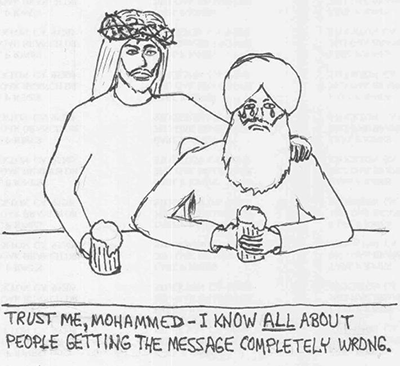
And in a spirit of conciliation here, unlinked, is a cartoon by California's Earl Jones that I hope will speak to Muslims, Christians and beyond.

Jesus comforts Mohammed

Tuesday, February 23, 2010

top tip for Tuesday

top tip for tuesday
Only time for one tip this week, as I'm experimenting with the seat-of-the-pants style of editing the church mag: but what a tip it is.

John Smeaton: click to read original postLast Friday John Smeaton, director of SPUC (the Society for the Protection of Unborn Children) drews a line in the sand in response to the Government's abusive proposals for sex education in schools, which bode ill for the Christian, Jewish, Hindu and Muslim voluntary grant-aided

Smeaton cites a Government media release praising St Thomas More's RC School in Bedford on the grounds that, among other things,
St Thomas More delivers SRE [sex and relationships education] through the pastoral programclick to go to the homepage of St Thomas More, Bedfordme in conjunction with the RE syllabus...the school explicitly recognises the reality that some young people may choose to be sexually active and, if that is the case, they need the knowledge and confidence to make an informed choice to protect themselves from pregnancy and STIs. The school nurse provides students with clear accurate information about the full range of contraception and STIs and details of local services...Pregnancy options, including abortion, are also discussed in a non-judgemental way with the RE syllabus requiring students to understand the spectrum of pro- and anti-choice views on abortion.
Smeaton provides a long list of tenets of the Roman Catholic faith that these grounds violate, after announcing that "I will be writing to St Thomas More school, asking them to confirm or deny the government's claims about what is happening in its school."

Damien Thompson - click to read his blog on the Catholic Education ServiceLater that day, the Telegraph's Blogs Editor, Damian Thomson forecast Bad Things for Oona Stannard, chief executive of the Catholic Education Service, which, as Smeaton identified, had helped the Government draw up its guidelines. Fr Tim Finnegan, a frequent flier on this feature, refers to both posts as he runs with the theme on his blog The Hermeneutic of Continuity. He asks how far the moral relativism will be taken:
I doubt whether you would get Healthy Schools Status if you taught that there was a range of views on the advantages of smoking tobacco; and I don't suppose there is meant to be a valid range of views on the pros and cons of nazism as a system of government. The relativism of Ed Balls and his friends who are setting the agenda for secular Britain is actually only applied to the "views" they disagree with, such as Catholic moral teaching on the sanctity of life, marriage, and the procreation of children.
The Government is mounting an attack both on one Faith and on faith. I remember minor Scottish politicians muttering about "Rome on the rates" and, as they have risen, they have dripped their poison slowly through the years in the hope that the erosion would create a cavity large enough to insert their specious moral outrage about "religion on the rates".

As John Smeaton notURGENT: read and act!es, today - Tuesday 23 - is the day when Parliament is due to vote on what is effectively the nationalisation of the bodies, minds and spirits of our children.

Smeaton remarks that St Thomas More "preferred to sacrifice himself rather than put the state's demands above the church's teachings", as can be seen in the 1966 film
A man for All Seasons starring, among others, Paul Scofield and Susannah York. I wonder if the Government was careful to use a school bearing his name as a Trojan horse to try to use the state's demands to extinguish the church's teaching?

Wednesday, December 9, 2009

case dismissed: Mohammed case thrown out

I don't ask for much, but I must admit it's gratifying to be vindicated. An hour ago I read a tweet from Martin Beckford, the Telegraph's Social and Relgious Affairs Correspondent to the effect that a judge has thrown out a case in which hoteliers Ben and Sharon Vogelenzang were accused of "launching a tirade" against Ericka Tazi, a recent convert to Islam. They had been accused of calling her hijab (full veil) "bondage" dressing, and of calling Mohammed a "warlord" like Adolf Hitler and Saddam Hussein. District Judge Richard Clancy dismissed the case after branding Ms Tazi's testimony as "inconsistent".

This is what I wrote about the case when it all kicked off in September - read the last sentence before the italics at the bottom.

Thursday, September 24, 2009

running from the void

click here for update

There's a story simmering in the news about a trial, due in December, of two hoteliers - a married couple - who allegedly called Mohammed a "warlord" and the burqa (garment revealing only the eyes and hands) "bondage" while in conversation with a Muslim woman who called Jesus a "minor prophet".

Ben and ShJohn Bingham of the Telegraph - click to read articlearon Vogelenzang run the Bounty House Hotel in Liverpool where, according to the Telegraph's John Bingham, they became involved in a comversation with a Muslim woman dressed in a Burqa about the relative merits of Islam and Christianity. The couple, members of the Elim Pentecostal Church, are being represented by the Christian Institute, who have been involved in several high-profile cases involving people victimised for refusing to hide their Christianity at work.

Cranmer, stating that he has been contacted by a personal friend of the family, elaborates:
Mr and Mrs Vogelenzang say that when the Muslim woman in question realised they were Christians, she kept trying to provoke them and start arguments about religion. They were wary of her and kept trying to change the subject but were always measured in tone and reasonable in the defence of their faith. They deny that they were threatening, abusive or insulting. Then, on her final day in the hotel, the Muslim woman emerged from her room in a burkha and started ranting at them about their Christian beliefs in an abusive and insulting fashion.
I am sure there will be much light and heat released in the run-up to the trial, and hope to release more of the former than the latter.

Mohammed was born in 570AD in Arabia and, following the death of his mother and father, Aminah and Abdullah, was brought up by his grandfather - Abdul Muttayib, custodian of the Ka'aba in Mecca, a repository for the gods of rival tribes who they would lay down their spears, notably during the uproarious and lucrative month of Ukaz.

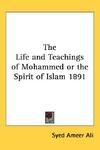
click to read The Spirit of Islam online at Project Gutenberg After his grandfather died in 579, Mohammed was taken in by his uncle, trader Abu Talib. During the happiest period in his life, he helped with trading trips and eventually became caravan manager for Khadija, a wealthy woman whom he married in 595, the same year that, according to Syed Ameer Ali's 1891 Spirit of Islam, he formed the League of the Fuzûl, whose members bound themselves by an oath "to defend every individual, Meccan or stranger, free or slave, from any wrong or injustice to which he might be subjected in Meccan territories, and to obtain redress for him from the oppressor". (The Hilf-ul-Fuzûl was based on an older society with the same aims named for its four leaders, Fazl, Fazâl, Muffazzal and Fuzail).

After increasing periods of time spent in meditation, Mohammed had his first vision in 610, in which he claimed that he had been instructed to memorise and recite a series of verses by the angel Gabriel. He began to construct a system of peace, respect and toleration in the face of persecution from the Meccan authorities, who had much to lose should presently warring tribes no longer need to make peace and parties during Ukaz.

We're coming to the crucial point, at which I think a comparison with Jesus of Nazareth is germane.

Like Mohammed, Jesus is said to have spent much of his younger life without his (earthly) father, and to have faced increasing levels of persecution which culminated in his crucifixion.


Jesus faced other pressures, too, notably through temptation. I once heard Bryan Knell of Global Connections break these down into temptations at the hands of Satan in the desert, to make life a little eaclick to go to the website of Global Coneectionssier for himself, make his ministry of revealing God easier and claim what was his by right the easy way. As if that weren't enough, he faced a similar temptation from his own family, and later the strain of fighting the temptation to escape his gruesome bodily destruction manifested in his addressing Peter as the Evil One when faced with his friend's horror at the revelation of what was going to befall his Master - and towards the end, he possibly showed that flight was on his mind at his arrest, only to face down the final temptation at the hand of his sneering enemies when anybody could have forgiven a dying tortured man for taking an easier way out.

Mohammed's life started turning sinister in 619, after a period of refuge in Ethiopia, with the deaths of both his uncle and his beloved wife Khadija. He'd been visited often by representatives of his followers in Medina, who promised to adore and venerate him as a prophet. Six visitors came from Medina to Mecca - whose authorities had posted guards to warn people off trying to speak to Mohammed - to try to persuade him to join them in 620; this rose to 12 in 621 and 75 in 622. In this year he succumbed to an ironic analogue of Christ's third temptation in the desert, upon which Islamic scholar and convert Mohammed Marmaduke Pickthall commented in his introduction ot the Koran,
Till then he had been a preacher only. Thenceforth he was the ruler of a state, at first a very small one, which grew in ten years to the empire of Arabia.
And his world of peace, toleration and respect went to pieces.

In 623 he married A'ishah, who was nine. A year later, the nomadic custom of tclick to go to an essay on the murder of the Banu Qurayzah tribe by Andrew G Bostomhe razzia, a (sometimes murderous) raid on one's enemy's possessions, became the jihad, military action of "believers" towards "unbelievers" with the Battle of Badr, then the Battle of Uhud in 625, both victories for the Muslims against the more numerous Meccans; then followed the massacre of a Jewish tribe called the Banu Qurayzah. In 629 Mohammed broke an uneasy truce with Mecca with the "Lesser Pilgrimage", and the next year took the city with 10,000 men and cleared the Ka'aba of its legions of idols, although Knell notes that there was "little bloodshed".


If, in considering whether Ben Vogelenzang called Mohammed a "warlord", the trial and the cloud of commentary surrounding it come to considering whether this is an insult or a fair description, I think the paragraph above will indicate that it will not be a walkover to persuade people that it is the former.


It would have been easy to conclude a short while ago that, given the discrimination of Christians noted by MPs, there would have been no consideration given to the Vogelenzangs being offended by Jesus being called a "minor prophet". But, while its not our consistencies but the way we resolve our cclick to go to the Elim Pentecostal Church websiteontradictions that make us interesting, the Arabian prophet's contradictions are so irresolvable that I think the Government, like Muslims who wish to rescue their religion from madmen, will be retreating to a safe distance from the void at the centre of Islam called Mohammed. I won't be surprised if this case is thrown out, should it make court at all.

NB: thanks to Bryan Knell for his series of presentations "Walking with Muslims" at Spring Harvest 2009 for much of the factual information: conclusions and opinions are mine alone.

Update: the case against Mr and Mrs Voglelenzang's case was thrown out of court on Thursday, January 9, with the judge calling their accuser's evidence "inconsistent". Click here for more details.

Click here to return to top

Monday, August 31, 2009

BBC - Murdoch throws his agendas into the debate

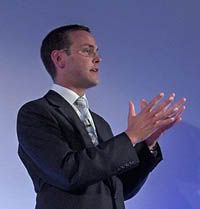
James MurdochThere's been a lot of comment on James Murdoch's speech when, giving the MacTaggart Lecture at the Edinburgh Television Festival on Friday, he criticised the "chilling land-grab" of the BBC website and called for the "abolition of the BBC licence fee, [and] the corporation's remit and governance to be drastically changed and brought back to basics".

I would broadly agree with Murdoch, while recognising that opposition to a powerful body can create strange bedfellows. He is the son of Rupert Murdoch, owner of the monolithic News Corporation that owns, among others, the Fox channel in the US and, in great Britain News International, comprising the newspapers The Times, the Sunday Times, The Sun and its Sunday version The News of the World - and their associated websites, which Murdoch pater complains he will have to start charging surfers for access.

For example, I agree with him when he questions why "a guide to night clubs in Mykonos is what the Government [which owns the BBC] needs to be doing", but I fear that team Murdoch are engaging in the Orwellian task of stirring up public resentment in order to topple their competitors and replace them on the top spot. Here's an example of text you can currently view for free on the News of the World, accessible through one click on the home-page, accompanying a picture special on Bob Geldof's daughters topless on the beach:
SAY hello to the Boob-town Brats - as Peaches and Pixie Geldof strip off and enjoy some topless fun on holiday...Peaches, 20, got a bit fruity while 18-year-old Pixie donned a snorkel kit (and not much else) to join in the fun...Best to not wear anything at all, eh Peaches?
Thankfully, the BBC website is a little more sedate, but BBC editorial policy continues to pursue the corporation's former Director General's feverish rush to make reparations for it being "hideously white, with the present Director General, Mark Thompson, delaring that "Islam should be treated more sensitively than Christianity" - I doubt whether Jerry Springer - the Opera will have a sequel detailing Mohammed's marriage to the nine-year-old Aisha. Not that I would be remotely interested, but I bet there would be much more reporting of the shockwaves as European Islamists hysterically rushed to protect groups which are perfectly able to protect themselves.

Dawn Airey - click to go to the Five websiteI prefer Dawn Airey's comments. She's the chief executive of commercial station Five, and envisaged a hypothetical scenario in which the BBC was to two TV stations and "a couple of radio stations", with a corresponding decrease in the licence fee and extra services on the website - like "view again" facilities being pay-per-view. (I should emphasise that she was talking about what the corporation could, not should, be.)

There's an opposing point of view that many BBC radio shows would never survive on commercial radio - like, on Radio 2, Nigel Ogden's show The Organist Entertains, for example. This is wrong. Theclassic FM - click to go to websitey would survive, just not on the same station; but if we've become used to channel-hopping with the TV, why can't we reconcile ourselves with radio-station hopping? (Although Classic FM is an excellent example of how a station devoted to preserving cultural treasures can survive perfectly well in the marketplace.)

There often comes a point at which somebody reveals the agenda fuelling their stance, and James Murdoch's moment was at the end of his speech, as Angela Andrews reports in the Telegraph:
He argued that the UK broadcasting sector is wrongly governed by "creationism" – the belief in a process managed by a single omniscient authority – and it needs to be more "evolutionary".

Creationism serves to create "unaccountable institutions", mentioning the BBC Trust, Channel 4 and Ofcom. Topical, he says, being the 150th anniversary of Darwin's On The Origin of Species.

"The creationist approach is similar to the industrial planning which went out of fashion in other sectors in the 1970s," he said, adding that this approach only serves to penalise the poor with "regressive taxes and policies – like the licence fee and digital switchover".
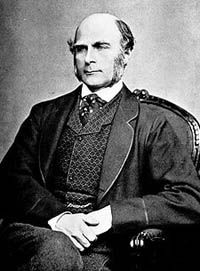
Francis Glaton, father of social Darwinism - click to read more about modern eugenics
Without wanting to get involved in the creationism versus evolution debate in science, it's easy to see why individuals at the top of their own particular trees are gratified by the thought that they have arrived there by a process of "survival of the fittest" - a phrase which Darwin never wrote down as it belonged to the iconography of the social Darwinism that so horrified him.

James Murdoch is there not because of the degree of his "fitness" but rather due to his father's fortune and influence - he's the boss's son - nothing wrong with that, but it's hardly a qualification of the sort of self-made man that Galton's admirers would envisage rising above the untermenschen. So how about a compromise - slim down the BBC to a rump and the licence fee accordingly, and ensure that News International can peddle its online tat to adults only?

Saturday, May 9, 2009

how diverse is diversity?

I'm just back from some mandatory diversity training. I was somewhat apprehensive on the way to Huntingdon (birthplace of Oliver Cromwell), where it was held, but my fears were mostly groundless.

I am worried by the lipservice given to diversity by many organisations today, which I think is summed up by a hymn pointed to by the Church Times blog, spotted by the Guardian (so it must be true) blogger Andrew Brown:


Lord of our diversity,
unite us all, we pray;
welcome us to fellowship
in your inclusive way.

If this isHarriet Harman true, it indeed rivals the previous nadir of hymnody, If I was a fuzzy wuzzy teddy bear, I'd thank you Lord, for my fuzzy wuzzy hair. (Or was that a parody with shades of the Golliwog? We may never know...)

My initial apprehension was due to the shibboleth-like nature of the mere word "diversity" in self-styled progressive society, which is such that Harriet Harman - Deputy Leader and Chair of the Labour Party, Leader of the House of Commons, Secretary of State for Equalities, Minister for Women and Lord Privy Seal - called confusedly for "positive action" to boost staff diversity. As the Telegraph's Richard Tyler reports,
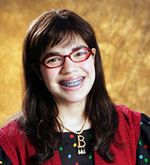
Ugly Betty, played by the rather attractive America Ferreira
employers will be allowed to favour a person from an under-represented group where there are two 'equally suitable' candidates...But positive discrimination, seen in TV show Ugly Betty, where someone is employed regardless of merit, will remain illegal.
However, I was impressed when a left-leaning friend who attended the course pointed out that "diversity", interpreted as awareness and acceptance of differences between human beings in terms of race, gender, sexual orientation etc has of itself no moral value, and pointed to Adolf Hitler as one of the most diversity-aware leaders of modern times. I'm working on putting my friend in touch with his inner Conservative.

We worked through several scenarios, of which I'd like to share three with you.

Firstly: a twentysomething graduate on accelerated promotion takes charge of a hospital department over the heads of several people who express their unhappiness that their decades of experience has been overlooked.

This was a clear case of ageism towards the younger person, which the scenario's writer designed to be easily found. But it was also clear that ageism was also flowing the other way here: is it right that people who have worked their way through almost every job in a department should have their experience comprehensively undervalued in favour of graduates at a time when degrees in certain British universities are being egregiously dumbed down? I wouldn't want to minimise the gains that can be harvested from the discipline of studying for several years, but the other side of the coin is that if people who have proved their worth time and again were allowed to ascend past the glass ceiling that is a hangover from a bygone age, then we might not have the situation in Stafford General Hospital and elsewhere whereby 400-1200 preventable deaths occurred with the board of directors possibly revelling in glorious ignorance of the fact.

Secondly: a woman in a self-help group for drug users refers to her partner, at which the facilitator asks aout her boyfriend, and the woman, after an uncomfortable silence, explains her partner is another woman; afterwards, the facilitator explains to colleagues that the lady hadn't looked like a lesbian, wondered whether she was the "butch" or "femme" of the relationship, and said "I think she fancied me".

There was, of course, discrimination on the ground of sexual orientation going on, something condemned by the Catechism of the Catholic Church when it says that "Every sign of unjust discrimination in [homosexuals'] regard should be avoided" (para 2358). However, it was noted that many stereotypes about homosexuals come from the gay community itself, and not a little buJames/Lauren Harries - click to see evidence of continuing bullying by the gay pressllying: witness child antiques prodigy (and Oprah veteran) James Harries, whose outrageous treatment by the gay community, to whom he tried to reach out in search of an identity that would make him feel whole, on account of his relatively high voice may have fuelled James' emotional and surgical transformation to Lauren. It was telling that one was tempted to assume that the group facilitator was a man, whereas the facilitator's gender wasn't mentioned.

Lastly: a Muslim arranges with his employer to move his shift back an hour during Ramadan, and also to take an hour's annual leave each Friday during the month so that he can go to the Mosque to pray - during a business meeting, there are comments made about his arrangements.

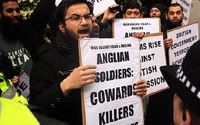
There was a consensus that an annual leave request is precisely that - a request, and that anybody unhappy with another person's arrangement with their employer should be invited to mind their own business. I had tried to start a conversation about how moderaabuse of freedom: click to read Thomas Harding and Richard Edwards' account in the Telegraph - thanks to the South Beds News for the picte Muslims are victims of the bad feeling generated by Islamists - for example, the Muslim community in Luton has lost its Islamic Centre to arson as a reprisal for a handful of Islamist protestors branding returning soldiers as "butchers", "cowards", "killers" and "extremists" - but there was no great enthusiasm for going down that route. A pity: it would have demonstrated that the recipients of our diversity policies do not always feel a need to respect diversity themselves. It would also have been good, I thought, to discuss outfits that go into apoplexy at the prospect of offending minorities like gay people or Muslims (who are actually quite good at offending each other), but are happy to tighten the screw on people from a Judaeo-Christian tradition.

What made the sesssion was that the facilitator was no ideologue but an experienced former managclick to go to the whistleblowing charity Public Concern at Work, which was awarded damages for 'botheration' for time-wasting and maladministration on the part of the Department of Trade and Industryer in the probation and drugs-services area who had worked his way to that position through a variety of jobs in many areas of those services. He was the first to agree that whistleblowing abut oppressive practices, which the Government pays lip-service to but in reality militates against, can leave you ostracised, isolated and vulnerable. The only point where I detected olitically-sensitive sensibility was when he referred to a joke made by actor David Jason ("what do you call an Asian cloakroom attendant?", but feKrazy - click to go to Toonhound's page on the 1970's comiclt unable to verbalise the punchline "Mahatma Coat". I was surprised by this, and informed him that a character called "Mahatma Coat" once popped up in the late 70s British comic Krazy, and was also the name of an instrumental by rock group Slade in their 1981 album, Till Deaf do us Part. Personally, I laughted when I read the joke, which sounded like more of the "laughing with" type than the "laughing at", and saw it as a measure of how sections of Asian communities had become integrated into British society.

On the way back to Huntingdon bus station I passed the Oliver Cromwell museum, but unfortunately, being late in the day, it was shut. Although seen by some as a divisive figure because of his admittedly indefensible actions towards (especially Irish) Catholics, I believe he did show some awareness of "diversity" through the blinkers of his day by encouraging Jews to return to Britain. I wonder if members of all of the groups named in diversity policies would agree with me?

Thursday, February 19, 2009

why we need to talk about the Muslim Problem

In Lionel Shriver's literary thriller We need to talk about Kevin, we are presented with a series of letters from the mother of a deeply disturbed boy, who goes on to massacre other children in a school, to his father.

That section of the press which is free of ideological blinkers is increasingly sending us warnings - letters, if you will - about a problem we have in Western society, an elephant in the room which will soon crush those who delight in pretending it isn't there.

The sustained Muslim surge towards hegemony in our civilisation is revealed in the pedestrian as well as the horrific, in footnotes and appendices as well as screaming headlines.

For example, the Telegraph's Nick Britten reported recently that in Birmingham's "mixed-race area of Hall Green", it is no longer possible to buy ham on the produce of Domino's Pizza, although Halal options are available - an honour whose equivalent has never been extended to the city's 3000-strong Jewish comunity. The Halal Food Authority's president, Masood Khawaja, commented sinisterly: "This is only the beginning".

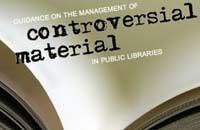
This week, it was reported that Leicester City Council's libraries department has decided to put the Koran on upper shelves, as Muslims believe that their sacred text should be "placed on a high shelf above commonplace things". The news that this was happening was broken by the Museums, Libraries and Archives Council in their publication Guidance on the management of cotroversial material in Public Libraries in section 5.1 of Appendix C, on page 41 of a 42-page document.

Although the city's Federation of Muslim Organisations advised the council, who sought it's advice, that all sacred books should be put high up so that the major religions' texts are seen to be equal, it remains to be seen whether the Muslims of Leicester, who have been repositioning the Koran unilaterally, will tolerate their book being placed alongside the Jewish and Christian Bibles.

What I find somewhat concerning is the use of the word "appeasement" in these stories and many like them, no doubt meant to evoke images of Neville Chamberlain flapping his piece of paper on which was Hitler's guarantee, gained at the 1938 Munich Conference, not to go to war with Great Britain in return for a promise of non-agression upon Germany's imminent annexation of Sudetenland, the German-speaking part of Czechoslovakia. The point about this story is often missed: Hitler had wanted negotiations at Munich to break down as a pretext to start a war, because he knew Britain's air defenses were inadequate, and some trade-unionists were agitating to slow down the already hesitant process of producing Spitfires, preparing to make their opposition to production of war matériel overt when the secret non-agression pact between Hitler and Stalin would be made formal with the Molotov-Ribbentrop pact of 1939.

Hitler was furious with Mussolini for crowing about his role in bringing about the agreement on Chamberlain's piece of paper, for in deferring a war the victory was Chamberlain's. I think a much more appropriate comparison for the present situation comes from the First World War, when the German High Command arranged for Lenin to be transported in a sealed train from Switzerland to Russia, where the disorder caused by his agitation would take Russia out of the war and let Germany concentrate on its western front. The Soviet empire that resulted from German strategy displayed the law of unintended consequences in spades.

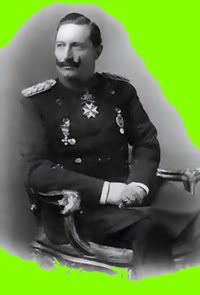
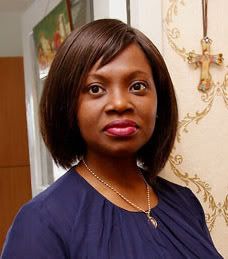
Similarly, Labour has encouraged the growth of a militant atheist clerisy that favours Islamism at every turn in order to oppress our long-standing Judaeo-Christian culture. Gone are the days when socialism owed more to Methodism than Marx, a point Gordon Brown was at pains to demonstrate in his biography of the left-wing Scottish MP, James Maxton. Just as Kaiser Wilhelm INadia Eweida - victim of political correctness.  Thanks to the Daily Telegraph and the PA for the pic.I's recruitment of communism as a weapon of war eventually led to the fracturing of his country for 45 years, so corporatist fawning to radical Islamism in the self-declared fight against traditional British values has cloven Britain into effectively untouchable radical militant preachers of hate and terrorism, their cannon-fodder, and the rest of us. And political correctness, a concept formed upon the orders of Lenin, is the favoured armament.

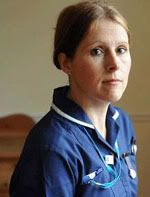
The attrition is visible all over the place. Nadia Eweida, banned by British Airways for wearing a cross visibly at work; Lilian Ladele, the registrar who had to resort to litigation against London's Islington Council because she felt that "marrying" gay people was contrary to her Christian beliefs; Caroline Petrie, a district nurse suspended by the NHS because she offered to pray for a Lilian Ladele - victim of political correctness.  Thanks to the Daily Telegraph for the pic.patient; and, most recently, Jennie Cain, sho was suspended from the school where she works as a secretary, her crime being having emailed friends from her home asking for prayers when her five-year-old daughter was reprimanded for talking about Jesus to a classmate.

On the other side, as Archbishop Cranmer explains, militant Labour peer Lord Ahmed recently bullied the House of Lords into banning democratically-elected Dutch MP Geert Wilders with the threat that he would mobilize a private army of 10,000 Muslims against Parliament if he were to arrive to give a talk and show his film, Fitna. Given that Wajid Shamsul Hasan, Pakistan's high commissioner to Great Britain, has made a thinly-veiled threat about emotions running high among the million-strong Pakistani diaspora in the UK over allCaroline Petrie - victim of political correctness.  Thanks to the Daily Telegraph for the pic.ied actions in the war upon terror, I can easily believe that Ahmed's figure of 10,000 stormtroopers under his command is realistic figure.

Breaking news today is that the preacher of hate Abu Qatada has been awarded compensation by European Human Rights judges because he was imprisoned without trial. Qatada is fighting deportation to Jordan for fear that he might be tortured there. If he was truly Osama bin Laden's right-hand man, why isn't he being encouraged by all necessary means to provode intelligence here that might protect British and US civilians and troops? I'm sure Allah would reunite him with his fingernails before deciding what to do with him and his associates for trampling the reputation of a fine religion into the mud.

And there's the rub. Islam once had a wonderful reputation for scholarship and tolerance that is fading fast. This is affecting me as well. For example, when lawyer Saleca Faisal Parkar won a discrimination case against her employers for egregious abuse on the grounds of race and gender, I was left feeling cold because of the actions of her co-religionists.

Anyway, here's something for you that the House of Lords was never allowed to see: the first part of Geert Wilders' film Fitna. I don't link to it, containing as is does disturbing images, out of any desire to cause offence, but because the elephant in the room has grown to such mammoth proportions that it threatens to trample us all, and this is why we need to talk about what I can find no name for other than the Muslim Problem. If watching it makes you feel a bit overwhelmed, try singing a hymn afterwards. How about Onward Christian Soldiers?

Monday, January 12, 2009

epithets and officers

There's been a big debate in Great Britain right now about a three-year-old video made by Prince Harry (the Queen's younger grandson) in which he refers to a colleague from Pakistan, Ahmed Raza Khan, as "our little Paki friend".

Things are getting out of hand. For example, one agitated caller to today's Jeremy Vine Show, who said he was a Pakistani living in the UK, said that the term "Paki" was charged with much more negative emotion than the term "Brit" or "Yank".

That's where the fellow lost my sympathy. I suspect he's never been in a quondam Glasgow to watch columns of IRA supporters marching down the street shouting "Brits out!" and, British citizens (mostly) themselves, baying for the blood of "Brits" in the Army stationed in Northern Ireland. As for the term "Yank", if he addressed this to somebody from the Southern States of the US - as I once did out of ignorance many years ago - he might not get the response he expected.

When "Paki" and other terms based on unalterable characteristics are used aggressively as insults or abuse, there's no excuse. But having watched the News of the World video embedded in the Telegraph report linked to in the first paragraph, the term doesn't come across as Greg Dyke - pot calling the kettle blackinsulting or abusive. Certainly the reaction in this country to a friendly gibe made in an Army environment doesn't bear any resemblance to the "British tolerance" which Gordon Brown assured the Indian people of when he visited to the sound of riots over the prolonged racist treatment of Shilpa Shetty in Celebrity Big Brother; and I certainly don't recall any Pakistani voice raised in protest when Greg Dyke, former Director General of the BBC, called the corporation "hideously white". I wouldn't be surprised if much of the present furore is coming from Brits who are as hideous and as white as the IRA supporters.

The then-cadet, who received the élite award of the Sword of Honour from the Queen at his passing-out parade and is now a Captain in the Pakistani army, has not made any complaint in the three years since the home-video was made. But his father, also an officer in the Pakistani army, has complained bitterly.

I rather think the father is more culturally Pakistani than the son, in the sense of being closer to the concept of Pakistan as an ethnocentric theocracy. One of Pakistan's founding fathers was Mawlana Abul A'la Mawdudi (1903-1979), who stated that Islam is

a revolutionary concept and ideology which seeks to change and revolutionise the world social order and reshape it according to its own concept and ideals.
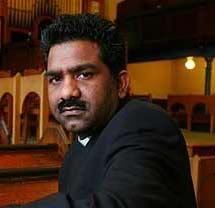
I qReverend Mahboob Masih - victim of Islamic ethnocentricity (with thanks to the Telegraph and epicscotland)uote the above because of another story involving somebody born in Pakistan that broke on Sunday - and in my home town - showing that people from that country can definitely be genuine victims of discrimination. Reverend Mahboob Masih of Awaz FM, which serves the Asian communities of Glasgow, was debating the views of Zakir Naik, who states that Jesus is not the only person who is the "way, the truth and the life".

This may be a fair comment for a Muslim to make in the context of Islam, but Naik, who has been criticized by Muslims in his native India for issuing fatwas (sharia rulings) with no authority to do so, demands that Christians recognise Mohammed with the equal reverence that they afford to Jesus. Rev'd Masih defended Christianity, and found himself sacked by Awaz FM, which claims in its mission statement to be "the voice of Glasgow’s ethnic communities and their respective faiths" (my italics). The Telegraph's Andrew Alderson reports that the minister has "reluctantly" apologised in order to calm things down, but has refused the station's demands that he apologise in person at the city's Central Mosque, on the reasonable grounds of fears for his safety.

I don't think those fears are overstated. The Pakistani caller to Jeremy Vine's show atrequiescat in pace - Shabana (with thanks to the Telegraph)tempted to show how downtrodden Muslims were in Britain by stating that it was unacceptable to insult Georgina Bailley, but not to insult a Pakistani. I think he said more than he realised - namely, that in Islam, women are viewed as being worth something less than men. Case in point: today's Telegraph reports the murder of one of Pakistan's famous dancing girls called Shabana by the Taliban because the terrorist organisation considered her dance too erotic. Given that Georgina Baillie is a burlesque dancer, I hope the remark wasn't meant to be as sinister as it sounded.

I hope also that Prince Harry gets what he deserves - a bollocking directed at stopping him from putting daft remarks on tape, especially when that tape might fall into the hands of papers owned by the anti-monarchist Rupert Murdoch.

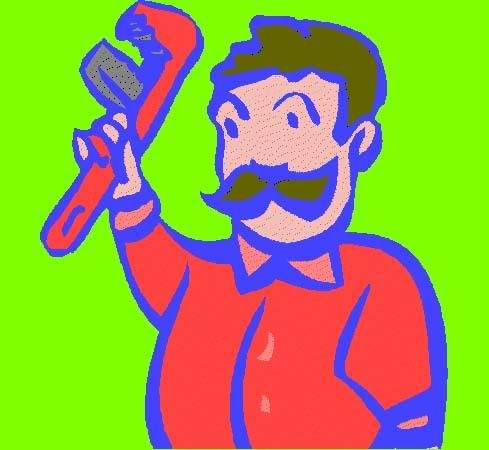
You can take that as the authentic ethnic view of an honest Jock. (I changed a washer today...does that make me Jock the Plumber?)

jock the plumber?

The Jeremy Vine show referred to in the second paragraph can be accessed until Sunday 18 January 2009 - click here

Wednesday, December 24, 2008

Christmastime in Cambridge

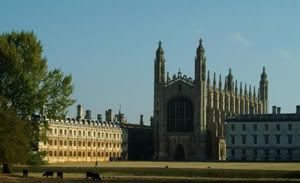
King's College Chapel as seen from 'the backs' across the river Cam - click to access Chapel website I have a surefire way of getting the Christmas shopping done - leave it all to the last moment and then panic. The method's served me well over many years.

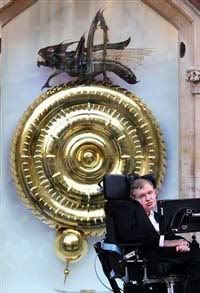
So on the 23rd I went into town, and realised how long it was since I'd had a good old wander round Cambridge. There's a maze of streets between the Marketplace and King's College Chapel with lots of speciality shops, if you take a while to look between the tourist shops and the coffee bars. There was a huge BBC Radio outside broadcast van outside the Chapel, where I guess they were recording "Carols from King's"Stephen Hawking unveils the Time Eater - photo from Ap Photo by Chris Radburn, click for further details sung by the College Chapel's choirboys, a Christmas staple throughout Great Britain. On my way back, I got my first look at the famous "time eater" clock worked by a fantasy grasshopper; it was designed by horologist Dr John Taylor (who invented the thermostat that stops electric kettles from boiling dry) and donated to Corpus Christi, who mounted it outside their college library after it was unveiled by Stephen Hawking.

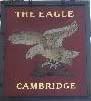
I visited The Eagle pub for the first time, where Watson and Crick would relax and discuss the ideas they were developing about the structure of DNA, which they would publish a paper on in 1953 with - as Watson would later admit - material from Rosalind Franklin shown to them pre-publication and without her knowledge.
The Eagle: click to read the CAMRA (Campaign for Real Ale) report
What I wanted to see was the Aircraft Bar, where British and American aircraftmen would relax after having spent periods of being at fifteen minutes' notice of scrambling, and where history was burnt into the structure of the pub. It's reckoned that P.E. Turner from Cherry Hinton (now part of Cambridge but then a village in its own right) was the first airman to have burnt his initials into the roof of the Eagle with his lighter, but pretty soon they were all at it, one suitably refreshed Michelangelo drawing a picture of a naked woman with lipstick.

The landlord must have been beside himself, and the ceiling was later plastered over; but after the pub was extended in 1992, it was lovingly restored by former RAF Chief Technician James Chainey, who served from 1943-1969. The ghostly initials have returned, but, alas, the lipstick lady is lost. There are stickers with the insignia of British, American and some German squadrons all round the walls, together with a picture of the original crew of the Mempclick to go to the website of the Memphis Belle Memorial Associationhis Belle, a B-17 Flying Fortress based at Bassingbourne whose crew were the first based in Britain to complete their tour of duty of 25 missions over such places as Brest, Bremen and Wilhelmshaven, and which has been lovingly restored by the Memphis Belle Memorial Association. Below this is another picture, of the survivors of the original crew, with the cast of the 1990 picture of the same name.

After doing the Christmas shopping I repaired to another bar, where an old fellow from my homeland introduced himself haltingly and indicated that he'd had a few. (Why can you find drunken Scots in bars worldwide?) He ordered a wine, which the barmaid gave him while leaving him in no doubt that this was his last. He apologised for being over-refreshed, explained that his wife had died so he was going home to an empty house, and started to cry. She called him a cab and held his hand until it arrived.

Christmastime is like that - a time of celebration in the midst of the winter's gloom when we remember those who are dearest to us, when the absence of loved ones who are lost to us for the present is most keenly felt. I don't think it's the actual feast of Christmas, which has visited every month in the calendar at least once: rather, its current siting in midwinter is responsible. Origen and Arnobius didn't see the point of celebrating Christ's birth, the latter comparing it to the "birthdays of the gods" celebrated by the pagans.

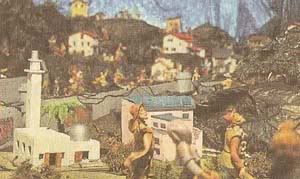
Perhaps settling for this period as a home for the feast of Christ's Birth was influenced by early Christians who didn't quite get monotheism and wanted to compare Jesus to Apollo (Greek/Roman sun-god), similar to the way in which the Psalmist calls God the great King above all gods; certainly Tertullian had to clarify that Christians didn't worship the sun as late as the 3rd century. There still seems to be a confusion in some quarters about the nature of Christmas - Father Prospero Bonzani of Genova has unleashed a storm of protest by including a Mosque in his nativity scene. I don't doubt his sincerity in saying a mosque in a depiction of Bethlehem is true to current reality, any more than I doubt that his placing a mosque in a scene representing what happened almost six centuries before Mohammed was born is sincerely wrong, and MEP Mario Borghezio of the Lega del Nord (Italian Northern League) is right to criticize him in the strongest terms.

the time-travelling mosque: photo, by Balostro Marco, scanned from the Telegraph of 24 December 2008
People who think this sort of critique of Fr Bonzani's actions are over-egging the pudding may want to consider what's at stake when Christians try to equate Islam with their own religion, especially during a major feast. Just like last year, the Cambridge News published Christmas messages from three clerics yesterday - the Right Revd. Dr Anthony Russell, Bishop of Ely, Father Rafael Estaban of Our Lady and the English Martyrs in Cambridge - and Abdal Hakim Murad, Muslim chaplain to the University of Cambridge.

I'm not criticizing Mr Murad's (aka Tim Winters, who aimed polite invective at Pope Benedict XVI post-Regensburg) right to free speech, merely questioning whether his views belong in a piece giving Christmas messages. He is merely stating what he believes when he says that Muslims don't believe in the Incarnation. He adds, correctly, that neither do Jews, but Christianity owes far more to Judaism than it does to Islam. Given that even the left-wing online Huffington Post has the epistolarian Rabbi Michael Lerner outlining similarities between Chanukah and Christmas, couldn't the Nuntii Cantabrigienses ask a Rabbi to contribute, then ask Murad to write a piece for Muslims on a Muslim feast?

Having rendered unto Caesar what is his and to Gordon Brown what isn't, I'm not long back from the sublime Midnight Service of Holy Communion at St Gallicus', where Rector Pellegrina spoke about the shepherds - trusting and meek - and the Wise Men who, through their training in etiquette and need to be noticed, arguably sparked off a wave of infanticide. She quoted the Archbishop of Canterbury, Dr Rowan Williams, who said that "in the straw of the stable, the humble and the complicated are able to kneel together". Amen to that - but I still think that the work of the Kingdom advances further through a barmaid holding a broken-hearted widower's hand than by an anachronism in a Nativity scene. Merry Christmas, everybody.

Why We are Waiting: click to go to the Archbishop of Canterbury's Advent and Christmas message

Saturday, November 1, 2008

Fatal Misconception - The Struggle to Control World Population

Fatal Misconception - The Struggle to Control World Population
Matthew Connelly
pp520
Harvard University Press 2008

"Those who cannot remember the past are condemned to repeat it."

George Santayana

I begin with this often-misquoted phrase from George Santayana because the story of birth-control as national and transnational policy seems to be that of recurring bouts of "collective amnesia", as Connolly puts it. For example, Connelly cites a screening of the pro-life film The Great Population Hoax at IPPF headquarters which caused activists to complain about arguments using distortions of the truth; manager Julian Heddy had to admit that these were actual claims made by earlier population-control advocates.

In order to test the prevalence of population control in recent times, after the prejudices, avoidable tragedies and wilful negligence, I leafed through today's Daily Telegraph. I found a story about how Pakistan is to receive a $9 billion (£5.6 billion) loan from the IMF, but would not like a full-blown IMF program because "it would likely come with painful conditions to cut government spending that could affect programs for the poor".

Wondering what these might be, I looked through some IMF papers for other countries, and found a Senegal Poverty Reduction Strategy Paper from 2006 which contained a statement on page 38 that one of the priority objectives of this was population control.

I've already blogged about how social Darwinism evolved into eugenics. I knew that Darwin himself was horrified by the former phenomenon, but it surprised me to learn that he complained to Annie Besant during her phase as a eugenicist (before she became a mystic philosopher) that eugenics interfered with natural selection. I considered myself quite informed on these matters, but this was only one of countless revelations in Matthew Connelly's intensely-researched tome on how population control was all about controlling other folks' populations. Shortly into my first session with Fatal Misconception, I realised I was reading one of the most important books of my life.

One of the key dogmas of eugenics was maintaining the purity of one's people. When Margaret Sanger realised that those concerned about this were coalescing into a discrete movement, two of the names she thought of calling it were "neo-Malthusianism" and "race control", before she decided on "birth control". An American, her British counterpart, Marie Stopes, stated that she wanted to recruit from "healthy, well-conditioned individuals only", and that "Constructive Birth Control will fill the comfortable cradles and empty the gutters".

The Birth Control Movement was ostensibly an internationalist movement seeking a world government in order to eliminate war. But what they were about was the future of the white race (whatever that is), and at the time eliminating the "yellow peril" (although at the International Neo-Malthusian and Birth Control Conference in New York in 1925, Indian nationalist Taraknath Das complained about the "white peril).

India was a target for Sanger and her followers from the start, and during Connelly's exposition of the whole sordid affair as a case-study I had to remind myself several times that I wasn't reading a horror story but modern history.

A measure of the morality of the Birth Control movement can be gleaned from his description of Margaret Sanger "criss-crossing" India dispensing spermicidal foam, almost totally unarmed with information as to its safety. It seems not to have bothered her that a similar foam, distributed to African Americans by "notorious racist" Lydia DeVilbiss, was causing side-effects, but finally sent her foam away for analysis upon learning that DeVilbiss' concoction had caused adverse effects when tested upon dogs.

Following the 1951 census, Indian Prime Minister Jawaharlal Nehru "called for free sterilisation and contraception when recommended on medical grounds, and suggested that where feasible it should be given for social and economic reasons as well". India would never be the same. (It should be noted that Hellen Keller, the deaf-blind pioneer, wrote to Sanger breathlessly congratulating her for founding the Planned Parenthood foundation in India in 1952. I find this rather strange, as Sanger referred to the blind, deaf and mute as "this dead weight of human waste" in her 1922 book The Pivot of Civilization - and Marie Stopes wrote her son Harry out of her will because he married a woman - daughter of "bouncing bomb" inventor Barnes Wallis - with hereditary short-sightedness.)

The International Planned Parenthood Federation (IPPF) had maintained a presence in India for two decades before Nehru gave them the go-ahead, and responded to their mission with a Neitzschean optimism: "India is the cauldron in which mankind will be tested". Farce ensued immediately - during their 5-year study in the Punjab husbands and wives would answer intrusive questions about their sex-lives differently, and by the time their trial on birth-control ended, the birth-rate was greater than when it began. (They weren't the only ones falling over their own feet; a Swedish trial in nearby Ceylon - now Sri Lanka - couldn't prove the effectiveness of contraceptives after two years.)

The degree to which the Indian population control program contributed to the Emergency and its conclusion will, I think, be a subject for debate until Kingdom Come. But abuses in order to increase "acceptors" were a part of the program from the beginning. Intrauterine Devices (IUD's), which had been found to be a cause of heavy bleeding and ectopic pregnancy in programs in Hong Kong, Puerto Rico, Pakistan and other countries, were being used widely, and the UN promised follow-ups in India to catch complications early, despite there being one health visitor per 40,000 people in India. Men who refused sterilization were denied pay-rises and promotions, and by the late '6o's payments were being made both to be vasectomised and to recruit others.

Mass sterilisation was praised in 1960 by Time, and when the Emergency was declared in 1975 Indira Ghandi's son Sanjay commented that it was an "appropriate atmosphere" for tackling what DN Pai, director of family planning in Maharashtra, called "people pollution". What was effectively coercive for poor people became mandatory. Connelly explains:
Sterilization became a condition not just for land allotments, but for irrigation, water, electricity, ration cards, rickshaw licenses, medical care, pay raises, and promotions. Everyone, from senior government officials to train conductors to policemen, was given a sterilization quota."
One of Sanjay's circle, Ruksana Sultana, demanded that Muslims who were begging her to have the demolition of their houses stopped - the idea being that sterilization certificates be produced to get alternative accomodation - produce 300 people for sterilization in return, and had to be rescued from the resulting riot by police who eventually gained control by firing live ammunition into the crowd.

However, Gandhi had two qualities that just about all senior population controllers at the time lacked: she was a woman and a mother. She became depressed over the suffering of her people and called an election - and was robustly defeated.

Another tragedy of India is that the population control could have been different. On December 3, 1935, Margaret Sanger had an audience with Mahatma Gandhi concerning population control, and told Time, "He just didn't know much about the subject." In reality, Gandhi was a proponent of natural family planning, which he thought strengthened self-control. Connelly speculates that she didn't publicize Gandhi's views on natural family planning because "it was endorsed by a growing number of Catholics".

Sanger was, in fact, deeply anti-Catholic, and indeed when she left the American Birth Control League "when she found she could no longer control it" she called its house journal, Birth Control Review, "no different from 'all the little Catholic papers'". Connolly continues:
Whatever their differences, Sanger insisted that all these [birth control] groups shared "one common enemy, one group of opposition objecting to everything we do or say - the Catholic Church".
This attitude still thrives: in September of this year John Smeaton highlighted tactics which were contrived to be offensive to Christians in general, but to Catholics in particular, and the British HFEA (Human Fertilisation and Embryology Authority) still excludes pro-lifers, which in some circles is taken to be a synonym for Catholic. There are, however, two things to be thankful for: firstly, Roman Catholics still swell the ranks of pro-lifers, and secondly, they have been joined by people of other religions and none - there are pro-life Anglicans, Baptists, Methodists, Protestants, Jews, Hindus, atheists, pagans - the list goes on and on and on...

Despite the abuses of the Indian birth control campaign, in 1983 Indira Gandhi, returned to power, shared the first United Nations Population Award - with Xinzhong Qian, Soviet-trained former soldier who was one of the masterminds of the Chinese population control campaign.

Birth control being what it says on the tin, ie control, it's surprising that it wasn't embraced wholeheartedly by a Communist country before China started considering it in the late seventies.

The IPPF's program in China, states Connelly, was "no secret". Stephen Mosher, later President of the Population Research Institute, brought back reports such as that from a Guangdong village:
Eighteen women who were at least five months pregnant, "red-eyed from lack of sleep and crying", were told they would have to undergo abortions, in two cases by Caeserian section. Through such means, China registered 7.9 million abortions, 13.5 million IUD insertions, and almost 7 million sterilizations in 1979...
Yet, though the riots in India had barely died down, it was as though they had never happened - despite the repercussions of the Indian fiasco reaching not just Pakistan, but also countries as diverse as Iran, Indonesia and the Philippines and contributing to the overthrow of more than one government. Yet, says Connolly, "senior IPPF staff had their eyes wide open" regarding the China campaign, whose aims, according to the United Nations Population Fund (UNFPA) were not just to reduce "overpopulation" but to "raise the quality of population from the point of view of eugenics, education and ethics". With people who could remember newsreels detailing the horrors of Belsen, Auschwitz etc at the time of their liberation still in employment, eugenics was back.

And it's back this time without necessarily being imposed from above - witness sex-selective abortions in India and China facilitated by ultrasound machines. In the light of modern preoccupations with all things genetic, Connolly refers to people "faithfully reciting a eugenic catechism without the faintest idea of where it came from or where it can lead". For example, while in Australia a child has been born after surviving an ectopic pregnancy, in Britain doctors have been given permission to screen embryos for cosmetic defects, with a view to destroying the ones that don't match expectations, the defects including squints and even hair colour.

One thing gynaecologists and obstetricians have always agreed upon is that there is no difference between a baby before birth and one after. This is why in 2006 the Royal College of Obstetricians and Gynaecologists proposed infanticide for the sickest babies on the grounds, among other things, of the costs of looking after them - and Connelly notes that the population control agenda gathered steam during the financial crises of the 1930's. In the US, Senator Barack Obama is reckoned to have voted against the Born Alive Infants Protection Act, which would protect babies who have survived abortion from being murdered. (In the UK, whose population is around a fifth of that of the US, fifty babies a year are estimated to survive abortion.)

What we're looking at here is an attempt to formally renunciate the broad medical concensus that once a baby has taken its first breath it is a human being. I'm reminded of Philip K Dick's 1973 short story The Pre-Persons, in which a child can be "aborted" up to the age of 12 , and even then is only safe if he/she can prove a certain degree of mathematical ability. I wish I could say it's still in the realms of sci-fi, but earlier this year Australian doctor and bioethicist Fr Joseph Tham estimated that infanticide would be "normalised" in 50 years. An online friend has alerted me to the philosophy of Dr Peter Singer, an animal liberationist who believes that animals are people but that babies can be killed up to 28 days post-birth. (Connelly refers to a pressure group called Zero Population Growth, which in 1969 wanted to exterminate humanity but give other primates an antidote so they would survive.)

What will happen? Will the "collective amnesia" of policymakers draw us to catastrophe once more, so that in the reaction we can once more cry "Never again"?

But population planners have an enemy that they cannot forever subjugate. Connelly describes how the Emergency ended - "Something more powerful, even more implacable, had finally defeated the ideology of population control: People voting, one by one."
Wednesday, June 25, 2008

multiculturalism in schools needs homework

Minora asked me for some help for a homework-question she'd been set in her Religious Education class - "should schools be multicultural?"
click for ofsted homepage
After giving her my opinion, I decided to do some of my own research. In doing so, I came across a 2005 Ofsted document containing two words which struck dread into me. See if you can guess what they are:

In a Year 3 religious education lesson on learning about different festivals, a notable feature was the use of a Melting Pot. Pupils had already completed work on celebrations. Part way through this lesson the teacher introduced a big jar termed a Melting Pot. It contained artefacts and props collected by the teacher during the course of six weeks which related to Islam, Judaism and Christianity as well as secular celebrations and events the pupils had been involved in, such as Arts Week.

The specific term was introduced by Israel Zangwill's 1908 play The Melting Pot, in which David Quiclick for Bishop Jackson's biographyxano accepts the dissolution of his Jewish identity into the substrate of American identity contained by the aforementioned metaphorical vessel. It was a controversial suggestion then, and I don't think it is any less so now, as Townhall's Harry R Jackson asserts. Frighteningly, he uses the example of multiculturalism in Great Britain in general, and London in particular, to devastating effect. More frighteningly, he hits the nail on the head.

I'm not saying that all different religions don't have a value, just that that value is different depending on whether one is thinking of a Christian, Jewish or Muslim child, or indeed a child of atheist parents.

Year 3 is Primary 4 in old money, containing children between 7-9 years old, with an average age of 8. At this time in life, I think it's a good idea to teach children that all human beings are equal regardless of their religion (or indeed lack of it), but this is a much more subtle idea than that which avers that all religions are the same. The latter concept is more a blunt instrument than a broad brushstroke, and is the mark of an atheistic outlook. As ex-PM Tony Blair's advisor Alistair Cambell famously pointed out to him, "We don't do religion". The comment was made when Blair was asked on his spiritual life by a journalist, but it could just as well have been a summary on governmental policy on religious education.

What is important in our lives does tend to be prioritised, even though other things are important to other people's lives. For example, Hannukah will start on December 22 this year, so if I am invited to a Jewish friend's house during it, I will have to see if the invitation clashes with a service in St Gallicus and work around that. The Second Vatican Council document Nostra Aetate (on the relation of the Church to non-christian religions) states hopefully:

[The Church] regards with sincere reverence those ways of conduct and of life, those precepts and teachings which, though differing in many aspects from the ones she holds and sets forth, nonetheless often reflect a ray of that Truth which enlightens all men[sic].

The elephant in the room, of course, is that the melting pot doesn't exist, even as a metaphorical click for storyconstruct. The objects of our multiculturalism (multiculturalees?) are not always multiculturalists themselves. At a time when a senior official in the Church of England is saying that more mosques need not be built because enough exist for Great Britain's (at present) 4 million Muslims - and being compared to a BNP activist by a member of the Muslim Council of Britain for her troubles - a thug has walked free from court after assaulting a vicar on the grounds that “This should not be a church. This should be a mosque.

My own opinion, which I gave to Minora, is that state schools should give prominence to the Christian culture of Great Britain, then teach respect for other cultures, while outlining those cultures containing sizeable sectors with a mixture of hatred and acquisitiveness towards our own society.

She looked at me somewhat suspiciously - she seems to have gotten an idea from somewhere that British patriotism is not too far removed from the outlook of "far-right parties like the BNP". I nearly invited her to consider that study of the BNP's policies reveal it to be a left-wing party, but decided that was one for another day.

With Ofsted going on about melting-pots, what chance is there for children to learn the value of their own culture at school at a time in their lives when they doubt the validity of any statement from their parents more complicated than "dinner's ready"? Multiculturalists, I think, should do their homework.

Saturday, January 12, 2008

hearts but no minds

In Frederick Forsyth's latest article for the Daily Express, he is of course correct to compare the situation as regards Muslim terrorism in Great Britain to the one that pertained to Irish terrorism. Much has been made of the lack of a "hearts and minds" campaign in Northern Ireland, but that certainly took place in Britain. When politicians, throughout the conflict but especially in the 1980's, condemned the terrorists and extremists but made sure that ordinary, decent Irish people were welcome in the country, they created a space where peace-loving Irish people felt safe to condemn terrorism. This eventually brought the terrorists and their apologists towards the centre as they desperately pursued a popular mandate.

The similar process that FF proposes in relation to Muslims should be happening, but it isn't. In sacrificing the truth that some things are objectively right while others are objectively wrong on the altar of relativism in the temple of evangelical atheism, the present political masters of our country tolerate all sorts of human-rights abuses on the basis that to ban them would be a restriction of the human rights of the perpetrators. To get to this point requires not only application, stamina and a total disregard for one's voters, it takes a hell of a lot of therapy.

Government appeasement of extremists is only alienating white British people from ethnic minorities and undoing half a century of (mostly) good race relations work. Tragically, awfully, decent white people are being pushed into the waiting arms of the BNP, who are winning their own hearts and minds campaign with concepts such as that it is racist to presume that people of ethnic minorities will behave like white liberals if we treat them like white liberals.

Mr Brown, if you are unwilling to call a general election, then at least please banish the careerists from the Cabinet and bring in your seasoned backbenchers, who know the difference between mushy peas and avocado purée (unlike Peter Mandelson), and between the duty to keep peace on the streets and racism.