Being something of a heavy metal connoisseur, I was saddened to hear the news of Ronnie James Dio's death on the radio last night.
Dio started playing in bands in 1957 and releasing records the year after. What a time his first full decade as a recording artist must have been, as rhythm'n'blues morphed into psychedelia which, in its 1970s incarnation as progressive rock, laid the foundations for the golden era of heavy metal in the 1980s. This, incidentally, was kicked off by Black Sabbath's release of Heaven and Hell, with Dio on vocals replacing Ozzy Osbourne, whose demons had nearly destroyed the band.
What marked Dio (born Padavona in Portsmouth, New Hampshire) out as a giant was his eschewal of the rock'n'roll lifestyle, which he put down not to studying pharmacology for a year at degree level but because, he told an interviewer for dmme.net, "I saw how destructive it was, and how it dulled your sensibilities and ate up your talent and your life". On records his first instrument was the bass guitar, but before that he learned trumpet, which built up his diaphragm to the point where it would sustain his most powerful and nuanced instrument: his voice, which would come to international prominence with Rainbow and, after recording arguably the definitive Black Sabbath album, with his eponymous band as well as numerous collaborations.
Dio succumbed to stomach cancer yesterday after battling with it since late last year. This may be of little comfort to his widow at the moment, but his avoidance of the rock'n'roll lifestyle put him beyond the rock'n'roll death that follows on all too often. Not for him choking on vomitus after downing a handful of sleeping-pills like Jimi Hendrix; or alcohol poisoning due to mistaking Heminevrin for recreational tablets, which prevented Keith Moon's stomach ejecting the bucketful he'd had during a relapse; or, most cruelly, Phil Lynott sliding into the last goodnight due to liver failure while his mother wept.
All of these people have left us wonderful music, but Dio left something else alongside - a template for living well in an industry that has been known to eat its children. Thanks for the music, Ronnie.
Here's RJD as I like to remember him, singing about his beloved pop medeivalism with Ritchie Blackmore's Rainbow in 1975.
Showing posts with label obituaries. Show all posts
Showing posts with label obituaries. Show all posts
Monday, May 17, 2010


Friday, January 8, 2010
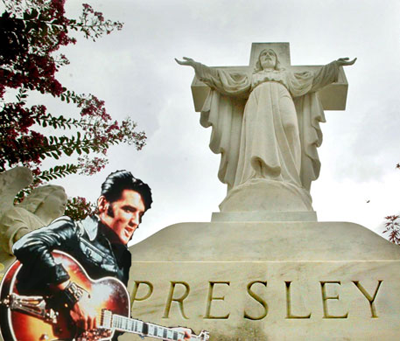
Elvis lives in our memories
The first time I saw an Elvis impersonator was in Joseph and the Amazing Technicolor Dreamcoat when one jumped out of a Sarcophagus in the role of Pharoah to delighted screams from the crowd - he'd just been dead two or three years.
The lasting cultural impact of Elvis can't be underestimated. In Roland Emmerich's 1998 remake of Godzilla, Jean Reno, playing a French intelligent agent, gets through a US security barrier by saying the classic line "thang-you very much!", and in Men in Black, when the cvar is speeding upside-down through a tunnel to the accompaniment of Elvis singing Promised Land, Tommy Lee Jones' character remarks to Will Smith's that "Elvis didin't die, he just went home". My favourite, though, is in the film of John Grisham's novel The Firm. In the book, main character Mitchell McDeere, in fleeing, hitches a ride with a lorry-driver who is an Elvis impersonator; whereas in the firm we see Tom Cruise, playing the part, in the passenger's seat beside a driver who looks just like Elvis - a nod, no doubt, to the enduring rumours that Elvis is alive.
I remember when he died in 1977 because my Mum, a huge fan, came into my room weeping to tell me the news. She'd been hooked since she'd first heard one of his singles on Radio Luxembourg - which, by chance, was the first European station to announce his death. She related to me how the only of his songs she couldn't listen to was Teddy Bear, because when she was a young woman with TB in Mearnskirk Hospital near Glasgow, a wardmate had played it continuously on a wind-up record-player until, to the guilty relief of all those around her, the object of her infatuation decided to call things off in a letter.
I think two things in particular attracted Mum and her peers to Elvis. Firstly, living in poverty in Tupelo, Mississippi before moving to Tennessee's Memphis, he was a true working-class hero long before John Lennon coined the term in song while living in the lap of luxury, and - again unlike Lennon - he never forgot where he came from.
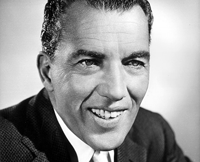 Secondly, his performances exuded sexuality in a "safe" way that was not only due to his distance from Scotland. The Southern laws of deference and politeness that his generation were instructed to observe almost religiously led Ed Sullivan to extemporise a paean to his decency, telling the audience at a time when Presley w
 as being attacked with all the might of the Establishment machine that he was "a fine, decent boy" and called everybody "Sir".
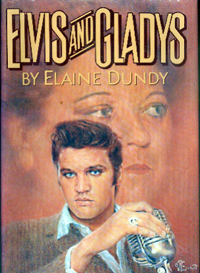
Another side of "Elvis the Pelvis" was a fierce love for his mother, something well understood in Celtic countries, so the rumour being disseminated in the late 1950's that he had killed her must have really hurt. The late Elaine Dundy, who wrote a book on this relationship called Elvis and Gladys, captured the more extreme devotion that still surrounds the star:
His ancestry was patchwork - Scottish, Irish, French, Jewish - and Native American (Cherokee ) - the latter perhaps informing his perfromance as a half-Kiowa frontiersma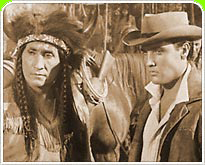 n in Flaming Star, which was remarkably free of melting-pot fuzziness right up to its bleak conclusion. Like George Harrison, Van Morrison and Beverley Knight - andf arguably the majority of artists - he was haunted by a need to pursue a more numinous reality than that which informed his life as a touring and recording artist, dogged by the necessity of feeding the financial appetites of Colonel Parker, both who manipulated him and suppressed many of his talents in favour of what printed money.
As Elaine Dundy said, "prior to '77...it was possible to get through a day without hearing Elvis' name". At this time of year - and particularly this year, when had he lived he'd have turned 75, sometimes it seems that one hears little else. And, given the incredible generosity of this phenomenal man who gave joy to millions, that's fine with me.
The lasting cultural impact of Elvis can't be underestimated. In Roland Emmerich's 1998 remake of Godzilla, Jean Reno, playing a French intelligent agent, gets through a US security barrier by saying the classic line "thang-you very much!", and in Men in Black, when the cvar is speeding upside-down through a tunnel to the accompaniment of Elvis singing Promised Land, Tommy Lee Jones' character remarks to Will Smith's that "Elvis didin't die, he just went home". My favourite, though, is in the film of John Grisham's novel The Firm. In the book, main character Mitchell McDeere, in fleeing, hitches a ride with a lorry-driver who is an Elvis impersonator; whereas in the firm we see Tom Cruise, playing the part, in the passenger's seat beside a driver who looks just like Elvis - a nod, no doubt, to the enduring rumours that Elvis is
alive.I remember when he died in 1977 because my Mum, a huge fan, came into my room weeping to tell me the news. She'd been hooked since she'd first heard one of his singles on Radio Luxembourg - which, by chance, was the first European station to announce his death. She related to me how the only of his songs she couldn't listen to was Teddy Bear, because when she was a young
woman with TB in Mearnskirk Hospital near Glasgow, a wardmate had played it continuously on a wind-up record-player until, to the guilty relief of all those around her, the object of her infatuation decided to call things off in a letter.I think two things in particular attracted Mum and her peers to Elvis. Firstly, living in poverty in Tupelo, Mississippi before moving to Tennessee's Memphis, he was a true working-class hero long before John Lennon coined the term in song while living in the lap of luxury, and - again unlike Lennon - he never forgot where he came from.
Secondly, his performances exuded sexuality in a "safe" way that was not only due to his distance from Scotland. The Southern laws of deference and politeness that his generation were instructed to observe almost religiously led Ed Sullivan to extemporise a paean to his decency, telling the audience at a time when Presley was being attacked with all the might of the Establishment machine that he was "a fine, decent boy" and called everybody "Sir".Another side of "Elvis the Pelvis" was a fierce love for his mother, something well understood in Celtic countries, so the rumour being disseminated in the late 1950's that he had killed her must have really hurt. The late Elaine Dundy, who wrote a book on this relationship called Elvis and Gladys, captured the more extreme devotion that still surrounds the star:
Here and now I feel sure that in the next millennium, excavations on the site of what was once Memphis, Tennessee, will uncover artifacts which lead archeologists to conclude there was once a god called Elvis who resided in the sacred temple "Graceland" where his followers gathered twice every year to worship: on the day of his birth, and on the day of his death.Elvis popularised a "black" style of music because of the musicians he jammed with and, like them, had long(ish) hair that migrated into the "duck's tail" (to give it a more polite name) hairstyle that was sported by, for example, Chuck Berry; unlike his black co-musicians, his hair was longer because he couldn't afford to get it cut so often. So, unlike singers of sanitized pop that were being given airtime with Establishment blessings, when he burst onto the scene he was rough and ready to rock, popularising real rhythm'n'blues that let black performers start to take their rightful place in mainstream music on his coat-tails.
His ancestry was patchwork - Scottish, Irish, French, Jewish - and Native American (Cherokee ) - the latter perhaps informing his perfromance as a half-Kiowa frontiersma
n in Flaming Star, which was remarkably free of melting-pot fuzziness right up to its bleak conclusion. Like George Harrison, Van Morrison and Beverley Knight - andf arguably the majority of artists - he was haunted by a need to pursue a more numinous reality than that which informed his life as a touring and recording artist, dogged by the necessity of feeding the financial appetites of Colonel Parker, both who manipulated him and suppressed many of his talents in favour of what printed money.As Elaine Dundy said, "prior to '77...it was possible to get through a day without hearing Elvis' name". At this time of year - and particularly this year, when had he lived he'd have turned 75, sometimes it seems that one hears little else. And, given the incredible generosity of this phenomenal man who gave joy to millions, that's fine with me.
Tuesday, December 15, 2009
Professor Calculus RIP
I needed to get hold of Professor Calculus last week and, when I couldn't get an answer phoning his house, phoned the pub; Caupo told me he hadn't been in, but had looked a bit dicey the day before.
Calculus was a child of the Raj, having been born in an area of India that is now Pakistan. As was the custom, his primary education took place "back home" in England; his parents decided to return in time for him to observe the Battle of Britain going on above his head. One of his favourite childhood stories was about a schoolfriend who took a trophy from a crashed Messerschmitt in the form of a boot but had to get rid of it when the lower leg it contained began to smell.
He graduated from the Home Guard to the Army at the same time as, a younger student than usual, he graduated from university and, his didactic streak showing through even then, was attached to a unit as a member of the Royal Army Educational Corps. Once he'd had enough of getting from the top of a cliff to the bottom at an alarming rate, he joined the Medical Research Council and was part of much vital research.
Having tried life as a teacher in England, he decided to up sticks with his young family and go to Africa, where the Department of Overseas Development would pay him more than he earned in Blighty. Of all the countries he taught in, he loved most Rhodesia (now Zimbabwe) and South Africa, the latter so much that he described himself as a South African. He raged against the racial inequalities in those countries and refused to teach in institutions where segregation was practised, sometimes going up against people of faith in this.
Eithe despite or because of being an atheist, Calculus would invariably start discussions about religion whin I'd go over to visit him for our weekly session of discussing politics, history and science and being generally grumpy, more often than not over a glass or two of wine. It never ceased to frustrate him that he couldn't trust in an agency he couldn't see, feel or prove with an algebraic equation. He went to see Rector Pellegrina recently, and asked how he could have faith. Pray, she replied. Although always a model of courtesy in front of a lady he demanded to know how he could pray to have faith when he didn't have the faith to pray, and left happy to have spent the time in her company but ultimately unfulfilled.
After I phoned the pub I called home and instructed Minima to go over: she found him unwell and, calling her mother, the ambulance was called. He was taken to hospital, where he seemed well until he suddenly deteriorated and, this morning, died.
What can a person of faith say of somebody who dies an atheist? Calculus' rage against inequality and injustice was matched only by his frustration at himself for feeling unable to trust in the God about whom he was instructed in school. We would regularly go round the houses of faith and knowledge not occupying the same space until Kingdom Come, and faith being a gift. I had no answer for his forlorn question as to why he hadn't been given that gift.
This evening, after seeing the empty hospital bed and asking the Ward Sister for the details, I went to the hospital chapel. At the back of this there's a "prayer tree" where you can write your petitions on notelets then clip them to nylon leaves. I asked Jesus to have mercy on somebody who had tried to touch His face but felt he had failed, and furthermore to send His mother to stand at Calculus' side to be an advocate for the mystery of God's loving forgiveness.
As for me, I trust that the miseries of the empty hospital bed, vacant chair and unfilled glass are transcended and resolved by the joy of the empty tomb. Sleep well, Professor Calculus. I miss you.
Calculus was a child of the Raj, having been born in an area of India that is now Pakistan. As was the custom, his primary education took place "back home" in England; his parents decided to return in time for him to observe the Battle of Britain going on above his head. One of his favourite childhood stories was about a schoolfriend who took a trophy from a crashed Messerschmitt in the form of a boot but had to get rid of it when the lower leg it contained began to smell.
He graduated from the Home Guard to the Army at the same time as, a younger student than usual, he graduated from university and, his didactic streak showing through even then, was attached to a unit as a member of the Royal Army Educational Corps. Once he'd had enough of getting from the top of a cliff to the bottom at an alarming rate, he joined the Medical Research Council and was part of much vital research.
Having tried life as a teacher in England, he decided to up sticks with his young family and go to Africa, where the Department of Overseas Development would pay him more than he earned in Blighty. Of all the countries he taught in, he loved most Rhodesia (now Zimbabwe) and South Africa, the latter so much that he described himself as a South African. He raged against the racial inequalities in those countries and refused to teach in institutions where segregation was practised, sometimes going up against people of faith in this.
Eithe despite or because of being an atheist, Calculus would invariably start discussions about religion whin I'd go over to visit him for our weekly session of discussing politics, history and science and being generally grumpy, more often than not over a glass or two of wine. It never ceased to frustrate him that he couldn't trust in an agency he couldn't see, feel or prove with an algebraic equation. He went to see Rector Pellegrina recently, and asked how he could have faith. Pray, she replied. Although always a model of courtesy in front of a lady he demanded to know how he could pray to have faith when he didn't have the faith to pray, and left happy to have spent the time in her company but ultimately unfulfilled.
After I phoned the pub I called home and instructed Minima to go over: she found him unwell and, calling her mother, the ambulance was called. He was taken to hospital, where he seemed well until he suddenly deteriorated and, this morning, died.
What can a person of faith say of somebody who dies an atheist? Calculus' rage against inequality and injustice was matched only by his frustration at himself for feeling unable to trust in the God about whom he was instructed in school. We would regularly go round the houses of faith and knowledge not occupying the same space until Kingdom Come, and faith being a gift. I had no answer for his forlorn question as to why he hadn't been given that gift.
This evening, after seeing the empty hospital bed and asking the Ward Sister for the details, I went to the hospital chapel. At the back of this there's a "prayer tree" where you can write your petitions on notelets then clip them to nylon leaves. I asked Jesus to have mercy on somebody who had tried to touch His face but felt he had failed, and furthermore to send His mother to stand at Calculus' side to be an advocate for the mystery of God's loving forgiveness.
As for me, I trust that the miseries of the empty hospital bed, vacant chair and unfilled glass are transcended and resolved by the joy of the empty tomb. Sleep well, Professor Calculus. I miss you.
Sunday, November 15, 2009
social enterprise and homeless needs: the autumn issue
Politicians of all parties are looking hopefully at the phenomenon of social entrepreneurship, and Spark provides some statistics that surprised me:
In the Autumn edition of the Willow Walker magazine Gary Barrett, who has been rock-solid in overcoming his addiction and encouraging others to do the same, describes the difficulty in getting people together to plan a magazine when they're simultaneously struggling to recover:
That means of communication is the Willow Walker itself, and its prominence in the homeless community and the agencies serving it is recognised in Cambridge City Council's Single Homeless and Rough Sleepers Strategy 2006-09, where, in the section on User Involvement, the Council sets as a "medium" priority (the highest in that strand)that "results must be fed back to users via the Willow Walker or alternative communication mediums".
The Willow Walker's funding has been cut off because, as Chris Havergal writes in the Cambridge News, the the Council "'have concluded we are not going to support Willow Walker. We support a range of projects, including a contract we have with WinterComfort, and we don’t want to duplicate'." It was only possible to bring out the Autumn edition of the Willow Walker because of a generous donation from Cambridge University Press and the gift of professional photographer Suzanne Middlemass's time and considerable talents.
 Wintercomfort, based in the city's Overstream House, supports those who are homeless or at risk of losing their accomodation and provides valuable services: for example, it's developing a weaving business based on social enterprise lines and using, ironically enough, willow. But it doesn't duplicate the vital role as a communications hub that is filled solely by the Willow Walker whose editor, social entrepreneur and community artist Kirsten Lavers, stands at the centre to stop things evaporating.
 One of the many interesting and commanding articles in the Autumn edition was written by Dr Christine Hugh-Jones, who is the doctor in charge of Cambridge's Access Surgery, which takes on homeless clients. She was writing about the pioneering Joint Strategic Needs Assessment for Homeless produced for Cambridgeshire NHS by Drs Jeremiah Ngondi and Fay Haffenden. Click on the link in the last sentence to view this important document as a PowerPoint file. Here's a whistlestop tour of it:

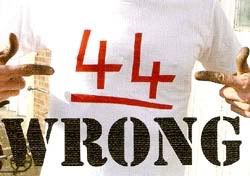
Analysing anonymised statistics from the Access Surgery, one of their many grim findings was that the average age at death of homeless people in Cambridge is 44, which the press managed to garble into "life expectancy of homeless people in Cambridge is half that of the rest of the population of Cambridgeshire". Through the Willow Walker, Dr Hugh-Jones was able to explain to its readers that the Access Surgery's clients had, on Ngondi and Haffenden's analysis, a 2-3% chance of dying in the next year - "This is still much too high but it does not mean that if you are forty you have only four years to live". (Although the four obituaries at the end of the magazine are a sobering reminder of mortality on the streets.)
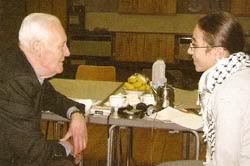 The projects that have budded from the Willow Walker have taken the Big Issue slogan of "a hand up, not a handout" and put it to work. I've already written about the radio show Homeless Truth's getting the police's point of view into the heart of the homeless community: in the latest Willow Walker there's a brilliant picture of one of the show's broadcasters, Laila Antoun, interviewing Tony Benn.
Dr Hugh-Jones' comment about the misquoted survey could apply to a range of issues affecting hard-to-reach communities in Cambridge: "What a pity no-one except the Willow Walker has bothered to report this".

Other posts related to the Willow Walker:
Homeless not hopeless
Catching Street Voices
Both Sides of the Tracks
Save the Willow Walker
The Willow Walker looks for a funder
Top Ten songs about Thomas
The reason Spark attracted my attention is that they support social entrepreneurship in the field of homelessness, and a trailblazing Cambridge social enterprise which serves homeless people, their friends and the agencies who serve them in a unique way is trying to identify funds to keep going. In short, it's fighting for its existence.There are at least 55,000 social enterprises in the UK with a combined turnover of £27billion per year. They account for 5% of all businesses with employees and contribute £8.4billion per year to the UK economy - almost 1% of annual GDP.
In the Autumn edition of the Willow Walker magazine Gary Barrett, who has been rock-solid in overcoming his addiction and encouraging others to do the same, describes the difficulty in getting people together to plan a magazine when they're simultaneously struggling to recover:
I can sympathise with Mr Barrett because, taking over as as acting editor of a village magazine, I've seen some things move at speeds that make paint drying look hurried. But the case he makes illustrates precisely the case for a means of communication to tie together the members of disparate communities of homeless and vulnerably-housed people in Cambridge that isn't going to evaporate because things go too slowly for people who have recently been involved in lifestyles wherein gratification, when obtained, is instant.After the Relapse Prevention Course I came up with the idea of a magazine. We got together a few of us ex-addicts, some of them are on meth [methadone], some of them are off...We had a magazine meeting this morning and I was the only one who turned up because the others have floated off because it's just taken too long.
That means of communication is the Willow Walker itself, and its prominence in the homeless community and the agencies serving it is recognised in Cambridge City Council's Single Homeless and Rough Sleepers Strategy 2006-09, where, in the section on User Involvement, the Council sets as a "medium" priority (the highest in that strand)that "results must be fed back to users via the Willow Walker or alternative communication mediums".
The Willow Walker's funding has been cut off because, as Chris Havergal writes in the Cambridge News, the the Council "'have concluded we are not going to support Willow Walker. We support a range of projects, including a contract we have with WinterComfort, and we don’t want to duplicate'." It was only possible to bring out the Autumn edition of the Willow Walker because of a generous donation from Cambridge University Press and the gift of professional photographer Suzanne Middlemass's time and considerable talents.
Wintercomfort, based in the city's Overstream House, supports those who are homeless or at risk of losing their accomodation and provides valuable services: for example, it's developing a weaving business based on social enterprise lines and using, ironically enough, willow. But it doesn't duplicate the vital role as a communications hub that is filled solely by the Willow Walker whose editor, social entrepreneur and community artist Kirsten Lavers, stands at the centre to stop things evaporating.One of the many interesting and commanding articles in the Autumn edition was written by Dr Christine Hugh-Jones, who is the doctor in charge of Cambridge's Access Surgery, which takes on homeless clients. She was writing about the pioneering Joint Strategic Needs Assessment for Homeless produced for Cambridgeshire NHS by Drs Jeremiah Ngondi and Fay Haffenden. Click on the link in the last sentence to view this important document as a PowerPoint file. Here's a whistlestop tour of it:Analysing anonymised statistics from the Access Surgery, one of their many grim findings was that the average age at death of homeless people in Cambridge is 44, which the press managed to garble into "life expectancy of homeless people in Cambridge is half that of the rest of the population of Cambridgeshire". Through the Willow Walker, Dr Hugh-Jones was able to explain to its readers that the Access Surgery's clients had, on Ngondi and Haffenden's analysis, a 2-3% chance of dying in the next year - "This is still much too high but it does not mean that if you are forty you have only four years to live". (Although the four obituaries at the end of the magazine are a sobering reminder of mortality on the streets.)
The projects that have budded from the Willow Walker have taken the Big Issue slogan of "a hand up, not a handout" and put it to work. I've already written about the radio show Homeless Truth's getting the police's point of view into the heart of the homeless community: in the latest Willow Walker there's a brilliant picture of one of the show's broadcasters, Laila Antoun, interviewing Tony Benn.Dr Hugh-Jones' comment about the misquoted survey could apply to a range of issues affecting hard-to-reach communities in Cambridge: "What a pity no-one except the Willow Walker has bothered to report this".
Other posts related to the Willow Walker:
Homeless not hopeless
Catching Street Voices
Both Sides of the Tracks
Save the Willow Walker
The Willow Walker looks for a funder
Top Ten songs about Thomas
Tuesday, August 11, 2009
human rights: a done deal for some, torture for others
Then the master called the servant in. 'You wicked servant,' he said, 'I cancelled all that debt of yours because you begged me to.
Shouldn't you have had mercy on your fellow-servant just as I had on you?'
In anger his master turned him over to the jailers to be tortured, until he should pay back all he owed.
In this excerpt from the Parable of the Unmerciful Servant, we can see how Jesus spoke to people in the idiom of their times. Some of the people in authority could be pretty cruel - it might be seen as a sine qua non of being in authority then. When Jesus spoke about a king who was prepared to send a servant to whom he'd previously been merciful to be tortured, his listeners would have recognised the scenario.
The subject of torture's in the news in the UK right now - two senior ministers in the Labour Government, Alan Johnson (Home Secretary) and David Miliband (Foreign Secretary) jointly published a piece in the Sunday Telegraph entitled We firmly oppose torture - but it is impossible to eradicate all risk. They wrote about how hard they work to ensure that British security services "do not collude in torture or mistreatment" of subjects who may have confessed to involvement in terror plots targeted at the West while being interrogated abroad.
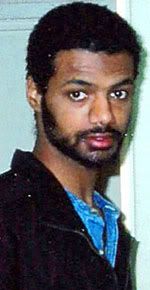
Caroline Gammell and Jon Swain explain the context - growing pressure to mount a judicial review into the treatment of Ethiopian citizen Binyam Mohamed, who left his job as a caretaker in London to travel to Afghanistan in order to kick a drug habit. Trying to re-enter Great Britain the next year with falsified documents, he was picked up in Pakistan, and ended up at the US Guantànamo Bay facility on Cuba in 2004, having been released earlier this year. Crucially, he claims that he was shunted through various countries en route under the US redition scheme, and was tortured because of material passed to US authorities by the British.
Mohamed's not a good witness even as regards his own story; the most consistent part is that he went to Afghanistan to get off drugs, and if you believe that then I'll send you prices for my cousin's drying-out house in the centre of Dublin. But the liberal-socialist establishment is getting set up to hang the British security services out to dry - presumably because they can't get hold of the American ones - and their key offence is that they perceive something in being British that is worth defending. Even the Labour chair of the Parliamentary Intelligence and Security Committee, Kim Howells, has spoke of his worry "that these calls for judicial inquiries and so on are really treating the intelligence agencies as guilty until proven innocent and that's very, very dangerous for the security of this country".
But open up the subject of treating somebody as guilty until proven innocent and you open precisely the sort of can of worms when a Government has been doing this on purely ideological grounds for more than a decade.
Peter Connelly - Baby P - was found guilty of merely existing by his guardians and their lodger, and was tortured to death. Haringey Council, which had time and funds to translate its LGBT (Lesbian, Gay, Bisexual and Transgender) Service Directory into French and Somali, visited every so often but otherwise stood by and ignored classic signs of serious abuse that you can learn in a day-long child protection course - just as it had with Victoria Climbié.
Interestingly, Human Rights Watch, an international non-governmental organisation who say "By focusing international attention where human rights are violated, we give voice to the oppressed and hold oppressors accountable for their crimes", has focussed extensively on the harrowing stories of...Binyam Mohamed, but - despite not confining itself to examining governments - did not devote one word to either Peter Connelly or Victoria Climbié. It will be interesting to see if the NGO devotes any interest to the "human rights" of Peter's mother and her boyfriend, Tracey Connelly and Steven Barker, to be free of victimisation should they be released from prison. (Should they survive the attentions of fellow prisoners eager to carry out the duty the state has deserted.)
Human rights: obviously the property of terrorism suspects with dodgy alibis, but not of the children living in "alternative" households. (Or of the victims of Charles Manson's "harem" - the three women who were his comrades-in-slaughter are preparing a case for parole "on compassionate grounds".)
Sir John Scarlett, head of MI6, has said that his organisation is "as committed to the values and the human rights values of liberal democracy as anybody else", and I've got no cause to disbelieve him. But Telegraph columnist posits this case: Would we refuse to torture a terrorist who knew there was a nuclear bomb planted in London? I suppose there's times when it's just not enough to wear a bracelet that says "What would Jesus do?"

Related post:Pilate's question remains unanswered
Friday, May 29, 2009
when agendas come together
This post contains a discussion of suicide. If you are feeling very down, please either navigate away or click here to go to the end.
When I started training as a psychiatric nurse in the late 1980s, we had a class on death in the initial module before we were let loose on unsupecting wards, and I was surprised by how many people had to take advantage of prior permission to step outside for a while should one feel the need.
Later on, we were introduced to psychiatric nursing proper, and we all did the training; those were the days when heads of nursing schools were more involved in working with hospitals than now, and it was realised that sometimes people with mental illnesses or learning difficulties need to come to hospital, or conversely staff in mental-health institutions might need general-nursing skills should one of their charges, say, become ill or have an accident.
In this module, we were introduced to suicide as a subject for clinical study, and everybody was expected to stay within the lecture hall: everybody did.
First came an anecdote of a man who said every day that he was going to kill himself, how, and where: and one day, after several years, as people paid less and less notice, he did. The moral: never take a threat or prediction of suicide anything other than seriously. On the other hand, there were also people who would be admitted having injured themselves in ways which self-evidently c ould not be life-threatening - but navigating around the large intersect between the two approaches the best definition of psychiatry I've ever heard: "a blind man in a dark room looking for a black cat that isn't there".
Over the years I lost several clients to suicide, which was quite hard at the time. But then I lost a friend, and experienced first-hand the raw nerves slicing across one's consciousness as emotional evisceration accompanies an endless round of "what-ifs". I still ask the girls to help me pray for "Dad's friend who died sad and alone", and I think Minora's guessed what that means.
So my antennae twitched upon reading a story on the matter in the Cambridge News.
In December 2006, 56-year-old David Woods was admitted to Addenbro oke's Hospital in Cambridge after a suicide attempt. His daughter and son were alerted. By the time they arrived in Cambridge, Mr Woods had been given a liver transplant as an urgent life-saving measure. Neither of his children had been consulted.
Mr Woods was in a coma for six weeks after the incident (it's not mentioned whether it was medically induced), and came to with, we are told, "the mental age of a child" who needs round the clock care. So, given that the attempt that landed Mr Woods in hospital came at the end of a rapid succession of tries that day, why was a liver transplanted; and why is this three-year-old incident hitting the news big-time now?
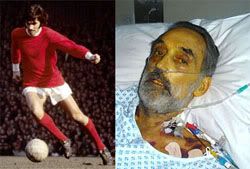
Looking at the first question yields clouds within clouds. Professor Roger Williams of University College's Institute of Hepatology in London was involved in Great Britain's first liver transplant in 1968, and was also involved in the care of George Best towards the end of his life, imploring every pub and off-licence in the country not to serve alcohol to the addicted footballer. He told the Telegraph's Celia Walden:
 ors; but I do't think I would be straying from the pro-life fold by suggesting that a liver transplant, with the attendant risk of major damage to organs - including the brain - through buildup of toxins should not be undertaken until the family's view has been taken into account. I'm not saying for a minute that anybody who is critically ill following a suicide attempt shouldn't be treated, merely that in this particular instance a unilateral decision to insert a donor liver may have been something of an unreasonably heroic measure.
Professor Williams adds: "I would say that the psychiatric assessor is the person one might point a finger at"; it's not clear that the psychiatrist who examined David Woods while he was semi-conscious at best was employed by Addenbrooke's or the local mental health trust, but it would be instructive to look at the latter, who would have treated him for his manic-depression.
In November 2006, the Cambridgeshire and Peterborough NHS Foundation Trust's board meeting minutes announced that "performance targets" for its annual health check by the Healthcare Commission (now the Care Quality Commission) included an "Audit of suicide prevention". This was a month before Woods' last attempt, but five months after an earler attempt, we are told, was assessed as a "cry for help". (The suicide prevention audit is first mentioned in board minutes of March 2006.) In March 2008's minutes we learn that the annual healthcheck has been passed except for a waste-management target, and "A re-audit of the National Suicide Strategy in 2007 identified clear improvements in clinical practice" and that "
the electronic system for investigating and completing serious untoward incidents (SUIs), was reviewed and further improved during the year and now incorporates the national standards for suicide prevention."
An annual healthcheck is a byzantine proceedure looking at a trust's "performance indicators"; in the "frequently asked questions" document, on page 12 (of 15), we learn in the answers to questions 24 and 25 that "It is the responsibility of every healthcare organisation to ensure that they submit all necessary data for our assessment purposes by the deadline date for each data collection...It is the responsibility of the primary data collector to communicate these data quality checks and ensure that they are applied prior to submission to the Care Quality Commission."
So there we have it: two levels of deniability between the Care Quality Commission's examining whether boxes are ticked and conditions endured by patients (and staff) on the ground. It comes as no surprise that the Care Quality Commission is headed by Cynthia Bower, former chief executive of the West Midlands Strategic Health Authority when it failed to pick up the egregious abuses visited upon patients in Stafford General Hospital. She wouldn't have been in place at the time we're talking about, but she has obviously been parachuted into a job where her talents will ensure the continuation of the prevailing ethos.
Cambridgeshire and Peterborough NHS Foundation Trust's medical director, Dr Tom Denning, told the Cambridge News in the article linked to above that "you always have to give life the benefit of the doubt". The Trust has just published a statement on the "latest news" section of its website:
You'll be glad to know that the answer to the question of why this is an item now is much simpler. But I should first note that I am not implying that David Woods' children have any sort of double agenda. To paraphrase a wise family doctor's counsel to my wife when I was first diagnosed with manic depression, they've been hit by the train, and it keeps on hitting.
On 27 May, the story broke in the Cambridge News and it was mentioned that Nadine Woods was "torn" about taking her father "to a euthanasia clinic in Switzerland".
The next day (the same day that the Telegraph picked up the story), Lord Alderdice tabled an amendment to the Coroners and Justice Bill, which is due to be debated in a House of Lords Committee on 9-10 June. The amendment reads:
If you live in Great Britain, please read and act upon this alert from the Society for the Protection of Unborn Children. If you from elsewhere, please pray for us.
And for the Woods family, who find themselves buffeted by agendas more highly-powered than most express trains.
Depression's a queer thing to deal with - everybody has their own way to deal with the Black Dog, as Churchill called it. There's always the Samaritans, of course, or a doctor, friend, counsellor, or the local mental health helpline. Myself, if I'm too down to read a book, I turn on the radio, preferably a station with some MOR music and light banter. The mood-lifting effects of exercise have long been noted, but if I embark on some hard-training plan I end up beating up on myself when, inevitably, I fail: walking is good. REM has some good advice in their song Everybody Hurts - "take comfort in your friends". I find it incredibly difficult to tell people face-to-face when I'm down, but I hae to because I hide it when I am; and my friends give me time when I manage to tell them, whether that be time spent with me or time I need to take to reforge connections after a period not really saying much. And as a very wise man I knew once said, if the abyss looks into you when you look into it, look the other way.
When I started training as a psychiatric nurse in the late 1980s, we had a class on death in the initial module before we were let loose on unsupecting wards, and I was surprised by how many people had to take advantage of prior permission to step outside for a while should one feel the need.
Later on, we were introduced to psychiatric nursing proper, and we all did the training; those were the days when heads of nursing schools were more involved in working with hospitals than now, and it was realised that sometimes people with mental illnesses or learning difficulties need to come to hospital, or conversely staff in mental-health institutions might need general-nursing skills should one of their charges, say, become ill or have an accident.
In this module, we were introduced to suicide as a subject for clinical study, and everybody was expected to stay within the lecture hall: everybody did.
First came an anecdote of a man who said every day that he was going to kill himself, how, and where: and one day, after several years, as people paid less and less notice, he did. The moral: never take a threat or prediction of suicide anything other than seriously. On the other hand, there were also people who would be admitted having injured themselves in ways which self-evidently c
ould not be life-threatening - but navigating around the large intersect between the two approaches the best definition of psychiatry I've ever heard: "a blind man in a dark room looking for a black cat that isn't there".Over the years I lost several clients to suicide, which was quite hard at the time. But then I lost a friend, and experienced first-hand the raw nerves slicing across one's consciousness as emotional evisceration accompanies an endless round of "what-ifs". I still ask the girls to help me pray for "Dad's friend who died sad and alone", and I think Minora's guessed what that means.
So my antennae twitched upon reading a story on the matter in the Cambridge News.
In December 2006, 56-year-old David Woods was admitted to Addenbro
oke's Hospital in Cambridge after a suicide attempt. His daughter and son were alerted. By the time they arrived in Cambridge, Mr Woods had been given a liver transplant as an urgent life-saving measure. Neither of his children had been consulted.Mr Woods was in a coma for six weeks after the incident (it's not mentioned whether it was medically induced), and came to with, we are told, "the mental age of a child" who needs round the clock care. So, given that the attempt that landed Mr Woods in hospital came at the end of a rapid succession of tries that day, why was a liver transplanted; and why is this three-year-old incident hitting the news big-time now?
Looking at the first question yields clouds within clouds. Professor Roger Williams of University College's Institute of Hepatology in London was involved in Great Britain's first liver transplant in 1968, and was also involved in the care of George Best towards the end of his life, imploring every pub and off-licence in the country not to serve alcohol to the addicted footballer. He told the Telegraph's Celia Walden:
"What is surprising is that the family do not appear to have been consulted," he tells me. "When we first started conducting liver transplants in paracetamol overdose cases, most were young people without a history of psychiatric illness. Very few would be given a transplant within 24 hours without agreement from the family...I find it puzzling that these things weren't picked up on when the clinician reviewed David Woods' notes. It is very unusual for someone to be given a transplant when they have tried to commit suicide several times in the past.Williams was speaking about the effect this affair might have on potential liver-don
ors; but I do't think I would be straying from the pro-life fold by suggesting that a liver transplant, with the attendant risk of major damage to organs - including the brain - through buildup of toxins should not be undertaken until the family's view has been taken into account. I'm not saying for a minute that anybody who is critically ill following a suicide attempt shouldn't be treated, merely that in this particular instance a unilateral decision to insert a donor liver may have been something of an unreasonably heroic measure.Professor Williams adds: "I would say that the psychiatric assessor is the person one might point a finger at"; it's not clear that the psychiatrist who examined David Woods while he was semi-conscious at best was employed by Addenbrooke's or the local mental health trust, but it would be instructive to look at the latter, who would have treated him for his manic-depression.
In November 2006, the Cambridgeshire and Peterborough NHS Foundation Trust's board meeting minutes announced that "performance targets" for its annual health check by the Healthcare Commission (now the Care Quality Commission) included an "Audit of suicide prevention". This was a month before Woods' last attempt, but five months after an earler attempt, we are told, was assessed as a "cry for help". (The suicide prevention audit is first mentioned in board minutes of March 2006.) In March 2008's minutes we learn that the annual healthcheck has been passed except for a waste-management target, and "A re-audit of the National Suicide Strategy in 2007 identified clear improvements in clinical practice" and that "
the electronic system for investigating and completing serious untoward incidents (SUIs), was reviewed and further improved during the year and now incorporates the national standards for suicide prevention."
An annual healthcheck is a byzantine proceedure looking at a trust's "performance indicators"; in the "frequently asked questions" document, on page 12 (of 15), we learn in the answers to questions 24 and 25 that "It is the responsibility of every healthcare organisation to ensure that they submit all necessary data for our assessment purposes by the deadline date for each data collection...It is the responsibility of the primary data collector to communicate these data quality checks and ensure that they are applied prior to submission to the Care Quality Commission."
So there we have
it: two levels of deniability between the Care Quality Commission's examining whether boxes are ticked and conditions endured by patients (and staff) on the ground. It comes as no surprise that the Care Quality Commission is headed by Cynthia Bower, former chief executive of the West Midlands Strategic Health Authority when it failed to pick up the egregious abuses visited upon patients in Stafford General Hospital. She wouldn't have been in place at the time we're talking about, but she has obviously been parachuted into a job where her talents will ensure the continuation of the prevailing ethos.Cambridgeshire and Peterborough NHS Foundation Trust's medical director, Dr Tom Denning, told the Cambridge News in the article linked to above that "you always have to give life the benefit of the doubt". The Trust has just published a statement on the "latest news" section of its website:
We are sorry to hear that the family have concerns about whether in retrospect it was the right thing to undertake a life saving liver transplant operation in 2006. We would like to hear from the family so that we can discuss their concerns in more detail.Personally, I think this bit of get-outery is of doubtful value, and I would suggest that David Woods was given a liver transplant - whatever the result - without reference to the family in order to improve Cambridgeshire and Peterborough NHS Foundation Trust's appearance of compliance with suicide-prevention targets.
Decisions to undertake emergency life-saving liver transplantation are made by the transplant consultants with advice from other medical specialists, including psychiatrists, when appropriate.
You'll be glad to know that the answer to the question of why this is an item now is much simpler. But I should first note that I am not implying that David Woods' children have any sort of double agenda. To paraphrase a wise family doctor's counsel to my wife when I was first diagnosed with manic depression, they've been hit by the train, and it keeps on hitting.
On 27 May, the story broke in the Cambridge News and it was mentioned that Nadine Woods was "torn" about taking her father "to a euthanasia clinic in Switzerland".
The next day (the same day that the Telegraph picked up the story), Lord Alderdice tabled an amendment to the Coroners and Justice Bill, which is due to be debated in a House of Lords Committee on 9-10 June. The amendment reads:
Insert the following new Clause—Although SPUC director John Smeaton states the amendment is not likely to be added to the bill, it's important that it be opposed vigorously to show that people who value life are alert to the drip-drip-drip of bringing legalised euthanasia onto the statute books against the will of the British people - and the Members of the House of Lords might want to look in the direction of the Commons to see the effects of continually acting against the interests of the people one is supposed to serve.
"Exceptions to offence of assisting suicide"
Notwithstanding sections 49 to 51, no offence shall have been committed if assistance is given to a person to commit suicide who is suffering from a confirmed, incurable and disabling illness which prevents him from carrying through his own wish to bring his life to a close, if the person has received certification from a coroner who has investigated the circumstances, and satisfied himself that it is indeed the free and settled wish of the person that he brings his life to a close."
If you live in Great Britain, please read and act upon this alert from the Society for the Protection of Unborn Children. If you from elsewhere, please pray for us.
And for the Woods family, who find themselves buffeted by agendas more highly-powered than most express trains.
Depression's a queer thing to deal with - everybody has their own way to deal with the Black Dog, as Churchill called it. There's always the Samaritans, of course, or a doctor, friend, counsellor, or the local mental health helpline. Myself, if I'm too down to read a book, I turn on the radio, preferably a station with some MOR music and light banter. The mood-lifting effects of exercise have long been noted, but if I embark on some hard-training plan I end up beating up on myself when, inevitably, I fail: walking is good. REM has some good advice in their song Everybody Hurts - "take comfort in your friends". I find it incredibly difficult to tell people face-to-face when I'm down, but I hae to because I hide it when I am; and my friends give me time when I manage to tell them, whether that be time spent with me or time I need to take to reforge connections after a period not really saying much. And as a very wise man I knew once said, if the abyss looks into you when you look into it, look the other way.
Thursday, May 21, 2009
Anne Frank
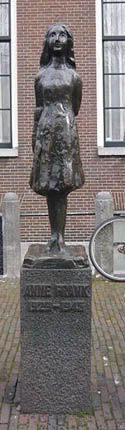
I don't often to to hospital for non-medical purposes, but today Maxima and I went to Cambridge's Addenbrookes Hospital to see an Anne Frank exhibit in the Treatment Centre. The hospital's now so big that it provides a rather large car called a "courtesy bus", which took us round the huge campus to the centre, aka Institute of Metabolic Science.
The exhibition was in the form of two sets of photos on screens, starting with the dire econimic situation in post-Versailles Treaty Germany, which bred resentment against the Allies, which Adolf Hitler took advantage of in the years following his outburst at a meeting of Anton Drexler's German Workers' Party (Deutsche Arbeiterpartei)persuading him to prefix Nazionalsozialistische: the Nazis had been born.
The presentation stressed that the majority of Germans were unaware of the true agenda of the Nazis until after their election in 1933. After this point, the exhibition grew ever darker, and you would see groups of nurses, physiotherapists etc gathering round words and pictures in silence. It related that 80,000 handicapped people were killed in order to prevent "enfeeblement of th
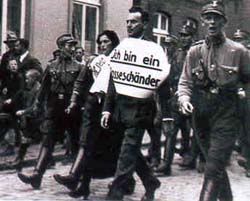 e race"; another photo showed a Jewish man, Julius Wolff, being driven down the street by SS soldiers alongside his "Aryan" girlfriend Christine Reemann in Norden in 1935, each bearing signs that said "I am a defiler of the race".
Interspersed with the indications of mounting horrors were the lives of Anne and her family, who moved from Germany to the Netherlands in 1933. In 1940, their country of exile was occupied and they took to hiding in rooms behind the business where Anne's father had worked, which she called "the secret annexe" - which was the original title of the book. One of the families foremost helpers and concealers was Miep Gies, who said:
'It seemed perfectly natural to me. I could help these people. They were powerless, they didn't know where to turn. I always emphasize that we were not heroes. We did our duty as human beings: helping people in need.
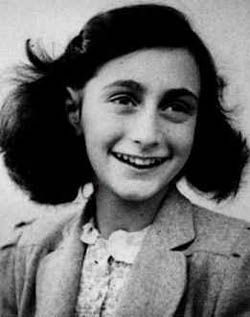 I stood looking at the quote underneath her picture for a couple of minutes, unable to speak. There were further details of how, even in the summer heat, Anne and her companions had to burn leftovers to destroy evidence of their clandestine existence. Another quote from the diary referred to the five books that Ms Gies, who recently achieved her century, brought them form the library every Saturday: "We long for Saturday because that means books". However, the quote that moved me most was underneath the world-famous picture of Anne gazing into a future that she would never see:
I long to ride a bike, dance, whistle, look at the world, feel young and know that I'm free, and yet I can't let it show.The family was arrested in August 1944. Anne, her sister Margot, and her mother Edith were sent to Auschwitz, where their mother died, having starved herself to give her daughters extra rations. By the time she died, Anne and Margot had been sent to Bergen-Belsen, where they died in a Typhus epidemic less than a month before the camp was liberated by British soldiers in April 1945.
Anne reaches out to us beyond her death. The Government has placed Diary of a Young Girl on the English National Curriculum; and in the UK, the Anne Frank foundation awards people who make a change in their community. For example, Uanu Seshmi, a teacher in the Peckham area of London, received an Anne Frank award for his amazing
 work in getting young black boys, who had been excluded from school, back into mainstream education. In Cambridgeshire, a self-confessed "boy racer" called Nick Bennett, whose hobby had landed him in a wheelchair was honoured for his work in going round schools informing teenagers of the dangers of his former occupation.
Anne's story is one, I believe, that makes the Holocaust comprehensible by providing an antidote to Stalin's dictum that "one death is a tragedy; one million is a statistic" - although it was sobering to learn that before Hitler embarked on his dark project there were eleven million Jews in Europe - the Nazis got more than halfway in their obscene scramble towards the Final Solution. Many years ago I found another part of the story contextualised when, during my first placement as a student nurse - in a medical ward - I met one of the soldiers from the unit which had liberated Bergen-Belsen. Having been a member of the Church of Scotland, he described how he had looked around, and his faith had vanished like a snowflake in a furnace. When I met him in the late '80s, he was still an atheist.
The diary has been attacked as a fraud - notably by lawyer Edgar J Steele, who claimed in November 2003 that "It wasn’t Arabs who forged the Anne Frank “diary” - it was jews [sic]" in a bizarre rant which ends: "And, lest we forget:It wasn’t Arabs who had Jesus Christ crucified - it was jews."
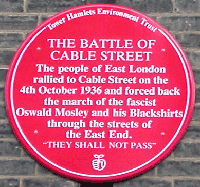
Professor Calculus has told me that he remembers from his boyhood slurs about the Jews being "Christ-killers"; and it is a troubling thought that, had the Hitler/Schickelgrueber family moved to, say, France or Britain when the children were young, Adolf might not have had much trouble starting a movement that resembled the Nazi Party in its anti-Semitism; certainly Oswald Moseley found people flocking to his New Party.
So perhaps it's a good thing that the Anne Frank Foundation will be delivering diversity training to Addenbrooke's staff, even though the concept of diversity has become so loaded with so much ideological baggage pertaining to unilateral multiculturalism that it is increasingly becoming a bad word among followers of many political creeds. Hopefully, the Foundation will be able to inject some reality into a troubled subject, in this corner of East Anglia anyway, before a backlash is unleashed that may snowball towards disaster.

Anne Frank
1929-1945
Thank you
Monday, March 23, 2009
empathy and distress: bad medicine for Baby OT
We've just had the sad death of Baby OT, whose parents fought a court battle to force doctors to resuscitate their child should breathing stop because of the effects of respiratory failure and metabolic disorder; brain damage was also present. His parents said:

Something that struck me about the affair was a remark by an unnamed British Medical Association (BMA) spokesperson that "Cases like this are very distressing and we have every empathy with the parents": this is the language of counselling, and bears no relation to medicine.
The remark appeared in an article entitled "Courts are right to make decisions on Baby OT treatment withdrawal cases, said British Medical Association".
However, in another context referring to the end of life, last year the Director of Public Prosecutions let it be known that it is not for the courts to make law in cases of euthanasia (unlike Debbie Purdy's, the doctors in baby OT's case were seeking permission to visit non-voluntary euthanasia upon the child, and succeeded).
Flitting over to the other side of the pond for an earlier case, I found out today from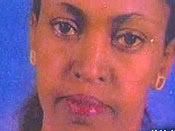 Wesley J Smith's blog, Secondhand Smoke, that Tirhas Habtegiris, a "dying, uninsured cancer patient", died in hospital in Baylor, Texas, in 2005. Her ventilator had been shut off because her family could not afford to keep her alive long enough for her mother to come over from Eritrea and hold her daughter while she died. Her family say she was conscious over most of the 15-16 minutes it took for her to suffocate.
What had exercised Wesley was an article by Ronald Bailey, a "libertarian trans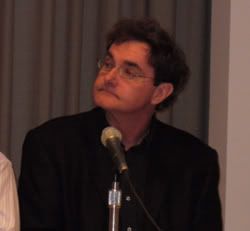 humanist" (avaricious Terminator fan) who contrasted Habtegiris' penurious death with that of Terry Schiavo, who was on a ventilator for seven years before her allegedly abusive husband won a court case to have life support - in this case a feeding tube - removed. Bailey asked, what "obligation do physicians, hospitals and the rest of us have to pay for the health care of others?"
Bailey links to "hardcore libertarian" (rapacious Wall Street wannabe) Steven Landsburg who, in an article called Do the Poor Deserve Life Support? analyses the situation with the semi-psychotic utilitarianism of Mill Sr that Mill Jr tried so hard to destroy: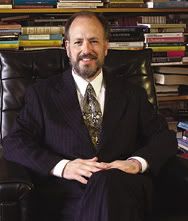 she expired. Just as Baby OT's parents wanted up to five years of life with a little boy who liked having his feet tickled.
As much as I think Steven Landsburgh's ideas are foul, he is at least honest, which is slightly easier to stomach than the BMA's dissembling when it speaks of the "quality of life" of a baby which they have no way of assessing. Likewise, Baroness Warnock has said that dementia sufferers have a "duty to die; just so, hospital managers have defended plans to refuse operations for groups including the elderly "because of the higher risk of complications on the operating table for unfit patients", while one the other hand one in three in a survey of hospital and family doctors said "elderly patients should not be given free treatment if it were unlikely to do them good for long".
Sometimes we pro-lifers are accused of concentrating on abortion, but the euthanasia movement has a powerful head of steam right now because of the truths and rights that were crumpled and torn in the fight to de-recognise the humanity of unborn babies - a process which has also tied women more securely into the structures of oppression from which the original feminists sought to free them. Cast adrift from moral certitudes, courts in, for example, the UK, the US, France and Singapore have prosecuted doctors for failing to kill a child during an abortion, effectively recognising what LifeSiteNews calls "wrongful life" - a concept powering some doctors' determination that Baby OT and Tirhas Habtegiris had to die.
It's certainl y a matter of money, but it's also more: a pathological need to control other peoples' lives, and the very same inflated sense of self-importance which compels some of those who seek euthanasia to involve not only health-care professionals, but also judicial systems and even governments in the attention-seeking path to their self-destruction. (Some, similarly narcissistic, reciprocate for their time in the sun: former health secretary Patricia Hewitt is calling for the legalisation of what's already being called "suicide tourism").
In 2006, echoing the confusion that reigns over people's rights at the end of life, an Italian court declared that an unborn child did not have a "right not to be born". It sounds like a fillip for the pro-life movement, but in reality it's as vacuous as saying Jade Goody did not have a right not to die from her endstage cancer, and echoes statements that Baby OT had a right to life, but not a right to be kept alive.
In the US, giving care to somebody who is bound to die is called futile care, a title that is at least more honest than the language of empathy and distress. Given that all lives will be interrupted by death, all care is ultimately futile. But we give it anyway, because we recognise that in the midst of life's compromises, to give without hope of return is good, makes us more human, makes us something more than the earthly account-book detailing the money we will generate minus what is required to keep us going long enough to die in a loved one's arms.
Related post: Baby RB and the misery of medics
We are and always will be convinced that despite his desperate problems his life is worthwhile and is worth preserving as long as it is possible to do so without causing him undue pain.The case was not without inconsistencies: OT's parents showed the court footage of the little boy smiling when his feet were tickled, and stated that some of the nurses believed that OT experienced happiness; whereas the Telegraph's Caroline Gemmell reported that one of the medical staff, Dr C, told the court that "the boy would 'certainly' be dead by the age of five...[and]conceded that OT was suffering from a very rare disorder about which not much was known, but said it was "very, very, very unlikely" that his condition would improve." [My italics.]
Something that struck me about the affair was a remark by an unnamed British Medical Association (BMA) spokesperson that "Cases like this are very distressing and we have every empathy with the parents": this is the language of counselling, and bears no relation to medicine.
The remark appeared in an article entitled "Courts are right to make decisions on Baby OT treatment withdrawal cases, said British Medical Association".
However, in another context referring to the end of life, last year the Director of Public Prosecutions let it be known that it is not for the courts to make law in cases of euthanasia (unlike Debbie Purdy's, the doctors in baby OT's case were seeking permission to visit non-voluntary euthanasia upon the child, and succeeded).
Flitting over to the other side of the pond for an earlier case, I found out today from
Wesley J Smith's blog, Secondhand Smoke, that Tirhas Habtegiris, a "dying, uninsured cancer patient", died in hospital in Baylor, Texas, in 2005. Her ventilator had been shut off because her family could not afford to keep her alive long enough for her mother to come over from Eritrea and hold her daughter while she died. Her family say she was conscious over most of the 15-16 minutes it took for her to suffocate.What had exercised Wesley was an article by Ronald Bailey, a "libertarian trans
humanist" (avaricious Terminator fan) who contrasted Habtegiris' penurious death with that of Terry Schiavo, who was on a ventilator for seven years before her allegedly abusive husband won a court case to have life support - in this case a feeding tube - removed. Bailey asked, what "obligation do physicians, hospitals and the rest of us have to pay for the health care of others?"Bailey links to "hardcore libertarian" (rapacious Wall Street wannabe) Steven Landsburg who, in an article called Do the Poor Deserve Life Support? analyses the situation with the semi-psychotic utilitarianism of Mill Sr that Mill Jr tried so hard to destroy:
If you ask people—and especially poor people—what their most dire needs are, you'll find that "guaranteed ventilator support" ranks pretty low on the list. OK, I haven't actually done a survey, but I'm going out on a limb here and predicting that something like, say, milk, is going to rank a lot higher up the priority list than ventilator insurance.Although I realise British and American health systems are different, what I'd like to note that Habtegris' family were not requesting an eternal deferment of death, merely enough time for her mother to be brought over from an all-but failed state and hold her daughter while
In fact, I'll go further. The back of my envelope says that a lifetime's worth of ventilator insurance costs somewhere around $75. I'm going to hazard a guess that if, on her 21st birthday, you'd asked Tirhas Habtegiris to select her own $75 present, she wouldn't have asked for ventilator insurance. She might have picked $75 worth of groceries...Tirhas Habtegris would probably have taken the cash. Then she'd have gotten sick and regretted her decision. And then we as a society would have been in exactly the same position we were in last week—deciding whether to foot the bill to keep Ms. Habtegris alive a little longer.
she expired. Just as Baby OT's parents wanted up to five years of life with a little boy who liked having his feet tickled.As much as I think Steven Landsburgh's ideas are foul, he is at least honest, which is slightly easier to stomach than the BMA's dissembling when it speaks of the "quality of life" of a baby which they have no way of assessing. Likewise, Baroness Warnock has said that dementia sufferers have a "duty to die; just so, hospital managers have defended plans to refuse operations for groups including the elderly "because of the higher risk of complications on the operating table for unfit patients", while one the other hand one in three in a survey of hospital and family doctors said "elderly patients should not be given free treatment if it were unlikely to do them good for long".
Sometimes we pro-lifers are accused of concentrating on abortion, but the euthanasia movement has a powerful head of steam right now because of the truths and rights that were crumpled and torn in the fight to de-recognise the humanity of unborn babies - a process which has also tied women more securely into the structures of oppression from which the original feminists sought to free them. Cast adrift from moral certitudes, courts in, for example, the UK, the US, France and Singapore have prosecuted doctors for failing to kill a child during an abortion, effectively recognising what LifeSiteNews calls "wrongful life" - a concept powering some doctors' determination that Baby OT and Tirhas Habtegiris had to die.
It's certainl
y a matter of money, but it's also more: a pathological need to control other peoples' lives, and the very same inflated sense of self-importance which compels some of those who seek euthanasia to involve not only health-care professionals, but also judicial systems and even governments in the attention-seeking path to their self-destruction. (Some, similarly narcissistic, reciprocate for their time in the sun: former health secretary Patricia Hewitt is calling for the legalisation of what's already being called "suicide tourism").In 2006, echoing the confusion that reigns over people's rights at the end of life, an Italian court declared that an unborn child did not have a "right not to be born". It sounds like a fillip for the pro-life movement, but in reality it's as vacuous as saying Jade Goody did not have a right not to die from her endstage cancer, and echoes statements that Baby OT had a right to life, but not a right to be kept alive.
In the US, giving care to somebody who is bound to die is called futile care, a title that is at least more honest than the language of empathy and distress. Given that all lives will be interrupted by death, all care is ultimately futile. But we give it anyway, because we recognise that in the midst of life's compromises, to give without hope of return is good, makes us more human, makes us something more than the earthly account-book detailing the money we will generate minus what is required to keep us going long enough to die in a loved one's arms.
Related post: Baby RB and the misery of medics
Sunday, March 22, 2009
Glasgow's oldest altar-boy is called home
Maxima and I were having a jar with Professor Calculus in the Tintinnabula when my phone went off and, seeing it was my Aunt from Glasgow, I was immediately anxious: she'd never phoned me on my mobile before.
It turned out that a figure who was threaded through my boyhood and who was now known as the oldest altar-boy in Glasgow had died. I'm smiling as I write this, remembering his good humour and his tall tales. He was a beacon in some pretty dark times as the drugs trade moved into much of the area, and many people who could afford to moved out. He had a quickfire wit that never spilled over to sarcasm, and was always seeking to put his talents to God's work in whatever way he could. He was part of the area since the first half of the twentieth century, and the area is something less without him.
Lord, may your good and faithful servant rest in peace.
It turned out that a figure who was threaded through my boyhood and who was now known as the oldest altar-boy in Glasgow had died. I'm smiling as I write this, remembering his good humour and his tall tales. He was a beacon in some pretty dark times as the drugs trade moved into much of the area, and many people who could afford to moved out. He had a quickfire wit that never spilled over to sarcasm, and was always seeking to put his talents to God's work in whatever way he could. He was part of the area since the first half of the twentieth century, and the area is something less without him.
Lord, may your good and faithful servant rest in peace.
Friday, March 13, 2009
Lexie
Lexie was evicted from his flat some years ago because he allowed the smalltime drug-dealers who preyed upon his addictions to ply their trade in it, and was so famous for aggressive begging that when he was banned from two of Cambridge's thoroughfares it made the front page of a local newspaper. So why am I writing his obituary?
Because when you got to know him, you could see that substance use had not completely effaced his humanity. For example, when his banning order was published, a woman, a senior citizen, wrote into the same paper recalling how Lexie had always helped her across one of the roads he was banned from, it being notoriously difficult to cross.
There's been much opposition to individual and collective banning orders from the more liberal element in Cambridge, but it was the making of Lexie, because he had much less opportunity to bump into the people he scored drugs from. Another key component in deferring an inevitable death from organ-failure was the policy of the drug-agency he collected medication from, that if any alcohol at all was detected on the breathalyser, the medication was withheld. This didn't stop him drinking, but it meant he had to put the cans of super-strength lager to the side at a specific time so that he wouldn't fail the breathalyser test the next morning.
Unfortunately, when the contract to run the drugs-service was put out to tender, the conditions set down for bidding precluded breathalyser tests. That's another story; but the consequences for Lexie were that the complex machinery of carrots and sticks that mitigated the effects of his substance use upon himself and society was irretrievably broken, and his behaviour became much harder for the dedicated staff looking after him to manage.
What effect will Lexie's actions have on his life after bodily failures terminated the death that composed much of his time on earth? God knows. But it's very difficult to get into a situation where you're addicted to one or more substances by yourself - something the police in Cambridgeshire are showing their realisation of by differentiating less between big and small fish, and merely asking whether somebody is a fish.
In a society whose values are so topsy-turvy that smoking a cigarette in a public toilet carries harsher penalties than injecting heroin in it, I hope senior police officers will close their ears to those who enthrone rights high above responsibilities, and move towards zero tolerance of all drug crimes.
I pray that the Lord grant eternal rest to Lexie.
Because when you got to know him, you could see that substance use had not completely effaced his humanity. For example, when his banning order was published, a woman, a senior citizen, wrote into the same paper recalling how Lexie had always helped her across one of the roads he was banned from, it being notoriously difficult to cross.
There's been much opposition to individual and collective banning orders from the more liberal element in Cambridge, but it was the making of Lexie, because he had much less opportunity to bump into the people he scored drugs from. Another key component in deferring an inevitable death from organ-failure was the policy of the drug-agency he collected medication from, that if any alcohol at all was detected on the breathalyser, the medication was withheld. This didn't stop him drinking, but it meant he had to put the cans of super-strength lager to the side at a specific time so that he wouldn't fail the breathalyser test the next morning.
Unfortunately, when the contract to run the drugs-service was put out to tender, the conditions set down for bidding precluded breathalyser tests. That's another story; but the consequences for Lexie were that the complex machinery of carrots and sticks that mitigated the effects of his substance use upon himself and society was irretrievably broken, and his behaviour became much harder for the dedicated staff looking after him to manage.
What effect will Lexie's actions have on his life after bodily failures terminated the death that composed much of his time on earth? God knows. But it's very difficult to get into a situation where you're addicted to one or more substances by yourself - something the police in Cambridgeshire are showing their realisation of by differentiating less between big and small fish, and merely asking whether somebody is a fish.
In a society whose values are so topsy-turvy that smoking a cigarette in a public toilet carries harsher penalties than injecting heroin in it, I hope senior police officers will close their ears to those who enthrone rights high above responsibilities, and move towards zero tolerance of all drug crimes.
I pray that the Lord grant eternal rest to Lexie.
Subscribe to:
Posts (Atom)