I had to attend a course on databases yesterday - sometimes my life just gets too exciting! After cycling into town I got onto the bus, asking the Eastern European driver where exactly the stop in the Flat Old Fen was. I know I've got a Scottish accent, but being married to an Englishwoman for nearly two decades - much of that time spent living in the Fens - has blunted it somewhat. Nevertheless, I had to sit down as wise as when I'd got on, which at that time in the morning isn't very wise at all. I wasn't as unlucky as the next chap, though - like the driver, English was his second language and he was gesticulating at a map trying to ask something. The two men found comm
 unication impossible, and the would-be voyager alighted.
What a change from the old days, I thought. We used to have an inspector on each bus who was, in Scotland, known as a clippie and - usually a woman - spoke the lingua franca, enjoining people to "come oan - get aff!" when the value of their ticket had expired and if asked, for example, if a bus went to the cemetery would reply "naw, it's afraid o' the ghosts!" You can make up your own replies for all sorts of situations, but the clippies kept it clean.
Still, I shouldn't complain in the light of what's happened in the Cambridgeshire town of Manea where a Nigerian-born German doctor who barely spoke English overestimated the amount of diamorphine (known as heroin on the streets) to give to 70-year-old David Gray by a factor of ten, killing him. The Cambridge News reveals that the company who employed Daniel Ubani as a locum had circulated an alert on the drug after two patients had placed in respiratory arrest after being prescribed overdoses - thank Heaven, they were resuscitated.
 Life and death featured in the Telegraph, with Stephen Adams reporting on Martin Amis' remarks that we need euthanasia booths on street corners to cope with the "silver tsunami". It's ironic to see the man who accused US novelist Jacop Epstein of plagiarism himself stealing the idea of suicide booths first floated by sci-fi writer Robert Sheckley in his 1959 Immortality, Inc.; one wonders at what point the author, now 60, will see himself as part of the silver tsunami? Plus ça change...
I got to the Flat Old Fen, where the course went well, delivered by a team representing various Home Office initiatives who knew what they were talking about. But I wonder if one of them said more than he'd meant to when he said everything was "expected to change in two months when we get a change of government"?
Having gotten back to Cambridge in time for the evening rush-hour, I found myself sometimes going fa
 ster than the cars as I cycled up the city's Mill Road. So it was initially surprising to get back to work and read Chris Havergal's article for the Cambridge News speaking of a 20mph speed-limit for the thoroughfare, as I don't think any of the cars I passed managed to get up to that speed. I guess there's a problem with speeding as night draws on, but that's down to problems getting drivers to respect the present 30mph limit. There have been threats of 20mph zones for some time, but they were meaningless until the start of the year when speed cameras that can detect velocities slower than 30mph came onto the market.
 I had one stop before getting home, meeting Constanter to discuss an article he's thinking of writing for the mag over a pint at the Tintinnabula. After warming ourselves at the fire we looked out of the window at St Gallicus' tower illuminated by spotlights: symbol of the centuries-long process - whereby everything flows but slowly and organically - that builds a village like the Draughty Old Fen, it's the sort of sight that makes a long day worth it.







 There was an interesting article in the Telegraph yesterday, stating that Harriet Harman MP, whose
  ums adjacent to the city to shiny new slums in places with names like Drumchapel and Easterhouse.

 In order to survive, any extremist organisation has to turn public opinion against the group from which it recruits in order that some individuals in this group will become radicalised and provide the extremists with an intake.
 the question that Luke 18:8 tells us Jesus asked his disciples during a discourse in the house of the Pharisee where he cured the man with the dropsical hand (starting 14:1) - "when the Son of Man comes, will he find any faith on earth?". She went on to write a rather amusing article which she ended by proposing that thousands of atheists club together to buy an advert on a bus that would say, "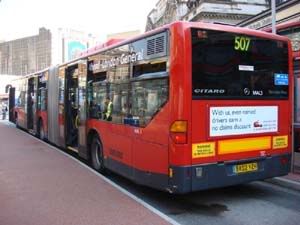

 the experience of driving; so I never bought the
  changes to
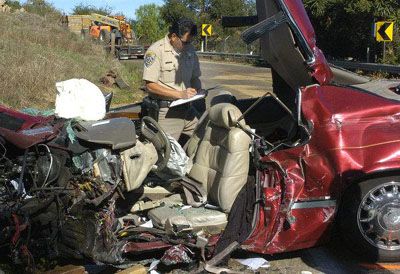
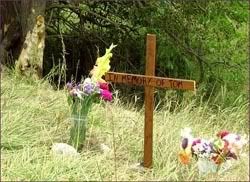 hey distract drivers and cause accidents. Personally, if I saw a cluster of roadside shrines, it would occur to me that since a few people had died in that location, I should reduce my speed. Taking the shrines away, to my mind, is removing intelligence that drivers should be extra careful on a certain section or a certain bend.