Showing posts with label stimulants. Show all posts

Monday, May 3, 2010

"Bronson" - special charity screening in Cambridge

Since the Willow Walker folded, a lot has been happening behind the scenes to re-estTom Hardy - click to read an interviewablish a written-word service for homeless and vulnerably housed people in Cambridge and the people who serve them.

This culminated earlier in the year with the formation of Flack, a company registered as a social enterprise which aims to launch its first issue next spring. Their patron, Tom Hardy, is coming to the Cambridge Arts Picturehouse on Sunday 9 May to answer questions after a special screeening of his controversial film
Bronson in aid of the charity. I don't think I can do better than give you the press release, with hyperlinks and pics.


click to go through to the Cambridge Arts Picture House homepageHollywood star Tom Hardy will be coming to Cambridge on Sunday, May 9 for a special screening of his film Bronson. The showing, in the Cambridge Arts Picturehouse at 1pm, will be followed by a question-and-answer session with the actor.

The screening is to support the newly-formed charity Flack, which was set up to replace and expand the services to homeless/vulnerably housed people and the agencies who serve them by the magazine Willow Walker. The first editor of the Willow Walker, named after a Cambridge hostel run by English Churches Housing Group, was Alexander Masters, whose book Stuart: A Life Backwards was turned into a film starring Hardy.

click to read a review of both sides of the tracksThe editor of Flack, which hopes to launch its new magazine in Spring 2011, is Kirsten Lavers, whose tenure at the Willow Walker as Alexander Masters’ successor saw the formation of a business called Cambridge Link-Up, run by present and formerly homeless people, and Street Voices, whose double CD Both Sides of the Tracks was released in March 2009 to critical acclaim.

Tom Hardy, patron of Flack, has successfully battled an alcohol and crack addiction he click to go to the star Trek Nemesis websiteacquired after the box-office failure of Star Trek Nemesis, in which he played Praetor Shinzon, an evil clone of Captain Jean Luc Picard; the film was released at the same time as Harry Potter and the Chamber of Secrets, the James Bond film Die another Day and Lord of the Rings: The Two Towers.

Bronson is the story of prisoner Charles Bronson, who changed his name from Michael Peterson to give him a harder image as a bare-knuckle fighter in London. First arrested in 1974 for armed robbery, he has spent just four months as a free man since, and is still imprisoned. He has been called "the most violent prisoner in Britain", and has been moved 120 times. Hardy famously did 2500 press-ups a day for five weeks before filming started to bulk up for the role. His other films include Black Hawk Down, Minotaur and RocknRolla, while he has also starred in TV productions such as Band of Brothers, Wuthering Heights and The Virgin Queen.

click to read the poster for the event

Sunday, November 1, 2009

cannabis policy's in no more chaos than usual

David Nutt - click to read BBC report
I'm not accustomed to find myself in agreement with anything the Government does, but today I must laud their decision to finally rid themselves of Professor David Nutt.

Until Friday 30 October, Nutt chaired the Advisory Council on the Misuse of Drugs, a body set up by the Misuse of Drugs Act 1971 to do what it says on the tin: advise the Government on drug-use and strategies to control it.

Nutt is no stranger to controversy, most famously this January when he published a paper in the Journal of Psychopharmacology called Equasy - An overlooked addiction with implications for the current debate on drug harms, in which he described a group of symptoms in a woman

who had suffered permanent brain damage as a result of equasy-induced brain damage. She had undergone severe personality change that made her more irritable and impulsive, with anxiety and loss of the ability to experience pleasure. There was also a degree of hypofrontality [lower metabolic activity in the frontal regions of the brain causing impaired concentration] and behavioural disinhibition that had lead to many bad decisions in relationships with poor choice of partners and an unwanted pregnancy. She is unable to work and is unlikely ever to do so again, so the social costs of her brain damage are also very high.
Equasy turned out to be Equine Addiction Syndrome - horseriding (does the author have a Jilly Cooper habit?); and Nutt showed a little later in the paper why he had been such an ideologially beautiful choice for the Labour Party to head a quango: "Violence is historically intimately associated with equasy – especially those who gather together in hunting groups; initially, this was interspecies aggression but latterly has become specific person to person violence between the pro and anti-hunt lobby groups."

He was forced to apologise by then Home Secretary Jacqui Smith for trivialising the dangers of ecstasy, but has continued to insist it is relatively harmless in the face of damage caused by other drugs, particularly alcohol.

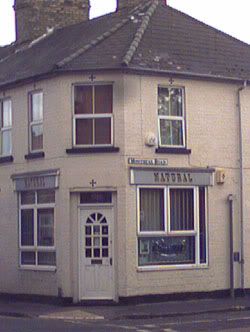
Natural in Cambridge - click to read about the head-shop in the Cambridge NewsI don't know any drugs worker who would disagree with this. One question commonly used in training is to ask what would be the major cause of substance-related conditions you'd see if you sat in a busy Accident and Emergency Ward (or Casualty, Emergency Room, etc) from Friday night to the wee hours of Monday morning. The answer, duh, is alcohol - with maybe a few heroin overdoses and overheating/dehydration and heart palpitations caused by ecstasy and other stimulants - hence the current debate about how to control alcohol consumption by people prone to binge-drinking.

What seems to have done for Nutt, however, is his allegation that Prime Minister Gordon Brown reclassified cannabis from a class C to a class B drug, after it was taken down from class B to C by former Home Secretary David Blunkett under Tony Blair in 2004, for political reasons.

Nutt's gotten hold of the wrong end of the stick. That first reclassification, in my view, was the political move. Votes were perceived in easing up on cannabis smokers and so, in the teeth of opposition from the police, the drug was placed into the lowest class of illicit substances. Almost immediately, people were popping up all over the place saying that cannabis had been legalised. Shortly afterwards, public and professional concerns about the link between cannabis and mental illness began to mount.

This was no knee-jerk reaction. In the early 1970s, when Nutt graduated from medical school, cannabis contained 1-2% THC (tetrahydrocannabinol, or to give it its Sunday name, Δ9-Tetrahydrocannabinol), the drug's main euphoriant. Now, the "super-strong" version of the weed called skunk, which has been selectively bred to increase the THC present, has up to 15% of the stuff. Skunk started appearing on British streets in the early 1990s, long after Bill Clinton did not inhale or some future British pyou don't know what you're getting without an electron microscopeoliticians did, as they used to push each other out of the way to tell us.

The thing is, if you increase the amount of one substance in the plant, other substances will be present in smaller proportions - one being Cannabidiol which, asserted Zuardi et al in a 2006 paper, actually functions as an antipsychotic. So people whose genetic trigger predisposes them to developing a psychotic condition are more vulnerable to having it pulled by cannabis.

And there's the rub. The UK Cannabis Internet Activists association resuscitates the uncaring utilitarianism of Mill Senior that Mill Junior had tried so hard to kill by looking at the number of people who would have to be discouraged from smoking cannabis to prevent one case of psychosis, concluding that "around 3,000 heavy cannabis users, or 150,000 light users" would have to be prevented to achieve this goal. [Update 2 Nov: they were quoting research from various universities - see their comment at bottom; my apologies.] If they want to use the NNT (number needed to treat) measure, though, it shouldn't be considered solely for a single issue: perhaps it might shed light on the effectiveness of the HPV vaccination, or the medicines being thrown at the swine flu. Or, indeed, we might look at the number of arrests needed to turn one burglar onto the straight and narrow, and conclude that theft should be legalised. And I suppose it's sweet that the Government doesn't persecute and slander every group denying establishment orthodoxy - in the UKCIA's case, that cannabis can cause schizophrenia.

Frank poster campaign arond cannabis - click to see its interactive websiteBut psychosis isn't the only risk of cannabis use. There's also the phenomenon - whose existence is admittedly disputed - of amotivational syndrome, where somebody feels a reduced desire to work or sometimes even get out of their chair - indeed, government drugs helpline Frank used the tagline "Have you become an expert of antique furniture, gardening and daytime cookery programmes?" on one of its posters raising awareness of the amotivational effects of cannabis. There was, it's true, a famous study on labourers in Jamaica who smoked "ganja" heavily that dismissed amotivational syndrome by showing that they did more work when on cannabis; but what's less often mentioned that the work done in between using cannabis was often found to have been carried out with impaired concentration and not quite finished. My own experience of middle-aged people who had used cannabis since their teens was of blank faces asking "what have I done with my life?"; and their partners, if they'd stayed, asking "what have you done with my life?"

I don't know why Nutt ignored all this in his demands for cannabis to be legalised - perhaps for ideological reasons, or possibly he wanted to be perceived as being "down with the kids". This chocolate teapot of a functionary fails to deal with the fact that only a government set on populating psychiatric wards and prisons would legalise skunk, therefore the cannabis "factories" - houses where every square foot possible is dedicated to growing strong cannabis, which can pull in £20,000 per month with overheads diminished if the "gardeners" are trafficked children instead of adults paid with the drug - would have no impetus to close down.

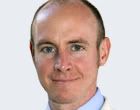
Daniel Hannan MEP - click to read his article on Frank NuttUltimately, despite claims to the contrary, British drugs policy is in no more of a state of chaos than it usually is for Nutt's departure. The hiring and firing of senior public servants is a function of government, and if we don't like a government's choices, then we change the government at the soonest possible opportunity. As Daniel Hannan MEP states in a Telegraph articleclick to go to the Advisory Council on the Misuse of Drugs homepage entitled Perhaps we should abandon democracy and be ruled by Prof David Nutt, "Have we really lost confidence in our ability to govern ourselves through the ballot box? What fools our fathers were if this be true."

Related post: Rizla - a smoke or a toke?

Wednesday, August 12, 2009

the passions of Kiri Te Kanawa

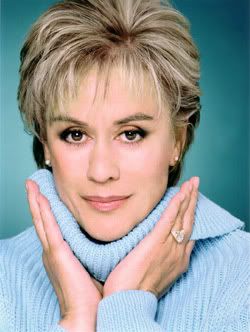
Dame Kiri Te Kanawa - click to go to the Kiri Te Kanawa Foundation websiteEverybody's got their favourite performances of their favourite stars. Mine's is Dame Kiri as Mary Dee in Paul McCartney's and Carl Davis' 1991 Liverpool Oratorio. Before she walks offstage after a blazing row in the Crises movement, her spoken "I think you should know, you're going to have a baby" could turn Old Faithful to ice.

Having gotten from being an aspiring opera singer in Gisborne, New Zealand, to become the First Lady of Opera by a commitment to education and hard work, she's sung the spectrum of soprano - from Die Zauberflöte (her first stage role) to South Pacific and from Faust to the two voices of Eliza Doolittle in My Fair Lady, playing so many lauded rolls that it would take a whole post to list them.

Today the Telegraph's Stephen Adams announced that when the opera-singer plays her beloved part of the Marschallin in Richard Strauss's Der Rosenkavalier next April, it will be her last role.

teaching at the Solti Te Kanawa Accademia di Bel Canto - click to read more (in Italian) However, what she's doing is just as interesting as what she's done. As well as being the first visiting teacher at Georg Solti's Accademia di Bel Canto (in which she is now a partner), the Kiri Te Kanawa Foundation identifies and nurtures operatic talent in New Zealand, and also prepares scholars for larger cities with long-established opera scenes. One of Te Kanawa's first protegées, Ana James, states
NZ is severely lacking in both language and vocal coaching...Many Australasian singers who I studied with in London and NY have already fallen of the radar.
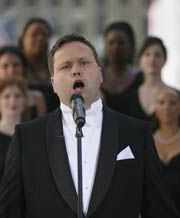
Hving pointed to so-called "popera" stars like Kathryn Jenkins' and Hayley Westenra's reliance on microphones, Dame Kiri has insisted that the opera singers of the future need time to mature away from the demands of the "instant fame" culture of shows such as X-Factor and Britain's Got Talent. Paul Potts, winer of Britain's got talent 2007
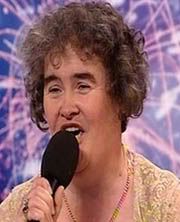
I can see her point: there'll always be a place for somebody like Paul Potts, who finished his shift selling mobile phones then brought the house down on the latter show with his rendition of Nessun Dorma, but Susan Boyle's collapse from
nervous exhaustion after her shock loss on this year's series showed the risks of a process that is not nearly long enough to identify people whom it might harm more than help, whatever the outcome. Susan Boyle, runner-up in Britain's got Talent 2007

Heaven knows I met enough aspiring dancers using stimulants to control their weight as a drugs-worker, but Kiri Te Kanawa Foundation alumna Ana James indicates the same process is happening with opera-singers:
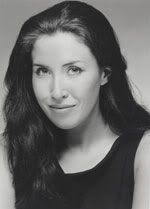
Ana James - click for biography
Now, opera companies want to cast slim healthy singers. I think this can only be a good thing as it is unhealthy to be over your ideal weight and not to take exercise in any case. However, at the other end of the spectrum, I know of several anorexic singers, which I am sure was unheard of 20 years ago! This is a very sad situation because it can and does affect the voice, as well as weakens the body and mind. As a soprano I feel huge pressure to stay slim,toned, fit, and look as good as possible at all times. There will always be a slimmer, better soprano out there ready to take a job!!! I work out at the gym, do pilates, yoga at least three times a week (when at home!) and I eat healthily (no carbohydrates after 5pm).
It would be sad to see the old adage that it ain't over till the fat lady sings become it's finished when the skeletal girl drops. I'm sure producers aren't looking for girls who are too hypoglycaemic to speak their own minds...are they?

Speaking one's own mind is something Te Kanawa has shown herself unafraid of doing. In 2003, she created a shockwave when she criticised welfare-dependency within the Māori culture from which she hails and about which she is as passionate as anything she devotes herself to. In a statement which isn't far from the reality on some housing estates I've lived in, she said,
I see too many people living on benefits... it just drives me mad. I've known someone, a Maori, who's been on a benefit for 37 years. Now what sort of pride is that?
Dame Kiri will be bringing three of her Future Stars of Opera to perform with the London Sinfonia on October 16 as part of the Tower (of London) Festival.

After which, the world will remain her oyster.

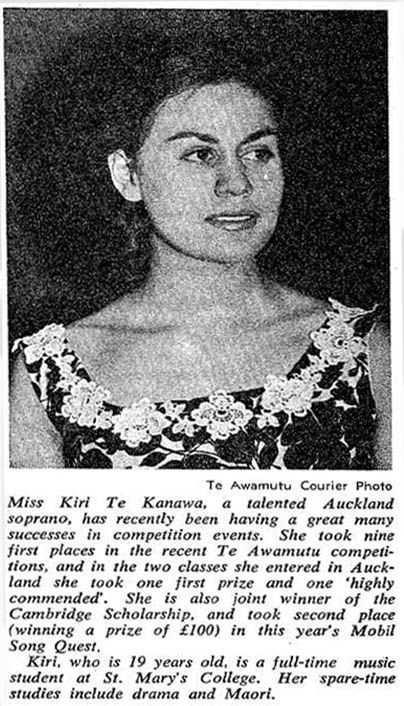
excerpt from TE Ao Hou - The New World - about Kiri Te Kanawa winning the Te Awamutu competition aged 19 in 1963 - click to read transcript

Monday, September 29, 2008

the bug letter: when 1 is more than 63,000

click to read more on the BBC from the Social Policy UnitRecently, I got a letter from a friend who lives in a nearby old fen and, like me, used to work with people who use illicit drugs. Inside were two letters from the BBC to him, in response to two letters of complaint he had sent about an objectionable song by The Beastie Boys called She's on it turning up on Dale Winton's show Pick of the Pops, which airs on Sunday afternoons from 2.30-4.30.

My friend, Iratus, was unhappy with those of the lyrics he managed to make out, and so looked them up on the web. When they did, he found the vocabulary of a situation that unfortunately is not uncommon today: a young lady (in the song a schoolgirl) being given cocaine in return for sexual favours. He wrote to the BBC, complaining that while he realised BBC Radio 2 did broadcast challenging material, this usually happened later in the evening and always with a warning.

Iratus received a prompt reply from the BBC, stating:

We are of course concerned if our programmes offend people and we never set out to offend but of course our public service role includes reflecting the world as it is...

I appreciate the strength of your views on these matters. Accordingly, I would like to assure you that I have registered your comments on our audience log. This daily report of audience feedback is circulated to many BBC staff, including members of the BBC Executive Board, channel controllers and other senior managers. The audience logs are seen as important documents that can help shape future decisions about future programming and content. They are also published on the BBC's intranet site, so are available for all BBC staff to view.

Thank you again for your interest in the BBC..."
When I took the letters to Professor Calculus to look over, upon reading the first he threw back his head and laughed, exclaiming: "They've given him the bug letter!"

Seeing my puzzled look, Calculus told me a story about a passenger on a cruise-ship who complained to the owners upon finding a bedbug. He got a reply stating that the member of staff responsible had been sacked and the captain reprimanded and, stuck to it, was his original complaint, with the words written on the back: "Give him the bug letter."

It was an amusing story, and when I investigated further I found that "the [bed]bug letter" had an interesting life as an urban legend. Anyway, Iratus didn't need any pointers to enlighten him to the fact that he was being fobbed off, and therefore iterated his complaint, adding that to give cocaine in return for sexual favours was to commit a criminal act.

This nugget appears to have exercised them down at BBC complaints. Their second reply to Iratus stated:

Having considered your further comments...I raised your concerns with senior management at the Radio 2 network. They acknowledge the record was not appropriate and suitable for this show. They pass on their apologies for any offence and thanks for bringing this matter to their attention.
Calculus and I looked at each other significantly like a pair of '70's detectives at this. So much for the "audience log" referred to in the bug letter!

Today, Andrew Porter interviewed Shadow Culture Media and Sports Secretary Jeremy Hunt, who was attending the Conservative Party Conference. Hunt questioned why the BBC should expect to receive a "£3 billion guaranteed cheque" every year and press onwards with a "lack of vision" regarding how it can help people and government tackle the pressing social issues of the day: "the rise in knife crime, gun culture, broken families".

He also referred to the £100 million per year that it takes to run BBC3 for "miniscule audiences". Too right. We bought a Freeview box in not in anticipation of the proposed switch from analogue to digital TV, but because it frustrated me to pay the license fee everynewsreader Fiona Bruce was approached about wearing a cross - click to read more year for so many services - BBC's 3 and 4, the childrens' channels, the digital radio stations - that I was unable to receive.

One way in which the BBC could help heal our broken society, which was Mr Hunt's main topic, is not to attack the backbone of our Christian society, which is still its religion. I'm thinking mainly of its decision to air Jerry Springer: the Opera in the face of the most complaints it had ever received prior to its being aired (it was already in the public realm as a stage musical).

There was some discussion about the actual number of complaints, but this was put to bed by the BBC Press Office, which reported that it received about 55,000 complaints prior to the show's broadcast and 8,000 complaints afterwards, with about 2,200 messages of support.

click to read Ofcom's advice on how to complainIn other words, there were around 30 times more complaints than pats on the back: in spite of this, communications regulator Ofcom found in its meeting on the subject that "The Content Board...suggested that whilst the programme would have offended some people, the requirements of freedom of speech were such that it must be permissible on occasion to cause offence."

I accept the principle, but it isn't practiced. In autumn 2006, a summit looked at the requests of performer Sacha Baron Cohen, who was invited to throw his pet hates into the bin in the BBC's Room 101. Cohen, a fair man, chose kosher food, the Archbishop of Canterbury, the Bible and the Koran. Almost everybody at the summit, including the show's producer, agreed that all of these items could be binned except the Koran.

Andrew Marr, senior journalist with the Corporation, was admirably honest:

“The BBC is not impartial or neutral...It’s a publicly funded, urban organization with an abnormally large number of young people, ethnic minorities and gay people. It has a liberal bias not so much a party-political bias. It is better expressed as a cultural liberal bias.”

The BBC, in fact, has also been criticised roundly for its anti-American and BBC caught out in bias: click to read moreanti-Israeli stances from both internal and external sources. William D Rubinstein, formerly of the Social Affairs Unit, asked at the time why no politician was willing to take serious action to tackle the BBC's bias. Perhaps Jeremy Hunt is in the vanguard of politicians who aren't afraid of the big bad Beeb.

Anyway, Iratus should be pleased; I don't know how many complainants got past the BBC's bug letter in the battle against Jerry Springer: The Opera, but in his own fight to get the BBC to admit it was wrong he's succeeded where 63,000 failed.

click to go to mediawatch-uk, who campaign for decency and accountability in the media

Related posts:

what the hell was all that about?

strictly sociopathic - the bbc has bullied us enough
Sunday, September 28, 2008

death, taxes and the comedown

Right now, every time you pick up a newspaper there seems to be news or rumours concerning the collapse of another financial institution and how this will affect the taxpayer. As the burden becomes ever more Sisyphean, I wonder if Labour MP's still sing The Red Flag as each company sinks, as they did with the Northern Rock affair?
click to go to The Tax Foundation homepage
The concept of Tax Freedom Day was first posited by The Tax Foundation, a US educational body, and identifies the day when, if you paid your taxes continually from January 1st, you would stop paying taxes and start earning for yourself. This year, Tax Freedom Day was 23 April in the US, aclick to go to The Adam Smith Institute homepagend 2 June in Great Britain (calculated by the Adam Smith Institute). I expect many will await the setting of next year's tax freedom days in various countries, as a measure of how the present crises have impacted on taxpayers.

In the context of skyrocketing taxes, The Sentinel Stars by Louis Charbonneau poses a unique but dystopian solution to the dilemma of one's tax burden being so high that working it off within one's lifetime may not be an option. Written in 1963, the book is set in a post-apocalyptic world where babies are born with the inheritance of their parent's tax burden, which they must work off - in addition to the tax they accrue through their lifetimes themselves - before they can become Freemen, if they live that long. (Alternatively, a lucky few are Freemen at birth, as they are born with an inheritance which is in credit.)

At 156 pages, The Sentinel Stars is shorter than a Mills and Boon novel, but, like much speculative fiction from the mid-50's to around the mid-70's, is bursting with ideas.

TRH-247 is the 247th person to be born with the name Thomas Robert Hendley in the Organisation, an outfit roughly analogous to Oceania in George Orwell's Nineteen Eighty-Four, with the difference that conflict has ended in TSS with the Merger of East and West.

Thomas meets Anne, loses her, and meets her again when he is sent to a Freedom Camp for a day as moral therapy - his importunity having been to go for a walk when he should have been at work. Having looked at some extreme sports, such as golf, he finds himself in a nightclub where the clientéle are in search of more lubricious pastimes. Anne explains:

"I have long legs and I'm athletic and I can dance. And I have a pretty face. I was picked out when I was ten years old. Every day since then I've done the right exercises and eaten the right foods and had the right creams massaged into me. Every day! Some of the girls are lucky. They stop growing too soon, or they get dumpy or their skin ages too quickly, or they just don't turn out to be as pretty as they seemed in the beginning. They're transferred out of out section. I wasn't."
Like Rabelais' Abbey of Thélème, there are no clocks in the Freedom camp, and no ruleFrançois Rabelaiss. Thomas, stuck in the Freedom Camp, is besieged by terrible freedom on every side, and finds himself dreaming of a return to too much government to escape the anarchy of too little. Eventually a doctor in the camp arrives at a diagnosis explaining his inability to accept the Organisation's norms. Genetic therapy, which is usually inflicted on the unborn disguised as prenatal screening, has not taken in Thomas' case. He is normal.

Surprisingly, illicit drugs feature only marginally in the novel. A habit-forming opiate called "the weed" is smuggled into Freedom Camps - Thomas asks, rather naively, "here there are no pressures, no worries, no frustrations. Why would anybody be driven to using drugs?" He appears unaware that in describing an anomic society he's answered his own question.

Unfortunately, drugs are a pedestrian reality in our real-life world and infest all walks of life. However, some professions are liable to do more harm when under the influence of mind-altering substances than others. Just over a fortnight before the Northern Rock privatisation story broke, the Financial Times published a piece by Stanley Pignall about drug use at work, in which Pignal stated: "The new data suggest cocaine use is no longer limited to bankers working long hours. Suspicions of widespread drug use in the City are common, but few firms conduct random drug tests." US lawyer and political scientist Ted Becker describes the additional obstacles law enforcers face in bringing higher-functioning drug users to book:

Apparently, the U.S. Drug Enforcement Administration (DEA) had set up a sting operation with the intent of ensnaring a large number of overwhelmingly white professionals - lawyers, physicians, stockbrokers, professors, CEOs - in a cocaine ring. They were the “buyers” who called the dealers and had amounts of pure powder cocaine delivered to their homes in New York City like pizzas...The DEA had hard evidence on all these elite buyers including “wiretaps, on videotape, on phone records.” It had taken a year to obtain all this evidence

...The result: “Prosecutors are contemplating stern letters to the suspects warning them to keep their noses clean” (Barrett 2001). “Sources say that since the dealer’s arrest...many of the buyers have hired lawyers who have bombarded officials with phone calls, insisting their clients not be charged...”
However the present crisis is resolved, whether it be through a Capitalism 2.0 or by some other means, I think the best we can hope for is stronger structures in place to buffer the bust which will follow the next boom. Those dealers (by no means all of them) who have projected their comedown onto society as a whole will not be caught. If, for example, they were asked to give a hair sample, they would reinvent the skinhead hairstyle.

Maybe I'm being too pessimistic. After all, life's stranger than fiction.

The Sentinel Stars
Louis Charbonneau
pp 155
Bantam, 1963 (US)
Corgi, 1964 (UK)

Friday, January 11, 2008

silly season for addled idiots

So here we go again, some eejit with nothing better to do thinks it's time to legalise all drugs, because Welsh chief constable Richard Brunstrom has called for legalisation and regulation of all drugs, describing the Misuse of Drugs Act 1971 as 'not fit for purpose' and 'immoral', urging its repeal."

There is a very good case to be made for decriminalising heroin under some conditions and prescribing it to people who are already addicted. It would vastly reduce the misery suffered by the victims of burglary and dealing, and moreover would make great inroads into reducing street-prostitution, as well as taking the most vulnerable (predominantly) women and girls out of situations where they might fall prey to the sort of scum who profit from their abuse at the hands of scum who use street prostitutes.

But what about stimulants?

This is the point at which pedants jump up and protest that caffeine's a stimulant. So it is, but caffeine never dissolved a nasal septum, bled calcium from bones, nails and teeth, induced impulsive crime and aggression or was to blame for unintended or even non-consensual sex. Cocaine does the first, amphetamines the second, both of them (and also methamphetamine) the third, and all three plus ecstasy the last - although a skinful can do the last two for less layout. Ecstasy, moreover, carries the perverse risk of death by drinking too much water due to its well-known effect of dehydration. Nobody in their right mind drinks a lethal amount of water, but if you have a roomful of people who have dropped E's then you will find nobody in their right mind.

Steroids turn the level playing field that sport should be played upon into a quagmire, lead to aggression and baldness (ever wondered why slapheads are moody buggers?), but on the upside, M&S will give any man brave enough to enter the lingerie section a free bra-fitting. And they shrink testicles to the dimensions of peanuts. Talking of which, as they are illicit and therefore not regulated, the carrier-oil can be anything...like peanut oil. Ouch.

And then there's the last refuge of the warm fuzzy liberal, cannabis. You know, the stuff that Bill Clinton put in the reefer that he tried to play the flute with. Trendy politicians push each other out of the way to offload that they did inhale once upon a time, and do not take it into account that cannabis has been selectively bred in the last two decades to maximise the amount of THC, the main one of the 60 or so psychoactive ingredients. Kids are ending up in psychiatric wards because they never had a chance in the face of huge amounts of psychosis-causing chemicals and of the collusion of their elders.

If the 1971 Act is not fit for purpose, it is precisely because it has been chipped away at by the cool, if unintended, products of middle-class upbringings stirring up sub-working-class sentiments to satisfy their need for publicity and controversy. Nothing wrong with being middle-class, of course (some of my best friends have fondue sets!), but when somebody with the means to spread their articulate attention-seeking propaganda among the fuddled masses pulls strings, we get the sort of Greek tragedies that have been inflicted upon the world by Marx, Lenin, Franco, Mosely, and not to forget St Clayre-Rayner, patron of professional victims.

In the draughty old fen, our hard-working sergeant is at pains to point out that recent drugs seizures don't mean we have an entrenched drug problem. Which is a good thing, as the tender mercies of John Barleycorn Esq upon some of our young folk keep the police busy. Mr Brunstrom should listen to his police officers and PCSO's on the ground before he gives the green light for the nation to get high.