Sitting on the sidelines is a favourite occupation of mine, and I avail myself of the luxury whenever it occurs.
So when I read on Richard Normington's blog that there was going to be a debate featuring the Conservative, Green, Labour and Lib Dem candidates, I headed to Cambridge's B-Bar, and was gratified to see that beside the seats there were half-a-dozen stools.
Sitting on one of them, I was party to a conversation between a young lady and a gentleman who had occupied the seemingly unoccupied seat next to her. He asked if it were fair that a seat that didn't even have a bag on it was deemed to be occupied and she replied that it had been agreed beforehand that her friend would sit there. He vacated the seat - eventually - and met a very nice lady with whom he had a loud conversation about whether a seat with nothing on it could be considered to be "booked".
The four candidates in the debate were Nick Hillman for ther Conservative Party, Tony Juniper (Green), Nick Huppert (Liberal Democrat) and Daniel Zeichner (Labour).
My money for the election is on Nick Hillman. Not because I'm a conservative (which I am), but because one of the first things he spoke about is relevant to my immediate family. The debate was sponsored by the University of Cambridge Programme for Sustainability Leadership; all the Prospective Parliamentary Candidates mentioned Cambridge University's potential to provide leaders, and rightly so: but Nick was the only person to mention Cambridge Regional College in the context of learning to be a builder. My daughter Minora has no desire to be an academic, but she wants get a job so that she can earn money and buy nice things.
Nick later mentioned that Cambridge is good at producing eminent professors, but not perhaps so good at producing, say, competent engineers. Personally, I used to enjoy a conversation about the ablative absolute with Professor Calculus of blessed memory, but we both agreed that when your boiler's gone south, you need somebody who's been trained to fix boilers (who, the job having been done, might very well have wanted to talk about the ablative absolute).
I didn't forsee emerging with a respect for the position for another party, but the Green's Tony Juniper eschewed the language of the debate being over, and left me with a longing for a time when those of us on both sides of the climate change debate can cool our heels and concentrate on what needs to be done.
I felt sorry for the Labour candidate, David Zeichner, who said in his opening speech that the Conservatives might win. But I must admit to being a bit confused as to when he said that if the Conservatives won there would be no going back, because we'd go back to Mrs Thatcher's time: answers on a postcard please...
Zeichner appeared to be angry about everything he spoke about. At one point he referred to the number of young people "coring through apprenticeships", and he had every right to be proud of this, but it didn't seem to occur to him to deal with why apprenticeships had died: trade union stewards were put under pressure to oppose apprenticeships because apprentices were perceived to be doing work on the cheap (Zeichner is a national political officer for the trade union Unison).
What confused me most was Mr Zeichner's statement that, in 90 days, "our financial decisions may be taken by George Osborne and we will be part of an experiment that has only been tried once before, in Ireland, and we've all seen how that's going". He then appeared to excoriate Nick Clegg because he might support the party with the most votes - but that's not my reading of Clegg's interview with the Telegraph.
I think the most human part of the night was when a distressed lady asked people not to vote for "the witch", by which she meant "Magus Lynus Shadee", who claimed to have performed a ritual that would make somebody commit suicide. She made a special request that a photocopy of the Cambridge News article be given to "the Conservative". Nick had the eejit nailed - he wanted to open a shop, and was seeking attention.
It's significant that Nick Hillman is a historian, because history is about what worked, what lasted, what doesn't need fixing. It seemed to me that the Labour candidate, God bless him, had made his mind up beforehand what Nick was going to say and this informed his reaction, because very little of what Zeichner said was relevant to Nick's presentation.
It seemed to me that Mr Zeichner not only had his seat booked, but had reserved the empty chair next to him in order to occupy it with a conservative bogeyman that exists only in the Labour collective consciousness. I hope things work out well for him. Personally, I'll be voting for Nick Hillman, because I want to vote for somebody who cares, and who is part of a government that not only cares but does it in the real world.
Thursday, February 11, 2010


Monday, February 8, 2010
top tips for Tuesday

 Revd Bosco Peters from the Church of New Zealand, part of the Anglican Communion, reflects on a classic 1970s paper on social networking to look at the strengths and weaknesses of Sola Scriptura, the Reformation doctrine that everything one needs for a Christian life is contained in the Christian Bible. |
 Naomi Litvin, author of Holocaust memoir and love story We Never Lost Hope, investigates the John Birch Society, which was instrumental in keeping Jews out of country clubs but disappeared up its own paranoia, and finds a sinister wall of silence. Be sure to check out Part Two of this intriguing search by clicking the link at the bottom of the post. |
 Nick Hillman, PPC (Prospective Parliamentary Candidate) for the city of Cambridge, gives a diary providing a fascinating insight into a week in the immediate run-up to the general election campaign. I felt tired after reading this. |
Government members got an answer to Stalin's question as to the whereabouts of the Pope's divisions recently when Pope Benedict XVI made a dramatic intervention reminding Britain that equality is not  an end in itself while Harriet Harman's (Minister of Equality) Equality Bill was going through Parliament. The result: the clause in the Bill, which would have forced all the Christian denominations in the country to admit gay people, transexuals and atheists to the priesthood, regardless of their views on these matters, was dropped without recourse to the Parliament Act - which was used to ensure hunting with hounds was banned - to force it through. Here Fr Tim of The Hermeneutic of Continuity provides a link to a petition in support of His Holiness' visit to Britain. He has shown himself capable of walking in his predecessor's shoes, and I recommend you sign it. |
 The Big Picture (News Stories in Pictures) reminds us that dogs and sleds have been prominently figured in the news recently, and provides 30 beautiful pics of dogs, snow and sleds. Depending on the speed of your modem, may take a while to load. |
 The media noise about a banker being caught in flagrante cyberdelictus ogling a naked model while his colleague was being interview appeared to have drowned out Vodafone's embarrassment over an obscene Tweet coming from one of its employees during working time, but the latter case seems to have sent more bloggers rushing to their keyboards. In the light of the Vodafone kerfuffle, Fresh Networks presents managers whose employees may have to use social media with a guide to getting them used to the new communications media. |
 It's neither Exodus nor Deuteronomy, but this list of The 10 Commandments of Political Blogging from The Conservative Blog is an essential guide from an experienced blogger. |
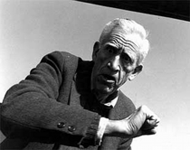 David Blackburn of the Spectator Arts Blog regrets that J.D. Salinger may have taken his autobiographical secrets with him. |
 Artist Edward Rawson is the son of Ian Rawson, Managing Director of the Hôpital Albert Schweitzer in Haiti. Rawson filius writes a guest blog on his time helping in the earthquake-stricken country. |
 And finally - Lukas is the latest addition to Cambridge Constabulary's class of trainee police dogs. His handler named him after Lukas Dryml, a Czech speedway rider who used to ride for the Peterborough Panthers. In a charming first post written in Lukas' own paw, rad all about the puppy's first Christmas. |
Sunday, February 7, 2010
start something: a cry for prayer
I've been compiling pubicity material for St Gallicus for much of the day and had resolved to have a night off blogging. Then I got an email from ChinaAid to the effect that Gulinuer, wife of imprisoned Uyghur Christian Alimujiang Yimiti from Xinjiang Province, has made a request.
Yimiti was jailed for revealing state secrets. Former British diplomat Tim Collard, who has worked in China, put this in context last year: r click here to read the text of her petition for prayer. (And click on the photo of Alimujiang at the bottom to read about governmental persecution of Chinese house churches in general.)
Nothing's ever simple - for example, Collard suggests that one of the reasons Yimiti was put on trial was to stave of Al Qaeda sabre rattling; he had converted to Christianity from Islam in 1995. Prayer might not always bring injustice to an end in and of itself, but its always a good place to start from. Let's start something.
Related posts:
Christians in Xinjiang are suffering too
Sport isn't worth that much - Yimiti's Olympic struggle

Yimiti was jailed for revealing state secrets. Former British diplomat Tim Collard, who has worked in China, put this in context last year:
"revealing State secrets"...that’s pretty serious. It’s hardly a sign of tyranny – you get prosecuted for that over here. The problem is that, under Chinese law, any information which has not been specifically released by the government’s information office is a state secret. The great dissident Wei Jingsheng got 15 years in 1979 for revealing that China was fighting a war with Vietnam, although many Chinese families had already found this out the hard way.Gulinuer's request is simple: pray. Click her photo to see a video of her request, o
r click here to read the text of her petition for prayer. (And click on the photo of Alimujiang at the bottom to read about governmental persecution of Chinese house churches in general.)Nothing's ever simple - for example, Collard suggests that one of the reasons Yimiti was put on trial was to stave of Al Qaeda sabre rattling; he had converted to Christianity from Islam in 1995. Prayer might not always bring injustice to an end in and of itself, but its always a good place to start from. Let's start something.
Related posts:
Christians in Xinjiang are suffering too
Sport isn't worth that much - Yimiti's Olympic struggle
sport: is morality the enemy at the gate?
 I was never a sports fan; but it's so pervasive that, even being averse to it if not phobic, I was caught up by the cloud of depression caused by Kenny Dalglish's departure to Liverpool from Celtic that hung over our school for a day. I think I went home and gazed at his picture on one of the football cards you got with bubble-gum bro
 ught from ice-cream vans and mentally asked, "how could you do it?" But I was better the next day, and was back in the school's small car-park with my Eye-spy Book of Cars.
The behaviour of sports personalities off the pitch, field or course has been high in the media spotlight recently but, in an article whose title refers to Pele's description of football as "the beautiful game", the Telegraph's Mick Brown shows us that extra-curricular activities are nothing new:
However, stories coming out in recent years seem to be of a more serious nature than spivviness.One of the more poignant football stories this week was the revelation that during the Second World War those two examplars of a finer age of Corinthian values, Stanley Matthews and Stan Mortensen, were arrested for trying to sell contraband coffee and soap while playing an international match in Belgium. Their excuse, touchingly, was that they needed the money to buy presents for their wives. The two men were given formal reprimands, and the incident buried away in Ministry of Defence documents which have been kept secret for more than 65 years.
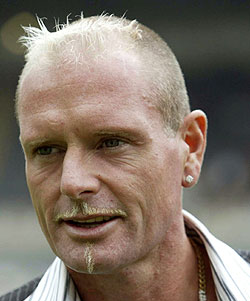 For example, we had the infamous "dentist's chair" incident in the 1996 European Cup, where members of the England Football Team adopted the posture of a client of said professional to have spirits poured into their mouths. The incident probably had a two-way relationship with Paul Gascoigne's increasingly problematic drinking; as the Guardian's Mark Watson wote last year, "if Gascoigne's gluttony ended up being his fatal flaw, the media were equally greedy for details of his impending downfall. The tabloids who demand 'GET HELP FOR THIS MAN' these days are, by and large, the same ones whose relentless scrutiny fuelled Gascoigne's decline."
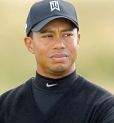
More recently, a presumably fatigued Tiger Woods has been intimately linked with nineteen women. But compare his attendance at a clinic that treats addiction to sex while Iris
 Robinson, MP in the devolved Stormont Assembly in Northern Ireland, who had a fling with one man who fleeced her for £50,000, told all in a BBC documentary and is now a star on Facebook, was taken into psychiatric care when the scandal broke. I'm not trying to say that committing adultery with one person is more excusable than committing it with nineteen, merely that being diversity-ridden does not protect society from institutionalised sexism.
It's as if sports stars, whether playing or not, are in an enclave where normal morality is kept at the gates. In an essay on Moral Reasoning in the Context of Sport, David Shields and Brenda Bredemeier of the Univesity of Missouri's Center for Character and Citizenship state they found in a study of 50 college students that "the nonathletes had significantly more mature moral reasoning than did the basketball players", explaining:
Now we have the news that John Terry, captain of the England football team, had an affair with the wife of his team-mate Wayne Bridge - but there's something different here. Famously strict England manager Fabio Capello, in seeking to lance "the most pernicious boil threatening his meticulous preparations for the World Cup", indicated that he's opening the gates of the enclave when he asked Bridge if he would be prepared to play under Terry's captaincy, the result being that England is seeking a new captain.we also noted that in the philosophical and social science literature on play, games, and sport it was commonplace to discuss these activities as somehow "set apart" from everyday life. The noted philosopher Huizinga, for example, described play as "a stepping out of 'real life' into a temporary sphere of activity with a disposition all of its own". Handelman, an anthropologist, wrote that entry into the play realm req
uires "a radical transformation in cognition and perception". Schmitz, a sociologist, similarly suggested that play transfers participants into a world with new forms of space, time, and behavior, "delivering its own values in and for itself".
One could argue that heaping more money and fame upon young males than they can reasonably be expected to cope with is asking for trouble. It's a compelling argument and is in many cases true, but there's more. Firstly, huge amounts of money pumped into sport by TV deals and sponsorship that distort the playing field in every sense - from which even the sedate world of cricket isn't immune; secondly, the fête-'em-and-slate-'em attitude embraced by celebrity magazines and the worse tabloids which assumes that being in the public eye is a hubristic act that must be punished by astounding violations of privacy; and thirdly, a notion on the part of the Establishment that success - that being known for being good at sport, perspicacious at business, or just being known for being known - is an end in inself and a "get out of jail free" card.
However, Capello's reaction to his former captain's phiandering - making Terry the first England player demoted for non-football-related matters - wasn't the only surprising thing about the affair; the "other woman" has announced that she won't be selling her story. If things keep going on like this, I might just look out my old football cards.
Friday, February 5, 2010
needle injury in a playground
 It was distressing to see on the Look East regional news magazine, then read in the Cambridge News yesterday, the news that a council worker had been jabbed in the leg by a used needle in a children's play area. But I found myself wishing that the former news outlet, part of the BBC, had researched their facts about the diseases that can be caught through contact with injecting equipment more thoroughly.
The needle had been wedged into the rope seat of a swing then, presumably, broken off, and had jabbed Jason Law, who works as a groundsman for Littleport Parish Council in East Cambridgeshire, through the trousers.
According to Look East, Mr Law would have "an agonising wait of 6-8 weeks" before he found out whether he would find if, God forbid, he had contracted anything from the needle.
This is tosh. The diseases most often caught from needles - Hepatitis B (against which any council should have workers like Mr Law vaccinated), Hepatitis C and HIV take a minimum of three months to show their ugly faces; in reality, negative test results are meaningless unless samples are taken six months after exposure. The Cambridge News got it right: "he has to have regular blood tests and injections over the next six months before, hopefully, being given the all-clear". The initial tests would have been at the behest of the behemoth which w
 ants to stop schoolchildren play conkers, push gravestones over and now ban doormats: the insurance industry. Should Mr Law be found to already have an illness that might be caught through contact with needles or other injecting equipment - or indeed through something as innocent as a boyhood blood transfusion - any payout would be substantially reduced or indeed non-existent.
It's being presumed that the needle was put into the swing-seat maliciously, as well it may have been. On the other hand, there is a growing awareness among the various communities of injectin
 g drug-users that they have a responsibility not to allow their equipment to be reused, which might risk transferring the very beasties that Mr Law has been put at risk of. In the absence of education otherwise, they often stick needles into trees and snap the attached syringes off (and the needles often later fall out and await a passing child in thin-soled sandals).
The correct procedure, of course, is to place the used injecting equipment into a burnbin/sharpsbin and take it to a needle-exchange, which is usually a pharmacist displaying one of the symbols to the right; or it may be within a drugs agency; from either
 the burnbins will be collected and incinerated, hence the unofficial name "sinbin" (incineration-bin).
What happened to Mr Law is of course the responsibility of the individual drug-user, and if this individual is found I hope they lock him away and throw away the key, both for what they are putting the groundsman through and the risk to which they exposed children at play. But, given that in the year to April 2009 hundreds of paedophiles and rapists were let off with cautions, I'm not hopeful.
What doesn't help as well is the refusal of some authorities to accept that a serious class A problem exists within their boundaries - perhaps a consequence of public bodies being allowed to rate their own performance?
 Another stumbling-block can be groups of residents fearful for their house-prices putting pressure on the outlets where Methadone is dispensed to be closed, as they are unhappy at seeing what in reality is a minority of clients collect their heroin-substitute then sit around swallowing cheap strong lager or cider. They're looking at the wrong side of the equation: if off-licenses, including shops that sell alcohol from dawn till after dusk, were forced to raise the price of their Carlsberg Special Brew, White Lightning Cider and the rest - as the Conservative Party has pledged to make happen - the problem would much lessen.
The war on drugs, of course, must continue; but like any war, resources must be targeted on a pragmatic basis. For example, it would make more sense to decriminalise or even prescribe - under strictly controlled conditions - diamorph
 ine (heroin) for the purposes of detoxification than to cede to the many attacks on the illegality of cannabis, because the problem of cannabis cultivation can largely be dealt with within our shores, whereas 95% of heroin comes from Afghanistan. Until a decision can be made as to whether to buy the products of the poppy fields at a higher rate than the Taliban offer and produce pharmaceutical opiates, or apply liberal helpings of Agent Orange (or some such herbicide) thereupon, all we can do is disconnect what supply from demand as we can and deal with the effects of what gets through.
But all this doesn't help Mr Law. I wish him as much peace as he can garner over the coming months, and hope he is given the support he so richly deserves for his devotion to his job.
Tuesday, February 2, 2010
top tips for Tuesday
 David Appletree from the Jewish Internet Defence Force (@JIDF) is presently at #2 in the Shorty Awards for Politics and, in being behind a Hamas sympathiser close to the Whitehouse, finds his shoulders bearing the hopes of many whose voices are being suppressed. Visit his site to find out what to do or, if you know, cast your vote! |
 In an explosive post, John Smeaton, SPUC Director relates in interview with the former director of an abortion clinic in Texas who has become pro-life after assisting in an abortion procedure and discovering that pro-choice and pro-abortion are synonymous. |
 Pope Benedict XII has made a stinging attack on the absolutism of equality (could one say diversity-ridden?) contained in Harriet Harman's Equality Bill, but Telegraph journalist Damien Thomson says in his blog that the situation is far more complex than the Holy See against the British Government. |
 Virtual prelate Cranmer, in response to a letter published by Richard Dawkins in the Times, gives the waspish theophobe a long and well-thought-out reply. One wonders if Dawkins' response, should he deign to give one, will be equally coherent. (Update: more on Dawkins from Heresy Corner. ) |
 Richard Normington reflects on a spectacular own goal by a Liberal Democrat who appears to have been throwing stones too close to his colleague Killian Bourke's glasshouse. |
 Here's a post from Republic of Mathematics about Algebra as arithmetic on names. Enjoy. |
 They're back...do you remember settling down in front of a Hammer film in delighted anticipation of the shivers and the cheese? The Horror Squad announces the director of Hammer redux's production of Susan Hill's short story The Woman in Black. |
 Life in Gaza is often presented as a struggle of Palestinians against Israelis somehow occupying their own country's territory, but Media Backspin presents a disturbing exposé of the realities for Christians in Hamastan. |
|
|

top ten songs for St Valentine's Day
Click here to view this post for 56k modems, or slow broadband connections
Once again we're approaching St Valentine's day, in the runup to which postal workers are kept working overtime taking cards ranging from the sublime to the cheesy - and often unsigned - from A to B.
Valentine is reckoned to have been a bishop of the early church in Rome at a time when legionaries had been forbidden to marry, as senior members of the Senate reckoned the marital to detract from the martial. Managers of football teams used to have equivalent ideas and ban WAGS from travelling with players for big fixtures; o tempora, o mores...
10 - The Carpenters voice what it feels like to want to be in love, but for love to escape one...a feeling not unknown to adolescents nor, unfortunately, to Karen Carpenter for most of her life.
9 Deep Purple, in something of a symphonic rarity from their 1969 Book of Taliesyn LP, describe from an adolescent male's point of view the emptiness referred to in the above song, and the epic heights to which boys (and men) can elevate an attraction that's not always much more than hormonal.
8 Sometimes young people find themselves thrown together then torn apart - especially in times of war. Here's Dame Vera Lynn singing about precious time together in a song that elements in the Government of the time tried unsuccessfully to ban: That Lovely Weekend.
 7 Symphonie Fantastique, 1st movement: Hector Berlioz composed this section of his emotional record of artistic life recalling himself at a dance when his beloved - Harriet Smithson - suddenly appears: a sweet moment when it happens, and sometimes this sort of thing does. One might see it as a classical version of Lennon and McCartney's I saw her standing there. Here it is performed by Fiorello H. LaGuardia High School's Senior Orchestra.
6 Janine - David Bowie, written by the songsmith about the girlfriend of a Polish acquaintance. I'm reminded of a trip to Ireland in the 1970s a my Mum sought out somebody she'd met at a party, presumably to ease the loneliness in the wake of my Dad's death. (Coming back there were no hotel places, but a Dublin Gardaí division let us sleep in their interrogation room.) Also of an ill-advised engagement to a Swiss girl after a holiday romance; thankfully, in both cases, good sense intervened before too much damage could be done.
5 There's an ongoing debate over the degree to which Shakespeare understood women. I don't know if that will ever be resolved, but Abba's songwriting team of Björn Ulvaeus and Benny Andersson put words into the mouths of their spouses, Anni-Frid Lyngstad and Agnetha Fältskog, that evinced an understanding of the female mind that sold millions of records, not least to women. One record in particular, The Day before you Came, reminds me of a poem by rennaissance woman Joyce Grenfell called Ordinary Morning:
4 Sometimes we form pairings that, for better or worse, fall apart. Sometimes couples reunite, other times they don't; the pain of parting is universal - but not all separations are forever...
3 ...as Emmy-Lou Harris sings: Together Again.
2 And when he and she are reunited, one hopes that romance still lives:
1 This song reminds me of my wedding to Maxima, my love. We had no money, but when we arrived at Church there were so many beautiful flowers; to this dayI don't know who provided them, but every night I thank God for them.
Have a happy Valentine's Day.
If you enjoyed this, click here for more Top ten songs about...
Once again we're approaching St Valentine's day, in the runup to which postal
workers are kept working overtime taking cards ranging from the sublime to the cheesy - and often unsigned - from A to B.Valentine is reckoned to have been a bishop of the early church in Rome at a time when legionaries had been forbidden to marry, as senior members of the Senate reckoned the marital to detract from the martial. Managers of football teams used to have equivalent ideas and ban WAGS from travelling with players for big fixtures; o tempora, o mores...
10 - The Carpenters voice what it feels like to want to be in love, but for love to escape one...a feeling not unknown to adolescents nor, unfortunately, to Karen Carpenter for most of her life.
9 Deep Purple, in something of a symphonic rarity from their 1969 Book of Taliesyn LP, describe from an adolescent male's point of view the emptiness referred to in the above song, and the epic heights to which boys (and men) can elevate an attraction that's not always much more than hormonal.
8 Sometimes young people find themselves thrown together then torn apart - especially in times of war. Here's Dame Vera Lynn singing about precious time together in a song that elements in the Government of the time tried unsuccessfully to ban: That Lovely Weekend.
7 Symphonie Fantastique, 1st movement: Hector Berlioz composed this section of his emotional record of artistic life recalling himself at a dance when his beloved - Harriet Smithson - suddenly appears: a sweet moment when it happens, and sometimes this sort of thing does. One might see it as a classical version of Lennon and McCartney's I saw her standing there. Here it is performed by Fiorello H. LaGuardia High School's Senior Orchestra.6 Janine - David Bowie, written by the songsmith about the girlfriend of a Polish acquaintance. I'm reminded of a trip to Ireland in the 1970s a my Mum sought out somebody she'd met at a party, presumably to ease the loneliness in the wake of my Dad's death. (Coming back there were no hotel places, but a Dublin Gardaí division let us sleep in their interrogation room.) Also of an ill-advised engagement to a Swiss girl after a holiday romance; thankfully, in both cases, good sense intervened before too much damage could be done.
5 There's an ongoing debate over the degree to which Shakespeare understood women. I don't know if that will ever be resolved, but Abba's songwriting team of Björn Ulvaeus and Benny Andersson put words into the mouths of their spouses, Anni-Frid Lyngstad and Agnetha Fältskog, that evinced an understanding of the female mind that sold millions of records, not least to women. One record in particular, The Day before you Came, reminds me of a poem by rennaissance woman Joyce Grenfell called Ordinary Morning:
It felt like an ordinary morningThe song is all the more poignant as it was released as the band was disintegrating:
It began in an ordinary way
And then, without warning
Ordinary morning
Became extraordinary day.
Hadn't the slightest sort of inkling -
No-one said love was on its way -
And then, within a twinkling
Without the smallest inkling
It became an extraordinary day.
For there you were
And the whole world stood still.
There you were,
I lved you then, and I always will.
At first, an ordinary morning.
Began on an ordinary way,
And then my heart was beating
At this ordinary meeting
And we both knew
This was not an ordinary day.

4 Sometimes we form pairings that, for better or worse, fall apart. Sometimes couples reunite, other times they don't; the pain of parting is universal - but not all separations are forever...
3 ...as Emmy-Lou Harris sings: Together Again.
2 And when he and she are reunited, one hopes that romance still lives:
1 This song reminds me of my wedding to Maxima, my love. We had no money, but when we arrived at Church there were so many beautiful flowers; to this dayI don't know who provided them, but every night I thank God for them.
Have a happy Valentine's Day.
If you enjoyed this, click here for more Top ten songs about...
Subscribe to:
Posts (Atom)