Wednesday, January 21, 2009

Night Fighters

Night Fighters - Luftwaffe and RAF Air Combat over Europe 1939-1945
Colin D. Heaton and Anne-Marie Lewis
Naval Institute Press 2008
pp 188


Some wars are with us for a long time - campaigns by Julius Caesar and Constantine set the structure of modern Western Europe, the Third Battle of Lepanto consolidated it, and the American Revolutionary War saw the birth of a country which continues to challenge and change the world.

Others are with us still in less benign ways. The Battle of Kosovo Field erupts intermittently, and the Crusades leave a bad taste in many mouths.

Machinations started in the first half of the seventeenth century by Cardinal Richelieu to keep the Germanic principalities from uniting, which would threaten France's influence in Europe, came to an end after the Franco-Prussian War of 1870 when, on 18 January 1871, the Hohenzollerns proclaimed a German Empire in the Hall of Mirrors in Versailles. The rest, as they say, is history, and Night Fighters is the story of a fiercely-fought episode in that history, where "over a million men fought in the hostile skies from the British Isles to the steppes of Russia, and from the Arctic Circle to the Sahara", which gave us many advances in military and civilian technology, in a war whose conclusion bequeathed us the United Nations, the European Union, the Space Programme and the Cold War.

Night Fighters deals with combat between the Luftwaffe and the RAF (Nachtkrieg - "night war" - in German), principally Bomber Command, over German-occupied Europe. Each of the authors brings a special gift to its writing: Colin Heaton's accounts of battle and its outcome are all the more chilling for his matter-of-fact manner borne of combat experience, and meticulously-transcribed interviews with German, British and American officers and airmen, many unavailable elsewhere, add valuable insights; Anne-Marie Lewis is a researcher and co-ordinator of veterans' foundations, including the Celebrate Freedom Foundation. In the light of the traumas suffered by airmen involved in nocturnal aerial combat in WWII, it is nothing short of amazing that these two have managed to bring British, German and American airmen from the conflict together for reunions.

The authors point out that Bomber Command as an organisation was virtually synonymous with Sir Arthur "Bomber" Harris, the controversial figure blamed by many for bombing German cities indiscriminately, whose memory is proudly guarded by the veterans of RAF Bomber Command (formerly the Bomber Command Association).

Myths about Harris explode like ack-ack from the start - referring to successes by the neonatal RAF in bombing German airfields in France in 1918, Stanley Baldwin enunciated the doctrine that "the bomber will always get through". This was in 1932, a rather confused period of British political history: he was at the head of the Conservative Party, which was then in a coalition "national" government with Labour, in response to the international financial crisis. Labour had expelled Prime Minister Ramsay MacDonald from the party for consenting to the coalition in the first place, which meant that Baldwin effectively ran the country. He continued: "The only defence is an offence which means you have to kill more women and children more quickly than the enemy."

Chruchill's first choice to head Bomber Command was a founder member of the RAF and its first chief of staff, Air Vice Marshall Sir Hugh Montague Viscount Trenchard, who had envisaged "round-the-clock" bombing of enemy manufacturing centres in January 1918, with the caveat that there would be losses of British aircraft and crew from the outset.

The last piece of the puzzle would fall into place in the aftermath of the Coventry raids of November 1940, when ordnance meant for factories landed on residential areas and power and sanitation facilities. Hitler was not the only one to look at the result with interest. Oxford physics professor Dr Frederick Lindeman (1st Viscount Cherwell) interviewed survivors and found that losing one's home was more debilitating than losing friends and relatives. The die was cast: Churchill presented Harris with orders to "de-house" German factory workers.

There has been much discussion over these raids over the decades, and indeed on British TV there was a televised debate on the eve of the First Gulf War on how to prosecute the air campaign, which referred back to the bombing campaigns on Germany - the daytime "precision-bombing" raids by American bombers, certainly, but principally Harris' nocturnal campaign.

At the time there was vigorous debate on the night-bombing campaign in the US -having joined the war after the attacks on Pearl Harbour - whose polar opposites were represented by General James H. Doolittle, who wished to maintain the moral upper hand, and General Curtis E. LeMay, who differentiated between the moral high ground and the military-industrial lowlands. US President Franklin D. Roosevelt agreed with Churchill that alternating American daytime raids with British night-time ones would be the most effective option.

The British were up against formidable opponents. I sometimes wonder if people who disapprove of Harris' tactics are aware of the situation as it existed. In the first part of his memoirs of the Second World War, The Gathering Storm, Winston Churchill talks of preparations for a German invasion, which would constitute mass distribution of bayonets with a grim poster campaign on the theme "you can always take one with you". Until the US entered the War, an Allied victory - in essence a British one - was unlikely. The authors' meditations on how the war might have proceeded had the Luftwaffe defeated a lone Britain's RAF are both counterintuitive and compelling.

The German genius for organisation was represented in the air-war by the Kammhuber Line, an "intricate array of defensive relay and observation systems" which stretched over much of occupied Europe and was, in part, manned by two million schoolboys, who had been conscripted under Article 1 of the Law concerning the Hitler Youth of December 1, 1936: "The entire German youth within the borders of the Reich is organised in the Hitler Youth" (one - unwilling - member was Josef Ratzinger, who would spend time in an American Prisoner of War camp with Günther Grass, and later rise through the Roman Catholic Church to become Pope Benedict XVI). There would follow airborne co-ordinators, and "Dark Night Trains" where a team of radar-operators who were experienced as pilots would guide night-fighters within squadrons.

The Nachtjagdfliegern - Night Fighters - were headed by Wolfgang Falck, who immediately saw that the problem with research and development was that innovations were being created by engineers who had no flying experience. Many of the pilots he inherited had been blooded in the Spanish Civil War, while Harris' crews had to gain experience and confidence bombing "softer" targets such as Luebeck and Rostock, and the Renault factory at Billancourt.

Falck fought with those he commanded, through a desperate game of technological catch-up which saw each side improve its navigation and detection systems, only to see the other improve them more. One of Falck's innovations was Schraege Muzik (Jazz Music) - arrays of guns mounted at 60 or 70 degrees, enabling German fighters to come up on the bombers from below and fire along the weak-points of their wing-roots.

Another was the Wilde Sau (Wild Boar), which would attack bombers as they approached their target. With the addition of the Zahme Sau (Tame Boar), British aircrews would constantly be under threat from either flak or fighters virtually from the moment that they were picked up by the Kammhuber Line, and sometimes find that they had been followed home covertly by night-fighters, who would start firing as the crew started to relax in anticipation of a landing which might not happen.

The authors explore the resulting crises suffered by crews exposed to prolonged stress and sometimes repeated trauma with an admirable even-handedness, weighing the physical and mental attrition suffered by aircrew against what was at stake, but also taking into account the sometimes unrealistic demands put upon them by a hierarchy who might have minimal flying experience, and the power medics with none had over their lives. Heaton and Lewis tell of a man who was seriously injured three times and was awarded the DFC (Distinguished Flying Cross) and DSO (Distinguished Service Order), who after an especially heroic feat confided to his commanding officer that he didn't feel able to fly again, and found himself transferred to a job as a janitor. The authors quote Scottish Victoria Cross recipient Bill Reid speaking to Heaton in 1999:
[Our superiors in London] should have [held] their conferences on board a Lancaster flying through flak, searchlights and dodging German fighters, all the while being rocked and bumped by the concussions from the flak and the shrapnel flying through the thin aluminium fuselage; men screaming and others dead or dying. This is the forum in which I think more lucid planning would have been developed.
However, once it became obvious in Westminster that things were going badly wrong, the neuropsychiatrist became part of the airfield medical team: not only had occupational health as we know it been born, but, in the military realm, this would eventually lead not only to improved healthcare but to ways of identifying individuals suitable for advanced and even élite training.

As a former mental health worker, what I found interesting was that serious study of psychiatric presentation moved the RAF forward from a one-size-fits-all kneejerk judgement to identify two sorts of risks: not only people who were severely mentally fatigued and didn't want to go back into a game of chance with loaded dice, but others who were too eager to volunteer for duty, who refused to take leave and took unnecessary risks. This was a vital step in identifying the objective effects of different personality-types and looking for different modes of treatment, which would eventually supercede the career-ending diagnosis of "Lack of Moral Fibre", but unfortunately too late for the many men who left the RAF under a cloud and whose records are still sealed.

As the war progressed the German night-fighter pilots found themselves suffering also - from the long-range and hard-to-detect Mosquito, from knowledge that their country was turning into an inferno - and often at the hands of the two individuals who were also Britain's enemies. In Diplomacy, Henry Kissinger gives a nineteenth-century diplomat's assessment of Tsar Alexander I's absolute power - "What he dreams of at night he can carry out in the morning". However, one can predicate of Hitler a deeper pathology even than that inflicted by absolute power. Kissinger again:

Hitler always seemed strangely unfulfilled by his victories...Psychologists may find therein one explanation for his conduct in the war in a manner that seemed to lack a strategic or political rationale until Germany's resources had been squandered and Hitler could finally, and still unyieldingly, fulfil himself by defying the world in a bomb shelter in the encircled capital of his almost completely occupied country.
If Der Fuehrer was determined to tear down the structures of his own making, Heaton and Lewis show that Goering proved himself a willing helpmate. A lord of misrule like his master, he was happy to see his subordinates divided among themselves so that he would remain unassailable. He would lie to senior Luftwaffe officers that he had passed their reports on to Hitler, and helped spread Kammhuber's anti-aircraft guns and Falck's night-fighters too wide to work efficiently, in accordance with Hitler's "delusional" fantasies, which survived even D-Day, that Germany was winning. Falck's, (Generalleutnant) Adolf Galland's and Hans-Joachim (Hajo) Herrmann's interviews with Heaton provide invaluable insights into how a mighty military machine was dragged down into the madness of the last months of the Reich.

Nothing succeeds like success, though - No. 617 Squadron of Bomber Command earned its nickname "the Dambusters" because of the famous night-time raid of 16/17 May 1943 on the Moehne, Eder, Sorpe and Schwelme Dams in the Ruhr Valley, with the intention of killing and "de-housing" workers who, according to Harris' argument, were contributing to Germany's war effort. Squadron Leader Guy Gibson was given a Victoria Cross for this, just as Harris was given a Knighthood for his strategy, which included "Operation Millenium" on Cologne in 1942, carried out by over a thousand bombers. Given that Heaton has been honoured for his work on the role of ununiformed combatants in war, his analysis of Harris' methods is eye-opening. And neither do the authors run away from the question of why concentration camps and the railway lines supplying them weren't bombed - their conclusion, even 60-plus years after the fact, is shocking and controversial, and demands a re-examination of the extent to which the political masters of Allied commanders considered the end to justify the means.

One thing Churchill and Hitler agreed on was that the British would not tolerate a death rate of much more than ten percent in Bomber Command. This figure was not passed many times (although on one early raid it reached 22%), but cumulatively, by the end of the war a staggering 51% of active Bomber Command crews were dead - 46,268 men killed on operations, with a further 8,090 killed on non-operational and training missions. (Only 2,500 out of a total of 25,000 German fighter-pilots - of which 400 were night-fighters - survived.) While not doubting the bravery of the German pilots, I support the campaigns by the Daily Express and the Daily Telegraph to have a Bomber Command medal minted.

There's also a growing head of steam for the campaign to have a statue of Sir Arthur Harris erected on the empty fourth plinth in London's Trafalgar Square. After reading Night Fighters' delineation of impossible decisions that had to be made in a battle for national survival, that statue is long overdue.

Thursday, January 15, 2009

colleges, closures and golf clubs

closures in Cambridge, thanks to Cambridge NewsThe economic downturn is making itself felt in the Draughty Old Fen, with people who have never been unemployed in their lives finding themselves without a job, some of these even looking abroad for jobs. Speaking as somebody who got on his bike and got a job in a different country, I have sympathy for them - but in my case it turned out to be the best move we ever made.

The Cambridge News carried an article today saying that "dozens of shops" in Cambridge are standing empty, at a time when Cambridge University colleges, who own commercial properties in the city, are considering raising rents.

It's a heartrending situation. The more shops go out of business, the more shops will follow them, as shoppers migrate to streets and even towns where there are less voids, especially when nights are dark.

On the other hand, I can see the Uni's need to establish a "fighting fund" in the face of government targets to place 50% of school-leavers in higher education. In order to facilitate this, central government is placing unrelenting pressure on universities to lower their academic standars, so that they are now offering what were lambasted by Labour's own Margaret (now Lady) Hodge as "Mickey Mouse degrees", such as studies in cosmetics or golf course management. Particulary in the ideologues' targets are the universities of Cambridge and Oxford, which are under fire for not forcing students onto dumbed-down courses which they are ill-equipped to finish and, dropping out, end up with their self-confidence around their ankles.

The chocolate fireguard degrees are a part of a plan which will see students in England forced to stay on in school or other education until the age of 18. The government will be able to point to some successes from this, but it occurs to me that these will be people who would have stayed on in education anyway. I suppose, however, that in line with plans for more employees to be given work by the state to ride out the recession, there will be an explosion in posts for truancy officers.

Instead of flooding the fast-food industry with golf graduates, what's wrong with lowering the school leaving age so that, say, a kid who likes golf can try to get a job as a caddy, graduate to the clubhouse, so that by the time his more academically able peers are graduating from college or university, he knows the golf trade like the back of his hand and is ready to start off in junior management, including further education on a sandwich basis?

I've said it before and I'll say it again: if schools were genuinely allowed to prepare pupils for the world of work, either directly or through higher education, universities would not be the only beneficiaries: we'd have shop-assistants who could count, administrators who could write letters, and everybody could come home and enjoy a good book.

None of this helps shopkeepers in Cambridge who find they have to shut up shop forever. But I think pointing to the colleges as the baddies is like blaming pubs for the downturn in their business because they've banned smoking. Let's take the blindfold off before we pin the tail on the donkey.

Monday, January 12, 2009

epithets and officers

There's been a big debate in Great Britain right now about a three-year-old video made by Prince Harry (the Queen's younger grandson) in which he refers to a colleague from Pakistan, Ahmed Raza Khan, as "our little Paki friend".

Things are getting out of hand. For example, one agitated caller to today's Jeremy Vine Show, who said he was a Pakistani living in the UK, said that the term "Paki" was charged with much more negative emotion than the term "Brit" or "Yank".

That's where the fellow lost my sympathy. I suspect he's never been in a quondam Glasgow to watch columns of IRA supporters marching down the street shouting "Brits out!" and, British citizens (mostly) themselves, baying for the blood of "Brits" in the Army stationed in Northern Ireland. As for the term "Yank", if he addressed this to somebody from the Southern States of the US - as I once did out of ignorance many years ago - he might not get the response he expected.

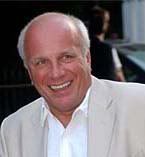
When "Paki" and other terms based on unalterable characteristics are used aggressively as insults or abuse, there's no excuse. But having watched the News of the World video embedded in the Telegraph report linked to in the first paragraph, the term doesn't come across as Greg Dyke - pot calling the kettle blackinsulting or abusive. Certainly the reaction in this country to a friendly gibe made in an Army environment doesn't bear any resemblance to the "British tolerance" which Gordon Brown assured the Indian people of when he visited to the sound of riots over the prolonged racist treatment of Shilpa Shetty in Celebrity Big Brother; and I certainly don't recall any Pakistani voice raised in protest when Greg Dyke, former Director General of the BBC, called the corporation "hideously white". I wouldn't be surprised if much of the present furore is coming from Brits who are as hideous and as white as the IRA supporters.
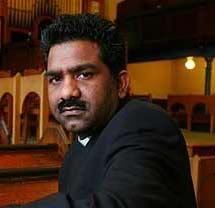
The then-cadet, who received the élite award of the Sword of Honour from the Queen at his passing-out parade and is now a Captain in the Pakistani army, has not made any complaint in the three years since the home-video was made. But his father, also an officer in the Pakistani army, has complained bitterly.

I rather think the father is more culturally Pakistani than the son, in the sense of being closer to the concept of Pakistan as an ethnocentric theocracy. One of Pakistan's founding fathers was Mawlana Abul A'la Mawdudi (1903-1979), who stated that Islam is

a revolutionary concept and ideology which seeks to change and revolutionise the world social order and reshape it according to its own concept and ideals.
I qReverend Mahboob Masih - victim of Islamic ethnocentricity (with thanks to the Telegraph and epicscotland)uote the above because of another story involving somebody born in Pakistan that broke on Sunday - and in my home town - showing that people from that country can definitely be genuine victims of discrimination. Reverend Mahboob Masih of Awaz FM, which serves the Asian communities of Glasgow, was debating the views of Zakir Naik, who states that Jesus is not the only person who is the "way, the truth and the life".

This may be a fair comment for a Muslim to make in the context of Islam, but Naik, who has been criticized by Muslims in his native India for issuing fatwas (sharia rulings) with no authority to do so, demands that Christians recognise Mohammed with the equal reverence that they afford to Jesus. Rev'd Masih defended Christianity, and found himself sacked by Awaz FM, which claims in its mission statement to be "the voice of Glasgow’s ethnic communities and their respective faiths" (my italics). The Telegraph's Andrew Alderson reports that the minister has "reluctantly" apologised in order to calm things down, but has refused the station's demands that he apologise in person at the city's Central Mosque, on the reasonable grounds of fears for his safety.

I don't think those fears are overstated. The Pakistani caller to Jeremy Vine's show atrequiescat in pace - Shabana (with thanks to the Telegraph)tempted to show how downtrodden Muslims were in Britain by stating that it was unacceptable to insult Georgina Bailley, but not to insult a Pakistani. I think he said more than he realised - namely, that in Islam, women are viewed as being worth something less than men. Case in point: today's Telegraph reports the murder of one of Pakistan's famous dancing girls called Shabana by the Taliban because the terrorist organisation considered her dance too erotic. Given that Georgina Baillie is a burlesque dancer, I hope the remark wasn't meant to be as sinister as it sounded.
I hope also that Prince Harry gets what he deserves - a bollocking directed at stopping him from putting daft remarks on tape, especially when that tape might fall into the hands of papers owned by the anti-monarchist Rupert Murdoch.

You can take that as the authentic ethnic view of an honest Jock. (I changed a washer today...does that make me Jock the Plumber?)

jock the plumber?

The Jeremy Vine show referred to in the second paragraph can be accessed until Sunday 18 January 2009 - click here

Saturday, January 10, 2009

what choice really means


In the Telegraph today, Richard Savill reports on something that has happened since time immemorial, and, I imagine, will continue to do so until Kingdom Come: two (then) sixteen-year-olds fell in love, and the girl became pregnant.

I'm not condoning it, but neither am I condemning it - I believe that one of the many things Christianity is about is dealing with the situation we have on our hands right now, and not getting lost in the if's, could's and should's.

Not that getting lost doesn't happen - I remember a family where the daughter became pregnant before she married her fiancé: they subjected her to an extended guilt trip at a very vulnerable part of her life, and the repercussions of this have rolled out for more than a decade to the extent that the family is effectively split.

Anyway, the two were boarders at an independent co-educational school, which has a policy that there should be no sexual contact between pupils. It appears that the pair were given condoms from the school's medical centre, which is independently run. Is anybody starting to see an inconsistency here? The girl's Mum, a practicing Christian, puts it in a nutshell: "If you hand out condoms, you’re saying, ‘Go for it’".

When the school's medical officer says “It is not the policy of the medical centre to offer unsolicited contraception”, he is saying nothing else than contraception will be given when solicited - ie you ask for it, you get it. This puts in context something the National Children's Bureau (NCB) said last November in context, and it's a frightening context:
Every 11 to 18-year-old in England should be able to receive advice on contraception, pregnancy tests and screening for sexually transmitted diseases between lessons, according to [the NCB]."
In the US, the American Cancer Society has recommended that the HPV vaccine be given to girls as young as nine years old, dangerous in the light that some boys might try to persuade girls that this makes sex "safe", whatever they think that means. (And HPV transmission can be prevented just as effectively by circumcision - why do girls have to pay for selfish sexual behaviours which arise predominantly from boys with and in their bodies?)

Back over here, we learnt last October from Jim Knight, then schools minister, that pupils will get basic classes in identifying body parts in the first few years of primary school - potentially from the age of five. A teacher sitting with children just out of infancy and teaching them the proper names of the genitalia using pictures is something that could have landed said teacher in prison in the not too distant past, and might still end in prosecutions.

Anyway, something miraculous is happening with our couple. They have since split up, but she has chosen to keep the baby, and he wants to be involved. Both sets of parents are supportive. Deep in Westminster, I'm sure a eugenicist is in a hellish rage, and a social engineer is cursing traditional families for not being as broken as he feels his efforts merit.

She's been excluded from school, but is being allowed to study for her exams at home. That's good, but I wonder if allowing her to attend classes as she becomes ever more heavily pregnant might not be a more valuable piece of sex education for all concerned than showing infants dodgy pictures.

I hope things go well for them, especially for her and the baby. I pray that God will turn His countenance towards them and give them peace. On that subject, I haven't given as many links as I might have for a reason.

And finally: what do seventeen-year-olds know about responsibility that many of our political masters have forgotten?

Wednesday, January 7, 2009

Claire Sweeney's big fat...

I remember a relative of mine who once had anorexia nervosa. She thought she was really ugly. Coming from a branch of the family where all of us are a bit pudgy, I once remarked to her that she must think I was ugly, at which she explained, stumbling somewhat, that she thought the ugliness pertained to her alone.

So, bearing in mind that body-image is a hall of mirrors within a forest of uncertainties, I took a call from a friend of mine with some trepidation. He has a daughter who has a fascination with serial dieting punctuated with overeating that, he fears, is teetering along the edge of becoming an obsession. He doesn't have a computer, so asked Maxima and me to have a look at a documentary about a starlet who goes on an extended eating binge to see what the effects on her body might be.

Claire Sweeney starred in the British soap opera Brookside and later in Celebrity Big Brother (pre-racism), after which she got roles in acting, presenting, and in musicals. The documentary I was contacted about was aired on ITV on Tuesday, 7 January, and was called Claire Sweeney's Big Fat Diet.

Sweeney, who was briefly bulimic after a crash diet as a teenage dancing student, spent six weeks eating what she wanted while also ceasing her punishing exercise regime. During the six-week period she woould go into restaurants and look at the menu, something she would never have done beforehand in order "to avoid temptation".

Coming from Scotland I'm an expert in chips, which Sweeney ate in spades, using more tomato ketchup than even a Scot could shake a stick at, drank more alcohol, and at one point complained that she couldn't see her feet. I know an easy way to see your feet: sit down and stick your legs out.

A doctor who monitored her health at some points through the experiment remarked that at the end of the six weeks her blood-pressure had rocketed up, which would put her at an increased risk of heart-attack and stroke should it remain high for a prolonged period. This obviously sounds concerning, but, despite the programme's good intentions, it seemed to be far more about appearance than health.

For example, Sweeney went to Los Angeles, "a city where thin is in". She visited a plastic surgeon's office, who possible said more than she meant to when she admitted that "here in California we [in the film industry] like a little more boyish bodies...it's a commentary on society".

I don't blame the surgeon for this, nor do I totally blame the film industry, although the latter certainly plays its part in deconstructing traditional Western values and society. I blame the international fashion industry, whose svengalis, for their own questionable reasons, like to take girls in their late teens and make them look barely-pubescent - which erupted in the recent heroin-chic controversy; fitness trainer David Kirsch has remarked that he's met models who are "struggling with a serious eating disorder". Indeed, Sweeney visited former Hollywood casting director Pamela Shae, from whom she discovered that not only that her new curvy body would qualify her for a "comedy" role, but also that were she to take on a role in a series looking thin but then gain weight, she would be reprimanded.

In the end, we are informed that Sweeney went back to her training regime and lost the weiMarylin - a real womanght, but at least she gained two pieces of wisdom: firstly, that the urge to slim down is more due to peer-pressure than to any desire to become attractive in any sense, and secondly - a stunning insight into the male psyche - "men seem to like curves". She's not wrong - a dress of the most famous female sex symbol ever, Marylin Monroe, was auctioned and found to be a size 16.

So I won't be recommending this documentary to my friend, because Sweeney's obsession with her appearance, as opposed to her health, appears liable to trigger girls (and boys) who may be on the verge of developing an eating disorder.

OLouise Redknapp: click to read about the dieting experiment that nearly killed herf much more merit, I thought, was a documentary made somewhat earlier by British singing star and presenter Louise Redknapp (née Nurding), in which she endeavoured to diet until she reached size zero (which I believe is UK size 4). During the course of this she became depressed and lachrymose, and seemed herself to border on developing an eating disorder as the control she experienced over her body became more valuable than just about any other consideration. Catwalk Queen comments:
It really is impossible to get the message through to the fashion industry that size zero is NOT attractive. Stella McCartney and John Lewis might be trying to change things by using larger models, but we have a long road ahead of us. Though I can't imagine fashionistas taking advice from a woman who used to be in a girl band, hopefully Louise's documentary will make impressionable young girls think twice about crash-dieting to get down to skeletal proportions. Is being super-skinny really worth losing the light in your eyes and alienating your loved ones?
While Redknapp's documentary was a valuable piece of research on dieting and its results with close medical control throughout - and included visiting a unit for girls with anorexia, the youngest of whom was twelve - Sweeney's was an opportunistic piece of awareness-raising about Sweeney, which was funded by Weightwatchers. I don't wish to take this outfit to task too robustly, as I believe it has a responsible attitude to prospective clients with body-image problems and donates to the British Heart Foundation, but I am worried about a documentary, to which girls with body-image issues will be attracted like barnacles to the hull of a ship, being effectively sponsored by an organisation which exists to help people lose weight in return for money.

Besides the documentary, Sweeney has just made a fitness DVD with Weightwatchers, featuring Click to go to Harvey Walden's webpageher personal trainer, Caroline Sandry, who also appears in Sweeney's documentary. Do I detect a covert selling campaign dressed up as concern for people's health?

There is, fortunately, some good sense out there. While Sweeney's plastic surgeon said that cosmetic procedures were not so much drastic actions as routine maintenance, former US Marines Drill Instructor and fitness instructor Harvey Walden calls it "lazy and invasive". One of my favourite politicians, Anne Widdecombe, investigated diets and expressed concerns over "who it is that decides what this perfect image is".

As the Greeks said, everything in moderation; and in the world of food, that includes moderation.

Related posts:
Abigail Blackburn and the truth about pregorexia

Body image isn't all it looks like

Tuesday, January 6, 2009

a hero is honoured

Detective Constable Stephen Oake RIP Detective Constable Stephen Oake was a brave man. On an operation to arrest a relatively lowly Al-Qaeda associate, he was faced instead with failed asylum-seeker Kamel Bourgass, whom the Telegraph's Nigel Bunyan describes as "a trained assassin and one of Osama bin Laden's most ruthless followers". Protecting his colleagues, he received eight knife wounds, three of which were enough to kill him individually.

Shortly after his death in January 2003, he was nominated for the Queen's Gallantry Medal. And he got it - in January 2009.

So what happened? Basically the George Cross Committee, composed largely of senior civil servants, decided that DC Oake didn't meet the "extremely high" criteria for this award. Basically they were saying that, in taking on a senior member of the organisation which was happy to fly aircraft into the Twin Towers of New York and bomb public transport in London, he wasn't brave enough - directly the opposite of what was written by former Labour Prime Minister Tony Blair when he closed the online petition, signed by 8000 people, to have the medal awarded.

It seems twho cries for Israel? Click and have a readhat liberal-socialist control of means of communication is an attempt to cut a democracy off from the very stuff of its life - access to the truth. Case in point - in Cambridge, Liberal Democrat MP David Howarth attended a rally to highlight the "siege on Gaza for the last 18 months", without any mention of the approximately 5,000 rockets which former Foreign Secretary Sir Malcolm Rifkind states have been fired at civilian targets in Israel from Gaza over the last 3 years, many smuggled from Egypt. (Backspin is currently liveblogging the ferocious media war surrounding the Gaza campaign.)

DC Oake died a martyr to the cause of preserving our democratic heritage against many-faced dark forces who hate tolerance, peace and, above all, freedom. The fact that the campaign to honour him has not only pierced the most politicised civil service ever but troubled Government at the highest levels shows that his sacrifice was not in vain. But the question remains, how many terrorists are still living illegally in the UK as failed asylum seekers, waiting to create more martyrs?

read the eulogy from Stephen Oake's funeral service

Thursday, January 1, 2009

happy new year

the one and only source of home-made curried beansBoth Maxima and I are hoarders. She's not as bad as me - my hoarding habit is attributable to Adolf Hitler. During much of the Second World War, my Mum was bedridden with an illness, and, I suppose, was spoilt somewhat, with many of her family's ration-coupons for sweets making their way to her. Unfortunately, when she recovered somewhat, peacetime rationing was still in place, and she learnt the widespread habit of hoarding which she eventually passed on to me. The inconveniences my hoarding has caused our family would never have occurred if the Bavarian Farmers' League had carried the vote in 1933.


To be more specific, we were searching yesterday for a set of elephants'-feet to raise a chair for Professor Calculus, who we'd invited over for Hogmanay. Maxima and I searched the house from top to bottom with a heavy heart, and when we failed to locate them we had to face the awful truth: they were in the cupboard under the stairs.

With trepidation we opened the small door, and some nice boxes fell out. There was nothing in them, they were just nice boxes. Then we had to tease out the curved tubular thingy that was going to give me killer abs in five minutes, but failed dismally. Maybe I should have given it a full five minutes...Anyway, we pulled out this, that and the other until, with the elephants'-feet in sight, I came across my old stamp collection. I opened the case and pulled out some of the little books from the Brignorth Stamp Club, some with pages that still had stamps attached. I looked at Maxima to remark on what a fortuitous find this was, but when I saw her face I quickly put it all away and helped her get the elephants'-feet out. Then we had all the stuff to put back in - but that's another story.

We just had a small gathering of people, but it must have been a good party because it didn't just end up in the kitchen, it never made it out of there. Constanter and Honorata attended as well as Calculus, and to keep everybody happy we alternated Mozart, Dvorak and Saint-Saens with Bread, the Beatles and Fredericks, Goldman & Jones.

Somehow the conversation drifted to my culinary abilities, which for some reason the gathered assembly estimated to be about nil. I objected, saying that I could open tins and heat the contents as well as the next person. I was challenged to make a curry, and solemnly informed those present that I would make them curried beans. Midnight came, and with Calculus encouraging Constanter we joined hands and sang Auld Lang Syne. We talked for a while, then gradually a good night broke up, never to happen again, but leaving a lifelong memory and stronger friendships.

So now we have to get the elephants'-feet back into the cupboard under the stairs.

A guid new year tae yin and a', and many may ye' see.