Saturday, July 4, 2009

HPV vaccination: time to sever this severe mistake

click to view the side-effects of Gardasil as listed in the british National Formulary (requires registration)
Minima has come home from school with a form requesting permission to give her the vaccination against Human Papillomavirus (HPV).

Maxima and I sat her down and we talked about the reason HPV vaccinations are being offered, ie in order to protect girls and women from catching the virus, which can cause precancerous changes in the cervix, through sex. As Minima sets out on her walk towards womanhood, we're - although Maxima takes a leading role - in the process of having short, targeted talks about boys and sex in the context of Christian morality. Having sat across my table from a state-school teacher expressing her frustration at not being allowed to mention abstinence in sex-ed on pain of being disciplined for being "judgemental", I'm not keen for the state to stick its sociopathic nose in.

When I looked at the form, published by Cambridgeshire Community Services, the first thing I noticed was a spelling mistake in the sentence asking if Minima had a "sever Latex allergy", and wondered if the manager who rubberstamped the form was a veteran of Labour's educational reforms:
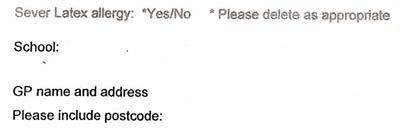
WHAT THE HELL IS A SEVER LATEX ALLERGY?

The back of the document asked for reasons should parents wish that their child not be immunized. I wrote that I'd send these under a separate cover, and that if Minima were vaccinated against HPV I would treat this as an assault.

The reasons for this are threefold:

Firstly, in order to make an informed decision regarding a medications given to their children, parents need good-quality information. This information is primarily about side-effects. No information at all is included on the form, merely a statement that for questions to be answered, "please contact the school nurse or other health professional or go to http://www.immunisation.nhs.uk/nhs. There, we are treated to less-than-comprehensive sagety information:
Is the vaccine safe?

The vaccine has undergone rigorous safety testing as part of the licensing process required in the UK and other European countries.

I'm sure it has done, but what I want to know is, what were the results of the safety testing, and who was informed of these results?

cover up: Seroxat, also known as ParoxetineThe reason I ask this is that it's not unknown for the results of safety testing to be withheld not just from the public but from doctors. For example, in 2001, a BBC documentary found that Glaxo Smith Kline had withheld from doctors the results of trials questioning the safety of the antidepressant Seroxat. Just so, an Australian report uncovered side-effects including paralysis and hallucinations relating to administration of Gardasil in that country, and the US educational foundation Judicial Watch forced the Government to release details of not onJudicial Watch: click to go to the homepagely 140 "serious adverse events" tied to Gardasil, including spontaneous abortion and the paralysing illness Guillain-Barré Syndrome, but also ten deaths. What else remains to come to light?

Secondly, in Great Britain we have the highest rate of teenage birth and teenage abortion in Europe - in other words, there's a lot of teenage sex happening (so I can understand my teacher friend's frustration at not being allowed to mention abstinence). At an age when memories of my teenage crushes seem to be at the far end of a long tunnel, I can understand that vaccination against two of the 30-40 HPV viruses that cause pre-cancerous changes that may lead to cervical cancer in the 10% of women who don't clear the virus spontaneously doesn't make sex "safe" (whatever that means); but to an individual caught in a hormonal vice and being hammered by the effects of abusive governmental policy on sex education, that conclusion may be difficult to reach.

Thirdly, I believe that there is a dignity inherent in being human which can be shattered by various acts, one of which is sex divorced of its proper context as an expression of love between a man and a woman who have taken a commitment to each other. Preferably before God, but as a minimum in public.

We shouldn't lose sight of our ideals for the sake of expedience, or because somebody might call us judgemental. So I will fight state-sponsored initiatives which harm children and families, and seek to present sex as a stand-alone activity that is unrelated to other aspects of life. As a Christian I realise that people of faith set high standards. These ideals aren't always met. US politician and soldier Carl Schurz put it best:
Ideals are like stars: you will not succeed in touching them with your hands, but like the seafaring man on the ocean desert of waters, you choose them as your guides, and following them, you reach your destiny.


Related post: HPV vaccination: the day I embraced Dawkins

Friday, July 3, 2009

national treasure

In Great Britain, there's a habit of calling somebody who's very good at what they do, and who captures the general mood at the time, a "national treasure". I would suggest that a genuine national treasure has just left us for a better place.

Liam Fairhurst was diagnosed with cancer aged 10 in 2005, and started fundraising for his fellow sufferers the next year, when his best friend died of the disease. He wasn't able to do a sponsored walk because Synovial Sarcoma precluded this - so he swam. He bothered top-level figures such as Sir Richard Branson and Prime Minister Gordon Brown in his crazy, blessed rush to ensure a future for fellow sufferers that he knew he would never see. To Mr Brown's credit, he kept in touch with Liam, and upon his death said:
Liam was a courageous young man who showed immense bravery in the face of his illness. It was a privilege to meet him - his dedication as a fundraiser was an encouragement to us all and I am very proud of what Liam achieved. His courage will be a continuing inspiration to all those that knew him. My thoughts are with his family at this sad time
Lord, please look with mercy on Your servant Liam. I suspect he has concentrated more people's minds on mortality than I don't know what.

Liam is the bravest boy I can think of. May he rest in peace - or, if it please You, may he be sent to shake us out of our complacency, as he did in life?

good boy - well done good and faithful servant

Tuesday, June 30, 2009

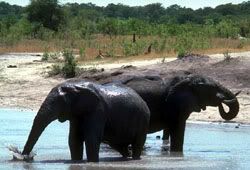
elephants, arthritis and euthanasia: inside nature's giants

elephants as they appear on postersMinima loves elephants: she has elephant posters in her room, pictures of elephants decorating the covers of her jotters, and was heartbroken, upon watching the last instalment of Lord of the Rings, to find that the baddies rode on elephant-like thingies with spikes.

So I was careful to phone home tonight, at the end of a late shift, to warn Maxima that I was going to watch a C4 show - to which I'd been alerted by the Telegraph's Urmee Khan - called Inside Nature's Giants, which, in the first of four episodes concentrating on autopsies on iconic animals, dealt with the post-mortem examination of a lame elephant. It's the first time in a while we've gotten Minima to retire without argument on her designated bedtime for a schoolday, but that's another story.


Not bAlun Williamseing oversentimental about dead animals, I nevertheless took no pleasure in seeing the grand old dame laid out. But she was treated with respect by the professionals, including the Royal Veterinary College's Alun Williams. Evolutionary biologist Simon Watt explained, with the aid of intelligent graphics, how animals representing various branches of the Tree of Life had tried to cope with reconciling a body high enough to house a vast digestive system with mouthparts that could reach water and high bushes but the elephant is the only surviving successful model.

I didn't have any problems with this, although I realise some of my coreligionists might. What made me feel concerned was that Richard Dawkins, society atheist and professional polemicist, had been invited to record contributions to the series, but added nothing of substance to Watt's informative expatiations.

One phrase of his that interested me was, when commenting on the tendency of male elephants to grow shorter tusks since being hunted for ivory by mankind, was that it was "evolution happening before our very eyes - it can happen very fast".

This was a view that Dawkins enthusiastically espoused in his first - bestselling - popular science book, The Selfish Gene, in catastrophic changes to the Evolutionary Stable Stephen Jay GouldStrategy he espouses in Chapter 5. Sometime after this, he discovered that he had reinvented Stephen Jay Gould's concept of punctuated equilibrium - that nothing much happens for a long time then everything changes - and was unkind to Gould in ways that could not be justified in a professional sense. In the 30th anniversary edition of The Selfish Gene, he admitted - in an endnote to chapter 5, that he had been "petulant" in his criticisms of punctuated equilibrium in his 1986 The Blind Watchmaker, and that "if this has hurt anybody's feeling, I regret it". Gould had been dead for four years. Dawkins absolves himself in finishing off the endnote: "my heart was in the right place".

There were fascinating insights into elephant anatomy and physiology, as well as footage of the beasts in the wild where they belong. Also shown was their irascible side. It was a pity Minima never saw this, as I'd have liked her to appreciate how God's creatures are in reality, now that she's graduating from comfortable storybooks.

Something that affected me was the sight of how elephants treat the remains of others of their kind when they happen upon them. They caress the skulls and lift the bones, in a display that suggested grief. The narrator suggested that they were trying to identify who the dead were. I can understand that: I never knew my Granny, Julia, but I remember an old woman from my childhood in the Ayrshire moors who knew me not by my name but as "Julia's daughter's son".

What concerned me was that, after this excercise in anthropomorphising our proboscid friends - which may have been justified to a limited extent - we were treated to several statements about the extent of the poor old girl's cartilage degeneration and how "the quality of life when you get to this level of arthritis is unthinkable". I'm sorry for her (I wish I'd noted her name), but my mother had severe arthritis in every joint for a couple of decades; I won't deny that death came as a friend, but that's by no means the same as averring that humans should be brought to his domain before nature is happy to call time on behalf of God. I've had a couple of dogs put down, because they did not have the capacity to try to apply understanding to suffering on behalf of themselves, let alone others. I grieved, of course, but to apply the same standards to people is to show a fundamental misunderstanding of why our species is called Homo sapiens.


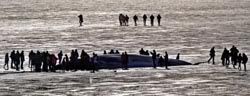
Generally, however, this was a very interesting program. I suppose Richard Dawkins generally behaved himself; it rethanks to the Irish Times for the pic - click to read their story about the beaching of a fin whalemains to be seen whether the same can be said of next week's offering, in which a fin whale is going to be autopsied in situ. Dawkins promises to reveal to us - in an opening salvo of a battle the Royal Veterinary College may not be eager to fight - "the delusion of design - it looks exactly like an engineer might have made it".

He's already got his first shot in: if we believe in a Creator, at a greater or lesser remove from the mechanics of His creation, we're deluded. I look forward to next week's programme, to hear his justification (if he deigns to give any) for why his faith in his own rectitude necessarily negates the beliefs of those he he labels as "deluded".

In the meantime, I quote a phrase of Charles Darwin's which I've never seen Dawkins referring to, as an indication of the former's breadth of intellect in the face of contradictions which would have pulled apart those who grasp fame at his coat-tails:
I feel most deeply that the whole subject is too profound for the human intellect. A dog might as well speculate on the mind of Newton. Let each man hope and believe what he can.


The first episode of Inside Nature's Giants may be viewed on the C4 website.


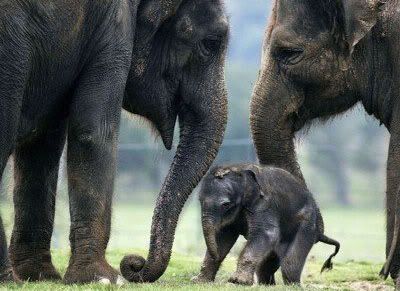
a family of elephants as they deserve to be left - with thanks to Getty images

Related post:Whales and unintelligent evolution: Inside nature's giants

Saturday, June 27, 2009

cocaine: heartless, soulless waste

The UK has just achieved an unattractive prominence: according to the Telegraph's Tom Whitehead, Great Britain is now the world's capital for cocaine use, says a UN report (which I haven't been able to locate on the organisation's byzantine site).

click to go the the Nottingham Trent University site detailing the award-winning program
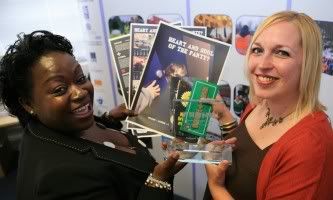
Ironically, we've just seen the publication of a report by Nottingham Trent University, in conjunction with the Nottingham Crime and Disorder Partnership, which focussed on an aspect of occaine-use that's often overlooked: the marriage of cocaine and alcohol to form a substance called coca-ethylene, which is toxic to the heart and the liver.

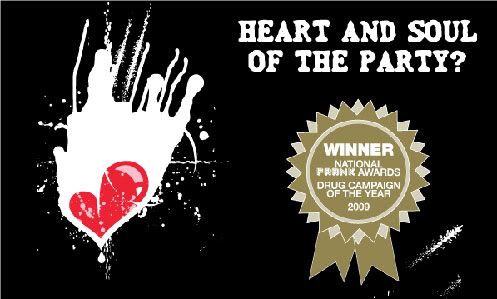
heart and soul of the party?The research, I think, hits the nail on the head with its title - Heart and soul of the Party? Unfortunately, I think many of us will have had the displeasure of seeing somebody emerge from the WC at a party or in a pub far more cheerful than when they went in, talking twelve to the dozen and on the edge of starting fights because they have lost any conception of personal space.
The worst thing is - I heard again and again from users trying to recover when I was a drugs worker - it feels that one can drink the place half dry and not feel that one is drunk. Not feel is the operative phrase: co-ordination might be less affected than if one had not had cocaine, but judgement goes right out the window, leading to more consumption of alcohol/cocaine and impulsive behaviour like fighting, or sex that is often unsafe and may lead to an unwanted present being transmitted to one's partner. (And that's assuming that the sex is consensual.)

The reason I mention sex more than once is that cocaine affects the brain by piggybacking on the reward system in the midbrain that makes sex, for one thing, feel enjoyable. The desire to take cocaine very soon inserts itself, cuckoo-like, as a drive. That's why the damn thing's so addictive that the brain doesn't really settle down until after about six months of abstinence.

That's the reason I spit feathers when I read articles by liberal-minded journalists who chide society - whatever they think they mean by this - for criminalising black people who take crack (the smokeaFrancisco Santos Calderón, Vice-President of Columbiable form of the drug) while turning a blind eye to white people who use cocaine. (I speak as somebody who met one black crack user in many years in the job.) The reason for my reaction is that if we see the council estates raided, then shouldn't we see the same happen to the Stock Exchange and the bankers' parties (like the one which saw the birth of derivatives)?

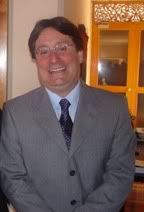
I can't disagree with the vice-president of Colombia, Francisco Santos Calderón (left), that "Every user that snorts a gram of cocaine kills 4.4 square meters of rain forest"; so I wonder why Minora comes back from school reciting the relative prices Colombian farmers can make for cocaine and traditional crops.

Cambridgeshire Constabulary - click to go to the Force home-pageI think that Cambridgeshire Constabulary is going down the right road by squeezing pubs with a name for cocaine use with an amalgamation of new technology and old-fashioned policing. As Operation Ortolan, mounted some years ago, showed, big fish and small fish are relative: in the end, there are only fish, some bigger than others, most aspiring to become bigger than they are. The Force's drugs lead, Chief Inspector Gary Goose, said:
"The dealing of heroin and cocaine is an appalling trade. It destroys people's lives and can also make life a misery for those who become a victim of associated crime such as burglary, robbery and anti-social behaviour. We do not want our communities to suffer the effects of drug misuse and we will do all we can to make the city a safer place to live and work.
The lesson of all this can be found, I believe, in Genesis 3. I've heard users say many times that they wished they'd never tried cocaine: there's such a thing as forbidden fruit.

And well done to the Nottingham Trent University students who have worked with Nottingham Crime Disorder Partnership to bring out this timely report. You can read a summary of it at Drink and Drug News.

Monday, June 22, 2009

normal service has gone for a burton again

I'm writing this quickly at work: Minora's trying to repair Windows, which doesn't want to let our computer speak to the Modem. Watch this space...patiently!

Friday, June 19, 2009

abortion advertising: how about a level playing field?

Today, there was a silent vigil outside the offices of the Advertising Standards Authority in London. The reason was a planed change in rules on standards for adverts relating to sexual health that will allow adverts for abortion clinics to be aired on TV.

I say "silent" at the earliest opportunity because other sites are markedly omitting the word. Here's how the Marketing Week website presented the protest two days before:
The Advertising Standards Authority is bracing itself for an eight-hour demonstration by anti-abortion campaigners as its consultation on changes to the advertising code of practice draws to a close.
I've made my position clear in the past: advertising abortion clinics is fine by me, if the field is level - ie, if the side-effects of abortion are allowed equivalent publicity. But although many pro-life sites will ably demonstrate that this is not so, I would go to source, and refer you to the Marie Stopes publication abortion your questions answered [sic]. This is a 12-page document claiming to lay out a woman's options regarding pregnancy, but only on page 3 do we see the options of continuing with the pregnancy in order to keep the child, or to adopt out. After this point, it's all about abortion - which, to me, seems a little dodgy given that Marie Stopes makes a lot of money around the world by providing abortions.

So - why am I against abortion? Isn't it a woman's right to choose what she does with her body?

I would answer the second question with a definite yes. But I remember, in the 1980's, when pro-abortion politicians were asked the status of unborn babies, they would reply that they were "tumours". (I remember - then - London councillor Linda Bellos saying exactly this on a political programme called Question Time.) How can allegedly intelligent people fall at the first hurdle of Science 101? Once spermatozoon and ovum have fused, you have a genetically discrete entity which cannot be equated with mother or father. Kill a human being at this stage and you can kill him or her at...well, just keep an eye on the news.

As to the first question - I am against abortion because of the attrition it inflicts upon human beings, not least mothers. Through Radagast I found a site called Teen Breaks, and saw the frst entry:
I was pressured to have sex, and did it, and got pregnant, and I’m only 13. Well, I just turned 13!! And I got an abortion.

It was sad and very scary, and I haven’t been the same since. I hated it so damn bad...and I used to be the head cheerleader, and I loved it, but now I’m quiet, and I don’t talk very much or anything
I believe these testimonies are invaluable, because they are the antidote to Stalin's dictum that when one person dies it's a tragedy, but the death of thousands is a statistic. So let me add another tragedy:

My friend Kathy (not her real name) had been delighted to find she was pregnant; I'm still not sure, all this time after, why she had an abortion. She seemed ok with it initially, but as the years passed and the chances of having another child receeded, she gravitated ever more towards groups formed of mothers in order to try to become one of the group: she was desperate to be called a mother. The thing is, had she, God forbid, committed suicide, would it have been registered as having been due to her abortion, which was so many years ago?

At the end of the day, should the ASA decide that adverts for abortion services be allowed, the test of democracy will be twofold: firstly, will adverts for pro-life organisations that give women some time to breathe be allowed; and secondly, given that abortions are predominantly funded by the state, will abortion adverts be forced to carry warnings about the many side-effects that have been proved to accompany this procedure, whether immediate or long-term?

Tuesday, June 16, 2009

top ten songs about ghost stories

We are a narrative species. Storytelling forms as much of the human experience as eating, breathing and sleeping, and ghost stories are an intrinsic part of this. What lies beyond? What if...? What comes after? It's a way of weaving a skein of fables which, when told with the greatest skill, forms a mirror that reflects back not just the facts of our existence but also the hopes and fears we're sometimes circumspect about speaking out loud. For example, when Jesus - a master storyteller - answered the Sadducees' question about what might happen to a widow who had been married to seven brothers in the afterlife, I bet you couldn't have heard a pin drop among his audience.

Without further ado, please let me share my own top ten ghost story genres in song with you.

10 - Obsession

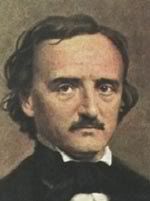
Edgar Allan Poe - click to go to the website of the Edgar Allan Poe Museum of Richmond, VirginiaThe song is from the Alan Parson Project's seminal 1976 album Tales of Mystery and Imagination, named after a collection of Edgar Allan Poe's short stories and poems. The poem of the same name concerns a young man who is morbidly devoted to his lost love Lenore, who the poem implies has died, and is seeking occult ways to have her returned to him. The video matches the mood of the poem exactly, and I would thoroughly recommend reading Poe's original poem.


9 - Love


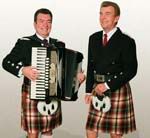
Tom and Jack Alexander: click to go to the Alexander Brothers' websiteScottish piano-accordian duo The Alexander Brothers had a huge hit with a sentimental ballad called "A Daisy a Day". In many ways the story behind the song, of a man who uses a simple gesture to demonstrate that he still loves his woman who's passed away and whom he's known since childhood, is the opposite of The Raven. It is devotion looking upwards, without the obsession that turns everything it touches sinister.

I'd thought that the brothers had written this song, and so was surprised to learn that it was penned by Jud Strunk, the song having been so popular that it was taken to the Moon by the astronauts of Apollo 17.


8 - Possession

Chris de Burgh: click to go to his official website
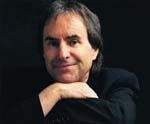
Chris de Burgh's The Tower is a classic parable of knowing somebody's value only once they've gone. From his concept album Spanish Train and other Stories, it merges warnings against encroaching upon God's creation too much originating from medioeval times with his own story about a nobleman who wanted to possess a beautiful, mysterious woman so much that he only realised too late that he had been in love with her.


7 - Generosity

Here we have Uriah Heep in their incarnation as 1972 fashion victims, singing one of a spate of songs at the time based on imagined meetings with Gandalf/Merlin etc. It's a plea for healing and looking at one another's similarities instead of difficulties. It's a nice thought, and possibly came true for a bright shining moment with the release and presidency in South Africa of Nelson Mandela, who - a friend of mine from the country reminds me - could have initiated a bloodbath with a wave of his hand.


6 - Horror

Blue Öyster Cult released Nosferatu to close their 1977 Spectres album, and is based on the film of the same name. Faithful to the film, which was based on the novel Dracula in 1922 and remade by Werner Herzog in 1979, it contains the risk to the vampire from a woman who is "pure in heart".


5 - Wonder

click here to go to the Vaughn Monroe appreciation Society webpage to see the breadth of his achievements
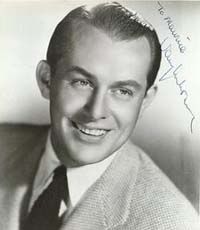
More played as an instrumental than a song, this is the tale of an old cowboy who sees a posse of cowherds chasing the devil's herd in the sky, finishing with instructions to the old boy to change his ways in order to earn a different fate. Enjoy this wonderful video to Vaughn Monroe's 1948 recording of the Stan Jones song.


4 - Payback


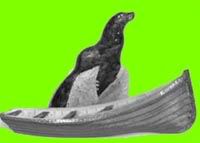
The Great Silkie [seal] of Sule Skerry is a story that originated among the Norsclick to read about the song on Roger McGuinn's (ex-Byrds) sitee people which they took further afield to, for example, the Orkneys and Newfoundland, and is now a staple in the folklore of many communities that depend upon the sea. The story goes that one night, a seal came ashore and became a man, and fell in love with a beautiful, mysterious woman. Soon afterwards, as he was returning to the sea and his natural state and leaving her pregnant, he has a vision that his child will be a boy who will gow up to be a seal-gunner, and his first kill will be his father. The video posted reflects the tale's international nature, with American Judy Collins singing and Irishman Tommy Makem on the penny-whistle. The story she sings is very slightly different, but you'll still get the point.


3 - Reward

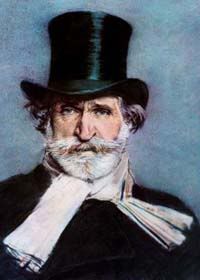
Giuseppi Verdi - click to read a biography
During the state funeral procession of composer Giuseppi Verdi in 1901, the crowds spontaneously broke into what is still his best-known piece - Chorus of the Hebrew Slaves, better known by its opening two words, Va, pensiero (fly, thought, on golden wings...). It's a meditation on Psalm 137, in which the slaves in Exile sing their children to sleep with tales of Israel. I bottled out of posting the partly-translated version by Italian guitarist and vocalist Zucchero with Luciano Pavarotti, but couldn't find an orchestral/choral version with sound quality that did it justice. So here's a compromise: a partly-translated version by Russell Watson, backed by orchestra and choir, telling the story of ghosts who are gone but by no means forgotten, and whose reward we all reap.


2 - A community of ghosts

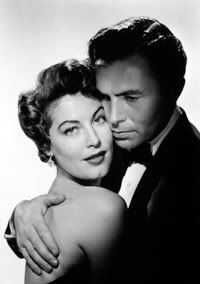
click to visit Jim Willsher's page on Runrig's 'Heartlands' album, from which the song is taken (pic: Ava Gardner and James Mason in the Flying Dutchman)
There's a breadth of tales about the ghost city, ship or train which is apparent for a while, then disappears - for example Brigadoon, Pandora and the Flying Dutchman or indeed Chris de Burgh's Spanish Train. This one, about a ghost market, is by Runrig and is in Scots Gaelic. You can see both Gaelic and English lyrics here - scroll down until you come to "The Hill at the Market Stance", which is the translation of the title. (The only decent video I could find aboutthe song is prefaced by an explanation by songwriters the MacDonald brothers about the ghost-story behind the song, and segues into another song which, in a sense, is about our ghosts.)


10 - What comes after?

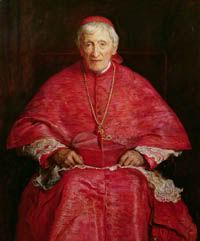
portrait of Cardinal Newman: click to go to the website of the Cardinal Neman SocietyThe Dream of Gerontius is assumed by many to be "by" Edward Elgar - he wrote the score, which is achievement enough, to the poem written by John Cardinal Newman in 1865, 20 years after he had converted to the Roman Catholic Church from the Anglican Communion; some say he's due to be canonised next year - talk about upward mobility!

Gerontius, very (too) briefly, follows an old man through the gates of death and to the throne of the Most High, whereupon he realises that God's goodness is so great that to stand in His presence in unpurified form will be destruction, and is taken to the soothing lake of Purgatory, where the Angel who has accompanied him tells him: "Angels, to whom the willing task is given,/Shall tend, and nurse, and lull thee, as thou liest;/And Masses on the earth and prayers in heaven,/Shall aid thee at the Throne of the most Highest." This is a very excerpt sung by Janet Baker:


Related posts: click here for more top ten songs about...