Sunday, April 4, 2010
he is risen...happy Easter!
Click on the image below to read the Resurrection story in the Gospel of Luke.


on the trail in Trumpington
UPDATE: click here if you're looking for "Trumpington Bible"

In the photo above, from left: Andrew Lansley, Shadow Secretary of State for Health, Lara Hillman, candidate for City Councillor for the Abbey Ward in Cambridge, and Nick Hillman, Prospective Parliamentary Candidate for Cambridge; taken in Brookside, in the Trumpington ward of Cambridge.
 Going to Trumpington Waitrose to meet Nick Hillman - Prospective Parliamentary Candidate) for Cambridge - for a letter-drop explaining a boundary change, I was delighted to meet Nick's wife Lara, who is standing to become a Councillor for the city's Abbey ward. I have to admit a stereotypical male reaction on meeting an obviously pregnant woman in asking whether she might need some rests while walking about, which she handled with very good grace, considering the weight I'm carrying myself.
The letter was from Shadow Health Secretary Andrew Lansley, explaining that the village of Trumpington will no longer be part of his South Cambridgeshire Constituency but pass to Cambridge City which, hopefully, will be turned blue by Nick Hillman on Election Day.
 Look to the panel on the top right to see a countdown to how long we have to wait until that day. Since Gordon Brown bottled out of an autumn 2007 election that he might well have won through the "honeymoon effect" of his just having taken over from Tony Blair, he must be thinking back to 1979, when James Callaghan went right to the wire and lost to Margaret Thatcher after a humiliating vote of no confidence which he lost by one vote.
Mr Lansley had been in the news yesterday criticising the Government for not making vital cancer-treating drugs available on the NHS; but, like any responsible MP, Lansley cares deeply about his constituency and says in his letter, which he came to Trumpington to hand to the Cambridge team:
 As Andrew Lansley indicates, Nick Hillman works closely with David Willetts, who is the Shadow Minister for Universities and Skills. I hope to see Nick Hillman and David Willetts working closely together with Michael Gove, presently Shadow Secretary of State for Children, Schools and Families - who has challenged a major teaching union to "put its own principles into practice by setting up its own school" - to help us al
 l create a society where, Gove stated at this year's Conservative Party Spring Conference in Brighton, "Education is at the heart of change."
It was interesting to see the cosmopolitan nature of the ward in the streets around the Panton Arms, houses side-to-side with student accommodation and University buildings. I saw a few students going about their business and reflected that Labour had brought education back to the state which prompted James Callaghan to deliver his Ruskin speech in the Oxford University college, one of his first acts upon taking over as Prime Minister in 1976 after the sudden retirement of Harold Wilson, in the middle of the Labour term that mirrors the present one in ending so chaotically. Callaghan wrote about the speech in his 1987 autobiography Time and Chance:
In the photo above, from left: Andrew Lansley, Shadow Secretary of State for Health, Lara Hillman, candidate for City Councillor for the Abbey Ward in Cambridge, and Nick Hillman, Prospective Parliamentary Candidate for Cambridge; taken in Brookside, in the Trumpington ward of Cambridge.
Going to Trumpington Waitrose to meet Nick Hillman - Prospective Parliamentary Candidate) for Cambridge - for a letter-drop explaining a boundary change, I was delighted to meet Nick's wife Lara, who is standing to become a Councillor for the city's Abbey ward. I have to admit a stereotypical male reaction on meeting an obviously pregnant woman in asking whether she might need some rests while walking about, which she handled with very good grace, considering the weight I'm carrying myself.The letter was from Shadow Health Secretary Andrew Lansley, explaining that the village of Trumpington will no longer be part of his South Cambridgeshire Constituency but pass to Cambridge City which, hopefully, will be turned blue by Nick Hillman on Election Day.
 Look to the panel on the top right to see a countdown to how long we have to wait until that day. Since Gordon Brown bottled out of an autumn 2007 election that he might well have won through the "honeymoon effect" of his just having taken over from Tony Blair, he must be thinking back to 1979, when James Callaghan went right to the wire and lost to Margaret Thatcher after a humiliating vote of no confidence which he lost by one vote.
Mr Lansley had been in the news yesterday criticising the Government for not making vital cancer-treating drugs available on the NHS; but, like any responsible MP, Lansley cares deeply about his constituency and
says in his letter, which he came to Trumpington to hand to the Cambridge team: [The boundary change] is sad for me. I lived on the High Street in Trumpington for five years. I have been involved in many issues locally and have got to know well many people and organisations. It will be hard to hand over. But, when I do, I hope it will be to Nick Hillman, who is the Conservatives' Prospective Parliamentary Candidate for Cambridge City. I have known Nick for several years. Living in Cambridge, a former teacher at Hills Road Sixth Form College and latterly the Conservatives' leading advisor on policy towards Universities, Nick is brilliantly well qualified to be the Member of Parliament for Cambridge.
As Andrew Lansley indicates, Nick Hillman works closely with David Willetts, who is the Shadow Minister for Universities and Skills. I hope to see Nick Hillman and David Willetts working closely together with Michael Gove, presently Shadow Secretary of State for Children, Schools and Families - who has challenged a major teaching union to "put its own principles into practice by setting up its own school" - to help us all create a society where, Gove stated at this year's Conservative Party Spring Conference in Brighton, "Education is at the heart of change."It was interesting to see the cosmopolitan nature of the ward in the streets around the Panton Arms, houses side-to-side with student accommodation and University buildings. I saw a few students going about their business and reflected that Labour had brought education back to the state which prompted James Callaghan to deliver his Ruskin speech in the Oxford University college, one of his first acts upon taking over as Prime Minister in 1976 after the sudden retirement of Harold Wilson, in the middle of the Labour term that mirrors the present one in ending so chaotically. Callaghan wrote about the speech in his 1987 autobiography Time and Chance:
Industry complained that some school-leavers did not have the basic tools to do the job and many of our best-trained students from university and polytechnics had no desire to join industry. Why was this?...Were we sacrificing thoroughness and depth of courses in favour of range and diversity?Lara was a bundle of energy: the people of Abbey will be well-served should they elect her as their City Counsellor. She and Nick gave me a lift back up to Waitrose so I could pedal frantically back to catch the start of Doctor Who, which I almost managed. Settling down to turkey-roll, and chips, it made me feel slightly guilty to think that Nick and Lara still had their sleeves rolled up and were working hard. I hope, for all our sakes, that they are elected in May.
Friday, April 2, 2010
top ten songs about england for 56k modems
Clikc here to go to Top Ten songs about England for broadband
I can't pinpoint when I became an Anglophile; my Mum and I would go to Blackpool frequently when I was young, but during the traditional "fair fortnight" holiday the Lancashire coastal resort would essentially turn Scottish in what remains of Scotland's support for the House of Lancaster during the Wars of the Roses, the price of cooperation having been Berwick (which soon returned to England).
I first lived in England after marrying Maxima, who comes from the other end of the Fens. After a spell we went and lived in Glasgow as my mother was very ill and, after her death, came to the Draughty Old Fen when offered a temprorary job here; when it became permanent the family moved down - it was a good move.
Although Maxima was regularly sent to coventry in Scotland because she's English, the situation has never been reciprocated here. I find the English warm-hearted, supportive and generous, despite their having laboured under an administration that for twelve years has tried its best to chip away at its best-loved traditions, the latest victim having been Pooh sticks, ostensibly cancelled for health and safety reasons.
I will always retain a level of affection for Scotland, but my guttering loyalty to the country was finally extinguished when the Lockerbie bomber, Abdelbaset Ali Mohmed Al Megrahi, was released for political reasons. Remembering TV pictures of the approaches to the Borders town choked with ambulances that would return empty, I felt sick.
Having deconstructed the notion of "race" to the level that, the Establishment says, your race is what you decide it is, one might make a good case for "English" to be a race, although in the diversity-ridden alternative universe presently prevalent in the corridors of power I suspect that one would be a non-starter. But if I called myself English, my accent would betray me the moment I opened my mouth. However, I definitely feel more British than Scottish, and will continue to do so should Scotland go its own way to make the United Kingdom into, says Alex Salmond of the Scottish National Party, the United Kingdoms.
I love England. And so, I would like to offer you a Top Ten about this wonderful, kind race: the English.
In England, where my heart lies..."

Paul Simon toured England in the early-mid 1960's, and famously spoke of his wish to voyage Homeward Bound, which he wrote while stranded at Widnes train station. "Home", of course, meant America, but it also referred to Kathy Kitty, the English girl he'd fallen in love with (hence the line "Kathy I'm lost" in America. Like many before and after he also fell in love with England - see the reference to "Cathedral bells" etc in To Emily, wherever I may find her. Here's the late Eva Cassidy singing the song live, including the classic reference to "England, where my heart lies".
http://www.youtube.com/watch?v=5G860hkE0Tc&feature=player_embedded
Dirty Old Town
Lancashire songwriter Ewan MacColl, father of Kirsty, wrote Dirty Old Town about Salford, a suburb of Manchester, where he was born. Written in 1949, it was immediately adopted and made famous by the Dubliners, and subsequently by bands all over the English-speaking world in an example of the way English culture can go international in a heartbeat, although the socialist songwriter may not have liked to think of it that way. Luke Kelly, Dubliners founder member, sings it with his band here, displaying the English-Irish cross-pollination that has enriched both countries for centuries.
http://www.youtube.com/watch?v=KSDzOKPvedc&feature=player_embedded
Zadok the priest
 This great anthem was written by Handel for the coronation of George II in 1727. Since the union of he Crowns of England and Scotland was in 1603, and the Act of Unions uniting the two countries' Parliaments in 1707, one could say that this is a British anthem. But should Scotland secede from the Union, it will be up to them what heritage from the Union they take: I hope that Zadok the Priest - based on 1 Kings 1:38-40 - is retained by England, even if it should be duplicated elsewhere.
http://www.youtube.com/watch?v=QCHUCMiJ_Ew&feature=player_embedded
From Brixton to another place
Electric Avenue is a thoroughfare in Brixton linking two roads full of stalls, just like you might see in Eastenders. As cosmopolitan as it is, the video of Eddy Grant singing about the street suggests that its inhabitants and patrons might like, maybe just once in a while, something else.
http://www.youtube.com/watch?v=UA5MtAmT24g&feature=player_embedded
Preotecting the old ways...
Yorkshire folk singer Kate Rusby covers the Kinks' 1968 hit The Village Green Preservation Society for a series called Jam and Jerusalem, which was modelled on the Womens' Institute, formed in 1915 to revitalise rural communities, but which now has a vital message for women and girls everywhere.
http://www.youtube.com/watch?v=iRK6U5vIHCs&feature=player_embedded
Burn them down?
 The Jarrow March was a heroic peregrination from Jarrow, near Newcastle, to the Houses of Parliament, to protest against the unemployment, poverty and even starvation that followed the collapse of the US stock exchange in 1929. In Alan Price's song about the event we hear him put himself into the song in a deconstructionist manner; but, more than that, while the majority of marchers wanted a job, we hear him echoing the cries of the vocal minority to "burn them down" - which prefigured the minority in the Miners' Strike of 1984-85 for whom a sedttlement of better pay and conditions would have been a disaster, because they wanted nothing but régime change.
http://www.youtube.com/watch?v=tlMjSESoz9A&feature=player_embedded
Cricket
It was sad to see that Cambridge University's Emmanuel College was forced to desist from holding a May Ball in praise of the British Empire. Nobody's going to support the Amritsar Massacre, but Britain - and England - spread abroad a culture that continues to refer back to the English way of life where, as poet Rupert Brooke asked, stands the church clock at ten to three? A sign of this culture, visible in India, Pakistan, the West Indies, Australia and New Zealand, is cricket: and here is the tune that has accompanied English cricket on TV for decades - Soul Limbo by Booker T and the MGs.
http://www.youtube.com/watch?v=67xXbTaQlKI&feature=player_embedded
Queen of Bollywood
This is Asha Bhosle singing for the BBC - enjoy.
http://www.youtube.com/watch?v=3oj2vvCUwHc&feature=player_embedded
The seaside
 The fascination for the seaside grew exponentially at the end of Queen Victoria's reign, and still remains. As well as Blackpool, there were Skegness, Brighton, Torquay and many other resorts. After a fallow period, English seaside resorts are becoming more popular due to the recession, as it becomes relatively more expensive to go abroad. (Study the video below and you'll see Brian May.)
http://www.youtube.com/watch?v=QWhdx6OB_uc&feature=player_embedded
Fisherman's Friends
The Fisherman's friends, of Port Isaac in Cornwall, were founded to support the Royal National Lifeboat Institution in a part of Britain where it's all too easy for boats to go missing. If you like what you hear, please think of the men and women who give so much to bring us fish, and of the men and women who are ready to sacrifice everything when something goes wrong.
http://www.youtube.com/watch?v=93wjsRsz1cI&feature=player_embedded
I can't pinpoint when I became an Anglophile; my Mum and I would go to Blackpool frequently when I was young, but during the traditional "fair fortnight" holiday the Lancashire coastal resort would essentially turn Scottish in what remains of Scotland's support for the House of Lancaster during the Wars of the Roses, the price of cooperation having been Berwick (which soon returned to England).
I first lived in England after marrying Maxima, who comes from the other end of the Fens. After a spell we went and lived in Glasgow as my mother was very ill and, after her death, came to the Draughty Old Fen when offered a temprorary job here; when it became permanent the family moved down - it was a good move.
Although Maxima was regularly sent to coventry in Scotland because she's English, the situation has never been reciprocated here. I find the English warm-hearted, supportive and generous, despite their having laboured under an administration that for twelve years has tried its best to chip away at its best-loved traditions, the latest victim having been Pooh sticks, ostensibly cancelled for health and safety reasons.
I will always retain a level of affection for Scotland, but my guttering loyalty to the country was finally extinguished when the Lockerbie bomber, Abdelbaset Ali Mohmed Al Megrahi, was released for political reasons. Remembering TV pictures of the approaches to the Borders town choked with ambulances that would return empty, I felt sick.
Having deconstructed the notion of "race" to the level that, the Establishment says, your race is what you decide it is, one might make a good case for "English" to be a race, although in the diversity-ridden alternative universe presently prevalent in the corridors of power I suspect that one would be a non-starter. But if I called myself English, my accent would betray me the moment I opened my mouth. However, I definitely feel more British than Scottish, and will continue to do so should Scotland go its own way to make the United Kingdom into, says Alex Salmond of the Scottish National Party, the United Kingdoms.
I love England. And so, I would like to offer you a Top Ten about this wonderful, kind race: the English.
In England, where my heart lies..."
Paul Simon toured England in the early-mid 1960's, and famously spoke of his wish to voyage Homeward Bound, which he wrote while stranded at Widnes train station. "Home", of course, meant America, but it also referred to Kathy Kitty, the English girl he'd fallen in love with (hence the line "Kathy I'm lost" in America. Like many before and after he also fell in love with England - see the reference to "Cathedral bells" etc in To Emily, wherever I may find her. Here's the late Eva Cassidy singing the song live, including the classic reference to "England, where my heart lies".
http://www.youtube.com/watch?v=5G860hkE0Tc&feature=player_embedded
Dirty Old Town
Lancashire songwriter Ewan MacColl, father of Kirsty, wrote Dirty Old Town about Salford, a suburb of Manchester, where he was born. Written in 1949, it was immediately adopted and made famous by the Dubliners, and subsequently by bands all over the English-speaking world in an example of the way English culture can go international in a heartbeat, although the socialist songwriter may not have liked to think of it that way. Luke Kelly, Dubliners founder member, sings it with his band here, displaying the English-Irish cross-pollination that has enriched both countries for centuries.
http://www.youtube.com/watch?v=KSDzOKPvedc&feature=player_embedded
Zadok the priest
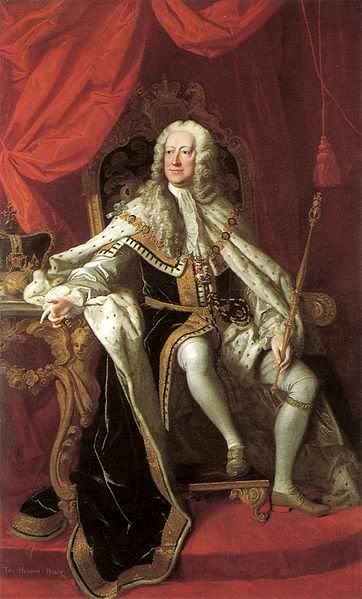 This great anthem was written by Handel for the coronation of George II in 1727. Since the union of he Crowns of England and Scotland was in 1603, and the Act of Unions uniting the two countries' Parliaments in 1707, one could say that this is a British anthem. But should Scotland secede from the Union, it will be up to them what heritage from the Union they take: I hope that Zadok the Priest - based on 1 Kings 1:38-40 - is retained by England, even if it should be duplicated elsewhere.
http://www.youtube.com/watch?v=QCHUCMiJ_Ew&feature=player_embedded
From Brixton to another place
Electric Avenue is a thoroughfare in Brixton linking two roads full of stalls, just like you might see in Eastenders. As cosmopolitan as it is, the video of Eddy Grant singing about the street suggests that its inhabitants and patrons might like, maybe just once in a while, something else.
http://www.youtube.com/watch?v=UA5MtAmT24g&feature=player_embedded
Preotecting the old ways...
Yorkshire folk singer Kate Rusby covers the Kinks' 1968 hit The Village Green Preservation Society for a series called Jam and Jerusalem, which was modelled on the Womens' Institute, formed in 1915 to revitalise rural communities, but which now has a vital message for women and girls everywhere.
http://www.youtube.com/watch?v=iRK6U5vIHCs&feature=player_embedded
Burn them down?
The Jarrow March was a heroic peregrination from Jarrow, near Newcastle, to the Houses of Parliament, to protest against the unemployment, poverty and even starvation that followed the collapse of the US stock exchange in 1929. In Alan Price's song about the event we hear him put himself into the song in a deconstructionist manner; but, more than that, while the majority of marchers wanted a job, we hear him echoing the cries of the vocal minority to "burn them down" - which prefigured the minority in the Miners' Strike of 1984-85 for whom a sedttlement of better pay and conditions would have been a disaster, because they wanted nothing but régime change.http://www.youtube.com/watch?v=tlMjSESoz9A&feature=player_embedded
Cricket
It was sad to see that Cambridge University's Emmanuel College was forced to desist from holding a May Ball in praise of the British Empire. Nobody's going to support the Amritsar Massacre, but Britain - and England - spread abroad a culture that continues to refer back to the English way of life where, as poet Rupert Brooke asked, stands the church clock at ten to three? A sign of this culture, visible in India, Pakistan, the West Indies, Australia and New Zealand, is cricket: and here is the tune that has accompanied English cricket on TV for decades - Soul Limbo by Booker T and the MGs.
http://www.youtube.com/watch?v=67xXbTaQlKI&feature=player_embedded
Queen of Bollywood
This is Asha Bhosle singing for the BBC - enjoy.
http://www.youtube.com/watch?v=3oj2vvCUwHc&feature=player_embedded
The seaside
The fascination for the seaside grew exponentially at the end of Queen Victoria's reign, and still remains. As well as Blackpool, there were Skegness, Brighton, Torquay and many other resorts. After a fallow period, English seaside resorts are becoming more popular due to the recession, as it becomes relatively more expensive to go abroad. (Study the video below and you'll see Brian May.)http://www.youtube.com/watch?v=QWhdx6OB_uc&feature=player_embedded
Fisherman's Friends
The Fisherman's friends, of Port Isaac in Cornwall, were founded to support the Royal National Lifeboat Institution in a part of Britain where it's all too easy for boats to go missing. If you like what you hear, please think of the men and women who give so much to bring us fish, and of the men and women who are ready to sacrifice everything when something goes wrong.
http://www.youtube.com/watch?v=93wjsRsz1cI&feature=player_embedded
coast: natural history of a man-made environment
 I once wisited The Wash. I was staying with a friend who worked in a hotel in Holbeach, in the South Lincolnshire area of Little Holland, and we drove up to see this seemingly unspoilt area of the Fens.
I say "seemingly" because the Fens compete with the Netherlands as constituting arguably one of the most modified areas in the world. Mostly below sea level, they were once a vast flooded area with bits of land poking up, on which settlements were built: Ely Cathedral in its various forms has been called "the ship of the Fens" for over a thousand years, and it's not a metaphor.
On last night's episode of the BBC2 10-minute documentary season Coast, focu
 ssing on The Wash, local archaeologist Maisie Taylor summed up how the Fens have been seen in Britain in the past: "they were wonderful for people who lived here, but for outsiders it was an evil place". Former Professor of History and Head of Trinity College at Cambridge University (and head of the British Red Cross during World War I) G.M. Trevelyan provides a case in point in his 1944 masterpiece English Social History by quoting Elizabethan historian William Camden:
The upper and north part of Cambridgeshire is all over divided into river isles, which all summer long afford a most delightful green prospect, but in winter are almost all laid under water, and in sIsolation, however, can have its advantages: I don't know if it's an urban myth that many churchyards dating from medieval times have mounds owing to mass graves dug to inter victims of the Black Death, but most churchyards in the Fens are flat, because they were cut off from the rest of England and often only reachable by boat.ome sort resembling the sea itself. The inhabitants of this and the rest of the fenny country (which reaches 68 miles from the borders of Suffolk to Wainfleet in Lincolnshire) are a sort of people (much like the place) of brutish, uncivilized tempers, envious of all others, whom they call Upland men; and usually walking aloft upon a sort of stilts they all keep the business of grazing, fishing and fowling.
 As Trevelyan notes, there had been plans to drain the Fens and make them more widely habitable since Elizabeth (I)'s time, with jealous eyes cast across the North Sea to Holland, whose modern name, Nederland, means "the lowland". It was eventually achieved by Dutchman Sir Cornelius Vermuyden, who was commissioned by King Charles I on the basis of his work in reclaiming parts of Essex from the sea. He oversaw the creation of artificial waterways - from ditches (one runs outside our house) to rivers - to channel water to the Wash, into which water was pumped through a series of windmills, although the job is now done electronically.
One principle Vermuyden insisted on was that large areas of land should not be built on; they might be cultivated (Taylor refers to the Fens in Coast as "a huge growbag"), but they needed to be free from buildings so that they could absorb precipitation, so it's disturbing to learn that politicians who either dont know, or don't care about, this country's history demanding that Cambridgeshire greenbelt land be built on. Some of this land is next to us, and higher than us - even with the fields there, we sometimes get floods: should the soil and grass be replaced by concrete, we'd better buy life-jac
 kets! We were all relieved to hear the Conservatives' plans to scrap national plans and promote local decision-making in the area of house-building, as reported by Richard Normington - not due to party-political considerations, merely because not all of us can swim!
 I'm a birdwatcher - albeit not a twitcher, I'm not into ticking boxes - so it was gratifying to see Coast deal with the half-million feathered friends who use The Wash as a stopping-off place each year during long migrations; I was surprised that oystercatchers, one of my favourite birds, sometimes travel from the Arctic to Africa. It was interesting to see how pla
 cid the birds were when caught by a cannon-net for purposes of ringing, with ornitholigist Miranda Krestovnikoff explaining that this made the job of the Wash Wader Ringing Group so much easier.
Presenter Mark Horton finished the show by saying that, due to rising sea levels, a decision would have to be made regarding whether to fight for the land around The Wash, or give it up to the sea. Businessman Peter Dawe proposed a controversial Wash tidal barrier in 2008 but it seems to have sunk without trace, although I wouldn't be surprised if it were refloated given that we now have near-idle windfarms that are killing bats and eagles.
If any of you reading this can access the BBC, I thoroughly recommend Coast as a compelling and informative series on the natural history of these islands, which at the moment do not have borders but rather coasts.
Thursday, April 1, 2010
lies, damn lies: statistics, strikes and the abuse of truth
 We're looking forward to going to a Christian retreat at Skegness called Spring Harvest, which we attended last year.
We'd been worried about an impending strike by the RMT union that was going to stop as many as four trains in five from running.
The timing of t
 ransport strikes gives a fascinating insight into the anti-religious mentality of union leaders. On the feastday of Frederick Denison Maurice, founder of Christian Socialism, we see a train-strike planned to disrupt the travel plans of members of Judaeo-Christian faith traditions around the time of Easter and Passover, and BA cabin crew, among the highest-paid in the industry, planned their original strike to disrupt the Christmas/Hannukah period.
The original BA strike was cancelled because members of the Unite union who no longer worked as cabin crew voted for the stoppage, invalidating the ballot. Now, we hear that, thankfully, the Telegraph's David Millward reports that an injunction has stopped the railway strike because - among other innaccuracies - more votes were cast than there are members in the relevant parts of the National Union of Rail, Maritime and Transport Workers Union.
This blind reliance on manipulated statistics betrays a contempt for the truth that pervades the modern left. For example, British Prime Minister Gordon Brown has just be
 en rapped by Sir Michael Scholar, chairman of the UK Statistics Authority, for stating in a podcast that immigration fell in 2009, using uncompareable statistics to back up his claims. But for me the most shocking abuse was by Equalities Minister Harriet Harman, who consistently claimed that the conviction rate for alleged rapists was 6%, discouraging women who had been violated from reporting the crime to the police, when the true conviction rate is over 60%.
Despite the best efforts of the RMT to disrupt travel at the time of major Christian and Jewish feasts, the trains will run next week and so (please God) we'll get to Spring Harvest, but I bet Frederick Denison Maurice is turning in his grave.

Tuesday, March 30, 2010
top tips for tuesday

 The Burke's Corner blogger, in his theological blog More than a Via Media, gives us his reflections on Jesus' last words from the Cross. |
 Nick Hillman, PPC (Prospective Parliamentary Candidate) for Cambridge, writes about a night spent with Cambridge Street Pastors. |
And while we read about the various pronunciations of Ceotibus in Fr Hunwicke's Liturgical Notes... |
 ...Richard Normington, who was lucky enough to attend a comprehensive school in the days when some were allowed to speak Latin, reflects upon a phrase from Tacitus in the imminent General Election. |
 Two for the price of one from Fr TF's The Hermeneutic of Continuity: click here to read about Richard Dawkins' hate-material about the Pope, comparing Dawkins to another villain who wished to eradicate another religion; quite disturbing given that the Pope will soon visit as a head of state. Alternatively, click the pic to read his blog about an article by an atheist who warns his peers against "Catholic-bashing". |
 Former British Ambassador Charles Crawford wonders if fans really want to feel like they're entering a boardroom when they go to watch the football... |
 While finally, on a slightly less urban note: a proposal for a city-farm in the south of Cambridge, from the Coleridge Conservative Action Team blog. |
Sunday, March 28, 2010
lights on: don't let earth hour usher in a dark age
 In the Draughty Old Fen last night, I didn't see many more houses in the dark than the number of people who are usually out on a Saturday evening leave behind. The reason I was looking was that Earth Hour took place from 8.30-9.30, during which people who believe the theory that the activities of humankind are causing our climate to change were told to leave their lights off to make "a call to stand up, to take responsibility, to get involved and lead the way towards a sustainable future".
If so, Earth Hour fell at the first hurdle. In the words of the Daily Telegraph:
Even if power stations are turned off, the upsurge in turning the lights back on one hour later will require power stations that can fire up quickly like oil and coal.Any chess player understands the principle of making an immediate sacrifice for a future gain, but if the WWF (World Wildlife Foundation) and its Green fellow-travellers were really into long-term thinking, they wouldn't have campaigned for decades against the cleanest proven source of large amounts of energy around: nuclear power. Because the protests of a tiny minority of vocal vested interests were heeded, Great Britain now has only 19 nuclear reactors, and the new generation, commissioned only last year, won't be ready to fire up until 2020, if there aren't yet more objections.
Energy experts said it could therefore result in an increase in carbon emissions "rendering all good intentions useless at a flick of a switch".
But WWF said the campaign was about raising awareness and saving energy in the long term, rather than a short-term fix.
I was interested to see a night-time satellite image of South Korea taken du
 ring Earth Hour on Anthony Watts' Watts up with That blog, showing the country's towns as lit up as on any other night, while on the north of the border a Communist dark age still exists.
I am concerned that in our still-free societies there are those who would like to lead us into such a dark age and, although little that justice-and-peace types say surprises me, I was shocked last year to be invited to "fast" from the lights in my house from Ash Wednesday so that I and my family would appreciate God's gift of light on Easter Sunday. Was it coincidence that this was also the time of the changeover from real lightbulbs that have served us well from Edison's time to the pathetically poor energy-saving bulbs that don't even light up when you switch them on?
 Suite 101's Paula Stiles identifies the term Dark Ages as having originally been coined by the Italian Renaissance poet Petrarch, who "appears to have used the term to describe the 5th to 14th centuries in protest at the relentless denigration of ancient pagan religion by Christian writers during this period."
Bertrand Russell, in his A History of Western Philosophy, doesn't link Petrarch with the phrase, but places the conception of the modern era at the Renaissance (in a chapter entitled The eclipse of the Papacy), and vents his anger on the Fathers of the Church, with special bile reserved for St Augustine, whose death was roughly contemporaneous with the final decomposition of the Roman Empire:
It is strange that the last men of intellectual eminence before the dark ages were concerned, not with saving civilization or expelling the barbarians or reforming the abuses of the administration, but with preaching the merit of virginity and the damnation of unbaptized infants. Seeing that these were the preoccupations that the Church handed on to the converted barbarians, it is no wonder that the succeeding age surpassed almost all other fully historical periods in cruelty and superstition.(It should be said that Russell lets his prejudice - and western ethnocentrism - trump his erudition here: one could say that the rump Roman Empire, as the Byzantine civilisation centred on Constantinople, survived happily into mid-Renaissance times until destroyed by Sultan Mehmed's Ottoman army in 1453).
But how dark were the dark ages? If the past is another country, we would be ethnocentric ourselves to blame other civilisations for not undergoing the explosion of progress that has marked ours since, say, the invention of the steam locomotive by William Murdoch and James Watt in the late 18th century. But the early medieval period was not short of eureka moments in many fields.
In 1150, for example, the Knights Templar sowed the seeds of modern capitalism by inventing the "letter of credit" - which would evolve into the cheque - that allowed a
 pilgim to deposit funds in one place and redeem them in another far away.
Shortly afterwards, the arbitrary power of absolute monarchs was dealt a fatal blow by the Magna Carta, signed in England in 1215. Around the same time, Franciscan Friar Roger Bacon would initiate the scientific method by making a hypothesis, testing it and then refining it further if it passed the test; if not, moving on to another hypothesis - one of his experiments was on the ancient remedy of ground willow bark to treat fever and pain, which would be built on by French chemist Charles Frederic Gerhardt to synthesize Aspirin in 1853.
Underpinning both of these - and much else - was the novel addition of wheels to the plough in the 6th century (abo
 ve), allowing it to increase in weight and till more and heavier soil, allowing populations to increase and create more pressure for innovation.
But now we have a movement of groups of activists, supposedly informed by science, to stifle any innovation that they do not approve of, and allow only research that saves the appearances of anthropogenic climate change/global warming, which is being shoved down the throats of our children and young people in education and leisure. Case in point: energy secretary Ed Milliband commissioned adverts promoting the theory of anthropogenic climate change as fact and using nursery-rhymes to do so, only (thank God) to have them banned by the Advertising St
 andards Authority on he grounds that the clear implications of the ads weren't supported by science. Milliband had obviously studied his Jesuit educational theory: "give me the child for his first seven years..."; but at least the lights are still on in the ASA.
The Telegraph's Murray Wardrop reports that earth is said to be entering a new period of geological time due to the acts of humankind having an indelible effect on old Gaia. Eugene F Stoermer of the University of Michigan's Center for Great Lakes and Aquatic Sciences places the handover from the present Holocene era to the putative Anthropocene at the end of the 18th century and "James Watt's invention of the steam engine" - William Murdoch obviously having gone the same way as Alfred Wallace, Friedrich Engels and woogie.
Last night I marked Earth Hour by having every light in the house switched on - except Maxima's room, as our cat Magus was curled up sleeping on her duvet. It was no mere excercise in contrarianism - we need a symbol of our desire to keep the lights on in science, and in our hard-won freedoms of conscience and expression.
To allow a Dark Age of fluffy earth-worship to be imposed would necessitate abuses of knowledge and wisdom that would have horrified the followers of the Old Religions whose torches were finally extinguished by the so-called Enlightenment's genteel patrician oppression; and the population control measures needed for proposed swingeing cuts in carbon dioxide (a gas necessary for all life on earth) would make the Holocaust look like a practice session. And guess what? It woul
 dn't be the lives of hand-wringing liberal intellectuals that were demanded.
Come next Earth Hour, my electricity meter will be working as hard as ever and for a good cause. When the time comes, I heartily commend Damian Thompson's advice to you: "Beat the 'Earth Hour' fascists and turn on your lights NOW!"
Subscribe to:
Posts (Atom)