Showing posts with label margaret thatcher. Show all posts

Monday, November 9, 2009

"Tear down this wall!"

Kristallnacht: click to read more on Pamela Geller's Atlas Shrugged blogWith only 365 days in the year, a lot of history is competing for a limited number of anniversaries.

Take November 9. In 1923, there was the Beer Hall Putsch in Munich, led by Adolf Hitler and Rudolf Hess, who would later decide that angels were telling him to negotiate a truce in the war to come and fly over to Scotland. Then in 1938, Kristallnacht began on the night of 9 November, seeing a stepping-up of the oppression of German Jews on the order of Hitler, ostensibly - says Tom Herschel GrynszpanSegev of Haaretz - as payback for the shooting of diplomat Ernst Vom Rath in Paris by young Polish Jew Herschel Grynszpan.

So I can appreciate why François Mitterand was jumpy about the Berlin Wall being taken apart bit by bit on the same day in 1989, starting when jetlagged German Communist Politburo member Günther Schabowski announced that border restrictions would be relaxed "as far as I know, effective immediately".

Mitterrand warned Thatcher that a united German might make even more ground than Hitler had. Mitterand was possibly being somewhat disingenuous, given that preventing Germany from uniting had been a French goal since the days of Cardinal Richelieu in the 17th century due to fear of its military and economic power - France wanted to be the biggest bully on the block. Madame Guillotine: liberty, equality and fraternity in practice

Thatcher was no fool and, on the feast of the Storming of the Bastille on 14 July of that year, had reminded a Mitterand who was getting overexcited over the effect of his country's revolutionary values of liberté, fraternité and egalité on Europe that the continent's foundations were, rather, Judaeo-Christian values.

So why was she so affected by Mitterrand's premonition? One possibility is that, having been born in 1925, she would have grown up with the travellers' tales of Great War Veterans, and turned 14 the month after the second round commenced in September 1939. But what the generation above her was too young to know much about was the 1871 liberté, egalité, fraternité: a pre-Euro French francTreaty of Versailles, whereby France was forced to recognise the existence of the German Empire in the palace's opulent Hall of Mirrors, which was reflected in a homonymous treaty signed in the same place 48 years later.

I make no bones about it: Communism formed exactly what Ronald Reagan called it in a 1983 speech: an evil empire. He was speaking to the (US) National Association of Evangelicals, and it would be another Christian, a great leader, who would join Reagan and Thatcher to form the triumvirate that would bring the fragile red tyrant crashing down like so many statues of Lenin. Pope John Paul II (Karol Wojtyła), having lived under both Nazi and Communist regimes, addressed his fellow Poles in 1979, enjoining them repeatedly "Do not be afraid!" Lech Walesa and his colleagues at the head of Pope John Paul II: click to read more about his role in the collapse of communism by his biographer George Weigelthe then-illegal trade union Solidarity recognised their moment. (The Pope would, I think, have been horrified by East Germans too young to remember the global conflagration caused by the Franco-Teutonic double-act becoming Neo-Nazis because it was the only alternative to Communism - the sinister side of a phenomenon known as "Ostalgia". )

So how have we done since 1989? Judaeo-Christian values, for one thing, are ignored by the EU Constitution/Lisbon Treaty; East Germans who rushed through the crumbling Iron Curtain to experience the freedom of the West are now micromanaged to the level of what sort of lightbulbs they can buy, in the name of the new pantheism dressed up as a delusion that climate change is due to the actions of humankind; and, as the shadow of Mutually-Assured Destruction (MAD) recedes, destruction by fundamentalist suicidal maniacs is more likely than ever.

So it's fortuitous that this day of anniversaries falls in the no-man's land between Remembrance Sunday and Remembrance Day, as it exemplifies the law of unintended consequences writ on a scale that leads to war. And down the decades come echoing the great words of Ronald Reagan's that emboldened reformer Mikhail Gorbachev, speaking in 1987 near where JF Kennedy had declared himself a doughnut:

We welcome change and openness; for we believe that freedom and security go together, that the advance of human liberty can only strengthen the cause of world peace. There is one sign the Soviets can make that would be unmistakable, that would advance dramatically the cause of freedom and peace. General Secretary Gorbachev, if you seek peace, if you seek prosperity for the Soviet Union and eastern Europe, if you seek liberalization, come here to this gate. Mr. Gorbachev, open this gate. Mr. Gorbachev, tear down this wall!
click to read more about Ronald Reagan's famous speech at the Ronald Reagan Presidential Foundation and Library website

Tuesday, October 6, 2009

"Strictly" leads race to the bottom of the class

Laila Rouass - click to read her story on the Mirror websiteJust when you thought it was safe to watch the sequins again, Strictly Come Dancing has had its first controversy of the season. The sister-show to America's Dancing with the Stars made the papers over news that one of the celebrity dancers, Anton du Beke, informed actress Laila Rouass, who had undergone the famous fake tan treatment, "you look like a Paki".

I can appreciate that the show's producers don't need this. Last year, judges Len Goodman, Bruno Tonioli, Craig Revel Horwood and Arlene Philips made it clear that veteran political journalist John Sergeant, then aged 64, was not welcome on the show despite constant support from vJohn Sergeant with Kristina Rihanoff - click to read the story of his departureiewers. Even in the context of forgetting that it was an entertainment show, Arlene Philips went above and beyond the call of duty in briefing against Sergeant on Steve Wright's Radio 2 show shortly before Sergeant resigned, and then said she'd always supported him. This may explain her having been replaced by former Strictly winner Alesha Dixon, with ballerina Darcy Bussell to join the judges in later episodes, which then led the BBC into the mouth of another ageism row.

The Telegraph's showbusiness editor, Anita Singh, puts the reason for the public reaction to this row in a nutshell in the article linked to in the first paragraph when she quotes a protestor on the show's messageboard: "I'm not comfortable with Anton's continued presence in the show, especially when Carol Thatcher was sacked for making a similarly controversial remark".

Carol ThatcherCarol Thatcher was alleged to have compared somebody's hair to that of a golliwog's and was ostensibly sacked from the BBC's The One Show for this, although many - myself included - maintain that her crime was to be the progeny of Margaret Thatcher, Britain's greatest peacetime Prime Minister and BBC critic.

In defence of the corporation, it is part of an Establishment for which racism is the new Holocaust denial even as, ironically, deying the real Shoah becomes ever more acceptable through some of the media's wanton wooing of Iran's President Ahmadinejad.

Couple this with an administration so ideologically driven much of its members have lost control with reality, and you have the ingredients for farces Mack Sennett could only dream of.

Take nine-year-old Steven Cheek, who was branded a racist and made to apologise to his class for "offensive language". His language? I quote the Daily Mail's Peter Hitchens:
Nine-year-old Steven Cheek didn’t know what ‘racism’ was until he was reprimanded for playing soldiers. Now he knows it’s a word used by the ignorant and conformist to control thought and speech.

Some dimwit teacher knew nothing about history and even less about boys, and so concluded that for Steven to say ‘We’ve got to shoot the German army’ to a Polish boy was ‘inappropriate’. Why? I imagine such thoughts are often expressed in Polish schools, most of which had to be rebuilt after the German army passed by in 1939.
So you'd think, then, that schools would look favourable on teachers who take robust action upon pupils who act in what the board of governors perceive to be a racist manner. But Michael Becker discovered otherwise when he manhandled a 15-year-old boy who would not stop telling a racist joke out of the classoom and into an unlocked cupboard. He now faces being referred to the General Teaching Council of England or the Independent Safeguarding Authority, either of which can prevent him from teaching again. But...what if he finds himself referred to both, and they differ as to whether he can continue to teach? That will be a battle worth seeing.

Although the Government doesn't seem to have a problem with imagining what age is, as MPs tend to be elected after the first flush of youth, the problem is that one of the many things it has forgotten is what race is, outside of merely a social construct. It's the presence of discrete physiological differences marking you as being descended from a community which spent a long time in isolation from other communities. I'm not talking about the genetic accident of skin colour: rather, for example, higher vulnerability to problematic alcohol use in some Native American communities due to genetically-derived variations in the enzymatic pathway through which alcohol is metabolised; or an inability of membersthanks to Chris Madden for the cartoon: please click to visit his site of some communities from sub-Saharan Africa to fully digest cow's milk; or indeed - a more common one whose effects are seen from Japanese people in Hawaii to black people in the US and Scots and Irish everywhere - the propensity of people descended from communities that often experienced prolonged hunger to pile on the pounds when exposed to the modern western diet.

The Beatles' Apple BoutiqueWhat race doesn't consist of is a hanger in the Goverment's shop of shibboleths from which, as in the last days of the Beatles' Apple Boutique, anybody who wants to display the latest politically correct fashion can carry away what they want with no responsibility or desire to display the courage of their convictions when the buzzwords are given a stir.

Michael Becker will be sentenced on October 23 - as well as potential referrals to the General Teaching Council of England and the Independent Safeguarding Authority, he is due to be disciplined by Suffolk County Council, and could face up to 6 months in prison. Whatever happens, I predict that he'll be somethin of a celebrity by then. Now that the BBC is realising that there's life beyond 40 with the inclusion of 61-year-old Linda Bellingham in Strictly, I wonder if we might see Becker in the next series...?

Tuesday, May 12, 2009

Norman Tebbit and the art of risk

danger: cardboard boxes

When I met Maxima in XV, the Draughty Old Fen's charity shop, she and Vecta were looking worriedly at a load of boxes filled with fairly-traded produce which the chap delivering had dumped in front of the counter instead of taking them behind, as Vecta had asked. Maxima asked me to help her carry boxes over one-by-one, and this is where my qoundam training as a moving and handling facilitator came in.

I explained that, if possible, it's better for one person to carry a heavy box because when two people carry, either both are walking like crabs, with spines out of alignment all over the place, or one is walking ahead with a textbook posture, and the other is walking backwards. There ended the lesson. I didn't add that the last moving and handling training I was forced to attend involved sitting imagining how our backs would swivel were we on skateboards - the car-park hadn't been risk-assessed for us to stand in.

Much - indeed most - health and safety management today is "risk-led", ie possible risks are identified, with a view to devising strategies to prevent the putative hazards. I'm not saying these are totally divorced from reality: in a medium-sized office I know where people feed numbers into computers, at the back of the accident book there's a chart to help one calculate possible risk, which ranges from "low-risk" to "multiple deaths".

You could say, for example, that Britain is full of graveyards with municipalcordoned-off graves - more offensive than dangerously-desecrated headstones because of the risk of the latter, as Government figures cite seven deaths and 21 injuries due to falling headstones. So insurance companies are refusing to cover cemeteries with graves which have even the least risk of falling, even if no injuries (or indeed falls) have occurred for centuries. Likewise, some schools have banned conkers because of the possible risk, taking no account of what injuries have occurred and in what circumstances. (Although the Daily Mail article linked to recounts the story of a poor boy killed by a gravestone while collecting conkers, so I wonder if the number-crunchers got confused in a frenzy of probabilities.)
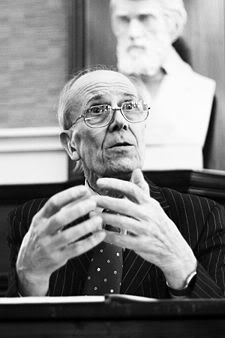
In the furore Norman (Lord) Tebbitsurrounding MPs' abuses of expenses allowances, former Conservative Party Chairman Norman (now Lord) Tebbit displayed a magisterial grasp of the anticipation and management of risk when he encouraged voters to vote for smaller parties in the forthcoming European elections, a move which Telegraph blogger Benedict Brogan states has led to the threat of his expulsion.

Tebbit would have learnt more about risk-management working as a military and civilian pilot than insurers and inspectors could grasp in a month of Sundays. And he's playing a risky but canny game here - just as he was part of the Tory Opposition team which forced the Labour Government to reduce tax prior to Margaret Thatcher's 1979 victory, he is now indicating to voters that the Conservative Party will stand or fall by its reaction to the scandal, while Labour Prime Minister Gordon Brown dithers and his pet Speaker makes the sort of hollow threats (about police investigations) that the playground bully does when he meets somebody who doesn't run away.

I hope we don't lose any seats in Brussels - but should that happen, I predict that Conservative MPs' expenses will become very clean very soon. And Britain - and the world - will see that not everybody here has been so cowed by the threat of litigation and action by police who would rather do police-work that they keep their heads under the parapet.

And come the next election, we might see kids looking for conkers to play with at school again. Just not under gravestones.

Gestapo Conker Suit: click to read more on Ken Frosts's 'Nanny Knows Best' blog

Monday, May 4, 2009

it was 30 years ago today...

pop idol with the X factor: Sir Jimmy SavilleBeing in my early teens when Margaret Thatcher was elected Prime Minister on Friday 4 May 1979, I was more interested in music than anything else; Jimmy Saville had presented Top of the Pops the night before, announcing, I think, Blondie at number 1 with Sunday Girl, which even my Mum, no rock fan, preferred to the previous incumbent Mike Batt's funereal Bright Eyes, sung by Art Garfunkel. Eurovision Song Contest winner Hallelujah, by Gali Atari and Milk & Honey, remained in the top ten, and I still think it beats the two number ones hands down. Gary Moore - in mid-divorce from Thin Lizzy - had made the top 30 with his genre-changing Parisienne Walkways. The Shadows, on their way to the top ten, had just gotten to number 40 with Cavatina, theme from The Deer Hunter.

I also remember - they're hard to forget - the strikes. Taken collectively, strikes in the winter of 1978-79 saw the largest withdrawal of labour in the country since 1926's General Strike. Gravediggers in the Liverpool area struck for higher pay for a fortnight, sparking fears that the area's dead might be buried at sea. It was one of the shorter strikes - ironic, since it became the cause célèbre of the period, and one of the reasons British scandal-rag The Sun christened the season the "winter of discontent". Many folk thought it a very cleverly-coined phrase, not realising it came from the opening line of Shakespeare's Richard III, where Gloucester is actually proclaiming the passing of said winter:

Now is the winter of our discontent
Made glorious summer by this sun of York;
And all the clouds that lour'd upon our house
In the deep bosom of the ocean buried.
Mrs (now Baroness) Thatcher took advantage of Shakespeare's original theme of winter turning to "glorious summer" in her Party Political Broadcast of January 1979, which was subtitled "Winter of Discontent" (although she never used the misquote in her speech) and which the Margaret Thatcher Foundation archive of her speeches rates as "key".

There were far fewer strikes during the following Conservative administrations, for the simple reason that the Conservative Party did not and does not mortgage its agenda to false and dangerous proRonald Reagan - click to go to the Ronald Reagan Foundation websitemises - something even the Socialist Workers' Party recognised in a 2002 article laying out the Labour Party's many failures in 1974-79, entitled "We struck because Labour betrayed us."

Anybody who lived through the 1980s in Great Britain knows it was no tea party, but Margaret Thatcher, among many other things, reformed union voting procedure to bring it in line with democratic best practice and lessen the possibility of coercion; faced down the illegal, year-long miners' strike, which was ostensibly about pay and conditions but which National Union of Mineworkers leader Arthur Scargill intended as a precursor to violent regime change;Pope John Paul II - click to go to the John Paul II Foundation and formed a triumvirate with Ronald Reagan and Pope John Paul II whose steadfast action and resistence to bullying was the sine qua non of Soviet communism's downfall.

In 1979, commercial punk having already burnt itself out, Abba had two albums in the year's top ten. It still has an album - Abba Gold - in this week's Top of the Pops top 40. Whereas in 1979 there was little evidence of the various forms of electronica which would feed upon the ashes of punk, it seems now that every innovation possible to popular music has been mined dry, and not only do we see bands that could stand proudly beside Blondie and her comrades-in-arms in the charts - like the Killers, the Kaiser Chiefs and Fleet Foxes - but old friends too: Chris de Burgh's album Footsteps is at no. 13, Carole King's Tapestry at 20 and Dusty Springfield at 30. And, of course, Bob Dylan, who released his first album in 1962, has just seen Together Through Life hit #1 in both the UK and the US.

Just so, we witness once more a sovietisation of British politics, with more quangos and committees than you can shake a stick at, and decisions that will have the greatest impact on British people taken away from the House of Commons. It didn't work before and it's not working now.

In the Winter of Discontent, rubbish was uncollected because of strikes; now it's not collected if it's the wrong kind of rubbish. Then, many NHS hospitals were only treating emergencies because of strikes; now, it's not unknown for people to come out of hospital sicker than when they went in because there is a surfeit of administrators and managers and a shortage of clinical staff on the ground.

Then, the actions of Labour, be it in exacerbating financial crises or personal feuding, led millions to vote Conservative who would never have thought of doing so before...funny how some things don't change, isn't it?

Margaret Thatcher's political legacy is alive and well and has changed politics, I believe, for many years to come. I believe that, when Gordon Brown (or his successor) finally suffers the British people to have an election, David Cameron will lead from the front, and return the House of Commons to it pre-eminent place that the respect the Conservative Party has for the British people demands it have.

Add in some good songs, and we might once more see the ice melting.

click to enter the Margaret Thatcher Foundation

Wednesday, April 22, 2009

this blessed plot, this earth, this realm, this England

a traditional view of St George and the DragonEngland can't claim such a high-profile patron saint as, say, the US, which is represented by the Immaculate Conception. (The New York Times complained in 1871 that Jay Gould wanted to make St Patrick the country's patron saint, but I suspect that's a different story.)

But St George is patron saint of this great country, and I look forward to celebrating his feastday tomorrow. Unfortunately, there's not that much going on in Cambridgeshire, at an official level at least: the Cambridge News's Jack Grove reports that Waterbeach's Beach Social Club will celebrate the great British banger with butchers entering their sausages in a competition, and Ely and District Scouts will fly their colours in a St George's Day parade on Sunday. (And in London, Boris Johnson's administration is putting on a free concert in honour of the saint on Friday.)

As a fellow exile living in England - though from not nearly as far away - I liked the introduction to the Archbishop of York Dr John Sentamu's speech on Englishness at the Sunday Times Literary Festival in Oxford earlier this month. It was a quote from a piece reputed to have been written by a Frenchman:
Dr John Sentamu: click to go to the Archbishop of York's website
There are four kinds of people in the UK -

First, there were the Scots who kept the Sabbath - and everything else they could lay their hands on;

Then there were the Welsh - who prayed on their knees and their neighbours;

Thirdly there were the Irish who never knew what they wanted - but were willing to fight for it anyway.

Lastly there were the English who considered themselves self-made men, - thus relieving the Almighty of a terrible responsibility
The last sentence, as the Archbishop points out, represents the heresy of Pelagianism, but the peice describes exactly both the self-confidence and self-deprecating humour that are part and parcel of the archtypal English character, and his "tentative conclusion" that "Englishness is back on the agenda" was reassuring.

It was concerning, however, to be directed by Damian Thompson, in his Holy Smoke blog for the Telegraph, to an article by the left-wing Christian think-tank Ekklesia which complains that


just as he was co-opted by the crusaders, so St George’s misappropriation as an excluding or dominating figure has continued in recent history. And it is not just the BNP who have done this. His elevation has happened in the political mainstream, too. In parliament, he sits over the exit from the Central Lobby of the House of Lords, lending presiding authority to the vestiges of an unelected, top-down social order.
Having laboured under a socialist government for 12 years, I don't have any problems with their objection to a "top-down social order". But the organisation continues: "We say that it is high time St George was reclaimed from the dragon, from past associations with racism and the far right, from religious crusades, from inward-looking nationalism, and from images of arrogant flag-waving."

I'm not saying that we should be complacent about "far-right" organisations (who want blanket nationalisations and micromanagement? Go figure) and we should certainly heed the warning of the Archbishop of Canterbury that the recession may fuel social unrest and xDeve Kumarasiri - thanks to Matt Alexander and the Nottingham Post for the picenophobia. But the aspect of multiculturalism that warms my heart most is that represented by Sri Lankan-born postmaster Deva Kumarasiri who, Lucy Cockcroft reports, turned away five people for "wasting time and holding up the queue" because they didn't speak English - he believes that immigrants should learn English and love their adopted country.

I can understand this. When I lived in Italy and France, I learned the languages, bought local, and grew to appreciate the many strong points of those countries. Unfortunately, the local Muslim community presented owner Rizwan Raja with a petition objecting to being told to speak English in England, and he was told not to turn in for work. I say "unfortunately" because if yoNorman Tebbitt - click to read his article on 'What England means to me'u've seen a bus driver who can't speak great English trying to speak to a prospective customer who has the same problem, then you'll understand that the problems caused by not speaking English in a country where that is the language are not confined to any one group.

Norman Tebbit, MP and Minister in Margaret Thatcher's government and now Lord Tebbit, proposed a "cricket-test" as one measure of integration of immigrants into England. He said that, say, Pakistanis would pass this test if they supported England against Pakistan at the game of cricket. (When attacked for his "far-right" views on a political discussion programme, Question Time, soon afterwards, he replied that he'd be just as happy for immigrants to vote Labour as Conservative.) Once again, Lord Tebbit brought good sense to the vexed topic of integration earlier this year when he wrote, in the context of councillors in Oxford beSt George and the Dragon - a more modern interpretationing unwilling to turn down applications for a loudspeaker-system in a Mosque, that Muslims be invited to turn their minds to Allah by bells within the Mosque - it would be in character with the area, and the Koran comes down in favour of neither.

Tomorrow I dare say I'll have a pint at the Tintinnabula - not with far-right racist flag-wavers, but with decent, hard-working flag-wavers of all political (and other) hues. Trying to slay the dragon that tempts us to be defined by our differences, I'll wish them, as I wish Deva Kumarasiri, Lord Tebbit, Archbishop Sentamu, and you: happy St George's Day!

This being also the anniversary of William Shakespeare's death in 1616, I think this is the best I can leave you with:

This earth of majesty, this seat of Mars,
This other Eden, demi-paradise,
This fortress built by Nature for herself
Against infection and the hand of war,
This happy breed of men, this little world,
This precious stone set in the silver sea,
Which serves it in the office of a wall,
Or as a moat defensive to a house,
Against the envy of less happier lands,
This blessed plot, this earth, this realm, this England


Richard II, Act 2, Scene I

Related post: let England stand free

top ten songs about England

Happy St George's Day!

Friday, March 20, 2009

pigs might fly

Butch (right) and her brother Sundance: click to read the story
Sometimes, the story of two runaways catches the imagination of a nation, if not a continent.

It was 1998: these two, being taken to an ignominious fate, escaped and were recaptured. Not happy with this, they escaped again and crossed the River Avon, after which the police were called out; by the time they were surrounded again the eyes of an entire media machine were upon tDonatella Lorch - click to read her storyhem. But like their human counterparts, Butch and the Sundance Pig were only taken after a long fight. By this time, of course, questions had been asked in Parliament, and if they had been returned to the Malmesbury abbotoir, there would have been an international outcry: Japan had sent journalists to the quiet Wiltshire town, and American war reporter Donatella Lorch declared that the pigs had become "celebrities".

There's a lot to be said for pigs, I think - mainly because we find it easy to have empathy with them. For example, when Patricia Piccini wanted to raise awareness of human-animal hybrids, she used pigs as a model for a sculpture called "The Young Family", of which a painting is reproduced here. A scientist friend of mine experimented on mice in order to further essential The Young Family: click to go to Patricia Piccini's websiteresearch, but told me he wouldn't have been able to experiment on pigs, because they look too intelligent. In fact, if celebrity chef Hugh Fearnley Whittingstall had campaigned for the rights of stall-farmed pigs instead of battery hens, the whole phenomenon of intensive farming would be on its last legs right now - but Whittingstall has his own organic meat to promote, and his biggest seller is chicken.

Maxima tells me that when she and her classmates were called "pigs" at school by boys who probably fancied them but were scared to admit it, the reply was that the epithet stood for "pretty intelligent girl".

But I don't think former Labour MP Helen Clark intended the word as a compliment when, tired and emotional in a bar, police were called to eject her when she became abusive to the Portuguese barmaid.

ClHelen Clark - click to read further details of the trialark was elected MP for Peterborough as a result of having been selected by Labour out of an all-woman list. After being voted out in 2005, she threatened to join the Conservative Party but didn't do so - so I guess distributing the Mae Wests and the parachutes was a waste of time.

She was an MP at a time when the police were being inundated with new paperwork and targets. I don't mean to say that as a Labour MP she was intimately involved with that - but in a sense that's the point: Tony Blair told MP's to spend more time in their constituencies, and while they did this - and I realise that in Labour, just as in any other party, there are MPs who are passionate about both their constituencies and Parliament - one of the many agendas enacted was that of trying to turn the police force from an effective body devoted to keeping the Queen's Police to a warm fuzzy group who would never stand in Labour's way again. Thankfully, due to the influence of old hands, they are yet to succeed completely.

Where this is coming from is the Miner's Strike of 1984-1985. This was ostensibly a strike over the issues of closures, pay and conditions, but what National Union of Mineworkers head Arthur Scarghill had in mind was unseating Margaret Thatcher's government, after the fashion in which the NUM had forced Edward Heath to ask Great Britain "who governs?" in 1974 under the general secretaryship of Lawrence Daly. To cut a long story short, the NUM lost, and paid for Scarghill's dream of revolution by seeing mines closed all over the country.
click to go to the website of the South of England Rare Breeds Centre & Country Farm Park
But there's a question I haven't answered. What became of Butch and the Sundance Pig? They were bought by the Daily Mail, are alive and well in the South of England Rare Breeds Centre & Country Park, and a film has been made of their story. From what I hear, fame hasn't gone to their heads. So far, at least - but I think they're smart enough to know when they're onto a good thing.

Clever animals, pigs.

Wednesday, February 4, 2009

golliwog-gate: the racism of anti-racists

First we had the debâcle of Jonathan Ross leaving obscene messages on a young girl's grandfather's answerphone on air. By debâcle I don't so much mean the actual incident - although heaven knows that was bad enough - but the BBC's initial response. At first it lied about not having received a complaint from Andrew Sachs, actor and grandfather of burlesque dancer Georgina Baillie, then attempted to smear those of its own listeners who complained, saying that they were offended after the fact, not having heard the broadcast (it pulled the incriminating sections of the broadcast out of the listen-again facility, but they were all over YouTube).

Now we have the siCarol Thatchertuation whereby a presenter on its evening magazine programme, the one show has been fired for allegedly having made a "racist" comment on Thursday, 29 January about an unidentified tennis-player off-air, in a private conversation in the green room. She is said to have compared the hair of a tennis player to the hair of the golliwog that used to be depicted on the Robertson's jam pots, and suddenly the ideologically beautiful press is screaming that she called a black man a golliwog.

The BBC said it would decide on whether Carol Thatcher could continue on the programme after an apology from her, which she promptly gave, and the decision was that she had to go.

Ferris State University's Jim Crow Museum of Racist Memorabilia gives a compsee the Project Gutenberg entry for The Adventures of two Dutch Dolls and a 'Golliwog'rehensive account of golliwog iconography, starting with its origins as a rag doll in the southern states of the US in the form of a minstrel - a white man blacked up - and going through its first gallant appearance in Bertha and Florence Kate Upton's 1895 The Adventures of two Dutch Dolls and a "Golliwog" to its less gallant appearance in Enid Blyton's series of Noddy stories, and in between its aforementioned appearance on jars of Robertson's jam.

Right away, though, we run into difficulties. The minstrels were represented on British TV in the BBC's own The Black and White Minstrel Show, the hugely popular variety show which finished after a campaign by ideological guerrillas in 1975. The most famous face click to see what Lenny Henry's doing nowto be launched by this show is Lenny Henry, probably Britain's best-loved black comedian and actor; had the show not been pulled, more black people may have similarly seen their careers launched.

I detest abuse on the grounds of the genetic accident of skin colour, but it's not even certain that Thatcher's "golliwog" epithet, made in the context of last week's Australian Open tennis championship, referred to the barnet of a black fellow: the top two contenders for golliwog-hair are Scottish Andy Murray and Frenchman Gaël Monfils. Both crops are shown below with that of our fictional friend.


golliwog-gate: it's about the hair, nothing else
The thing is, as (surprisingly) The Guardian's Michael White blogs, militant anti-racism can be as selective as the discrimination it deplores. When a thin white girl with long blonde hair is compared to Barbie, it isn't usually a complement - as used, for example, about Claudia Schiffer, by the liberal-socialist media machine. Multiple enhancee Sarah Burge, however, has turned the discrimination on its head by presenting herself as the "Real-life Barbie".

I think Lenny Henry was doing the same thing when he agreed to provide the voice, in Harry Potter and the Prisoner of Azkaban (my favourite Potter movie), of Shrunken Head, who is animated as a rasta-haired trophy on a string similar to what might have been produced by headhunters as imagined in, say, King Kong. This is in its own way as much of a race-based distortion as the gollywog, as of all the world's headhunters, the only ones to produce shrunken heads were the Jivaro of what is now Ecuador and Peru, who would not have encountered black people speaking English with a Caribbean accent. This isn't to try to take the fun out of Harry Potter, merely to amplify White's point about the selectivity of anti-racism.

That a Guardian journalist should agree on one point with an ennobled Conservative shoclick to go to the Margaret Thatcher Foundationws the depth of public dissatisfaction with the BBC's double standards. Both point to what has largely remained the elephant in the room - Carol Thatcher's parentage. As Norman (now Lord) Tebbit told the Telegraph, "It is probably a bit of a way for the BBC to get back at Carol's mother". Carol Thatcher is daughter of Baroness Margaret Thatcher, who was Great Britain's greatest peacetime Prime Minister, and fought running battles with the BBC over their coverage of, for instance, the Falklands War, the Miner's strike and the fight, which still continues, against hard-left influences in some unions which see political influence at the highest level as more important than the pay and conditions of their members.

Meanwhile, Michael White ends his article on a chilling note:

The idea that [racism] is a vice unique to white Europeans or north Americans is also a bit of a chuckle, as the Chinese will one day demonstrate when their looming hegemony provides some scope.
Get ready for the BBC to ban the Fu Manchu films. But I won't be watching the BBC by then, so I'd better start dusting off my Mum's old videos of The Black and White Minstrel Show.


denial of choice attack

Monday, December 29, 2008

give them what they deserve

In the 1980's, the relationship between the Archbishop of Canterbury, the late Dr Robert Runcie, and the then Conservative government of Great Britain was often strained, yet I do not recall any loud calls for the Church of England to be disestablished form the state, merely rumblings that "the clergy should not interfere in politics". This is, of course, seen as the corollary of one translation of Matthew 22:21, when Jesus is asked whether it's lawful to pay taxes to the Romans, and famously replies, "give to Caesar what belongs to Caesar, and to God what belongs to God."

We're now facing calls for disestablishment, which would technically mean that Great Britain, despite its many Christians, would no longer be officially a Christian nation, and would move closer to being handed over to radical militants of various political and theological persuasions, and I fear that one of the strategies will be to try to pit the Church of England and Roman Catholic Church against each other. Archbishop of Canterbury, Dr Rowan Williams

The latest stage of this situation started with remarks of the present Archbishop, Dr Rowan Williams, on Prime Minister Gordon Brown's borrowing plans to provide a "fiscal stimulus" which would presumably lead us to liquidise what savings we have so that the freed money would mitigate the financial situation; Williams stated that it was like "the addict returning to the drug...What I'm worried about is anything that pushes us straight back into the kind of spiral we were in before". Ironically, his words encapsulated those of Prime Minister James Callaghan to the Labour Party Conference of September 1976:
We used to think that you could spend your way out of a recession and increase employment by cutting taxes and boosting government spending. I tell you in all candour that that option no longer exists, and in so far as it ever did exist, it only worked on each occasion since the war by injecting a bigger dose of inflation into the economy, followed by a higher level of unemployment as the next step.
In this curious game of theological tennis, Mr Brown replied that "we should not walk by on the other side when people are facing problems".

The next round is masterfully described by Cranmer in his post "Church of England unites to damCranmern "morally corrupt" Labour. In the Sunday Telegraph of December 28, Jonathan Wynne-Jones reported that the Bishop of Manchester said Labour was "beguiled by money", the Bishop of Hulme added they were "morally suspect", the Bishop of Durham opined that they had reneged on their promises, and the Bishops of Winchester and Carlisle brought up the rear with the charge that ministers had squandered their opportunity to reform society.

The backlash is reported in today's Telegraph, where the intellectual tone was set by John McFall MP with "I don't know if at the bishops' palaces there has been too much mulled wine passed around over the past few days."

There is due to be a CofE synod in February, in which a debate on the financial crisis is expected to be highly critical of the government's handling of it. Look out for much mud-slinging and sleight-of-hand in the run-up.

One area for agitation will be, I believe, the Act of Settlement 1701, which basically ensures that nobody who is a Catholic, or who is married to one, may take the British throne or be in line to it. It is, of course, a deeply discriminatory piece of legislation - but when I worshipped for several decades in the Roman Catholic Church, I don't recall a single occasion when somebody said to me, "you know, the Act of Settlement really bothers me"; in fact, in Scotland, when you heard about it, you knew that the Scottish National Party and the Labour party were fighting over the Catholic vote, especially in parts of the politico-religious quagmire thereabouts where angels fear to tread.

There was much talk of the Act of Settlement when Peter Phillips, the Queen's older grandson, married Autumn Kelly earlier in 2008. Ms Kelly, born a Catholic, converted, and so the need to amend the Act didn't arise.

Not that the Act of Settlement hasn't been amended before - to allow Edward VIII to abEdward and Mrs Simpson - the Duke and Duchess of Windsordicate and marry his Mrs Simpson, and it can be amended again. For example, in the early '70's, when Prince Charles developed a relationship with Lucia Santa Cruz, daughter of the then Chilean Ambassador to London, there was talk among MP's that if the relationship should deepen, the necessary action could be taken to ensure that she could be Charles' queen. (In the event, the ships passed in the night, but not before Ms Cruz introduced her prince to Camilla Shand, now his wife. But that's another story.)

Margaret Thatcher, British Prime Minister 1979-1990What will be interesting is what the Bishops make of Gordon Brown's remark about "not passing by on the other side". As well as a reference to the Good Samaritan, it's an echo of Margaret Thatcher's concept, first formulated in a 1968 lecture to the Conservative Political Centre, that "even the Good Samaritan had to have the money to help, otherwise he too would have had to pass on the other side".

The thing is, Thatcher, when elected in 1979, had to take care of the mess she inherited - somebody else mugged the man going to Jericho; the wounds of today's unfortunate traveller were inflicted by his rescuer. Brown seems to suffer from a political and financial version of Munchausen's syndrome by proxy: not so much a St Francis of Assissi as a Beverley Allitt - the children's nurse who poisoned babies in order to act the hero when she stepped in, and is consequently serving time for murder.

In a not dissimilar vein to the Archbishop's, the Pope warned that the world is "headed towPope Benedict XVI giving his Christmas addressard ruin if selfishness prevails over solidarity during tough economic times" in his Christmas message, but I doubt Mr Brown is ready to take on the man to whom he gave a copy of his father's sermons when he had an audience - and whose predecessor Margaret Thatcher praised many times in her political memoirs.

I hope we all stick together as far as is possible during what may be testing times. I would ask for your consideration of an alternative translation of Mt:22:21 - "give Caesar what Caesar deserves, and give God what God deserves."

Sunday, September 7, 2008

when stone-throwing becomes a blitz

A tangled skein of gender-related issues seem to be in the media lately. For example, the Daily Telegraph reported recently that bosses might be less likely to hire women now that maternity leave has increased to a year, and women are to receive benefits in kind that they would have had they still been at work, for example gym membership. (A single male friend of mine wondered about the gym membership. I told him to talk to women with children in secondary school. He did, and, somewhat wiser, now concurs with the measure.)

There's a lot goidetail from St Lawrence by Fra Angelicong on there, however. For example, is it really the job of employers to maintain their employees' pelvic floors? Saint Lawrence, when ordered by the prefect of Rome to produce the treasures of the church, produced the poor. I don't believe that government should be bigger than it needs to be, but should not the state provide for the treasures of the country - its children - instead of demanding that employers do this and recoup their costs from poor consumers?

In another story, the Telegraph again tells us that HarperCollins careful, nowhave offered an apology to Australian aborigines because, in the Australian edition of The Daring Book for Girls, authors Andrea Buchanan and Miriam Peskowitz suggest that girls play the didgeridoo, something that is the subject of a gender taboo pertaining to Aborigine culture. Mark Rose, head of the Victorian Aboriginal Educational Association, says that the suggestion is the equivalent of "encouraging someone to play with razor blades", and is warning that girls who do so could "face infertility".

(Gender issues have touched my family's lives as well. When my sister-in-law Patientia attended an orthopaedic consultant as an out-patient regarding joint-pains, once he had ran out of tests he told her: "Your problem is that you are a housewife. You're not busy enough, so you're imagining these pains. Get a job, and get a life." Personally, I'd say that being a housewife is pretty hard work, without a minimum wage and paid holidays, let alone gym membership.)

Gender politics - literally - seem to be on the agenda in the US as well. Something quite remarkable has happened: as a correspondent on Michelle Malkin's website states, "The feminists have suddenly decided that a mother should be home with her children in lieu of a career."

This remark was made in the context of the forthcoming US elections, where Republican presidential candidate John McCain has chosen Alaska governor Sarah Palin as his running mate, ie to become Vice-President should he be elected.

Two things are happening here to rain on the ideological parade of those who people the liberal-socialist axis.

Firstly, having trawled through bios, it seems to me that the candidates are more inthe best working class heroes Labour never had touch with people from backgrounds liable to economic upset than presidential/vice-presidential candidates have been for some time. It comes as no surprise to me that this should happen in a right-wing party; in the UK, Margaret Thatcher, a shopkeeper's daughter, was the Prime Minister to see through the cant of union bosses grown fat on their members' hardships. Her successor, John Major, was the first Prime Minister ever to call for a classless society. Now that the nominally democratic socialist Labour party has reneged on its promise to offer a referendum on a European superstate, its pet papers are presenting attempts to consult the people on this as "a challenge from the right".

Secondly, three days after her selection as running mate, Sarah Palin announced (not "admitted", as the New York Times said) that her daughter was pregnant. Wonderful news. But suddenly Democrats and left-leaning folk generally became moralists to an extent that makes Queen Victoria look like Paris Hilton on ecstasy. Their problem doesn't seem to be the pregnancy so much as that the pregnancy is continuing. The Sharp Right Turn blog posted a YouTube video of Obama Barack speaking to a crowd, saying, "If [my daughters] make a mistake, I don't want them punished with a baby, I don't want them punished with an STD at the age of 16".

There's lots to unpack there, for example the view of STD's as punishments (from whom?), but the description of a baby as a punishment says it all. I'm sure US politics is no Buckingham Palace garden party; but to Mr Obama's credit, on the same day as Mrs Palin announced the news, he gave out the order that families were "off limits", on pain of being fired. That, however, hasn't stopped a miscellany of starlets declaiming on the issue. Some atrocious material has been forwarded which, insulting as it is to Mrs Palin, amounts to nothing less than a concerted campaign of abuse directed at a minor. As high-minded as I'm sure Obama's motives are in calling for a cease-fire, I'm sure he also wants to put a damper on the strange compulsion of left-leaning stone-throwers to bring the fragile edifices of their own construction crashing down upon all their ears.

this is the only member of the Palin family running for electionAs passionate as I am about the prospects for the British election, when it comes, it has to be admitted that the US elections, especially now, are the most important in the world. I pray for strength for Mrs Palin as the most shockingly sexist mores are borne from the scrapheap by people who demand that these same standards do not represent their own - many of them not much more sophisticated than becoming infertile by touching a didgeridoo. And may God bless all of her family.

Monday, July 7, 2008

The Third Way gasps for oxygen

Via Media it ain't
Leaving St Gallicus' after a concert tonight, I picked up a copy of a magazine that I'd never seen before, called Third Way.

Much of it seemed to be a middle-class intellectualist meditation on the vagaries of life, and therefore relatively harmless.

However, I was concerned to see an interview with Khalid Mish'al, who is regarded as the most senior figure in Hamas, which won a landslide victory in the Palestinian Authority elections of Wednesday 25 January 2006.

I was initially interested in the article, and looked forward to reading a neutral view of the situation between Israel and the Palestinian Authority. But my expectations were shattered, not by one of Mish'al's answers, but by one of the questions:


"Nelson Mandela famously said, 'The struggle is my life', and for many people that sums up the heroism of the man. It occurs to me that if he had been speaking Arabic, he would have used the word jihad. Can you explain what jihad means to Hamas, and in particular to you?"


If Khalid Mish'al were to choose to compare himself to Nelson Mandela that would be one thing, happy?but it is in fact the interviewer, Huw Spanner, who suggests the comparison first. This allows Mish'al to continue the metaphor at a later point in the interview:

"the Palestinians, like Nelson Mandela, feel that their life is struggle and resistance. When you live every day under occupation, your natural behaviour - This is what people in the West should understand: every day, we suffer aggression, killing and siege, with houses destroyed and families homeless."

Spanner, does have form, however: on his website, he claims to have interviewed Richard Dawkins, Philip Pullman, Yasmin Alibhai-Brown, Yusuf al-Qaradawi, Gerry Adams and Martin McGuinness. This is, of course, a highly selective list, but the devil's in the detail.

I think his sympathies come through in asking whether he clarifies whether Mish'al classifies what al-Qa'ida does as jihad, to which the answer comes:

"I don't want to talk about others, but if anybody is in doubt about Hamas they need only answer the questions: Has Hamas ever fought outside Palestine? And has it ever resisted anyone other than the Israeli occupation? Any fair-minded person will see the difference."
While wondering what was the question that Mish'al thought he was answering, I can see a parallel between this outlook and that of the last two members on the above list, Messrs Adams and McGuinness. Their original organisation, the IRA, tended to act within the confines of the United Kingdom, but the operatives were no less terrorists for that.

During the 1980's, in the context of the IRA's bombing campaigns, Margaret Thatcher spoke of the necessity of starving terrorists of the oxygen of publicity, perhaps not fully realising the degree to which terrorism would become an anaerobic beast - it is the yeast that makes the circulation and viewing figures of certain media outlets rise.

So what's the answer to the problem of magazines like Third Way giving a sympathetic platform to terrorists wishing to present themselves as oppressed freedom-fighters? The answer, I think is twofold:

Firstly - it's obviously up to the magazine what they publish, but for the sake of a balanced viewpoint I would liked to have seen an opposing viewopoint in the same issue - from Anglican Friends of Israel, for instance.

Secondly, if it's impossible to starve terrorists of the oxygen of publicity - and this appeared to be the case even in the days before the internet - then, with due deference to Mrs Thatcher, let's blast them with the stuff. Make every published sermon and piece of propaganda by Islamic extremists available to every household in Great Britain, so that those who are interested can see the agenda for themselves, without having to peer round the edges of liberal-tinted glasses of pet reporters determined to present themselves and their country in surrender mode.

click to read Margaret Thatcher's 'oxygen of publicity' speech