Friday, April 2, 2010

top ten songs about england for 56k modems

Clikc here to go to Top Ten songs about England for broadband

I can't pinpoint when I became an Anglophile; my Mum and I would go to Blackpool frequently when I was young, but during the traditional "fair fortnight" holiday the Lancashire coastal resort would essentially turn Scottish in what remains of Scotland's support for the House of Lancaster during the Wars of the Roses, the price of cooperation having been Berwick (which soon returned to England).

I first lived in England after marrying Maxima, who comes from the other end of the Fens. After a spell we went and lived in Glasgow as my mother was very ill and, after her death, came to the Draughty Old Fen when offered a temprorary job here; when it became permanent the family moved down - it was a good move.

Although Maxima was regularly sent to coventry in Scotland because she's English, the situation has never been reciprocated here. I find the English warm-hearted, supportive and generous, despite their having laboured under an administration that for twelve years has tried its best to chip away at its best-loved traditions, the latest victim having been Pooh sticks, ostensibly cancelled for health and safety reasons.

I will always retain a level of affection for Scotland, but my guttering loyalty to the country was finally extinguished when the Lockerbie bomber, Abdelbaset Ali Mohmed Al Megrahi, was released for political reasons. Remembering TV pictures of the approaches to the Borders town choked with ambulances that would return empty, I felt sick.

Having deconstructed the notion of "race" to the level that, the Establishment says, your race is what you decide it is, one might make a good case for "English" to be a race, although in the diversity-ridden alternative universe presently prevalent in the corridors of power I suspect that one would be a non-starter. But if I called myself English, my accent would betray me the moment I opened my mouth. However, I definitely feel more British than Scottish, and will continue to do so should Scotland go its own way to make the United Kingdom into, says Alex Salmond of the Scottish National Party, the United Kingdoms.

I love England. And so, I would like to offer you a Top Ten about this wonderful, kind race: the English.

In England, where my heart lies..."

click to read more on the Edmondson Blog
Paul Simon toured England in the early-mid 1960's, and famously spoke of his wish to voyage Homeward Bound, which he wrote while stranded at Widnes train station. "Home", of course, meant America, but it also referred to Kathy Kitty, the English girl he'd fallen in love with (hence the line "Kathy I'm lost" in America. Like many before and after he also fell in love with England - see the reference to "Cathedral bells" etc in To Emily, wherever I may find her. Here's the late Eva Cassidy singing the song live, including the classic reference to "England, where my heart lies".

http://www.youtube.com/watch?v=5G860hkE0Tc&feature=player_embedded

Dirty Old Town

Lancashire songwriter Ewan MacColl, father of Kirsty, wrote Dirty Old Town about Salford, a suburb of Manchester, where he was born. Written in 1949, it was immediately adopted and made famous by the Dubliners, and subsequently by bands all over the English-speaking world in an example of the way English culture can go international in a heartbeat, although the socialist songwriter may not have liked to think of it that way. Luke Kelly, Dubliners founder member, sings it with his band here, displaying the English-Irish cross-pollination that has enriched both countries for centuries.

http://www.youtube.com/watch?v=KSDzOKPvedc&feature=player_embedded

Zadok the priest
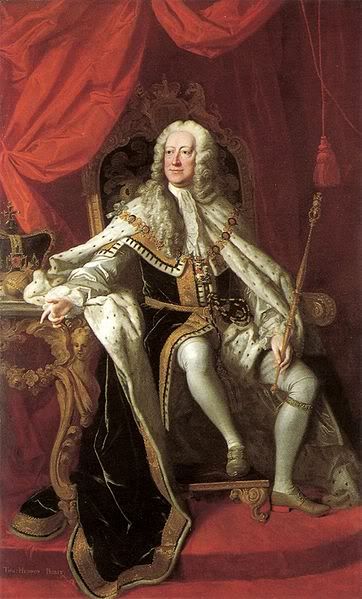
King George IIThis great anthem was written by Handel for the coronation of George II in 1727. Since the union of he Crowns of England and Scotland was in 1603, and the Act of Unions uniting the two countries' Parliaments in 1707, one could say that this is a British anthem. But should Scotland secede from the Union, it will be up to them what heritage from the Union they take: I hope that Zadok the Priest - based on 1 Kings 1:38-40 - is retained by England, even if it should be duplicated elsewhere.

http://www.youtube.com/watch?v=QCHUCMiJ_Ew&feature=player_embedded

From Brixton to another place

Electric Avenue is a thoroughfare in Brixton linking two roads full of stalls, just like you might see in Eastenders. As cosmopolitan as it is, the video of Eddy Grant singing about the street suggests that its inhabitants and patrons might like, maybe just once in a while, something else.

http://www.youtube.com/watch?v=UA5MtAmT24g&feature=player_embedded

Preotecting the old ways...

Yorkshire folk singer Kate Rusby covers the Kinks' 1968 hit The Village Green Preservation Society for a series called Jam and Jerusalem, which was modelled on the Womens' Institute, formed in 1915 to revitalise rural communities, but which now has a vital message for women and girls everywhere.

http://www.youtube.com/watch?v=iRK6U5vIHCs&feature=player_embedded

Burn them down?

the Jarrow CrusadeThe Jarrow March was a heroic peregrination from Jarrow, near Newcastle, to the Houses of Parliament, to protest against the unemployment, poverty and even starvation that followed the collapse of the US stock exchange in 1929. In Alan Price's song about the event we hear him put himself into the song in a deconstructionist manner; but, more than that, while the majority of marchers wanted a job, we hear him echoing the cries of the vocal minority to "burn them down" - which prefigured the minority in the Miners' Strike of 1984-85 for whom a sedttlement of better pay and conditions would have been a disaster, because they wanted nothing but régime change.

http://www.youtube.com/watch?v=tlMjSESoz9A&feature=player_embedded

Cricket

It was sad to see that Cambridge University's Emmanuel College was forced to desist from holding a May Ball in praise of the British Empire. Nobody's going to support the Amritsar Massacre, but Britain - and England - spread abroad a culture that continues to refer back to the English way of life where, as poet Rupert Brooke asked, stands the church clock at ten to three? A sign of this culture, visible in India, Pakistan, the West Indies, Australia and New Zealand, is cricket: and here is the tune that has accompanied English cricket on TV for decades - Soul Limbo by Booker T and the MGs.

http://www.youtube.com/watch?v=67xXbTaQlKI&feature=player_embedded

Queen of Bollywood

This is Asha Bhosle singing for the BBC - enjoy.

http://www.youtube.com/watch?v=3oj2vvCUwHc&feature=player_embedded

The seaside

Blackpool Tower: click to learn moreThe fascination for the seaside grew exponentially at the end of Queen Victoria's reign, and still remains. As well as Blackpool, there were Skegness, Brighton, Torquay and many other resorts. After a fallow period, English seaside resorts are becoming more popular due to the recession, as it becomes relatively more expensive to go abroad. (Study the video below and you'll see Brian May.)

http://www.youtube.com/watch?v=QWhdx6OB_uc&feature=player_embedded

Fisherman's Friends

The Fisherman's friends, of Port Isaac in Cornwall, were founded to support the Royal National Lifeboat Institution in a part of Britain where it's all too easy for boats to go missing. If you like what you hear, please think of the men and women who give so much to bring us fish, and of the men and women who are ready to sacrifice everything when something goes wrong.

http://www.youtube.com/watch?v=93wjsRsz1cI&feature=player_embedded

coast: natural history of a man-made environment

click to read the Wikipedia entry for HolbeachI once wisited The Wash. I was staying with a friend who worked in a hotel in Holbeach, in the South Lincolnshire area of Little Holland, and we drove up to see this seemingly unspoilt area of the Fens.

I say "seemingly" because the Fens compete with the Netherlands as constituting arguably one of the most modified areas in the world. Mostly below sea level, they were once a vast flooded area with bits of land poking up, on which settlements were built: Ely Cathedral in its various forms has been called "the ship of the Fens" for over a thousand years, and it's not a metaphor.

On last night's episode of the BBC2 10-minute documentary season Coast, focuclick to read G.M. Trevelyan's account of the eleventh battle of Isonzossing on The Wash, local archaeologist Maisie Taylor summed up how the Fens have been seen in Britain in the past: "they were wonderful for people who lived here, but for outsiders it was an evil place". Former Professor of History and Head of Trinity College at Cambridge University (and head of the British Red Cross during World War I) G.M. Trevelyan provides a case in point in his 1944 masterpiece English Social History by quoting Elizabethan historian William Camden:
The upper and north part of Cambridgeshire is all over divided into river isles, which all summer long afford a most delightful green prospect, but in winter are almost all laid under water, and in sclick to read more about William Camden on the Vision of Britain Through Time websiteome sort resembling the sea itself. The inhabitants of this and the rest of the fenny country (which reaches 68 miles from the borders of Suffolk to Wainfleet in Lincolnshire) are a sort of people (much like the place) of brutish, uncivilized tempers, envious of all others, whom they call Upland men; and usually walking aloft upon a sort of stilts they all keep the business of grazing, fishing and fowling.
Isolation, however, can have its advantages: I don't know if it's an urban myth that many churchyards dating from medieval times have mounds owing to mass graves dug to inter victims of the Black Death, but most churchyards in the Fens are flat, because they were cut off from the rest of England and often only reachable by boat.

Sir Cornelius Vermuyden: click to learn moreAs Trevelyan notes, there had been plans to drain the Fens and make them more widely habitable since Elizabeth (I)'s time, with jealous eyes cast across the North Sea to Holland, whose modern name, Nederland, means "the lowland". It was eventually achieved by Dutchman Sir Cornelius Vermuyden, who was commissioned by King Charles I on the basis of his work in reclaiming parts of Essex from the sea. He oversaw the creation of artificial waterways - from ditches (one runs outside our house) to rivers - to channel water to the Wash, into which water was pumped through a series of windmills, although the job is now done electronically.

One principle Vermuyden insisted on was that large areas of land should not be built on; they might be cultivated (Taylor refers to the Fens in Coast as "a huge growbag"), but they needed to be free from buildings so that they could absorb precipitation, so it's disturbing to learn that politicians who either dont know, or don't care about, this country's history demanding that Cambridgeshire greenbelt land be built on. Some of this land is next to us, and higher than us - even with the fields there, we sometimes get floods: should the soil and grass be replaced by concrete, we'd better buy life-jacRichard Normington: click to read his post on housing targetskets! We were all relieved to hear the Conservatives' plans to scrap national plans and promote local decision-making in the area of house-building, as reported by Richard Normington - not due to party-political considerations, merely because not all of us can swim!

Miranda Krestovnikoff: click to read more about Coast presentersI'm a birdwatcher - albeit not a twitcher, I'm not into ticking boxes - so it was gratifying to see Coast deal with the half-million feathered friends who use The Wash as a stopping-off place each year during long migrations; I was surprised that oystercatchers, one of my favourite birds, sometimes travel from the Arctic to Africa. It was interesting to see how plaoystercatcher: click to see more wonderful images of natural Britain by Mark Holdernesscid the birds were when caught by a cannon-net for purposes of ringing, with ornitholigist Miranda Krestovnikoff explaining that this made the job of the Wash Wader Ringing Group so much easier.

Presenter Mark Horton finished the show by saying that, due to rising sea levels, a decision would have to be made regarding whether to fight for the land around The Wash, or give it up to the sea. Businessman Peter Dawe proposed a controversial Wash tidal barrier in 2008 but it seems to have sunk without trace, although I wouldn't be surprised if it were refloated given that we now have near-idle windfarms that are killing bats and eagles.

If any of you reading this can access the BBC, I thoroughly recommend Coast as a compelling and informative series on the natural history of these islands, which at the moment do not have borders but rather coasts.

Thursday, April 1, 2010

lies, damn lies: statistics, strikes and the abuse of truth

Spring Harvest 2010 - click to find out moreWe're looking forward to going to a Christian retreat at Skegness called Spring Harvest, which we attended last year.

We'd been worried about an impending strike by the RMT union that was going to stop as many as four trains in five from running.

The timing of tFrederick Denisoun Maurice - click to read more on Bishop David Thomson's blogransport strikes gives a fascinating insight into the anti-religious mentality of union leaders. On the feastday of Frederick Denison Maurice, founder of Christian Socialism, we see a train-strike planned to disrupt the travel plans of members of Judaeo-Christian faith traditions around the time of Easter and Passover, and BA cabin crew, among the highest-paid in the industry, planned their original strike to disrupt the Christmas/Hannukah period.

The original BA strike was cancelled because members of the Unite union who no longer worked as cabin crew voted for the stoppage, invalidating the ballot. Now, we hear that, thankfully, the Telegraph's David Millward reports that an injunction has stopped the railway strike because - among other innaccuracies - more votes were cast than there are members in the relevant parts of the National Union of Rail, Maritime and Transport Workers Union.

This blind reliance on manipulated statistics betrays a contempt for the truth that pervades the modern left. For example, British Prime Minister Gordon Brown has just beHerr Brown?  Click to read more on the Business and Politics siteen rapped by Sir Michael Scholar, chairman of the UK Statistics Authority, for stating in a podcast that immigration fell in 2009, using uncompareable statistics to back up his claims. But for me the most shocking abuse was by Equalities Minister Harriet Harman, who consistently claimed that the conviction rate for alleged rapists was 6%, discouraging women who had been violated from reporting the crime to the police, when the true conviction rate is over 60%.

Despite the best efforts of the RMT to disrupt travel at the time of major Christian and Jewish feasts, the trains will run next week and so (please God) we'll get to Spring Harvest, but I bet Frederick Denison Maurice is turning in his grave.
click to find out more on the BBC website

Tuesday, March 30, 2010

top tips for tuesday

top tips for tuesday
click to read a meditation on the Seven Last Words

The Burke's Corner blogger, in his theological blog More than a Via Media, gives us his reflections on Jesus' last words from the Cross.
click to read more on Nick Hillman's blog

Nick Hillman, PPC (Prospective Parliamentary Candidate) for Cambridge, writes about a night spent with Cambridge Street Pastors.

And while we read about the various pronunciations of Ceotibus in Fr Hunwicke's Liturgical Notes...
click to read more on Tacitus and the coming election on Richard Normington's blog

...Richard Normington, who was lucky enough to attend a comprehensive school in the days when some were allowed to speak Latin, reflects upon a phrase from Tacitus in the imminent General Election.
click to read more at Fr TF's blog

Two for the price of one from Fr TF's The Hermeneutic of Continuity: click here to read about Richard Dawkins' hate-material about the Pope, comparing Dawkins to another villain who wished to eradicate another religion; quite disturbing given that the Pope will soon visit as a head of state. Alternatively, click the pic to read his blog about an article by an atheist who warns his peers against "Catholic-bashing".


Former British Ambassador Charles Crawford wonders if fans really want to feel like they're entering a boardroom when they go to watch the football...
click to read more about the proposal

While finally, on a slightly less urban note: a proposal for a city-farm in the south of Cambridge, from the Coleridge Conservative Action Team blog.

Sunday, March 28, 2010

lights on: don't let earth hour usher in a dark age

click to read how to beat the Earth Hour fascists next yearIn the Draughty Old Fen last night, I didn't see many more houses in the dark than the number of people who are usually out on a Saturday evening leave behind. The reason I was looking was that Earth Hour took place from 8.30-9.30, during which people who believe the theory that the activities of humankind are causing our climate to change were told to leave their lights off to make "a call to stand up, to take responsibility, to get involved and lead the way towards a sustainable future".

If so, Earth Hour fell at the first hurdle. In the words of the Daily Telegraph:

Even if power stations are turned off, the upsurge in turning the lights back on one hour later will require power stations that can fire up quickly like oil and coal.

Energy experts said it could therefore result in an increase in carbon emissions "rendering all good intentions useless at a flick of a switch".

But WWF said the campaign was about raising awareness and saving energy in the long term, rather than a short-term fix.
Any chess player understands the principle of making an immediate sacrifice for a future gain, but if the WWF (World Wildlife Foundation) and its Green fellow-travellers were really into long-term thinking, they wouldn't have campaigned for decades against the cleanest proven source of large amounts of energy around: nuclear power. Because the protests of a tiny minority of vocal vested interests were heeded, Great Britain now has only 19 nuclear reactors, and the new generation, commissioned only last year, won't be ready to fire up until 2020, if there aren't yet more objections.

I was interested to see a night-time satellite image of South Korea taken duclick to read Anthony Watts on Earth Hour in North Korearing Earth Hour on Anthony Watts' Watts up with That blog, showing the country's towns as lit up as on any other night, while on the north of the border a Communist dark age still exists.

I am concerned that in our still-free societies there are those who would like to lead us into such a dark age and, although little that justice-and-peace types say surprises me, I was shocked last year to be invited to "fast" from the lights in my house from Ash Wednesday so that I and my family would appreciate God's gift of light on Easter Sunday. Was it coincidence that this was also the time of the changeover from real lightbulbs that have served us well from Edison's time to the pathetically poor energy-saving bulbs that don't even light up when you switch them on?

click to read 'Petrarch and the Dark Ages' by Paula StilesSuite 101's Paula Stiles identifies the term Dark Ages as having originally been coined by the Italian Renaissance poet Petrarch, who "appears to have used the term to describe the 5th to 14th centuries in protest at the relentless denigration of ancient pagan religion by Christian writers during this period."

Bertrand Russell, in his A History of Western Philosophy, doesn't link Petrarch with the phrase, but places the conception of the modern era at the Renaissance (in a chapter entitled The eclipse of the Papacy), and vents his anger on the Fathers of the Church, with special bile reserved for St Augustine, whose death was roughly contemporaneous with the final decomposition of the Roman Empire:

It is strange that the last men of intellectual eminence before the dark ages were concerned, not with saving civilization or expelling the barbarians or reforming the abuses of the administration, but with preaching the merit of virginity and the damnation of unbaptized infants. Seeing that these were the preoccupations that the Church handed on to the converted barbarians, it is no wonder that the succeeding age surpassed almost all other fully historical periods in cruelty and superstition.
(It should be said that Russell lets his prejudice - and western ethnocentrism - trump his erudition here: one could say that the rump Roman Empire, as the Byzantine civilisation centred on Constantinople, survived happily into mid-Renaissance times until destroyed by Sultan Mehmed's Ottoman army in 1453).

But how dark were the dark ages? If the past is another country, we would be ethnocentric ourselves to blame other civilisations for not undergoing the explosion of progress that has marked ours since, say, the invention of the steam locomotive by William Murdoch and James Watt in the late 18th century. But the early medieval period was not short of eureka moments in many fields.

In 1150, for example, the Knights Templar sowed the seeds of modern capitalism by inventing the "letter of credit" - which would evolve into the cheque - that allowed aclick to go to Top 10 Inventions of the Middle Ages pilgim to deposit funds in one place and redeem them in another far away.

Shortly afterwards, the arbitrary power of absolute monarchs was dealt a fatal blow by the Magna Carta, signed in England in 1215. Around the same time, Franciscan Friar Roger Bacon would initiate the scientific method by making a hypothesis, testing it and then refining it further if it passed the test; if not, moving on to another hypothesis - one of his experiments was on the ancient remedy of ground willow bark to treat fever and pain, which would be built on by French chemist Charles Frederic Gerhardt to synthesize Aspirin in 1853.

Underpinning both of these - and much else - was the novel addition of wheels to the plough in the 6th century (aboone of Milliband's banned adverts, click to read more...ve), allowing it to increase in weight and till more and heavier soil, allowing populations to increase and create more pressure for innovation.

But now we have a movement of groups of activists, supposedly informed by science, to stifle any innovation that they do not approve of, and allow only research that saves the appearances of anthropogenic climate change/global warming, which is being shoved down the throats of our children and young people in education and leisure. Case in point: energy secretary Ed Milliband commissioned adverts promoting the theory of anthropogenic climate change as fact and using nursery-rhymes to do so, only (thank God) to have them banned by the Advertising St...and another banned advert;again click to read moreandards Authority on he grounds that the clear implications of the ads weren't supported by science. Milliband had obviously studied his Jesuit educational theory: "give me the child for his first seven years..."; but at least the lights are still on in the ASA.

The Telegraph's Murray Wardrop reports that earth is said to be entering a new period of geological time due to the acts of humankind having an indelible effect on old Gaia. Eugene F Stoermer of the University of Michigan's Center for Great Lakes and Aquatic Sciences places the handover from the present Holocene era to the putative Anthropocene at the end of the 18th century and "James Watt's invention of the steam engine" - William Murdoch obviously having gone the same way as Alfred Wallace, Friedrich Engels and woogie.

Last night I marked Earth Hour by having every light in the house switched on - except Maxima's room, as our cat Magus was curled up sleeping on her duvet. It was no mere excercise in contrarianism - we need a symbol of our desire to keep the lights on in science, and in our hard-won freedoms of conscience and expression.

To allow a Dark Age of fluffy earth-worship to be imposed would necessitate abuses of knowledge and wisdom that would have horrified the followers of the Old Religions whose torches were finally extinguished by the so-called Enlightenment's genteel patrician oppression; and the population control measures needed for proposed swingeing cuts in carbon dioxide (a gas necessary for all life on earth) would make the Holocaust look like a practice session. And guess what? It woulreprise: click to read Damian Thompson's advice on climate changedn't be the lives of hand-wringing liberal intellectuals that were demanded.

Come next Earth Hour, my electricity meter will be working as hard as ever and for a good cause. When the time comes, I heartily commend Damian Thompson's advice to you: "Beat the 'Earth Hour' fascists and turn on your lights NOW!"

Monday, March 22, 2010

spring of hope: an update in pictures

I'm not doing too well this Lent. Last year, I gave up a couple of pints a weSpring of hope: click to go to homepageek and gave the money to charity. This Lent I've had to learn editing from scratch to publish the village magazine - although I was priveleged to learn from somebody who'd done the job in professional and voluntary roles for decades.

click to go to the Ugandan tourist board websiteSo it was good to be sent a photo-update of a charity I was made aware of soon after moving to the Draughty Old Fen: the Spring of Hope foundation (part of the Youth with a Mission group) which helps disabled children in Uganda - much are in their clinic in Wabwoko, which is in the Kayunga District of Uganda, shaded orange in the map to the left. I'd like to share some of these photos with you, with the original comments.


Click here to go to the Spring of Hope blog


click to go to Mulago Hospital website

Emily (volunteer) and Victor (OT student ) on a home visit!! Feb 2010, we saw our first Uganda OT students come from Mulago training hospital!!

click to read about Spring of Hope's New Steps deaf school and World Deaf Awareness Week

Our deaf children from both schools were able to visit the zoo in Entebbe thanks to Roxy fundraising!!
22nd Feb 2010

click to go to the Spring of Hope page on Facebook We bought our 2nd bike, after a previous volunteer Melanie fundraised. Moses is now out and about in the community. Children in Wabwoko are at last receiving weekly home visits!! Bought Feb. 11th!!
click to read Counting Pills for Clinic on the Spring of Hope blog

Carolyn(volunteer) and Moses counting medications at the end of a very busy clinic,. At this clinic in Wabwoko we received 96 epileptic patients!! Feb 12th!!

click to read about Adia on the Spring of Hope blog

Children and parents at the clinic in Wabwoko. Feb 12th!!


The last pic really struck a chord with me because I remember the sense of wonder and getting bigger exuded by both my children when they started school, something I think one can see on the face of little Zachariah as he starts on his own incredible journey of education, thanks to Spring of Hope.


Zachariah's first day aat school - click to read more about Spring of Hope and how you can help

Sunday, March 14, 2010

mothers' day: comfort and pain

happy Mothers' Day

The nomenclature of the feast of mothers leaves me confused. I'm not sure if the difference between Mothers' Day and Mothering Sunday is that one is American and the other British, or one secular and the other religious.

Anybody who has had the privilege of knowing members of the Filipino Lito Jumilla of the Cambridge Filipino Basketball Team - click to read morecommunity in Cambridge (the city's St Philip Howard's church has been called Little Manila) will know that they celebrate Mother's Day as religiously as any Holiday of Obligation. It leaves you with a renewed appreciation of the feast; but it's a time of year that can bring as much upset as it can peace.

Mothers' Day at St Gallicus was a happy affair that saw the first reading subsequently dramatisclick to read more on the Children's Society websiteed preceded by the children, which ended up with the teenage daughter of a two-year-old Pharaoh rescuing a plastic Moses from a basket. At the close of ther service all the mothers in the congregation were presented with little potted primroses, with enough left over so that everybody was abe to leave with one.

At home, Minora had put a lamb joint in the oven, and Minima prepared the veg while I divested the table of a week's accretion of books, homework and other things we'd decided we needed to keep but couldn't quite remember why.

A sobering note came during dinner when we heard on the radio news of Children's Commissioner Dr Maggie Atkinson's cynically-timed announcement that murdered toddler Jamie Bulger's killers Jon Venables and Robert Thomson, both 10 at the time of the slaughter, would never have stood trial today under the change she wishes to implement to the minimum age of criminal responsibility, raising it from 10 to 12.

Calling Dr Atkinson's comments twisted and insensitive, Jamie's mother, Denise Fergus, called for an apology to be followed by her either jumping or being pushed from the post. Doubtlessly we'll hear more of the affair, as Mrs Fergus is due to meet Justice Secretary Jack Straw this week to discuss Venables' arrest, rumoured to be connected with child pornography.

Minima volunteered to wash up, while Maxima and I listened to Johnny Walker's Sounds of the 70s show on Radio 2, then we got the laptop out for something that, to be honest, Iclick to enter The Snowman website think we'd been avoiding.

Aled Jones came to fame as a choirboy singing most famously Walking in the Air from The Snowman, and now, as well as pursuing a singing career, presents Christian programmes on TV and radio. On this morning's Good Morning Sunday Mothers' Day special, he'd interviewed Kate McCann, whose daughter Madeleine was taken from the family's holiday apartment in Portugal.

Aled Jones and Kate McCann - click to go to the show websiteAt times her voice seemed on the verge of cracking - and we were close to tears - as Kate told how she thinks of Madeleine every day and prays for her captors: her Parish Priest has given her a key to the church. She said that "every day is the same without Madeleine", so Mothers' Day brings both comfort and pain. When Jones asked her if she could forgive the people who took her daughter, she paused then said "I don't know". It was, I think, the most searingly honest point in an excoriating interview.

I was pleasantly surprised that the programme emphasized the religious aspect of Mothers' Day - Jones played Taverner's Hymn to the Mother of God, performed by the Choir of St George's Chapel, and an unexpected treat: Hymn to Mary by Beth Nielsen Chapman. It was interesting that Taverner composed his hymn in remembrance of his mother: this was the motivation for Paul McCartney's Let it Be, with the meditation on a line of the Prayer to Our Lady of Lourdes - priez pour ceux qui aiment et sont partis (pray for those who love and are parted) - in the middle two verses.

And the best prayer that I can send up to the mother of God on this day for Denise Fergus and Kate McCann and their families concerns the situation which many mothers have to face as regards their children, albeit hopefully in happier circumstances: pray for those who love and are parted.

click here to spend 'a minute for Madeleine'.

Click the picture above to spend a "minute for Madeleine", or click here to listen to Good Morning Sunday featuring Kate McCann (until Saturday 20 March)