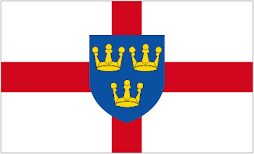
Ten top tips this week, starting with Cambridge's Big Three Conservative bloggers!
The Coleridge Conservative Action Team, including City Councillor Chris Howell and candidate Andy Bower, looks at the police's success in closing down two brothels in the city's south-east area, then meditates on the injustice in doffenences in the BBC's coverage of the financial affairs of Conservative and Labour donors...
Anybody who knows anything about mental illness or recovery from drugs misuse has heard of serotonin and dopamine - here Neuroskeptic summarises the case of a chap who was born with a brain unable to synthesize either.
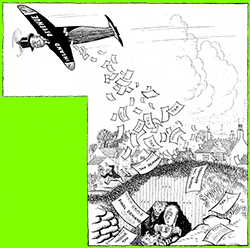
The cartoonist Bones - aka Yaakov Kirschen - looks at a meeting of three modern dictators and compares in to events on the eve of the Second world War - click the pic to see the whole cartoon.
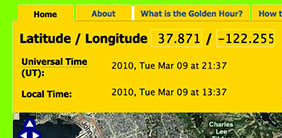
One for the photographers of both digital and analogue disposition: petapixel posts a link to an online application that calculates the "golden hours" - the time immediately after dawn or before sunset - for anywhere on the globe.
The Seventeenth Century History blog ponders the decisions to sack Naomi Tadmor and David Ganz, respectively an early modern historian and Britain's only Professor of Paleography, in a polyglot post bemoaning the dumbing-down of our education.
Father TF looks at That "Adam & Steve Apology in the wake of a deacon having been forced to make an apology over the prospect of same-sex marriage that, FrTF points out, may not have come from homosexual activists.
But I can make a cappuccino, asserts Linda from Don't Poke the Baby, meditating upon the slings and arrows of outrageous fortune.
I can understand the reasoning behind a certain amount of discretion about military matters in time of war - censorship imposed upon the newspapers by the wide-ranging 1914 Defence of the Realm Act was intended to maintain the morale of families, many of whose members would vote in an election that eventually came in 1918.
But nevertheless war journalism, from Winston Churchill's commission as a war reporter during the Boer war, through Leslie Illingworth's satirical cartoons for the Daily Mail to the embedding of journalists in military units today (which is going to be banned), has been essential in dispelling rumours about what might really be happening at the front.
But what's really happening at the front may be, for Prime Minister Gordon Brown, the problem. For example, Snatch Land Rovers (left), nicknamed "mobile coffins" due to their vulnerability to mines, are to be phased out in favour of more robust Ridgbacks. But, after Gordon Brown's markedly uncensored visit to troops in Afghanistan on March 5 - after giving evidence to the Chilcot Inquiry on Britain's involvement in the Iraq War about his commitment to funding the Armed Forces that was immediately rebutted by senior military chiefs - Shadow Defence Secretary Liam Fox claimed that the procurement of 200 Ridgbacks (right) was at odds with the tender for 400 originally put out.
If this is the reason for the media blackout, it is a myopic repetition of history by those who appear to have forgotten it. When David Lloyd George took over as Prime Minister from Herbert Asquith after the latter's resignation in 1916, he had no choice but to relax reporting restrictions upon newspapers somewhat, because the tales of soldiers returning from the fighting were at odds with tales of victory planted by official sources.
Brown might again ban forces personnel in Afghanistan from using social media, as happened in February last year only to have the ban lifted that August, but is he going to cancel leave and Medivac during the period of "purdah" - a domestic political protocol intended to make government department communications equitable to all political parties once an election has been declared? If he wishes to put us all into a position where we don't talk about the war, he's on a hiding to nothing: if returning soldiers forced Lloyd George to loosen his government's stranglehold on the press, what will be the effect of full-on deployment of social media during [the] British election?
One thing's clear to me: if the Government thinks it can stage-manage information on a war that half the world's reporting on, we'd better keep an eye on the ballot boxes on election night.
The staff of Cambridge's Mill Road Tesco deserve an award for tenacity in the face of eejits, as in merely opening the store they scored a gruelling victory over vested interests mounting a predominantly anti-capitalist campaign under the name of the No Mill Road Tesco Campaign.
The store has recently had an application to sell alcohol turned down - see Cambridge resident (expected to stand as an Independent in the next election) Richard Taylor's helpful and exhaustive account - on account of its being in a cumulative alcohol impact zone, which creates an assumption against granting new licences to sell alcohol.
What got me thinking was how alcohol gets into the hands of people in Mill Road with problematic drinking patterns in the first place. So as soon I was able I went to the end of Mill Road nearest town and walked up the mile-odd length, paying attention to the shops that sell alcohol.
Like any other consumers of alcohol, street-drinkers are partial to their favourites - most commonly Carlsberg Special Brew or the other 9% lagers on sale. (The manufacturers observe the Memorandum of Understanding between the Department of Health and the Alcohol Industry on putting sensible drinking reminders on their cans, despite the fact that the contents of a single 500ml can of 9% lager, containing 4.5 units of alcohol, put the drinker above the government's recommendation of 2-4 units daily). Strong ciders also appeal to their palate, so I think it's significant - thanks again to Richard Taylor for his report - that Mill Road Tesco had pledged to sell no beers or cider above 5.5% alcohol - the equivalent of 11º proof in US measurements.
So No Mill Road were being rather disingenuous in making a noise about the local Tesco store's admittedly presumptious display of posters offering cheap wine: one doesn't often hear of pinot grigio-fuelled disorder.
Which isn't to say that there hasn't been controversy with wine in Cambridge: in 2008, a wine-shop in the city's Victoria Road called Bacchanalia, which is opposite an Alcoholics Anonymous centre (and has a sister-store on Mill Road) displayed a sign proclaiming Rehab is for Quitters. Although one can appreciate the wordplay on one level, I think the fruit of the vine was more sinned against than sinning, not to mention people trying to piece their lives back together.
The first thing I noticed was that shops genuinely serving specific communities - eg Chinese, Afro-Carribean, Malaysian - sold little or even no alcohol. On the other hand, the cynically-named International Food Store was in reality a wallful of shelves stocked with wines and spirits facing a wall of beers and soft drinks, with two thin aisles of snacks in between, and in between those huge plastic bottles of strong cider on the floor. Another general store had not only three different brands of 9% lager but also a variety of strong, cheap ciders, of the chemically-derived sort that Conservative leader David Cameron once remarked had "never seen an apple".
In all, there were five small, independent stores of the kind, say No Mill Road Tesco, in need of protection against the supermarket giant which were selling drinks that specifically fuel the thoroughfare's alcohol problems. I say specifically advisedly - when's the last time you saw 9% syrup or paint-stripper cider at a dinner-party or while getting together to watch the football?
Capitalism is insensate and must needs be fenced in by legal frameworks to prevent abuses like, for example, the sale of alcohol to minors, directly or through adults. Both the Co-op and Tesco, as far as I'm aware, will not sell to adults who are known to pass on to underage street-drinkers; so why can't smaller stores be leant upon to refuse to sell to people who are drunk, or who are known to drink in the street? Many people buy drinks from stores because pubs are forced to keep their prices high - releasing the legislative garotte strangling them wouldn't stop street drinking, but it could prevent people taking drinks home in a habit that has the potential to spiral dangerously, and would widen the cadre of social drinkers in pubs in whose self-interest it is not to let each other get out of control.
And while I'm on my wish-list, how about doubling the price of superstrong lagers and ciders?
I first became aware of Festa delle Donne (Women's Day) in the 1980s in Italy, which is quite appropriate as that is where it appears to have begun. At the end of the Second World War, it was decided to consolidate several days celebrating women in March, some with roots in antiquity, in March 8. I remember going to university and seeing just about all of the women wearing flowers on their coats - small, white flowers, I wish I could remember the name.
March 8 is still, of course, International Women's Day, but it has accrued a whole week around it, which this year lasts from Saturday 5 March to Saturday 12 March, with the day itself in the middle on the Tuesday. And, as a bonus, Women's World Day of Prayer on the inaugural day, Saturday March 5, focussing on Cameroon.
I'd been planning a Top Ten pertaining to women for some time, because I looked at my music collection and saw that there were few women fronting a band or singing solo there: Carole Fredericks, Ulanda McCulloch and Bonnie Tyler, for example, and, of course, Cambridge-born songstress EJ Norman (right - click to hear her music). Is collecting music by other blokes something men do when we graduate from stamps?
It's not an idle question: last night I had a bath, which among other things affords me the only opportunity I get to read for a prolonged time, and had BBC Radio Cambridgeshire on the shower radio. Having the germ of this blog in my head, it shocked me that well over an hour passed between hearing one female vocalist and the next, despite there certainly being no dearth of good music written and/or performed by women. If this phenomenon is threaded through the fabric of society, is it possible that, say, all-women shortlists to select Prospective Parliamentary Candidates - which I've always felt vaguely uncomfortable with but are supported by many including Ellee Seymour - are the way ahead?
On the other hand, the opposite situation doesn't pertain with Maxima: although she certainly listens to more female vocalists than me - like Diana Ross, Nancy Griffiths and Katie Melua - she also has in her collection The Jam and the Police (with their respective solo leaders Paul Weller and Sting), Madness and Planxty, as well as her family's favourites such as Guy Mitchell and Tommy Steele. (And Buddy Holly. Being a Buddy Holly fan makes life easier in our house.)
Making a list for this post, I found myself trying to identify only pieces sung by women but also composed by women, and wondered if I were unconsciously applying a sort of gender-apartheid? The thing is, if I am, I am therefore part of the problem and will be unable to appreciate it from the outside. I'm confused...
10 - what men think women think
I can only ever write this post from the outside, so here's Nick Lowe with Girls' Talk, showing how men can be paranoid about women when there aren't even any present.
9 - self-assurance
Beverley Knight released this recently with Chaka Khan, and these lines go right to the heart:
Where's the man to quantify Everything I'm worth and who I am? He should look me in the eye Tell me where he figures in my plan...!
8 - remembrance and sorrow
Fannie Hurst's 1933 novel Imitation of Life was filmed twice, the 1934 version being eclipsed by the 1959 one - which I remember watching with my Mum in the late 1970s: here Mahalia Jackson sings at the funeral of the black woman who brought up a white girl who didn't quite appreciate the worth of her foster-mother until it was too late.
7 - remembrance and joy
6 - the girl he left behind
All around my Hat was originally written from the viewpoint of a minor English criminal sent to Australia for several years, but here legendary folk singer Sandy Denny fronts Steeleye Span in turning it round so that the girl he leaves behind will wear a ribbon in her hat for "a twelve-month and a day".
5 - sticking with it
French singer/songwriter Jean-Jacques Goldman (who wrote for Céline Dion before she started singing in English) found himself surfing TV channels one night and was suddenly faced with a documentary called "Far West", part of which dealt with a group of nuns in the delivery suite of a maternity hospital. He was amazed by the footage and wrote a song that he performed with the supergroup he formed with his chums Michael Jones and the late, great Carole Fredericks, to whom this video is dedicated.
4 - incertitude?
Nena (Gabriele Kerner) released 99 red balloons (or luftballone) in 1983, not long after a British TV survey of the concerns of schoolchildren revealed nuclear war to be their greatest fear. Towards the end of the video, set on an army assault course in Germany (the father of one of the band members was a NATO colonel), if the band look distressed, it's because they were: unscripted gasoline bombs were exploding around them. But it made for a good video.
3 - identity
Here Gali Atari, who won the 1979 Eurovision Song Contest for Israel singing Alleluia wih Milk and Honey, sings of the joy and the pain of belonging to a place one cannot separate oneself from.
2 - What have they done to the weather?
Originally released as Weather Song, writer Malvina Reynolds wanted to highlight the effects of nuclear testing, which - reports the Telegraph's Bonnie Malkin, is still bearing bad news to the Aboriginies of the Australian outback. For a while, this became the anthem of a generation sufficiently secure behind their countries' nuclear deterrents to call for said deterrents' dismantling. (See the passionate support of the recently demised Labour leader Michael Foot for the Campaign for Nuclear Disarmament, which he helped found.) Here it's sungby one of the most beautiful voices of all time, Judith Durham, with of course the Seekers.
1 -trust
When Minima asked to play this at the start of an Advent course and I heard the first few lines, I thought it was time to hide behind my hands; but I hadn't trusted her enough - just over halfway through the song by Nashville-based Christian band Zoegirl, the lyrics develop to completely change the meaning of the piece.
I first became aware of Festa delle Donne (Women's Day) in the 1980s in Italy, which is quite appropriate as that is where it appears to have begun. At the end of the Second World War, it was decided to consolidate several days celebrating women in March, some with roots in antiquity, in March 8. I remember going to university and seeing just about all of the women wearing flowers on their coats - small, white flowers, I wish I could remember the name.
March 8 is still, of course, International Women's Day, but it has accrued a whole week around it, which this year lasts from Saturday 5 March to Saturday 12 March, with the day itself in the middle on the Tuesday. And, as a bonus, Women's World Day of Prayer on the inaugural day, Saturday March 5, focussing on Cameroon.
I'd been planning a Top Ten pertaining to women for some time, because I looked at my music collection and saw that there were few women fronting a band or singing solo there: Carole Fredericks, Ulanda McCulloch and Bonnie Tyler, for example, and, of course, Cambridge-born songstress EJ Norman (right - click to hear her music). Is collecting music by other blokes something men do when we graduate from stamps?
It's not an idle question: last night I had a bath, which among other things affords me the only opportunity I get to read for a prolonged time, and had BBC Radio Cambridgeshire on the shower radio. Having the germ of this blog in my head, it shocked me that well over an hour passed between hearing one female vocalist and the next, despite there certainly being no dearth of good music written and/or performed by women. If this phenomenon is threaded through the fabric of society, is it possible that, say, all-women shortlists to select Prospective Parliamentary Candidates - which I've always felt vaguely uncomfortable with but are supported by many including Ellee Seymour - are the way ahead?
On the other hand, the opposite situation doesn't pertain with Maxima: although she certainly listens to more female vocalists than me - like Diana Ross, Nancy Griffiths and Katie Melua - she also has in her collection The Jam and the Police (with their respective solo leaders Paul Weller and Sting), Madness and Planxty, as well as her family's favourites such as Guy Mitchell and Tommy Steele. (And Buddy Holly. Being a Buddy Holly fan makes life easier in our house.)
Making a list for this post, I found myself trying to identify only pieces sung by women but also composed by women, and wondered if I were unconsciously applying a sort of gender-apartheid? The thing is, if I am, I am therefore part of the problem and will be unable to appreciate it from the outside. I'm confused...
10 - what men think women think
I can only ever write this post from the outside, so here's Nick Lowe with Girls' Talk, showing how men can be paranoid about women when there aren't even any present.
Fannie Hurst's 1933 novel Imitation of Life was filmed twice, the 1934 version being eclipsed by the 1959 one - which I remember watching with my Mum in the late 1970s: here Mahalia Jackson sings at the funeral of the black woman who brought up a white girl who didn't quite appreciate the worth of her foster-mother until it was too late.
All around my Hat was originally written from the viewpoint of a minor English criminal sent to Australia for several years, but here legendary folk singer Sandy Denny fronts Steeleye Span in turning it round so that the girl he leaves behind will wear a ribbon in her hat for "a twelve-month and a day".
French singer/songwriter Jean-Jacques Goldman (who wrote for Céline Dion before she started singing in English) found himself surfing TV channels one night and was suddenly faced with a documentary called "Far West", part of which dealt with a group of nuns in the delivery suite of a maternity hospital. He was amazed by the footage and wrote a song that he performed with the supergroup he formed with his chums Michael Jones and the late, great Carole Fredericks. Even if you don't speak French, there is a part of this video that will literally stop your heart.
Nena (Gabriele Kerner) released 99 red balloons (or luftballone) in 1983, not long after a British TV survey of the concerns of schoolchildren revealed nuclear war to be their greatest fear. Towards the end of the video, set on an army assault course in Germany (the father of one of the band members was a NATO colonel), if the band look distressed, it's because they were: unscripted gasoline bombs were exploding around them. But it made for a good video.
Here Gali Atari, who won the 1979 Eurovision Song Contest for Israel singing Alleluia wih Milk and Honey, sings of the joy and the pain of belonging to a place one cannot separate oneself from.
Originally released as Weather Song, writer Malvina Reynolds wanted to highlight the effects of nuclear testing, which - reports the Telegraph's Bonnie Malkin, is still bearing bad news to the Aboriginies of the Australian outback. For a while, this became the anthem of a generation sufficiently secure behind their countries' nuclear deterrents to call for said deterrents' dismantling. (See the passionate support of the recently demised Labour leader Michael Foot for the Campaign for Nuclear Disarmament, which he helped found.) Here it's sungby one of the most beautiful voices of all time, Judith Durham, with of course the Seekers.
When Minima asked to play this at the start of an Advent course and I heard the first few lines, I thought it was time to hide behind my hands; but I hadn't trusted her enough - just over halfway through the song by Nashville-based Christian band Zoegirl, the lyrics develop to completely change the meaning of the piece.
I was hoping to have done another "ordinary" blog before the Top Tips this week, but was called out to the printers to sort out a problem with the village mag...so here come the tips!
Nick Hillman, Prospective Parliamentary Candidate for the city of Cambridge in the forthcoming General Election, gives an excerpt from a non-partisan article he's written about involvement in political parties for the Church Times.
OBV, the website of Operation Black Vote, provide a pictorial presentation of the Revd Jesse Jackson's visit to London, from where he travelled to Cambridge - unfortunately no pics of this on the site.
John Smeaton from SPUC presents a review from his newly-graduated son, Paul, of a challenging new play called Really Old, Like Forty-Five, which looks at what happens when the breakdown of the family reaches breaking-point.
A three-link chain: as the Spectator's Melanie Phillips lauds the House of Commons All-Parliamentary Group against anti-semitism while presenting depressing evidence of the necessity of its existence...
...David Appletree of JIDF (Jewish Internet Defence Force) presents a victory against an antisemitic site on Facebook, which is notoriously selective in enforcing its own Terms of Service...
Photographer, cook, home educator and general polymath Linda from Don't Poke the Baby delivers a haunting and poignant meditation for Lent.
Poppy, avatar for LegionLive, the new blog of the Royal British Legion, looks at the nomenclature of British and American military operations and wonders, What's in a name?
On the other hand, Telegraphblogger and Conservative MEP Dan Hannan has been looking admiringly at the American Tea-Party movement and presents a report from the first British manifestation at the Conservative Spring Conference at Brighton. And I bet they served tea at this one.
I'm a big fan of The Lord of the Rings, but must admit to my shame that I find the films more accessible than the book - I'm on my third attempt to get to the finish and, being halfway through The Two Towers, am further than I managed to get to either as a schoolboy or ten years ago.
A few months ago I bought a book - the first of a series called The Wheel of Time - that offered to "mine the world Tolkein hinted at"; I got through a few hundred pages then came to a phrase "slowly he began to breathe slowly". (Minora calls me a pedant, which really annoys me, because she puts the stress on the wrong syllable.)
As I threw it in the bin, I resolved to spend my weekend alone - Maxima having taken the girls to the other end of the Fens to visit her parents - reacquainting myself with the films, which have helped me power through the book no end.
As usual with one of my "bachelor weekends", I raided the "reduced to clear" section of the local supermarket to make one of my experimental meals that the women in my life tend to frown on. The goal, I decided, would be something meatball-ish. So I emptied three cans of mince and onions into bowl, and grated two big wodges of blue cheese into it. I'd come home with a pack of eight factory eggs which had been going for a song because there should have been ten. I'm not overly chuffed at the concept of factory farming, but it beats me how people can look virtuous when buying their free-range eggs laid by hens bred to produce the extra-large ones, either not thinking or not caring why the shells have blood on them. Anyway, I couldn't decide how many eggs to use, so in went the lot. Then the best part of a jar of pesto went in. I like pesto. It's the nearest you'll get to a culinary proof of a deity other than an epiphany in your pantry, especially at times when you find yourself wondering why a loving God would create something like carrots.
Anyway, I grated a chunk of parmesan into the concoction, mixing while some penne bubbled away, then dropped teaspoonfuls of it onto a hot frying-pan with plenty of oil. (Helping make pancakes at the Rectory on Shrove Tuesday, Rector Pellegrina asked me to reduce the amount of oil in my pan. When I did, people grumbled that my pancakes suddenly weren't as nice.) They ended up more like flat coins than balls, but tasted sublime in a sauce of blue cheese, mushroom soup and eggs.
It was, in fact, a meal suitably epic to accompany a marathon session of all three videos from which I emerged square-eyed but happy. I have the book with Tolkein's Foreword to the Second Edition, in which he tries to dispel speculation that the work is a religious analogy. I accept that, but it was also a labour of love for the author and expert on the Anglo-Saxon and early English languages, and as such I believe that the childhood convert to Roman Catholicism dug deep into the mines of his spirituality to inform the ethics of his morality-tale. What's really becoming clear to me as I read The Lord of the Rings this time is that his first-hand experience of the horrors of the Great War wedded to frustration with the politics of appeasement directed towards Hitler - despite Tolkein's denial - come through in the backstory of the powers of Middle Earth standing back while the treacherous Sauron consolidates his hold on Mordor, to use it as a base for launching his bid to enslave the fantastic world.
And my cooking? I enthusiastically showed the remainder of the panful to Maxima on her return, at which she winced and told me to go get everybody a Chinese. Was it the eggs?
The Draughty Old Fen, Cambridgeshire, United Kingdom
An incurable old cyber-grumpy, I like good music, cats, bacon sarnies and anything to do with Terry Wogan. Raining on ideological parades is the cream in the coffee.
Latest 50 educational institutions accessing Tales From a Draughty Old Fen:
No endorsement by the institutions listed below of the website or any post is intended to be inferred. Click an organisation's link to go to its website.




 But what's really happening at the front may be, for Prime Minister Gordon Brown, the problem. For example, Snatch Land Rovers (left), nicknamed "mobile coffins" due to their vulnerability to mines, are to be phased out in favour of more robust Ridgbacks. But, after Gordon Brown's markedly uncensored visit to troops in Afghanistan on March 5 - after giving evidence to the Chilcot Inquiry on Britain's involvement in the Iraq War about his commitment
  to funding the Armed Forces that was


 d Tesco had pledged to sell no beers or cider above 5.5% alcohol - the equivalent of 11º proof in US measurements.


 Nena (Gabriele Kerner) released 99 red balloons (or luftballone) in 1983, not long after a British TV survey of the concerns of schoolchildren revealed nuclear war to be their greatest fear. Towards the end of the video, set on an army assault course in Germany (the father of one of the band members was a NATO colonel), if the band look distressed, it's because they were: unscripted gasoline bombs were exploding around them. But it made for a good video.